A lifting clutch hooks onto the spherical head of an anchor cast into a precast unit, and is released by hand once the unit is set down. The system is only as safe as its weakest decision: the anchor’s load class, the concrete’s strength at lifting, and the angle of pull. Here is how the system works and the rules makers set.
G-209, S-209, G-2130, A-342 — Crosby’s catalogue numbers have become the trade’s shorthand for rigging shapes. The letter tells you the finish or material; the number tells you the shape. Here is the key, a table of the common numbers, and why a part made to a Crosby pattern is not a Crosby part.
New lifting gear arrives with a manufacturer’s certificate; gear in service carries a report of thorough examination. They answer different questions. The first proves the item was made and tested to its standard; the second says it was fit to use on the day it was examined. Here is what each must contain, and the checks to make before the first lift.
A sling with ten broken wires in one lay, a chain link worn by a tenth, a hook opened by 15%, a polyester sling with a cut deeper than a tenth of its width, or any item with no readable tag — each comes out of service. Here are the discard criteria for every common piece of lifting gear, in one place.
DIN link chains are named for their link length and whether they are tested and calibrated — and the current DIN 764 and DIN 766 are written for chain conveyors, with an explicit ban on use as slings or lifting accessories. Here is what each standard covers, how they compare with Grade 80 lifting chain, and what they are actually for.
A lever binder tensions a chain in one swing of the handle — and can whip back just as fast. A ratchet binder takes longer to tighten but gives twice the mechanical advantage and a controlled release. Both carry the same rating for the same chain size. Here is how they compare and how to use either safely.
A 50 mm ratchet strap might be rated 2,000 daN, yet tightened by hand it typically pulls only 250 to 500 daN on the load. That gap decides how loads are secured: straps are good for clamping light and finished loads down; chain and binders for heavy, hard-edged ones. Here is how the ratings work and how many tie-downs a load needs.
On the Gulf coast, zinc on galvanized rigging can be lost at up to 8 µm a year, and faster offshore. Stainless steel does not rust away, but it pits in salt air, can crack in hot chloride conditions, and is usually rated well below carbon or alloy steel of the same size. Here is how to choose.
A properly poured spelter socket keeps 100% of the wire rope’s breaking load — the only end fitting besides a swaged socket that does. Open sockets connect with a pin through their jaws; closed sockets take a pin or shackle through a solid eye. A wedge socket is quicker to fit but keeps 80%. Here is how to choose and what a good socket needs.
Every way of making an eye in wire rope keeps a different share of the rope’s strength. Sockets keep all of it; ferrule-secured and Flemish eyes about 90% or better; a hand splice less, and less again as the rope gets bigger. Here is the efficiency table, how each eye is made, and where each one belongs.
A thimble keeps a wire rope eye from crushing and wearing where it bears on a shackle or pin. It is not rated to carry load itself — it protects the rope that does. Here is how standard, extra-heavy and solid thimbles differ, and how to match one to the rope and the fitting.
A weld-on lifting point is only as good as its weld. A bolt-on point is only as good as its thread engagement and torque. A swivel point turns to face the sling, but not every one keeps its full rating sideways. Here is how the four kinds of lifting point compare, and what each needs to be fitted properly.
Hooks are chosen on two things: how they attach (eye, clevis, shank or swivel) and what they do (a sling or slip hook holds a load in its bowl; a grab hook grips a chain link). Use a grab hook to shorten a chain and the sling loses 20% unless the hook is a cradle type. Here is how the types differ, and when a hook comes out of service.
The master link is the top of a multi-leg sling: it gathers the legs and sits in the crane hook. Two legs can share a single master link; three or four need an assembly with sub-links. And the link has to fit the hook as well as the chain. Here is how to choose one.
A chain block lifts straight up and down, from overhead. A lever hoist pulls, lifts and tensions in any direction, as long as the pull runs straight hook to hook. An electric hoist does the work for you, all day, rated by duty class. Here is how they compare and which one fits the job.
A snatch block opens at the side so a rope can be dropped in without threading the end through. That is its whole difference from a pulley block — but either one can carry nearly twice the line pull, depending on the angle. Here is how to work out the block load, size the sheave and count the parts of line.
Chain slings survive heat, edges and rough handling. Wire rope slings are strong and stiff. Webbing and round slings are light and gentle on finished surfaces, but cut easily and stop at 100 °C. Here is how the four compare, and how to choose for the load in front of you.
Under EN 1492, a violet polyester sling is rated 1 t, green 2 t, yellow 3 t, grey 4 t, red 5 t, brown 6 t, blue 8 t and orange 10 t or more. US round slings follow a different scale, so a green sling can mean 2 t or 5,300 lb depending on where it was made. Here is the chart — and why the label, not the colour, is the rating.
A turnbuckle is only as strong as its weakest end, and that is usually the hook: on our US drop-forged range a 1/2″ hook end is rated 1,500 lb against 2,200 lb for eye or jaw ends. Here is how end fittings and body types change the rating, which standards cover what, and how to keep a turnbuckle from unwinding.
A plain eye bolt is rated for a straight pull only. A shoulder eye bolt pulled at 45° keeps 30% of its rating. A DIN 580 collar eye bolt has its own table for angled loads and none at all for a pull across the eye. Here is how each type is rated, fitted and derated.
In Abu Dhabi, lifting accessories must be thoroughly examined by an approved third party at least every six months and lifting equipment every twelve — it is written into the emirate’s code of practice. Dubai requires annual certification by an EIAC-accredited inspector, and accredited inspectors apply six months to accessories. Here is what each document says.
A wire rope clip termination is only as good as its installation: the saddle on the live end, the right number of clips, the right length of turnback and the right torque, re-checked after the first load. Here are the published tables for US-type and DIN 1142 clips, and the one job clips must never do.
Two sling legs do not each carry half the load unless they hang straight down. At 45° from vertical each leg carries 71% of the load; at 60° each carries all of it. Here is the chart, the one-line formula behind it, and how rating tables for multi-leg slings build it in.
A wire rope designation such as 6x36WS-IWRC 1770 B sZ tells you almost everything about how the rope will behave. The surprise is how little the construction changes its strength: at 12 mm, the common six-strand ropes break within about 12% of each other. What changes is flexibility, abrasion resistance and crush resistance.
Chain grade is a statement about the steel, and it decides two things: how much a given size carries, and whether it may be used overhead at all. Grades 30, 43 and 70 are for tie-down and towing. Only alloy Grade 80 and Grade 100 are lifting chain. Here is the whole ladder, with figures from our own tables.
A shackle is chosen on two decisions: the body shape, which sets the directions it can be loaded from, and the pin, which sets how securely it stays closed. Here is how anchor and chain shackles differ, when each pin type is right, and how material changes the rating at the same size.
The breaking strength of a lifting component is not a number you lift to. It is the WLL multiplied by a design factor, and that factor runs from 4:1 on alloy chain to 7:1 on polyester slings. Here is how the four ratings relate, worked through with figures from our own tables.
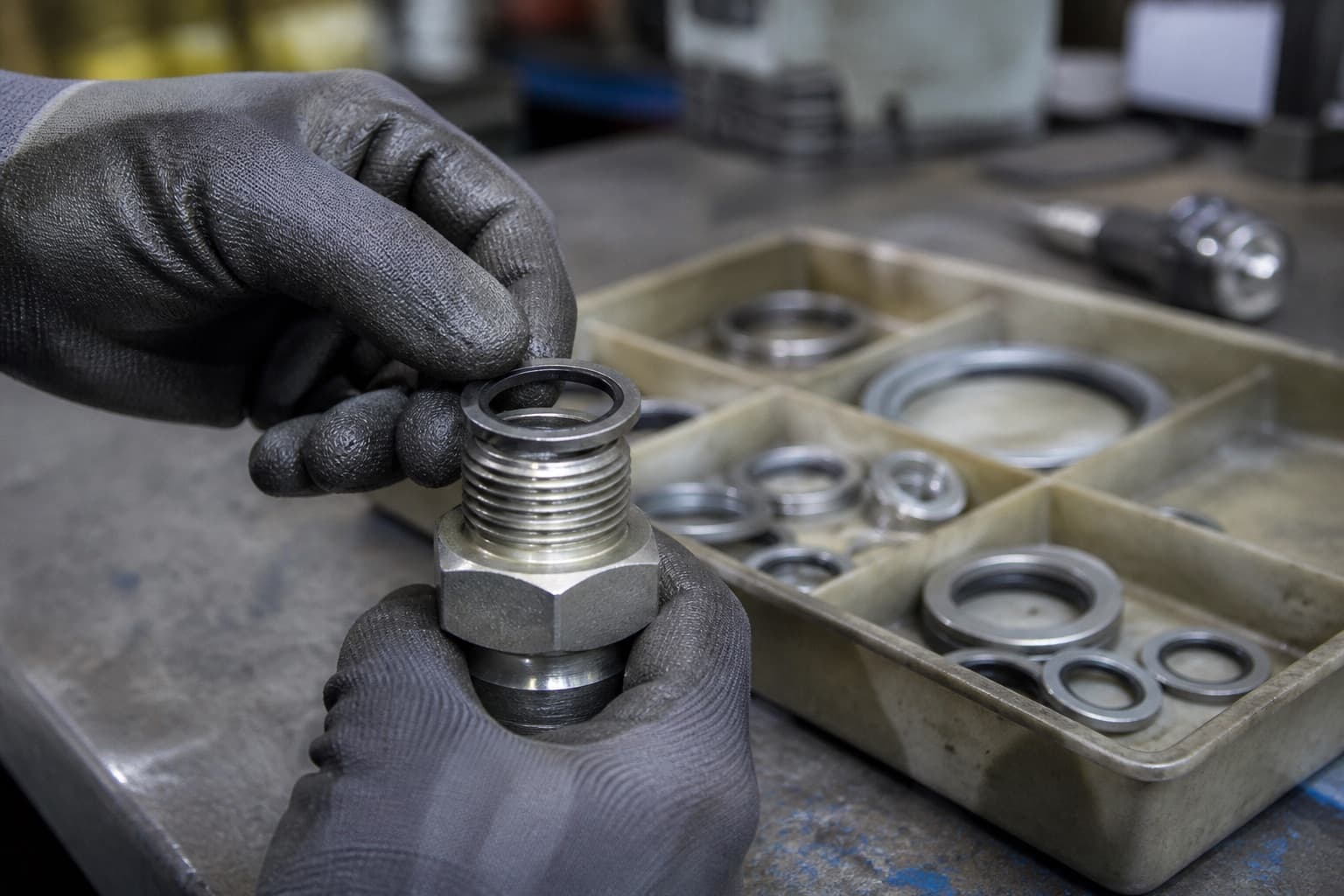
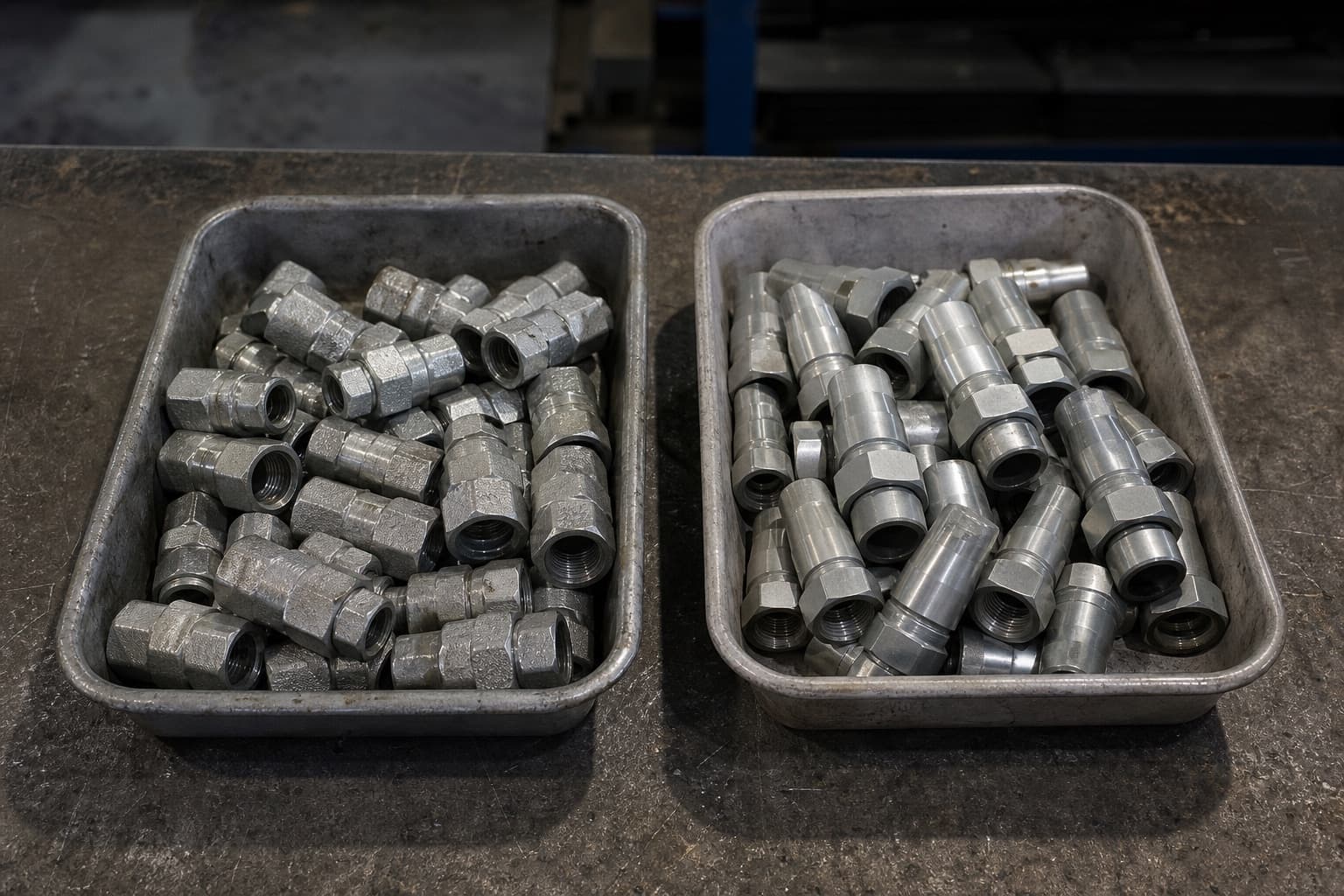
Half the parts in the tray are perfectly good and half are finished. Sorting them takes a light and two minutes, and getting it wrong shows up after reassembly.
A fitting can be contaminated before anyone opens the bag. What happens to parts over a long sea leg and a longer shelf, and the two minutes that prevent it.
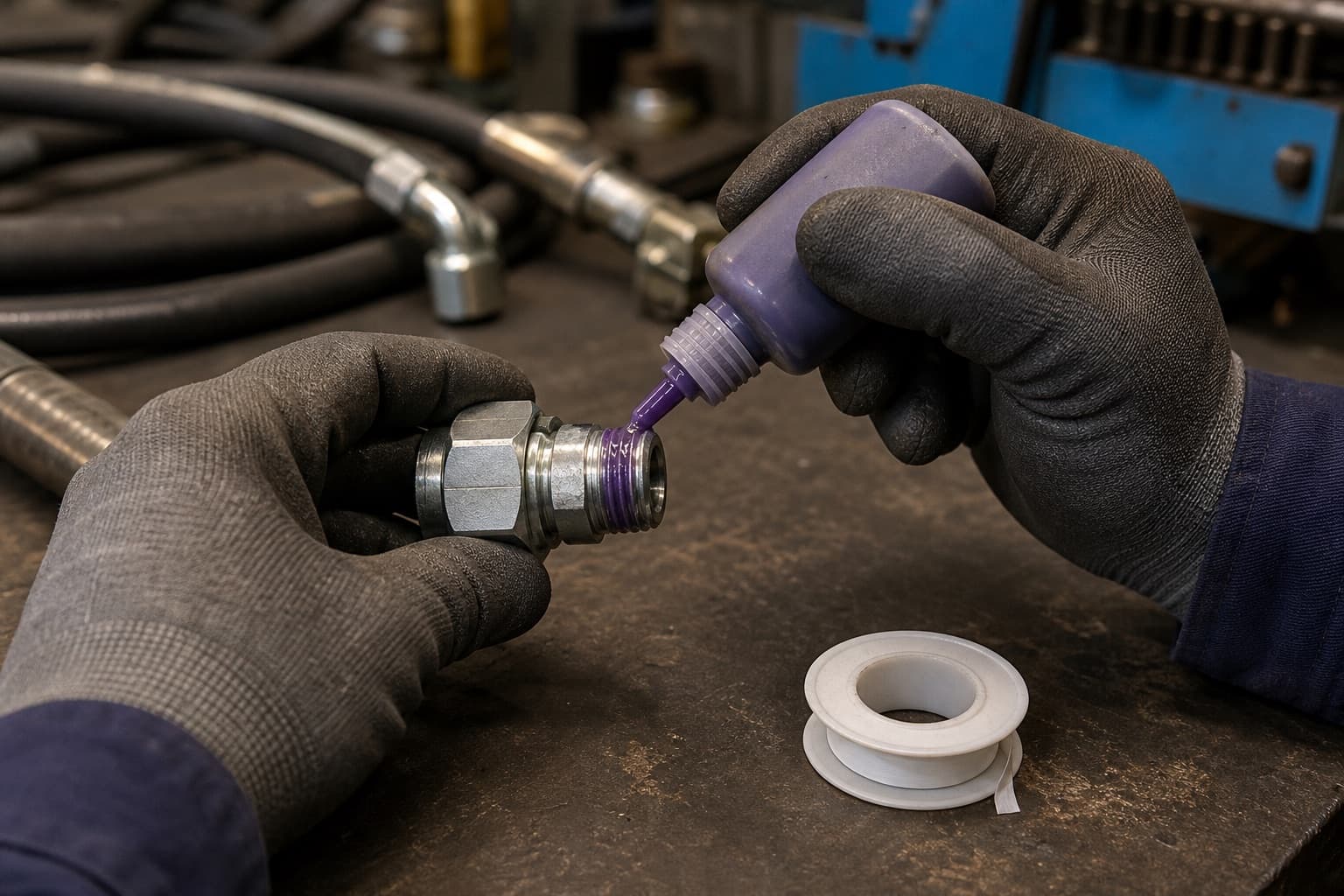
Tape on a tapered thread is correct. Tape on a cone, a flat face or an O-ring boss is how a good joint is made to leak — and how debris gets into the system.
The fitting is cheap and the thing it screws into is not. How to judge what is in front of you, and the cases where the honest answer is that it is finished.
Both faults leak, and the marks they leave are different. What to look for on a joint somebody else assembled, and which of the two is the expensive one.
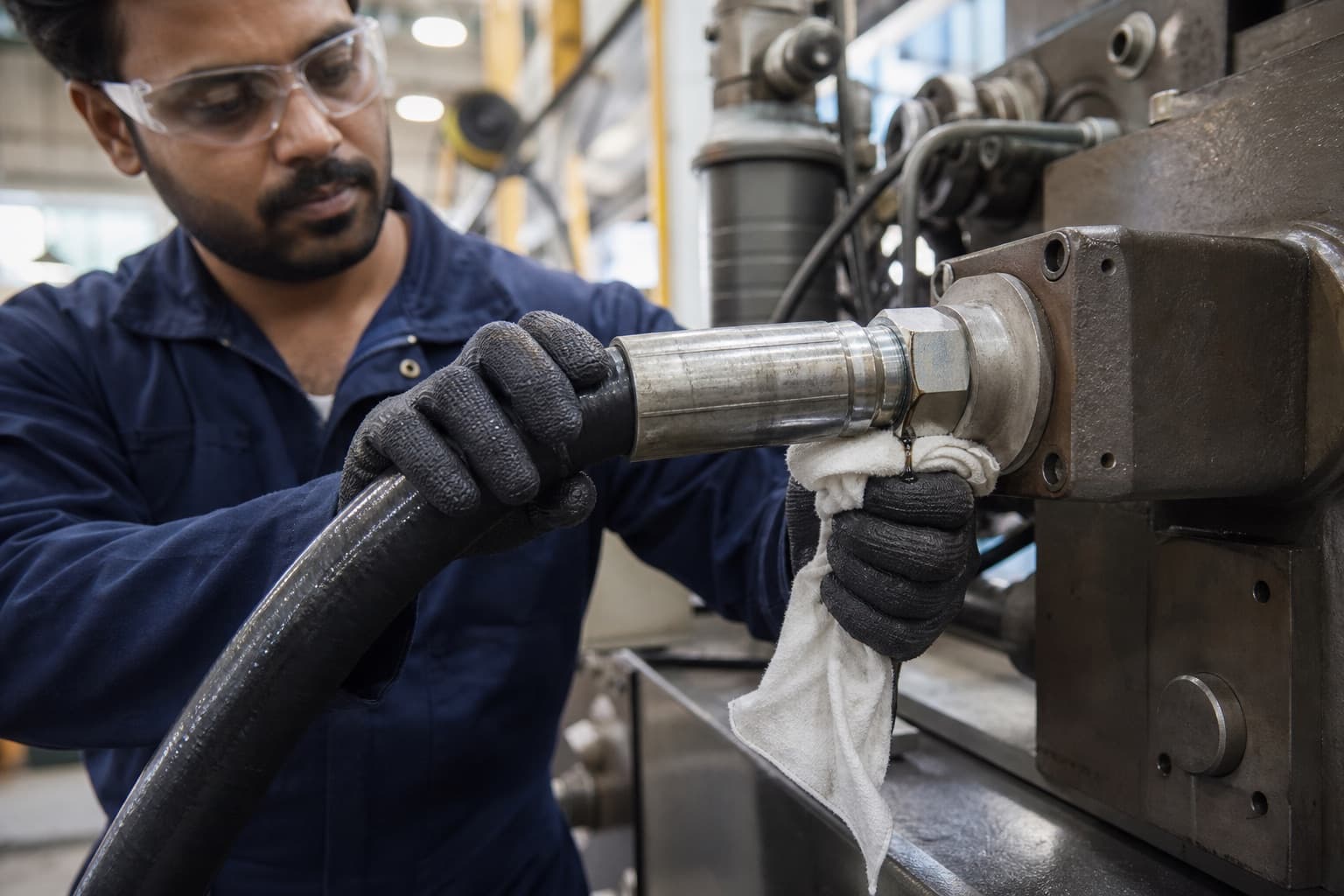
A weep is evidence before it is a fault. Where the oil appears — at the seat, down the thread, under the nut — narrows the cause to one of four things.
A factory is the one environment where the thread population is a choice rather than an inheritance. Most plants never make that choice, and pay for it every week.
A mill runs flat out for months and then stops dead. Everything about stocking, inspection and replacement follows that calendar rather than the failure rate.
Container handling runs around the clock in the most corrosive air on the continent. That combination decides the material, and it decides when you are allowed to change anything.
A drilling rig is a workshop that relocates every few weeks, usually further from help each time. What travels with it decides whether a failure costs hours or a fortnight.
A tractor, a backhoe, a tipper and a generator in one yard is the normal African workshop. Four origins, three thread families and one drawer that has to cover all of it.
Rig-side flow equipment and ordinary plant hydraulics look like one order and behave like two. The paperwork, the lead time and the acceptance criteria all differ.
A gold circuit is abrasive in some places and chemically aggressive in others, and the two want different fittings. Getting that split right is most of the maintenance saving.
Two different hydraulic worlds share a fence line. The haul fleet fails by abrasion and vibration; the concentrator fails by slurry and washdown, and they want different answers.
Substitution happens at two in the morning with a machine down. Here is the rule that makes it defensible, and the one case where the answer has to be no.
One consignment, one set of documents, one clearance. The saving is not in the parts — it is in everything that happens to a parcel between here and your gate.
Fittings are small, dense and cheap to fly relative to what they unlock. That makes the mode question different from the one you answer for hose or plant.
Stainless fittings resist corrosion and often carry a lower pressure rating than the carbon-steel part they replace. Both facts matter, and only one of them is on the buyer’s mind.
The plating decides how long a fitting lasts on the outside of a machine. What the common finishes are, how they are rated, and where the corrosion actually starts.
A box of adapters is easy to sign for and hard to argue about later. Five checks on the loading bay, and the two faults that only show up under pressure.
When the next delivery is a month away, stocking decisions are risk decisions. What to hold, what to skip, and the two categories people always get backwards.
A kit built from a catalogue is mostly parts you will never fit. A kit built from a yard walk is small, cheap, and covers the failures that actually happen.
A part number describes a fitting in one manufacturer’s language. Translating it means decoding what it says about geometry — and geometry is the only thing that has to match.
Six things turn an enquiry into a named part on the first reply. Sending five of them is the difference between a quote today and three days of questions.
A mixed fleet forces you to join families that were never meant to meet. Where that is ordinary engineering, where it becomes a leak with a schedule, and how to design it out at the next hose change.
A board of known samples on the wall answers in five seconds what a catalogue answers in twenty minutes. What to put on it, how to label it, and what to keep off it.
Workshops ask which standard "we use here". Countries do not have thread standards — they have import histories, and the drawer should be stocked for the fleet rather than the flag.
These machines sit between the Japanese and European worlds, and the honest answer is that a single machine can carry both. What that means for how you identify and how you stock.
Metric 24° cone covers most of it, but the same tube size exists in two series with different threads. Knowing which one you are holding is the whole job.
JIC, ORFS, NPT, O-ring boss and split flanges arrive as a set. What each is for, which two are routinely confused, and the mistake that ruins a port rather than a fitting.
Tractors sit further from a hydraulics counter than any other machine, and the repair happens when the rain is coming. What to hold, and what to identify before you need it.
Two common families share a 30° seat and use different threads underneath it. Checking the angle alone tells you they match, and they do not — here is how to separate them.
Metric 24° cone and BSP cover most of what you will meet, with flanges on the big lines. What each looks like in the hand, and why the badge on the machine never settles it.
On an oilfield order the paperwork is part of the product. What the pack normally contains, who has to sign each piece, and the two items that are always requested late.
Four destinations, four different regimes, and none of them is SABER. What each one asks of a hose consignment, and which questions belong to your customs broker rather than your supplier.
What identity evidence a hose and its fittings actually carry, how to check it on receipt, and why the weakest link is almost always the assembly rather than the hose.
Approved vendor lists sit between a contractor and the fastest way to fix a machine. How the regimes actually work, which parts of them are about the supplier and which are about the product.
MR0175 is a materials standard for metals. Asking for a "NACE compliant hose" answers the fittings question and leaves the rubber one untouched — which is usually the one that matters.
The difference between a 2.2 and a 3.1 is not detail — it is whether the numbers came from your batch. That single distinction is behind most rejected document packs.
A proof test is a pass or fail against a pressure, applied once, to a specific assembly. It is strong evidence of one thing and no evidence at all of several others people read into it.
Buying from a Dubai stockist does not make goods UAE-origin. What the certificate of origin actually states, why it is not a formality, and where duty is genuinely paid once.
No — and knowing why saves a procurement team a month. What G-Mark actually covers, what it does not, and which requirement people are usually reaching for when they ask for it.
SABER is two registrations, not one, and the second is per consignment. What that means for a hose order, when the part numbers have to exist, and why a shipment that travelled in three days can still sit at the border.
Service schedules cover oil, filters and greasing. They rarely mention the hoses, which is why a machine on a perfect service record still strands a crew on a Thursday.
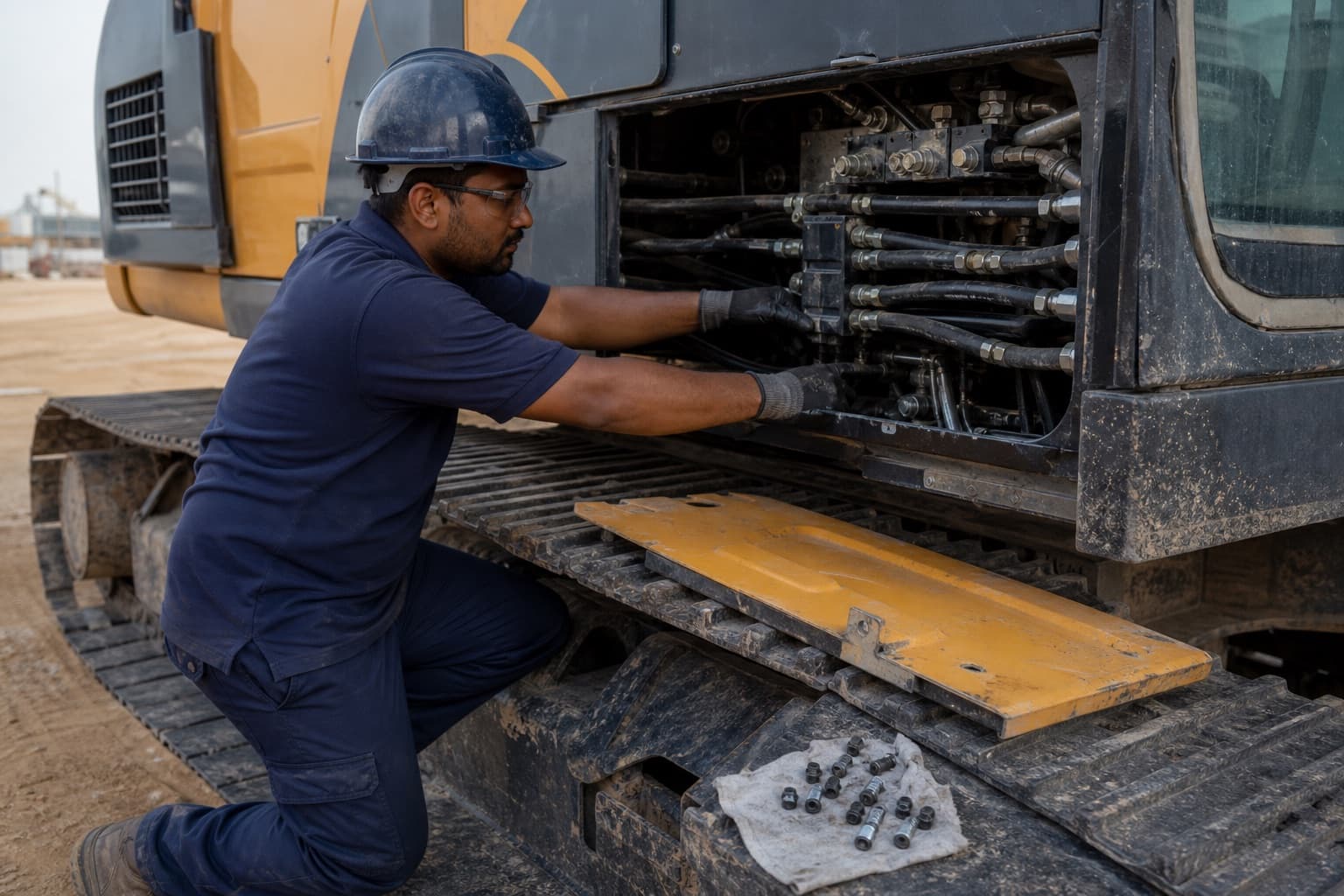
On a machine built in the last fifteen years, getting to the hose takes longer than changing it. Most of that time is spent undoing things nobody photographed.
Small circuits are where the pressures are highest relative to the budget and where the specification is most often copied from whatever the last person used.
Bringing the machine to a workshop is the easy version. This is the other one — what to stage, what to label, and the order of work when the machine cannot move.
The smallest threaded part on the machine, in four thread families that all look alike, and the one that will not take grease at six in the morning is always the one you cannot reach.
The pump that fails three weeks after a hose change did not fail by coincidence. Everything that ruins it entered during the twenty minutes the port was open.
Everyone stacks adapters. Nobody writes down where it stops being acceptable, so here it is — three rules, and the one arrangement that is always wrong.
A cracked female coupler body is not a manufacturing defect and it is not bad luck. It is almost always one of three things, and two of them are avoidable for nothing.
JIC is the default on most of this continent and it deserves to be. It is also the wrong answer in four specific situations, and every one of them is a situation where people keep specifying it anyway.
A bonded seal is sized by the thread it sits under, not by the bore of the fitting or the size printed on the box. That one sentence resolves most of the confusion.
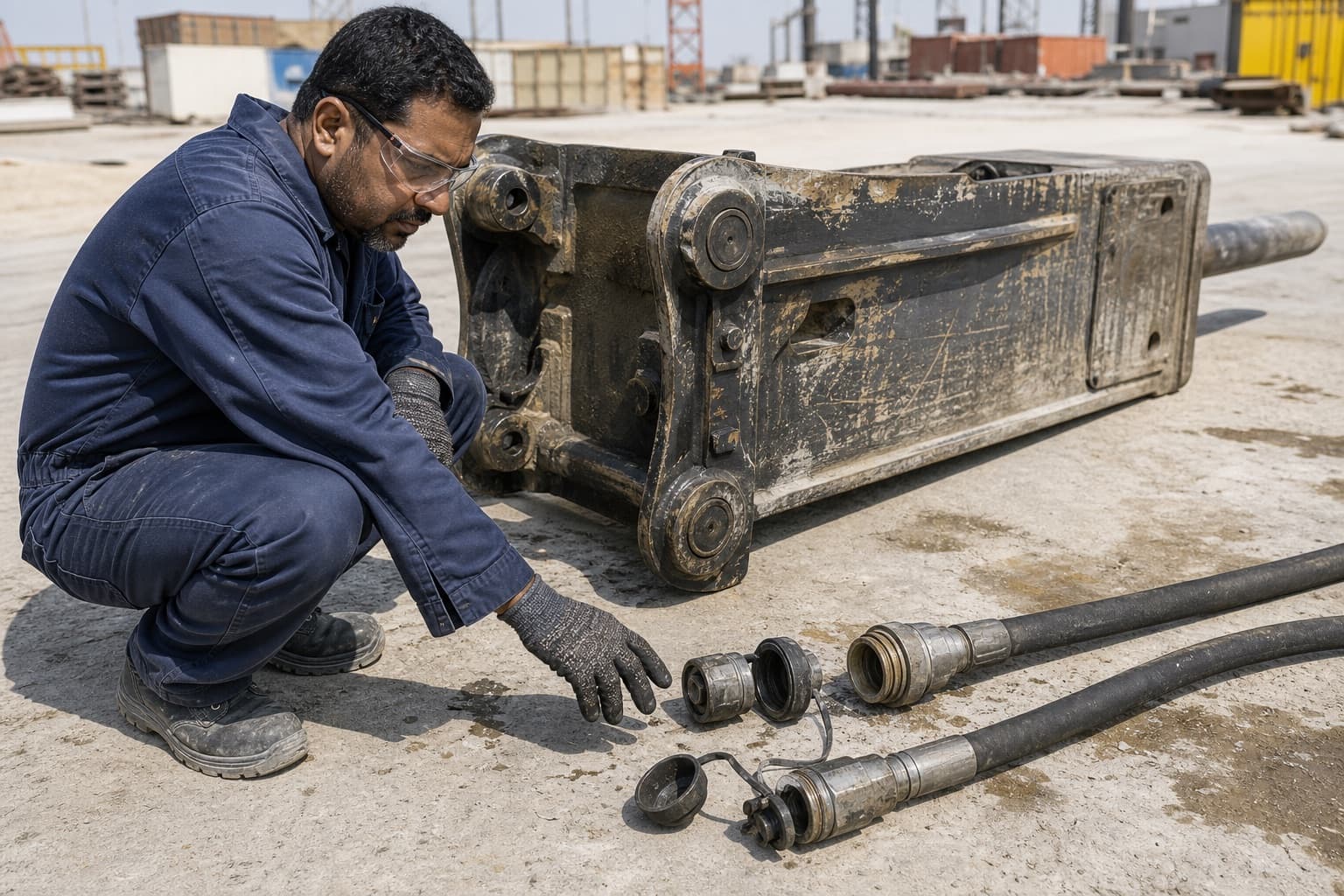
An attachment left in the sun all morning can build enough pressure in a disconnected line to make a coupler impossible to push home. Forcing it is the part that hurts people.
What is recoverable depends on something most people never think about: whether that port seals on the thread or somewhere else. Get that question right and the decision makes itself.
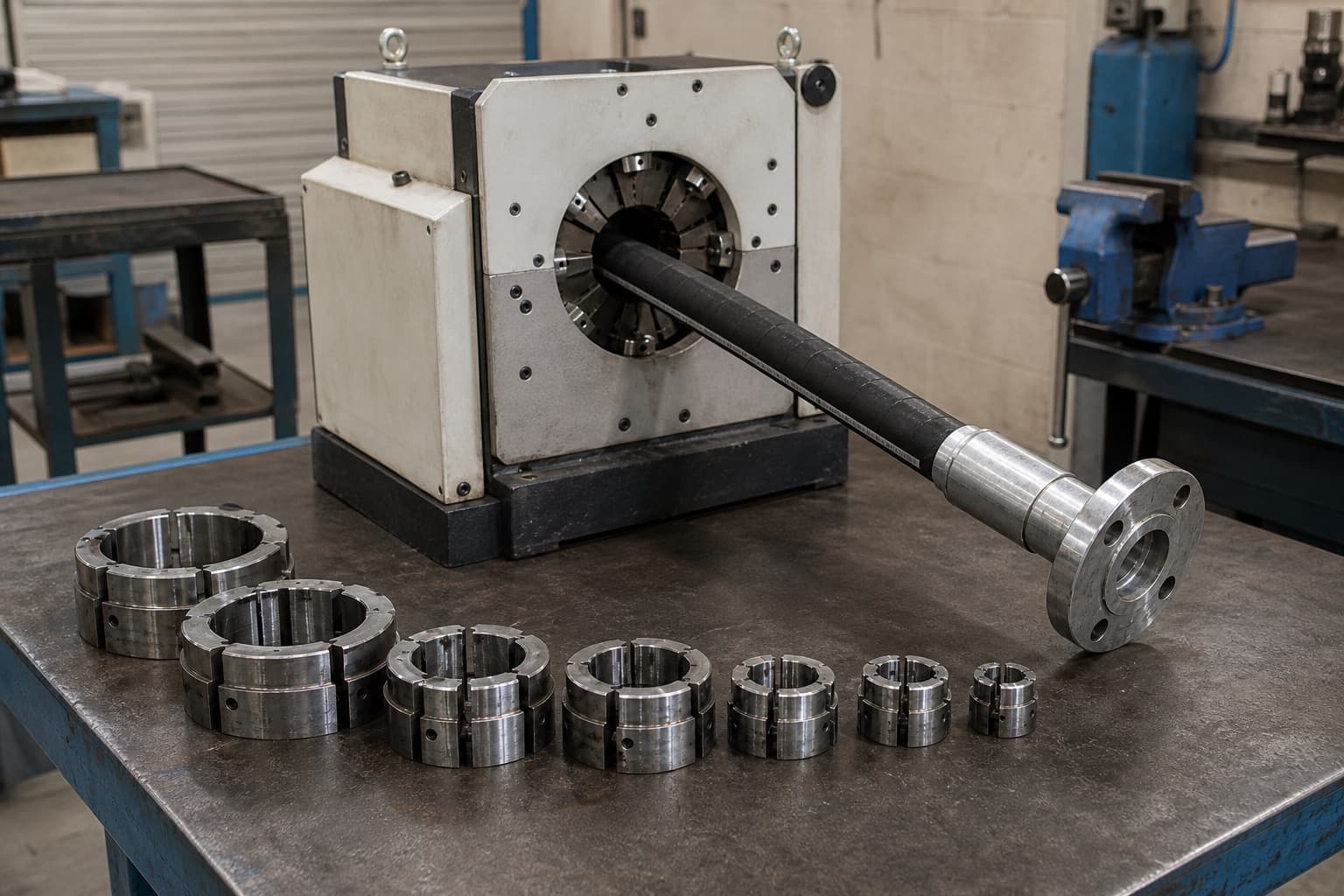
Sometimes the answer is yes. The machine is rarely the expensive part, the dies usually are, and the thing that decides it is not cost at all — it is how far away your machines break down.
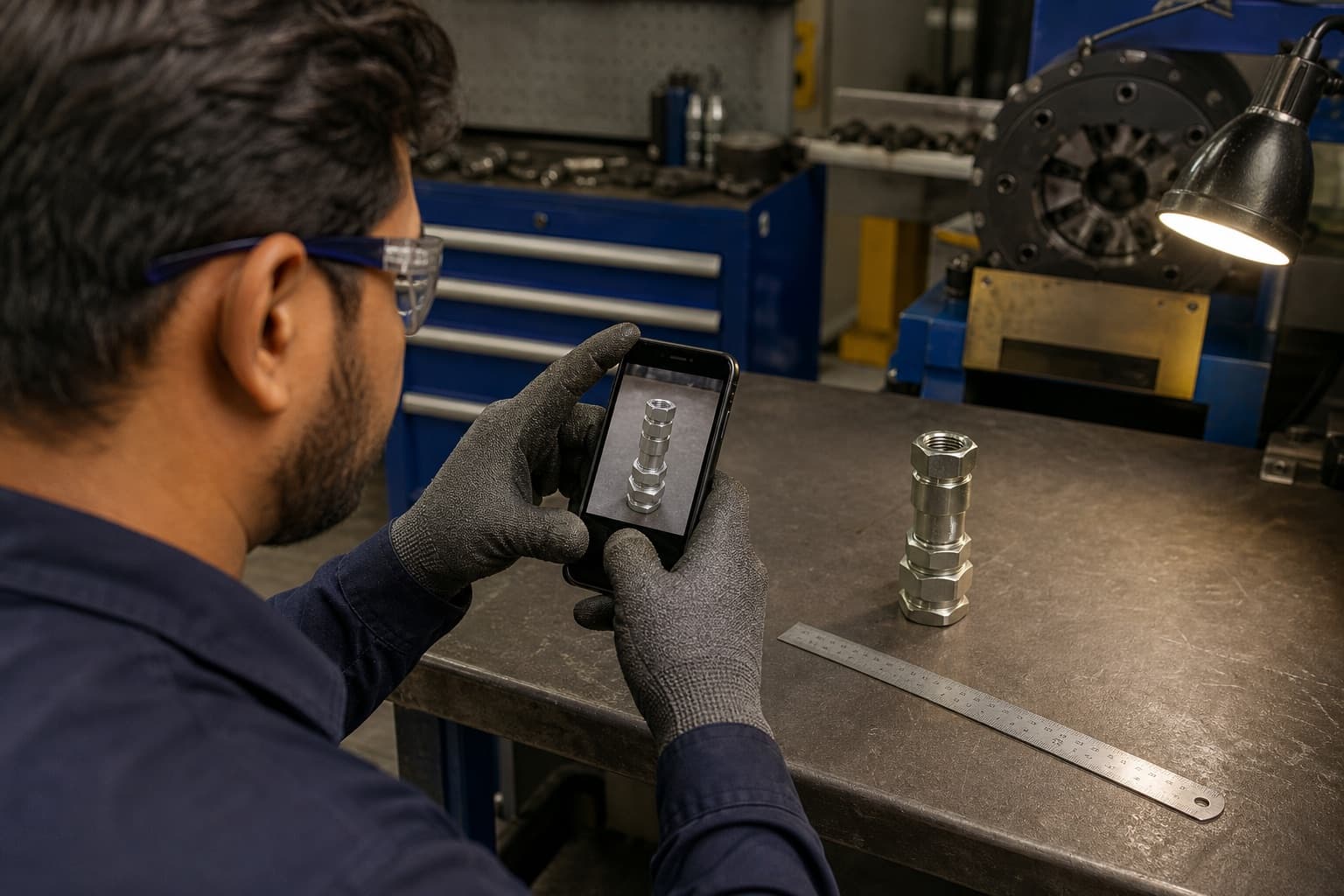
Four photographs and one measurement identify almost any hydraulic fitting remotely. Most requests arrive with one photograph taken at arm’s length, and that one settles nothing.
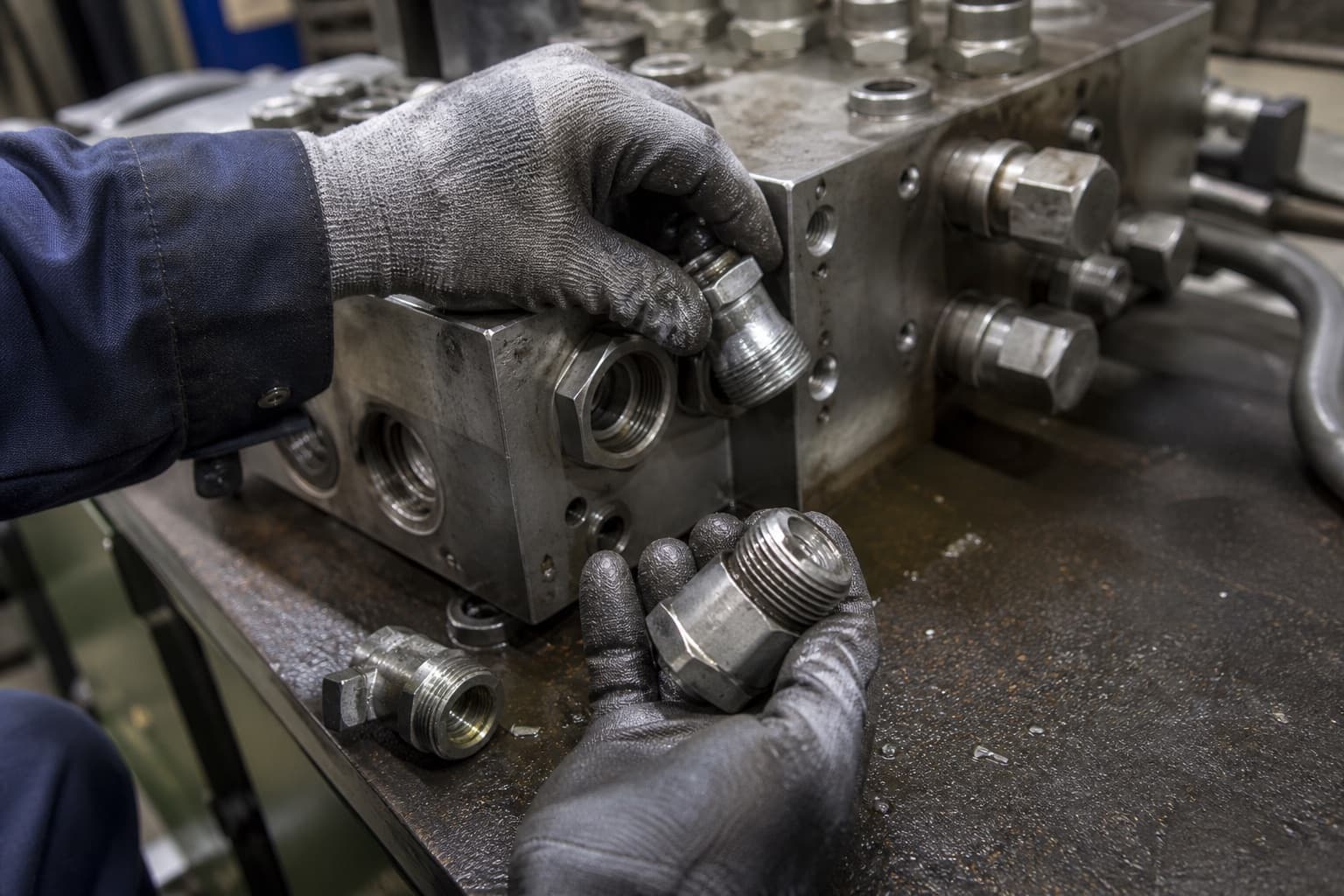
The hose is scrap either way. The manifold behind it is not, and almost every expensive outcome here comes from a decision made in the first five minutes.
Nobody carries a torque wrench up a boom. The method that works without one is a published one, it is specific to each connector family, and it is the reason two fitters get different results on the same joint.
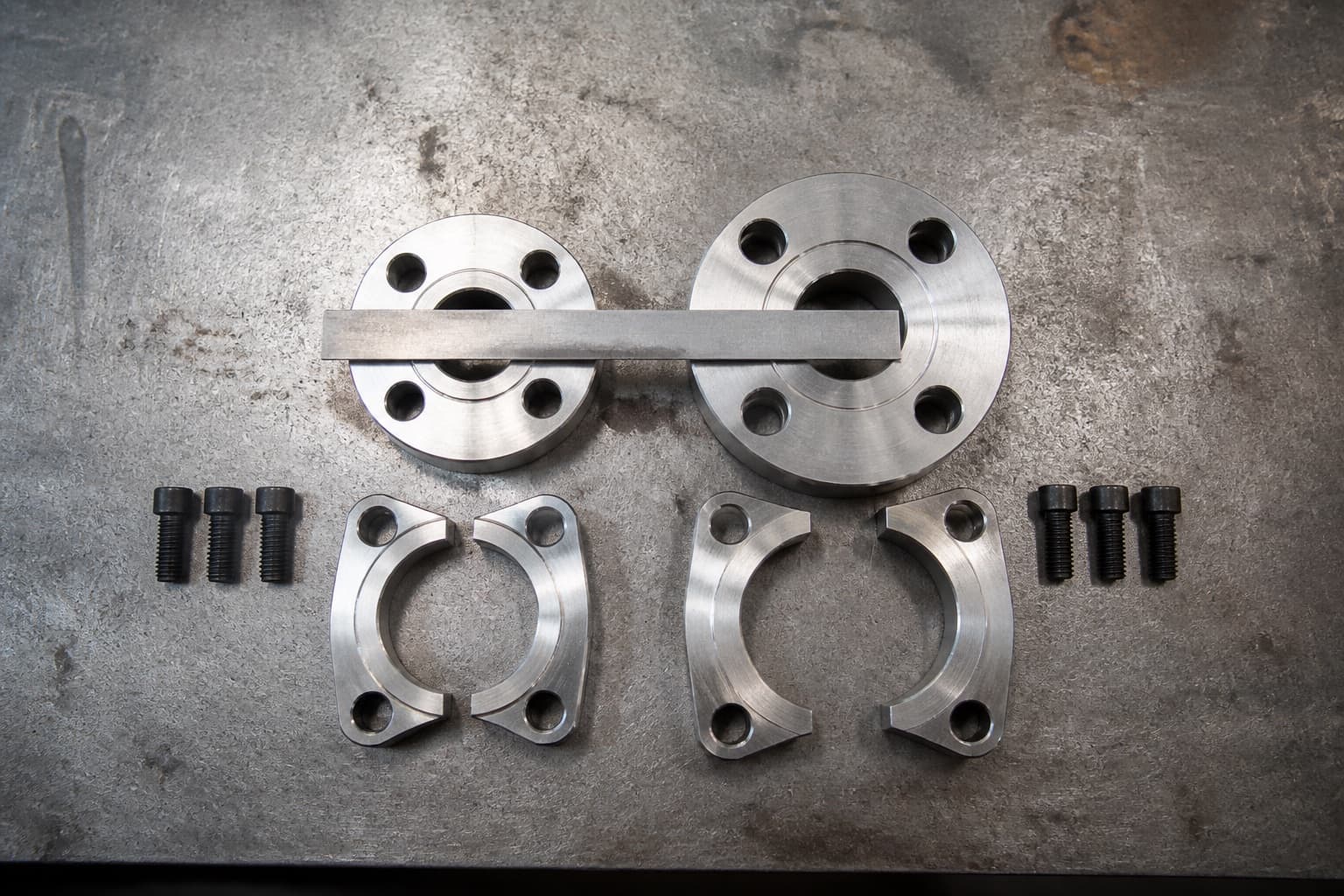
Two split-flange halves for the same bore, one rated for far more pressure than the other, and almost nothing on the part to say which is which. The measurement that settles it takes ten seconds.
A hose fitted this morning is damp by the afternoon. The crimp is the last thing to suspect, not the first — and there are five checks ahead of it that take a minute each.
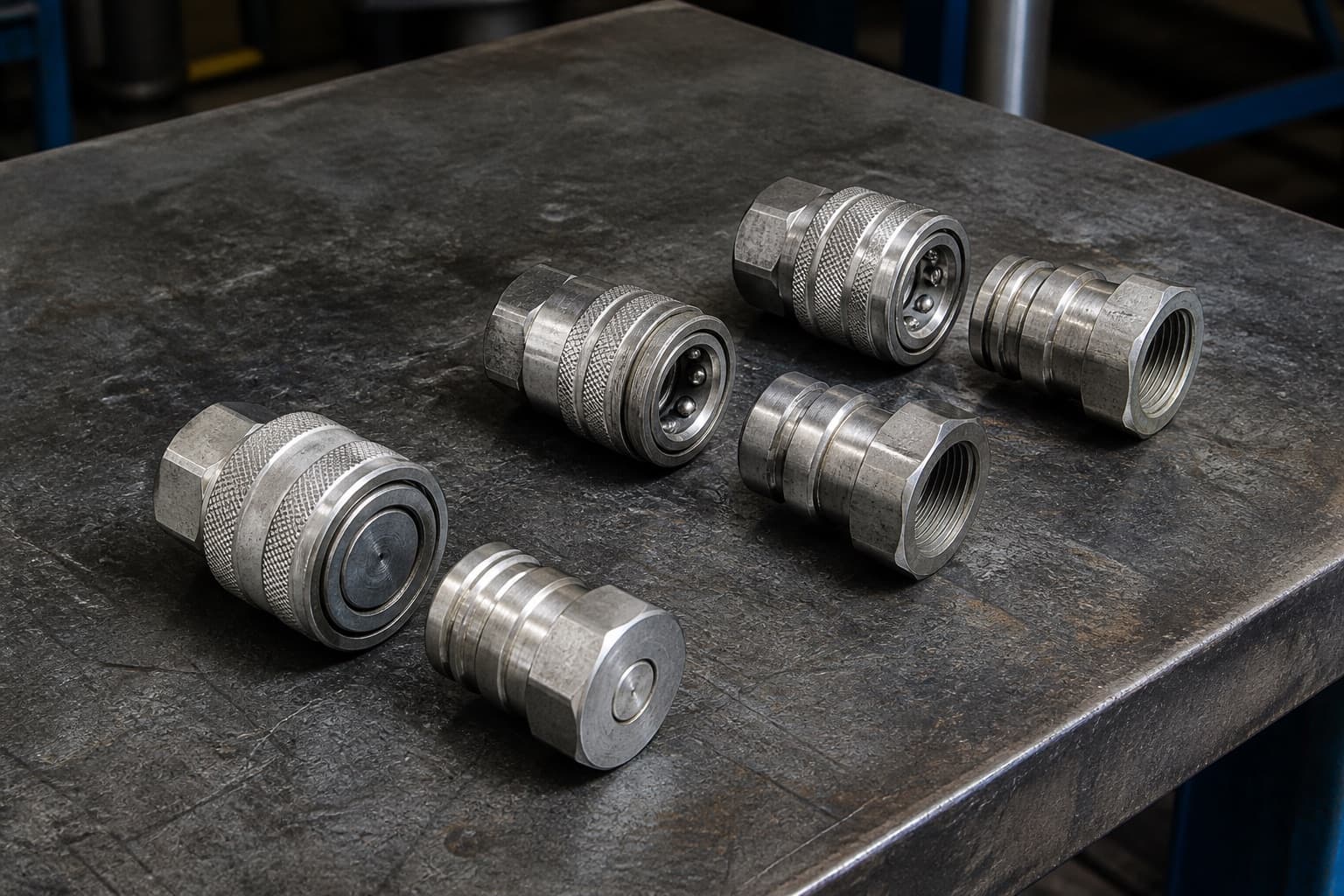
Two couplers of the same nominal size, the same thread and the same brand will refuse to mate if one is Series A and the other Series B. Here is how to tell which you have before you order.
A tapered thread seals on the thread itself, which is why it needs help. Every other connector on the machine seals somewhere else, which is why putting tape on it makes the leak worse.
A kit is not a box of spare hoses. It is a decision about which failures you are prepared to have unplanned — written down, priced, and put on a shelf before it is needed.
The problem with an unbranded fitting is not that it is cheap. It is that nobody can tell you its crimp specification, its material or its pressure rating — so the assembly built from it has no stated rating at all.
Buying hose on a reel and crimping your own looks cheaper and sometimes is. The decision turns on whether you can state a crimp diameter and prove you hit it.
Three quite different situations get described as "lead time", and they differ by orders of magnitude. Knowing which one you are in is what lets you plan rather than chase.
Stocking everything is expensive and stocking nothing is worse. The useful question is not what fails most often — it is what stops the most valuable thing for the longest.
Two assemblies of the same length can differ several-fold in price, and the reason is almost never the rubber. Here is what moves the number, so a quote can be read rather than just accepted.
Most quote requests come back with a question rather than a price, and it is nearly always the same handful of missing details. Here is what to include so the first reply is a number.
Somebody hands you a part number from a brand you cannot buy locally. Here is how to find something that genuinely replaces it — and why the cross-reference tables you will find online are not evidence.
A collection vehicle compacts a few hundred times a shift, in traffic, all year. Its hydraulics work harder than most construction plant and get maintained like a truck rather than like a machine.
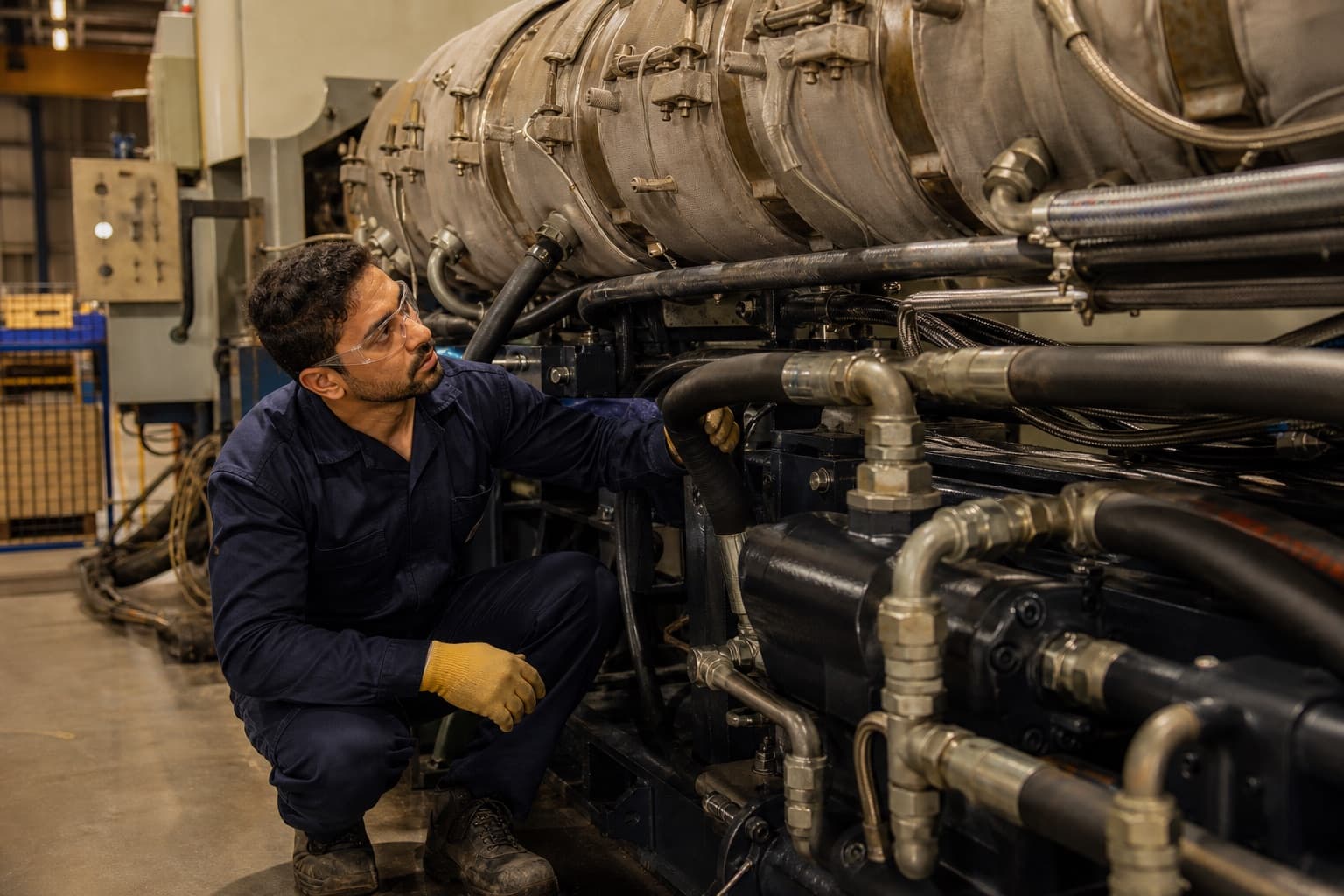
A moulding machine sits still in a clean factory and eats hoses anyway. The hoses are not being flexed or abraded — they are being cooked, next to a barrel that runs hot all day.
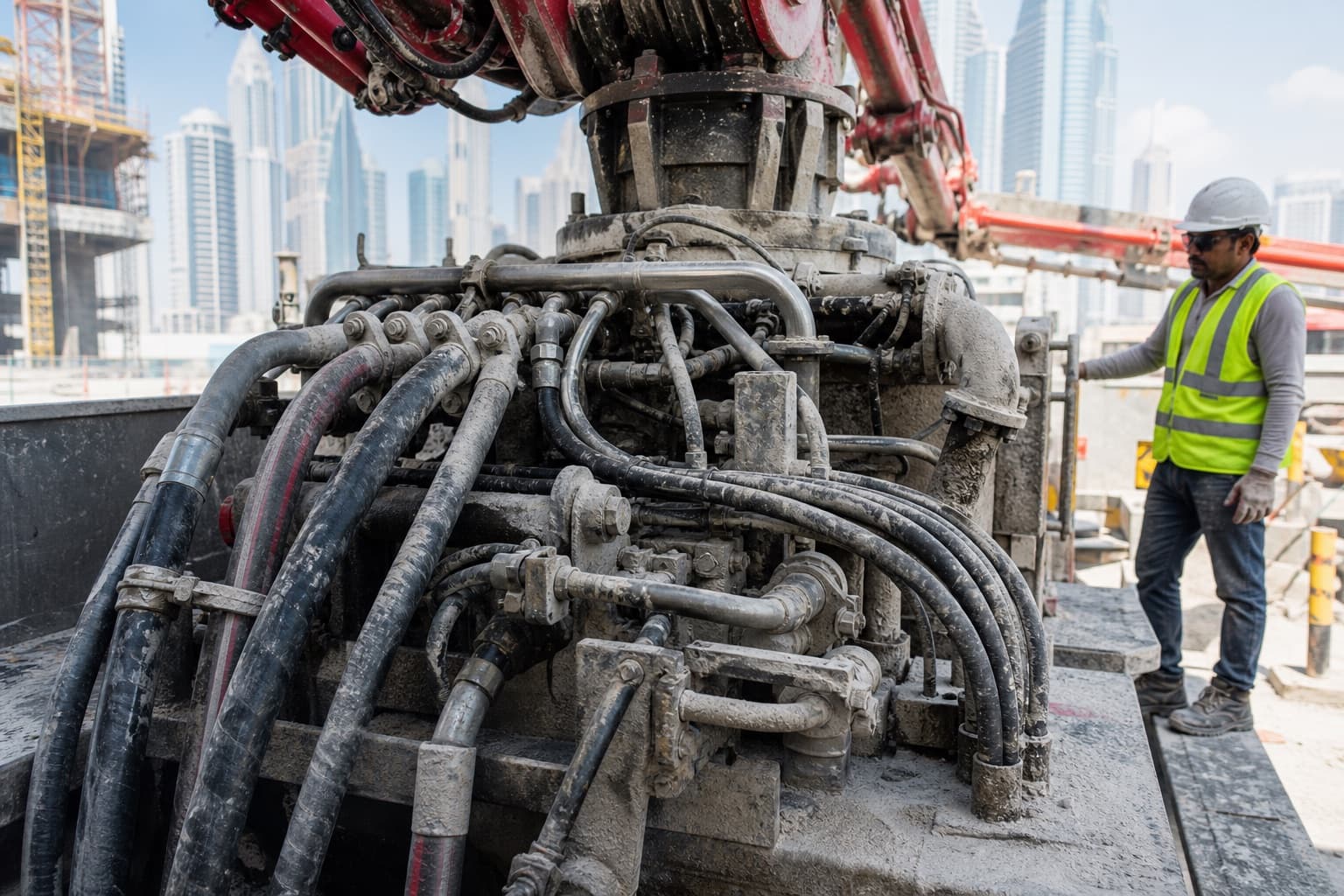
A truck-mounted pump runs pumping pressures well above ordinary construction plant, on a duty cycle that reverses continuously. Do not confuse the hydraulic hoses with the delivery hose — they are different problems entirely.
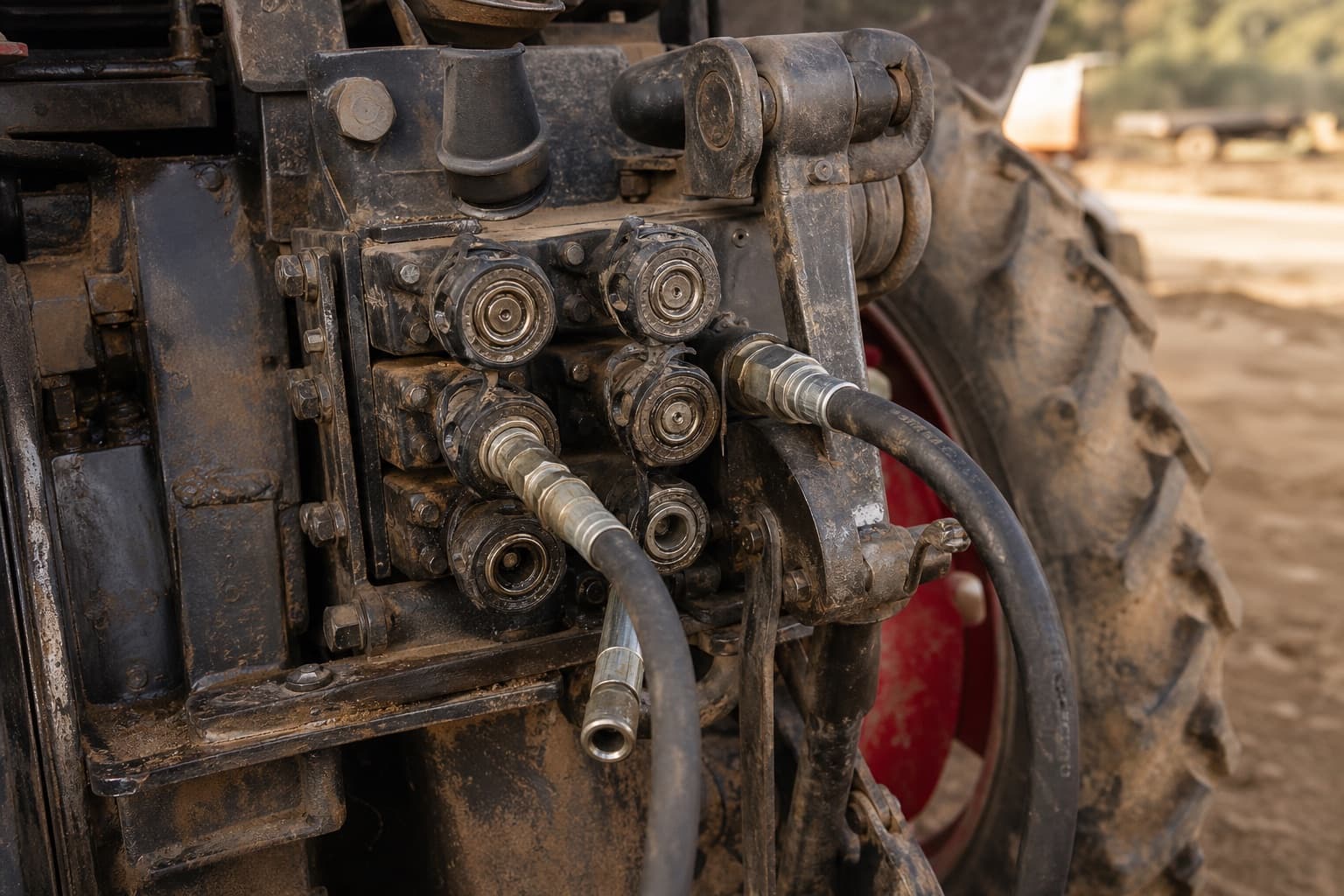
Agricultural hydraulics run on a coupler standard that has barely changed in decades, which is why a 1990s implement still connects to a new tractor — and why grit gets into everything.
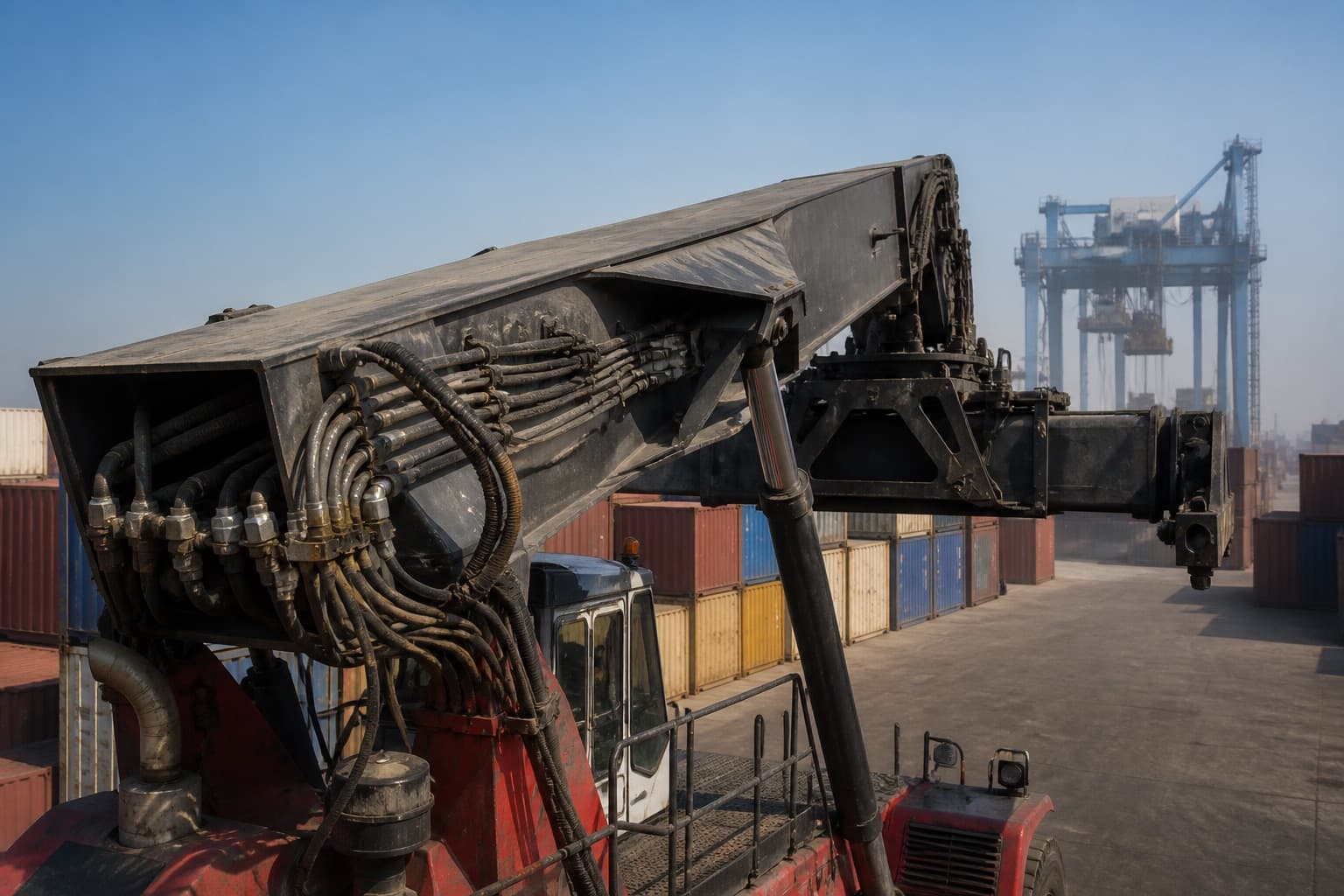
Port equipment combines the two hardest things: coastal corrosion and a duty cycle that never stops. Neither is an argument for a different hose. Both are arguments for a different regime.
Access equipment carries people. That changes what a hose replacement is — not a repair, but a modification to a machine whose certification assumes it is in the condition it was inspected in.
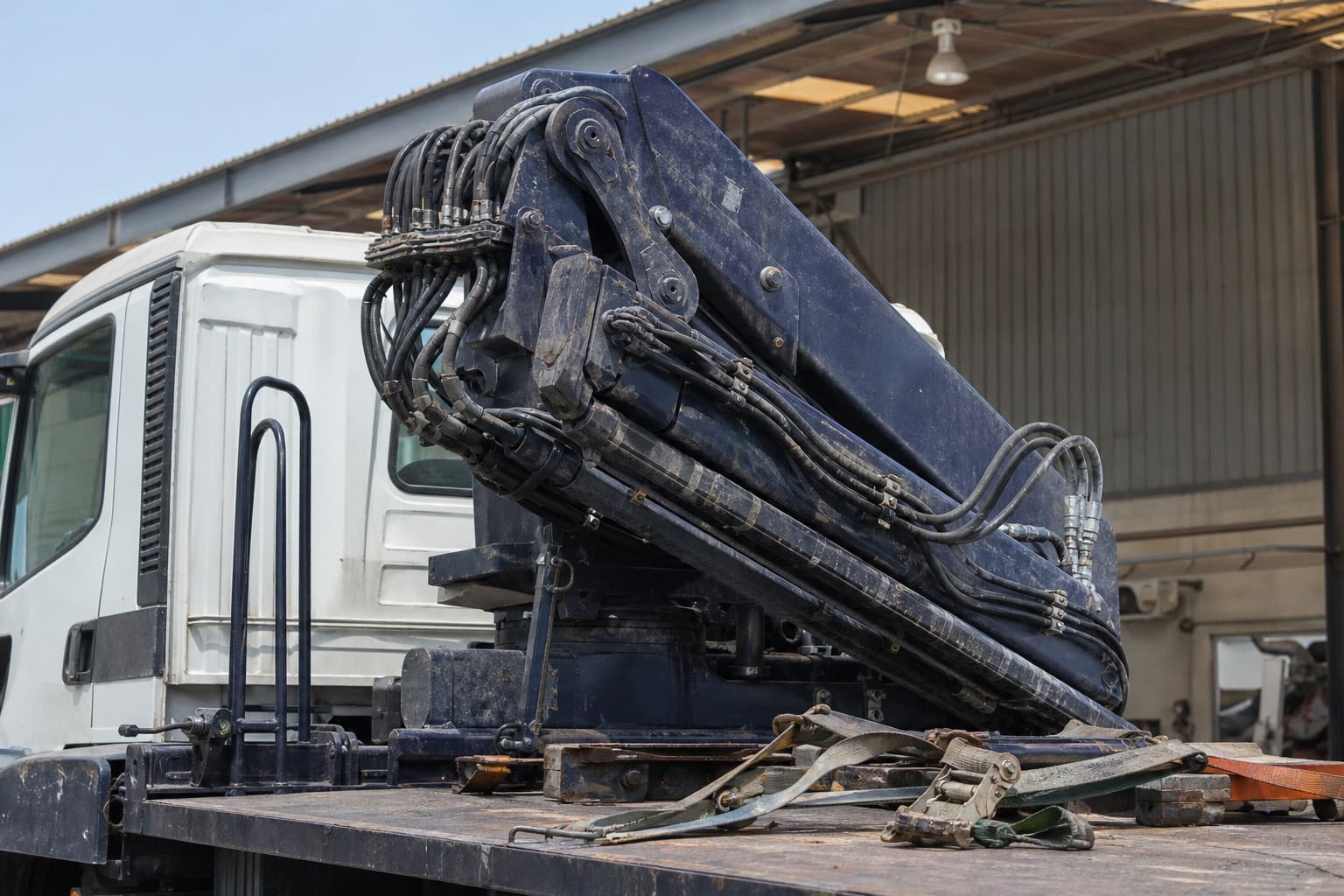
A lorry loader spends its life folded up and driven around, then unfolds and lifts. The hoses have to survive both, and the routing that suits one position rarely suits the other.
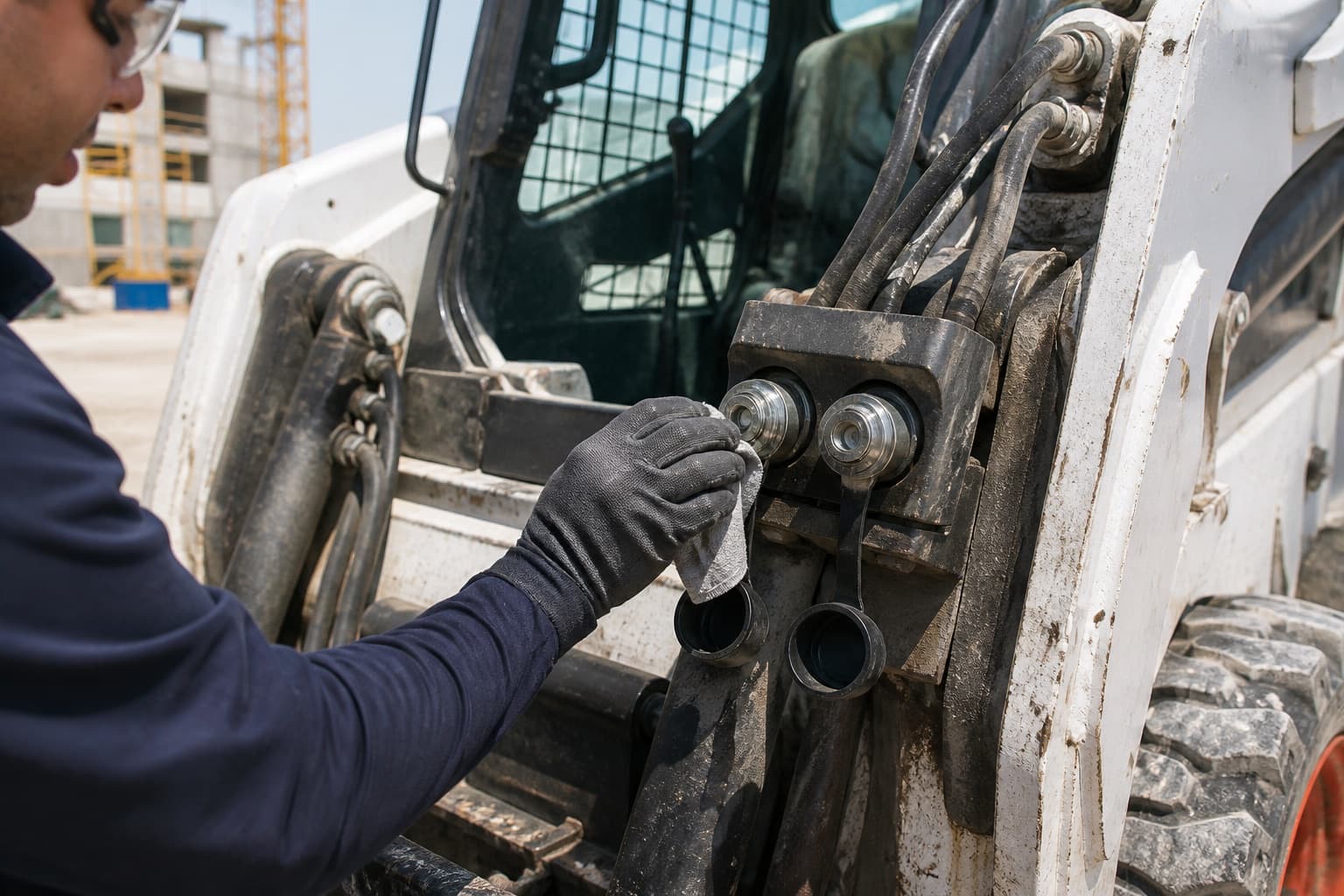
A skid steer changes attachments several times a day, and every change is a chance to connect a dirty coupler. On these machines the failure is more often contamination than a burst hose.
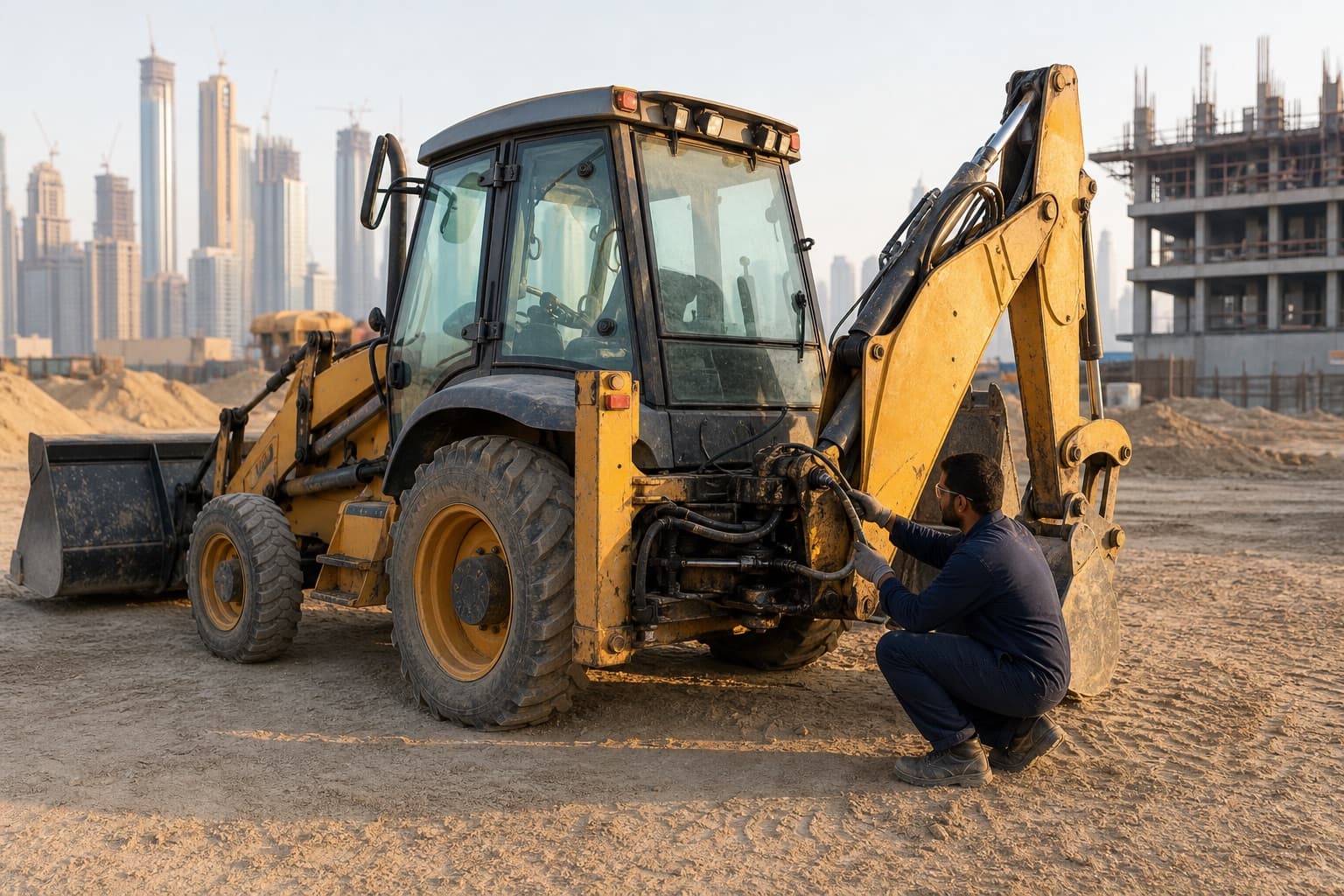
The front end is a loader and the back end is an excavator, and they fail in different ways for different reasons. Which end stopped tells you most of what you need before you look at anything.
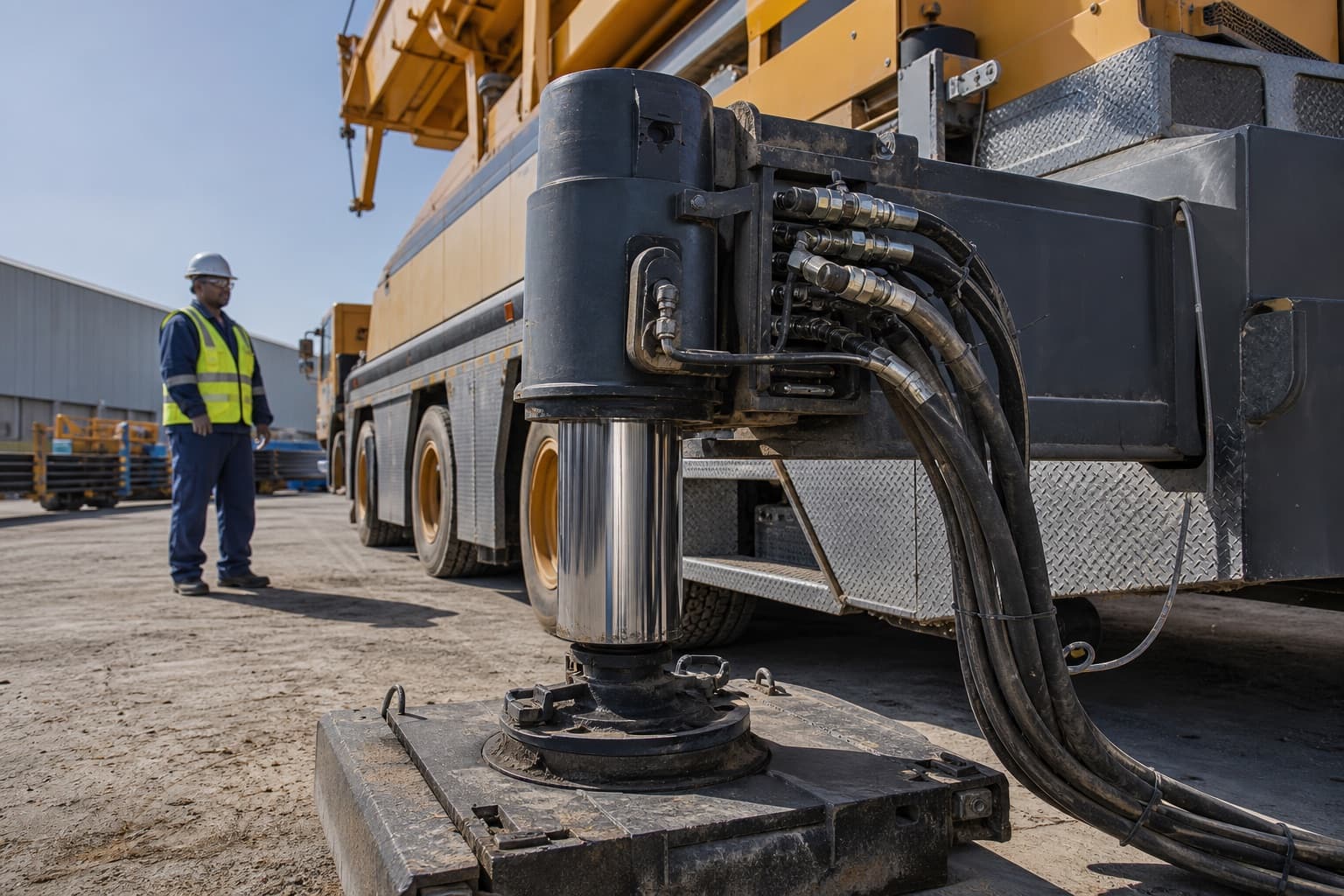
On most machines a hose failure stops work. On a crane, some of them drop a load. Which circuit a hose belongs to decides whether it is a maintenance item or a safety-critical component.
Three circuits, and the one that failed decides how urgent this is. A loader that will not lift can be parked. A loader that has lost steering cannot be driven anywhere.
Brine, chlorine, antiscalants and cleaning chemicals all pass through hose on a desalination plant, and they are chemically very different from each other. Selecting on "water" gets it wrong.
Four things change at once between March and August, and they compound. Hotter fluid, hotter ambient, thinner oil and longer running hours all push in the same direction on the same components.
Hose ages whether or not it is fitted to anything, and a hot open store in the UAE ages it faster than the figure on a datasheet assumes. The widely quoted shelf-life numbers are also attributed to the wrong standard.
Offshore, the hose is often the least of it. Carbon-steel fittings in a splash zone corrode on a schedule nobody planned for, and a seized fitting is a different kind of problem from a worn hose.
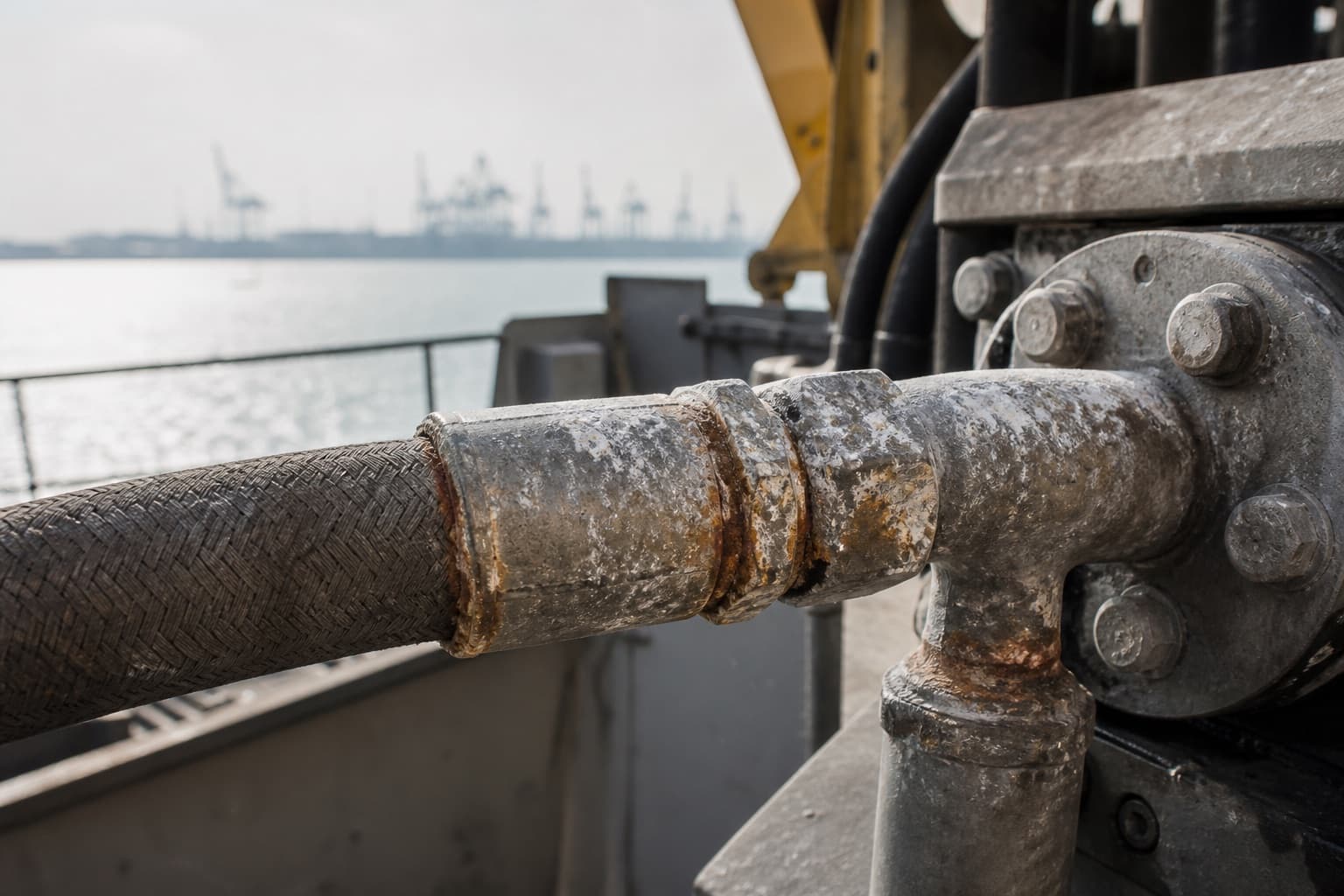
The corrosion mechanism is the same everywhere. What changes near the sea is the speed — and because the reinforcement corrodes invisibly, speed is the whole problem.
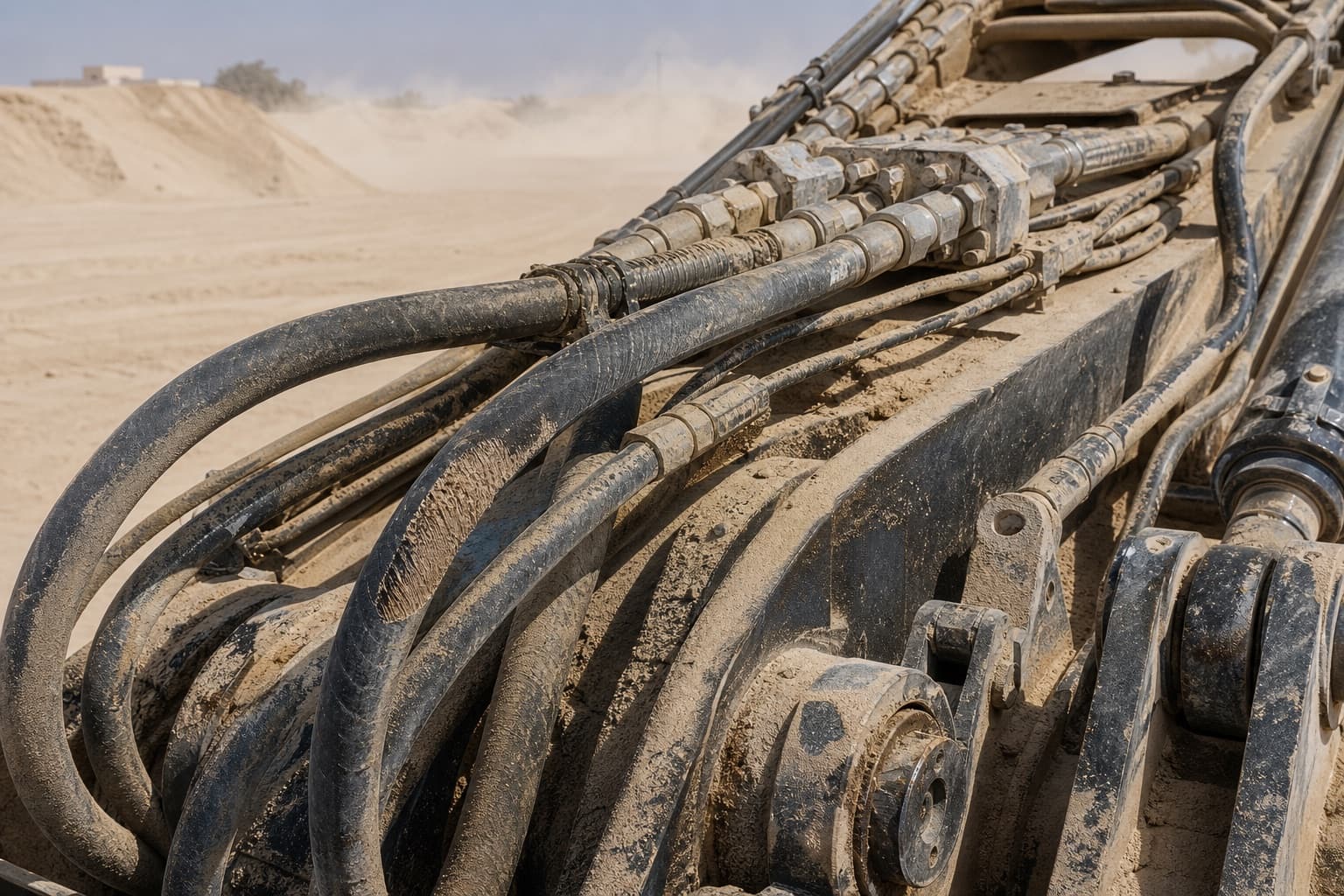
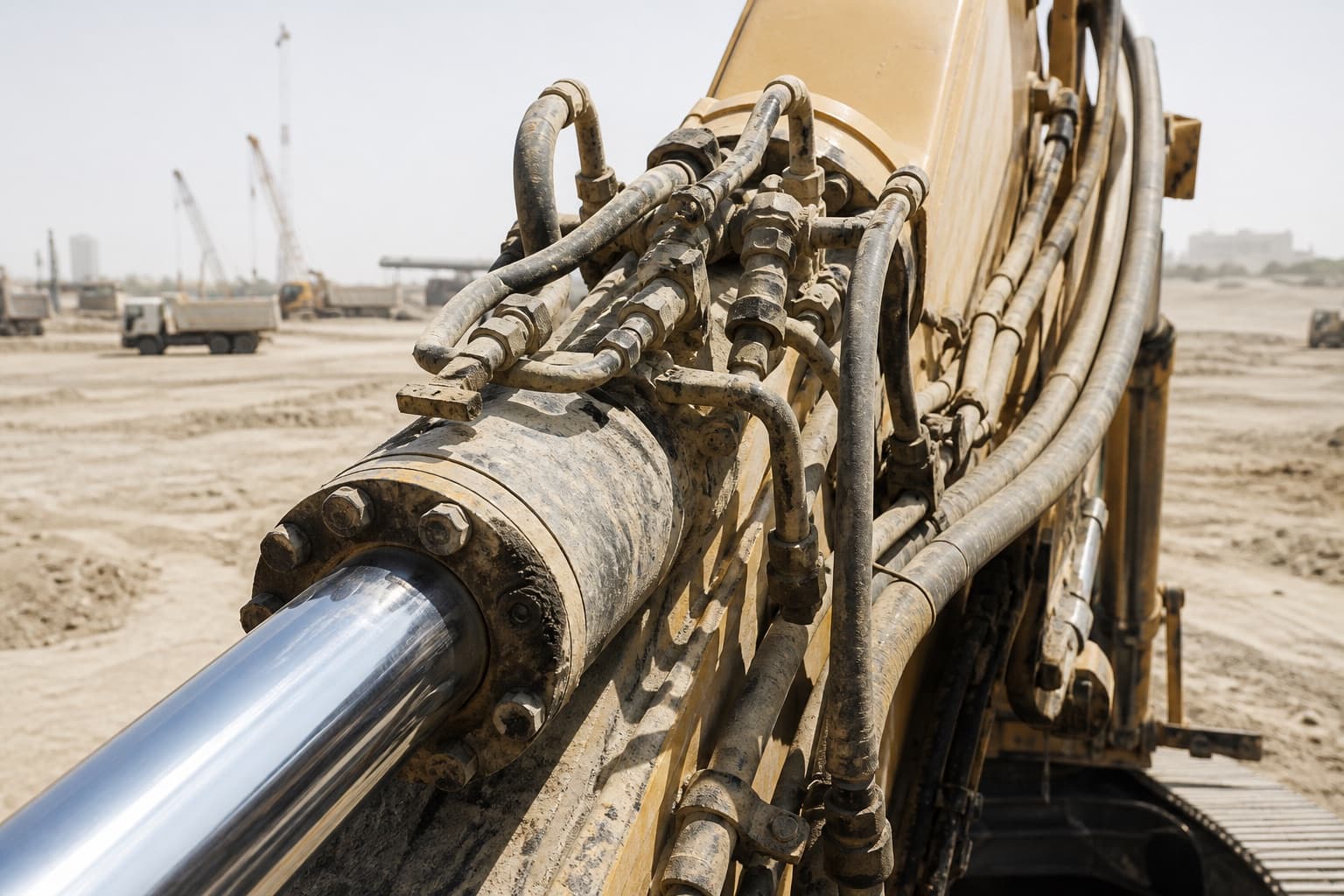
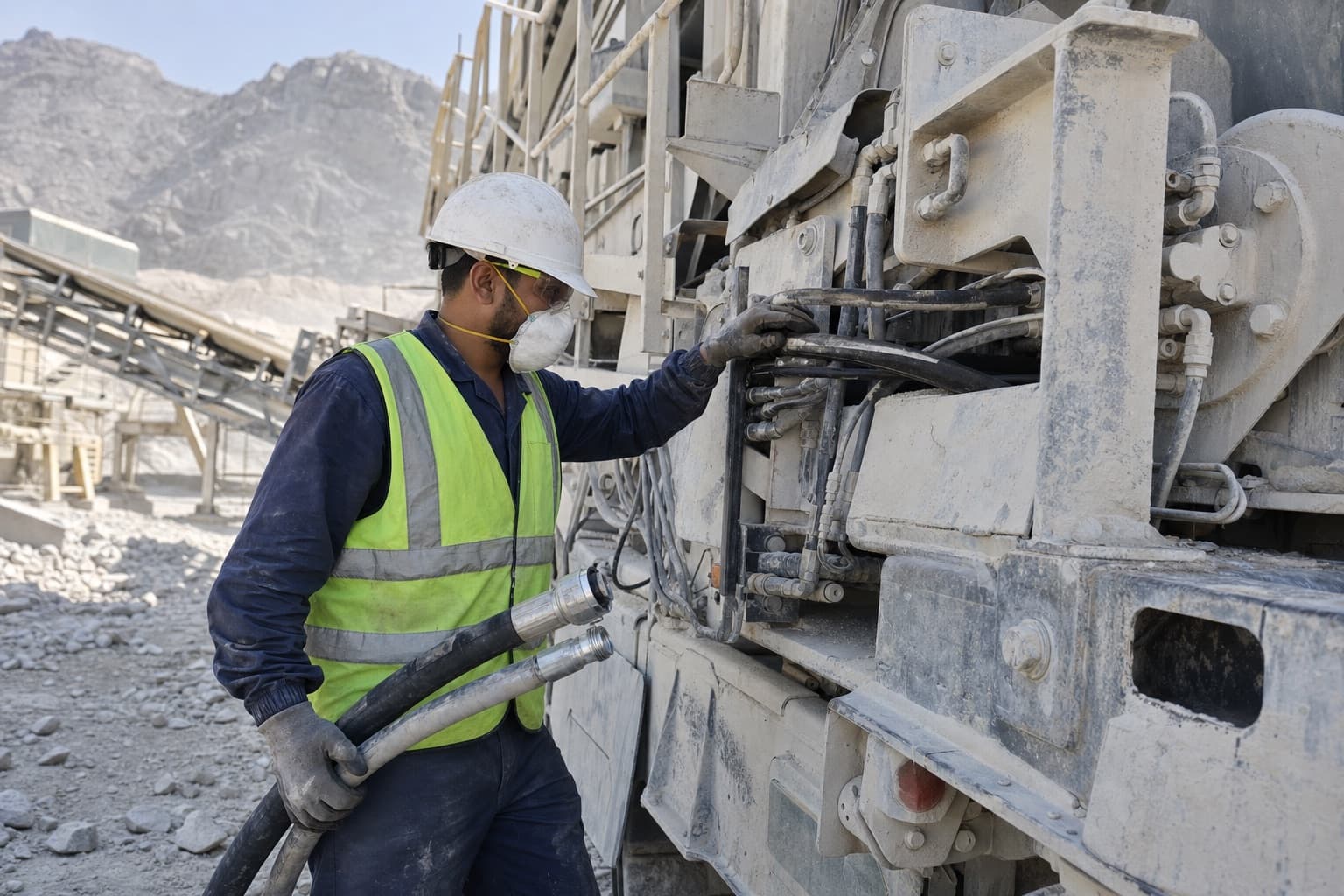
On a desert site the hose is not rubbing against a bracket. It is rubbing against a bracket through a layer of sand — and that changes both how fast the cover goes and what actually stops it.
UV and ozone both attack rubber, they attack it in different places, and neither needs the hose to be doing anything. A spare on a rack in a Gulf yard is being damaged as surely as one in service.
Hose temperature ratings are written for the fluid inside. In a UAE summer the hose is also being heated from outside, by air near 50 °C, by sun on the cover and by radiation off the machine — and none of that is in the rating.
Most hose failures get replaced, not investigated, so the same position fails again next quarter. This is the record that turns a replacement into a fix — eleven fields, five minutes, and no special equipment.
A crimp is a measured diameter with a tolerance in tenths of a millimetre. Miss it in either direction and the assembly fails — but it fails differently, and the difference is visible on the failed part.
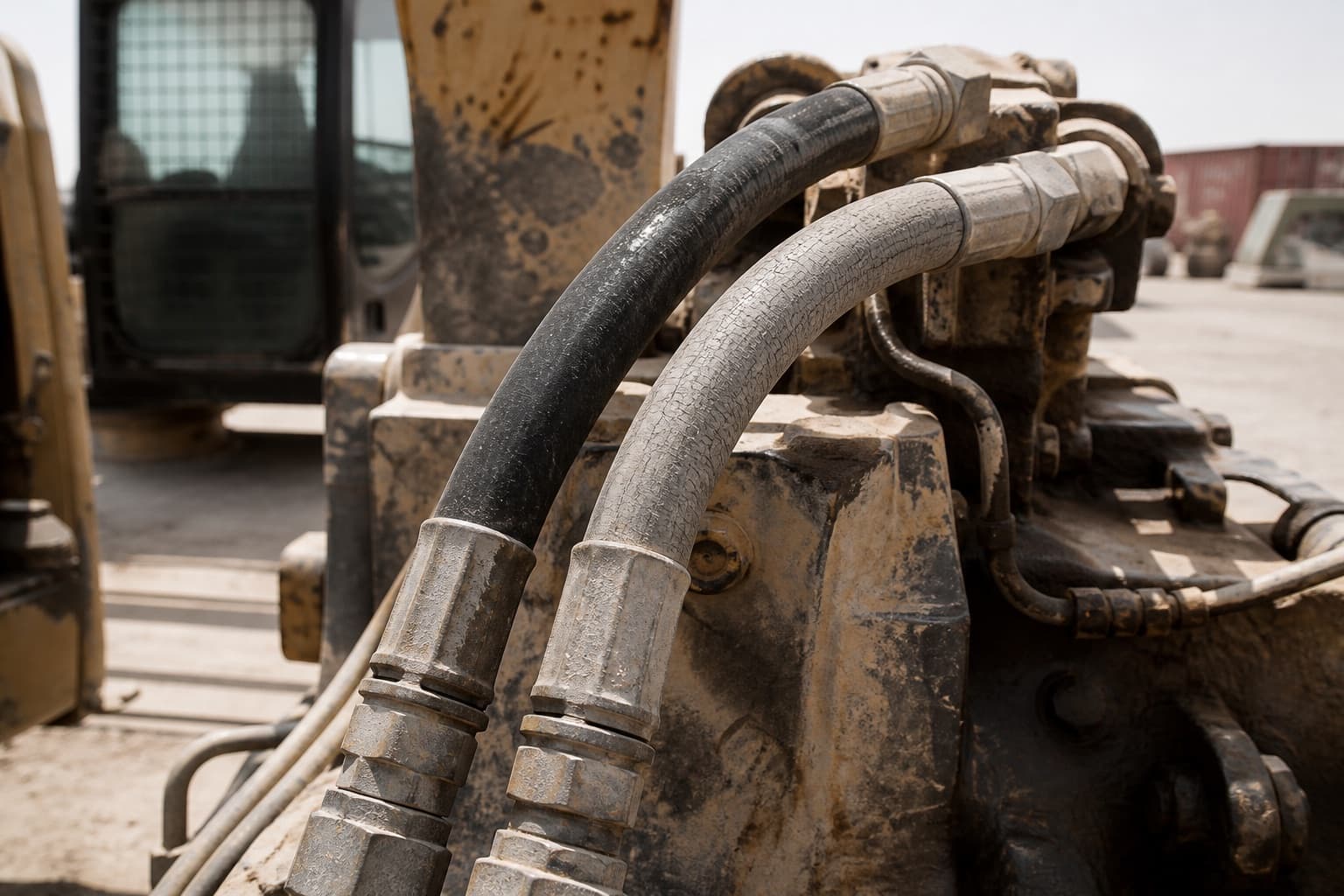
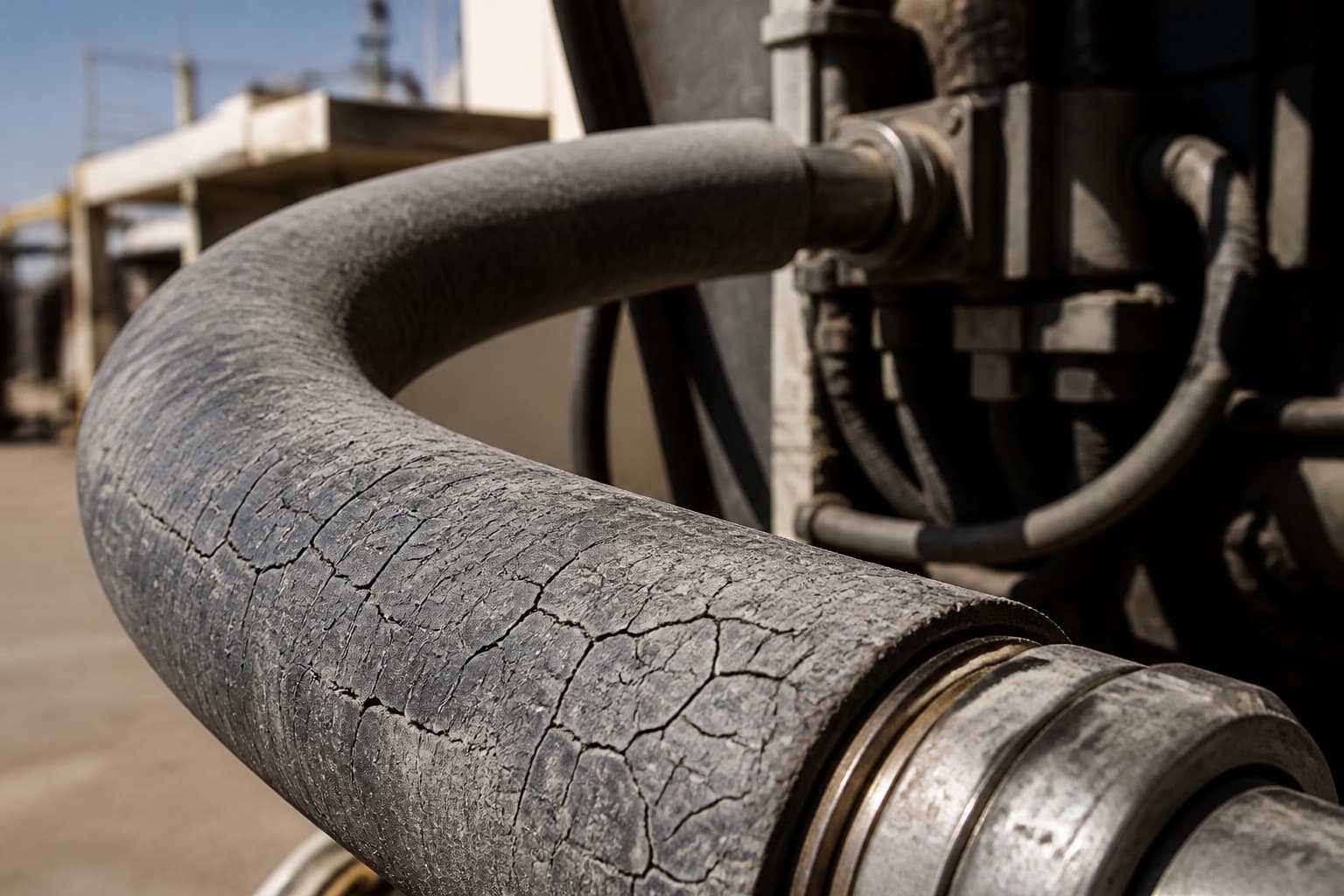
A cover covered in fine cracks has been cooked, or has been sitting in sunlight and still air. The crack pattern separates them, and only one of the two is fixed by moving the hose.
Cut a failed hose open and the tube tells you whether the fluid was wrong. Swollen and soft is one problem, shrunken and brittle is the opposite one, and both mean the hose and the fluid were never suited.
A hose bent tighter than its rated radius is damaged whether or not it looks it. The fix is almost never a more flexible hose — it is turning the line at the fitting instead of at the hose.
A hose fitted with a twist in it has been failing since the moment it was tightened. The layline shows you immediately, it takes seconds to check, and almost nobody does.
The most preventable hose failure there is. A hose worn flat on one side has been telling you where it touches something for months — and the wear pattern points straight at the cause.
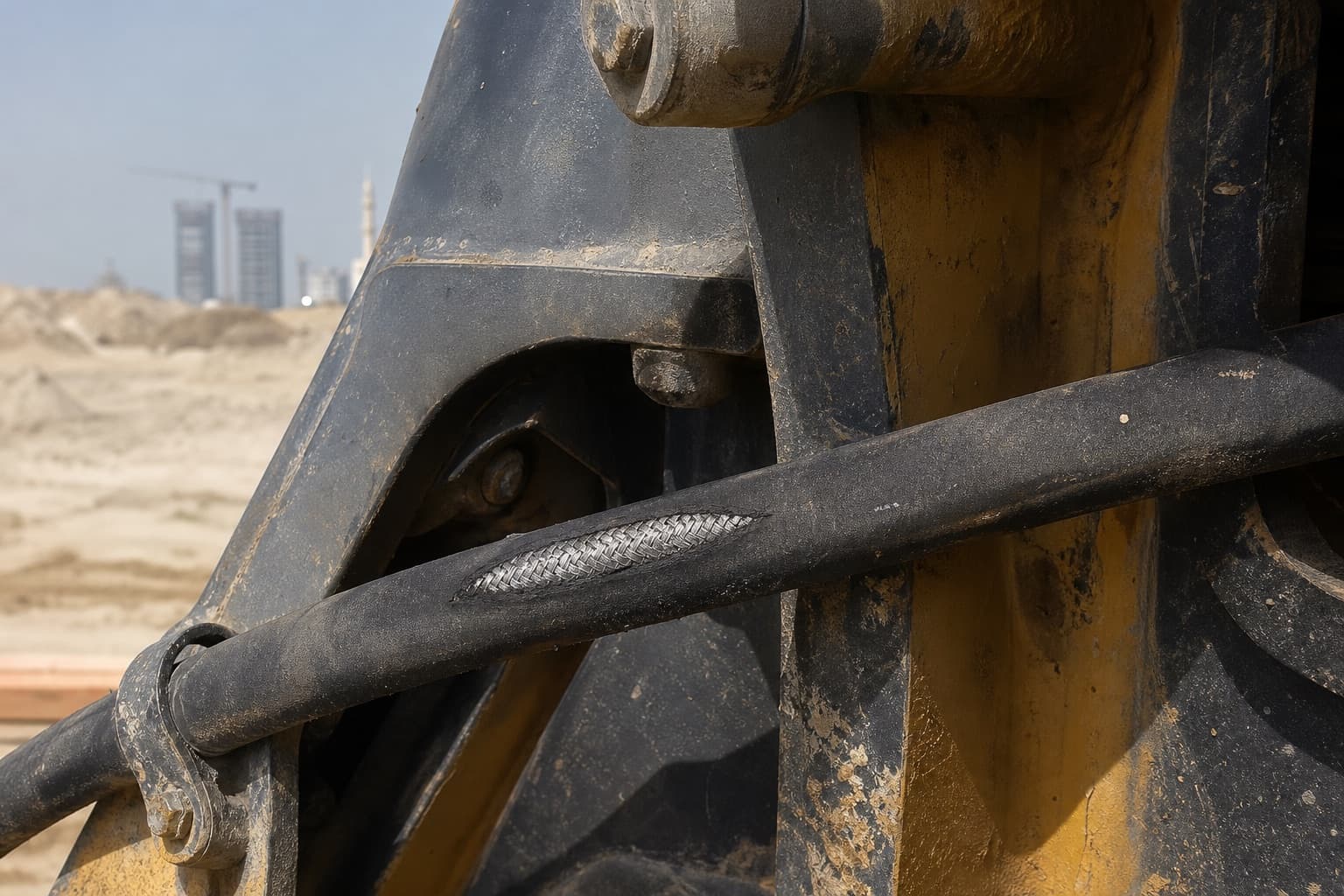
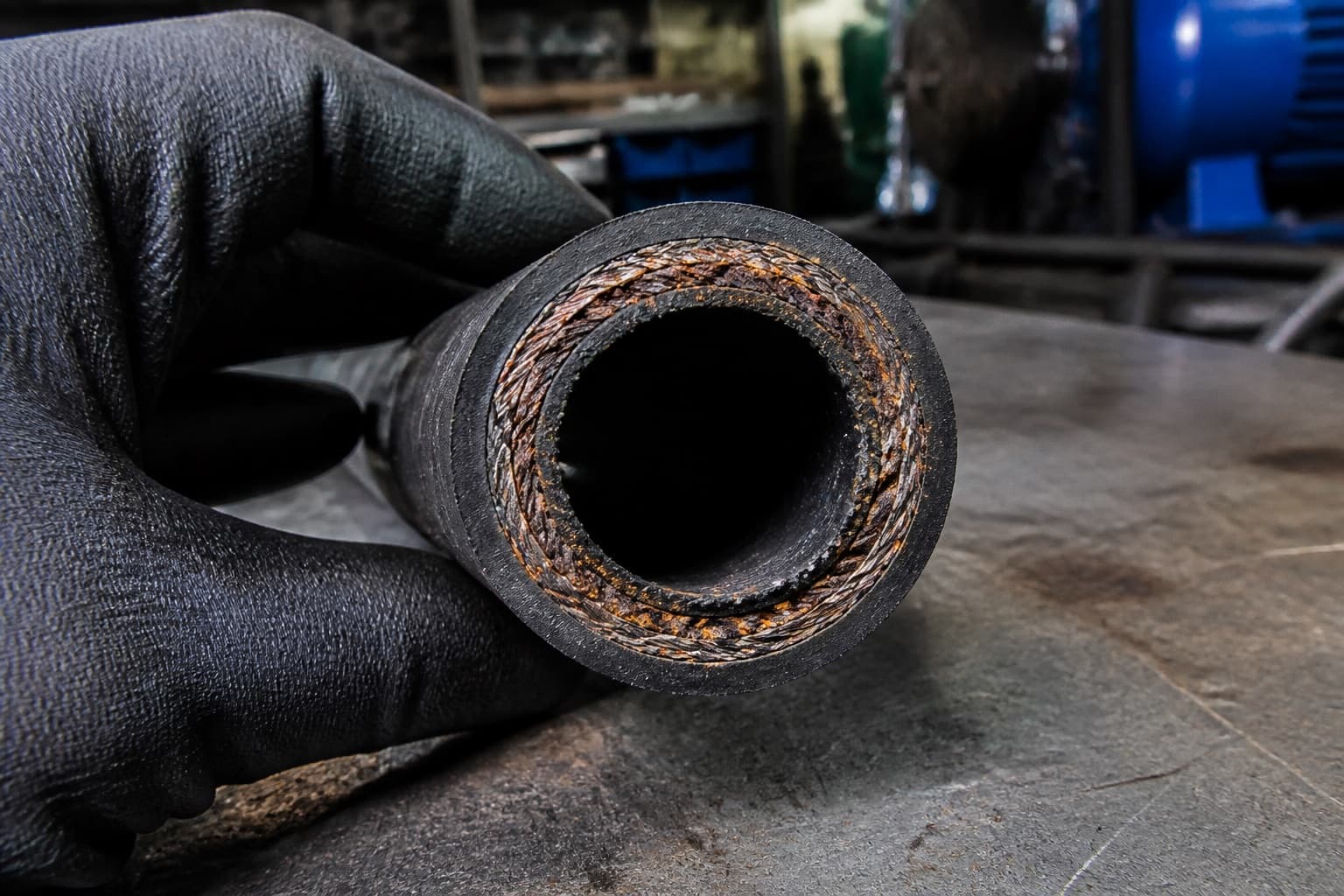
A hose can look perfect and have rusted reinforcement. The cover is not waterproof once anything has broken its surface, and in a coastal climate the wire goes long before the rubber shows anything.
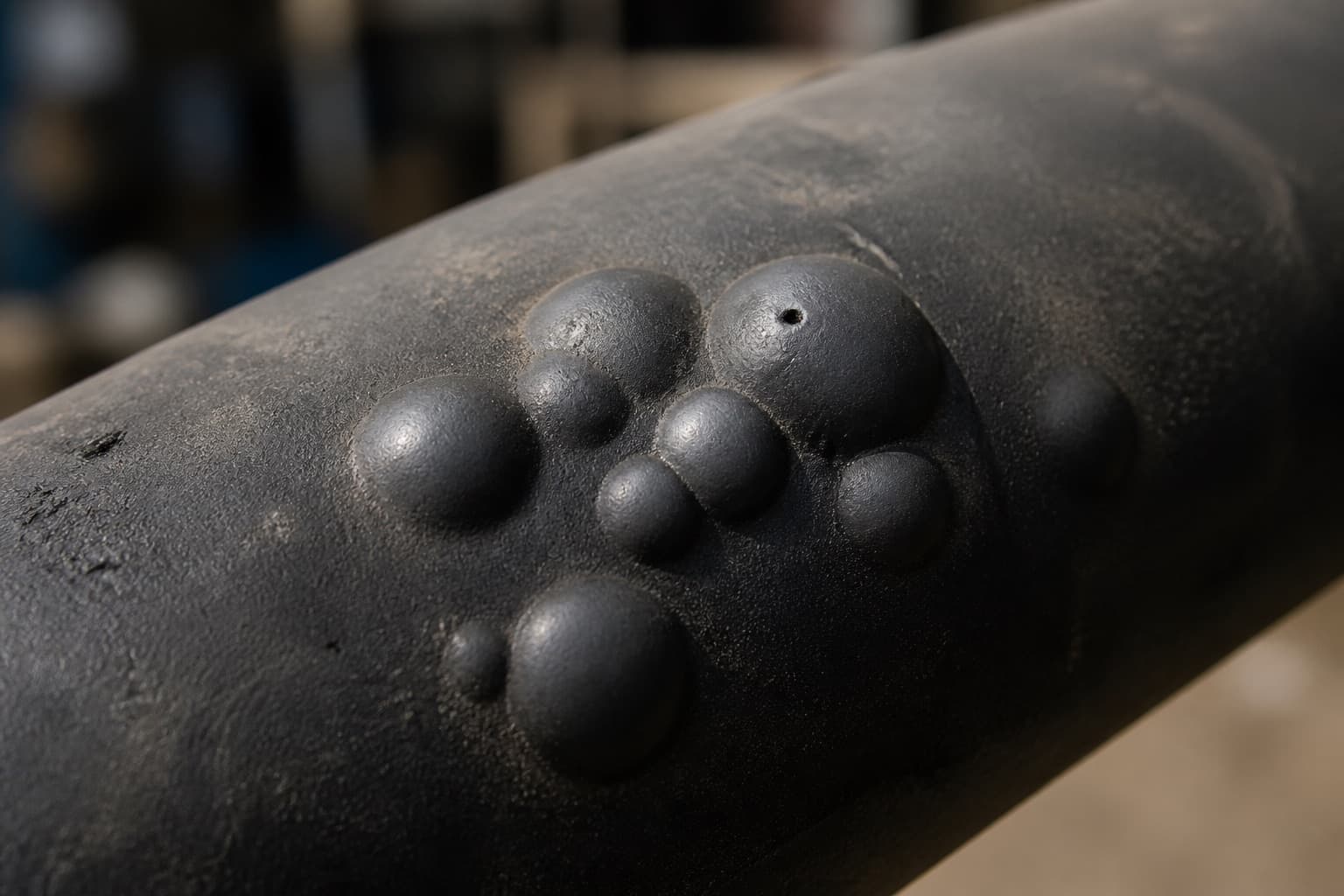
A bubble under the cover looks like a manufacturing fault and normally is not. It is gas that got through the tube and could not get out through the cover — which tells you something specific about the fluid and the duty.
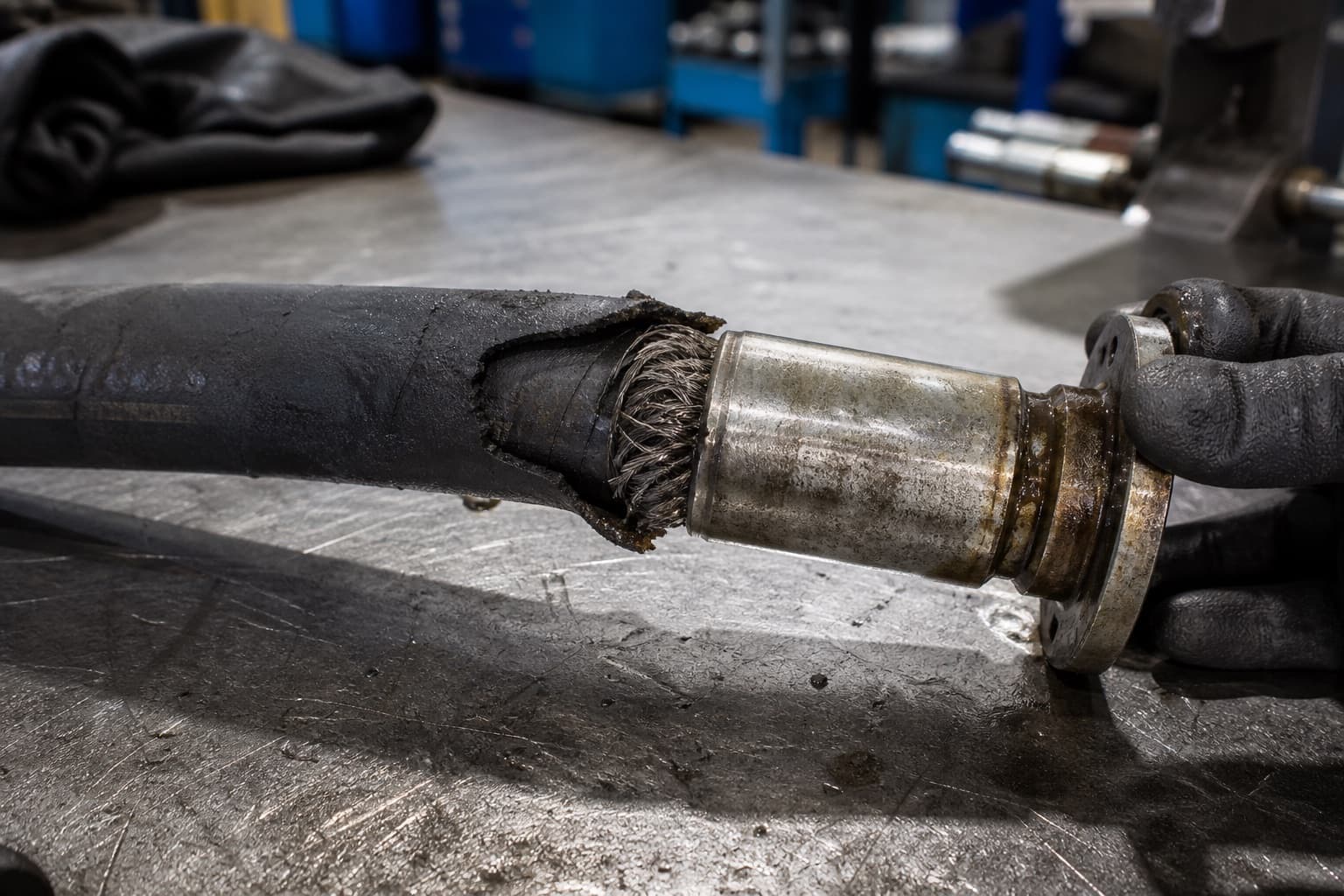
Where a hose failed is diagnostic. A burst within a hand’s width of the ferrule almost never means the hose was under-rated — it means something at that end was wrong, and replacing like for like will do it again.
JIC 9/16"-18 and ORFS 9/16"-18 are the same thread. They will assemble, and one of them will leak. Every designation and pitch we stock, grouped by family, with the collisions marked.
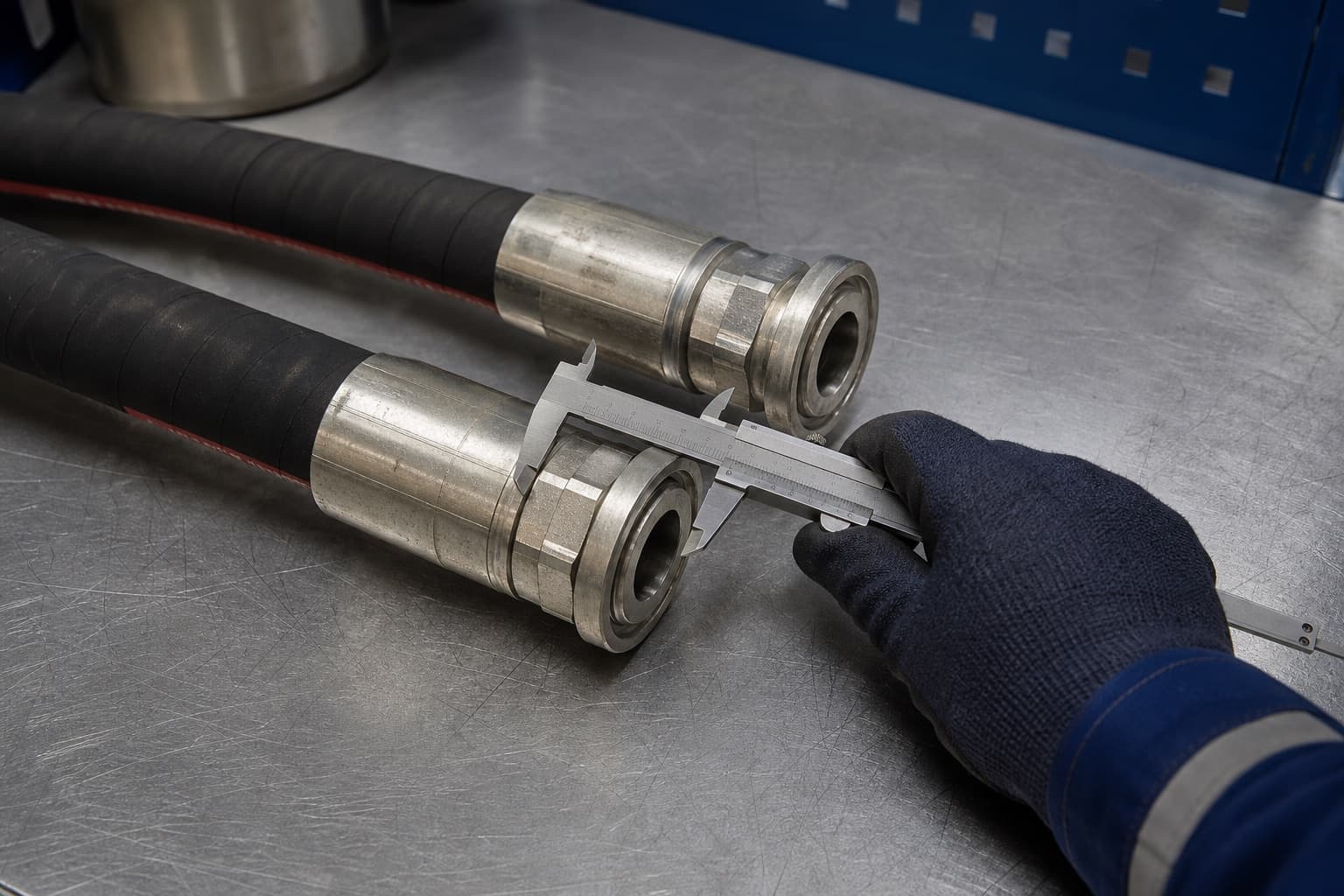
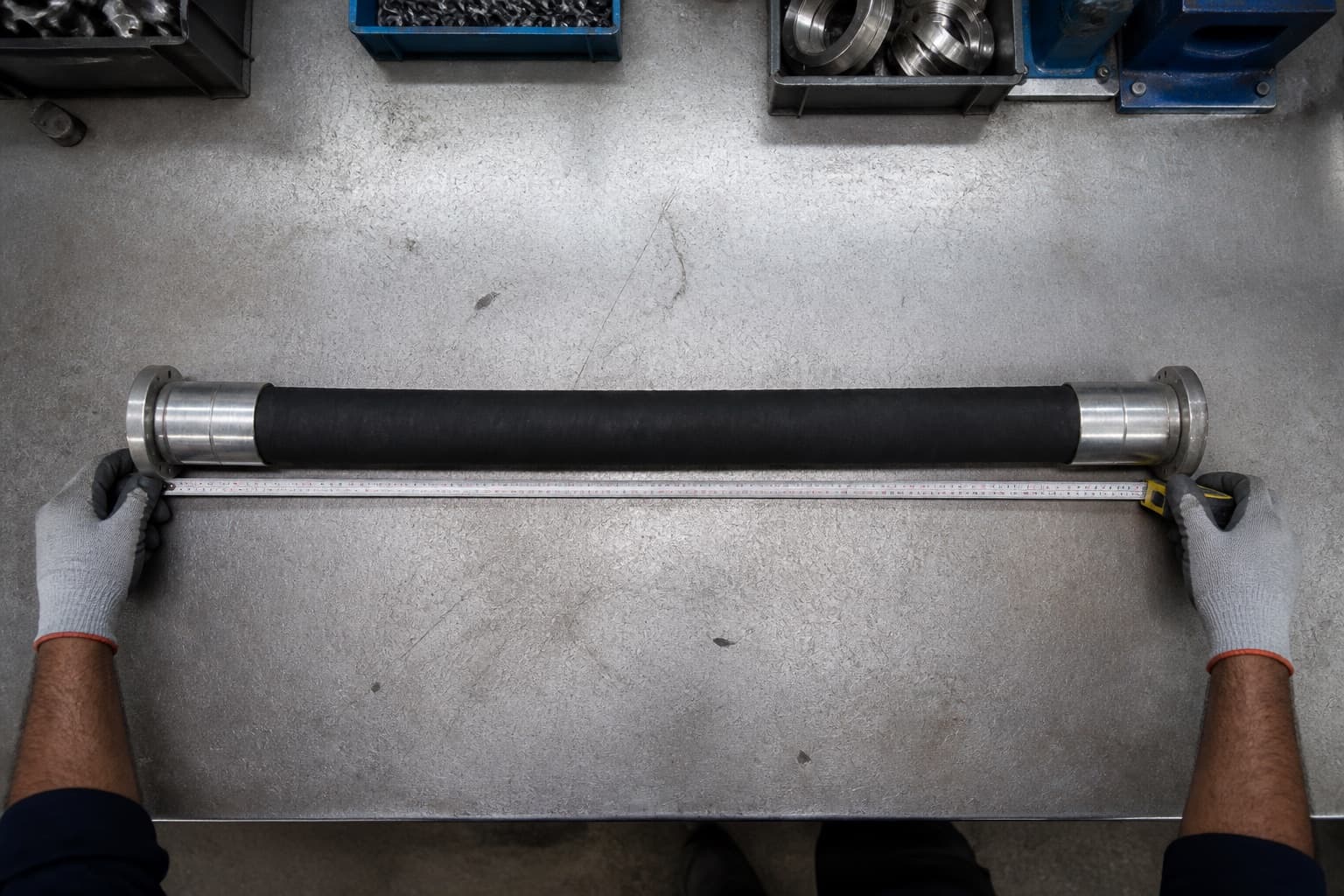
Measure the hose, hand over the number, and the assembly comes back too long. The figure a workshop needs is the distance between sealing faces — and the difference between that and what most people measure is the whole problem.
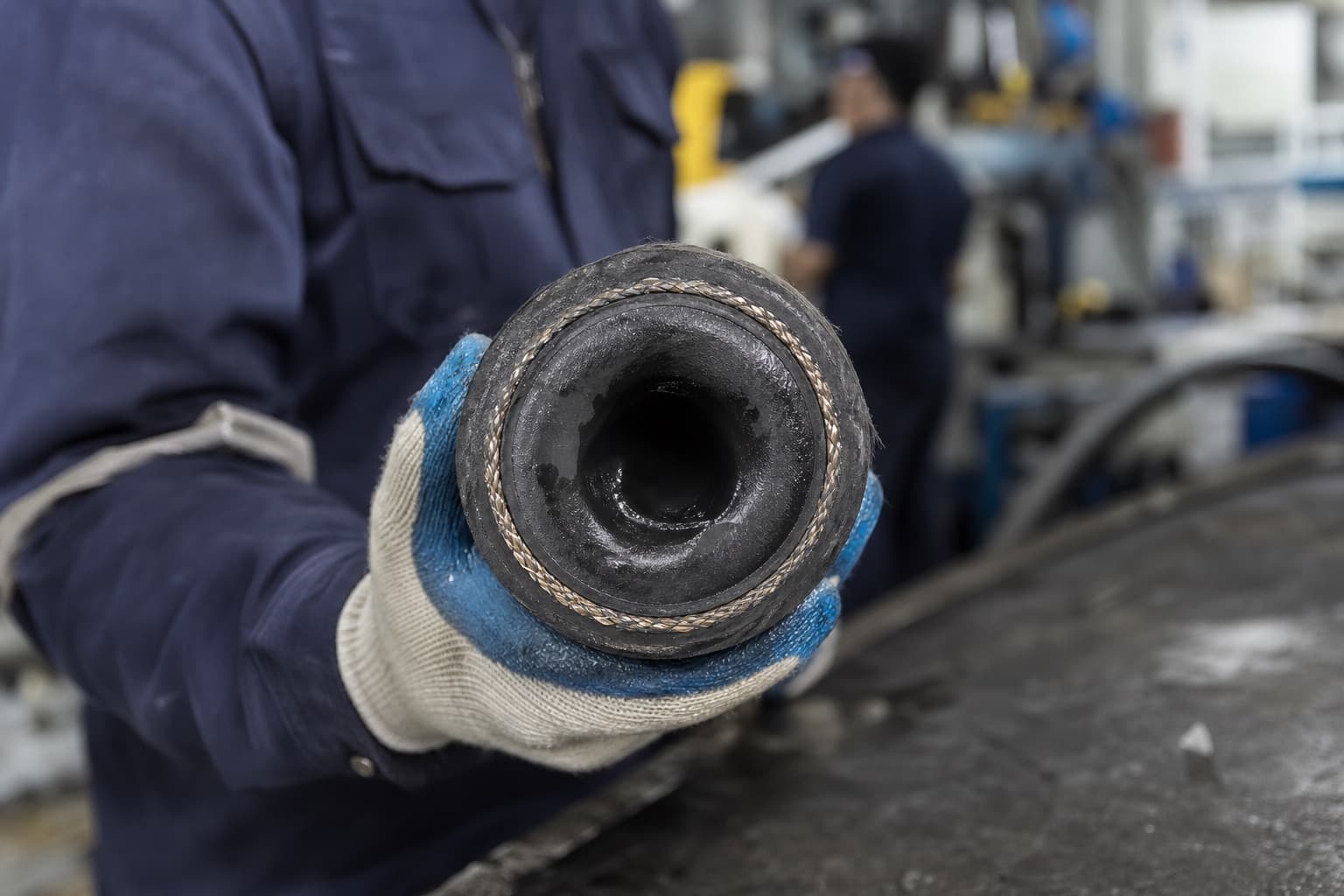
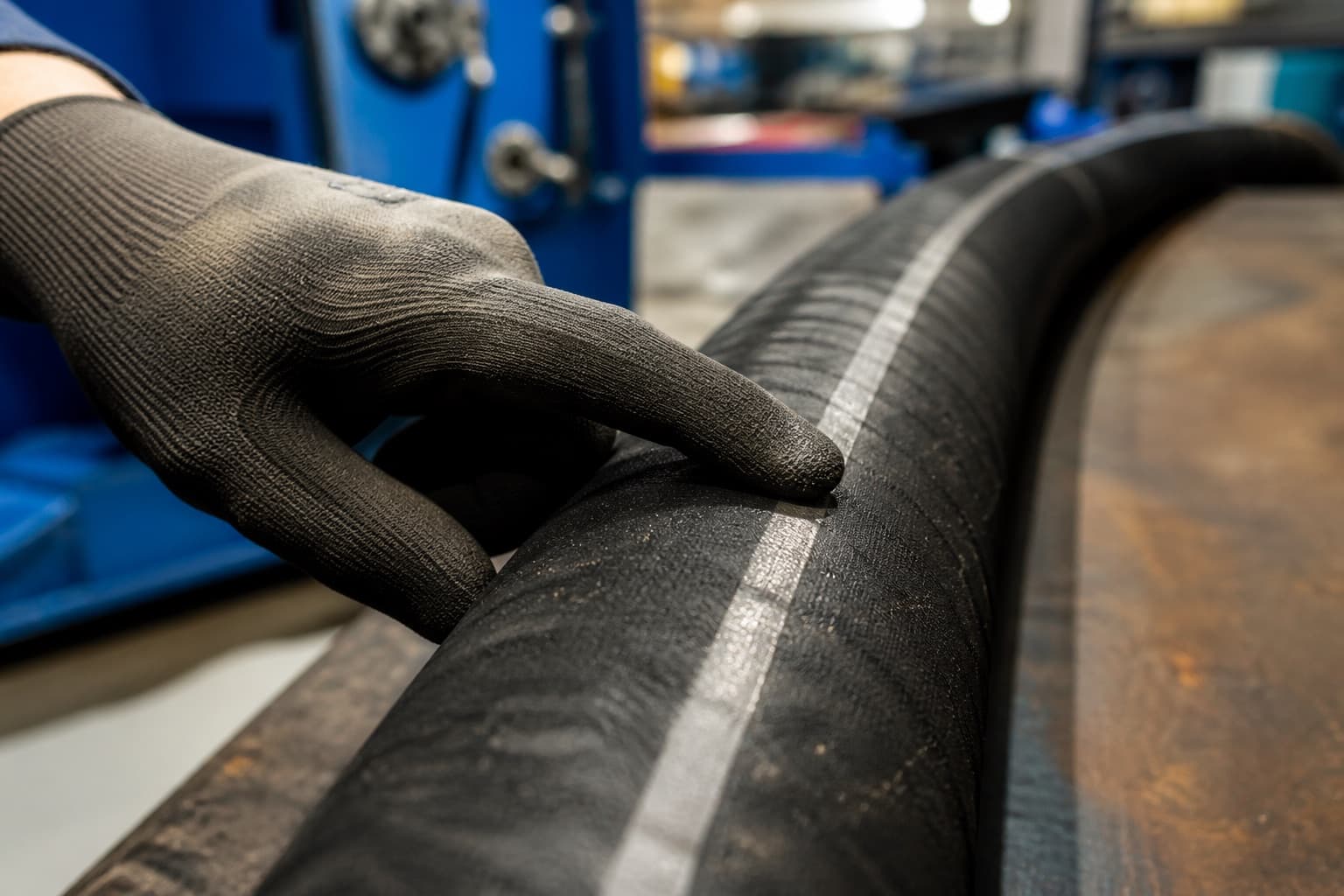
The line of text down the side of a hydraulic hose identifies it completely — grade, size, pressure, maker and often the date it was built. Here is how to read each element, and what to do when it has worn away.
A dash size is sixteenths of an inch of bore. Except on SAE 100R5, where −08 is a 10 mm bore rather than 12 mm — because R5 is sized on tube outside diameter. Here is the full conversion, and where it breaks.
Two of these pairings are real and printed on the same hose. Several of the equivalences circulating in the trade are not. Here is which is which, and what to do about the grades that have no counterpart.
R6 is rated 28 bar. R2AT is rated 400 bar. The higher number is fourteen times weaker. Here is what each SAE 100R designation actually specifies, and why the sequence tells you nothing about strength.
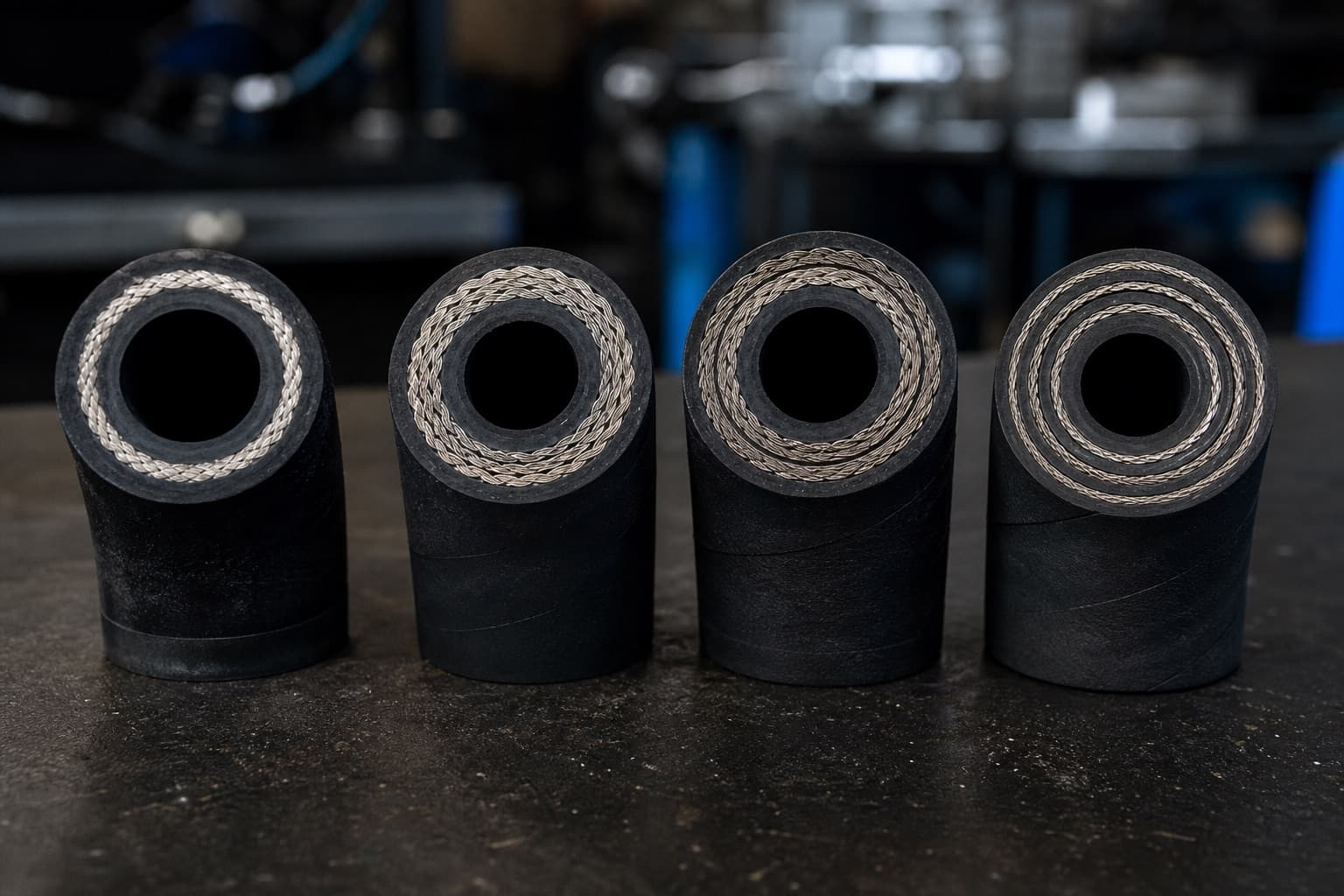
EN 857 1SC and 2SC bend to half the radius of standard braid at the same bore, in a smaller outside diameter, at the same or higher pressure. They remain the least-specified hose we stock.
Braided hose loses four fifths of its rating between quarter-inch and two-inch. Spiral hose holds flat. Past a certain bore the decision has already been made.
On a rebuild, recommissioning or cold-stack return, building every assembly at once produces a better machine and a better record than replacing hoses one failure at a time.
Workshop density in Sharjah, quarry abrasion at Khor Khwair, port and bunkering equipment in Fujairah. Same hose, four failure patterns, four different service answers.
On a drilling rig the hose work is the easy part. Access, permits and certification are what set the clock — and all three can be shortened before anything fails.
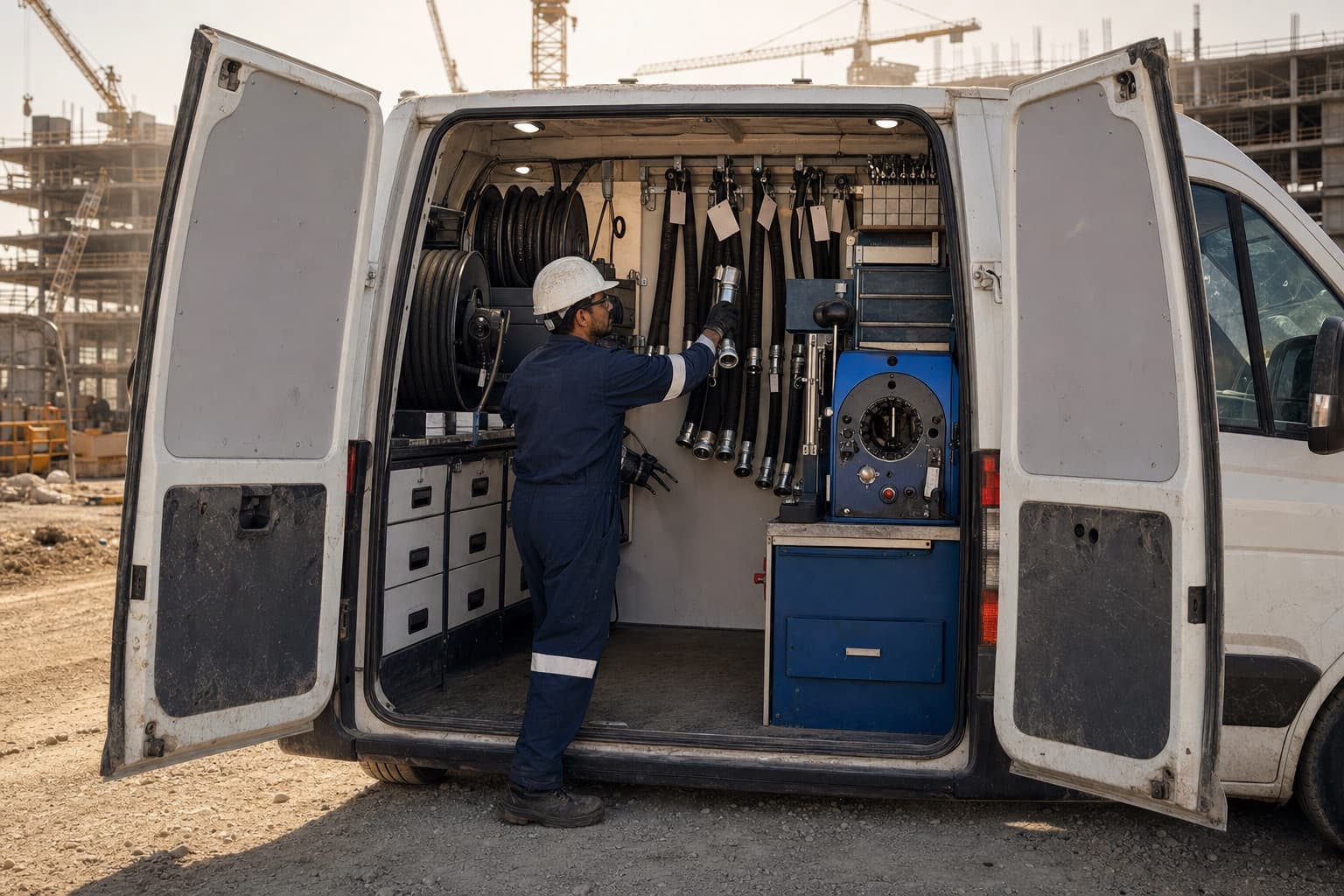
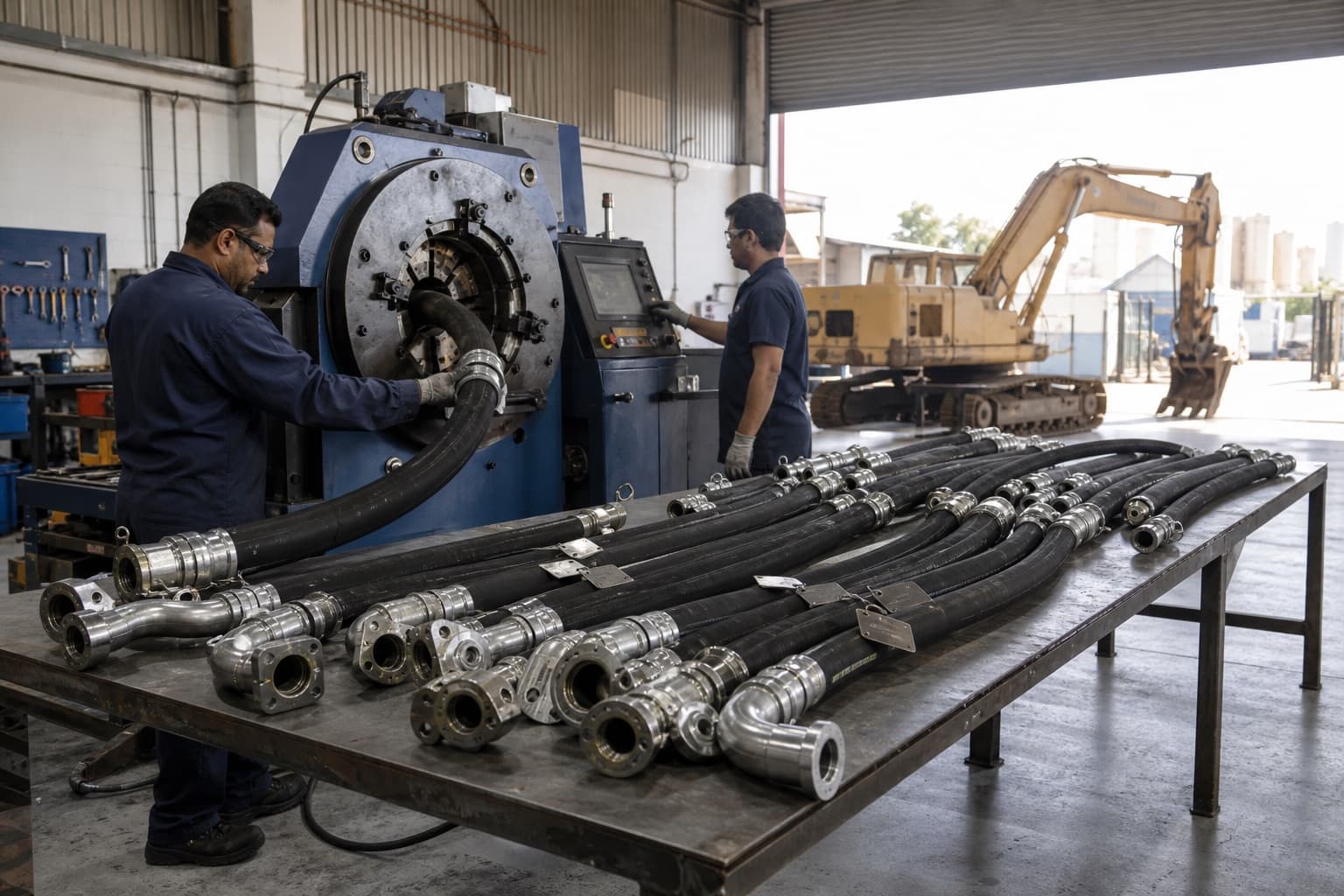
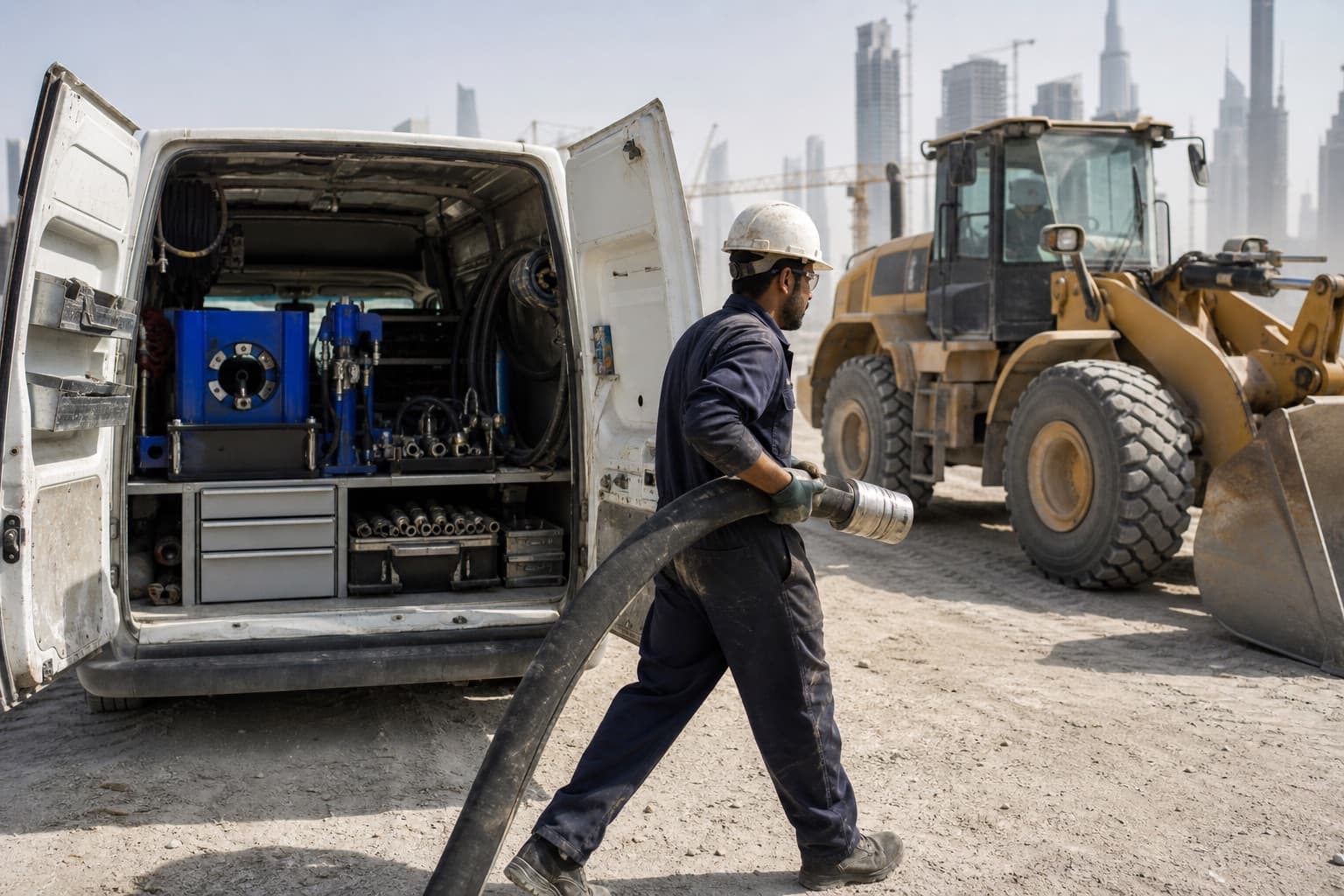
Bringing the hose bay to the machine instead of the machine to the bay. What on-site assembly can and cannot do, and how it differs across the seven areas we cover.
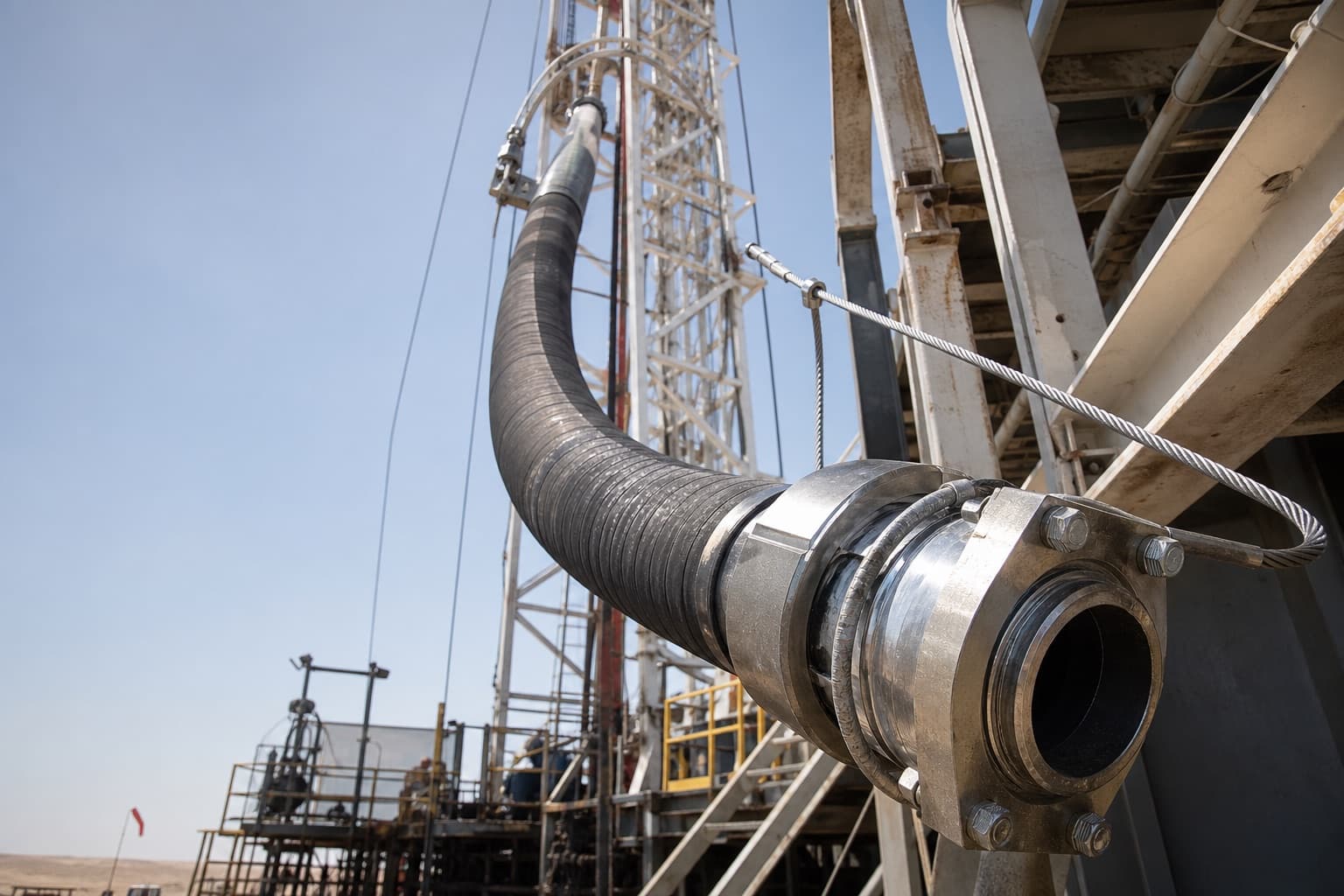
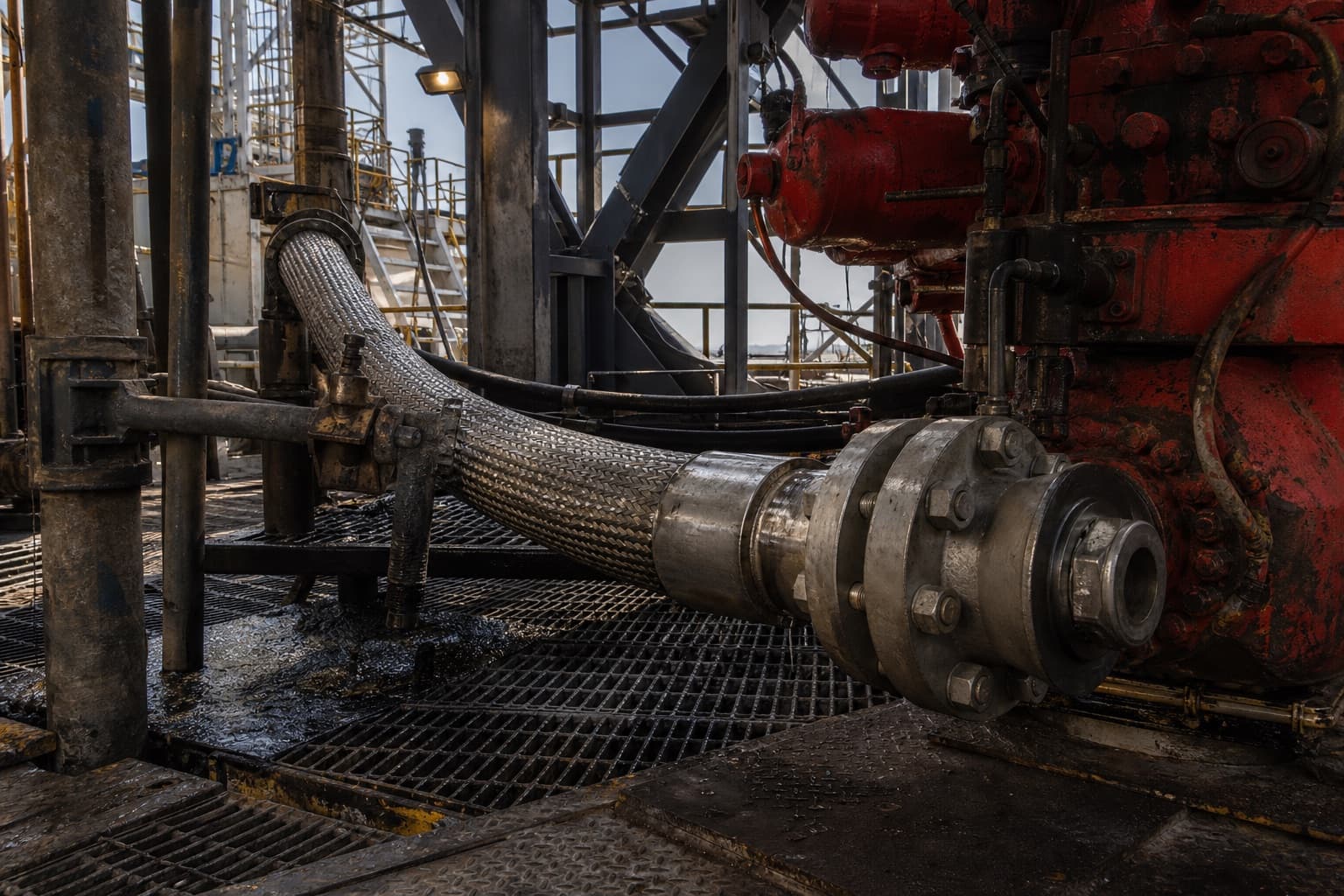
Same 5,000 psi rating, three different coupling methods, and one accessory that is not optional. What separates the constructions, and what changes for high-temperature and sour wells.
An API 16D control hose is rated on pressure like anything else — and then on something most hose never has to do: keep working inside a fire for long enough to shut the well in.
A choke and kill line runs closer to its burst pressure than almost anything else on a rig. What sets the temperature ceiling, why the liner is the decision, and what that margin means for handling.
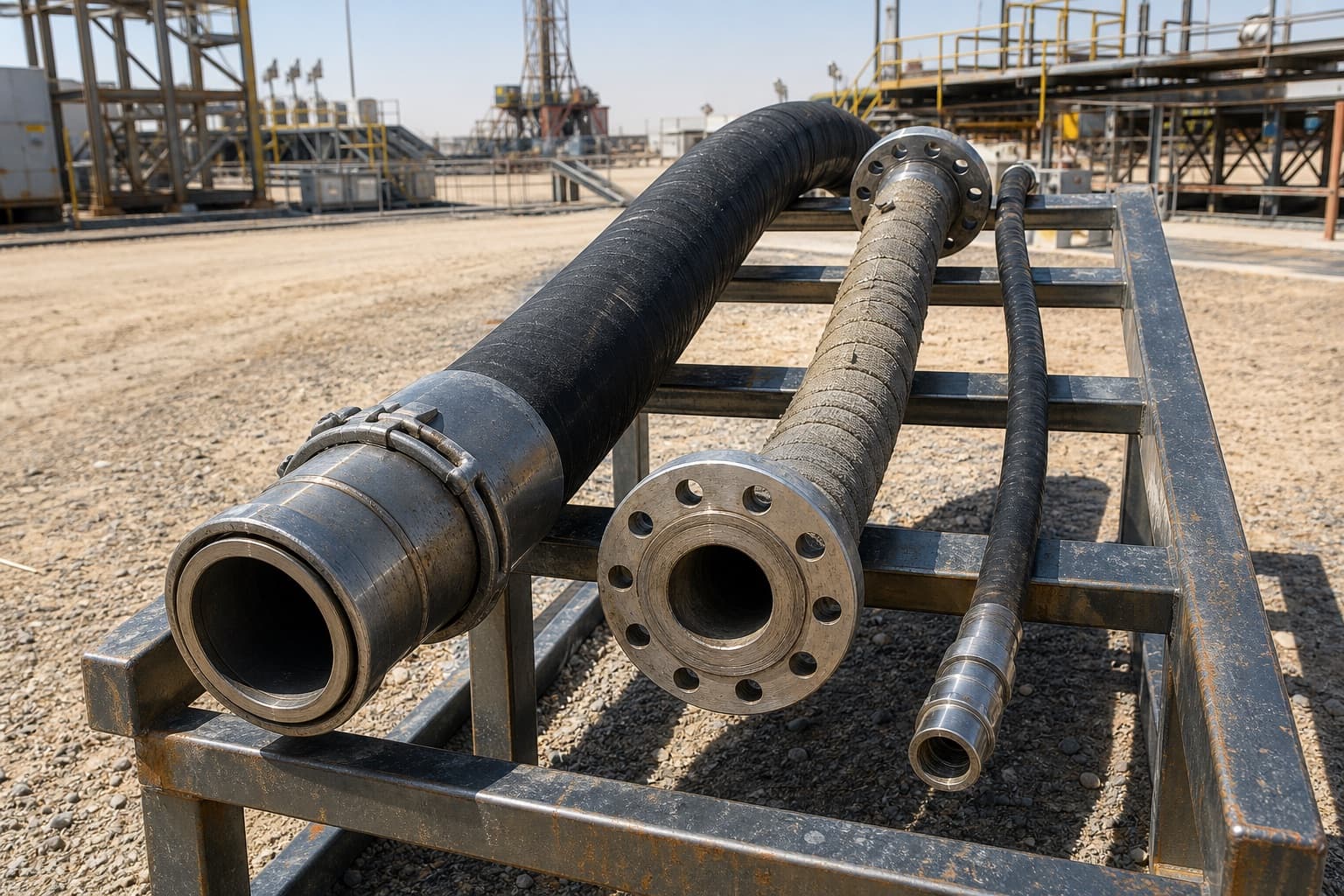
Three API specifications cover three different jobs, and they do not share a design factor. What each one governs, and why a 16C line at 10,000 psi has less margin than a hydraulic hose at 400 bar.
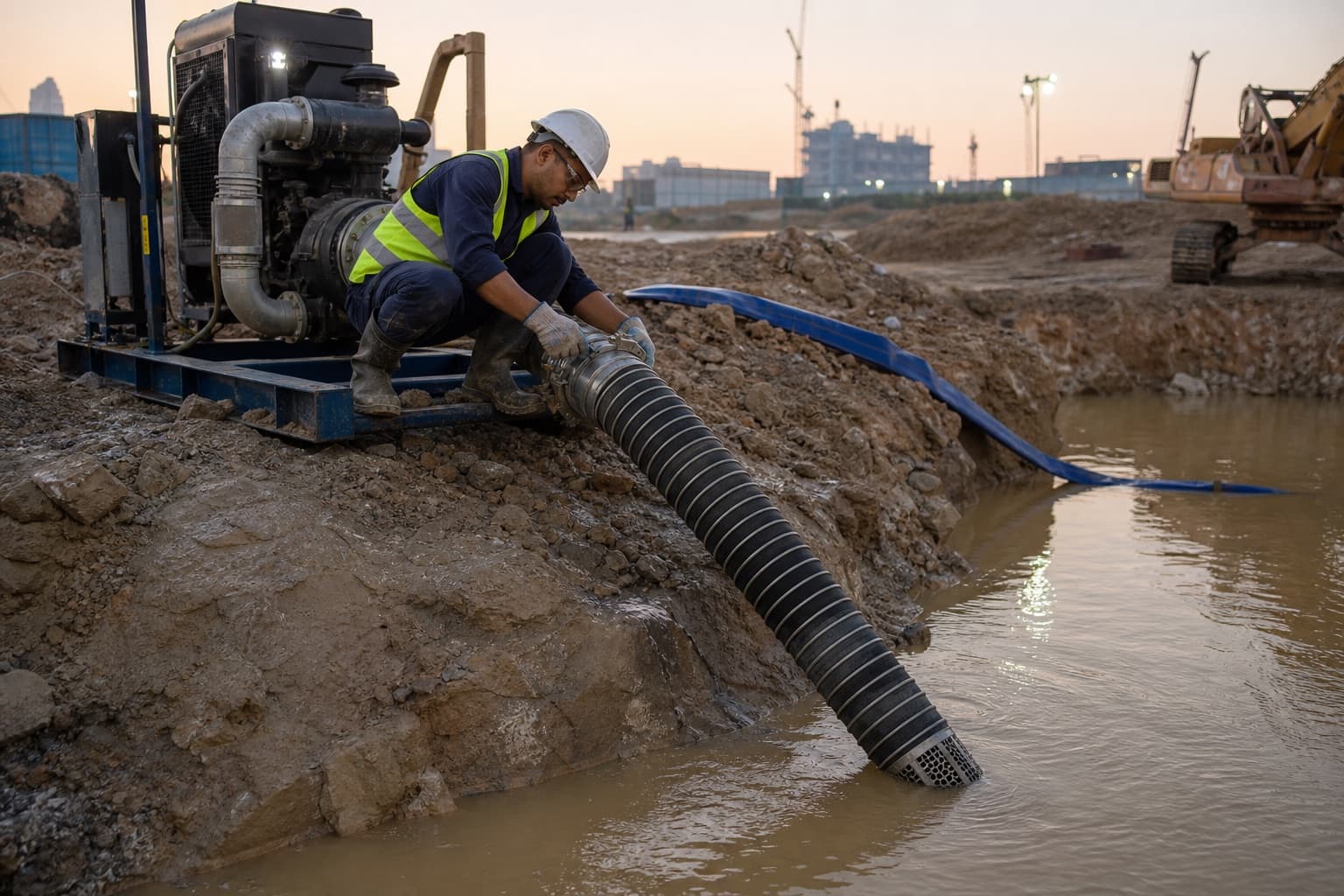
On a dewatering set the pump is rarely the problem. Suction hose that collapses, leaks air or sits above the water line accounts for most of the calls.
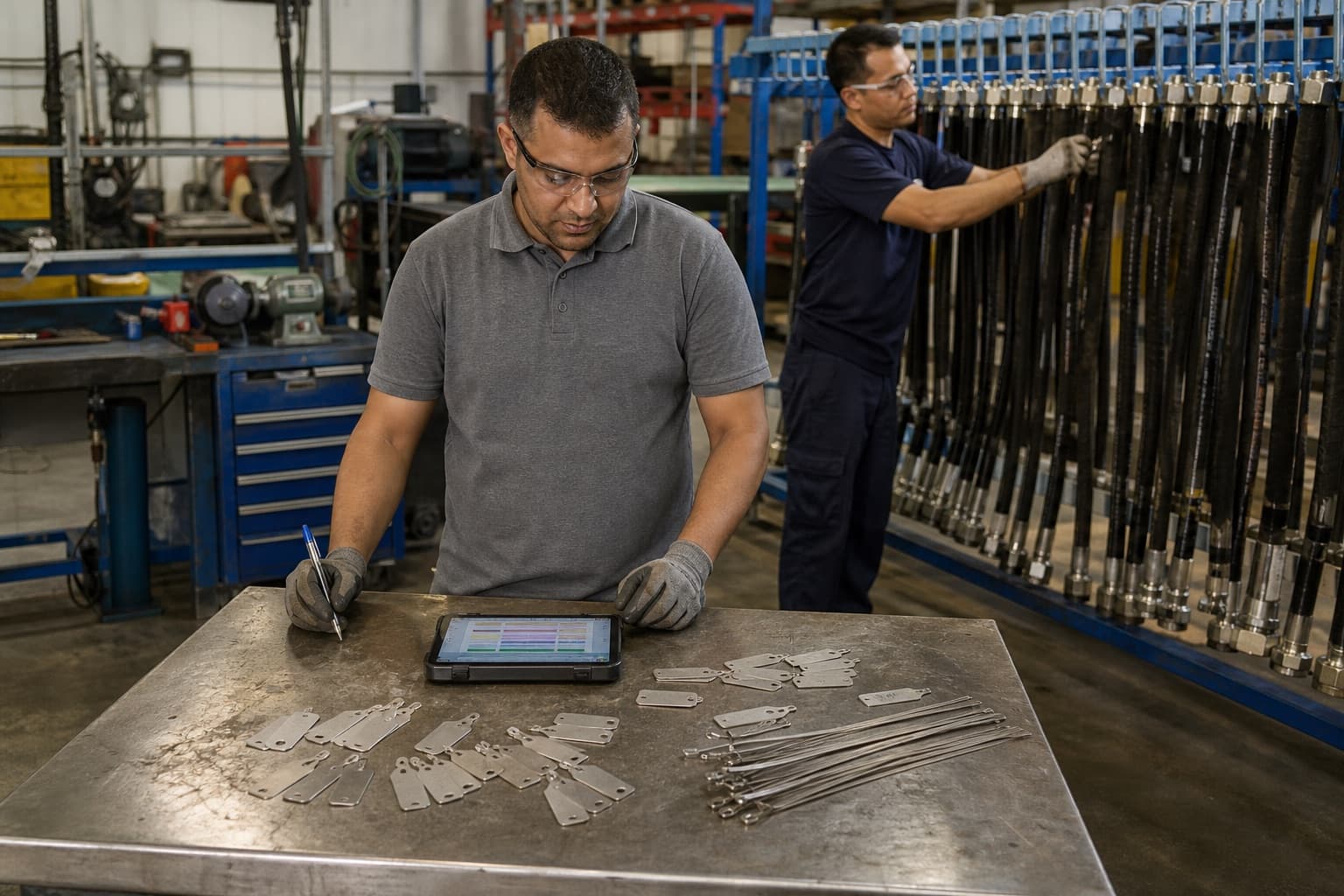
Most fleets replace hoses when they burst. Moving to planned replacement needs three things — a register, a criticality ranking, and an interval that comes from your own data rather than a catalogue.
A hose that lets go at a coupling becomes a moving object. Restraints, sleeves and guards each solve a different failure — and using the wrong one is the same as using none.
Skive and no-skive fittings are not interchangeable, and the difference is invisible once the assembly is crimped. What each does, and why the mistake only shows up under pressure.
Body-flex, PTO and drum-drive hoses fail in ways that are specific to vehicles that flex and vibrate all day. What goes, why, and the safety step nobody should skip.
Three circuits, three very different failure patterns. Which one went, where the hose actually wears, and the safety step that gets skipped on every second job.
On food, beverage and potable duty the material is only half the requirement. What the regulations actually cover, and what an auditor will ask you for.
Steam hose failures hurt people, and most of them happen at the ends rather than in the middle. What steam service demands, and why push-on couplings have no place on it.
The liner decides everything. How compatibility charts work, why concentration and temperature change the answer, and what else has to be right before the hose is safe to use.
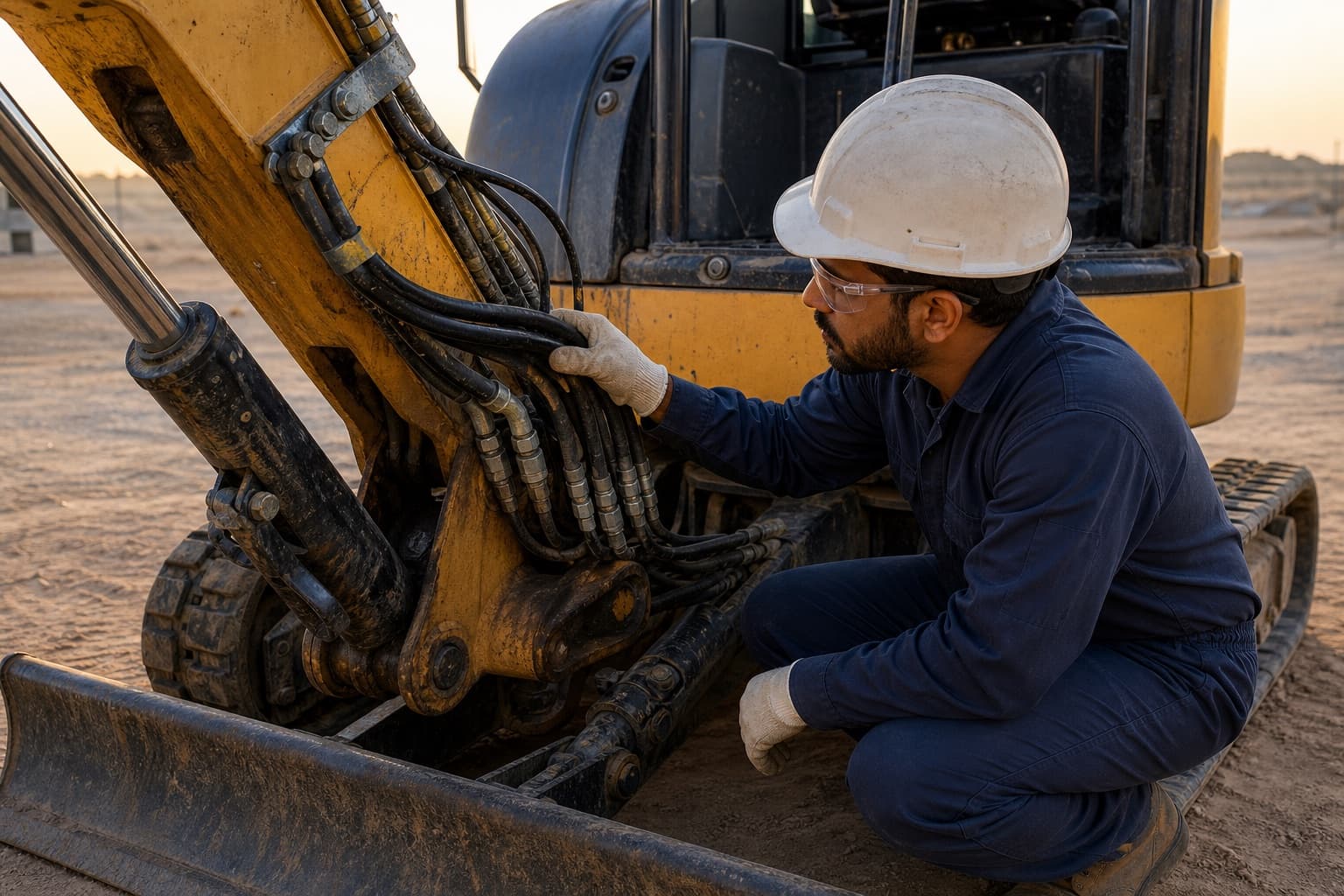
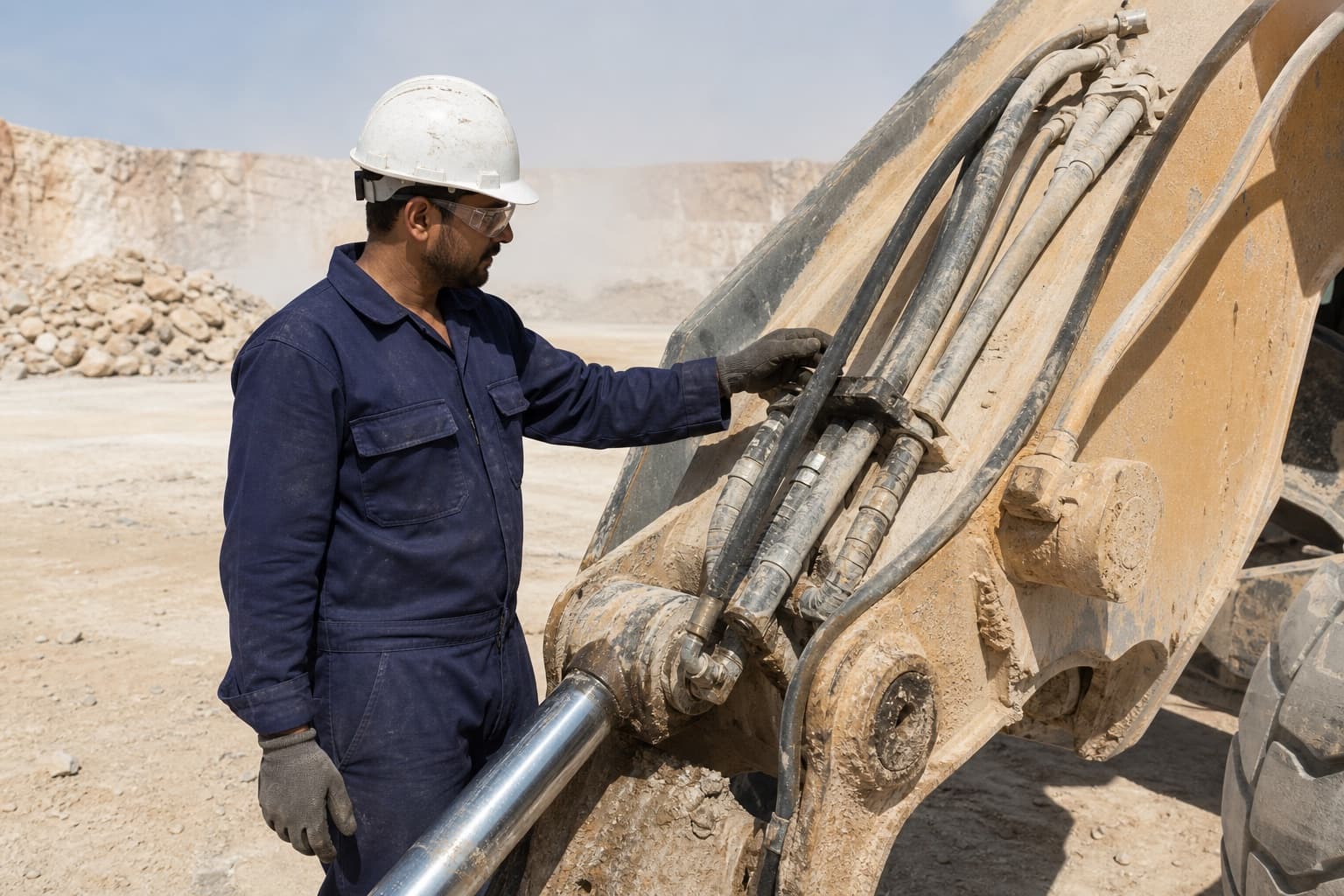
Boom, arm, bucket, swing or travel — the symptom tells you which circuit failed before anything comes apart. How to read it, and how to identify the hose without the dealer part number.
Hydraulic hose is chosen on pressure. Industrial hose is chosen on what is going through it, at what temperature, and whether it has to suck as well as blow.
Three installation faults account for a large share of premature hose failure, and all three are free to avoid at fitting time. What they look like and how to design them out.
A walk-round that takes ten minutes finds most of what is about to fail. What to look at, what each finding actually indicates, and where the judgement calls are.
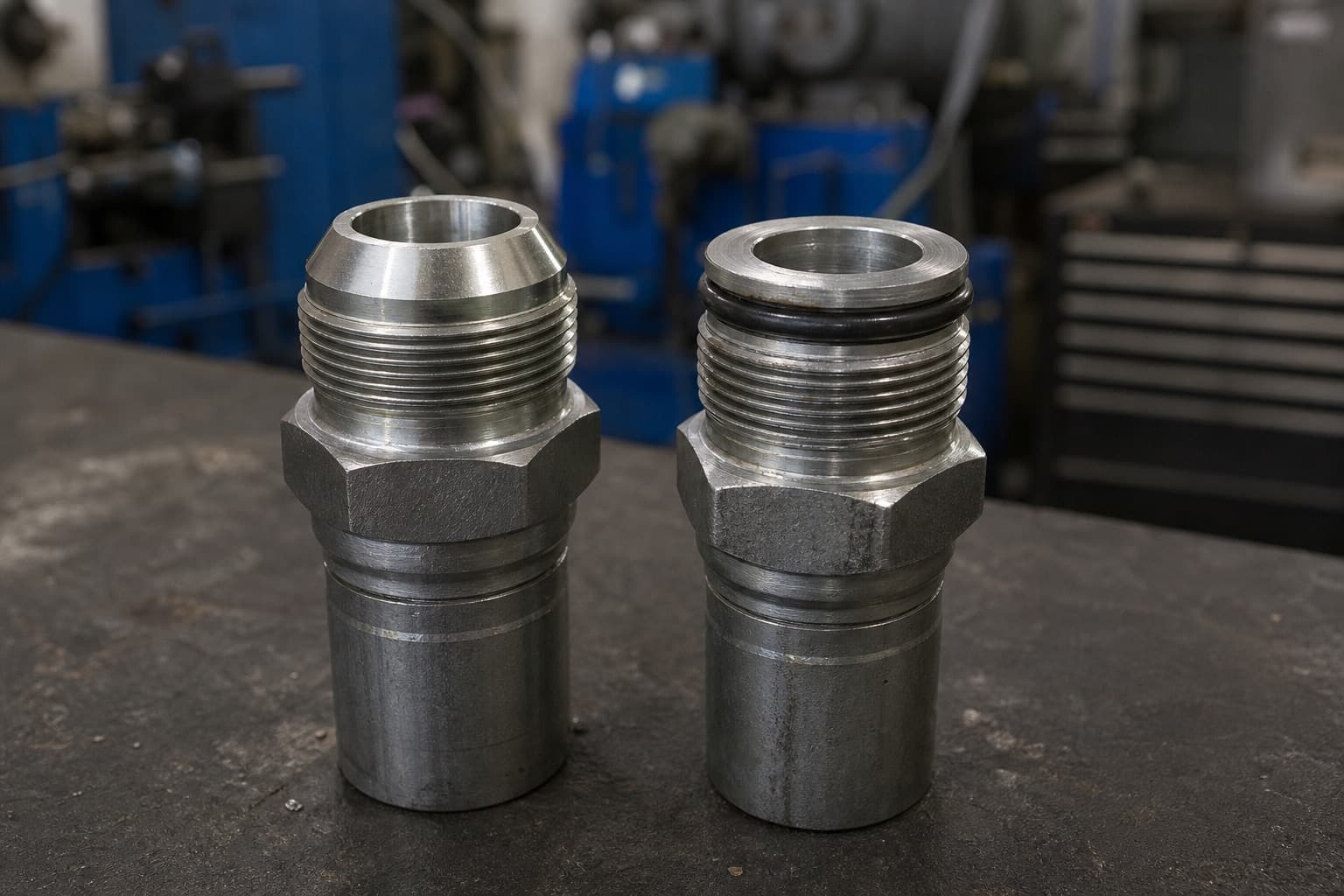
Four families cover almost every hydraulic connection you will meet. What each one seals on, which are re-makeable, and which pairs will thread together and still fail.
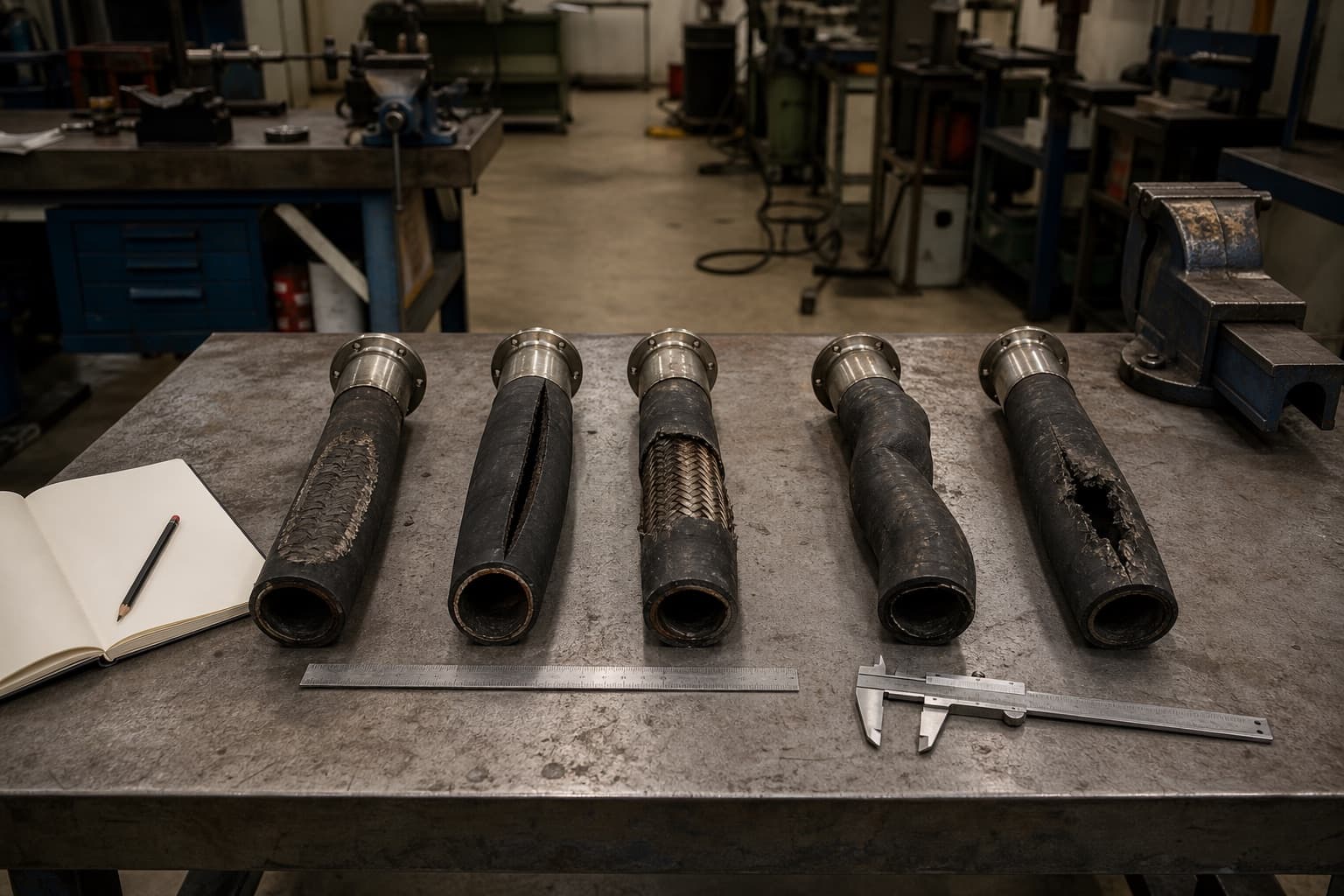
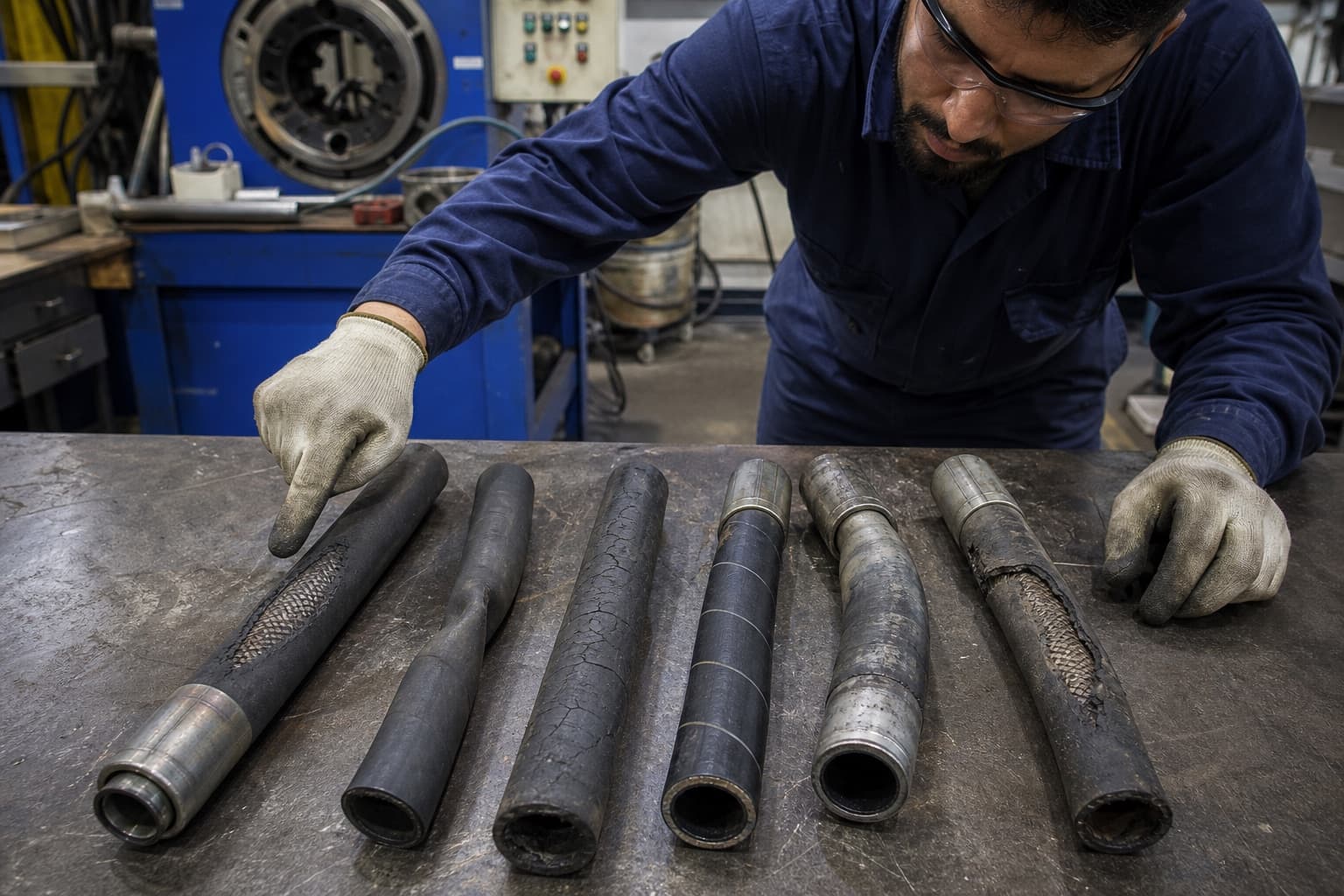
A failed hose usually tells you why it failed. Abrasion, kinking, heat, cold-set, wrong routing and fitting problems each leave a different signature — and each has a different fix.
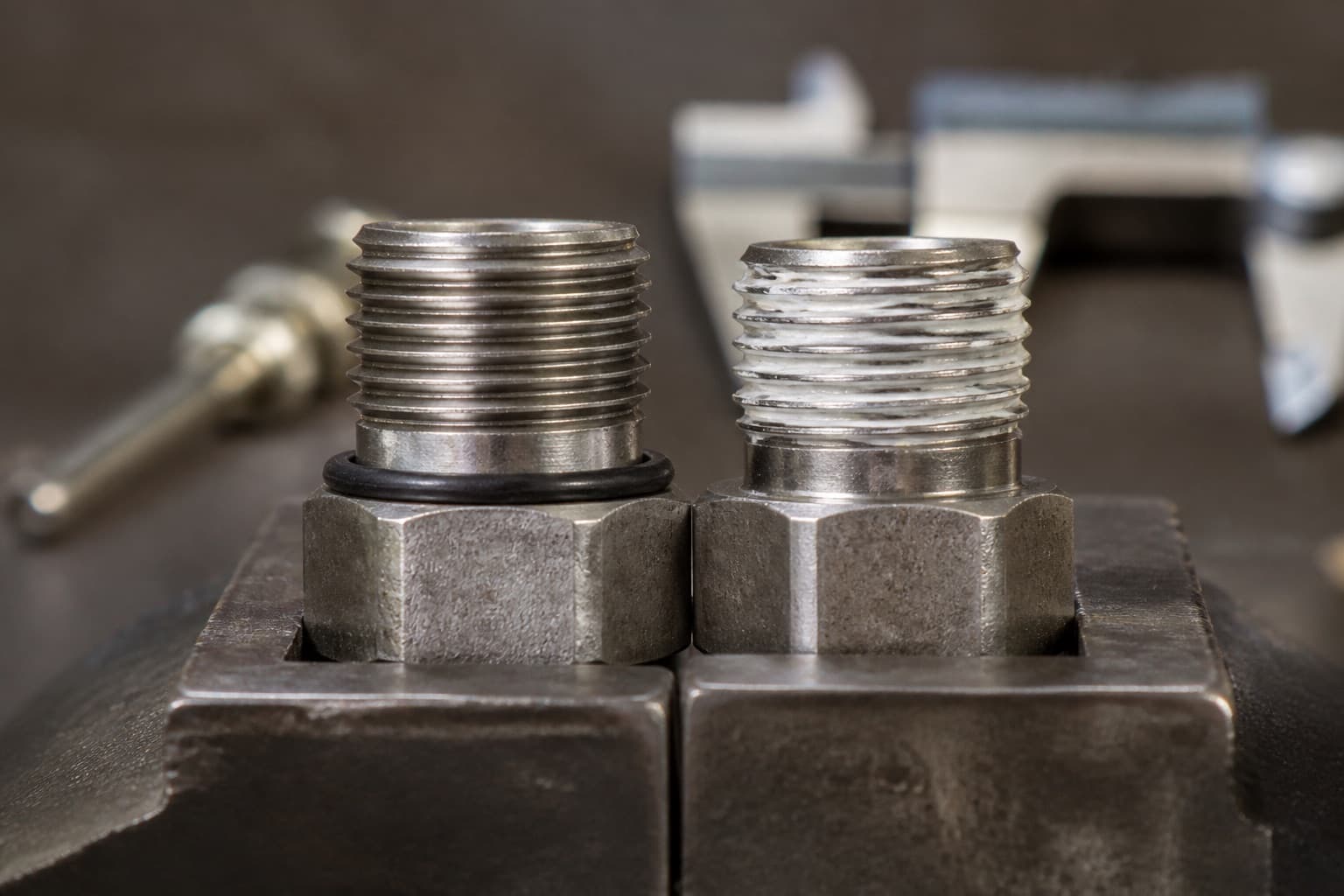
They share a thread form and a size designation, and they do not seal the same way. How to tell them apart on the bench, and what happens when they are mixed.
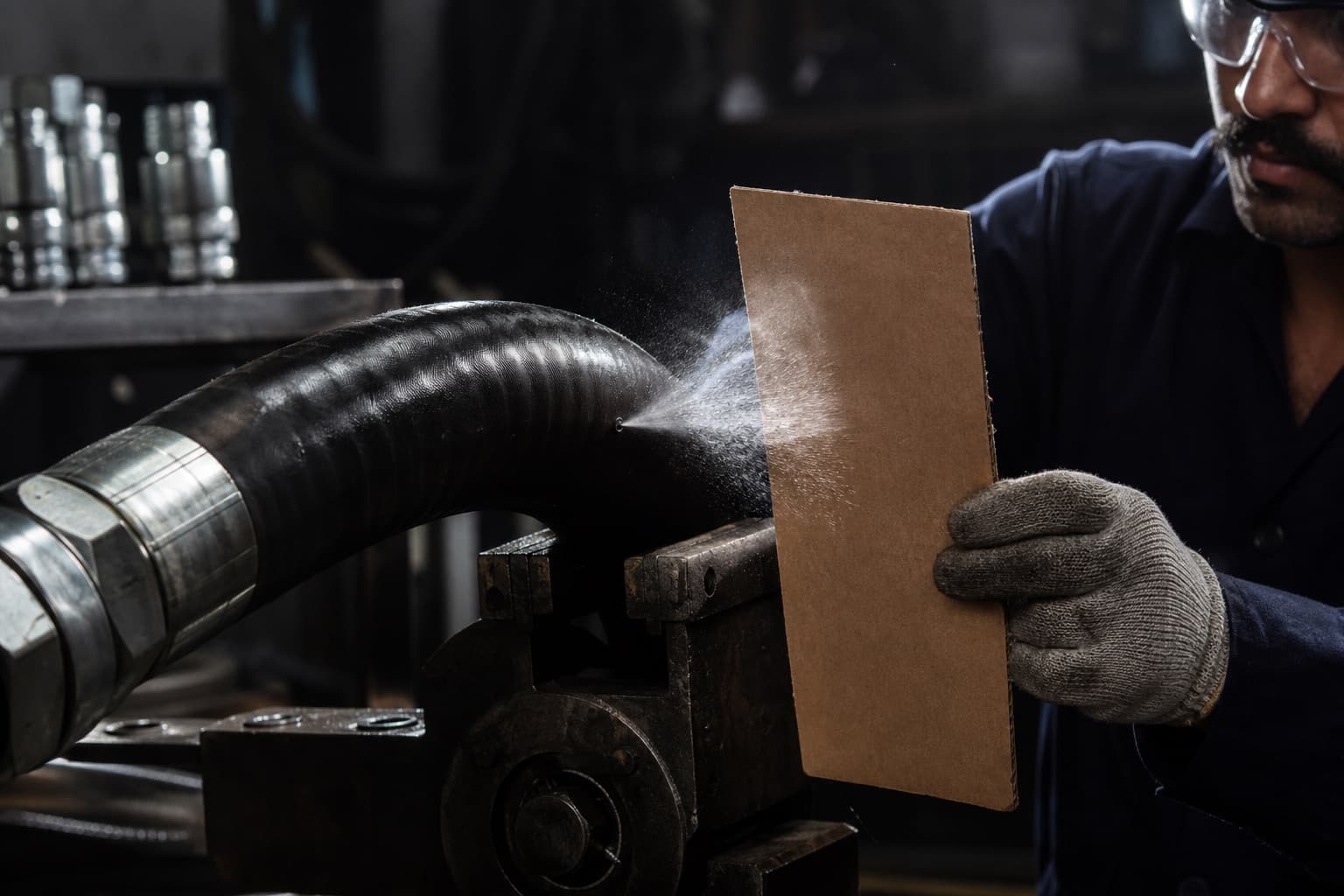
A high-pressure leak can inject fluid through skin from a hole you cannot see. The entry wound looks trivial and the damage underneath is not. What it is, why it is missed, and what to do in the first hour.
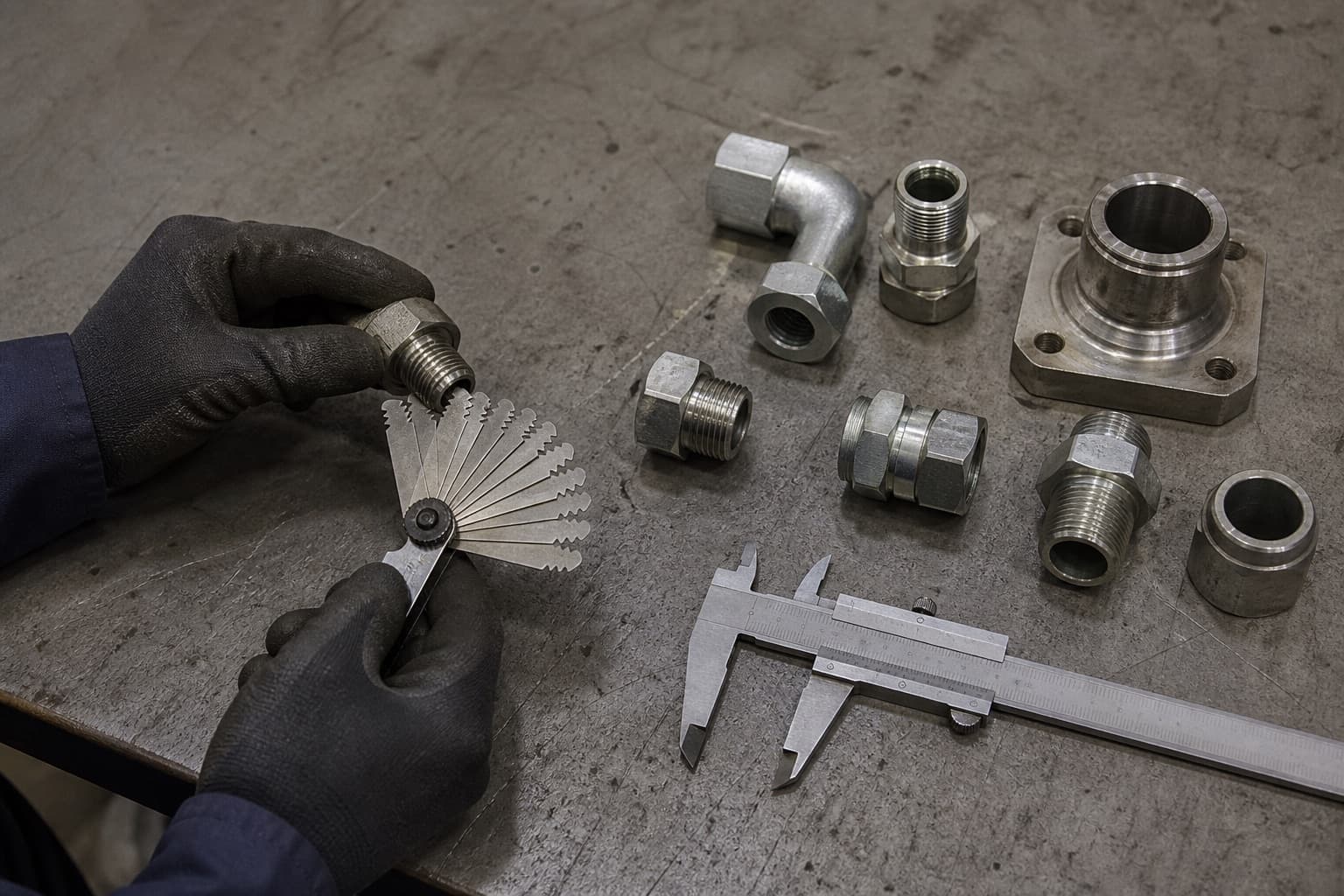
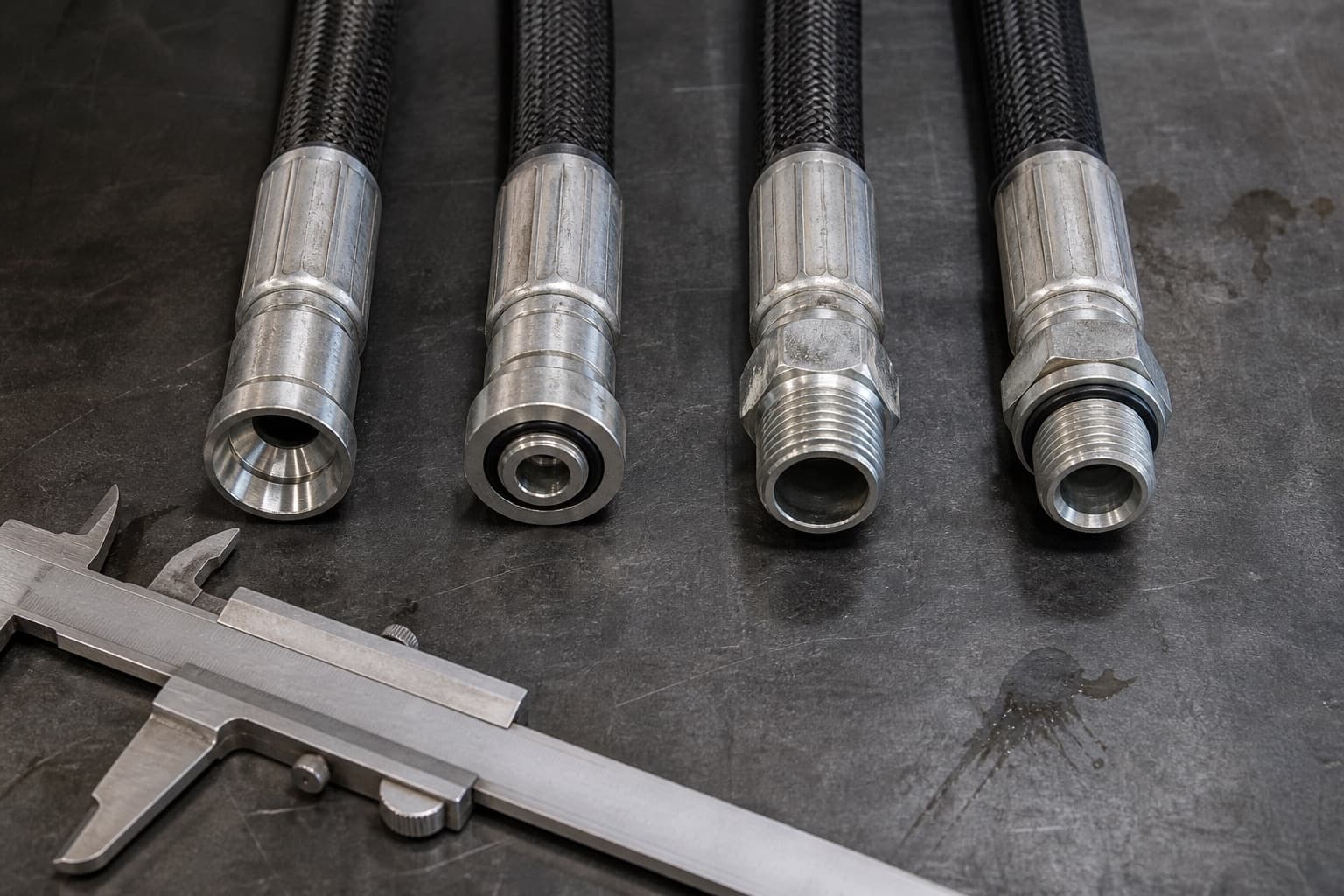
Four thread families cover almost everything on a machine in the Gulf. Here is how to tell them apart with a caliper and a thread gauge — and why two of them will thread together and still leak.