Europe’s 2025 wildfire season was the most destructive on record. The EU’s Joint Research Centre reported 1,079,538 hectares burnt across 7,783 mapped fires in 25 member states, with all-time national records in Germany, Spain, Cyprus and Slovakia; an August heatwave alone drove 22 very large fires in Spain and Portugal. Two years earlier, the Evros fire in Greece burned more than 80,000 hectares — described by EU civil protection as the largest single fire in the EU since records began. Aircraft get the headlines; on the ground, fires are held by crews with portable pumps and long lines of light hose.
/01What makes forestry hose different.
Structural attack hose is built to be dragged from an appliance into a building at high pressure. Forestry hose has a different job: to be carried — in packs, over hills, through scrub — and laid out for hundreds of metres from a small portable pump or a tanker. Weight and bulk matter more than anything, so forestry hose is single jacket, small bore and light, and it must still take the abrasion of rock, roots and dry ground. NFPA 1961 (now part of NFPA 1960) recognises forestry hose as its own category, and NFPA 1962 sets its in-service test at a minimum of 300 psi, the same as attack hose.
/02Sizes, threads and lengths.
| Size | Typical use | Thread | Length |
|---|---|---|---|
| 1-1/2"Highlighted | Main or trunk line from the pump | NH (National Hose / NST) | 100 ft |
| 1" | Laterals to the fire edge | NPSH | 100 ft |
The US Forest Service specifies lined fire hose (5100-186) and lightweight lined fire hose (5100-187) in 1" and 1-1/2" sizes. Elsewhere the couplings follow local practice — Storz in much of Europe, other instantaneous patterns in the UK and Commonwealth. Whatever the pattern, keep it consistent across pumps, hose and appliances, so any length couples to any other. Our expansion ring couplings come in 1" to 2-1/2" with NST, NPSH or BAT threads.
/03The progressive hose lay.
In a simple hose lay, lengths are coupled end to end from the pump to the nozzle. In a progressive hose lay — the standard technique for working along a fire edge — wye valves or tees are put into the main line at intervals as it advances, and lateral lines are run from them to the fire. The crew can then hit spot fires and hot spots along the whole length of the line without shutting it down, and extend it length by length as the fire edge is secured. That puts a premium on hose that is quick to carry, couple and lay — and on fittings and couplings that never jam.
/04Choosing forestry hose.
| Hose | Construction | Best for |
|---|---|---|
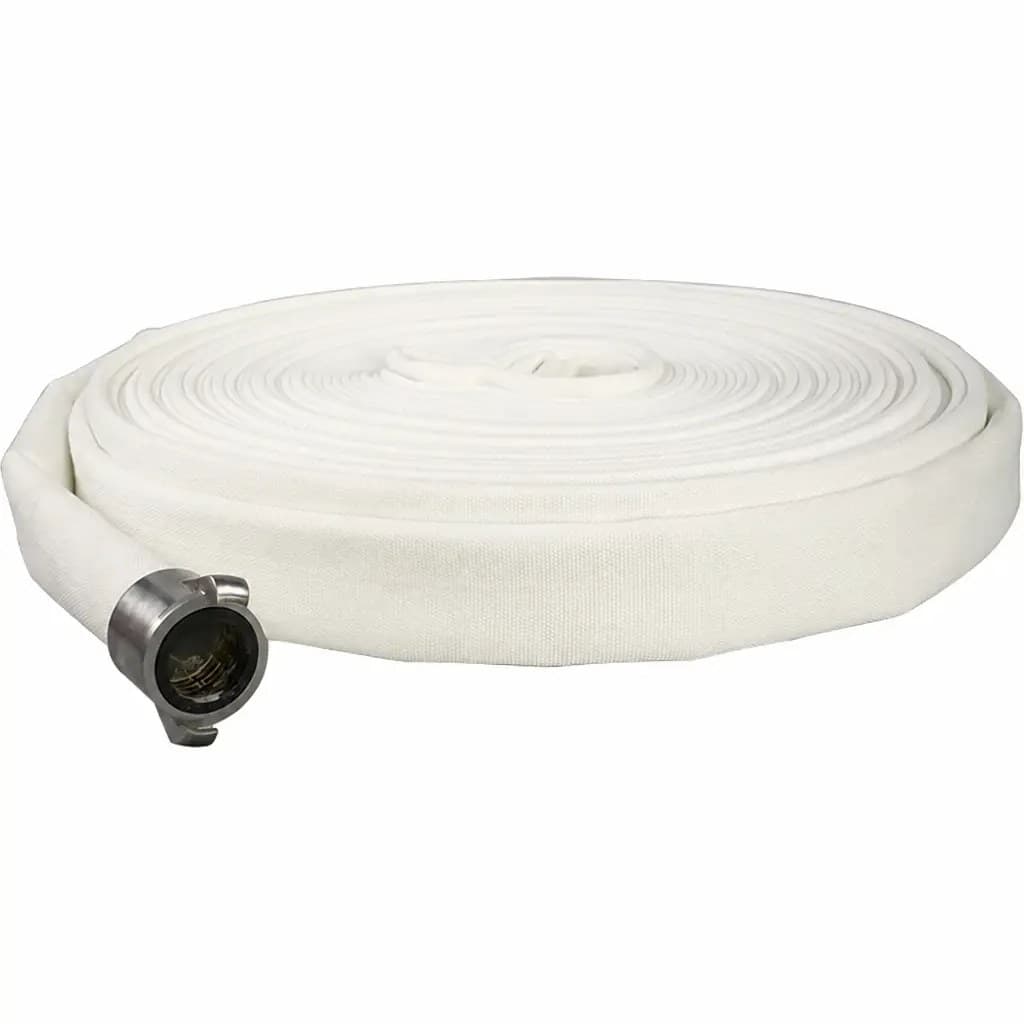
| Forestry fire hose, EPDM liner | Single woven polyester jacket, EPDM liner, white | Lightest carry; heat, weather and ageing resistance |
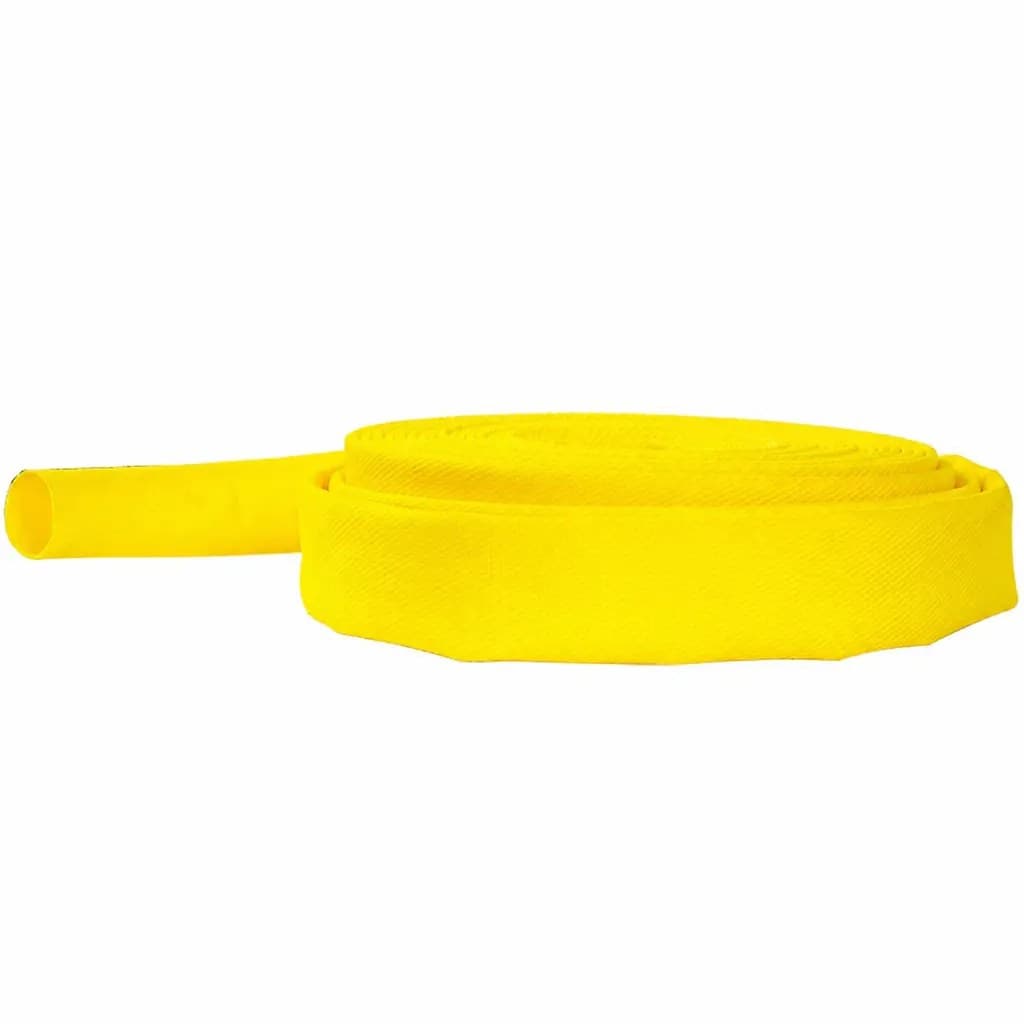
| Forestry fire hose, rubber liner, PU-coatedHighlighted | Natural rubber liner, single jacket, water-based polyurethane coat, yellow | Rocky and abrasive terrain where uncoated hose wears out |
Our EPDM-lined forestry hose keeps weight down for long carries and stores well in hot depots; the PU-coated forestry hose trades a little weight for much better abrasion resistance where hose is dragged over rock and roots. No approval is published for either line — tell us the specification or authority listing you work to. For the liners themselves, see fire hose liner materials.
/05Testing and refurbishing.
Wildland hose takes a beating in a single season. US Forest Service fire caches refurbish used hose and test it — typically to 300 psi — before it goes back into storage, and NFPA 1962 requires hose that fails inspection to be repaired and service tested, or condemned. Wash off ash and mud, dry it fully before rolling (wet hose grows mildew), store it out of the sun, and keep hose awaiting repair tagged and apart from ready stock. See how to repair lay flat hose.
Common questions
- What is the difference between forestry hose and attack hose?
- Forestry hose is lighter and smaller, built to be carried and laid by hand over rough ground; attack hose is built for hard use from appliances at structural fires. NFPA treats them as separate categories.
- What threads does wildland fire hose use?
- In North American practice, NH threads on 1-1/2" hose and NPSH on 1" hose. Other regions use their own coupling patterns.
- What is a progressive hose lay?
- A hose lay in which wyes or tees are put into the main line at intervals as it advances, with lateral lines run to the fire edge.
- What pressure is forestry hose tested at?
- NFPA 1962 sets the in-service test for forestry hose at a minimum of 300 psi, or the service test pressure marked on the hose.
- How bad was the 2025 wildfire season in Europe?
- The worst on record in the EU: 1,079,538 hectares burnt, according to the EU’s Joint Research Centre, nearly double the 2006–2024 average.