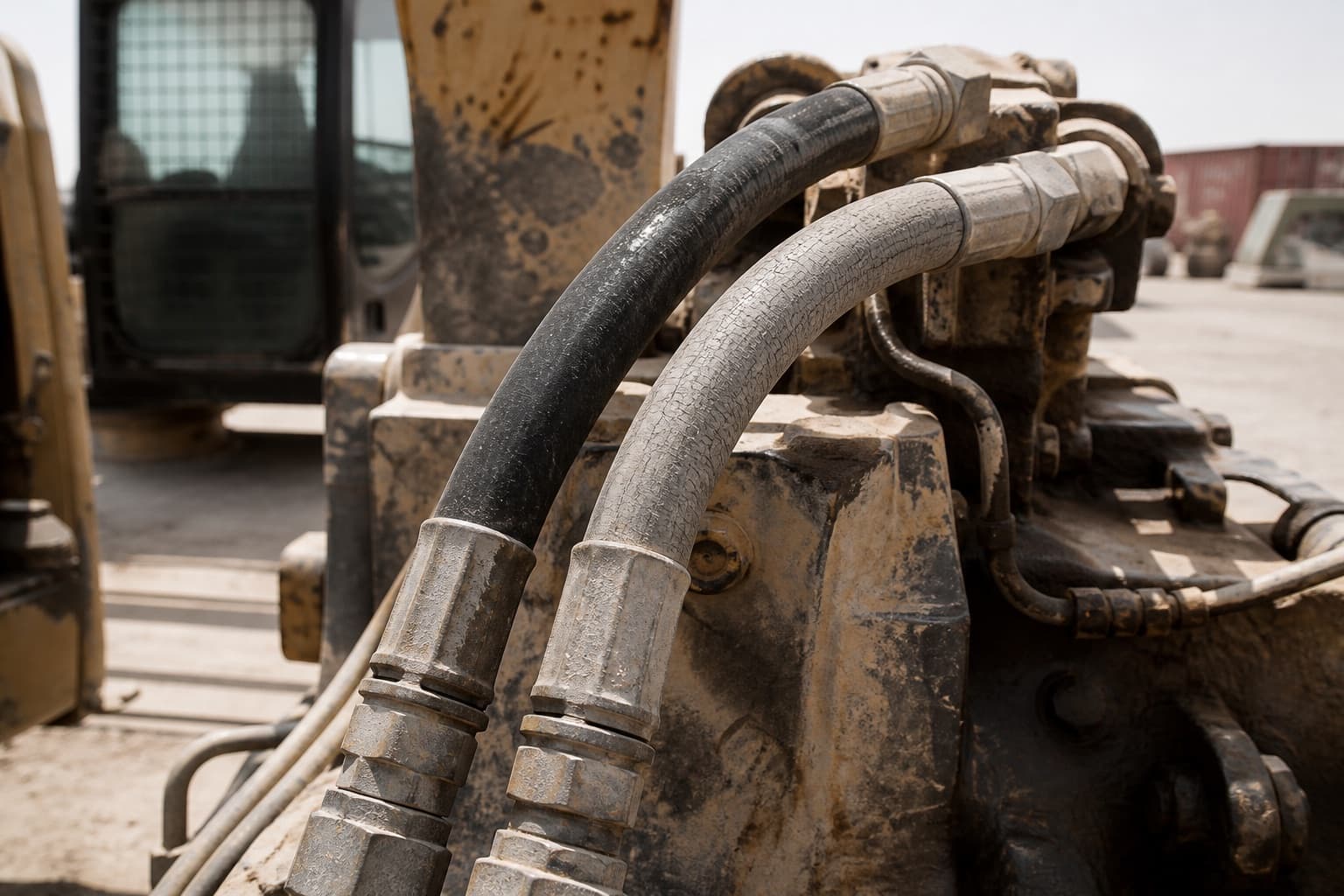
Both of these are slow, neither is dramatic, and both are routinely written off as a hose simply looking old. In a climate with this much sunlight they are a real component of hose life, and one of them is doing damage to stock that has never been fitted to anything.
/01Telling them apart.
| Property | UV | Ozone |
|---|---|---|
| Where the cracks areHighlighted | The side facing the sun | The outside of every bend |
| Needs sunlight | Yes | No |
| Needs the rubber stretched | No | Yes — that is the mechanism |
| Affects stored hose | If stored in light | Yes, especially coiled tight |
| Appearance | Fading and surface chalking, then crazing | Fine cracks perpendicular to the stretch |
/02Ozone is the one that gets stock.
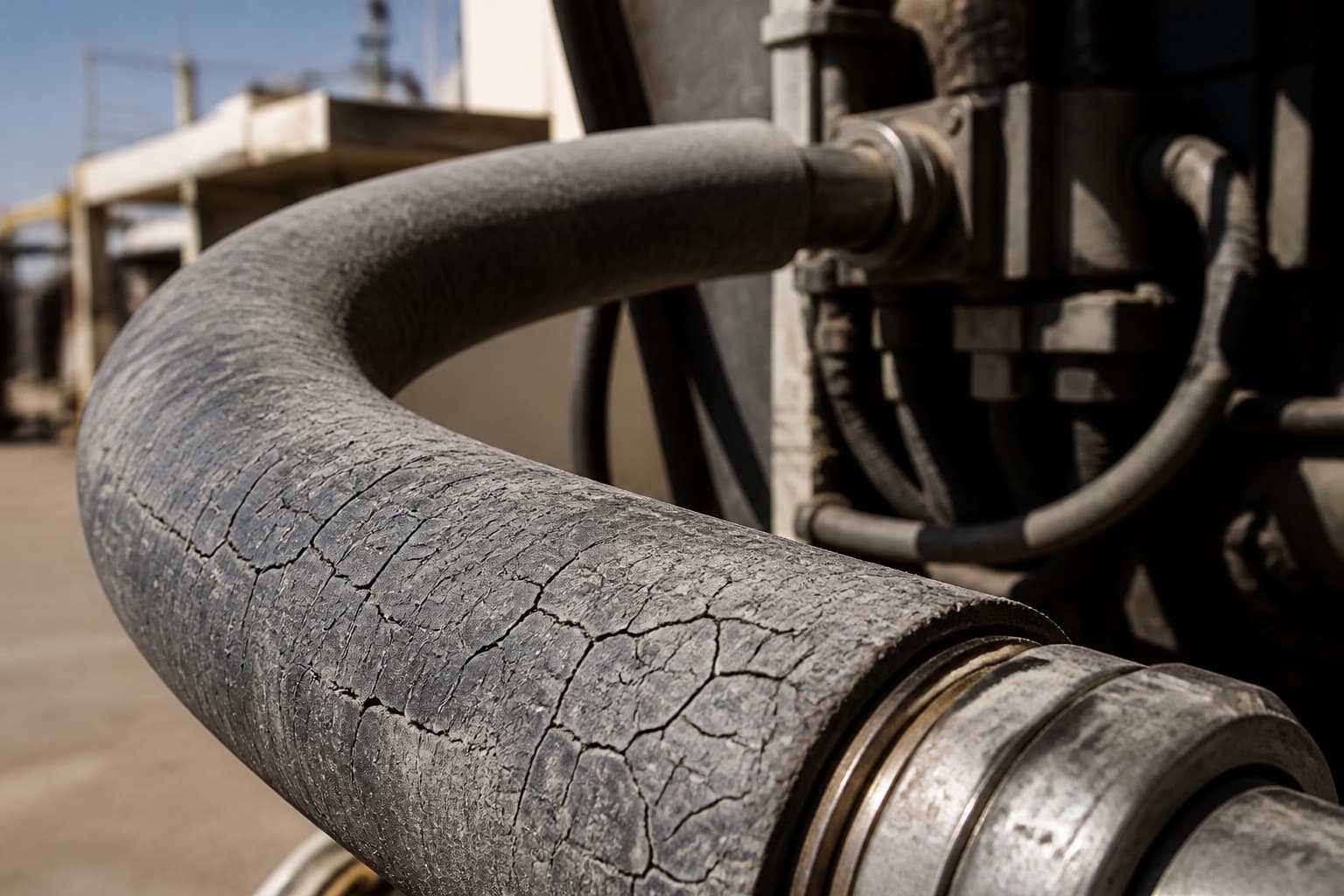
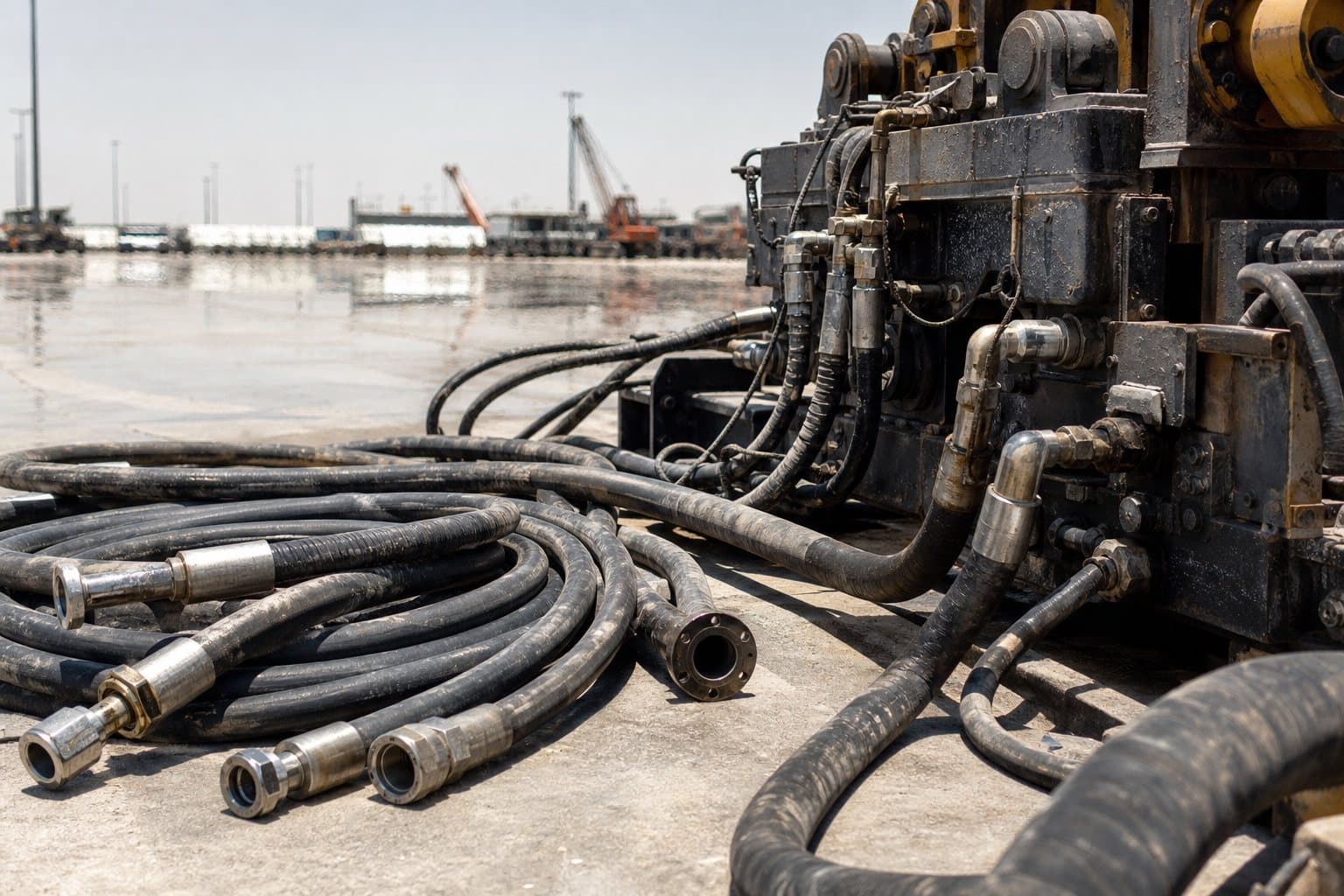
Ozone attacks rubber that is held in tension, and it needs no light and no heat. A hose coiled tightly on a rack has its outer surface stretched for the entire time it sits there, which is why spares can be cracked before they are ever fitted and why the cracks are on the outside of the coil.
/03Cover specification is a real choice.
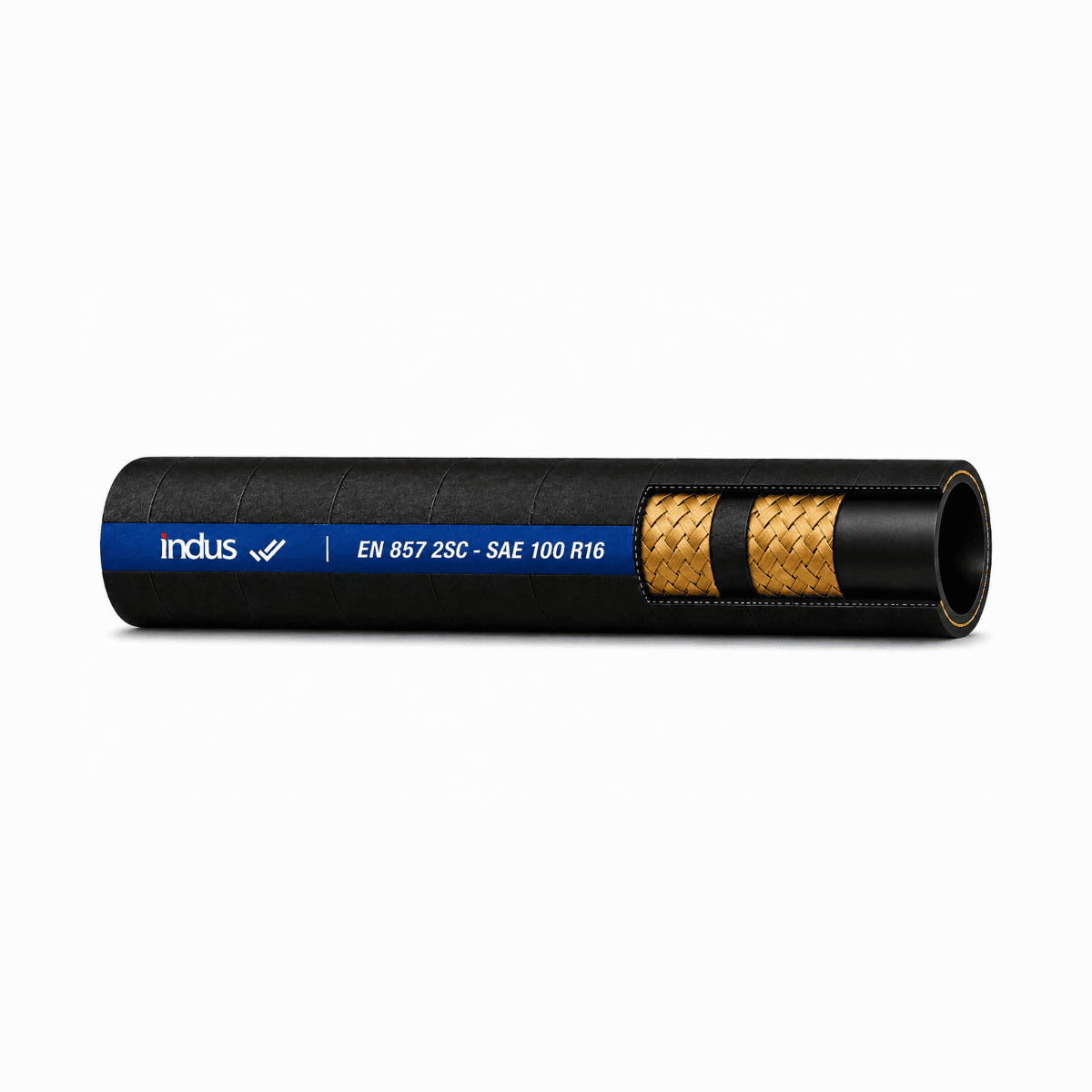
Covers across the grades we stock are specified differently — some abrasion-resistant, some weather-resistant, several both, and some carrying an MSHA acceptance. Those words are the specification, not marketing. A hose chosen for abrasion resistance and put in an exposed static run has been chosen against the wrong hazard.
Where a run is fully exposed and does not rub on anything, weather resistance is what matters. Where it rubs and is shaded, abrasion resistance is. Where it does both — which is most of a working machine — the cover needs to carry both, and several of ours do. 1SN, 2SN and 4SH are among them.
Common questions
- How long does a hose last in direct UAE sun?
- There is no single figure — it depends on the cover compound, whether the hose is also hot, and whether it is under tension. What is reliable is the direction: an exposed run ages faster than a shaded one in the same machine, which is why the fix is usually shade rather than a different hose.
- Is a sleeve enough to protect against UV?
- Yes, for the length it covers. A sleeve fitted for abrasion is doing double duty, and on a fully exposed run it is often the cheapest available improvement.
- Our spares crack in storage. Are they still usable?
- A cracked cover on a wire-reinforced assembly should not be fitted — the reinforcement is exposed from the moment it goes into service. Fix the storage and treat the cracked stock as consumed.
- Does hose colour matter?
- Not in any way you can select on. Cover compounds are formulated for their environment and the colour follows from the compound, not the other way round. Choose on the stated cover specification.