On a frac spread or a cement unit, the valves that isolate each line are usually plug valves: a quarter turn, a full bore when open, and a compact body that sits in a line of iron. The design question is how the plug seals against the body — with grease pumped in, or with a liner that does the job dry. Each answer brings its own maintenance and its own failure modes.
/01How a plug valve works.
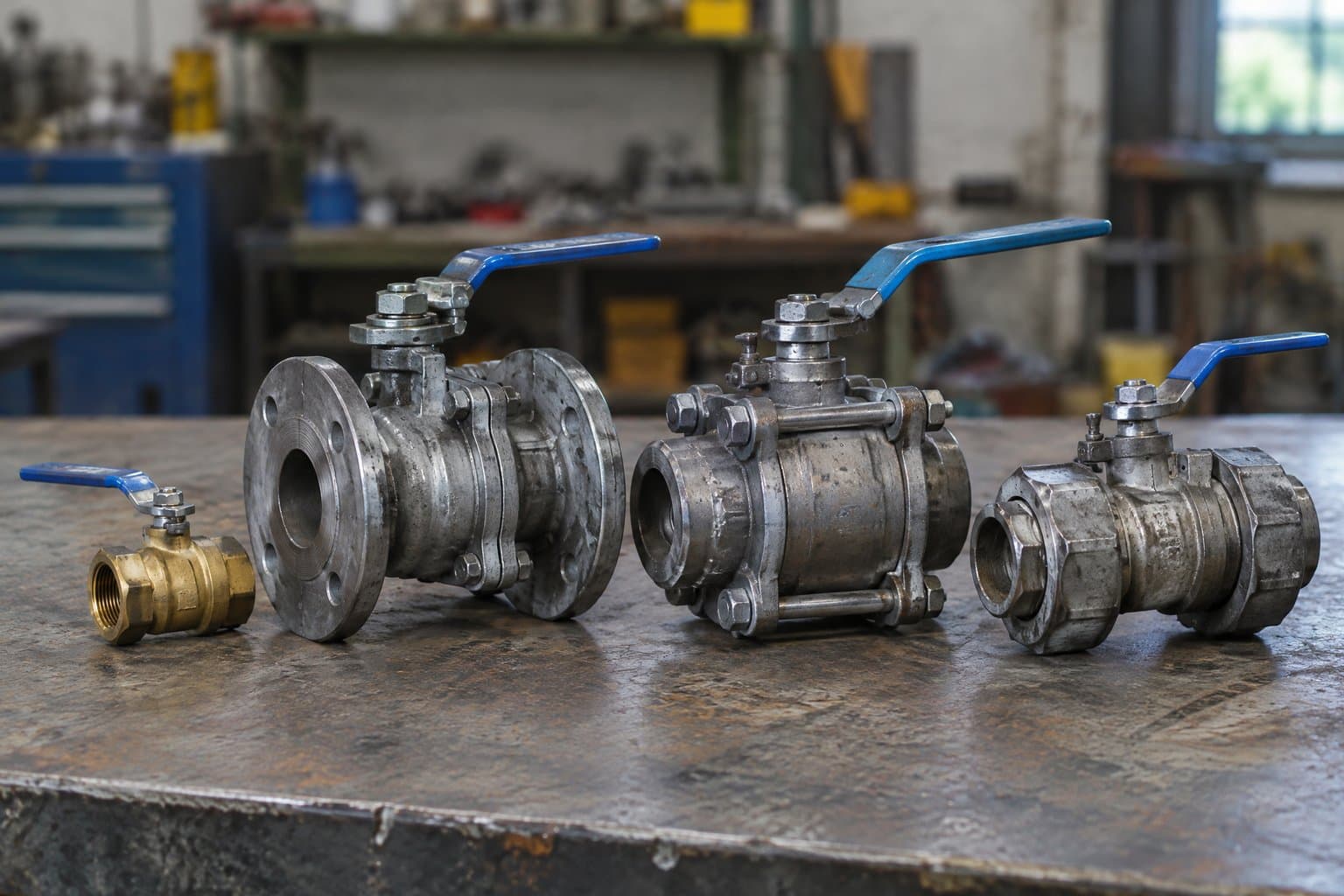
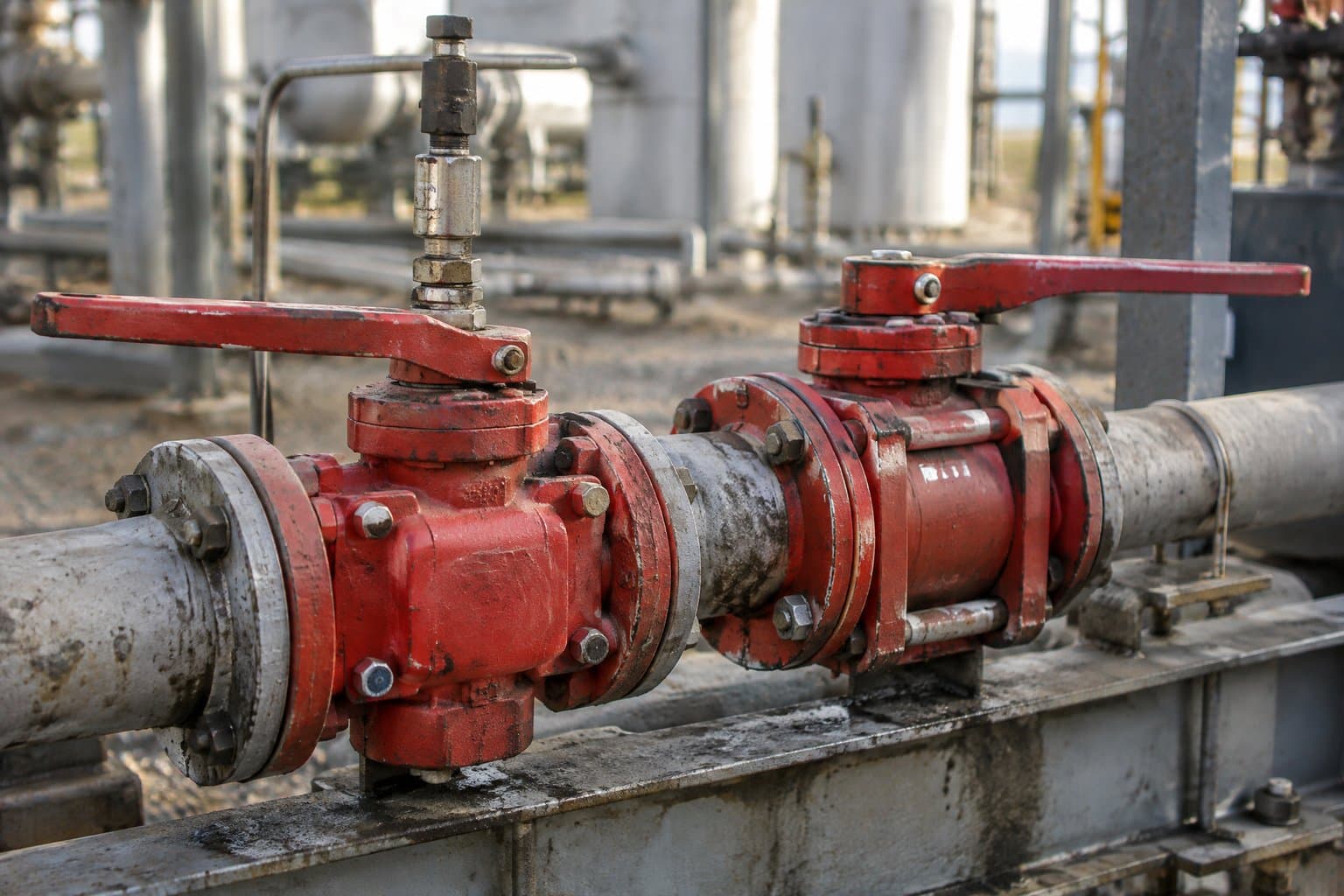
A plug valve is a body with a plug inside it, bored through. Turned a quarter turn one way, the bore lines up with the line and the valve is open, full port on most of our listings; a quarter turn back and the solid side of the plug faces the flow. The seal is made between the plug and inserts or a liner in the body, and everything else about the valve — torque, maintenance, tolerance of sand and acid — follows from how that seal is made.
/02Lubricated and non-lubricated, side by side.
| Property | Lubricated (LT) | Non-lubricated (TE) |
|---|---|---|
| How it sealsHighlighted | Sealant injected between plug and body inserts | Plug against a PEEK liner |
| Plug and body | 17-4PH plug, 410 stainless inserts | 17-4PH or Inconel 625 plug, PEEK liner |
| Seals (as listed) | RPTFE and Viton; HNBR and graphite packing in sour | PEEK and HNBR; RPTFE and Viton on standard units |
| Ends and ratings | 1502: 15,000 psi standard, 10,000 psi sour | 206, 602, 1502, API 6A 15M flanged, ASME 300 and 900 RF |
| Maintenance | Regular re-greasing | No sealant; inspect liner and plug |
/03Lubricated valves.
In a lubricated valve, sealant is pumped through a fitting into grooves between the plug and the body inserts. It fills the clearances that would otherwise leak, eases the plug so it turns more easily, and keeps sand and fluid out of the sealing faces. The cost is maintenance: sealant is lost every time the valve cycles under pressure, so it has to be replenished on a schedule — set by the valve maker and the operator, and on stimulation work often between stages. Our lubricated valves are 2" and 3" full port and 2" × 1" reduced port with 1502 ends, manual or gear-operated.
/04Non-lubricated valves.
A non-lubricated valve replaces the sealant with a liner — PEEK on our listings — that seals against the plug directly. There is no grease to inject or lose, which suits manifolds and process lines where greasing is impractical, and the sour versions pair the liner with an Inconel 625 plug and HNBR seals. Our non-lubricated range runs from 2" and 3" Figure 206 valves at 2,000 psi through 602 and 1502 union valves to a 2-1/16" API 6A 15M flanged valve at 15,000 psi, and to ASME raised-face valves to API 6D: 3" Class 300 at 740 psi and 2" Class 900 at 2,220 psi.
/05Ordering.
Give the size, the end connections (union figure and gender, or flange standard and class), standard or sour service, lubricated or non-lubricated, and the operator — lever, handle or gear. Union-ended valves take the rating of their figure, explained in hammer union figure numbers; the lines they isolate are described in flow iron explained.
Frequently asked questions
- Why do plug valves need greasing?
- Lubricated plug valves seal with injected sealant, which is lost as the valve cycles. Re-greasing restores the seal and keeps the turning torque down. Non-lubricated valves do not need it.
- What pressure is a 1502 plug valve rated for?
- Our 1502 plug valves are 15,000 psi for standard service and 10,000 psi for sour service.
- Can a plug valve be used to throttle flow?
- No. Partly open, it erodes the plug and its seals. Use it fully open or fully closed and throttle with a choke.
- What is a TE plug valve?
- On our listings, TE marks the non-lubricated design, which seals against a PEEK liner rather than injected sealant.
Plug valves
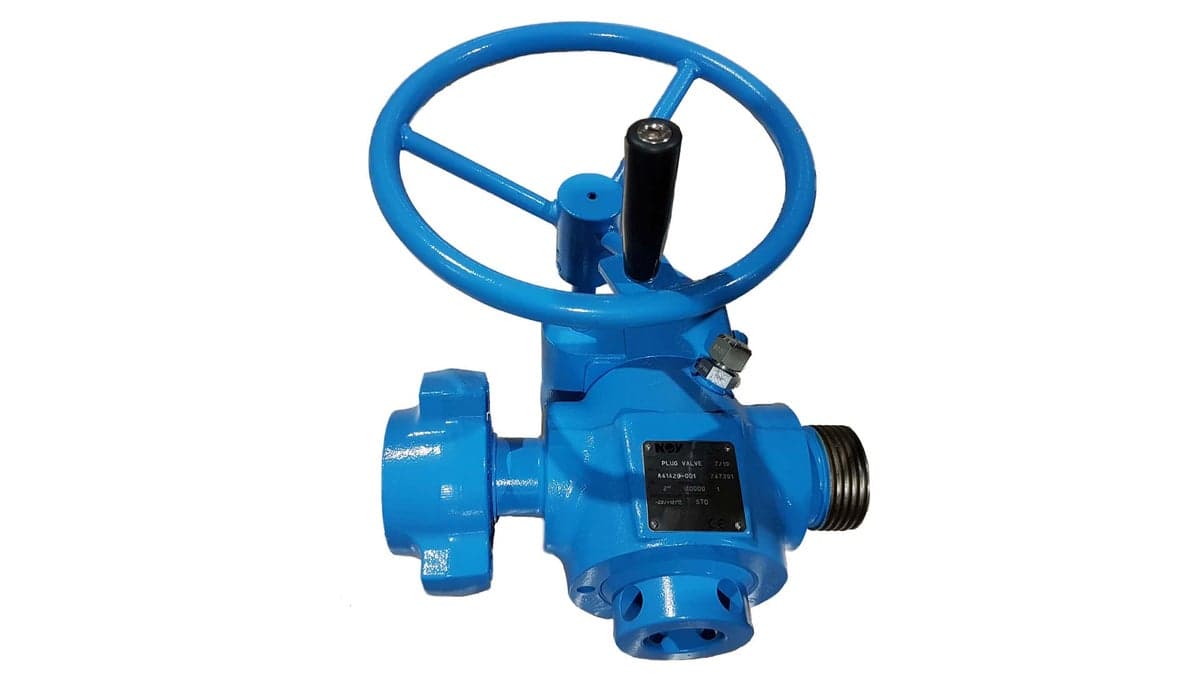 IH-OFV-PLUG-LT-2-1502MF-15K-STD-ANSONPlug Valve, Lubricated (LT), Manual, 2 in × 1502 M×F, 15,000 psi, Standard ServiceAnson
 IH-OFV-PLUG-LT-3-1502MF-15K-STD-FMCPlug Valve, Lubricated (LT), Manual, 3 in × 1502 M×F, 15,000 psi, Standard ServiceFMC Technologies
 IH-OFV-PLUG-LT-3-1502MF-15K-STD-WOMPlug Valve, Lubricated (LT), Gear-Operated, 3 in × 1502 M×F, 15,000 psi, Standard ServiceWorldwide Oilfield Machine
 IH-OFV-PLUG-TE-2-1502MF-10K-SOUR-ANSONPlug Valve, Non-lubricated (TE), Manual, 2 in × 1502 M×F, 10,000 psi, Sour ServiceAnson
 IH-OFV-PLUG-TE-2116-15M-15K-STD-FMCPlug Valve, Non-lubricated (TE), Manual, 2-1/16 in × 15M Flanged, 15,000 psi, Standard ServiceFMC Technologies
 IH-OFV-PLUG-TE-2-602MF-6K-SOUR-ANSONPlug Valve, Non-lubricated (TE), Manual, 2 in × 602 M×F, 6,000 psi, Sour ServiceAnson
- IH-OFV-PLUG-TE-3-206MF-2K-SOUR-INDUSPlug Valve, Non-lubricated (TE), Manual, 3 in × 206 M×F, 2,000 psi, Sour ServiceIndus Hydraulics
- IH-OFV-PLUG-TE-3-300RF-740-SOUR-STREAMFLOPlug Valve, Non-lubricated (TE), Manual, 3 in × 300# RF, 740 psi, Sour ServiceStream-Flo Industries