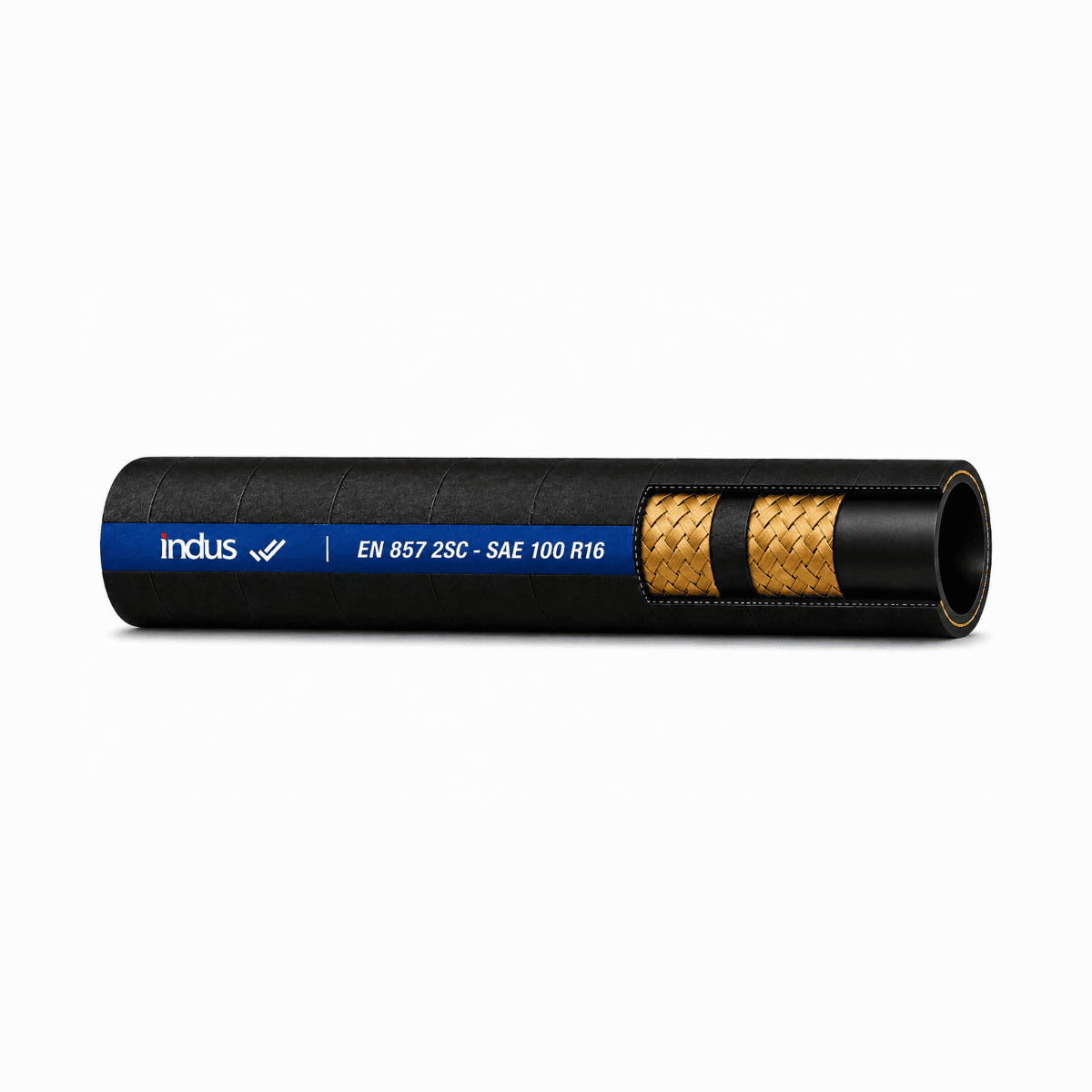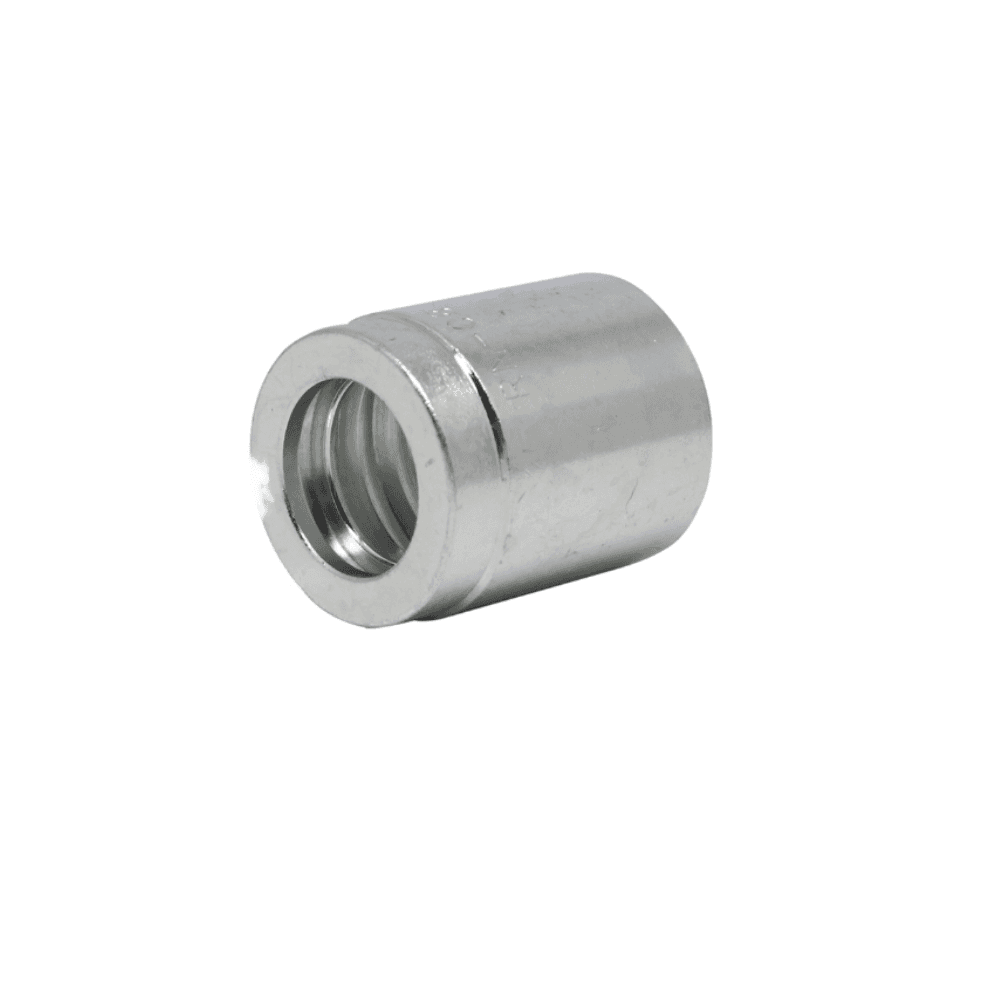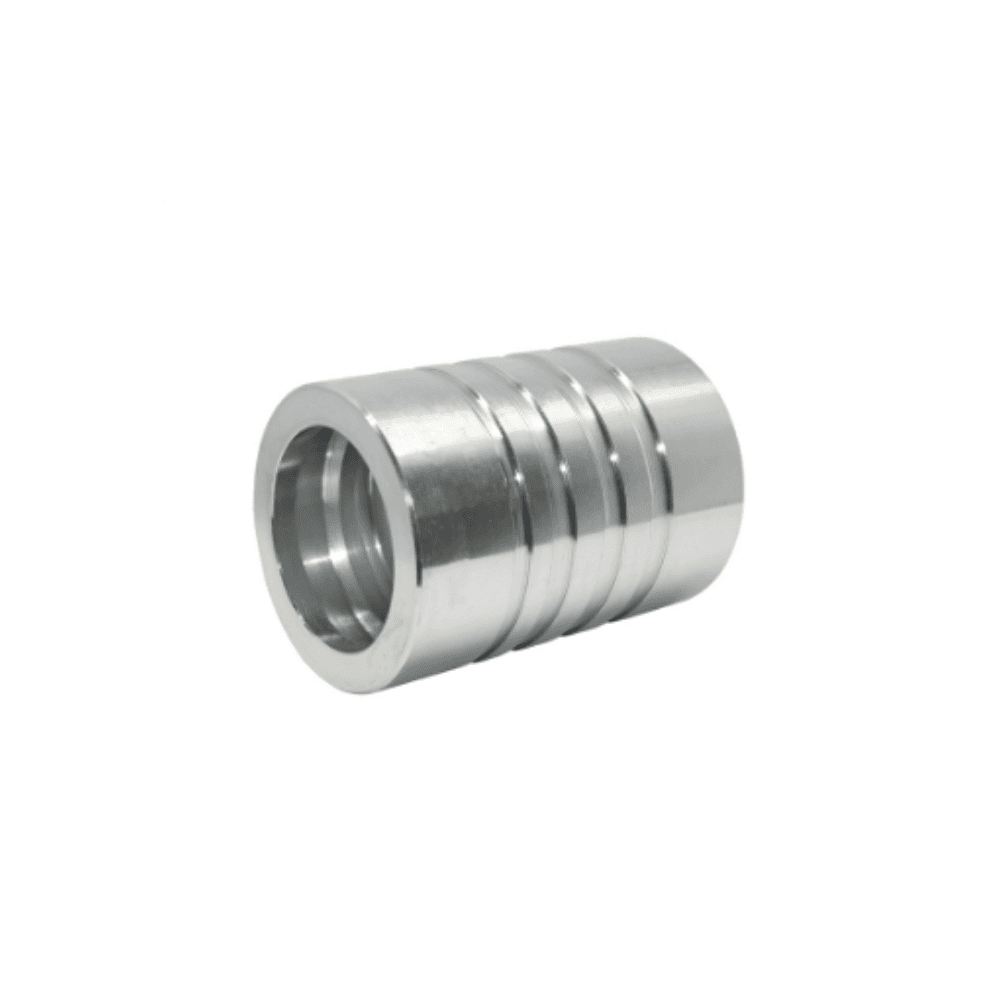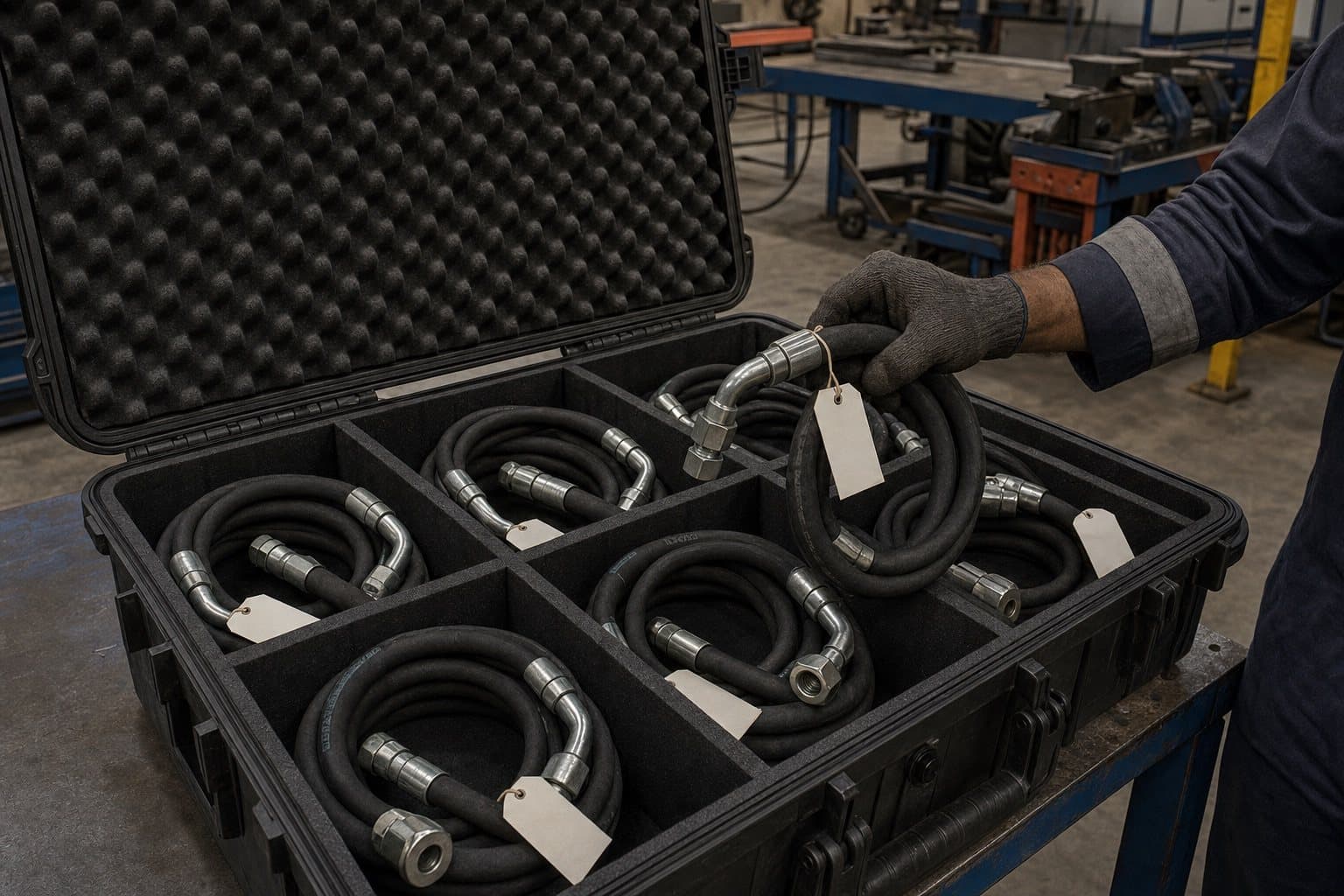
The arithmetic on buying bulk looks compelling: hose is cheap by the metre, fittings are cheap in a box, and a crimper pays for itself in a year. The arithmetic is usually right. What it leaves out is that a crimp is a measured dimension, and owning a press is not the same as being able to state one.
/01What in-house crimping actually requires.
| Requirement | Why |
|---|---|
| The press | The obvious one, and the one people budget for |
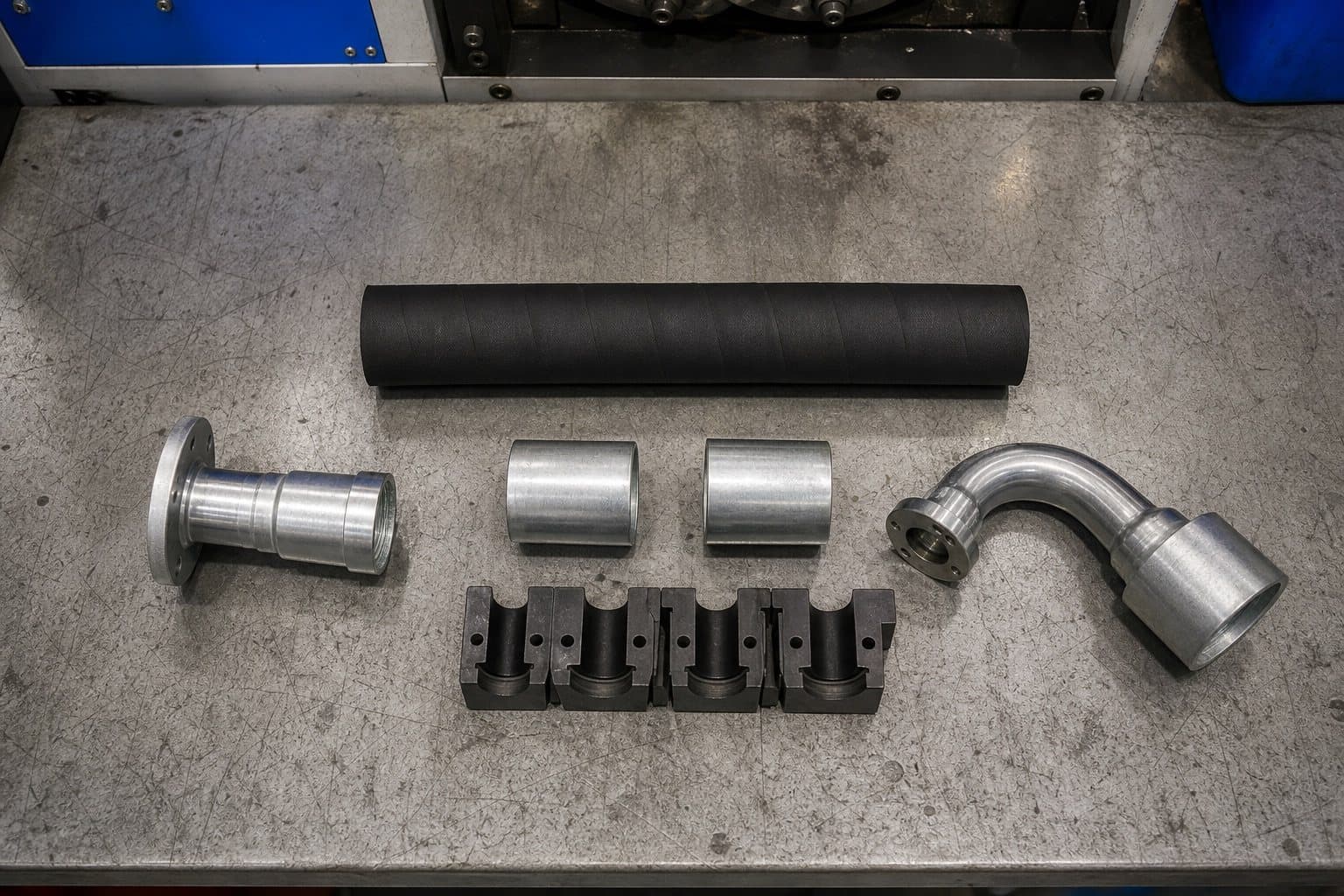
| The correct dies for each combination | Die, ferrule and hose are a matched set |
| The published crimp diameter for each combinationHighlighted | From the fitting manufacturer — not a machine setting |
| Callipers, and the habit of using themHighlighted | A crimp is verified after pressing, every time |
/02What each form is good at.
| Property | Bulk + fittings | Finished assemblies |
|---|---|---|
| Coverage per unit of stockHighlighted | High — any length, many combinations | One part number each |
| Shelf ageing | Better — gentler strain, no fittings to corrode | Worse — coiled, with fittings |
| Time to fit when a machine stops | Minutes plus a crimp | Minutes |
| Test recordHighlighted | Only if you test | Supplied with the assembly |
| Skill required on site | Real | None beyond fitting |
| Cost per assembly | Lower once volume justifies the kit | Higher per unit |
/03The split most fleets land on.
Bulk for the everyday work — general circuits, common bores, standard ends, where a hose is a hose and the workshop can build one in twenty minutes. Finished and certified for anything where a failure has a consequence beyond downtime: cranes, access platforms, anything inside an inspection regime, anything a competent person will ask about. Bulk means hose such as 2SN by the metre, with the matching no-skive ferrules and ends.
That split is about consequence, not cost. It happens to be roughly what most well-run fleets converge on, and the reasoning is worth being explicit about rather than arriving at by habit.
Common questions
- Will you supply crimp specifications for hose we buy from you?
- Yes. If you are crimping our hose onto our ferrules, ask and we will give you the published crimp diameter for each combination. You should not be guessing it and we should not be leaving you to.
- Can we crimp your ferrules onto another brand’s hose?
- The crimp specification is defined for a specific hose-and-ferrule combination, so mixing them means nobody can state the correct diameter. We would rather supply both sides than have you build assemblies with no defined specification.
- Do we need to proof test what we build?
- For general circuits it is good practice. For lifting, access and anything within an inspection regime, treat it as necessary — and if you cannot test, buy those assemblies finished.
- Is a crimper worth it for a small fleet?
- It depends on volume and on how far you are from a workshop. For a site four hours out, often yes. For a yard in Dubai, frequently not.