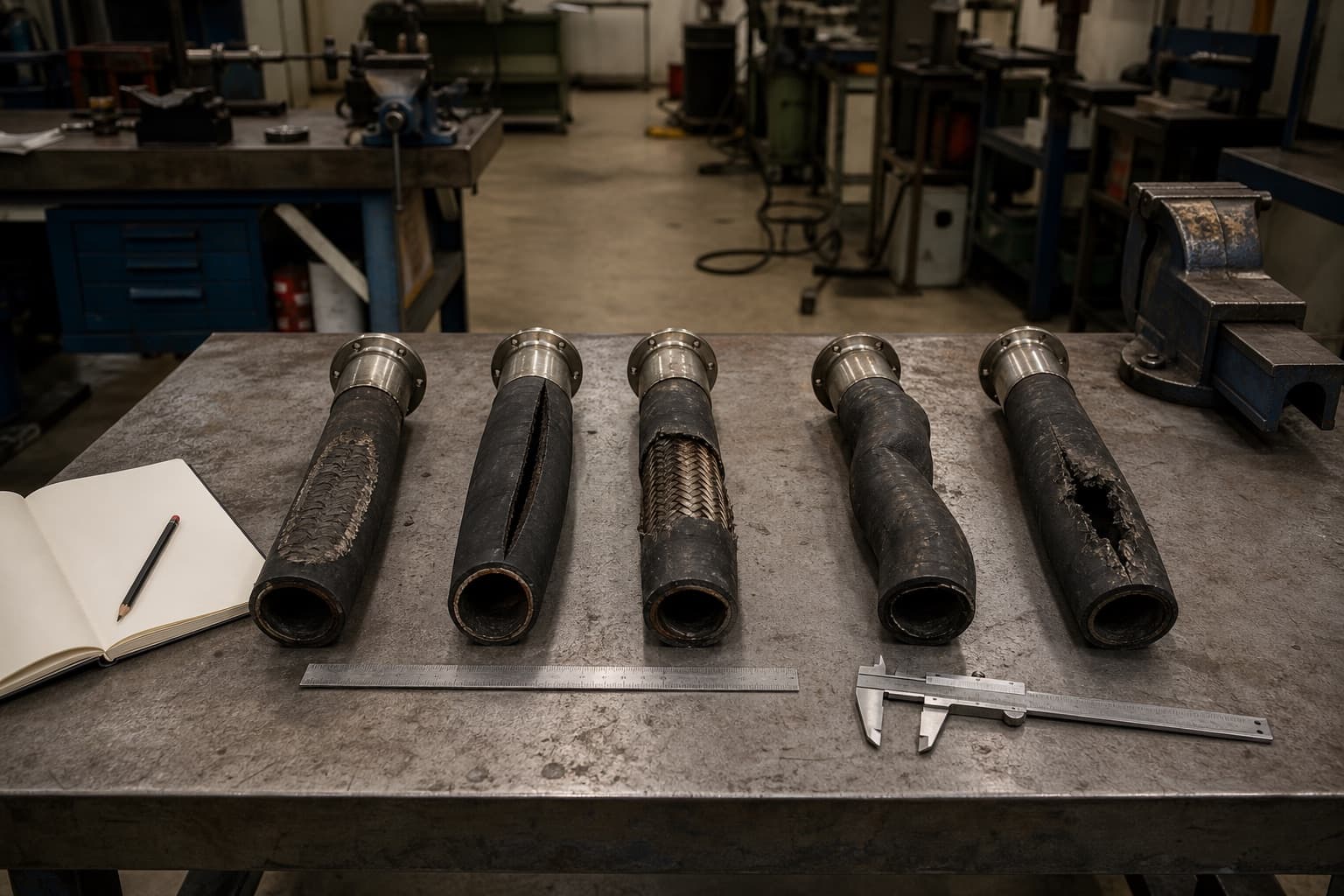
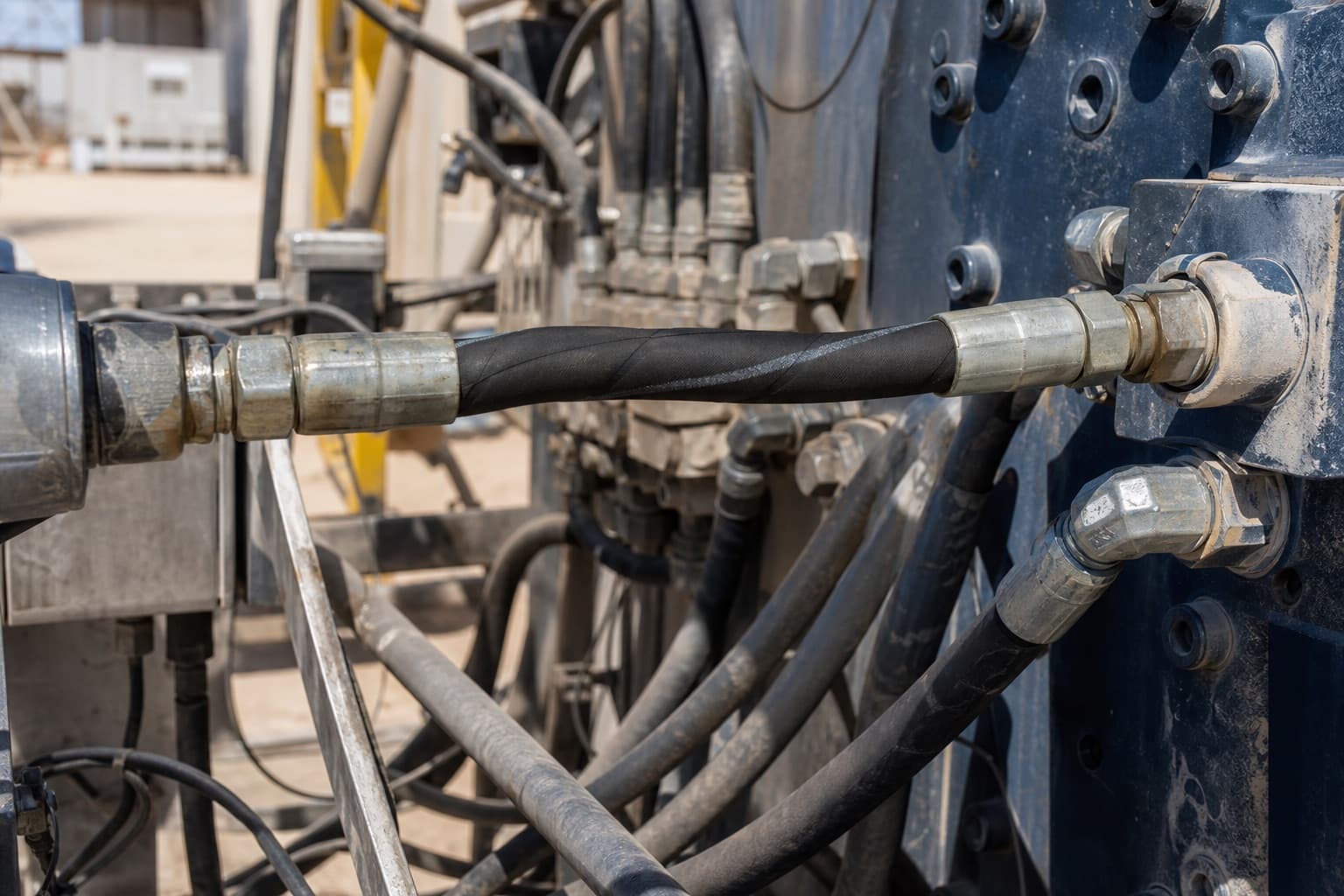
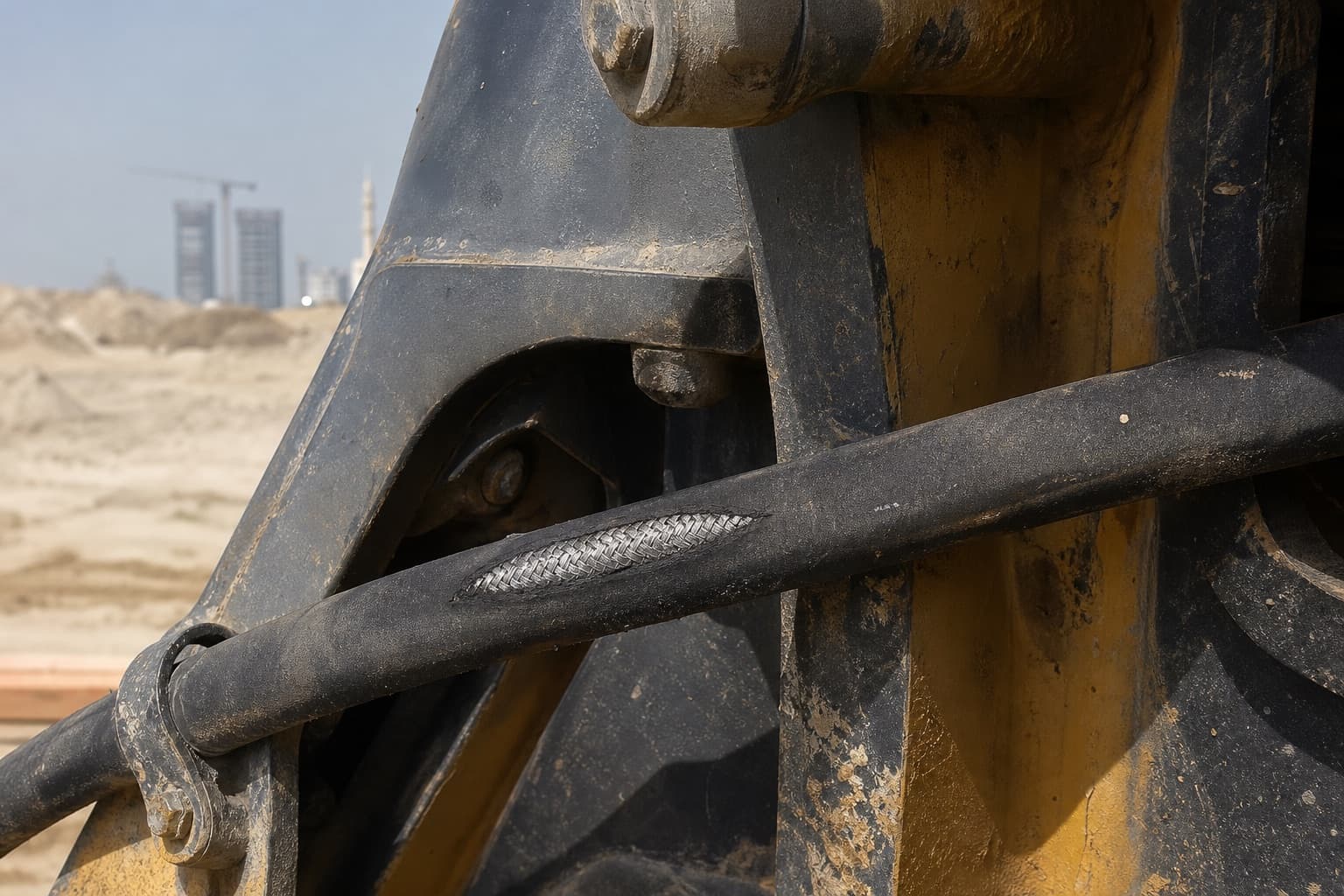
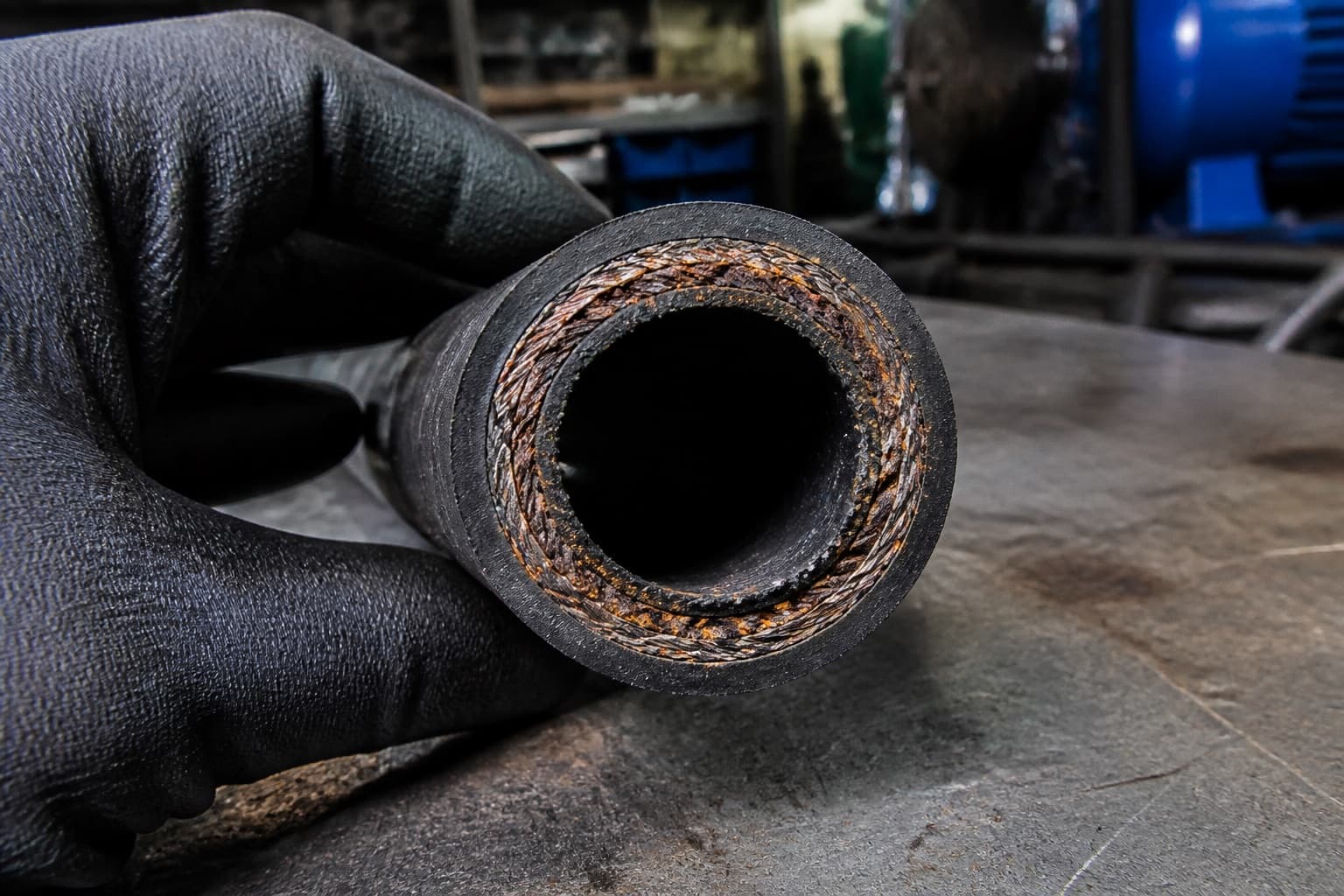
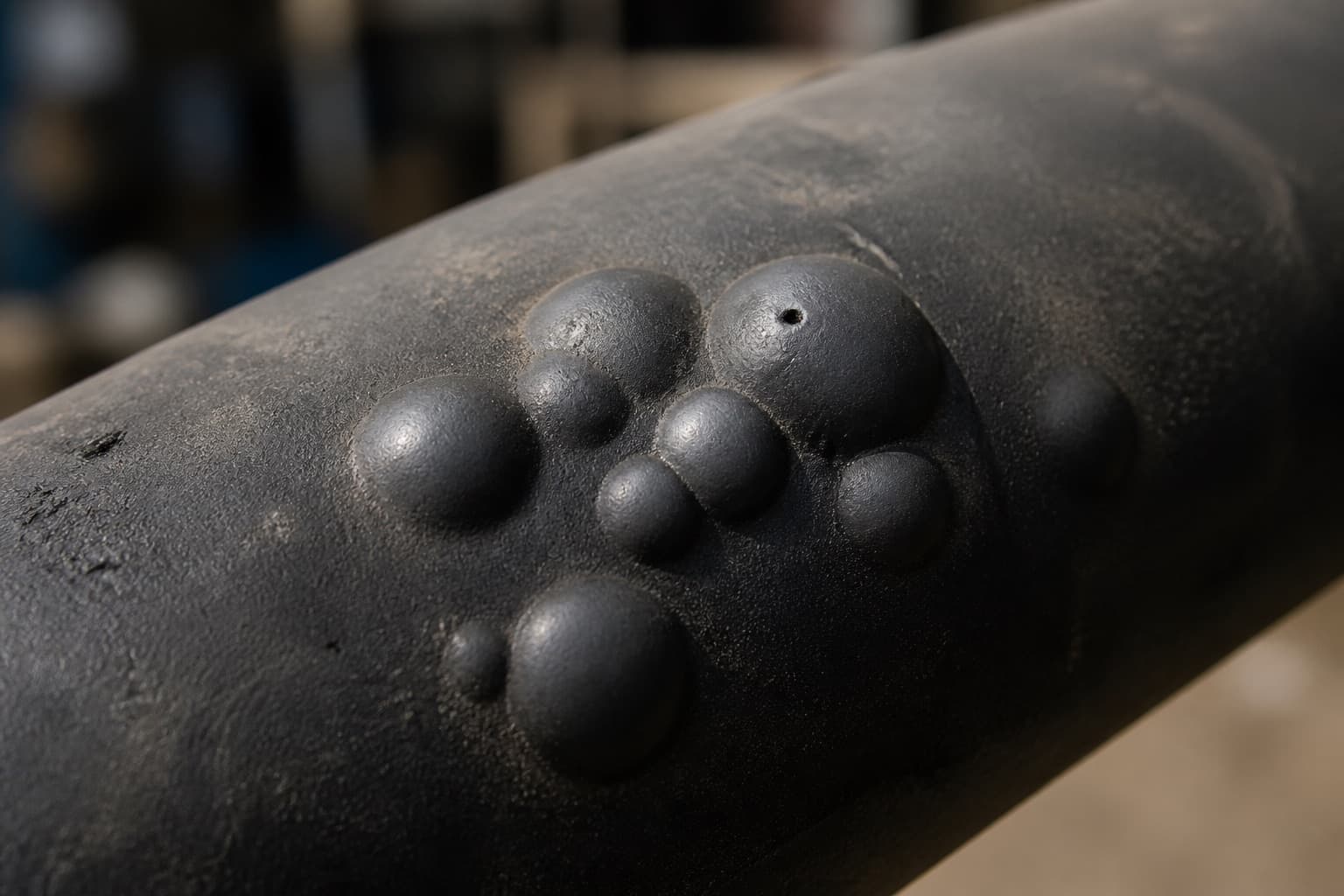
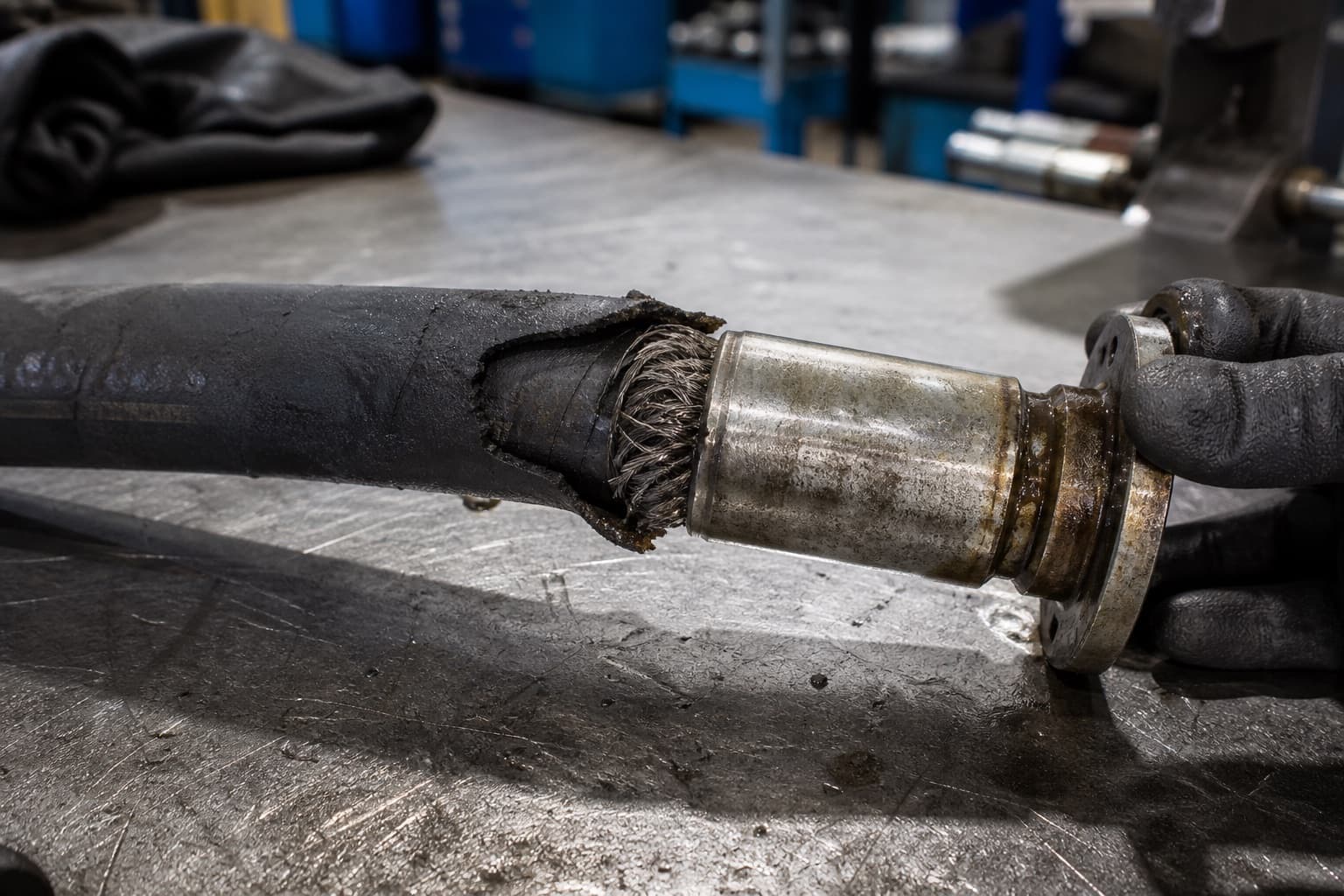
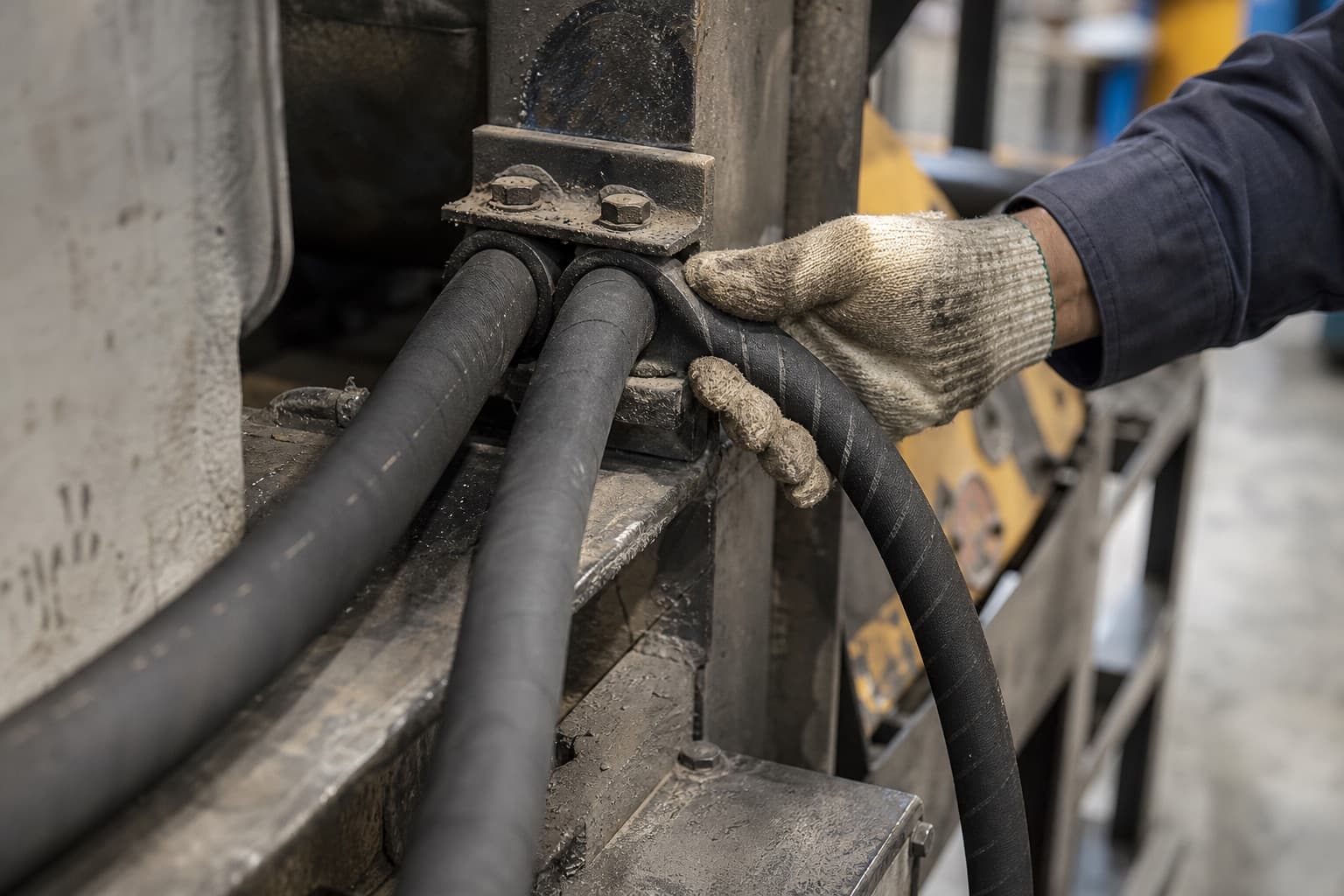
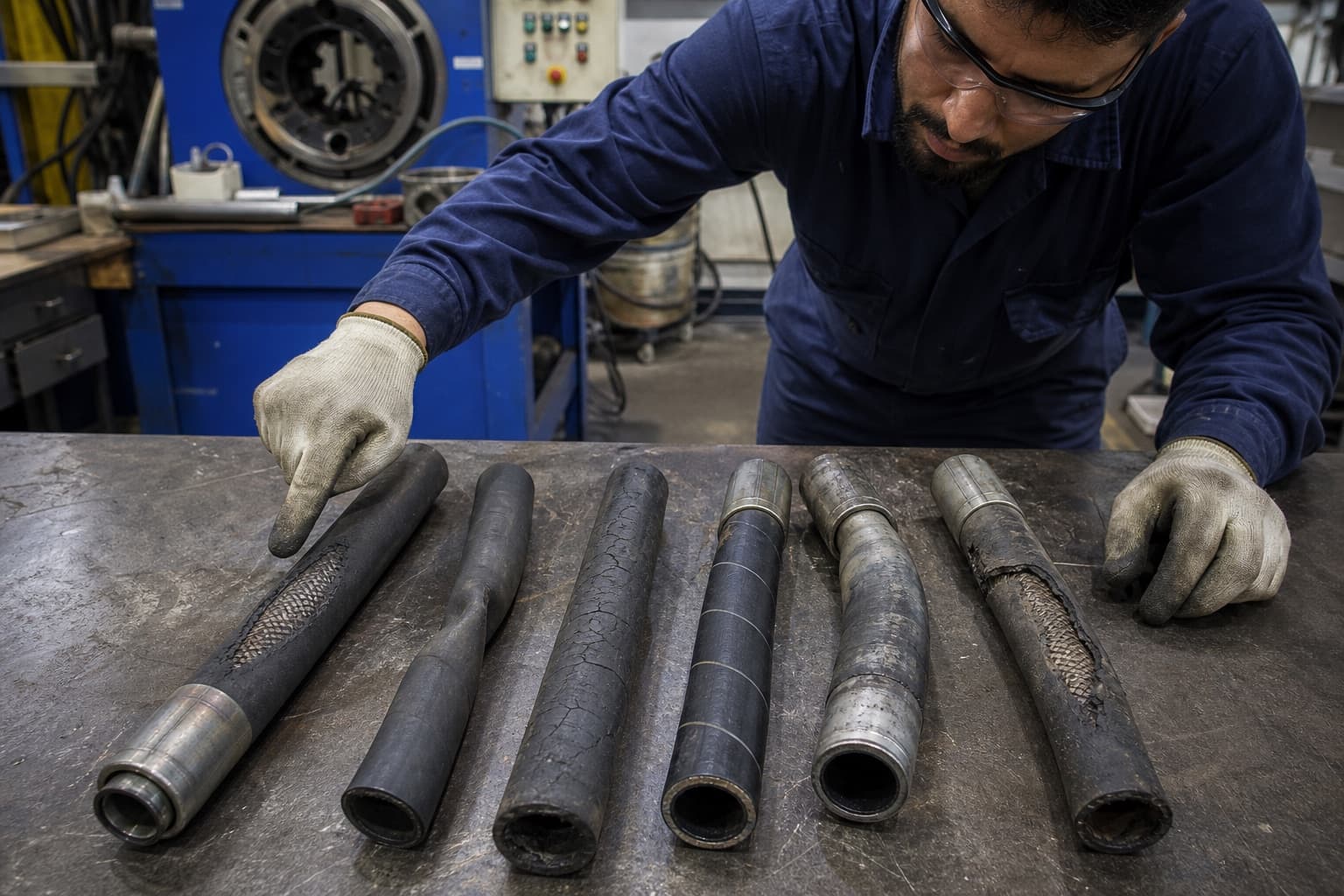
A failed hose usually tells you why it failed. Cover condition, wire exposure, burst geometry and fitting witness marks each point somewhere different.
22 articles
Why do hydraulic hoses fail?
Almost never from a defect in the hose. The common causes are abrasion at a rub point, installation with a twist, a bend tighter than the rated radius, heat ageing, fluid incompatibility and a crimp outside specification. Each leaves distinct physical evidence, which is why a failed hose is worth examining rather than binning.
A hose that failed once will fail again in the same place unless the cause changes. The replacement is the easy half; the diagnosis is the half that stops it recurring.
What the evidence points at
What you find
Points at
Burst at or just behind the fitting
Crimp, flexing at the ferrule, or a bend starting too close to the end
Burst mid-length, wire splayed
Pressure event, or a hose past its impulse life
Cover worn through on one side only
Abrasion at a rub point — the hose was routed against something
Wire corroded under an intact cover
Water tracking under the cover, often from a pinhole or a cut
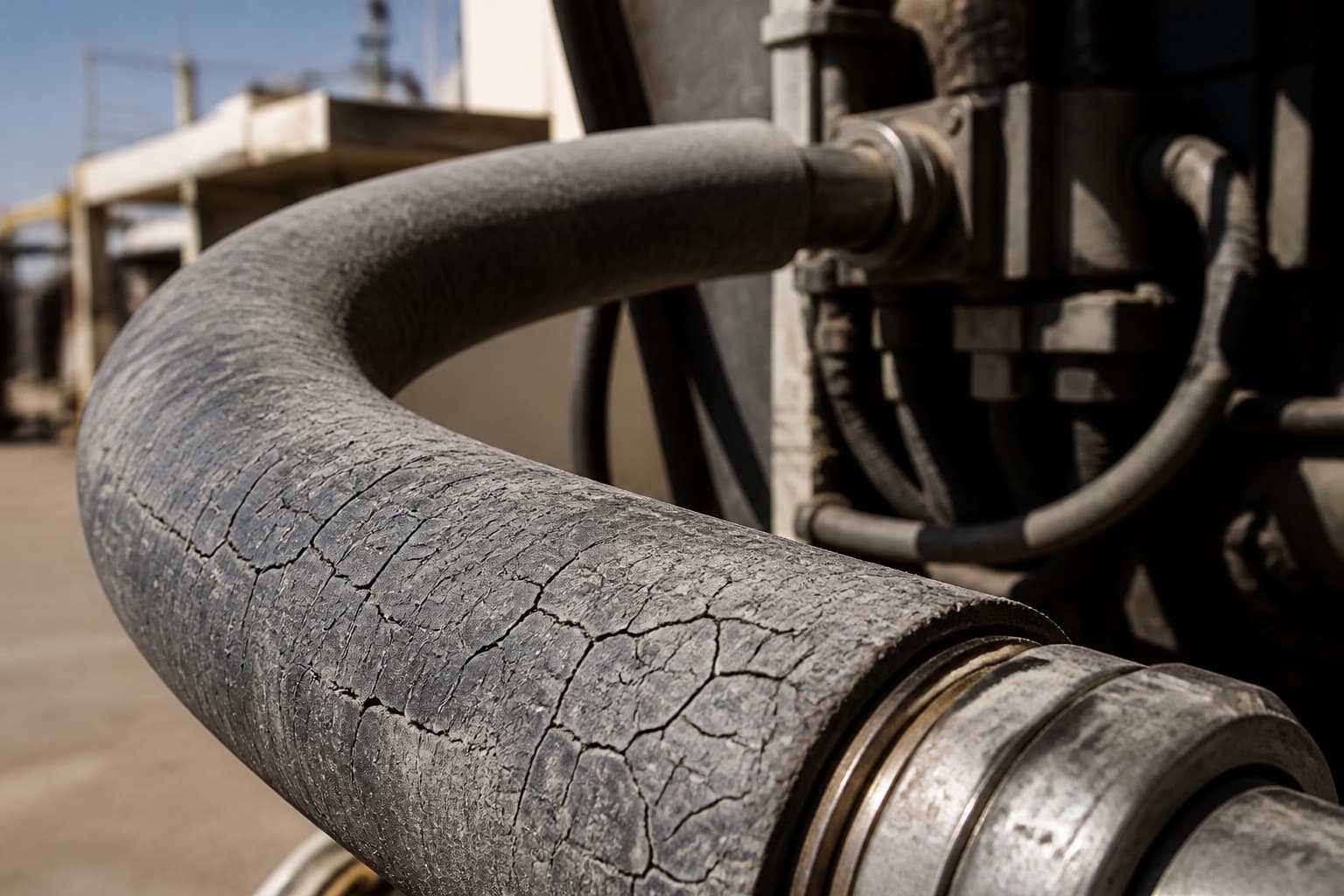
Cover cracked all over
Heat ageing or ozone and UV exposure
Tube swollen, soft or hardened
Fluid incompatible with the tube compound
Hose twisted along its length
Installed with a twist — it has been losing life since day one
Send photographs of the failure and the routing. A hose that fails twice in the same place is a routing or specification problem, and replacing it again will not fix it.
A fitting can be contaminated before anyone opens the bag. What happens to parts over a long sea leg and a longer shelf, and the two minutes that prevent it.
Tape on a tapered thread is correct. Tape on a cone, a flat face or an O-ring boss is how a good joint is made to leak — and how debris gets into the system.
The fitting is cheap and the thing it screws into is not. How to judge what is in front of you, and the cases where the honest answer is that it is finished.
Both faults leak, and the marks they leave are different. What to look for on a joint somebody else assembled, and which of the two is the expensive one.
A weep is evidence before it is a fault. Where the oil appears — at the seat, down the thread, under the nut — narrows the cause to one of four things.
A cracked female coupler body is not a manufacturing defect and it is not bad luck. It is almost always one of three things, and two of them are avoidable for nothing.
What is recoverable depends on something most people never think about: whether that port seals on the thread or somewhere else. Get that question right and the decision makes itself.
A hose fitted this morning is damp by the afternoon. The crimp is the last thing to suspect, not the first — and there are five checks ahead of it that take a minute each.
Most hose failures get replaced, not investigated, so the same position fails again next quarter. This is the record that turns a replacement into a fix — eleven fields, five minutes, and no special equipment.
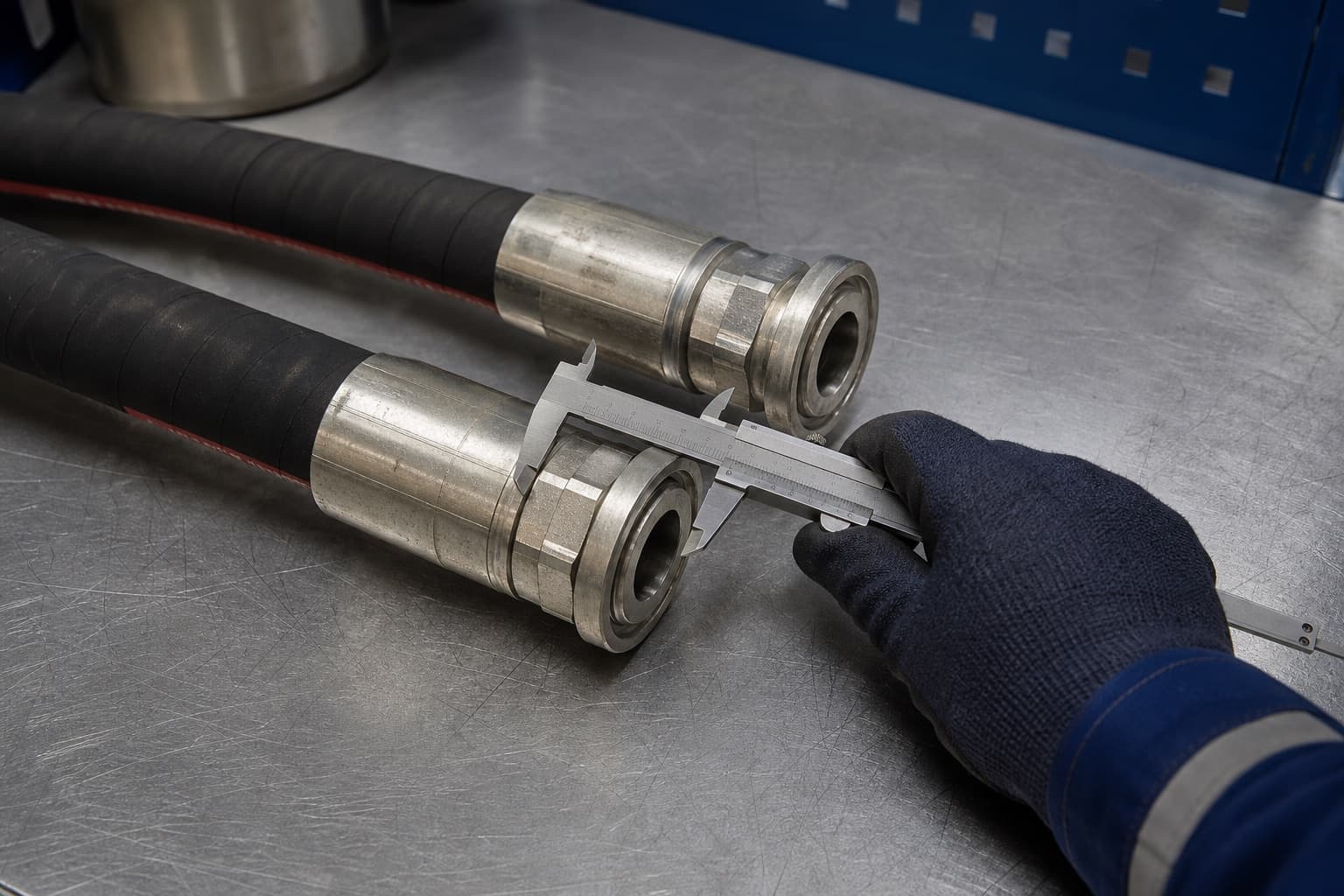
A crimp is a measured diameter with a tolerance in tenths of a millimetre. Miss it in either direction and the assembly fails — but it fails differently, and the difference is visible on the failed part.
A cover covered in fine cracks has been cooked, or has been sitting in sunlight and still air. The crack pattern separates them, and only one of the two is fixed by moving the hose.
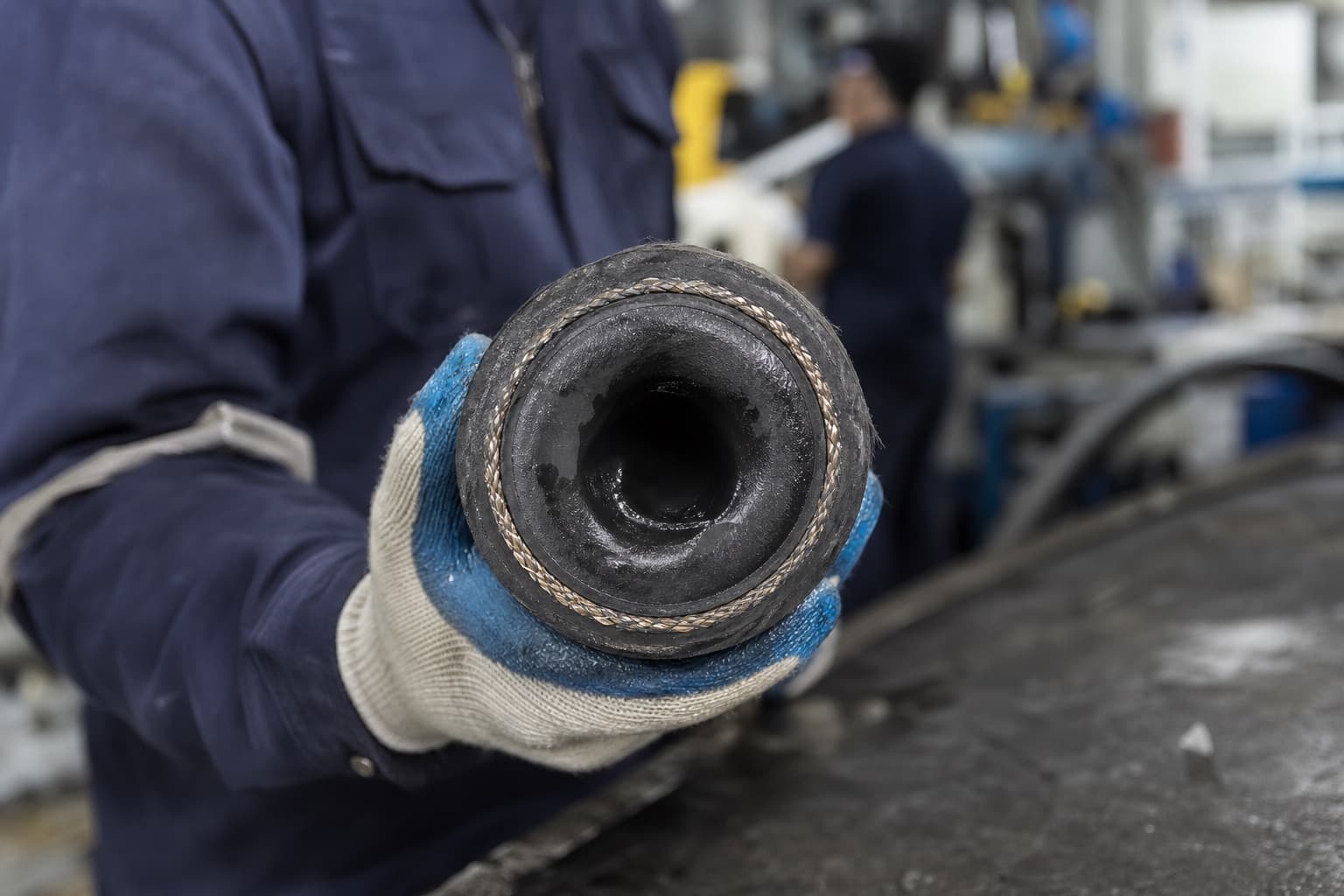
Cut a failed hose open and the tube tells you whether the fluid was wrong. Swollen and soft is one problem, shrunken and brittle is the opposite one, and both mean the hose and the fluid were never suited.
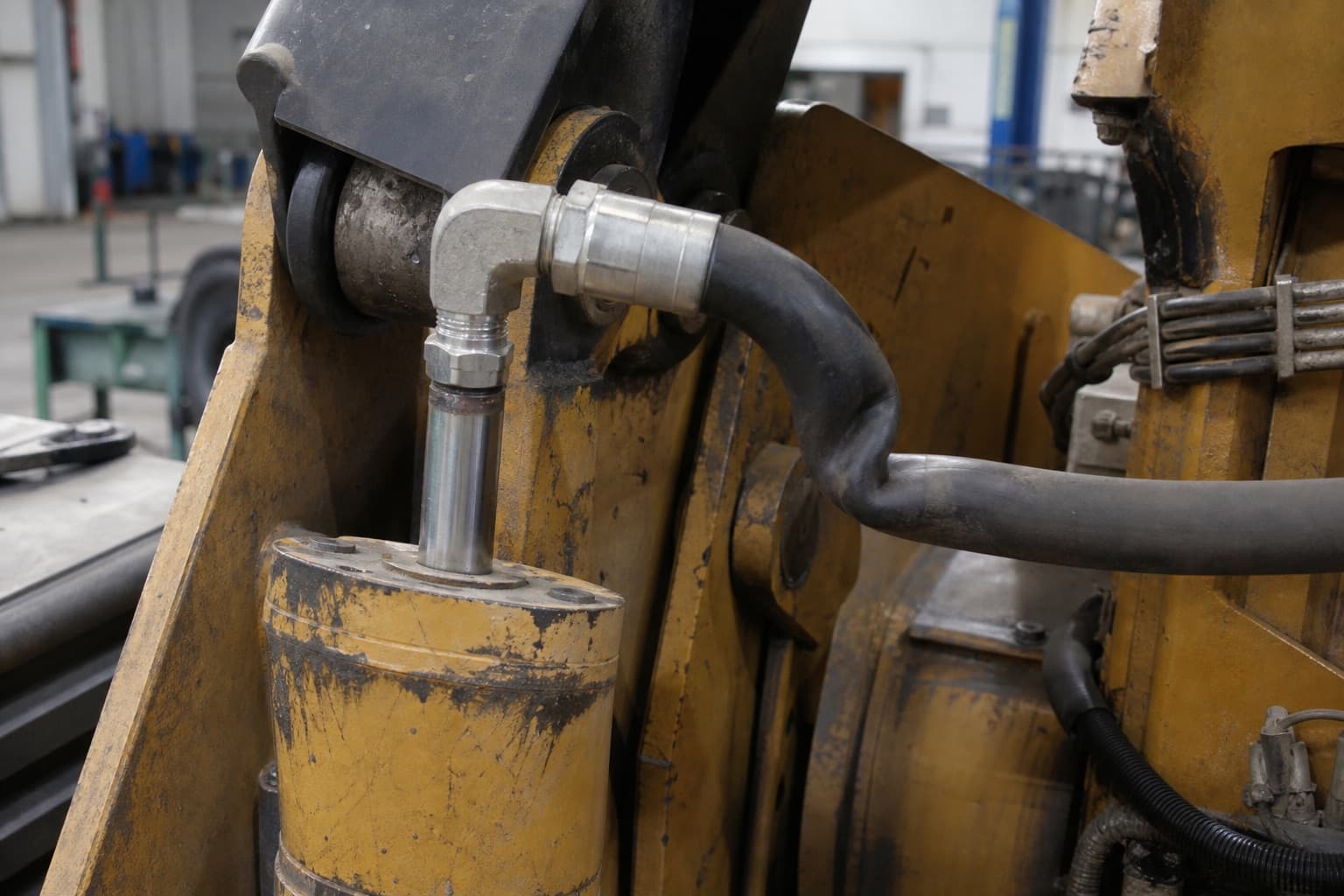
A hose bent tighter than its rated radius is damaged whether or not it looks it. The fix is almost never a more flexible hose — it is turning the line at the fitting instead of at the hose.
A hose fitted with a twist in it has been failing since the moment it was tightened. The layline shows you immediately, it takes seconds to check, and almost nobody does.
The most preventable hose failure there is. A hose worn flat on one side has been telling you where it touches something for months — and the wear pattern points straight at the cause.
A hose can look perfect and have rusted reinforcement. The cover is not waterproof once anything has broken its surface, and in a coastal climate the wire goes long before the rubber shows anything.
A bubble under the cover looks like a manufacturing fault and normally is not. It is gas that got through the tube and could not get out through the cover — which tells you something specific about the fluid and the duty.
Where a hose failed is diagnostic. A burst within a hand’s width of the ferrule almost never means the hose was under-rated — it means something at that end was wrong, and replacing like for like will do it again.
Three installation faults account for a large share of premature hose failure, and all three are free to avoid at fitting time. What they look like and how to design them out.
A failed hose usually tells you why it failed. Abrasion, kinking, heat, cold-set, wrong routing and fitting problems each leave a different signature — and each has a different fix.