
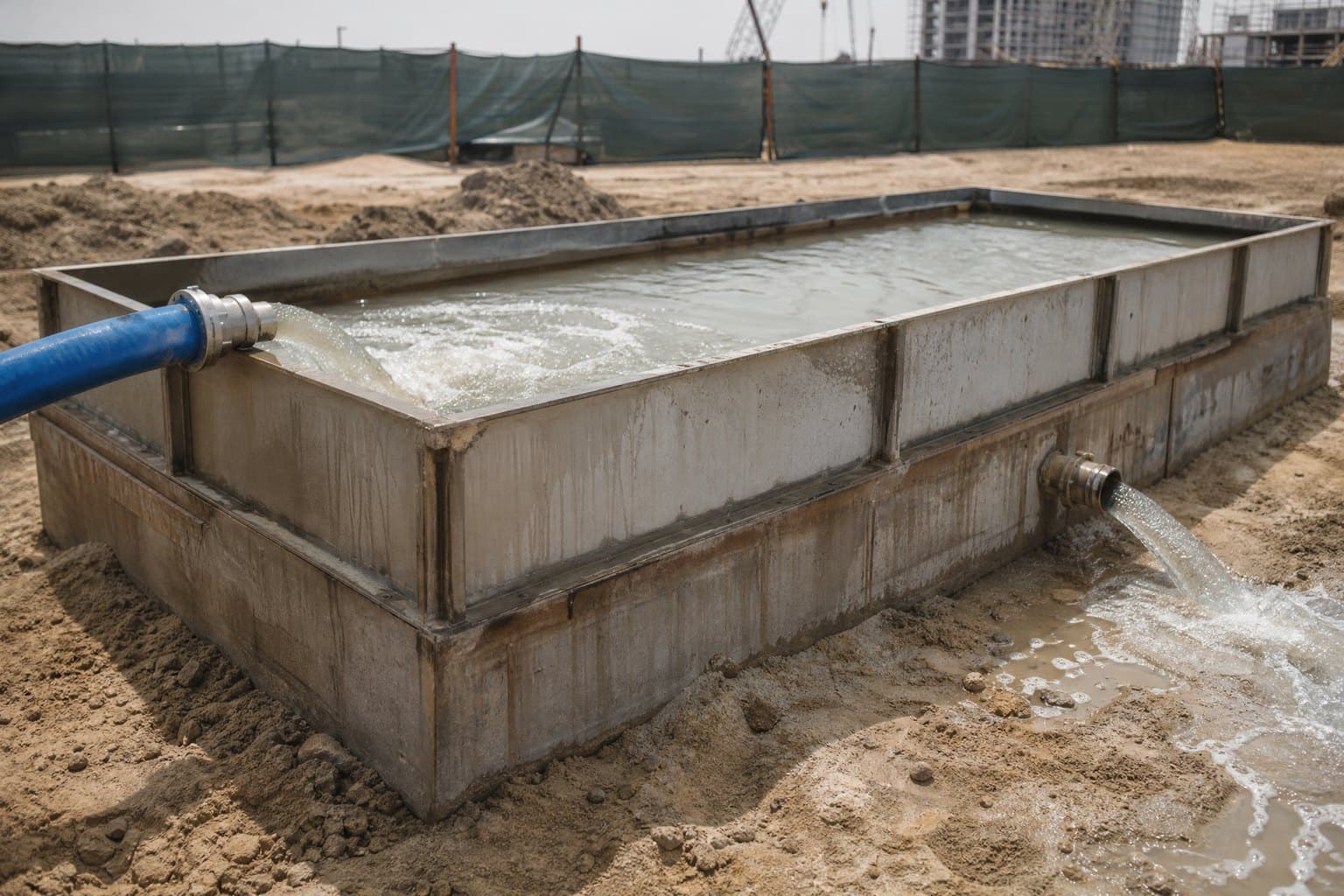
On a Gulf construction site the dewatering pumps often start before the piling rig arrives — and before they do, someone has to obtain permission to discharge the water. The rules differ from city to city, but they share a logic: the authority wants to know how much water will be pumped, where it will go, how the sand and silt will be taken out of it, and that the equipment on site matches the paperwork. This guide sets out what we could verify from official and published sources in October 2026. Rules change; always confirm with the authority or your consultant before applying.
/01Dubai.
Dubai Municipality lists a Permit to Dewater Groundwater in Construction Sites among its services, alongside an NOC to Discharge Groundwater into Temporary Lagoons and an NOC to Withdraw or Discharge Water from and to the Sea. The underlying rules for discharge into the public drainage network are in Local Order No. 8 of 2002 on sewerage, irrigation and water:
- Article 27 — discharging dewatering water into the rainwater drainage network requires a written permit, which states the number of dewatering points, the number and capacity of pumps, the pipe diameter and the specification of the sedimentation tank.
- Article 28 — a sand trap must be provided and kept clean at all times.
- Article 29 — pumping must stop if infiltration or leakage is found.
- Article 30 — the site must be restored and a completion certificate obtained; the order also sets a security deposit and daily charges per dewatering point.
Two further points. Within its own area, the Dubai Development Authority issues a separate Dewatering NOC for discharge to the storm network or a temporary lagoon; its published terms are a 6-month validity and an application that includes the dewatering contractor’s trade licence and a drawing. And Dubai Law No. 11 of 2024, which created the Dubai Environment and Climate Change Authority, gives that authority groundwater licensing powers — so check which body handles your application today.
/02Abu Dhabi.
Abu Dhabi regulates groundwater under Law No. 5 of 2016, which makes the Environment Agency – Abu Dhabi the licensing body for groundwater activities. Construction dewatering applications have been handled by the municipality under its dewatering design guidelines, which set monitoring requirements by hazard zone, distance to neighbouring structures and depth of excavation. We could not confirm the current permit name or issuing department, so treat this as orientation and confirm with the municipality and EAD.
/03Qatar.
In Qatar, Ashghal (the Public Works Authority) published its guideline Management of Construction Dewatering in 2014, including requirements for treating the effluent. Ashghal prequalifies dewatering contractors, and approved contractors apply for permission to discharge into its drainage networks. Ashghal has described five routes for dewatering water: the storm network, direct to sea, temporary lagoons, injection into deep aquifers, and reuse on site. Developer permit-to-work requirements we have seen add sedimentation tanks or filters to Ashghal’s standard, calibrated flow meters and weekly reporting of TSS, TDS, pH, turbidity and odour.
/04Elsewhere in the GCC.
Saudi Arabia, Kuwait, Oman and Bahrain all regulate discharges to drains, the sea and the environment, usually through the municipality and the environmental regulator, but we could not verify a specific construction dewatering permit for them from official sources. Ask the main contractor or consultant which approvals apply to the project, and expect the same questions: flow, discharge point, sediment removal and monitoring.
/05Building the hose and pump plan.
Because the permit describes the equipment, the equipment has to be decided first. A plan that gets through quickly answers these questions on one drawing and one schedule:
| Permit asks for | Decision behind it | Where to start |
|---|---|---|
| Number of dewatering points | Method: wellpoints, deep wells or sumps | Dewatering design |
| Number and capacity of pumps | Total flow, duty and standby pumps | Pump schedule |
| Pipe diameterHighlighted | Discharge line bore for total flow and length | Friction loss check — lay flat or pipe |
| Sedimentation tank | Tank size and inlet and outlet connections | Hose couplings to suit the tank |
| Discharge point | Route to network, lagoon or sea | Hose length and road crossings |
| Monitoring | Flow meter and sampling point on the line | Flanged or grooved connections for the meter |
For the discharge line, lay flat hose is the usual choice: it runs from pumps to tank and from tank to outfall in long lengths, and it is easy to re-route as the excavation advances. Size the bore for the total flow over the full length using our friction loss guide, use flanged or grooved couplings where the line meets a flow meter or tank, and remember Article 29: leaks stop the pumping. Couplings fitted properly and a daily walk of the line are part of compliance.
Common questions
- Who issues dewatering permits in Dubai?
- Dubai Municipality issues the permit to dewater groundwater on construction sites and NOCs for discharge to lagoons or the sea; the Dubai Development Authority issues a dewatering NOC in its area. The Dubai Environment and Climate Change Authority also holds groundwater licensing powers under Law No. 11 of 2024 — confirm which applies.
- What does a Dubai dewatering discharge permit specify?
- Under Local Order No. 8 of 2002: the number of dewatering points, the number and capacity of pumps, the pipe diameter and the sedimentation tank specification.
- Who regulates construction dewatering in Qatar?
- Ashghal, under its Management of Construction Dewatering guideline. Discharge to its drainage network is through prequalified dewatering contractors.
- Is a settlement tank required?
- Dubai requires a sand trap kept clean at all times before discharge to the network, and Qatar expects sedimentation tanks or filters. Plan for one on every site.
- Can lay flat hose be used for the permitted discharge line?
- Yes. It is the usual discharge line from pumps to settlement tank and outfall. Record the bore on the application and use the same size on site.
For the discharge line
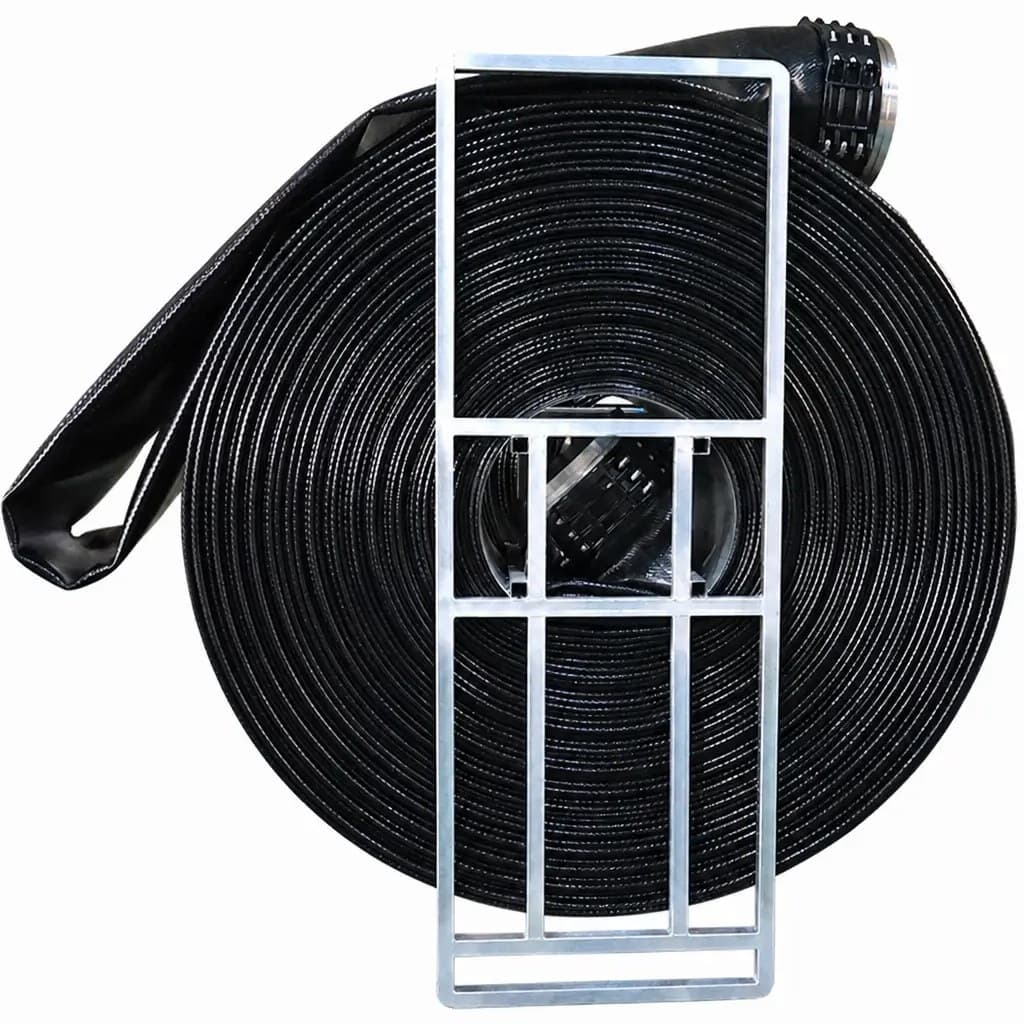 IH-LF-TDWTPU Lay Flat Dewatering and Water Transfer HoseIndus Hydraulics
 IH-LF-NBRNBR Lay Flat Discharge Hose, Ribbed CoverIndus Hydraulics
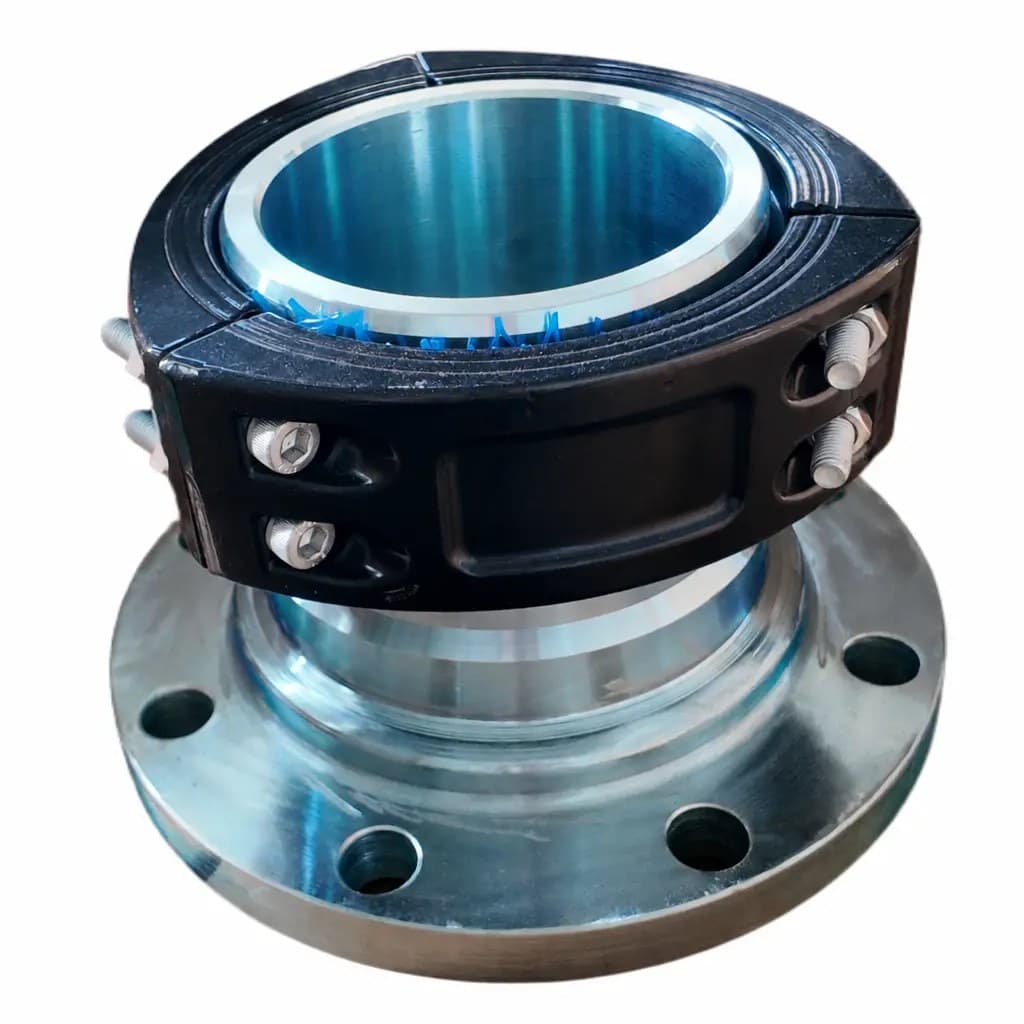 IH-LF-CFLLarge-Bore Flanged Lay Flat Hose CouplingIndus Hydraulics
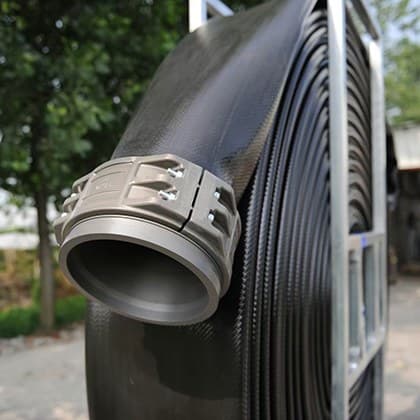 IH-LF-CVGLarge-Bore Lay Flat Hose Coupling, Grooved EndIndus Hydraulics
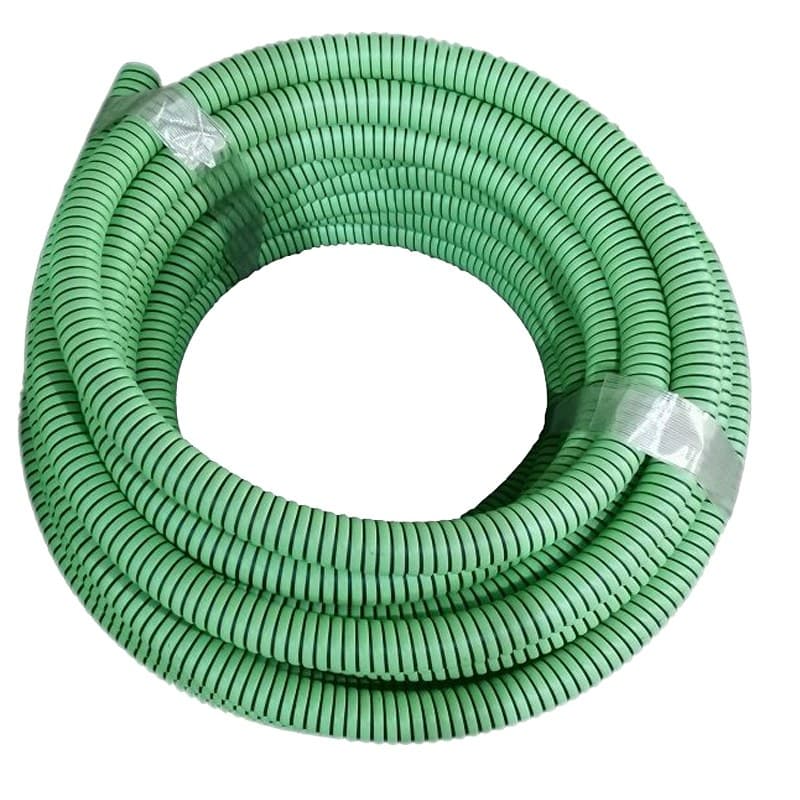 IH-LF-SEPEPDM/PE Suction Hose with Rigid HelixIndus Hydraulics


