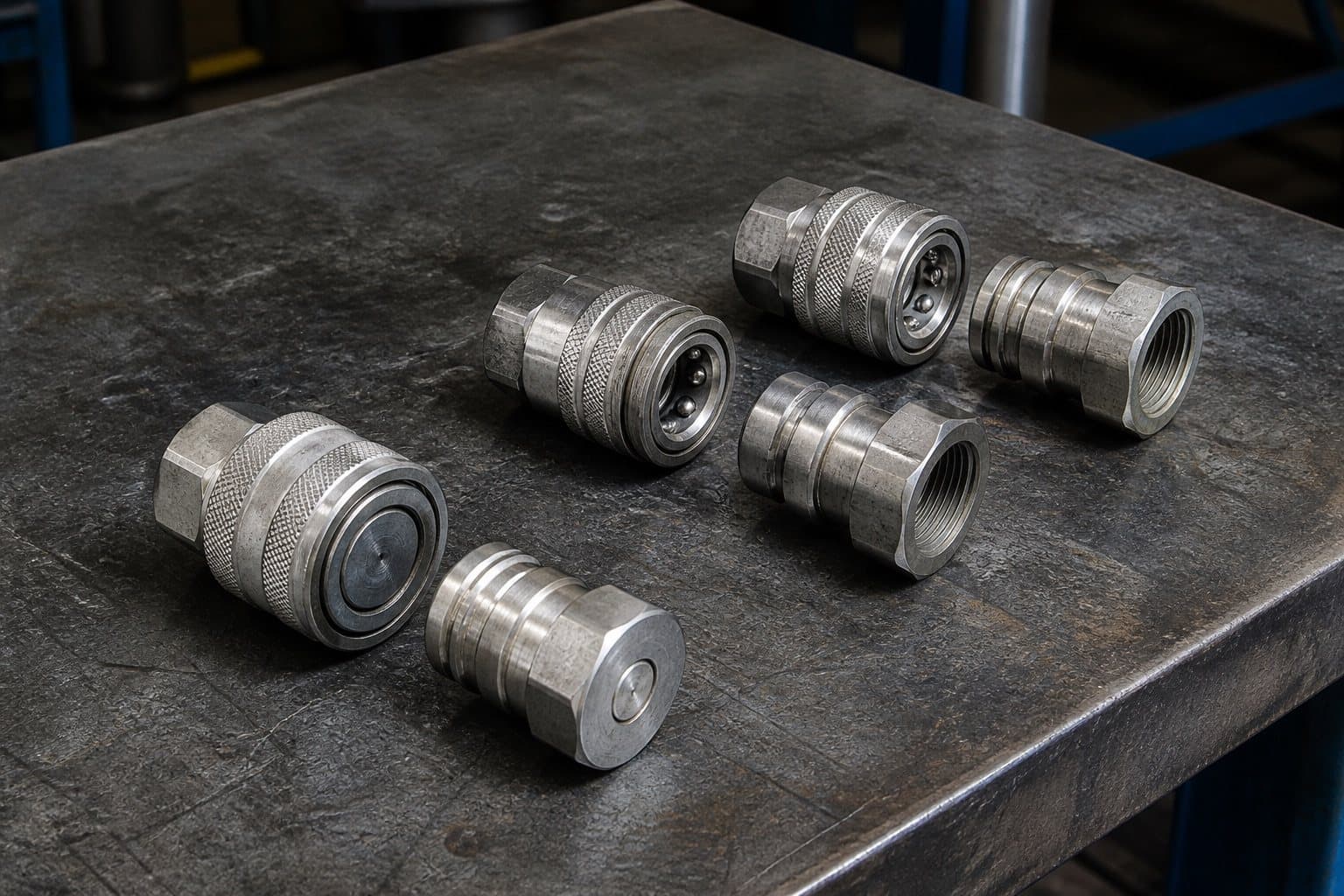
Almost every "these do not fit and they are both half inch" thread on the internet is the same problem. The bore size in the part number describes flow capacity. Whether two halves latch is decided by the coupling profile — the poppet, the sleeve, the locking ball track — and that is a completely separate specification that is very rarely printed on the part.
/01The three families you will meet.
| Family | Where it is normally found | Recognisable by |
|---|---|---|
| ISO 7241 Series AHighlighted | General industrial, older mobile equipment, workshop rigs | Slim body, poppet recessed well inside the female |
| ISO 7241 Series BHighlighted | Heavier industrial duty, many machine tool circuits | Visibly stockier body for the same bore than Series A |
| ISO 16028 flat-face | Skid steers, excavator attachments, anything with frequent changeover | Both halves present a flush flat face when uncoupled |
| ISO 5675 | Agricultural tractor rear remotes | Pull-break design, sized for tractor spool blocks |
| Screw-to-connect | High impulse, breakers, hammers, high residual pressure | Threaded collar instead of a sliding sleeve |
/02Identifying what is already on the machine.
Working out which coupler you have
In order, because each step removes more of the possibilities than the one after it.
IfIs the uncoupled face flat and flush on both halves?
Flat-face — ISO 16028 or a proprietary flat-face profile.
Flat-face is visually unmistakable and is the only family you can identify with confidence from a distance.
IfDoes it have a threaded collar rather than a sliding sleeve?
Screw-to-connect. Specify by the manufacturer profile.
These exist because they connect under residual pressure and survive impulse. They are almost never cross-compatible between makers.
IfPoppet type, and it is on a farm tractor rear remote?
Assume ISO 5675 until measured otherwise.
Superficially similar to Series A, dimensionally not the same.
IfPoppet type, industrial or mobile machine
Series A or Series B — this is where measurement is unavoidable.
Measure the male tip diameter and the female sleeve outside diameter, and compare both against a manufacturer interchange chart for that nominal size. The body thread will not answer it.
The single most useful habit: when a coupler is replaced, replace both halves as a pair. Mixing a new female onto an old male of unknown series is how a machine ends up with three incompatible quick-connect standards and no record of which is which. Our range covers ISO 7241 Series A, Series B and ISO 16028 flat-face couplers, so a pair can be replaced like for like.
/03Why flat-face won the attachment market.
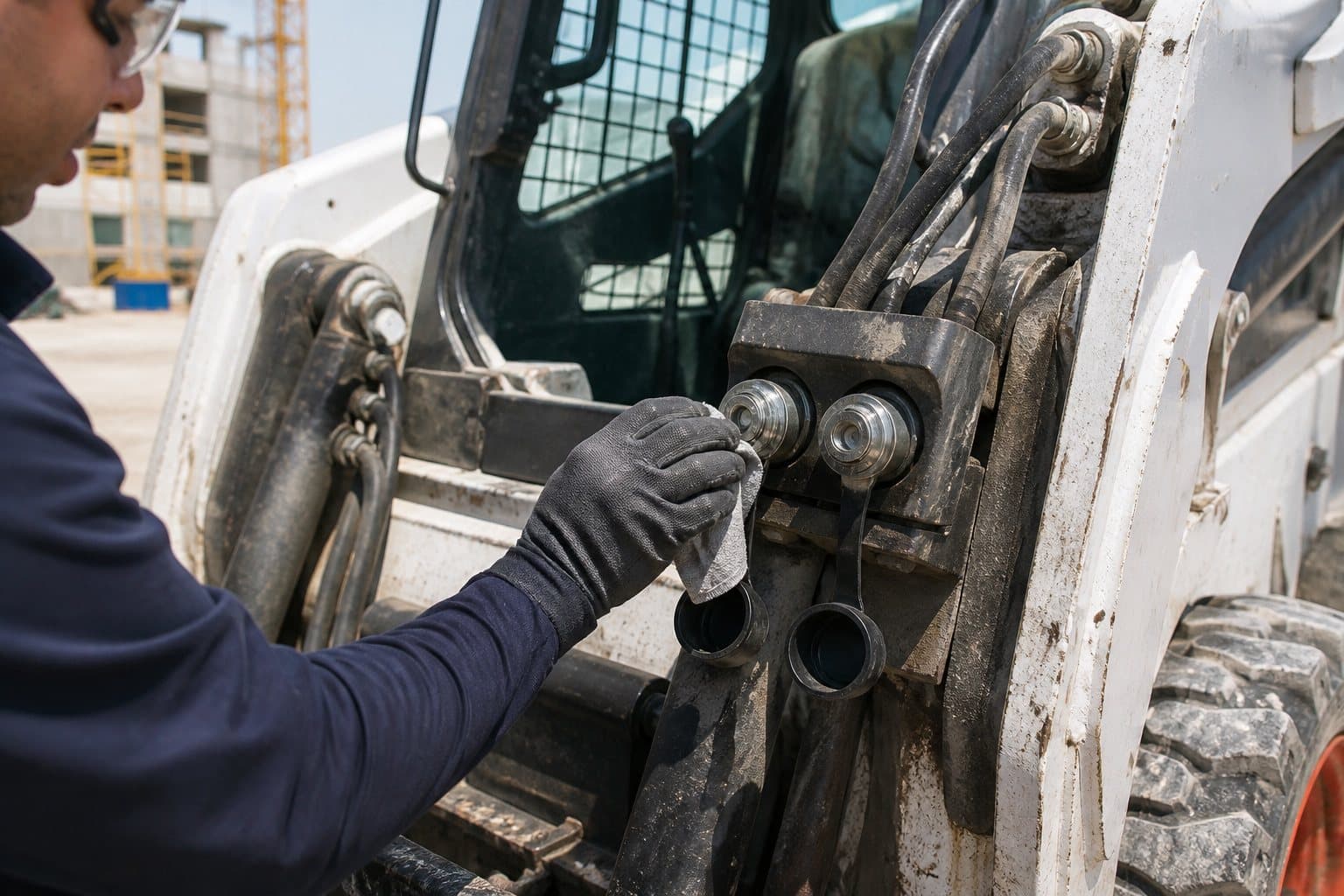
| Property | Poppet (Series A / B) | Flat-face (ISO 16028) |
|---|---|---|
| Oil lost per disconnectHighlighted | A measurable dribble each time | Close to none |
| Air drawn in on connect | Yes, in the poppet cavity | Very little |
| Can be wiped clean before matingHighlighted | Not properly — dirt sits in the recess | Yes, both faces wipe flat |
| Behaviour in a dusty yard | Contamination enters with every changeover | Much better |
| Cost per pair | Lower | Higher |
| Pressure drop for the same bore | Higher | Lower |
/04Specifying a replacement.
| Detail | Why it matters |
|---|---|
| Interchange series or a photograph of the mating halfHighlighted | Decides whether it will latch at all |
| Nominal size | Decides flow capacity, not compatibility |
| Body port thread and gender | How it attaches to the hose or the manifold |
| Working pressure of the circuit | Flat-face and poppet ranges differ by series and size |
| Whether it must connect under residual pressureHighlighted | Points to screw-to-connect or a pressure-eliminator design |
| Fluid and duty | Seal material — the coupler seals are the part that fails first |
Hydraulic fluid power — Quick-action couplings
Specifies dimensions and requirements for quick-action couplings, including the separate interchange profiles commonly referred to in the trade as Series A and Series B. The important consequence for a buyer: two couplings can both conform and still be mechanically incompatible.
Hydraulic fluid power — Flush-face type, quick-action couplings
The flat-face standard used on attachment circuits. Its defining feature is that both halves present a flush face when uncoupled, which is why it loses almost no fluid on disconnect and can be wiped clean before mating.
Common questions
- Can I connect an ISO 7241 Series A coupler to a Series B one?
- No. They are different interchange profiles. No adapter converts one to the other in place; you change one half so both are the same series.
- Both couplers are 1/2 inch. Why does that not mean they fit?
- The size refers to nominal bore and therefore flow capacity. Latching depends on the coupling profile, which is a separate specification and is usually not marked on the part.
- Are flat-face couplers worth the extra cost?
- On anything that changes attachments regularly, yes — the saving is in contamination and spilled oil rather than in the coupler itself. On a fixed circuit that is disconnected twice a year, the case is much weaker.
- My coupler leaks a few drops every time I disconnect. Is it faulty?
- On a poppet coupler that is normal behaviour, not a fault. If the loss is more than a few drops, or it weeps while connected, the seals have gone and the pair should be replaced.
- What is a pressure-eliminator or decompression coupler?
- A design that vents or mechanically overcomes residual pressure in the male half so it can be connected after the circuit has been left standing. Worth specifying on attachment circuits that sit in the sun.
Parts for this job
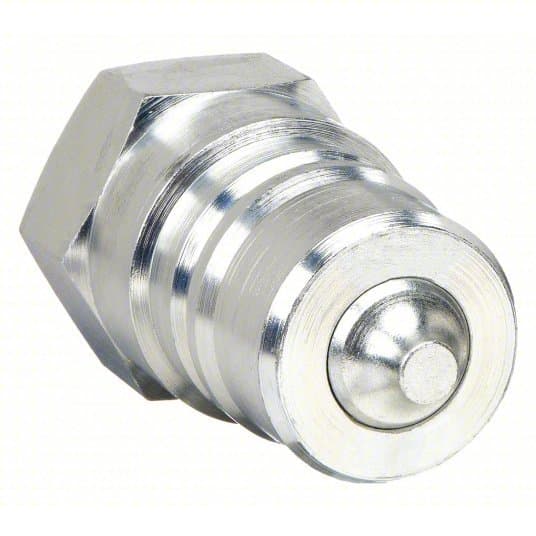 IH-QC-ISO7241A-VISO 7241 Series A Valved Hydraulic Quick CouplerIndus Hydraulics
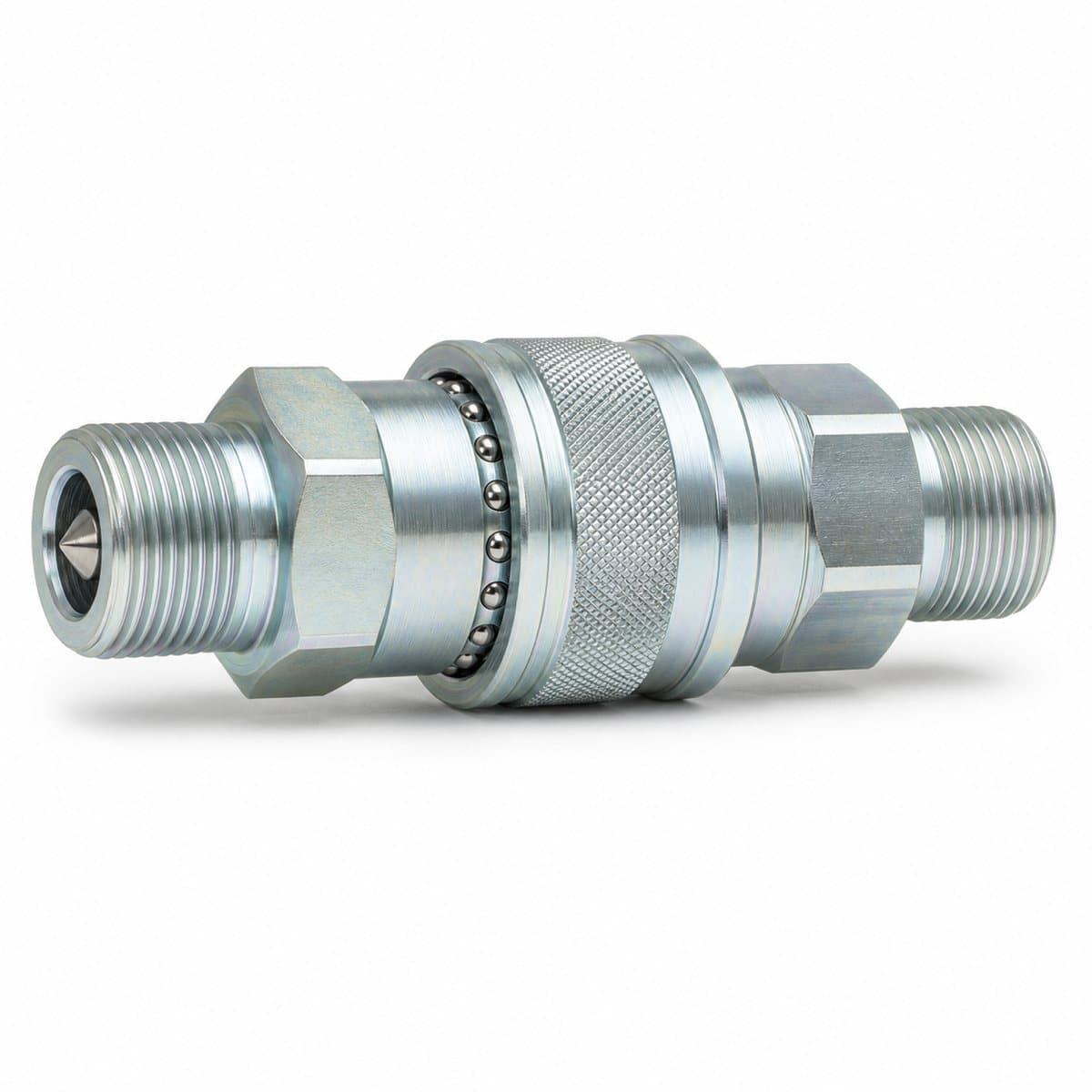 IH-QC-ISO7241B-VISO 7241 Series B Valved Hydraulic Quick CouplerIndus Hydraulics
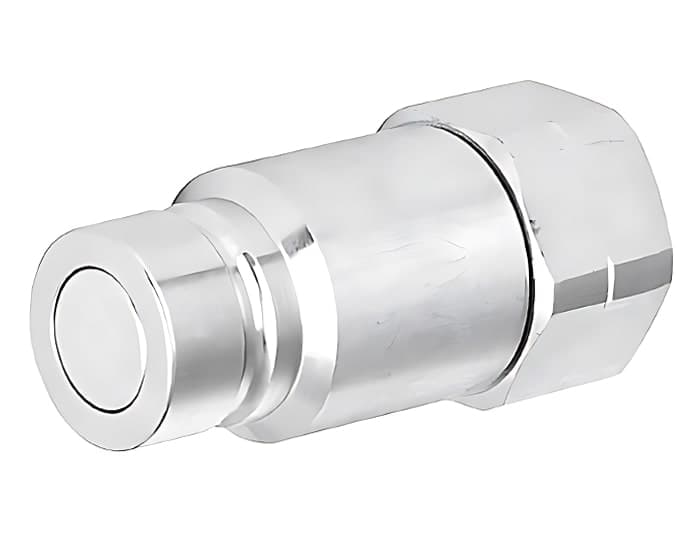 IH-QC-ISO16028ISO 16028 Flush Face Hydraulic Quick CouplerIndus Hydraulics
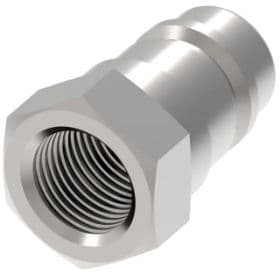 IH-QC-FARM-ISO5675ISO 5675 Farm Tractor Male Tip CouplerIndus Hydraulics