
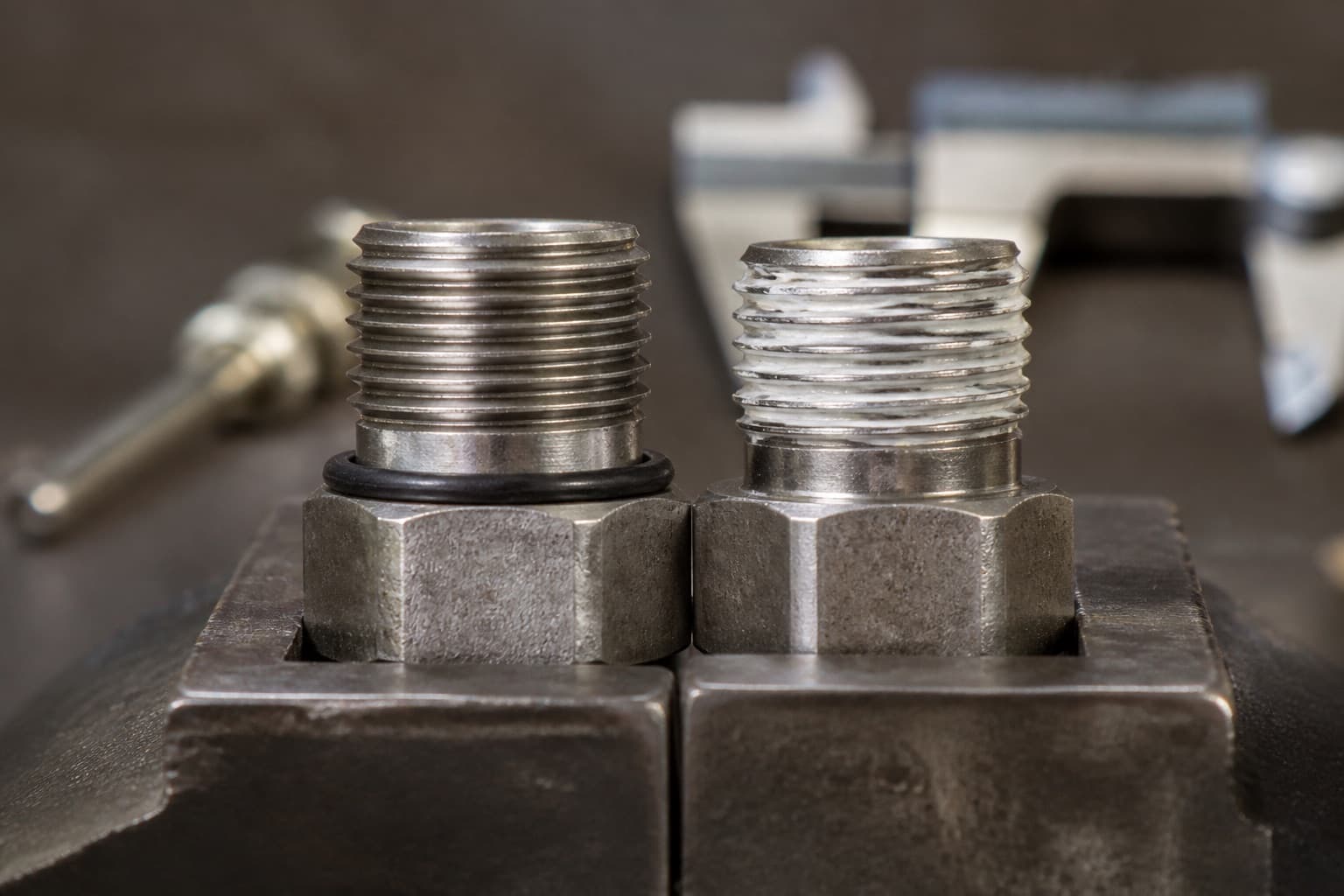
Two fittings marked 1/2 BSP, from the same drawer, that will not do the same job. The designation refers to the thread size only — it says nothing about whether the thread is parallel or tapered, and that is the property which decides how the joint seals.
The same thread, cut two ways.
Both are Whitworth-form threads with a 55° included angle and the same threads-per-inch for a given size. Put a pitch gauge on them and you get the same reading. The difference is that BSPP is cut parallel along its length and BSPT is cut on a taper, so a BSPT thread grows in diameter from the leading thread backwards.
| Property | BSPP (parallel) | BSPT (tapered) |
|---|---|---|
| Thread form | 55° Whitworth | 55° Whitworth |
| Profile along the thread | Constant diameter | Increasing diameter |
| What makes the seal | 60° cone seat, or a bonded washer under the head | Interference between the threads themselves |
| Needs a sealant | No | Yes |
| Re-makeable | Yes — the sealing face is reusable | Limited — each make deforms the threads |
| Reference standard | ISO 228-1 | ISO 7-1 |
Pipe threads where pressure-tight joints are not made on the threads — Part 1: Dimensions, tolerances and designation
The title carries the whole argument. This is the parallel-thread standard, and it states in its own name that the joint is not sealed by the threads — which is precisely why a BSPP connection needs a cone seat or a bonded washer to function at all.
Pipe threads where pressure-tight joints are made on the threads — Part 1: Dimensions, tolerances and designation
The tapered counterpart, and note the inverted title. Here the threads do make the joint, with a sealant, which is what limits how many times a BSPT connection can be broken and re-made before it stops sealing.
Telling them apart.
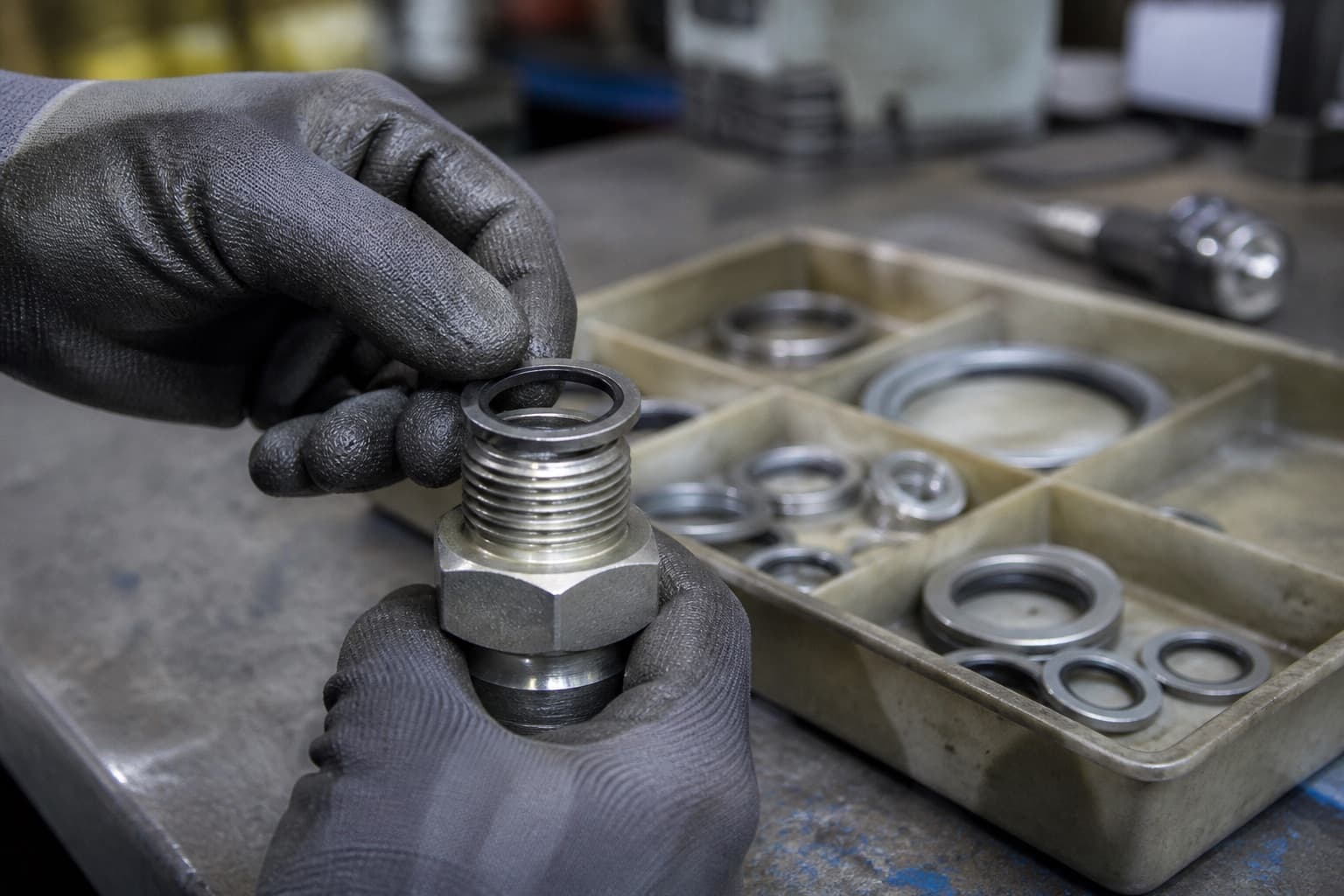
How do you tell BSPP from BSPT?
Measure across the thread crests at the first thread and again at the last. A parallel thread reads the same at both ends; a tapered one grows measurably along its length. On a female port, look for a cone seat — a 60° seat means the port is designed for a parallel male.
On smaller sizes the taper is easy to miss by eye, which is how the substitution happens. A caliper settles it in seconds. On a female port the giveaway is the seat: a machined cone means the port expects a parallel male and a cone-seated fitting to seal against it.
BSP fittings we stock
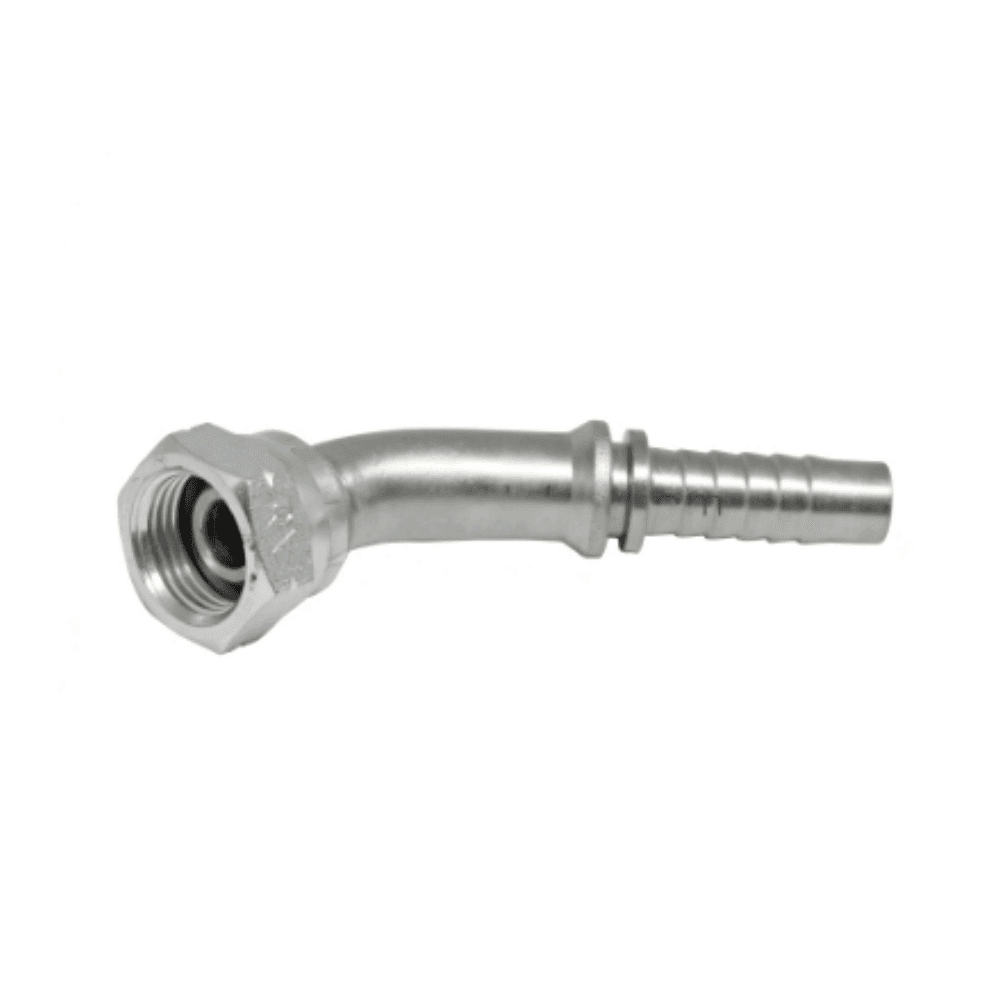
IH-BSP-FEM-60-45
45° BSP Female 60° Cone Elbow Hose Fitting
Indus Hydraulics
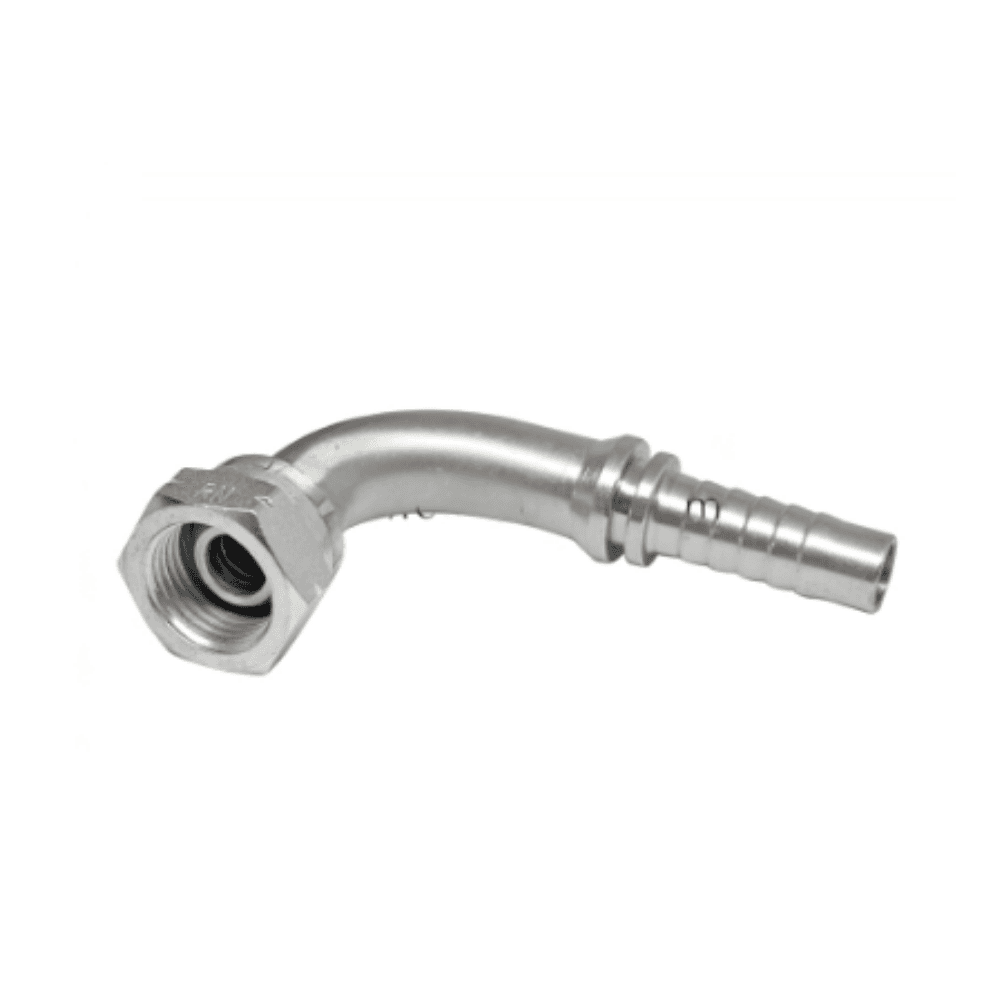
IH-BSP-FEM-60-90
90° BSP Female 60° Cone Elbow Hose Fitting
Indus Hydraulics
Both are female 60° cone — the parallel-thread pattern. If the port on your machine is tapered, you need the BSPT equivalent instead; send us a photo and we will confirm which.
Common questions
Is "G" thread the same as BSPP?
Yes. The G designation from ISO 228-1 is the parallel thread. "R" is the tapered external thread and "Rc" the tapered internal one under ISO 7-1.
Can I use PTFE tape on a BSPP joint?
It will not do what you want. The seal on a parallel joint is the cone or the bonded washer; tape on the threads adds nothing and can hold the fitting off its seat. If a BSPP joint leaks, look at the seat and the washer.
How many times can a BSPT joint be re-made?
Fewer than people assume. Each make deforms the mating threads slightly, so sealing degrades with every break. If a tapered joint has been disturbed several times and still weeps, replace the fitting rather than adding sealant.
Is BSP the same as NPT?
No, and this is the more damaging mix-up. BSP is a 55° thread form and NPT is 60°, so the flanks never mate properly even when the sizes appear compatible. They will start together and the joint will leak.
BSP fittings and adapters
Parallel and tapered BSP, plus adapters into JIC, ORFS and metric.
Figures verified · Thread geometry checked against ISO 228-1 and ISO 7-1. No pressure ratings published here.
Not sure which one you have?
Photograph the thread against a rule and send it over. We identify fittings from photographs every day.
Plant-down? Call +971 52 2477942 — 24/7