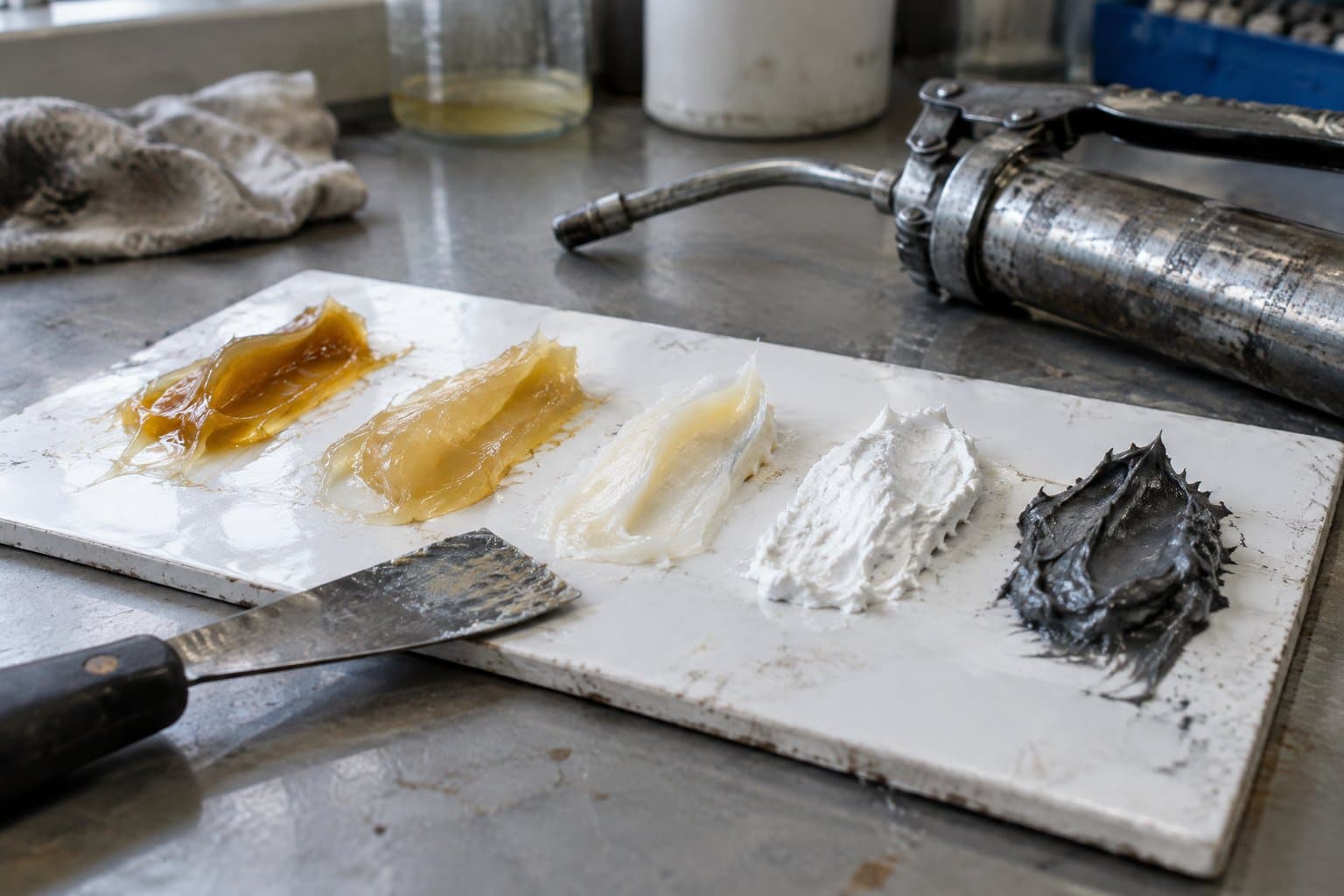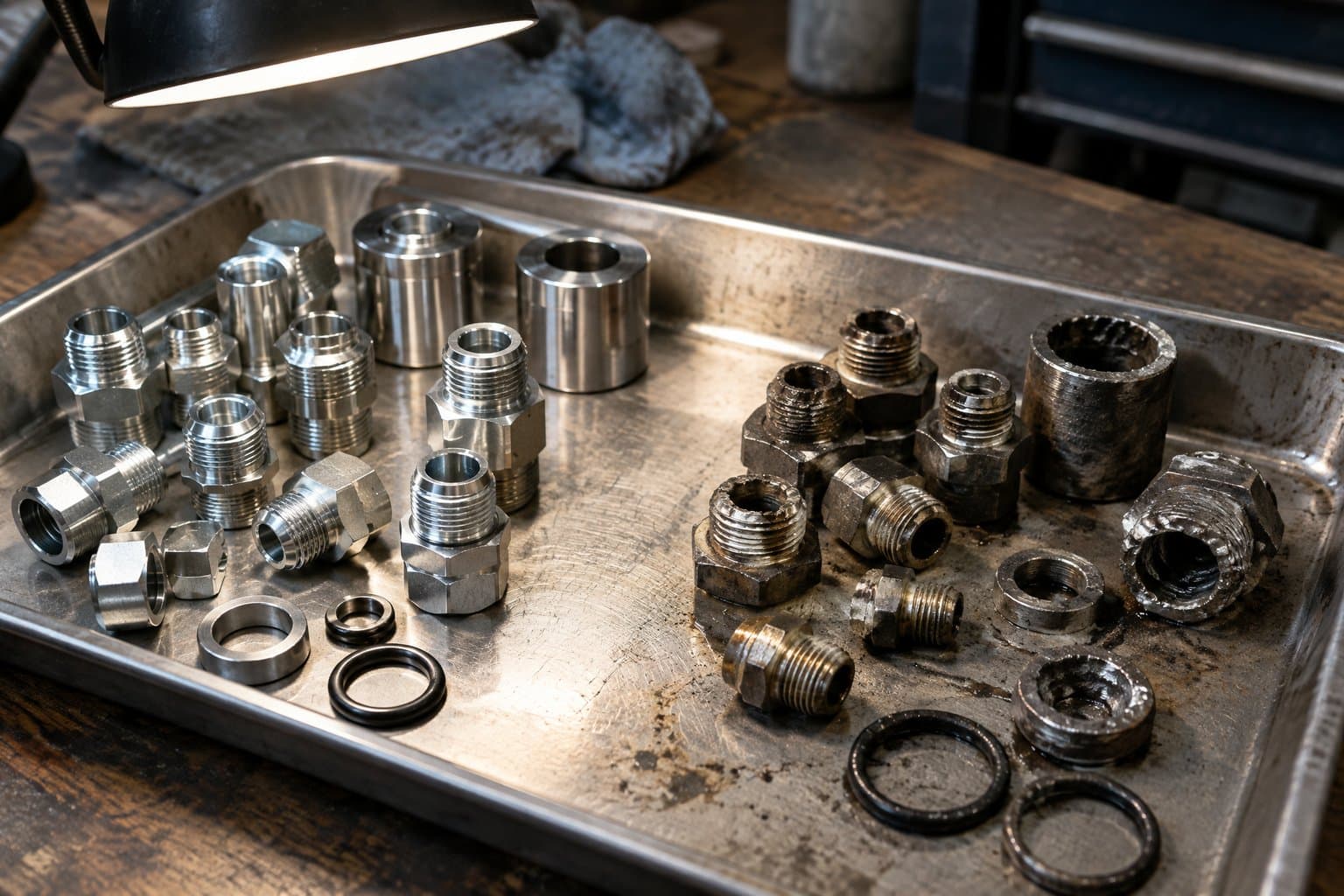
Grease protects parts that move. The surfaces that cause the most trouble at a shutdown are the ones that barely move at all: flange bolts baked for two years, a bearing pressed onto a shaft, stainless threads that gall on the first turn. Those are the jobs for a paste, and the two kinds of paste solve different halves of the problem.
/01What a paste does that a grease cannot.
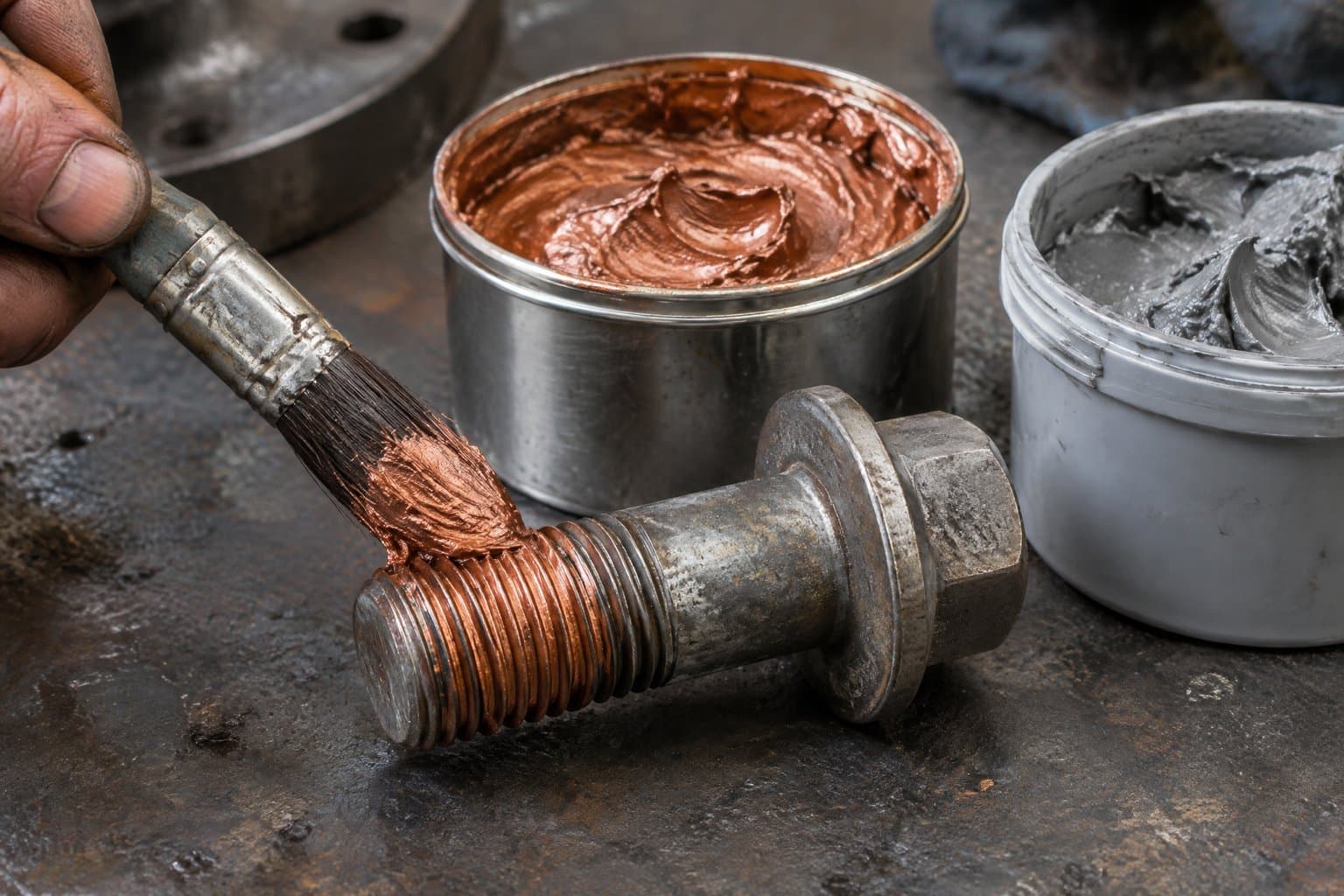
Under the contact pressure of a tightened thread or a press fit, the oil film of a grease is squeezed out and metal meets metal. A paste keeps a layer of solid lubricant in the gap — lamellar MoS2 or graphite, a soft metal, or white solids where a dark film is not wanted — so the surfaces slide instead of welding together. That is what stops galling as a joint is made up, fretting corrosion in a press fit that sees vibration, and seizure in a bolt that has been hot and wet for a long time.
| Paste | Solids (as listed) | Listed temperature | Main job |
|---|---|---|---|
| G-N Metal Assembly PasteHighlighted | MoS₂, white solids | −18 °C to 400 °C | Assembly, press fits |
| G-Rapid Plus | MoS₂, graphite, white solids | −35 °C to 450 °C | Assembly and running-in |
| U-N Paste | MoS₂, white solids (PAG base) | −40 °C to 400 °C | Assembly |
| Molykote 1000 | Not stated | −30 °C to 650 °C | Anti-seize, threads |
| CU-7439 Plus | Not stated (copper appearance) | −30 °C to 650 °C | Anti-seize, threads |
| P-3700 | Special solid lubricants | −30 °C to 900 °C | Anti-seize |
| HSC Plus | Not stated | −30 °C to 1,100 °C | Anti-seize |
| HTP Paste | White solids | −20 °C to 1,150 °C | Anti-seize, white film |
| P-37 | Not stated | −30 °C to 1,400 °C | Anti-seize |
| D Paste | White solids | −25 °C to 250 °C | Assembly, white film |
| E Paste | PTFE (silicone base) | −50 °C to 150 °C | Plastics and rubber |
/02Reading the top of the temperature range.
No mineral or synthetic oil survives 650 °C, let alone 1,400 °C, so the upper figure on an anti-seize paste describes what is left after the carrier has burned off or evaporated: a layer of solids that keeps the thread faces apart and lets the joint be broken out later. It is not a statement that the paste lubricates a moving part at that temperature. For a bearing or a slide in heat, a high-temperature grease is the right product — Molykote 41 is listed to 290 °C — and above that the answer is usually a dry film.
/03Torque changes when the thread is lubricated.
Most of the torque applied to a bolt is spent overcoming friction under the head and in the thread; only the remainder stretches the bolt and creates clamp load. Lower the friction with a paste and the same torque produces more clamp load. A torque value taken from a dry-thread table and applied to a pasted bolt can therefore overstretch it. Use the torque the joint designer or the paste maker gives for that lubricant, and use the same paste on every bolt in the joint so the clamp load is even.
/04Assembly and running-in.
Assembly pastes do their work in the first minutes of a part's life. Pressing a bearing onto a shaft, sliding a hub along a spline or running in a new gear set loads the surfaces before any oil film exists, and an MoS2 paste carries the load until it does. G-N is listed in a 500 g tub, 4.5 kg and 22 kg pails and a 400 ml spray; G-Rapid Plus in 250 g and 1 kg cans, a 25 kg pail and a spray; M-77 from 6 g pillow packs to a 300 kg drum. For anything that keeps moving afterwards, the paste is the start and a grease or oil is the service lubricant.
/05Matching the paste to the metal.
Stainless steel and nickel alloys are the threads most prone to galling, and the ones where the choice of solid matters most. Copper-containing pastes are widely used on carbon steel but are commonly avoided on some stainless and nickel-alloy fasteners; white-solids pastes such as HTP and D Paste leave a light film where a dark one is unwelcome. The datasheet for each Molykote paste lists the metals it suits — check it against the fastener before choosing, and for plastic or rubber parts use a silicone-based product such as E Paste.
Which Molykote paste?
Start from the job, then confirm the metal and temperature against the datasheet.
IfPressing, splining or fitting parts that then keep moving?
Assembly paste — G-N or G-Rapid Plus.
Follow with the service grease or oil once the part runs.
IH-LUB-G-N-METAL-ASSEMBLY-PASTEIfBolts or studs that must come apart after heat, up to 650 °C?
Anti-seize — Molykote 1000 or CU-7439 Plus.
IH-LUB-1000IfExhaust, turbine or furnace bolting hotter than that?
P-3700 (to 900 °C), HSC Plus (to 1,100 °C) or P-37 (to 1,400 °C).
IH-LUB-P37IfA dark film is not acceptable?
White-solids paste — HTP Paste or D Paste.
IH-LUB-HTP-PASTEIfPlastic or elastomer parts?
Silicone-based E Paste, −50 °C to 150 °C.
IH-LUB-E-PASTE
Frequently asked questions
- Can I use anti-seize instead of grease on a bearing?
- No. Anti-seize protects static joints such as threads and press fits. A bearing needs a grease or oil that keeps a lubricating film while it runs.
- Does anti-seize change bolt torque?
- Yes. Lower thread friction means more clamp load for the same torque. Use the torque given for the lubricant, not a dry-thread value.
- What does a 1,400 °C rating on P-37 mean?
- That its solid lubricant still keeps a joint separable at that temperature after the carrier has gone. It is an anti-seize limit, not a lubrication limit for moving parts.
- Is copper anti-seize suitable for stainless steel?
- It is commonly avoided on some stainless and nickel-alloy fasteners. Check the paste datasheet against the fastener material before use.
Molykote pastes
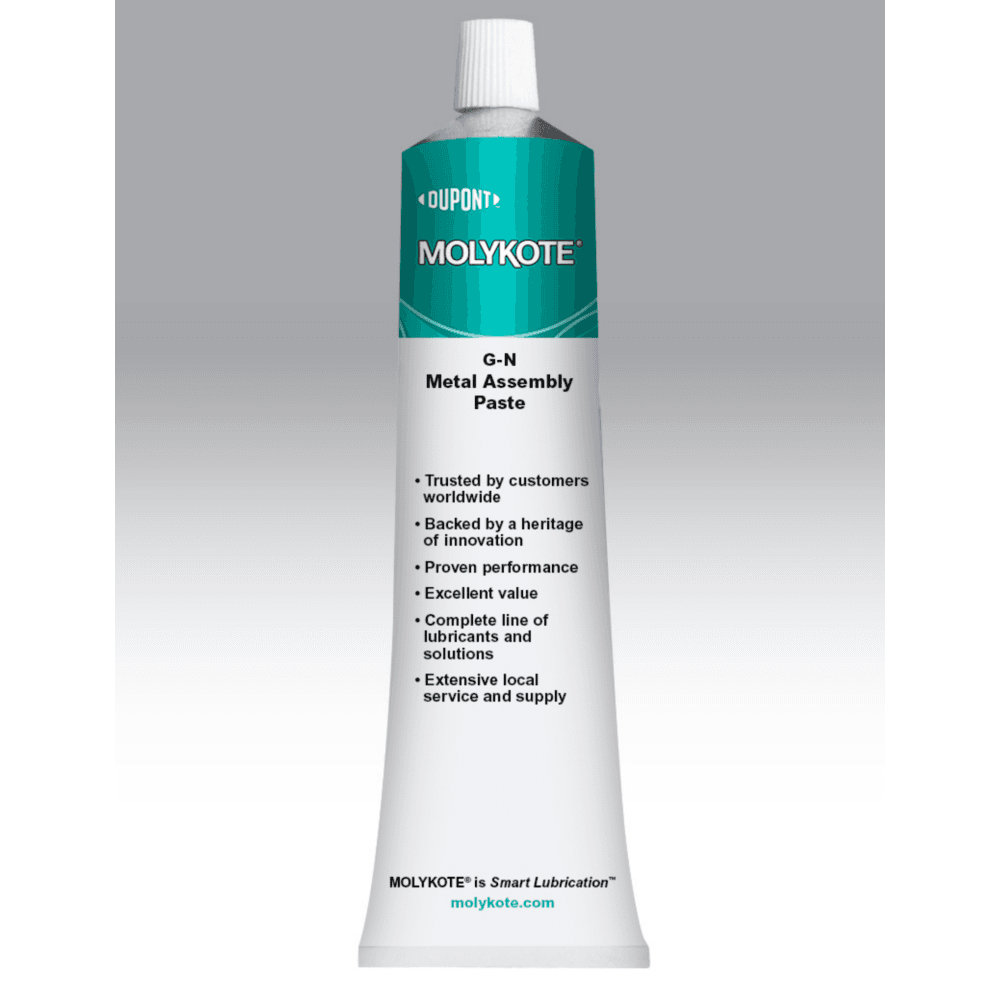 IH-LUB-G-N-METAL-ASSEMBLY-PASTEMolykote G-N Metal Assembly PasteMolykote
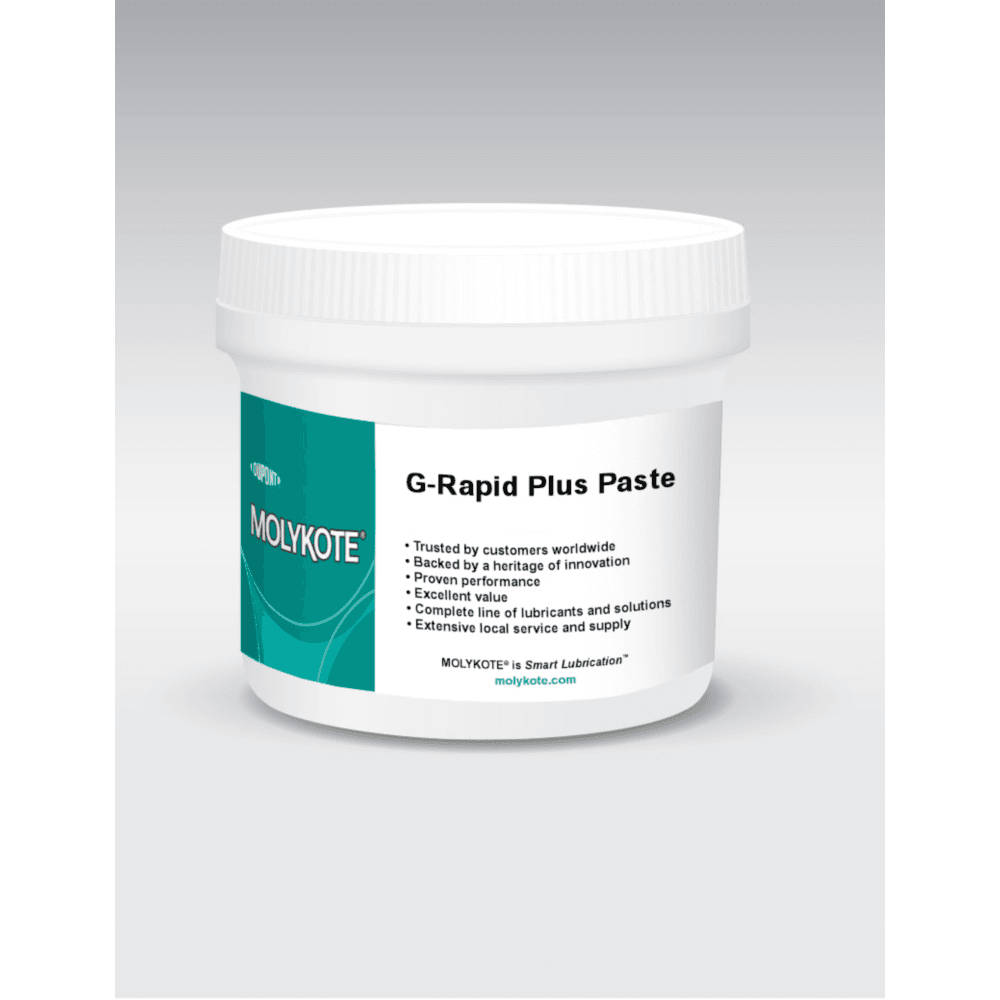 IH-LUB-G-RAPID-PLUS-PASTE-1KGMolykote G Rapid Plus Paste 1KGMolykote
 IH-LUB-M-77-ASSEMBLY-PASTEMolykote M-77 Assembly PasteMolykote
 IH-LUB-1000Molykote 1000Molykote
 IH-LUB-7439Molykote CU-7439 Plus PasteMolykote
 IH-LUB-P-3700-ANTI-SEIZE-PASTEMolykote P-3700 Anti-seize PasteMolykote
 IH-LUB-HSC-PLUS-PASTEMolykote HSC Plus PasteMolykote
 IH-LUB-P37Molykote P37Molykote