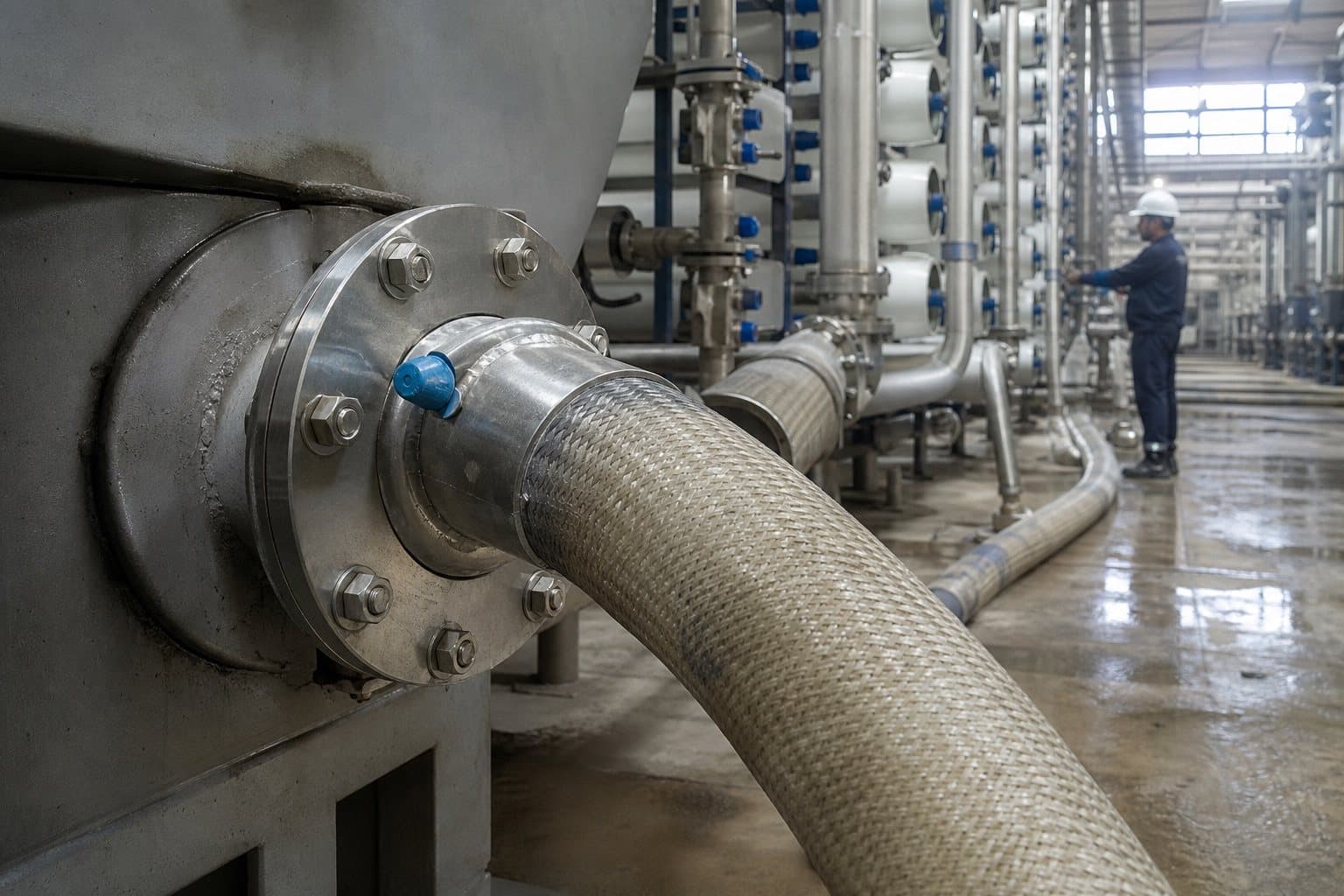
Desalination is one of the few industries where a plant deliberately concentrates the corrosive component of its own feedstock and then has to handle the result. Specifying hose for it on the basis that the medium is water is the most common and most expensive simplification.
/01Four duties, four answers.
| Duty | What makes it difficult |
|---|---|
| Seawater intake | Salt, plus suspended solids that abrade the tube |
| Concentrated brine rejectHighlighted | More aggressive than the feed, and produced continuously |
| Chemical dosingHighlighted | Small lines, very aggressive chemistry — chlorine, acids, antiscalants |
| Clean-in-place | Periodic exposure to chemistry the process fluid never involves |
| Permeate and product water | The easy one, and often the only one people specify for |
/02Dosing lines are the hard part.
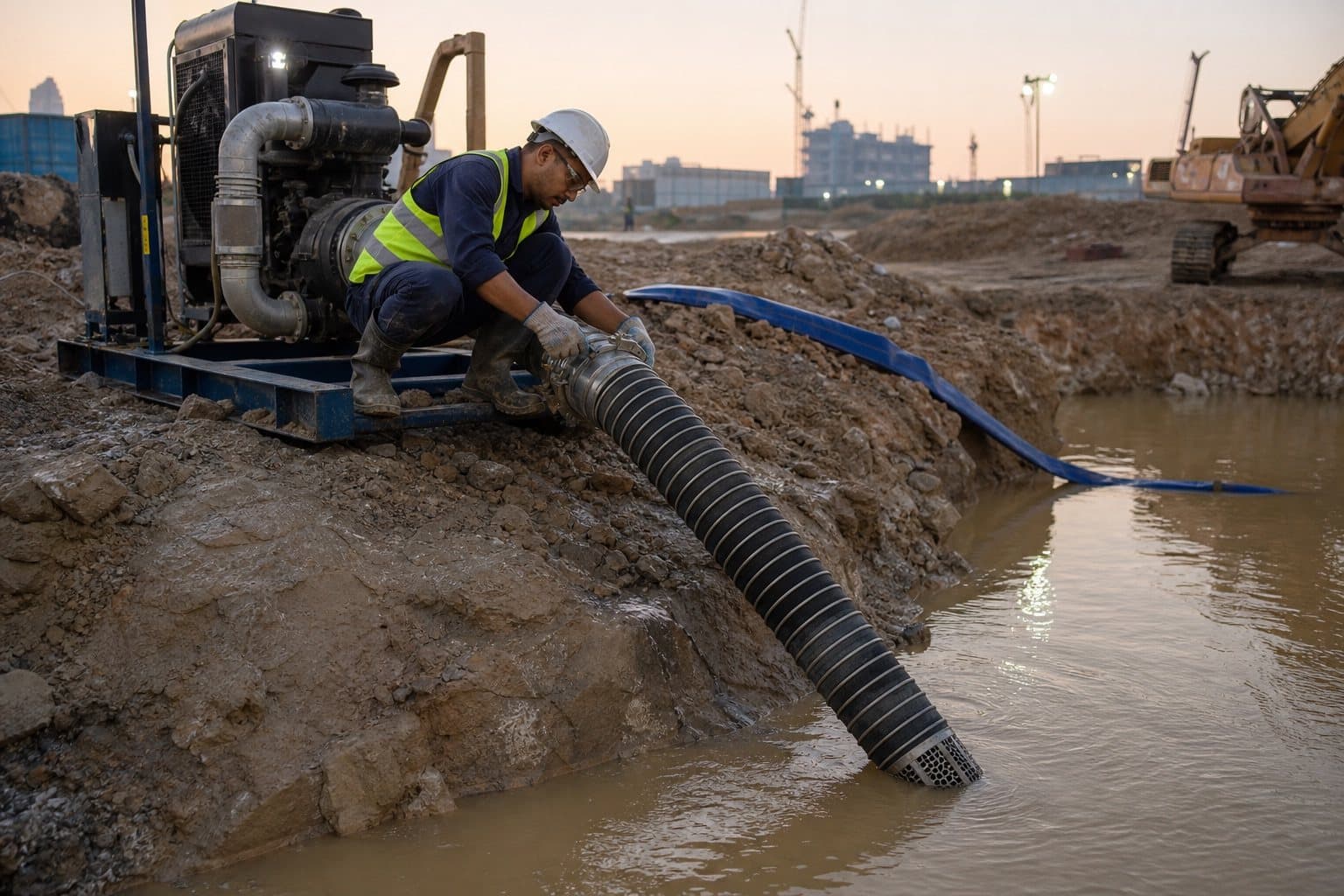
Chemical dosing lines carry very small volumes, so they look trivial next to the main flows and they get specified last. But they carry the most aggressive chemistry on the plant — hypochlorite, acids, antiscalants — often at ambient temperature but continuously. A dosing line failure is also a chemical release into a plant room, which makes it a safety event rather than a maintenance one. Larger chemical transfer runs suit UHMWPE-lined chemical hose, which resists a very wide range of acids and alkalis.
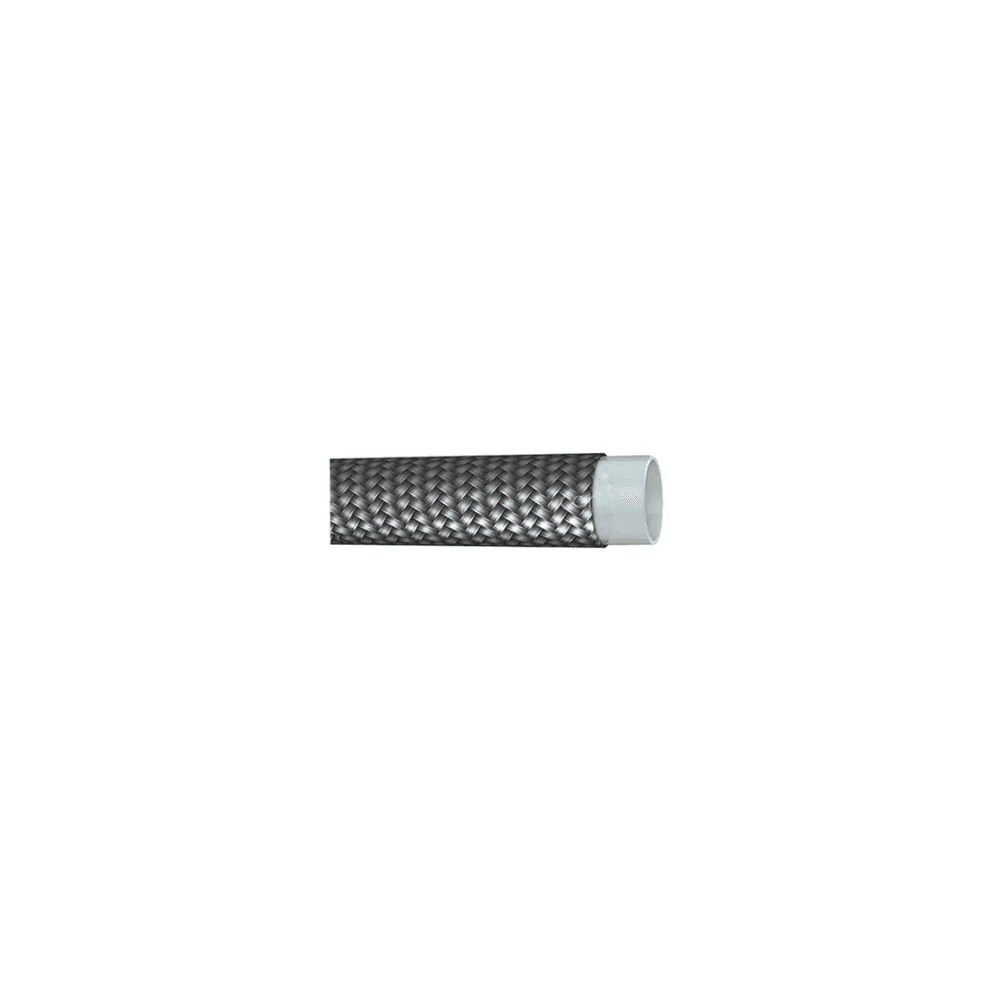
Where the chemistry is aggressive enough, PTFE is the answer — chemically inert, and rated to a far higher temperature than it will ever see on this duty. It costs more and it is worth it on a line whose failure empties a chemical drum onto a floor.
/03Outside as well as inside.
A plant on the Gulf coast puts salt-laden air on the outside of every hose and fitting while the process puts brine on the inside. Both matter. Carbon-steel clamps and fittings on a seawater plant have a short and unhappy life, and the failure is frequently a seized fitting rather than a leaking hose.
Temporary bypass and transfer lines around plant work are often run in lay flat hose; see the lay flat hose guide and how its pressure ratings work.
Where the chemistry governs
Common questions
- Can one hose type cover the whole plant?
- No, and trying is how dosing lines end up under-specified. Group the duties and specify each group; the process water lines are genuinely straightforward and the chemical lines genuinely are not.
- Is brine really worse than seawater?
- It is more concentrated, which is the point of the process. Anything selected on seawater compatibility should be re-checked before it is used on the reject side.
- What about the CIP chemicals?
- They are a separate compatibility question and they are periodic, which is why they get forgotten. A hose that handles the process fluid perfectly can be attacked during cleaning.
- Does temperature matter on these duties?
- Less than on hydraulics, but it still shifts compatibility. Where a chart rating is marginal, a warmer line can move it from acceptable to not.