A hydraulic panel on an offshore platform can be built entirely of the right fittings and still fail at one plated adapter that rusted through in the salt air. That is the reason 316 stainless adapters exist, and the reason they are specified a whole system at a time. This guide covers when stainless is worth it, how the end connections seal, how stainless changes ratings and assembly, and the thread families of the adapters in between.
/01When stainless is worth it.
| Medium | Brass | Steel | 316 stainless |
|---|---|---|---|
| Sea waterHighlighted | F | NR | S |
| Brine (sodium chloride)Highlighted | NR | NR | S |
| Water | S | F | S |
| Hydraulic oil, water base | Insufficient data | S | S |
| Steam below 400 °F | F | S | S |
The chart says it: steel is fine in water-based hydraulic fluid; what it cannot survive is chloride on the outside. Stainless earns its price where the environment is the problem — sea spray and open decks, salt-laden coastal air, brine and chemical plant, and food and beverage lines, where Parker does not recommend zinc-coated steel at all. DNV, approving one maker’s 316Ti cutting-ring fittings for sea-water service (which it defines to include piping on open deck), adds the honest caveat that even this grade "cannot be considered immune to attack under all situations" — stagnant sea water and weld oxides are the usual culprits.
Modern zinc-nickel plated steel is a real alternative for less severe sites, but once one part of a system is stainless the rest should be too: see when stainless is worth it and 316L hydraulic fittings.
/02How the ends seal.
| End | Standard | Seals on | In stainless |
|---|---|---|---|
| 37° JIC | SAE J514 / ISO 8434-2 | Metal flare | Common; nuts pre-lubricated against galling |
| ORFSHighlighted | SAE J1453 / ISO 8434-3 | O-ring in face | Best leak resistance; rated as steel |
| ORB (SAE straight thread) | SAE J1926 / ISO 11926 | O-ring at port | Preferred port over pipe thread |
| 24° cone | ISO 8434-1 / DIN 2353 | Cutting ring | Rated lower than steel; preset with a tool |
| BSPP | ISO 228-1 / ISO 1179 | Spot face (bonded or soft seal) | Good; seal not on the thread |
| NPT / BSPT | ASME B1.20.1 / ISO 7-1 | The thread | Prone to galling; avoid where possible |
/03Ratings: stainless is not steel.
Parker’s Catalog 4300 (2017 edition) gives a separate pressure column for steel and 316 on every fitting, and the relationship changes by family:
- 37° flare straights and unions — stainless rated higher: a -4 straight-thread connector is 7,500 psi in steel and 9,000 psi in 316; -16 is 4,500 and 5,400.
- 37° flare elbows — stainless rated lower: -16 is 4,000 psi in steel, 3,000 in 316.
- ORFS and SAE flareless — equal in both materials.
- Metric 24° cone — stainless much lower: an L-series union for 6–10 mm tube is 500 bar in steel and 315 bar in stainless.
So a stainless adapter must be rated from the maker’s stainless column for that exact shape. Where our listing says the manufacturer publishes no figure, tell us the working pressure and we will confirm it before you order.
/04Galling: keep the threads lubricated.
Galling is local welding of mating metal surfaces, and austenitic stainless against austenitic stainless is prone to it when the threads are forced together dry. Makers design around it: Parker’s stainless 37° nuts carry a pre-applied anti-seize and states that all its stainless nuts are coated to prevent galling at assembly; its metric stainless nuts have silver-plated threads, which it says eliminate galling and cut assembly torque by up to 40%; its flareless stainless nuts are pre-lubricated and need nothing more. Do not clean that coating off, and do not swap a coated nut for a bare one.
With the coating intact, Parker applies the same 37° assembly torque to properly lubricated stainless as to unlubricated steel — not a reduced figure — and prefers the flats-from-wrench-resistance method for stainless. The details are in stainless JIC fittings.
/05BSP, metric and NPT adapters.
Most adapters in a stainless system exist to join one thread family to another. Parker’s thread table sets them out: NPT to ASME B1.20.1 (NPTF to SAE J476), BSPT to ISO 7-1, BSPP to ISO 228-1, metric to ISO 261. BSP threads have a 55° flank; NPT a 60° one, and the families do not interchange even where sizes look close.
- BSPP (parallel) seals on the port spot face, not the thread — with a bonded seal, an elastomer soft seal (ISO 1179-2, "ED"), a metal sealing edge (ISO 1179-4) or an O-ring and retaining ring (ISO 1179-3).
- Metric parallel ports follow ISO 9974-1 or ISO 6149-1; Parker recommends ISO 6149-1 for new designs.
- NPT and BSPT (taper) seal on the thread and always need sealant — Parker says a sealant is necessary even with dry-seal NPTF. Ham-Let advises two wraps of PTFE tape on stainless tapered threads, on the male thread only, and never on flared, coned or tube-fitting ends.
Common questions
- When should I use stainless steel hydraulic fittings?
- Where the environment is corrosive: sea spray, open decks, coastal plant, brine and chemical service, food and washdown. Parker rates steel "not recommended" in sea water and brine and 316 "satisfactory".
- Are stainless hydraulic adapters rated the same as steel?
- Not always. In Parker’s tables stainless 37° straights are rated higher than steel, elbows lower, ORFS and flareless equal, and metric 24° fittings lower. Rate from the maker’s stainless column.
- How do I stop stainless fittings galling?
- Keep the maker’s pre-applied lubricant or plating on the nut, lubricate pipe threads with a sealant made for stainless, and avoid over-tightening dry threads.
- What O-rings come in stainless hydraulic fittings?
- It depends on the maker: Parker’s SAE fittings use 90-durometer nitrile even in stainless; metric makers fit FKM (Viton) to stainless as standard. Specify FKM if the service needs it.
- Should I use NPT in a stainless hydraulic system?
- Only where unavoidable. Taper threads gall easily in stainless, can crack ports and seal poorly under vibration. ORB, ORFS or BSPP with a seal are better.
- What is the difference between BSPP and BSPT?
- BSPP is parallel and seals on the port face with a bonded or soft seal; BSPT is tapered and seals on the thread with sealant. Both have a 55° flank.
What we list
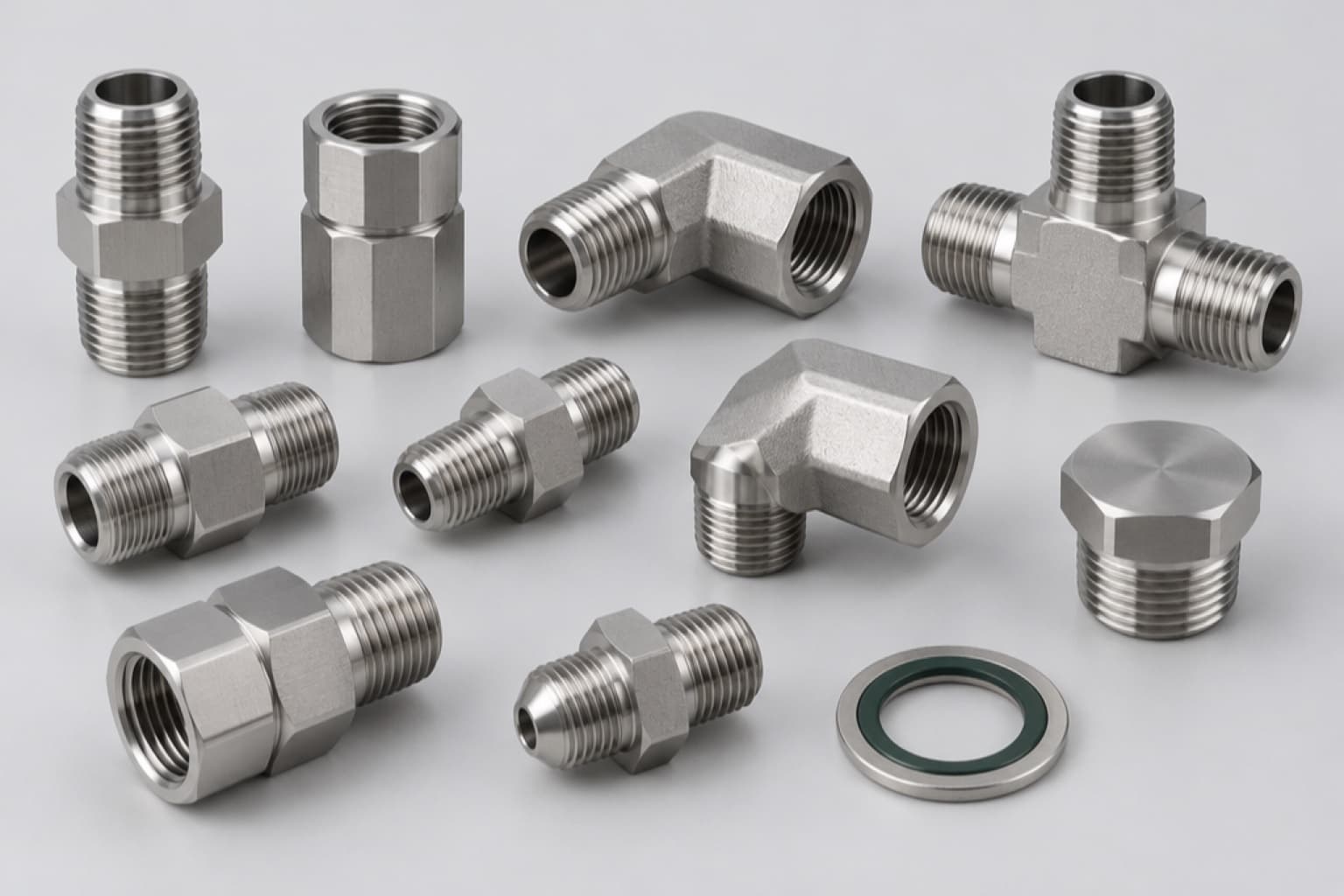
316 stainless BSPP, BSPT, metric and NPT adapters, plugs and bonded seals:
- Stainless Steel BSPP Male Nipple
- Stainless Steel BSPP Male × BSPT Male Adapter
- Stainless Steel JIC 37° Male × BSPP Male Adapter
- Stainless Steel BSPP Male × NPT Male Adapter
- Stainless Steel BSPT Male × NPT Male Adapter
- Stainless Steel JIC 37° Male × BSPT Male Adapter
- Stainless Steel BSPP Male × BSPP Female Swivel Adapter
- Stainless Steel BSPP Male × JIC 37° Female Swivel Adapter
- Stainless Steel BSPP Countersunk Sealed Plug (Viton Seal)
- Stainless Steel Metric Countersunk Sealed Plug (Viton Seal)
- Stainless Steel BSPP Hex Head Plug
- Stainless Steel BSPT Hex Head Plug
- Stainless Steel BSPP Female Swivel Cap
- Stainless Steel BSPP Male × NPT Female Adapter
- Stainless Steel NPT Male × BSPP Female Adapter
- Stainless Steel BSPT Male × NPT Female Adapter
- Stainless Steel BSPP Female × BSPP Female Adapter
- Stainless Steel JIC 37° Male × BSPP Male Adjustable 90° Elbow
- Stainless Steel JIC 37° Male × BSPT Male 90° Elbow
- Stainless Steel JIC 37° Male × Metric Male Adjustable 90° Elbow
- Stainless Steel JIC 37° Male × Metric Standpipe
- Stainless Steel Metric Male × NPT Female Adapter
- Stainless Steel JIC 37° Male × BSPP Female Swivel Adapter
- Stainless Steel Bonded Seal, BSPP
- Stainless Steel Bonded Seal, Metric
- Stainless Steel Bonded Seal with Viton Ring, BSPP
- Stainless Steel JIC 37° Male × Metric Male Dual-Purpose Adapter
- Stainless Steel JIC 37° Male × Metric Male Dual-Purpose Adapter, Heavy
- Stainless Steel NPT Male × NPSM Female Swivel Adapter
- Stainless Steel NPT Female × NPSM Female Swivel Adapter
- Stainless Steel NPT Male × NPSM Female Swivel 90° Elbow
- Stainless Steel NPT Female × NPSM Female Swivel 90° Elbow
- Stainless Steel NPT Male × NPSM Female Swivel 45° Elbow
- Stainless Steel NPT Female Coupling
- Stainless Steel NPT Male Hex Nipple
- Stainless Steel NPT Male × NPT Female Adapter
- Stainless Steel NPT Hex Reducer Bushing
- Stainless Steel NPT Hex Socket Plug
- Stainless Steel NPT Hex Head Plug
- Stainless Steel NPT Hollow Hex Head Plug
- Stainless Steel NPT Female Cap
- Stainless Steel NPT Male 90° Elbow
- Stainless Steel NPT Male 45° Elbow
- Stainless Steel NPT 90° Street Elbow
- Stainless Steel NPT 45° Street Elbow
- Stainless Steel NPT Female 90° Elbow
- Stainless Steel NPT Female 45° Elbow
- Stainless Steel NPT Male Tee
- Stainless Steel NPT Female Branch Tee
- Stainless Steel NPT Street Tee
- Stainless Steel NPT Female Run Tee
- Stainless Steel NPT Male Branch Tee
- Stainless Steel NPT Female Tee
- Stainless Steel NPT Female Cross
Stainless thread adapters
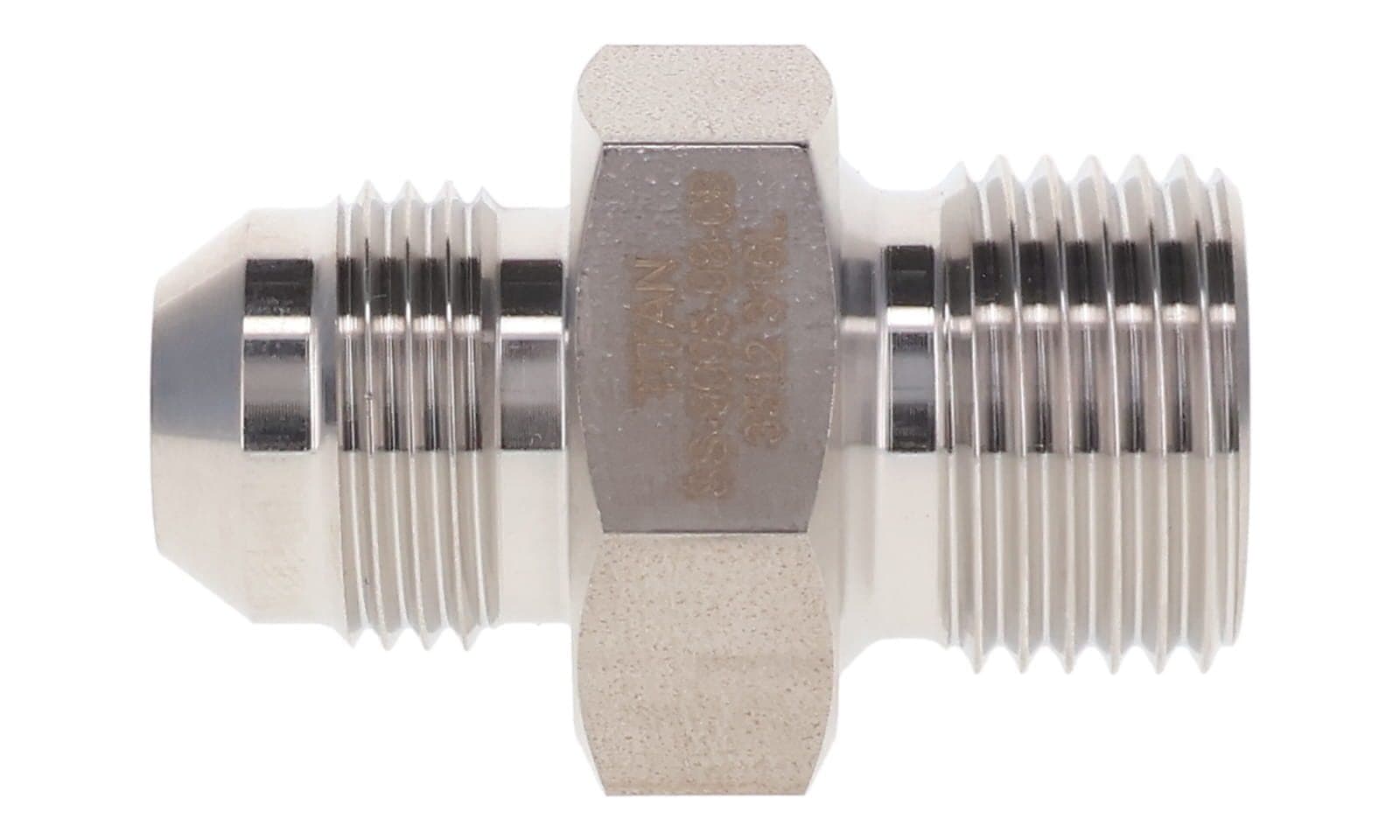 IH-SS-9005Stainless Steel JIC 37° Male × BSPP Male AdapterIndus Hydraulics
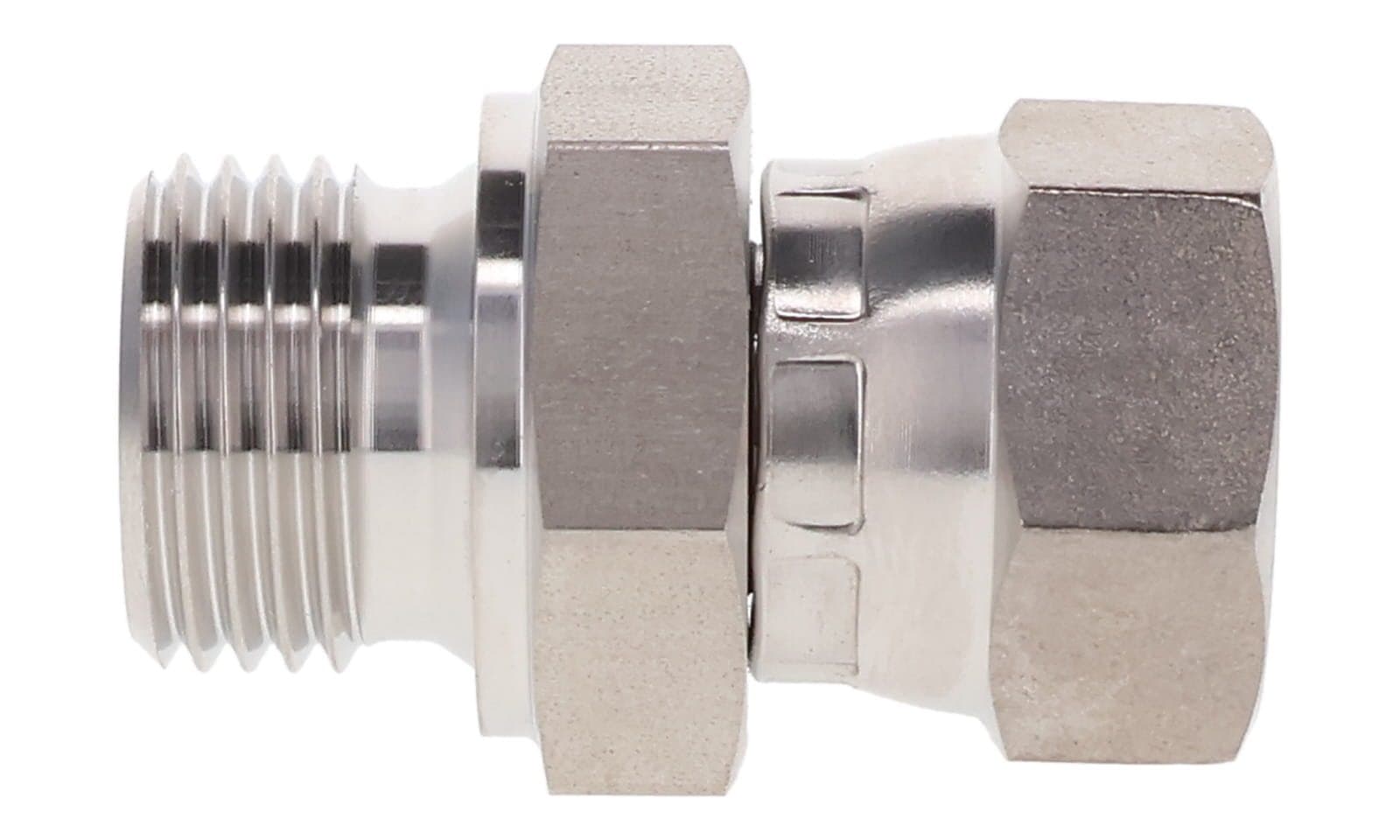 IH-SS-9021Stainless Steel BSPP Male × JIC 37° Female Swivel AdapterIndus Hydraulics
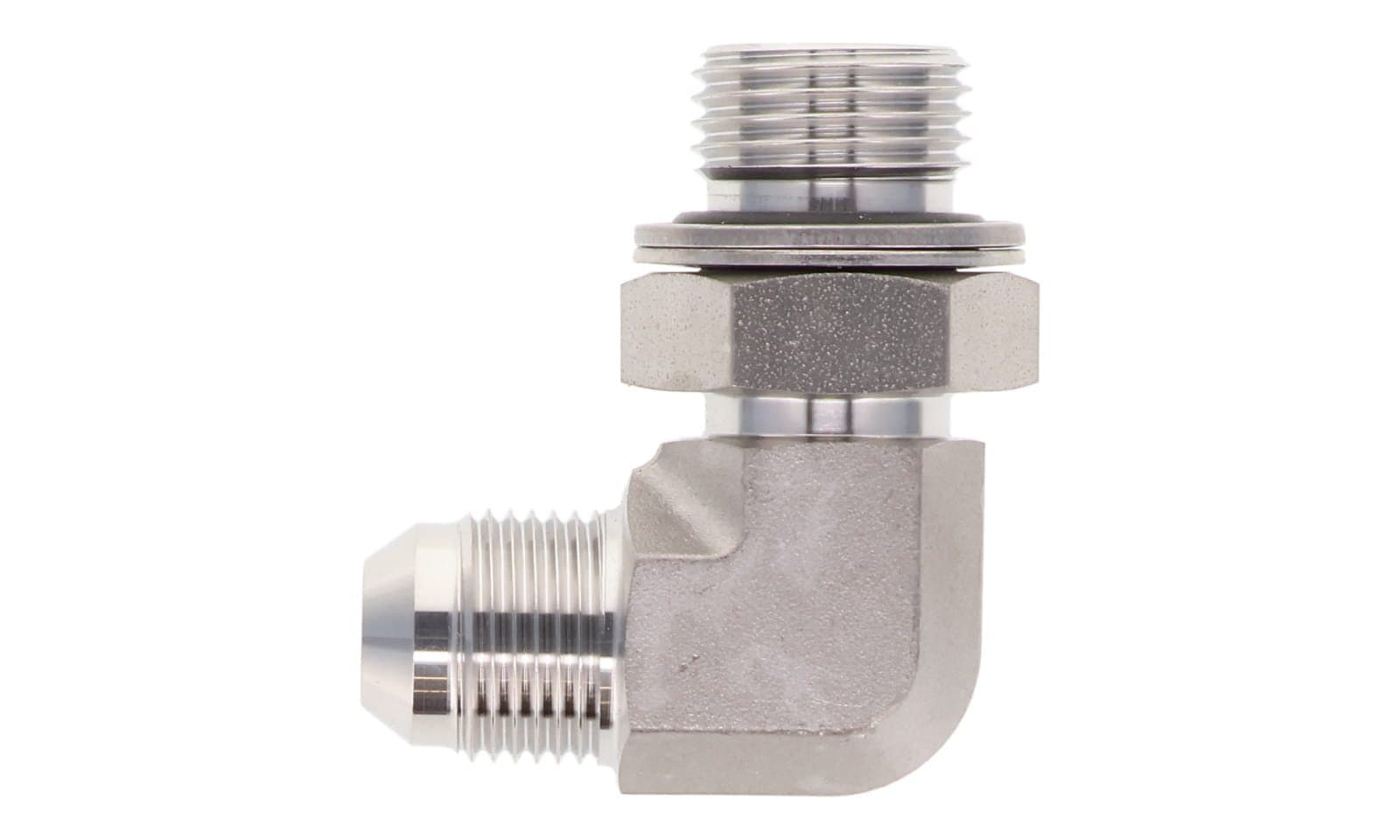 IH-SS-9059Stainless Steel JIC 37° Male × BSPP Male Adjustable 90° ElbowIndus Hydraulics
 IH-SS-9500VStainless Steel Bonded Seal with Viton Ring, BSPPIndus Hydraulics
 IH-SS-9028Stainless Steel BSPP Countersunk Sealed Plug (Viton Seal)Indus Hydraulics
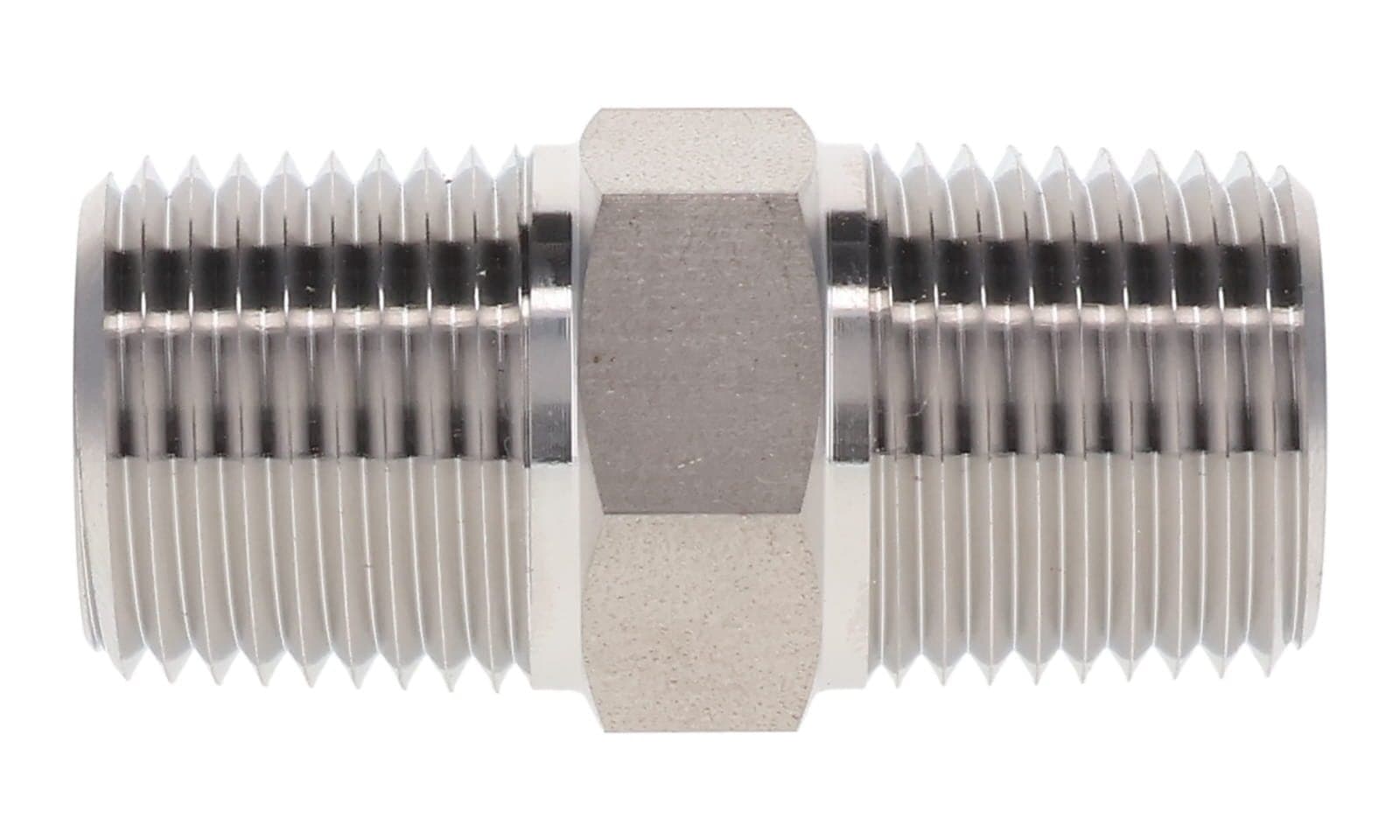 IH-SS-5404Stainless Steel NPT Male Hex NippleIndus Hydraulics
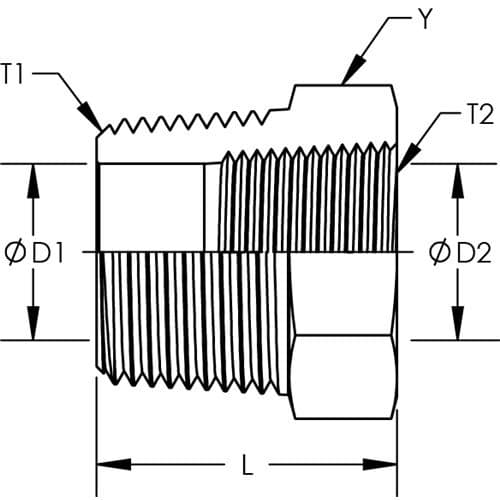 IH-SS-5406Stainless Steel NPT Hex Reducer BushingIndus Hydraulics
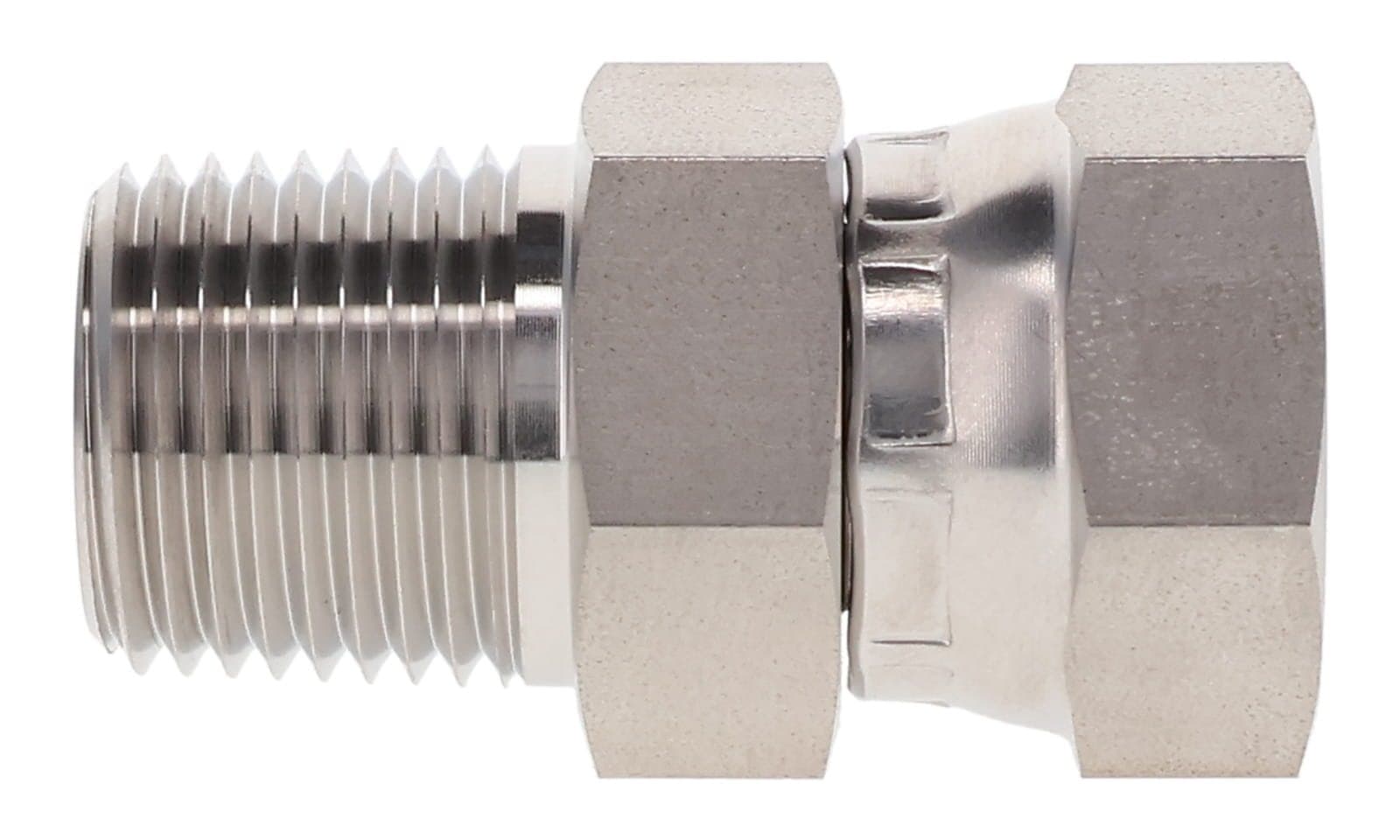 IH-SS-1404Stainless Steel NPT Male × NPSM Female Swivel AdapterIndus Hydraulics