
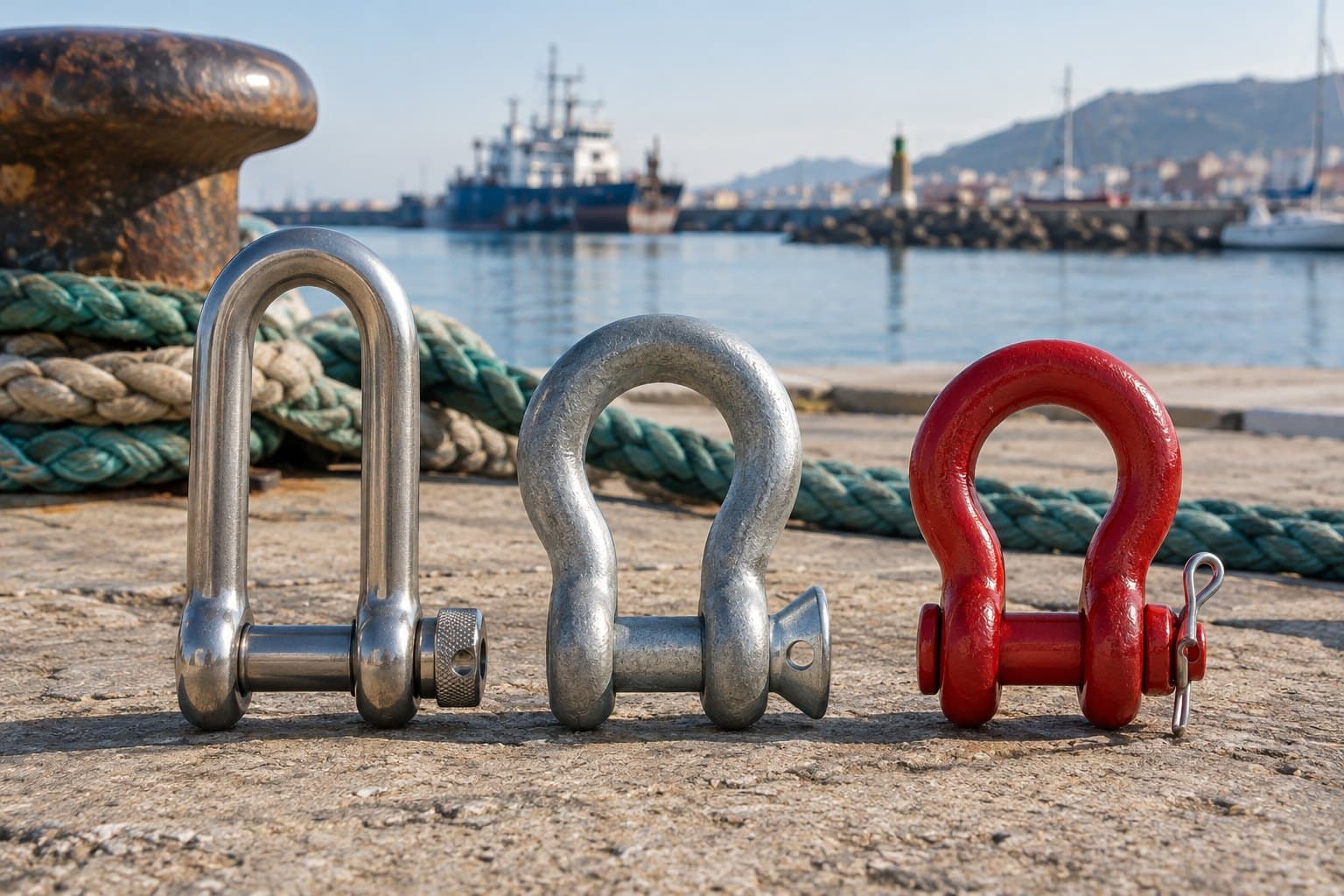
Gulf projects are designed in London, Hamburg, Perth and Houston, and the drawings carry each office’s habits. A rigging schedule from a British consultant asks for BS 3032 shackles; a shipyard specification names DIN 82101; an Australian-designed plant calls for AS 2741 Grade S; European lifting gear arrives marked EN 13889. They are not interchangeable with US patterns by size, and one of them is not even a current standard. This guide sorts them out. For the US patterns, see G-209, G-2130 and G-213.
/01The four standards at a glance.
| Standard | Status and scope | Our range |
|---|---|---|
| BS 3032 (UK) | Higher-tensile steel shackles; withdrawn 2001, still specified | Large bow and small dee, screw collar pin, 0.25–10.75 t |
| DIN 82101 (Germany) | Dee shackles for shipbuilding: lifting, towing, lashing | Galvanised, M4 to M140 body sizes; rating on request |
| AS 2741 (Australia)Highlighted | Forged shackles, Grade M (4) and Grade S (6) | Grade S, screw pin 0.33–55 t; safety pin 2–150 t |
| EN 13889 (Europe) | Forged grade 6 dee and bow shackles, 0.5–25 t, threaded pins | European large bow and dee shackles |
/02BS 3032: withdrawn, still specified.
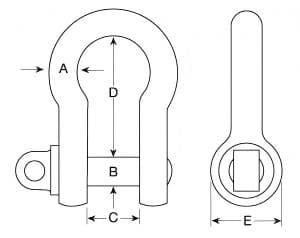
BS 3032 (1958) covered higher-tensile steel shackles. It was withdrawn in 2001, and its listed successor, BS 6994, was withdrawn too. Yet “BS 3032” still appears on British-origin rigging schedules and maintenance lists, and shackles are still made to its dimensions and ratings — usually with a screw collar pin, in large-bow and small-dee forms. When you order one, you are buying to a pattern rather than to a current standard: make sure the shackle is marked with its WLL and comes with a test certificate. Our BS 3032 shackles run from 0.25 t to 10.75 t.
/03DIN 82101: shipbuilding shackles.
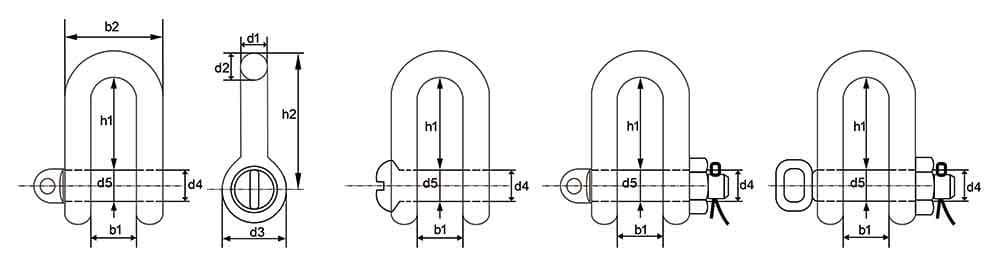
DIN 82101 is a German shipbuilding standard for dee shackles used for lifting, towing and lashing aboard ship and in yards. It defines several forms with different pin arrangements and a long series of body sizes; its ratings depend on form and size, so check the standard or the certificate for the form you order. Our galvanised DIN 82101 shackles run from M4 to M140 body sizes, and their load ratings are confirmed on request. For marine use, see stainless vs galvanised rigging in the Gulf.
/04AS 2741: Grade S and Grade M.
AS 2741 covers forged shackles in two quality grades: Grade M (also called 4) and Grade S (also called 6), the higher-strength grade used for most lifting. It requires each shackle to be marked with the maker’s name or mark, the grade, the working load limit and an identifier that links it to its test certificate. Our Grade S shackles come with screw pins (5–63 mm, 0.33–55 t) and safety pins (13–102 mm, 2–150 t), in bow and dee forms.
/05EN 13889: the European standard.
EN 13889 covers forged steel dee and bow shackles, grade 6, for general lifting, from 0.5 t to 25 t WLL, and applies only to shackles with threaded pins. It is the standard behind much European-made lifting gear. Our European large bow and large dee shackles, and the Italian-type galvanised shackles, follow European dimensions; check the certificate for the standard each is supplied against.
Common questions
- What replaced BS 3032?
- It was listed as superseded by BS 6994, which was itself withdrawn in 2001. Shackles are still made to the BS 3032 pattern.
- What is a DIN 82101 shackle?
- A dee shackle to the German shipbuilding standard, used for lifting, towing and lashing on ships and in yards.
- What does Grade S mean on a shackle?
- The higher-strength quality grade (also called grade 6) in the Australian standard AS 2741; Grade M (grade 4) is the lower.
- What is EN 13889?
- The European standard for forged steel grade 6 dee and bow shackles for general lifting, 0.5 t to 25 t, with threaded pins.
- Can I substitute a G-209 for a BS 3032 shackle?
- Only if the rigging engineer approves it: dimensions and ratings differ. Order to the standard on the drawing, or ask for an approved equivalent.
Shackles to non-US standards
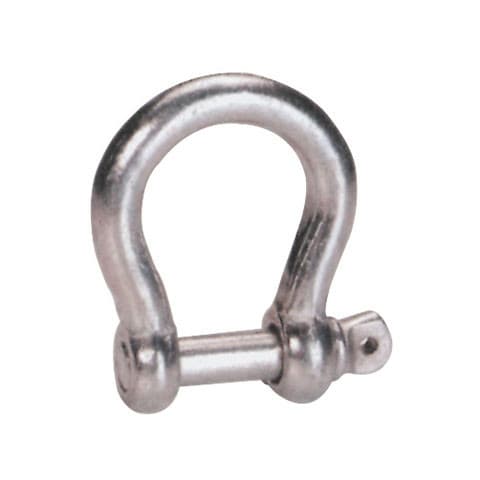
 IH-LR-SH-B3032SSCPBS 3032 Shackle with Screw Collar Pin
 IH-LR-SH-SD82101FBShackle — DIN 82101 Form A, B and C Pattern, Galvanized
 IH-LR-SH-SSA2741SP2Grade S Shackle — AS 2741, Screw Pin
 IH-LR-SH-SSA2741SPGrade S Shackle — AS 2741, Safety Pin
 IH-LR-SH-EBOWLarge Bow Shackle — European Type
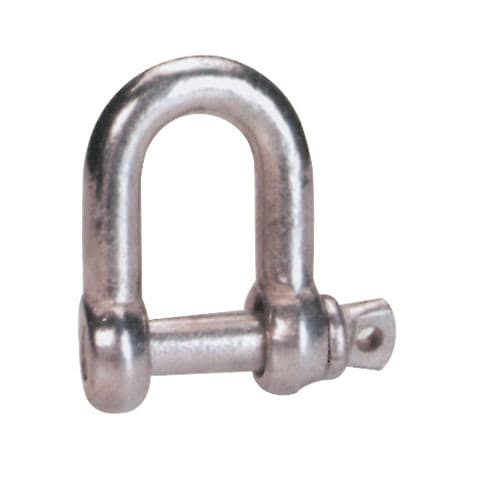 IH-LR-SH-EDEELarge Dee Shackle — European Type
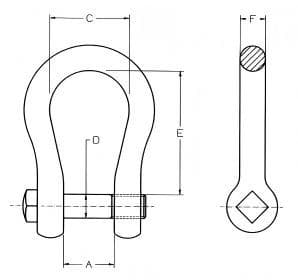 IH-LR-SH-IGSGalvanized Shackle — Italian Type
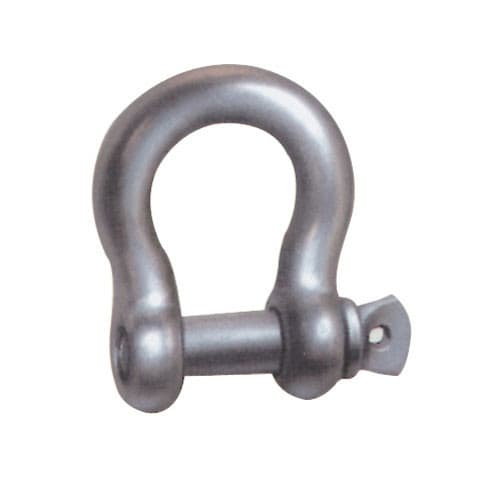 IH-LR-SH-JISJIS Screw Pin Chain Shackle — With or Without Collar