
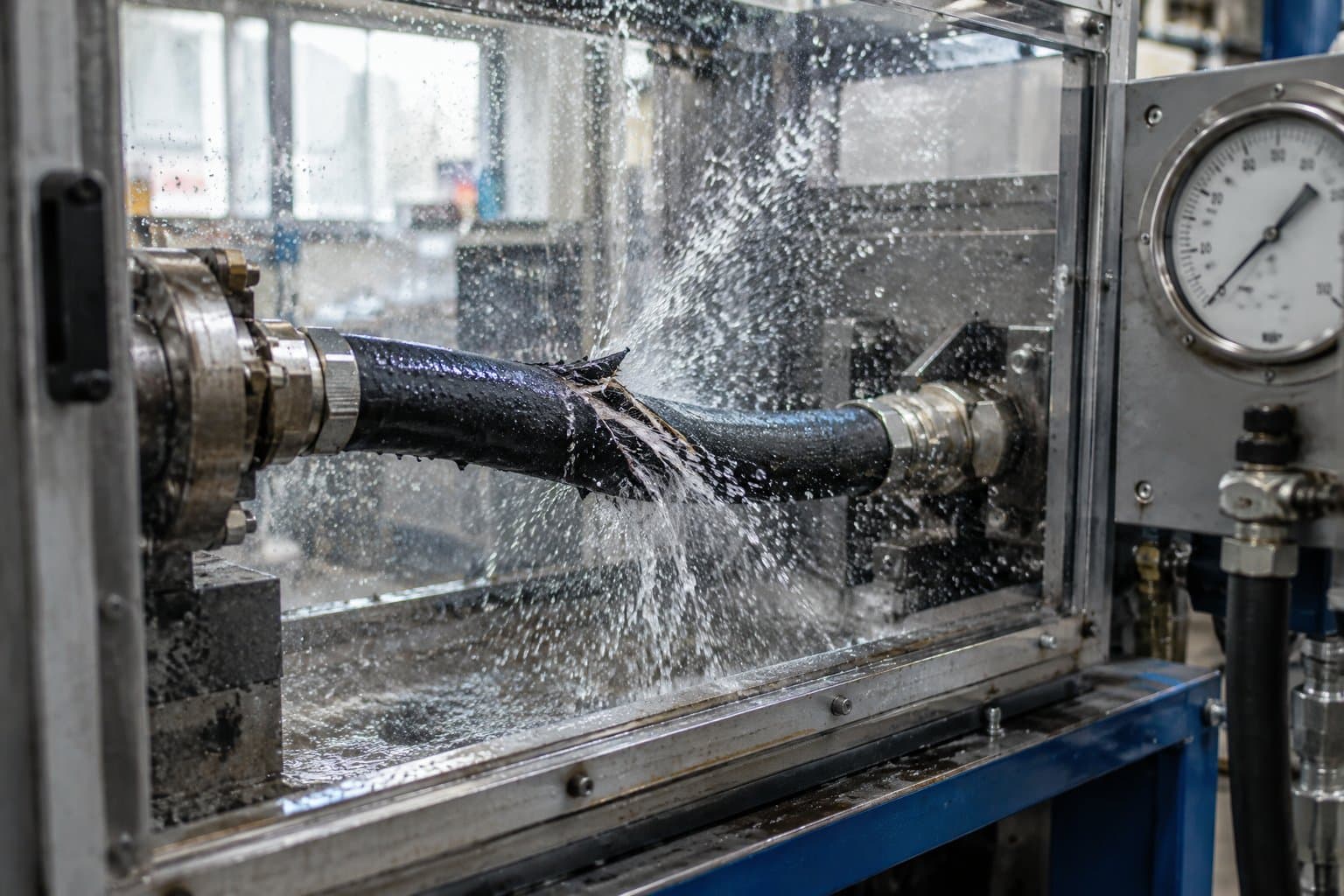
Every industrial hose listing in our range carries a field most buyers skip: the safety factor. It is the ratio between the pressure the hose is rated to work at and the pressure it is guaranteed not to burst below, and it is not the same number for every hose. Reading why it changes says more about how to use a hose than any marketing description.
/01What the factor is.
Divide the minimum burst pressure by the working pressure and you have the safety factor. A 10 bar water hose with a 30 bar burst is 3:1. The margin exists to absorb everything the rating cannot see — pressure spikes, ageing, small amounts of damage, temperature — so that a hose run at its working pressure for its whole life does not fail. It is not spare capacity: running a 10 bar hose at 15 bar spends the margin that was meant for its old age.
| Duty | Example from our range | Working / burst | Factor |
|---|---|---|---|
| Water suction and delivery | A210 | 10 / 30 bar | 3:1 |
| Compressed air and water | A101HP | 20 / 60 bar | 3:1 |
| Oil suction and delivery | A460 | 20 / 60 bar | 3:1 |
| Oil, mud and sea water | A400EU | 20 / 80 bar | 4:1 |
| Chemical (UHMWPE) | A410 | 10 / 40 bar | 4:1 |
| Composite | A901GG | 20 / 80 bar | 4:1 |
| Silicone food | SANSIL | 3 – 10 bar by size | 4:1 |
| Saturated steamHighlighted | A230 | 18 / 180 bar | 10:1 |
/02Why the factor changes.
Two things push a factor up: how bad a failure would be, and how fast the hose ages. Water at 10 bar escaping from a split is a nuisance; the hose ages slowly; 3:1 is enough. A chemical or a fuel escaping is a release, and composite and chemical hose are exposed to media that work on them over time, so 4:1. Steam is both — a failure releases scalding steam at the operator, and heat ages the rubber continuously from the inside, where nobody can inspect it — so steam hose is built to 10:1. Our 7 bar steam and hot water hose bursts at no less than 70 bar; our 18 bar hose at 180.
/03Against hydraulic and oilfield hose.
Hydraulic hose is built to 4:1 — a 2SN hose rated 400 bar at −04 has a 1,600 bar minimum burst. Oilfield hose goes the other way: API 16C choke and kill lines are designed as close as 1.5:1 between working and test, and API 7K rotary hose at 2.5:1. Those thin margins are made acceptable by the inspection, pressure-testing and recertification regimes around them — margin that is not in the design has to come from inspection.
/04The assembly factor.
A hose's safety factor says nothing about its couplings. A 20 bar oil hose on a 6" cam and groove coupling rated 75 psi is a 5 bar assembly; a 16 bar suction hose on a nipple held by one band clamp is whatever that clamp holds. Rate an assembly at its weakest component, mark it at that figure, and pressure-test the assembly rather than trusting the hose's datasheet.
Frequently asked questions
- How is a hose safety factor calculated?
- Minimum burst pressure divided by maximum working pressure. A 10 bar hose with a 30 bar minimum burst has a 3:1 safety factor.
- Why do steam hoses have a 10:1 safety factor?
- Because a failure releases scalding steam and heat ages the hose continuously from the inside. Our steam hoses are built to 10:1.
- Can I run a hose above its working pressure if the safety factor is high?
- No. The safety factor is the designers' margin for spikes, ageing and damage. Running above the working pressure spends it.
- Does the safety factor apply to the whole assembly?
- No — only to the hose. The couplings and clamping have their own ratings, and the assembly is rated at its weakest part.
Hoses quoted in this article
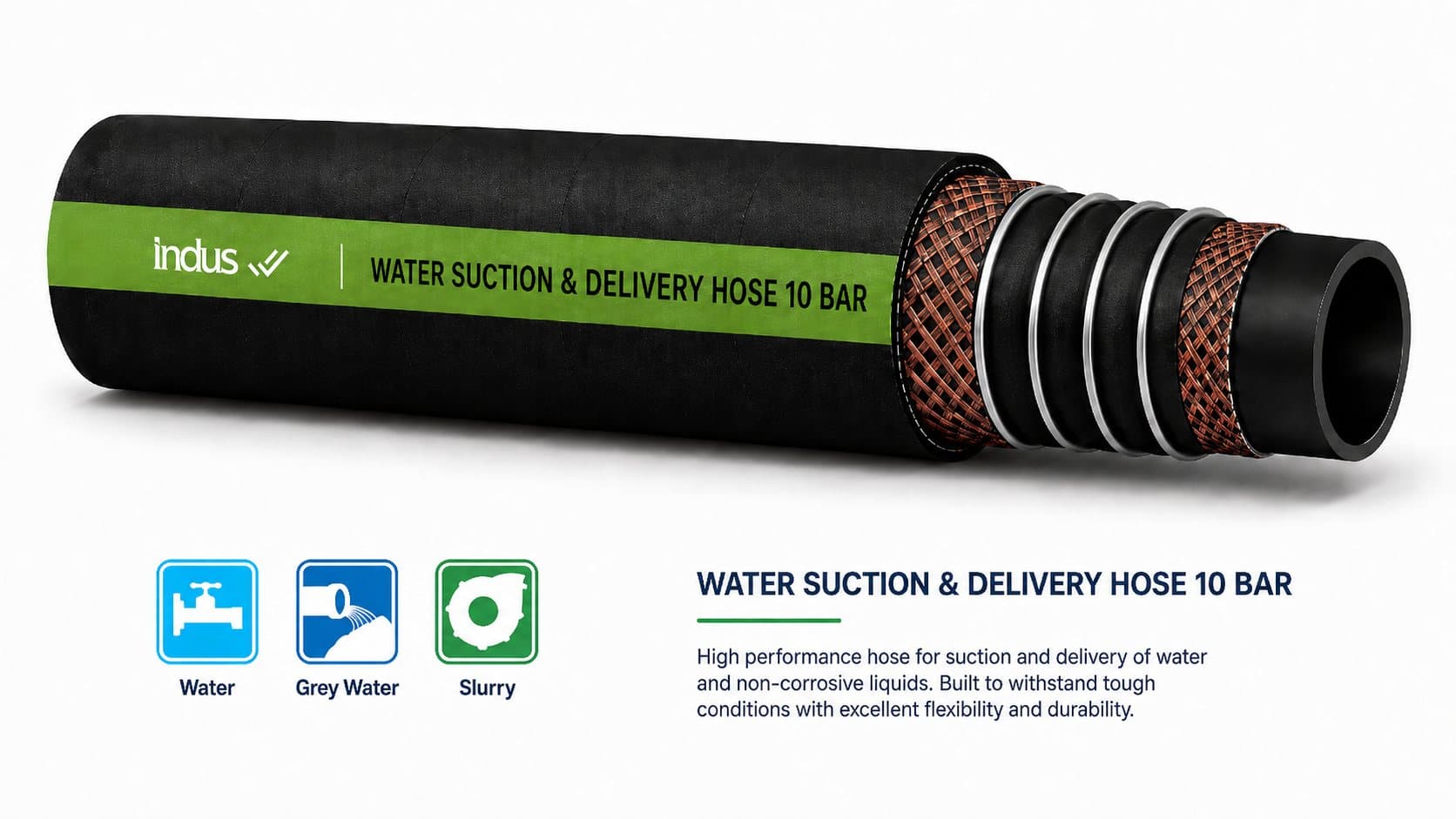 IH-IH-A210Water Suction & Delivery Hose 10 BarIndus Hydraulics
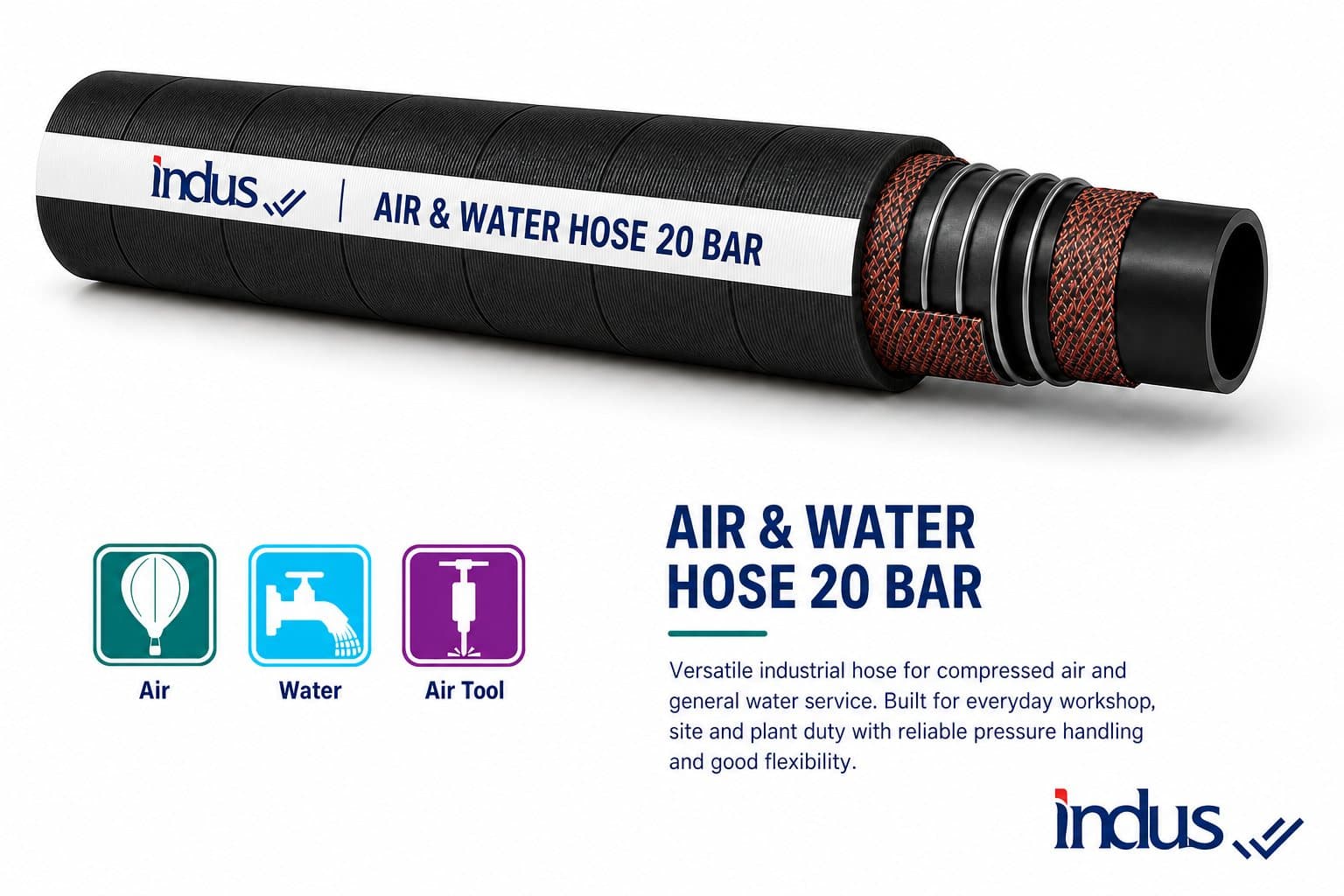 IH-IH-A101HPBlack Air/Water Hose 20 BarIndus Hydraulics
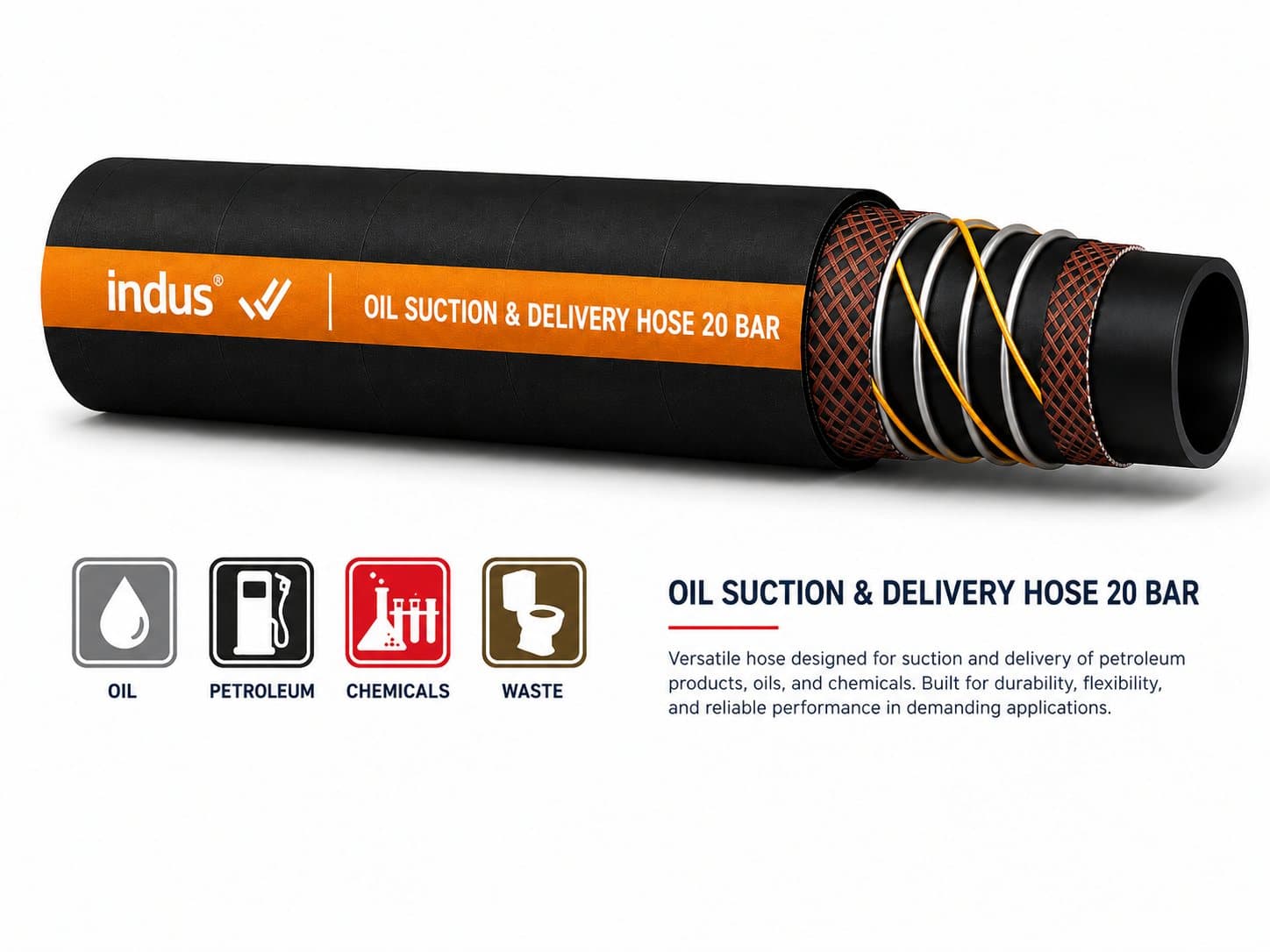 IH-IH-A460Oil Suction & Delivery Hose 20 BarIndus Hydraulics
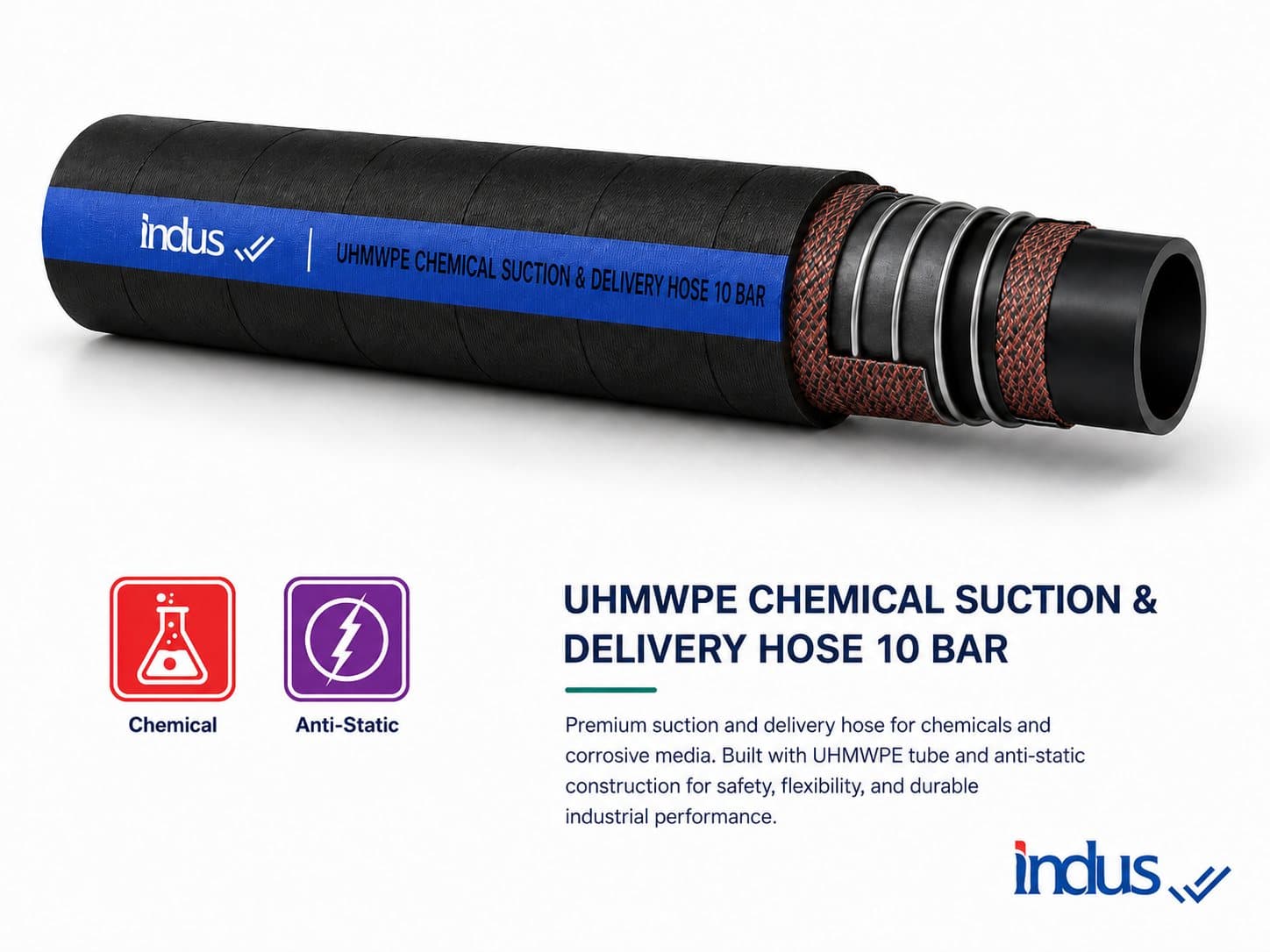 IH-IH-A410UHMWPE Chemical Suction & Delivery Hose 10 BarIndus Hydraulics
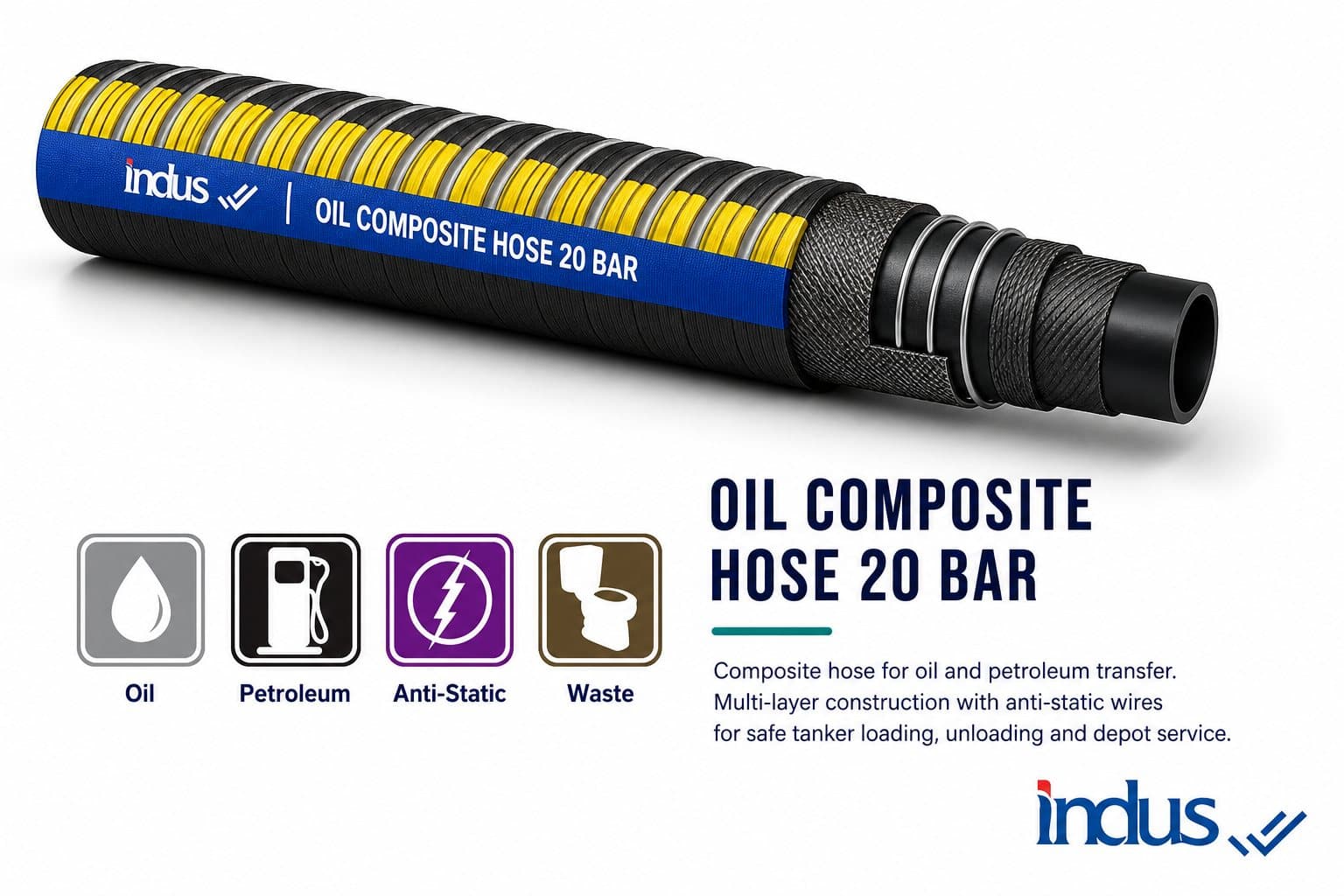 IH-IH-A901GGOil Composite Hose 20 BarIndus Hydraulics
 IH-IH-SANSILSilicone Suction & Delivery HoseIndus Hydraulics
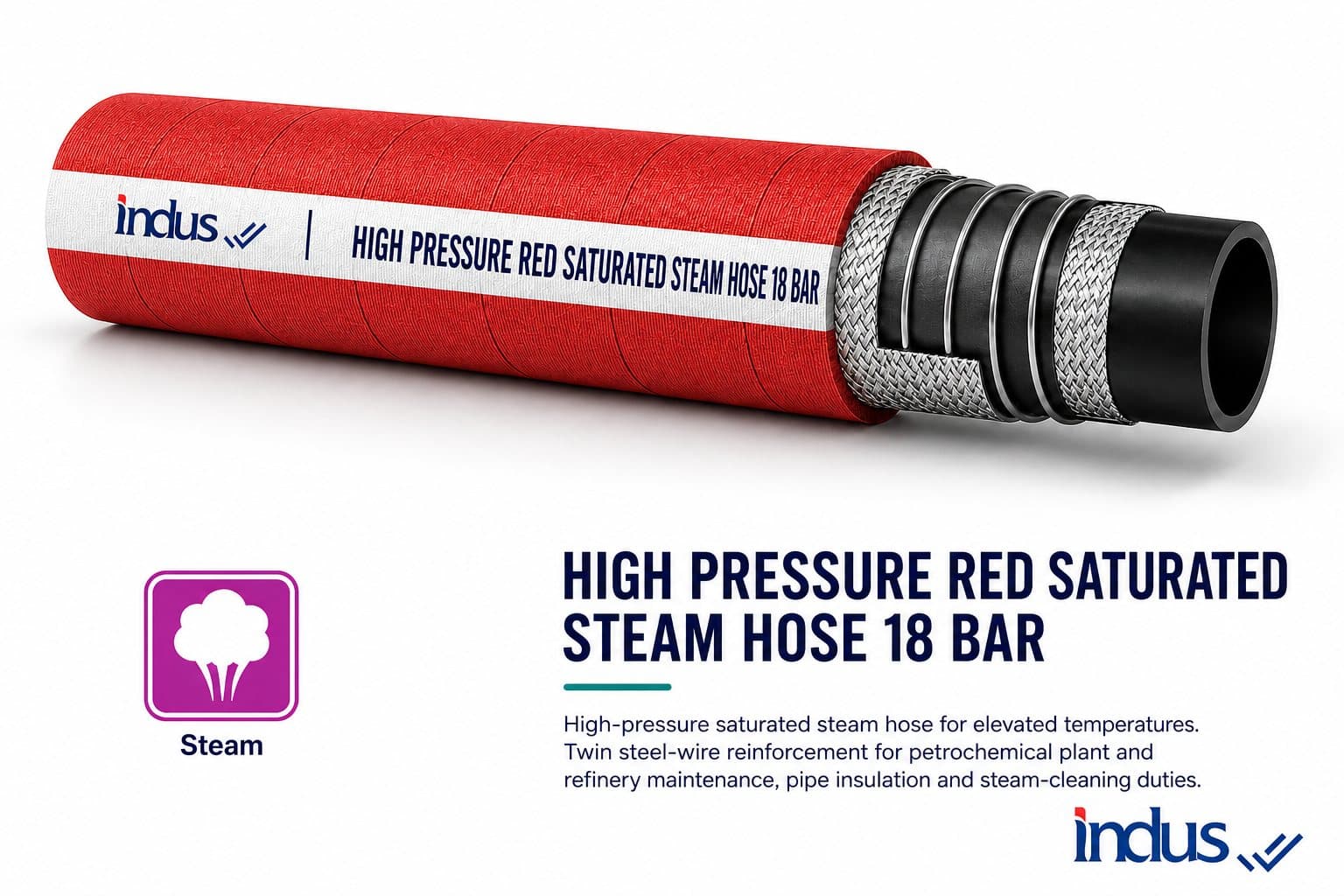 IH-IH-A230High Pressure Red Saturated Steam Hose 18 BarIndus Hydraulics
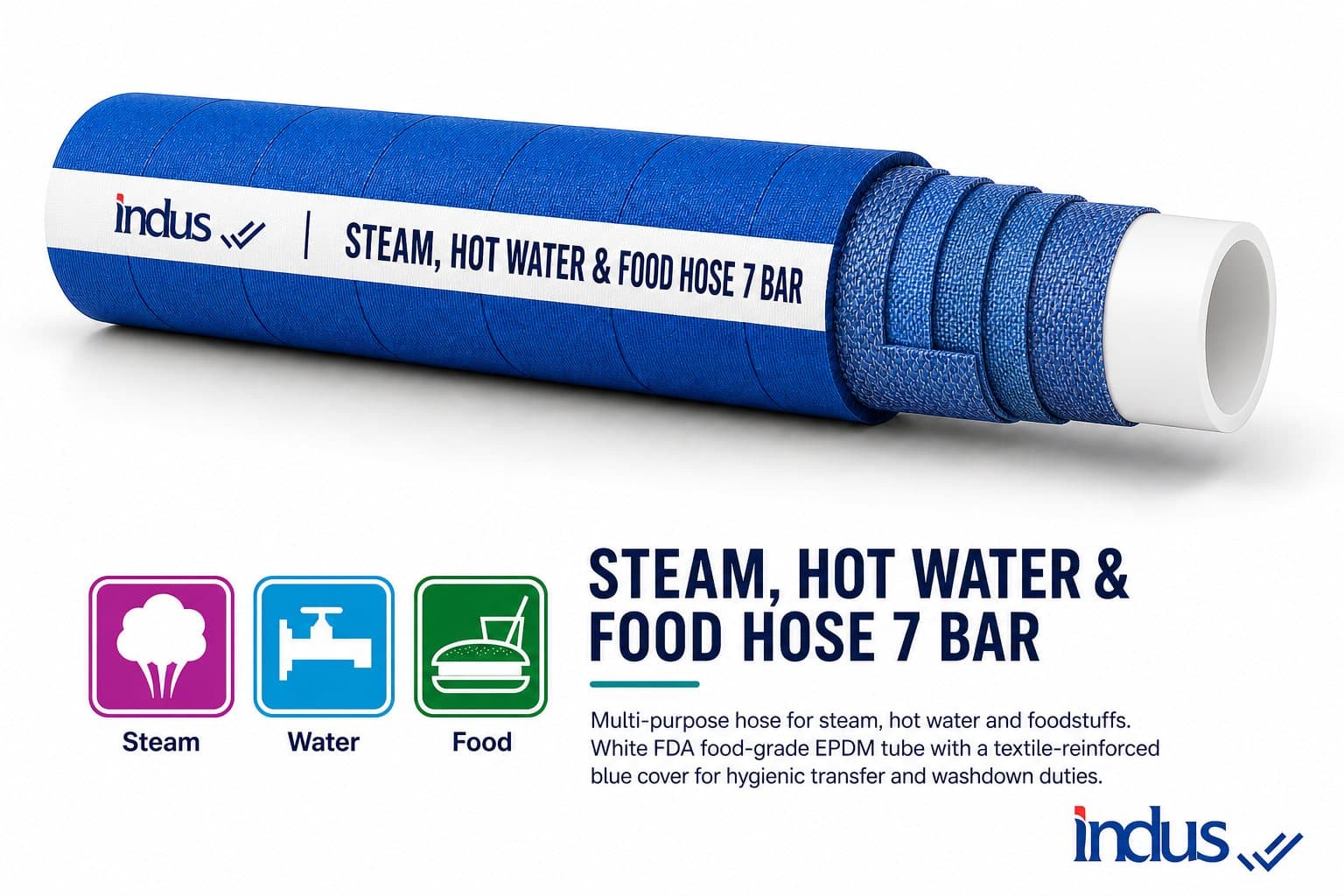 IH-IH-A235BUSteam, Hot Water & Food Hose 7 BarIndus Hydraulics


