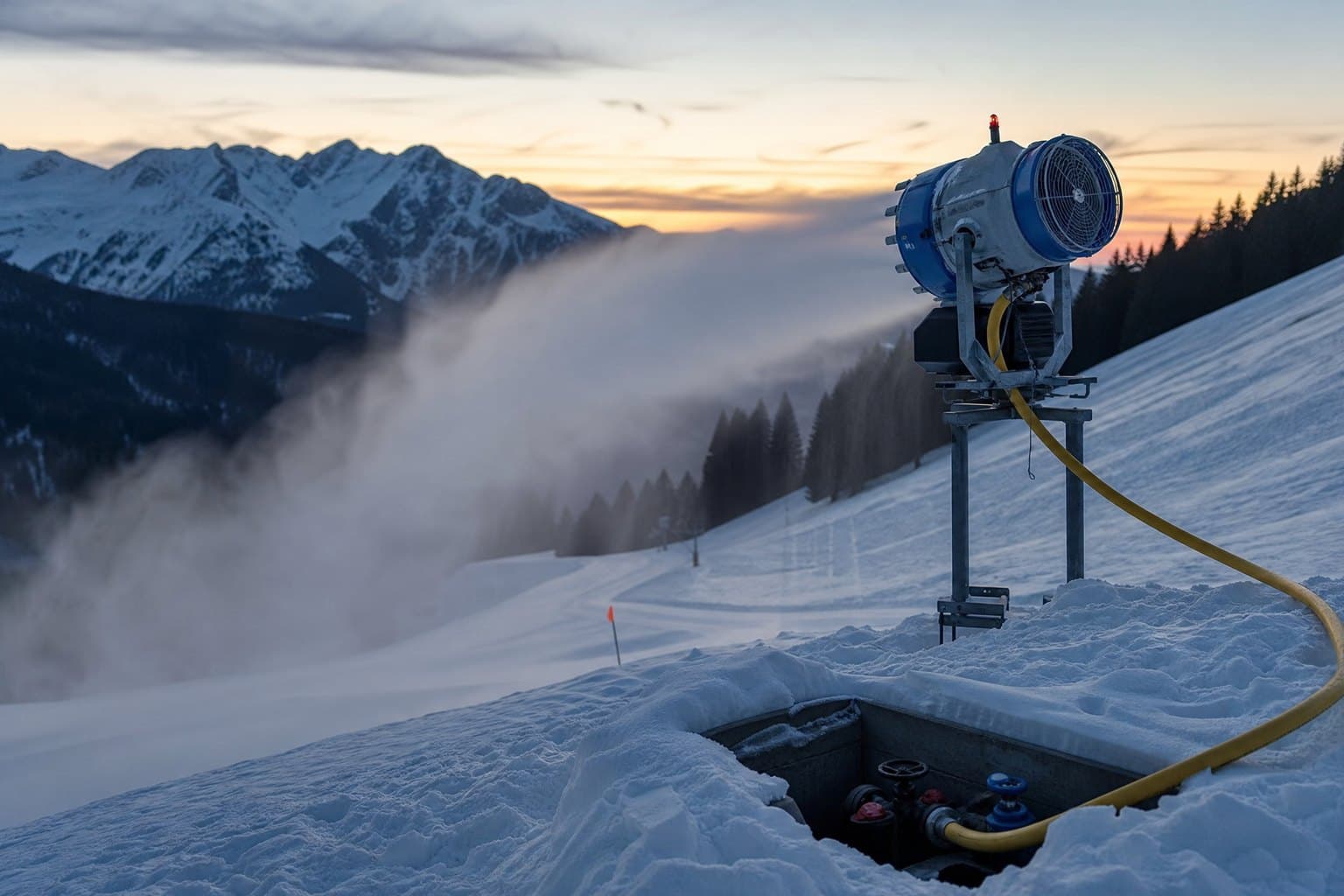
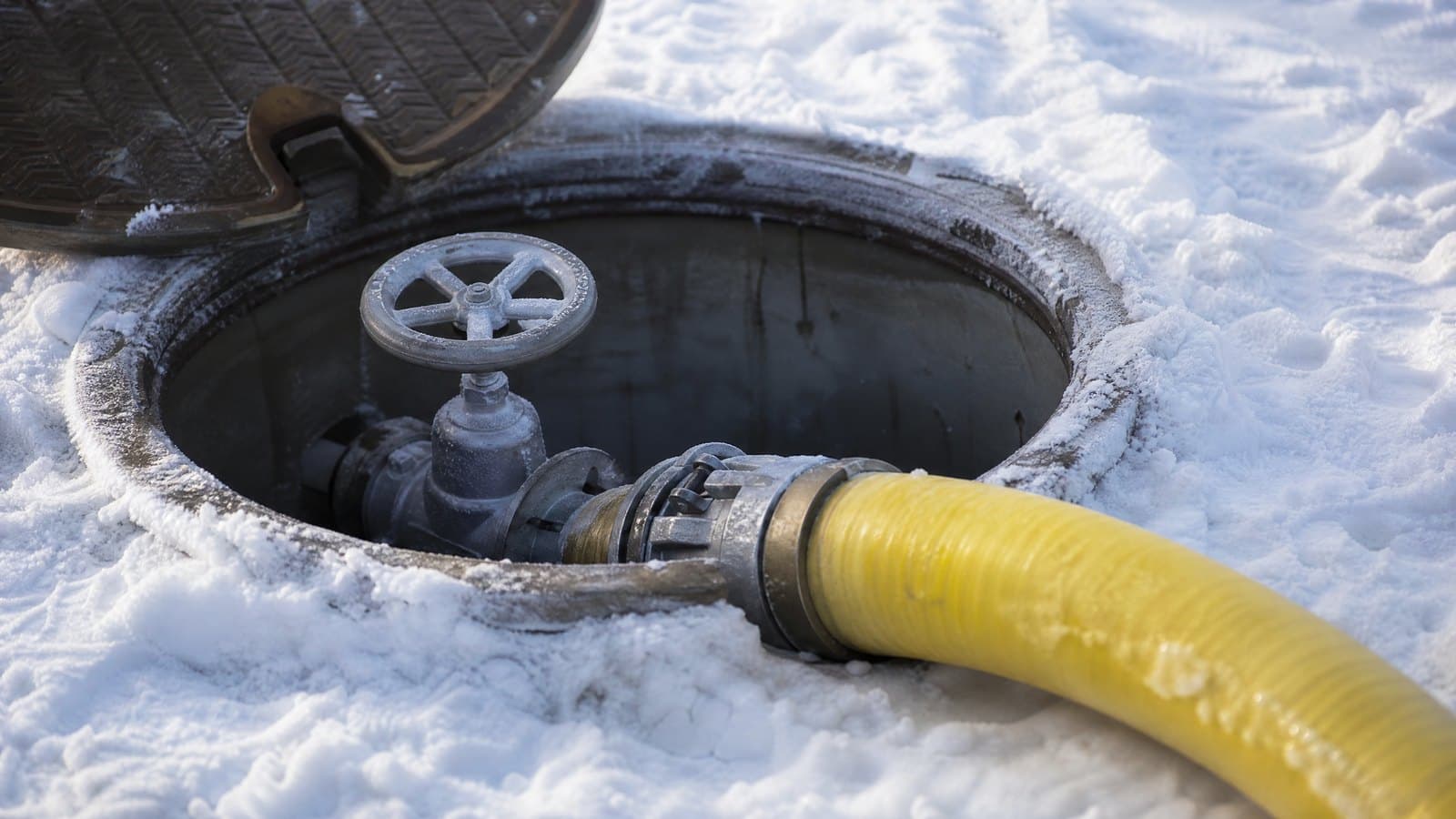
At a ski area, snowmaking begins when the air is cold and dry enough — typically around −2.5 °C wet-bulb temperature — and often runs through the night. A pumped network delivers water under pressure to hydrants along the pistes; from each hydrant a short hose feeds a fan gun or lance, and as the snow builds the crew moves guns and hoses to the next hydrant. The hose is the one component that is handled constantly, at the coldest time of day, on ice.
/01How much water.
Machine-made snow is dense: research measurements put it at 350 to 600 kg/m³, so each cubic metre of water makes roughly 1.7 to 2.9 m³ of snow. Across a season the volumes are large — Austrian resorts used on average about 3,500 m³ of water per hectare of piste, and French figures go up to about 4,000 m³/ha — and field studies have found that over half of the water can be lost to evaporation, sublimation and wind drift. That water reaches each gun through a hydrant and, usually, a length of hose.
/02What the hose must survive.
- Cold flexibility. PVC and many rubbers stiffen sharply below freezing; a stiff hose kinks, cracks at folds and is hard to handle in gloves.
- Pressure. Snowmaking networks run at high pressure to atomise water; high-pressure lance and tower systems can run at several tens of bar.
- Abrasion. Hose is dragged over ice, rock and snow-groomer tracks.
- UV. High-altitude sun and snow glare age covers quickly.
- Visibility. A hose on the piste must be seen by groomers, skiers and crews — which is why snowmaking hose is usually yellow or orange.
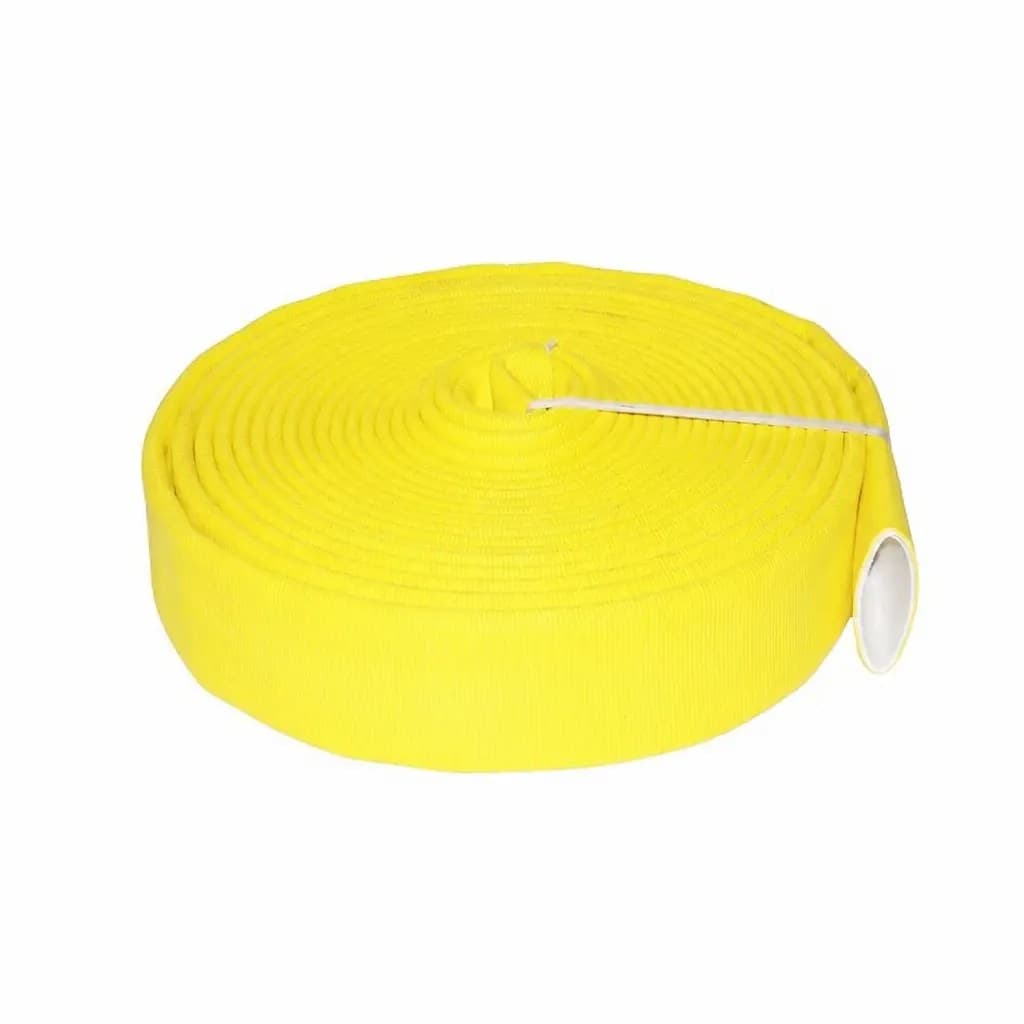
Our TPU snowmaking hose is made for exactly this: a TPU liner and cover around a woven jacket that stay flexible in the cold, resist abrasion, UV and chemicals, and come in high-visibility yellow. TPU hose in our range is rated down to −50 °C. A per-size pressure table is not published for this line, so send the hydrant pressure, bore, length and couplings and we will confirm the rating against your system.
/03Fan guns, lances and pressure.
Fan guns combine a fan with nozzle rings and are moved around the slope; lance and tower guns are tall, fixed or semi-fixed and rely on water pressure and compressed air. Both are fed from hydrants, but pressures differ by system and by position on the mountain — hydrants low on the network see the static head of everything above them. Rate the hose on the highest hydrant pressure it will ever be connected to, and match the couplings to the hydrant and gun connections used across the resort so any hose fits any hydrant.
/04Stopping hose from freezing.
- Keep water moving while the gun runs; a flowing line rarely freezes.
- Drain before moving. Close the hydrant, open the drain, and lift the hose to empty it before dragging it to the next position.
- Drain at shutdown. A full hose left on the slope overnight freezes solid and can split.
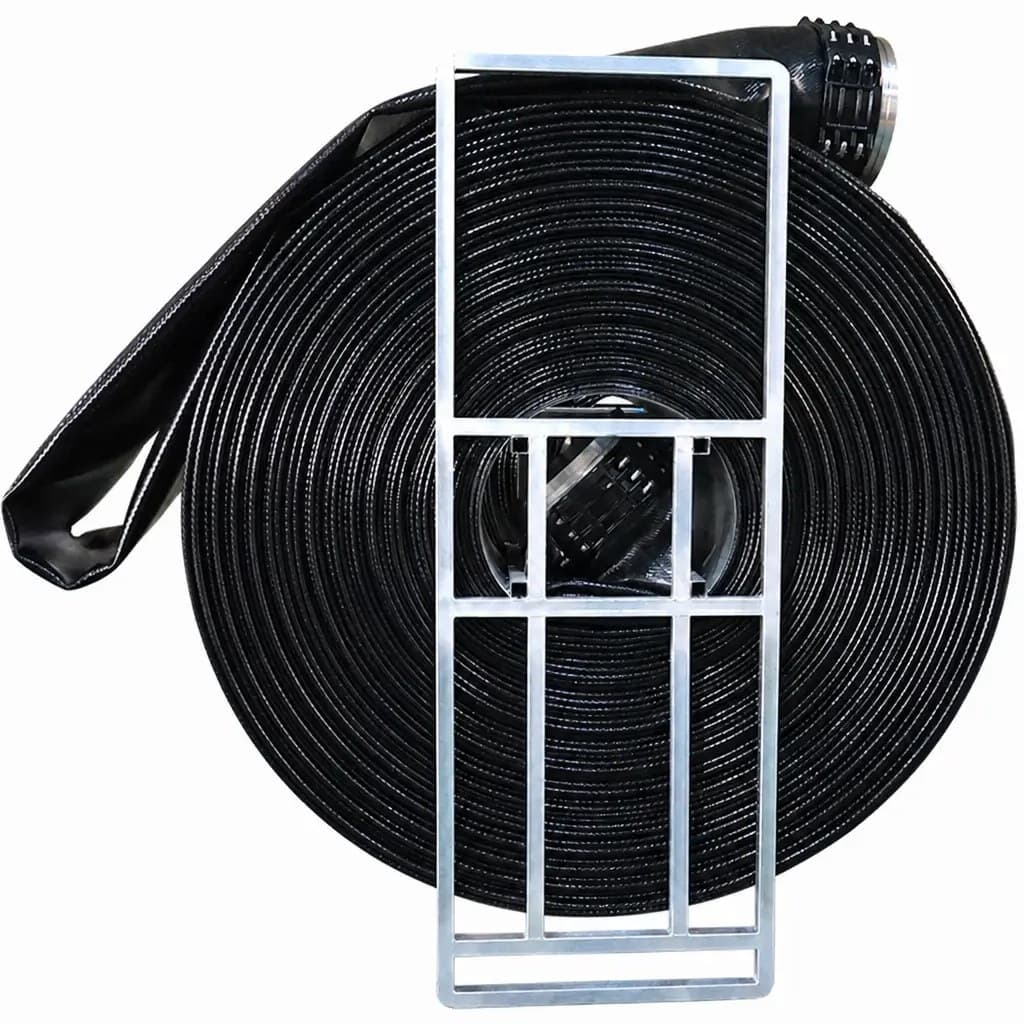
- Coil lay flat hose flat and empty for transport by snowmobile or groomer.
- Inspect at the start of each season for cuts, cover wear and damaged couplings.
The same hose serves indoor snow centres, including those in the Gulf, where the conditions are reversed: cold inside the hall, extreme heat in the plant areas outside. See lay flat hose in Gulf heat.
Common questions
- Why is snowmaking hose yellow?
- For visibility on snow — to groomer drivers, skiers and the crews moving guns at night.
- What temperature can snowmaking hose take?
- Our TPU hose is rated down to −50 °C and stays flexible in the cold.
- How much water does snowmaking use?
- Austrian resorts used on average about 3,500 m³ of water per hectare of piste per season. One cubic metre of water makes roughly 1.7 to 2.9 m³ of machine-made snow.
- How do I stop a snowmaking hose freezing?
- Keep water flowing while the gun runs, and drain the hose before moving it and at shutdown.
- What pressure rating does snowmaking hose need?
- At least the highest hydrant pressure on your network. Send the hydrant pressure, bore and couplings and we will confirm the rating.