A certificate that says “proof tested” is reassuring, but it is easy to read more into it than it says. A proof test shows that a particular item survived a load well above its working load limit without stretching — that it was made from the right steel, heat-treated properly and assembled correctly. It does not show how much the item could carry, and it is no substitute for using it correctly. This guide explains the numbers. For the three numbers in general, see working load limit vs breaking strength.
/01Three numbers.
| Figure | What it is | Used for |
|---|---|---|
| Working load limit (WLL)Highlighted | The most the maker rates the item to carry in service | Every lift — the only working figure |
| Proof load | A test load, a multiple of WLL, applied without permanent deformation | Proving each item (or a sample) at manufacture or after repair |
| Breaking load | The minimum load at which the design fails | Design and type testing — never a working figure |
/02The factors differ.
| Product and source | Proof load | Breaking load |
|---|---|---|
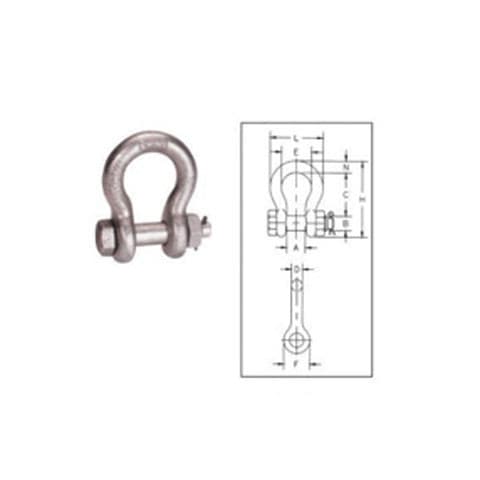
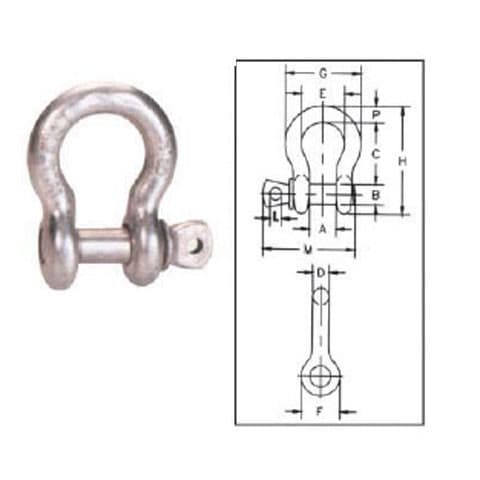
| Shackles to US Federal Spec RR-C-271 | 2.2 × WLL | 5 × WLL minimum |
| Grade 6 shackles to EN 13889 (maker’s data) | 2 × WLL | Safety factor 6 |
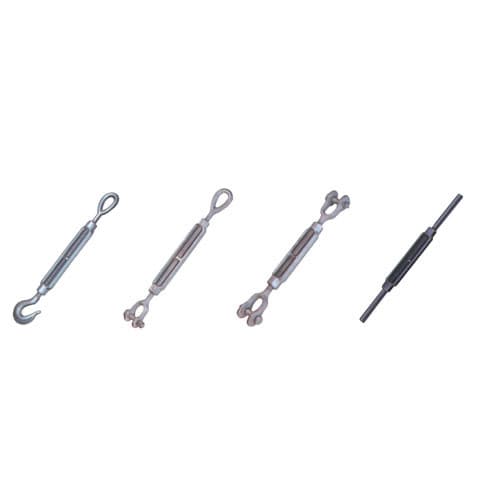
| One maker’s forged turnbuckles | 2.5 × WLL | Design factor 5 |
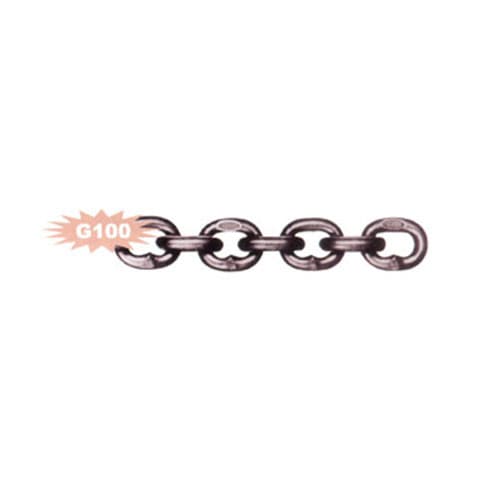
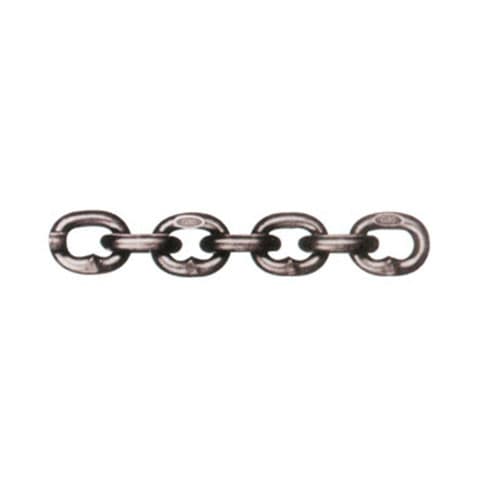
| Our Grade 100 chain, 6 mm (live table) | 35 kN (WLL 1.4 t) | 57 kN |
Because the factors differ, a proof load figure only means something alongside the standard it was tested to. Our size tables publish WLL and, where the maker supplies them, proof and breaking loads — the Grade 100 chain table, for example, gives all three for each size. See chain grades explained.
/03What the certificate should show.
- The item, its size and WLL, and its traceability code or batch.
- The proof load applied — or the standard that sets it — and the result.
- The maker’s identity and the date.
See lifting gear test certificates for the difference between a manufacturer’s certificate, a declaration of conformity and a report of thorough examination.
/04Re-testing used gear.
In service, the routine is thorough examination, not proof testing. Under the UK’s LOLER regime — widely used as a Gulf baseline — accessories are examined at least every 6 months, and an examination scheme may include tests at the competent person’s discretion. In practice, testing is called for after an item has been repaired or modified (a chain sling with replaced components, for example), when its history is unknown, or when the examiner cannot otherwise satisfy themselves it is safe. In the UAE, local codes set the examination regime — see lifting equipment inspection in the UAE.
Common questions
- What is the proof load of a shackle?
- It depends on the standard: 2.2 × WLL for RR-C-271 pattern shackles, 2 × WLL for EN 13889 Grade 6 shackles (per maker data). Check the certificate.
- Is proof load the same as safe working load?
- No. Proof load is a test figure well above the WLL; the WLL is the only working figure.
- Does every item get proof tested?
- It depends on the product standard and maker — some test every item, others test samples. The certificate states what was done.
- When does used lifting gear need re-testing?
- Typically after repair or modification, or when its history is unknown — at the competent person’s discretion. Routine checks are thorough examinations.
- Do your size tables show proof loads?
- Where the maker supplies them, yes — for example our Grade 100 chain table gives WLL, proof and breaking load for each size.