A chain certificate is a record of tests. Knowing what they are tells you what the certificate proves — and what it does not. The rules come from the classification societies, built on the IACS requirements; the summary below follows how one chain maker sets out the tests required for finished chain and for accessories.
/01The proof load test.
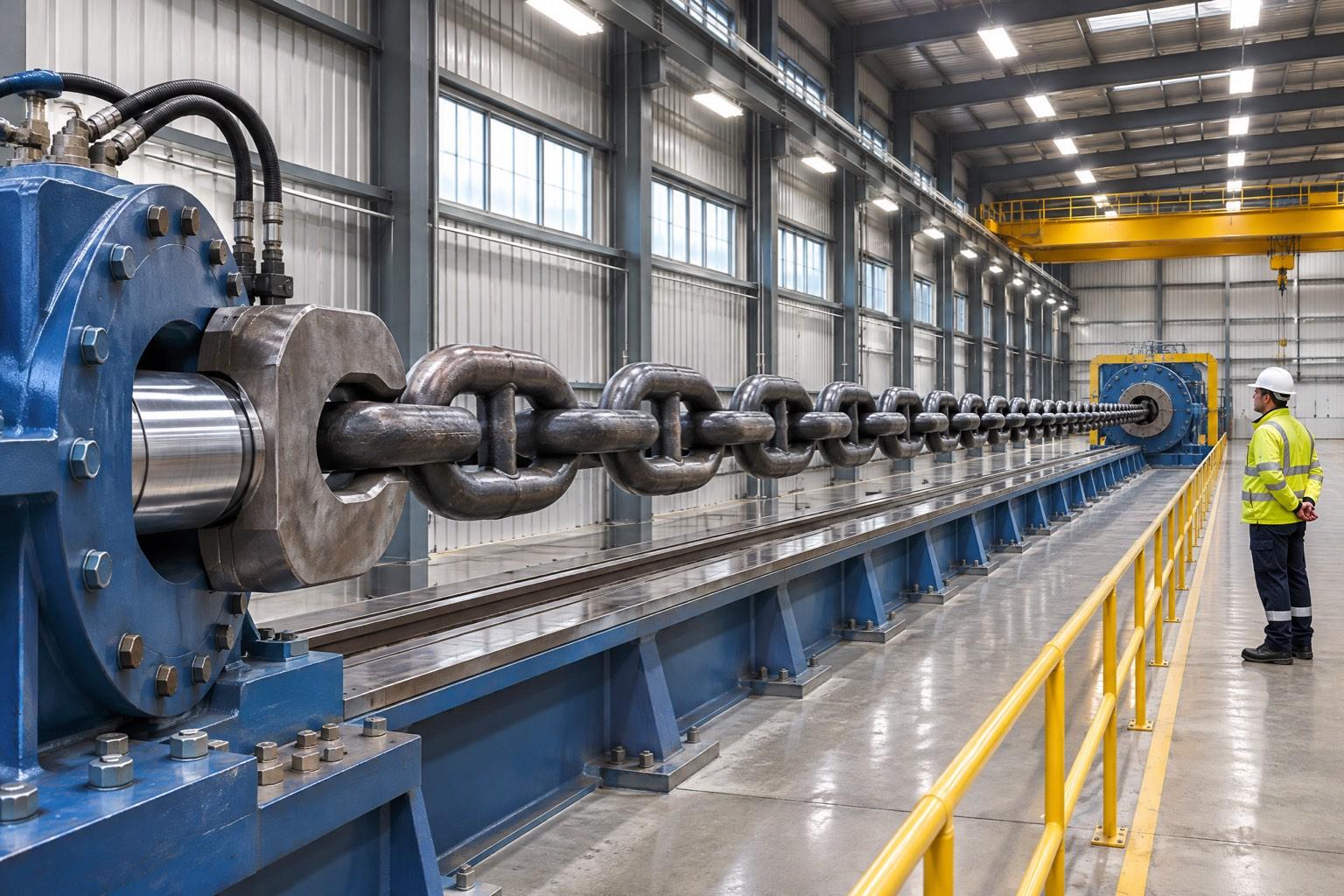
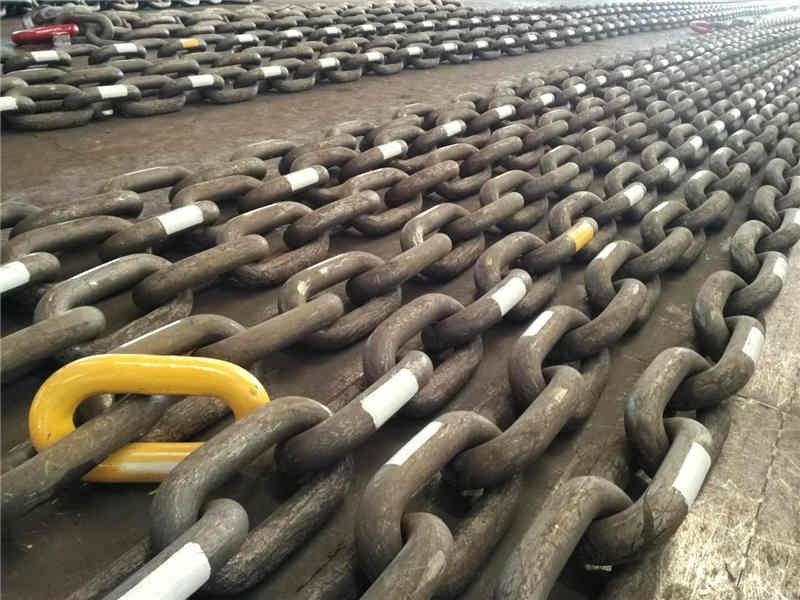
Every length of finished chain is pulled on an approved test machine to the proof load for its size and grade — 2,150 kN for a 76 mm U2 chain, 4,731 kN for 76 mm R4 stud link (all sizes in the size chart). After unloading, every link is examined and the length and dimensions checked. The length passes if there are no visible defects and its permanent elongation does not exceed 5% of the original length. The test is made on bare steel: paint or anti-corrosion coating must not be applied first, because it could hide a crack.
/02The breaking load test.
| Item | Requirement |
|---|---|
| Sampling | One length chosen by the surveyor from each batch of four lengths or fewer |
| Sample | At least three links, made, welded and heat treated with the chain |
| Load | The grade’s breaking load, held for at least 30 seconds |
| Pass | The sample does not break |
| Very large chain | If no machine can reach the load, an equivalent method agreed with the class society |
The sample links are cut out in the surveyor’s presence. For the largest offshore sizes the breaking loads run past 30,000 kN, which is why makers invest in test machines of 1,600 and 4,000 tonnes.
/03Accessories.
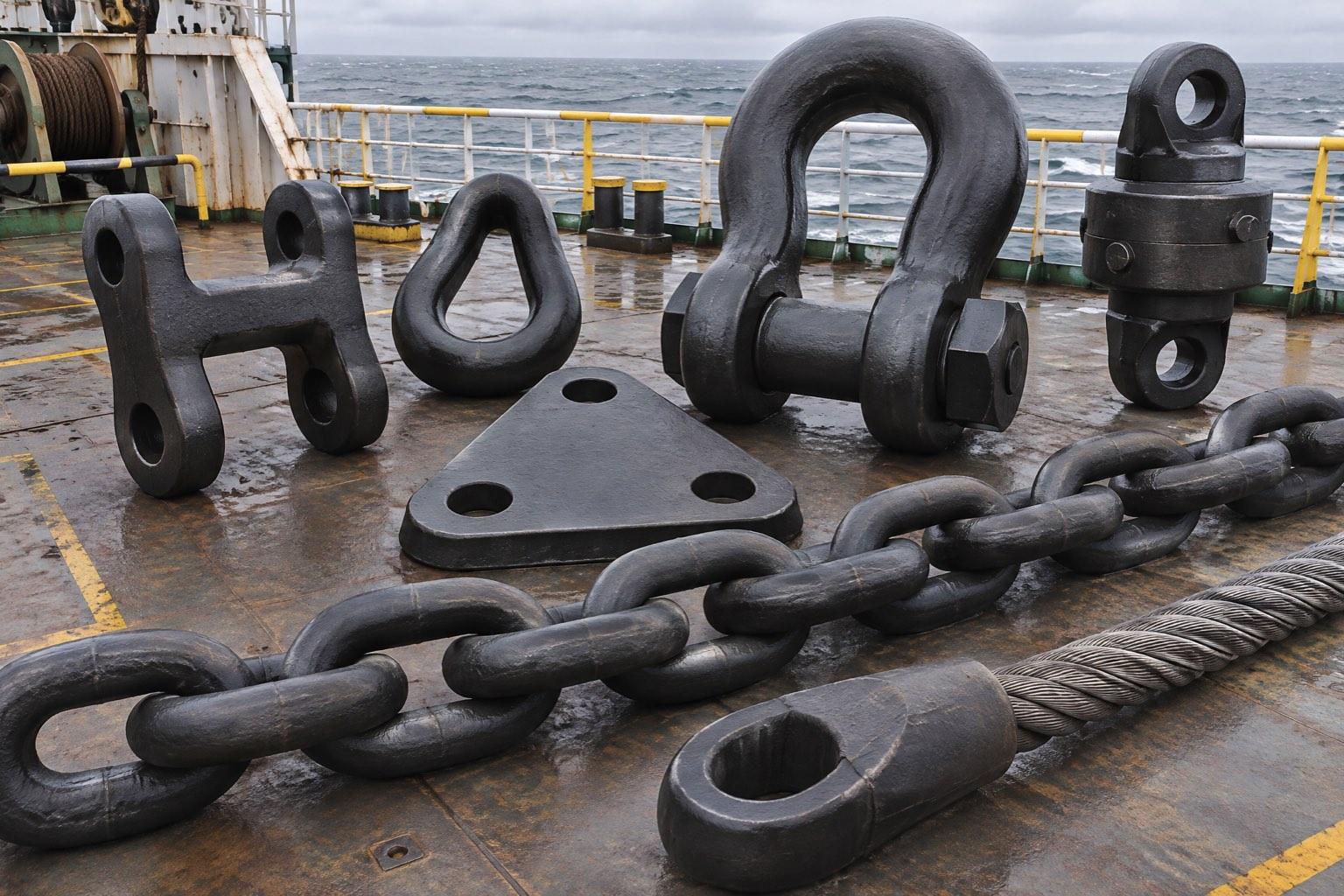
- Proof test: every shackle, swivel, swivel shackle, enlarged link and end link is proof loaded to the proof load of the chain it is made for.
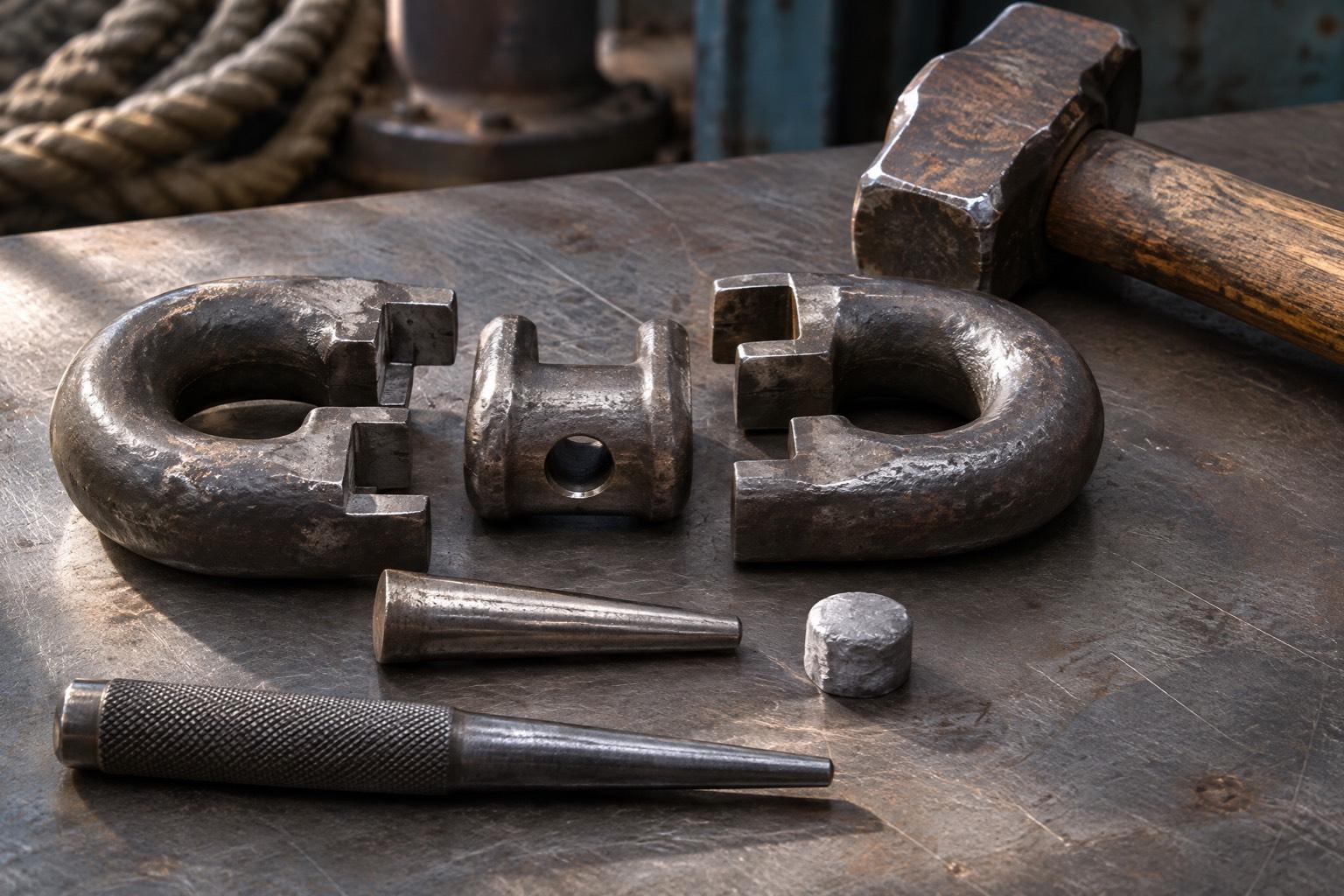
- Break test: one piece per batch — same heat, same chain size, same heat treatment — of 25 or fewer shackles, swivels and links, or 50 or fewer connecting links such as Kenter shackles.
- After a break test the piece is scrapped — unless its steel is stronger than the grade requires or its size can withstand 1.4 times the breaking load.
- Exemption: the break test can be waived if the design’s breaking load was proven at approval, each batch’s mechanical properties and impact energy are verified, and the pieces are examined by suitable NDT.
/04Mechanical tests and NDT.
Test pieces cut from the chain are tested for tensile strength, yield, elongation and reduction of area, and Charpy impact specimens are taken from the link and across the weld. For U3 ship chain one maker cites at least 60 J in the link and 50 J at the weld; the offshore grade minimums are in mooring chain grades. Offshore chain is additionally examined by non-destructive testing — one maker now uses phased-array ultrasonic inspection — and measured link by link, then marked. See how anchor chain is made for where these steps fall in production.
Common questions
- Is every length of anchor chain proof tested?
- Yes. Every 27.5 m length is proof loaded and inspected before it is certified.
- What is the elongation limit in a chain proof test?
- Permanent elongation must not exceed 5% of the original length after the proof load is removed.
- How many breaking tests are made?
- One sample of at least three links from every four lengths or fewer.
- Can a break-tested shackle be used?
- Normally no — it is scrapped. It may be reused only if its steel exceeds the grade requirement or its size can take 1.4 times the breaking load.
- Is chain tested painted?
- No. Proof and break tests are made on bare chain so that coating cannot hide defects.
Certified chain and accessories
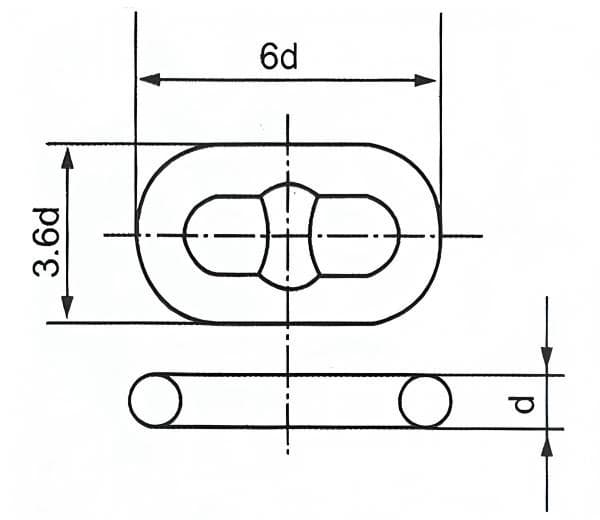 IH-LR-AC-SLACGU1U2Stud Link Anchor Chain — Grades U1, U2 and U3
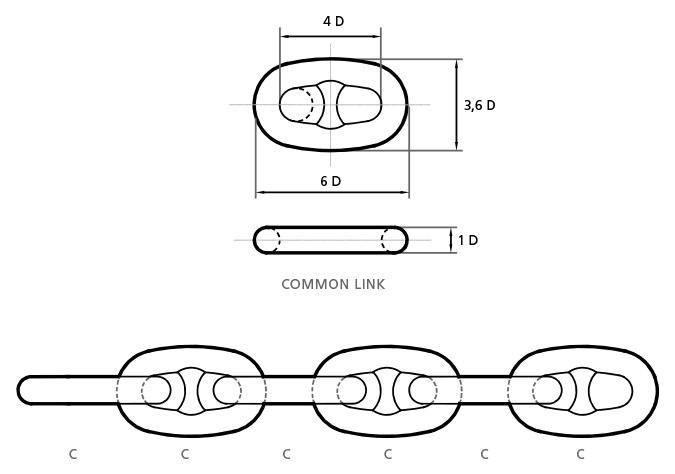 IH-MR-MC-SLStud Link Offshore Mooring Chain — Grades ORQ, R3, R3S, R4, R4S and R5
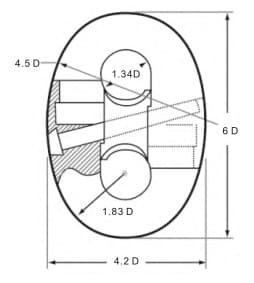 IH-LR-AC-KSGU2U3Kenter Shackle — Grades U2 and U3
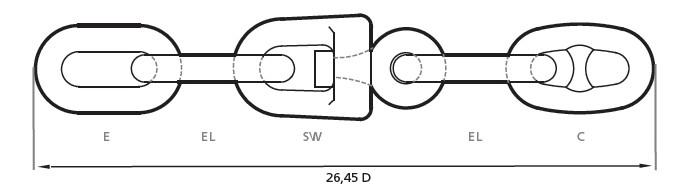 IH-LR-AC-SFACGU2U3Swivel Forerunner — Anchor Chain, Grades U2 and U3
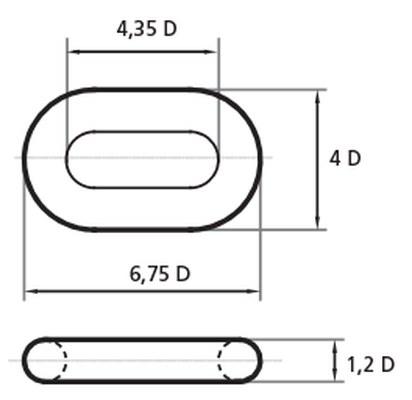 IH-MR-AC-ENDEnd Link — Stud Link Anchor Chain, Grades U2 and U3
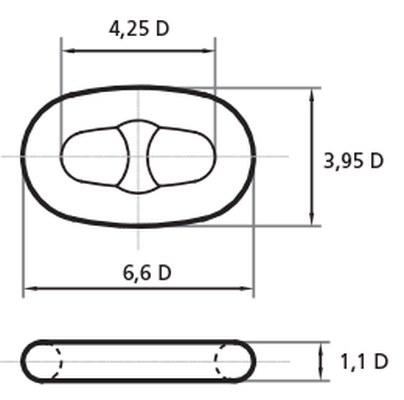 IH-MR-AC-ENLEnlarged Link — Stud Link Anchor Chain, Grades U2 and U3