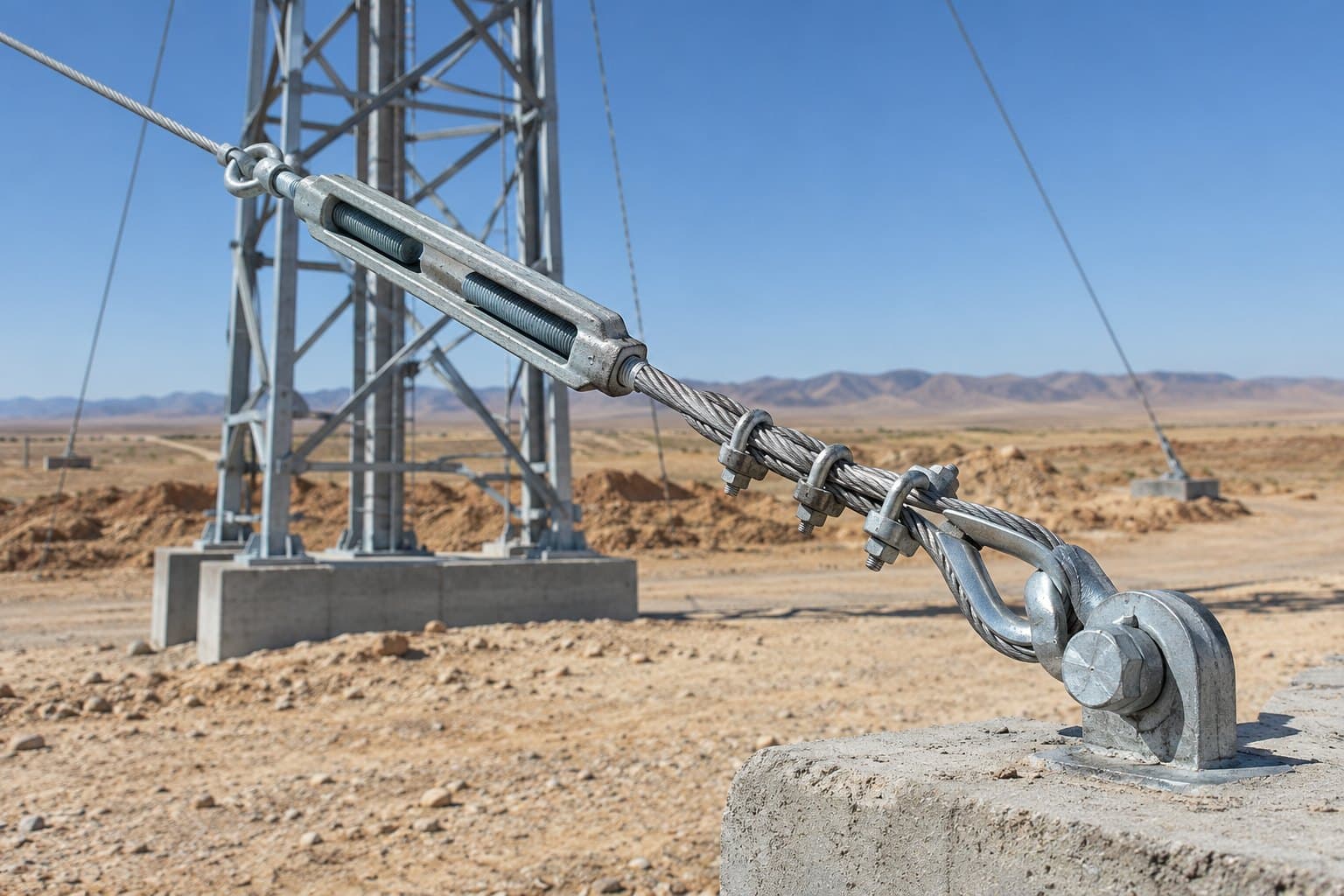
On a construction site, guy wires hold temporary masts, lighting towers and scaffold hoists; on finished buildings, cables brace steel frames, carry shade sails and hold facade elements. The turnbuckle is the adjustable link in every one of them, but it is never alone. This guide builds the whole assembly, end to end. For the turnbuckle itself — end fittings, ratings and locking — see how to choose and tension a turnbuckle.
/01The assembly, end to end.
- Anchor — a ground anchor, embedded plate or structural lug rated for the guy load.
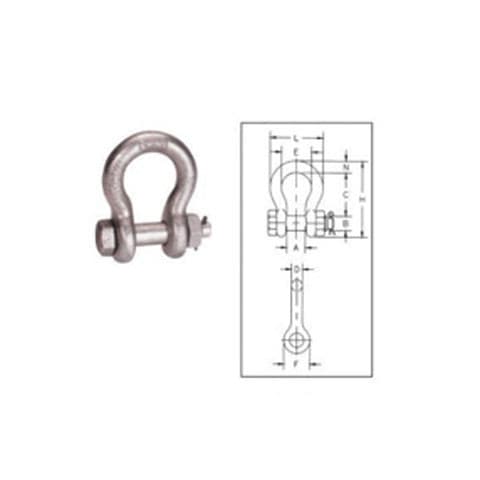
- Shackle — joins the anchor to the turnbuckle; a bolt-type shackle for anything permanent.
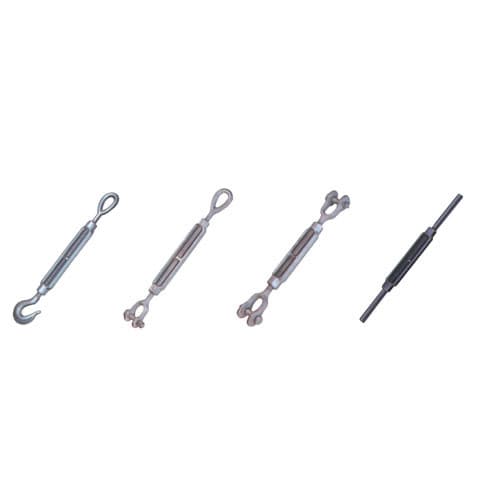
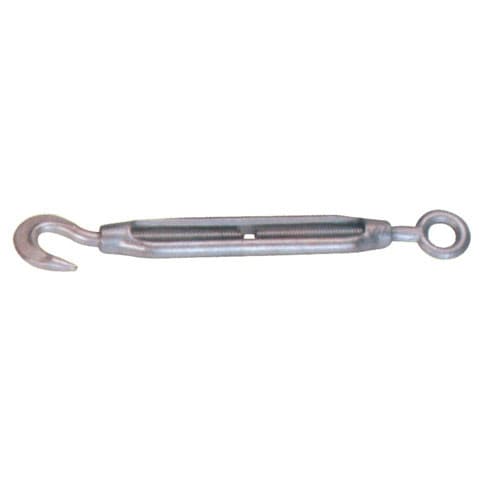
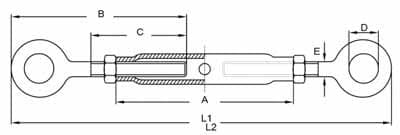
- Turnbuckle — eye or jaw ends, rated at least for the design tension.
- Thimble — inside every rope eye, to stop the rope crushing and wearing. See wire rope thimble types.
- Wire rope — sized for the load with the design factor your engineer specifies.
- Termination — wire rope clips or a pressed ferrule. See wire rope clips installation for numbers, spacing and torque.
/02Matching the parts.
| Part | Match it to |
|---|---|
| Turnbuckle | Design tension, using the rating for its end fittings |
| Wire ropeHighlighted | Design tension × the design factor the engineer specifies |
| Thimble | The rope diameter, and the shackle or turnbuckle pin it sits on |
| Clips or ferrule | The rope diameter and construction; clip count by rope size |
| Shackle | At least the design tension; pin fits the turnbuckle eye or jaw |
| Anchor | The design tension, as calculated for the ground or structure |
/03Setting the tension.
Guyed towers are commonly designed with an initial tension of around 10% of the guy strand’s published breaking strength — enough to keep the mast stable without overloading the guys when the wind blows. Your engineer or the mast supplier sets the figure for your structure. Bring each guy up gradually and in sequence around the mast so it stays plumb, turning the turnbuckle body with a spanner on its flats; for bracing and shade cables, tension to the designer’s figure and check the structure stays true.
/04Locking it for the long term.
Wind makes guys and cables vibrate, and vibration turns an unlocked turnbuckle. Once the tension is set, tighten the jam nuts against the body and add locking wire through the body and end fittings. On guyed towers a common extra measure is a safety loop: a length of guy strand woven through both turnbuckle eyes and the anchor and clipped, so that if the turnbuckle ever let go the guy would still be held.
Common questions
- How tight should a guy wire be?
- To the designer’s figure. Guyed towers are commonly designed with an initial tension around 10% of the strand’s breaking strength, but your structure’s design governs.
- Should a guy wire turnbuckle have hook ends?
- Not on permanent guys. Use eye or jaw ends; hooks are rated lower and can come off a slack line.
- Do I need a thimble in a guy wire eye?
- Yes. A thimble protects the rope eye from crushing and wear where it bears on the turnbuckle or shackle.
- How do I stop guy wire turnbuckles loosening?
- Tighten the jam nuts, add locking wire through the body and ends, and consider a safety loop of strand through the turnbuckle eyes and anchor.
- Galvanised or stainless for outdoor bracing?
- Hot-dip galvanised for most structural and site work; stainless where corrosion is severe or appearance matters, such as coastal facades.