
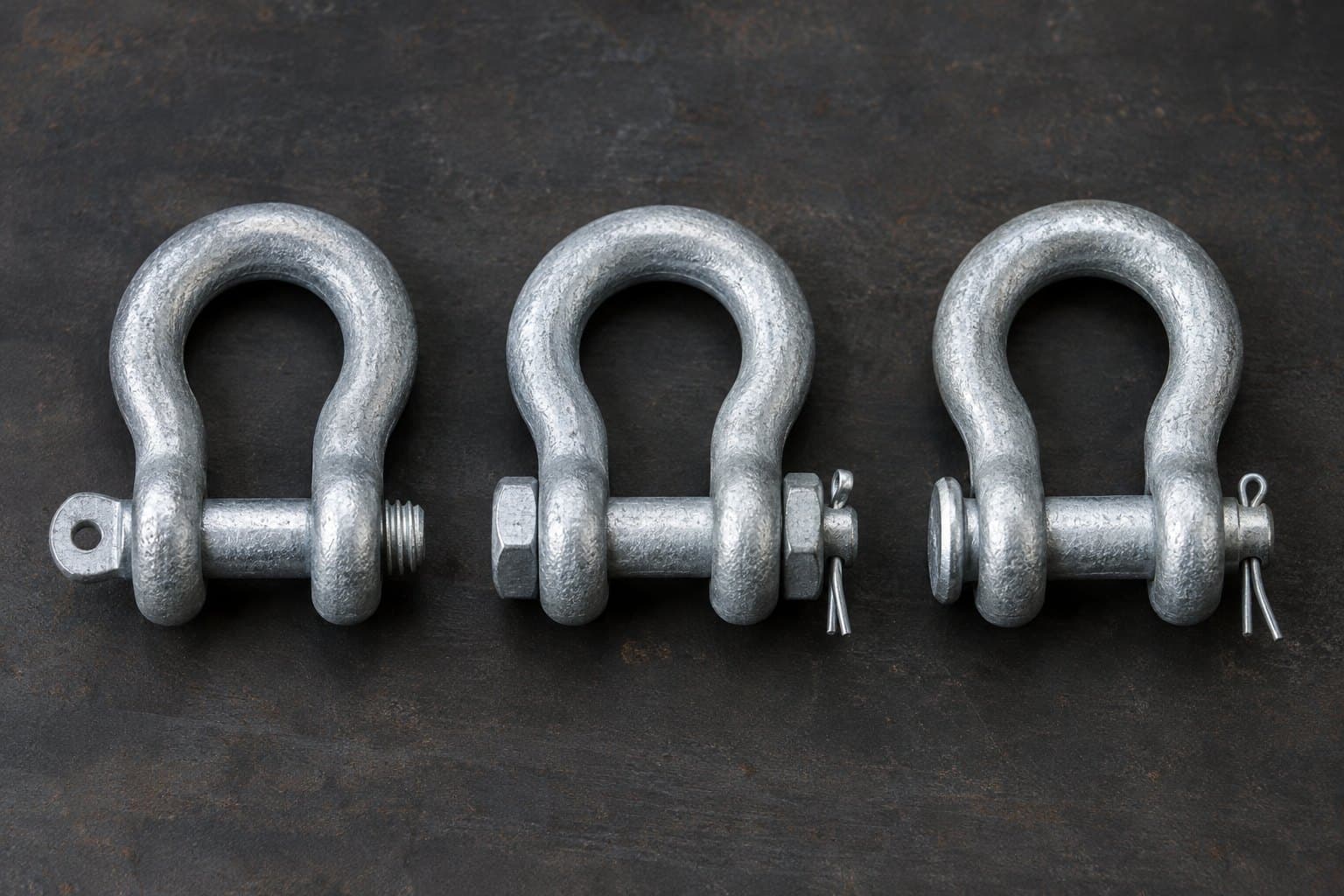
Pattern numbers are the shorthand of the rigging loft. A storekeeper who asks for “G-209 1 inch” gets a galvanised screw-pin anchor shackle with known dimensions and a known rating, from any maker who makes to that pattern. Three anchor patterns cover most site needs, and because their rating tables match, the choice between them is entirely about the pin. Our shackle buying guide covers the rest of the order.
/01Three pins, one rating table.
| Property | G-209 | G-2130 | G-213 |
|---|---|---|---|
| Pin | Screw pin | Bolt, nut and cotter | Round pin and cotter |
| RR-C-271 class | Class 2 (screw pin) | Class 3 (bolt, nut, cotter) | Class 1 (round pin) |
| 1/2" / 1" / 2" WLLHighlighted | 2 t / 8.5 t / 35 t | 2 t / 8.5 t / 35 t | 2 t / 8.5 t / 35 t |
| Largest size in our range | 2-1/2", 55 t | 4", 150 t | 2", 35 t |
| Side loading | Allowed with maker’s reduction | Allowed with maker’s reduction | Not allowed |
| Typical use | Temporary rigging, made and broken often | Long-term rigging, rotating loads | Tie-downs, towing, in-line pulls |
/02G-209: screw pin.
The G-209 pattern is the everyday rigging shackle: the pin screws into the body, so it is fitted and removed in seconds. Two rules make it safe. The pin must be fully engaged — the collar seated against the ear — and tightened before each lift. And it must not be used where a running line or a rotating load can turn the pin, because a screw pin that is turned can back itself out. Crosby, for example, warns against letting a live line rotate the screw pin, such as in a choker hitch, and calls for a screw pin used long-term to be secured (moused) against rotation.
/03G-2130: bolt type.
The G-2130 pattern replaces the screw pin with a bolt, a nut and a cotter pin through the bolt — often called a safety-pin shackle. Once the cotter is in, the pin cannot work loose, whatever the load does. Makers recommend bolt-type shackles for permanent or long-term installations and wherever the load may slide on the pin and turn it. In our range the G-2130 also runs to the largest sizes — up to 4" and 150 t — and the G-2150 is its dee-shaped chain-shackle partner.
/04G-213: round pin.
The G-213 pattern uses a plain pin held by a cotter. It is cheap and quick, and suits tie-downs, towing and strictly in-line pulls. It is not for side loading, and makers say round-pin shackles must never be used to gather several sling legs. If a lift could put any angle on the shackle, choose a G-209 or G-2130 instead. The chain-shackle version is the G-215.
/05Anchor or chain body.
Each pin comes in two bodies. The anchor (bow) shackle has a rounded bow that accepts several sling legs or a pull at an angle; the chain (dee) shackle has a narrower, straight-sided body for in-line pulls. Anchor shackles are the default for lifting with slings; chain shackles suit chain connections and in-line rigging. See types of shackles and how to rig a shackle correctly.
Which pattern?
IfWill the shackle stay in place for weeks or longer, or could the load turn the pin?
G-2130 bolt type.
IH-LR-SH-G2130IfIs it temporary rigging, made and broken often, with the pin bearing on a fixed point?
G-209 screw pin.
IH-LR-SH-G209IfIs the pull strictly in line, with one connection each side — a tie-down or tow?
G-213 round pin.
IH-LR-SH-G213IfAbove 2" or 35 t?
G-2130 runs to 4" and 150 t; or a wide-body sling shackle.
IH-LR-SH-WBSSSP
Common questions
- Do G-209 and G-2130 have the same rating?
- Yes, size for size up to 2" in our tables — for example 8.5 t at 1". The G-2130 range continues to 4" and 150 t.
- Can I side load a G-213 round pin shackle?
- No. Makers do not allow side loading of round-pin shackles or using them to gather several sling legs.
- What does the G stand for?
- In Crosby’s pattern numbering the G prefix indicates a corrosion-protective (galvanised) finish. Pattern shackles from other makers use the number for the shape; see pattern numbers explained.
- What is a safety pin shackle?
- A bolt-type shackle like the G-2130: a bolt, nut and cotter pin instead of a screw pin.
- Which pattern is used under a crane hook with multiple legs?
- An anchor (bow) shackle with a screw or bolt pin — G-209 or G-2130 — with the pin on the hook and the legs in the bow.
The three patterns and their chain-shackle partners
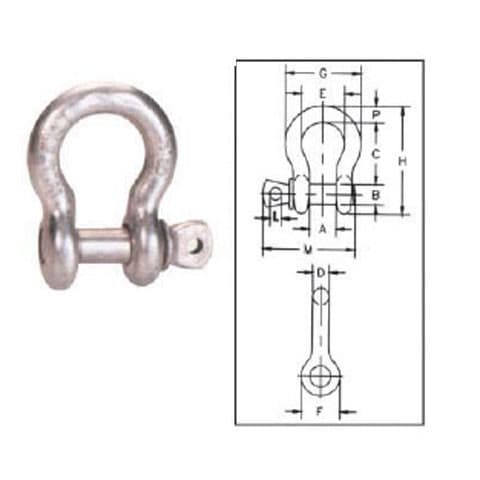 IH-LR-SH-G209Screw Pin Anchor Shackle — G-209 Pattern
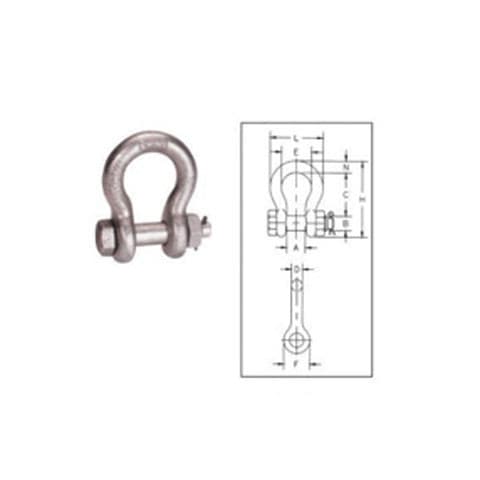 IH-LR-SH-G2130Bolt-Type Anchor Shackle — G-2130 Pattern
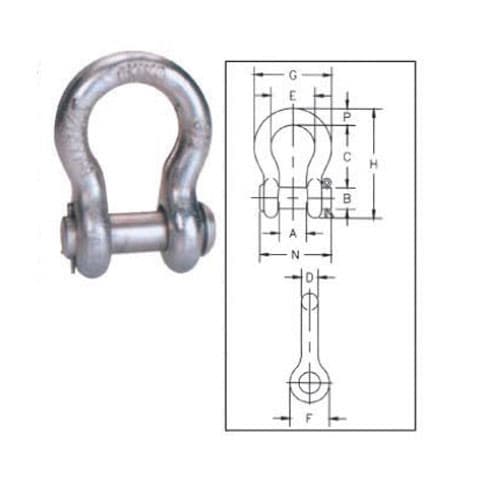 IH-LR-SH-G213Round Pin Anchor Shackle — G-213 Pattern
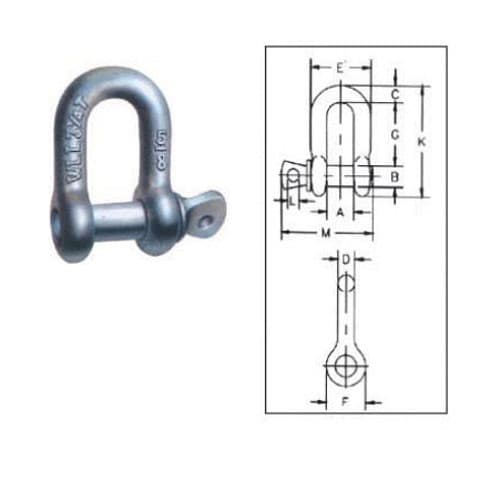 IH-LR-SH-G210Screw Pin Chain Shackle — G-210 Pattern
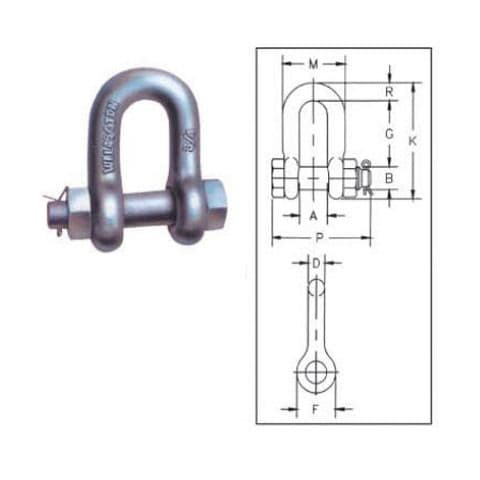 IH-LR-SH-G2150Bolt-Type Chain Shackle — G-2150 Pattern
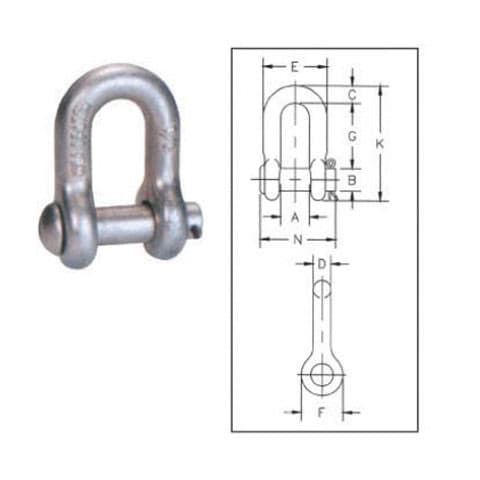 IH-LR-SH-G215Round Pin Chain Shackle — G-215 Pattern