A builder of offshore cranes, piling rigs or deck machinery rarely wants a catalogue winch: the drum length, rope capacity, frame and controls are set by the machine. But building a winch from a bare gearbox means designing bearings, brakes and lubrication too. Dinamic Oil sells all three levels, which makes the trade-off clear.
/01The three options.
| Feature | Winch drive (WD, RW) | Motor drum (WDD) | Complete winch (NP to SRD) |
|---|---|---|---|
| You design | Drum, frame, outboard bearing | Frame only | Mounting and circuit only |
| SuppliedHighlighted | Gearbox with brake, set up for a motor | Gearbox, drum and opposite support | Motor, brake, lowering valve, gearbox, drum, frame |
| Range | WD 18–400 kNm, RW 7–33 kNm (FEM) | 7,500 to 30,000 daN line pull | 500 to 29,700 daN line pull |
| Drum | Your own | Length and diameter to order | Catalogue sizes |
| Class approval | DNV type approved (RW, 3-stage WD) | Drive approved, drum per project | Per project |
/02Why the drum needs a second bearing.
A rotating-case winch drive has a fixed flange bolted to the winch frame and a rotating flange bolted to the drum, carried on a single bearing. That keeps the winch isostatic — the load on the drive bearing does not depend on how stiff the frame is — but it means the drum has to be supported on the other end by an outboard bearing. The bearing that carries the rotating flange has its own static and dynamic ratings, and its life (Lh10) has to meet the duty class as well as the gears.
/03Reading an FEM rating.
Winch drives are rated by T2 FEM: the torque the gearbox can transmit in FEM 1.001 mechanism class M5 (load spectrum L2, utilisation T5) at 25 rpm. For another class or speed, find the equivalent class at 25 rpm and multiply T2 FEM by the catalogue coefficient c — class L3-T4 at 12 rpm, for example, is worth 0.90 of the rating. The result must exceed the application torque, including accelerations and drive efficiency, and the dynamic and static peaks must stay below the maximum dynamic and static torques. For continuous input speeds above 1,500 rpm, Dinamic Oil recommends its high-speed brake versions.
/04Class approval.
On a classed vessel or offshore unit the winch has to satisfy the class society’s lifting-appliance rules. A drive that already holds a type approval shortens that process: Dinamic Oil’s RW range holds DNV type approval TAS00001JK (shipboard and offshore lifting appliances, lifeboat and davit winches, drilling facilities) and the three-stage WD sizes hold TAS00000YS. See DNV and ABS type approval for what a type approval does and does not cover.
Common questions
- Can I check the oil without unwinding the rope?
- On the WD range, yes: the oil is checked and changed from the motor side.
- Hydraulic or electric?
- The standard build is set up for a hydraulic motor with a negative brake; versions for an electric motor, or with a high-speed input shaft, are available. Two-stage RW drives give ratios suited to electric drives.
- What brake comes with a winch drive?
- A negative multi-disc parking brake sized to the gearbox torque — FW up to 1,600 Nm or FY up to 3,600 Nm on the WD range, with an optional freewheel.
- How is the rope anchored?
- With clamps as standard, or a wedge lock on request.
- Which grooving for the drum?
- Smooth, standard grooving or Lebus-type grooving for multi-layer spooling under load.
Winch drives and motor drums
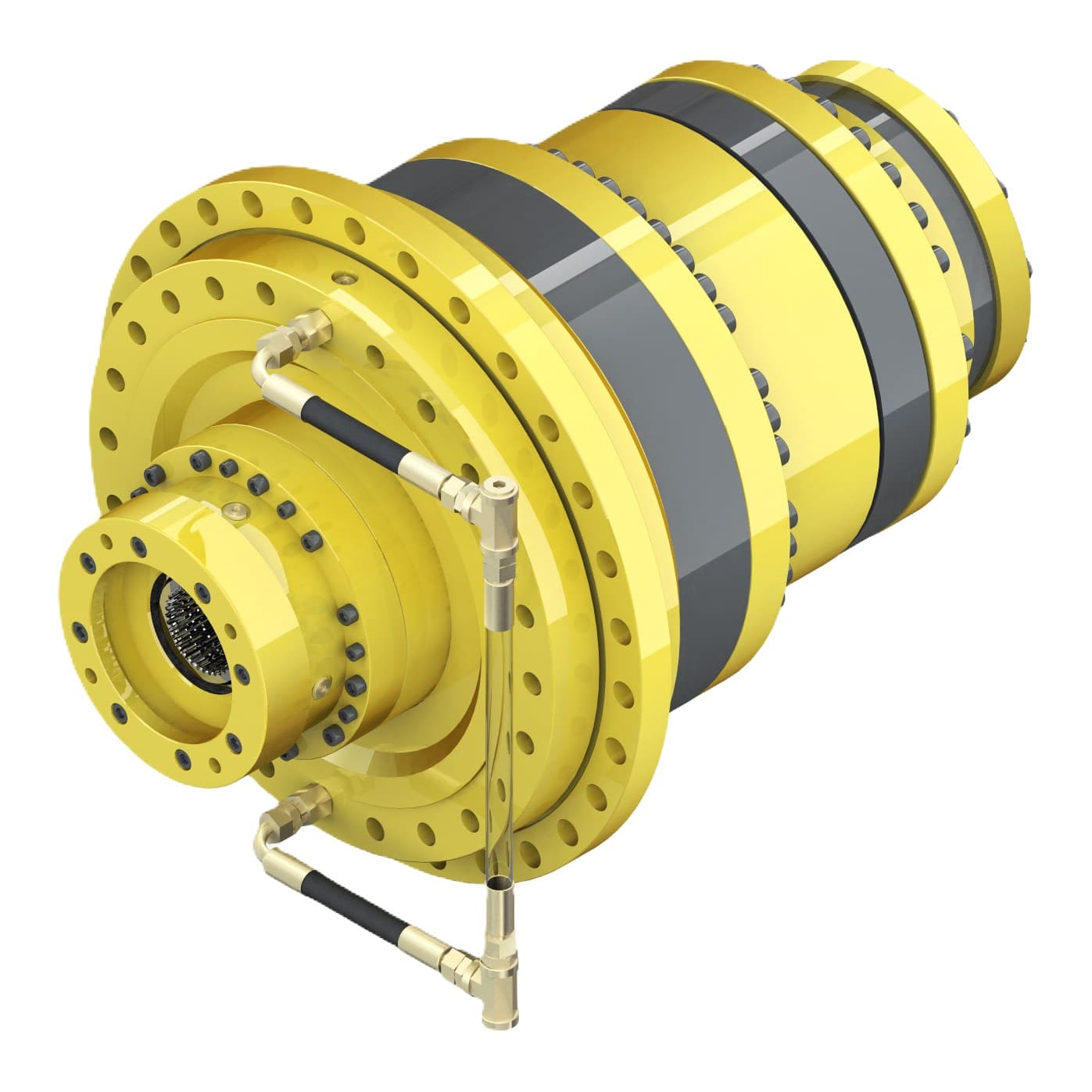 IH-DO-WDDinamic Oil WD Planetary Winch Drives — 18.1 kNm to 400 kNm FEM TorqueDinamic Oil
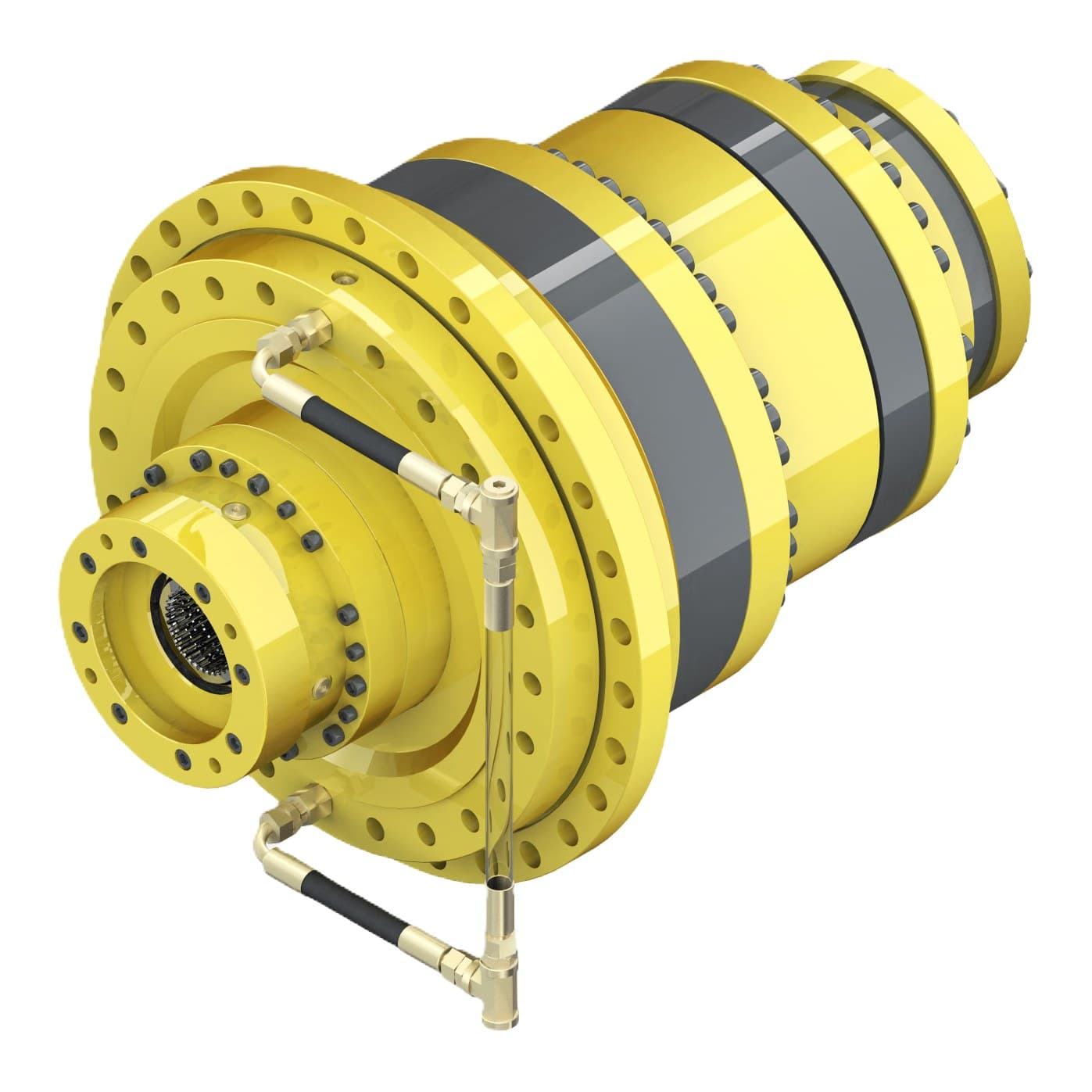 IH-DO-RWDinamic Oil RW Planetary Winch Drives — 7,380 to 32,530 Nm, DNV Type ApprovedDinamic Oil
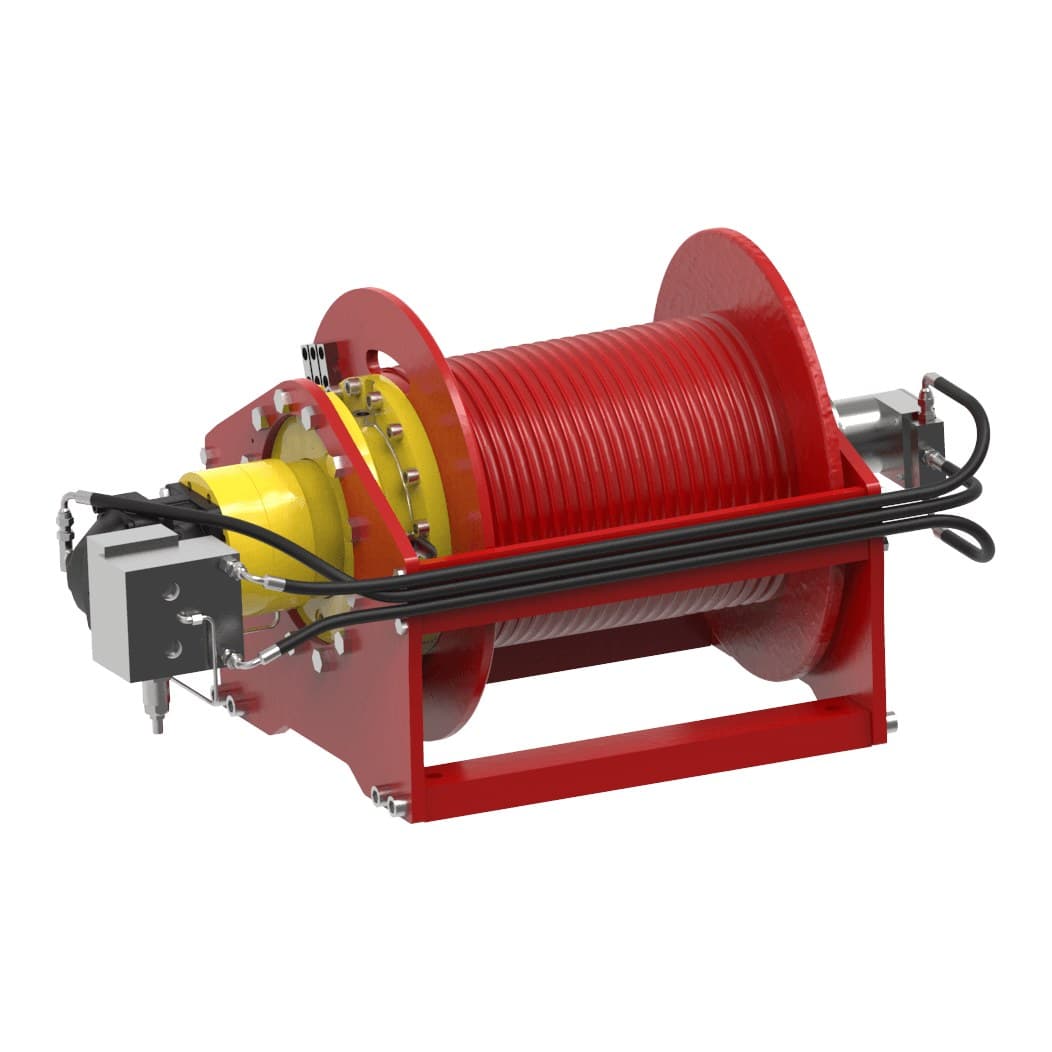 IH-DO-WDDDinamic Oil WDD Motorized Winch Drums — 7,500 to 30,000 daN Line PullDinamic Oil
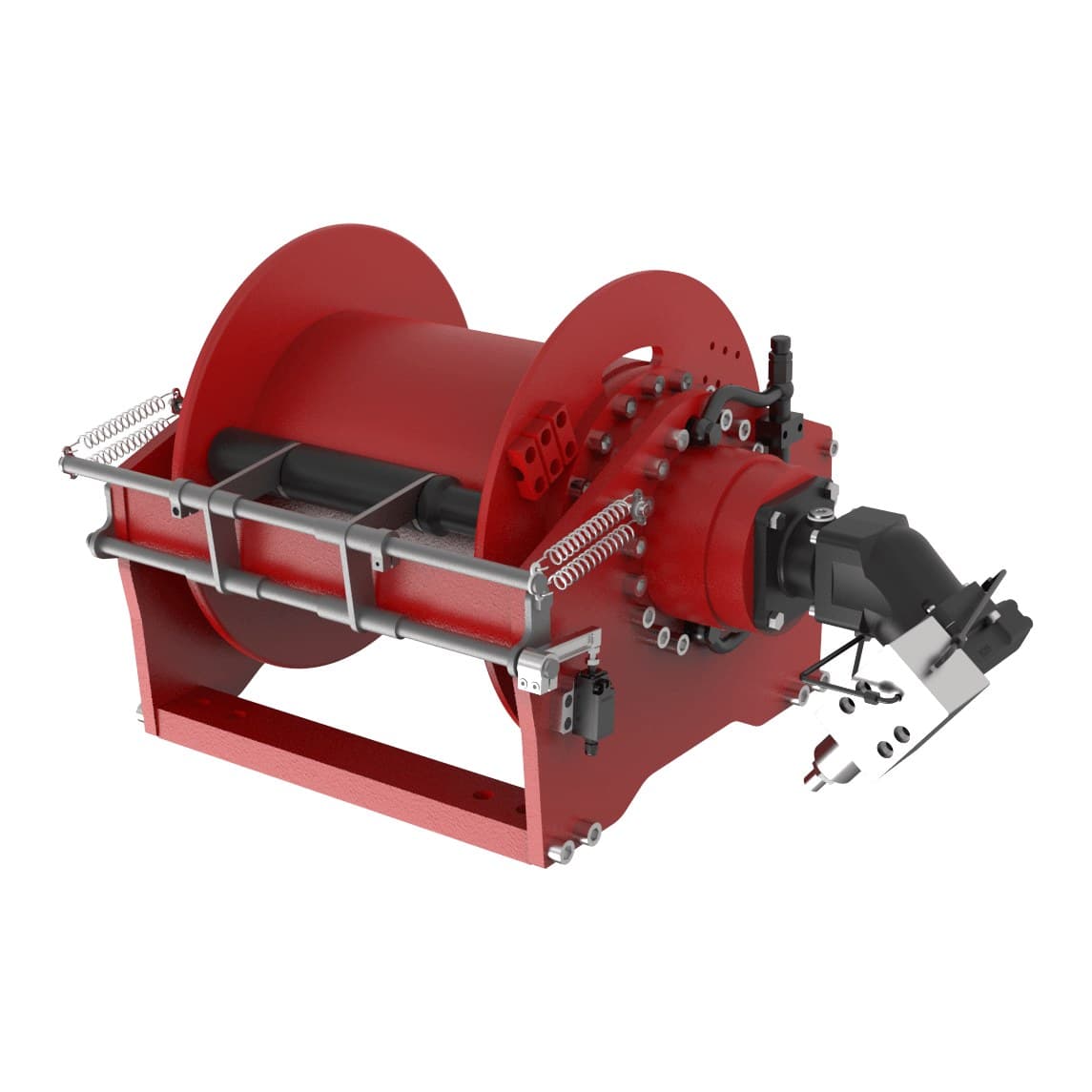 IH-DO-SRDDinamic Oil SRD Heavy Hydraulic Winches — 8,000 to 29,700 daNDinamic Oil