Thermoplastic hose is the specialist of the hydraulic hose family: light, flexible, with a smooth low-friction cover, and — in its non-conductive form — the only hydraulic hose you should run up the boom of an aerial lift working near live lines. It also needs its own fittings. This guide covers the hose types, their ratings, and the crimp ends that go on them.
/01R7, R8 and R18.
| Class | Parker hose | Ratings | Fittings |
|---|---|---|---|
| SAE 100R7, non-conductiveHighlighted | 518D | 3,000 at -4, 2,250 at -6 to -10, 1,250 at -12, 1,000 at -16 | 56 Series crimp; 51R field attachable |
| SAE 100R8 | 520N / 528N | 5,000 at -3 and -4, 4,500 at -5, 4,000 at -6, 3,500 at -8 | 56 Series |
| SAE 100R8 | 580N / 588N | 3,500 at -8, 2,750 at -10, 2,250 at -12, 2,000 at -16 | 56 Series |
| SAE 100R18 | 53DM / 538DM | 3,045 constant, -4 to -10 | 56 Series |
Parflex describes its R8 hoses as lighter and smaller in OD than 100R2 hose, and its R18 hose as excellent for over-the-sheave use, from −70 to 212 °F on petroleum fluids. The 518D layline carries two pressures because SAE J517 requires a 4:1 design factor for R7 while ANSI A92.2 accepts 3:1 for aerial devices. Parker notes thermoplastic shelf life is considered unlimited.
/02Non-conductive hose.
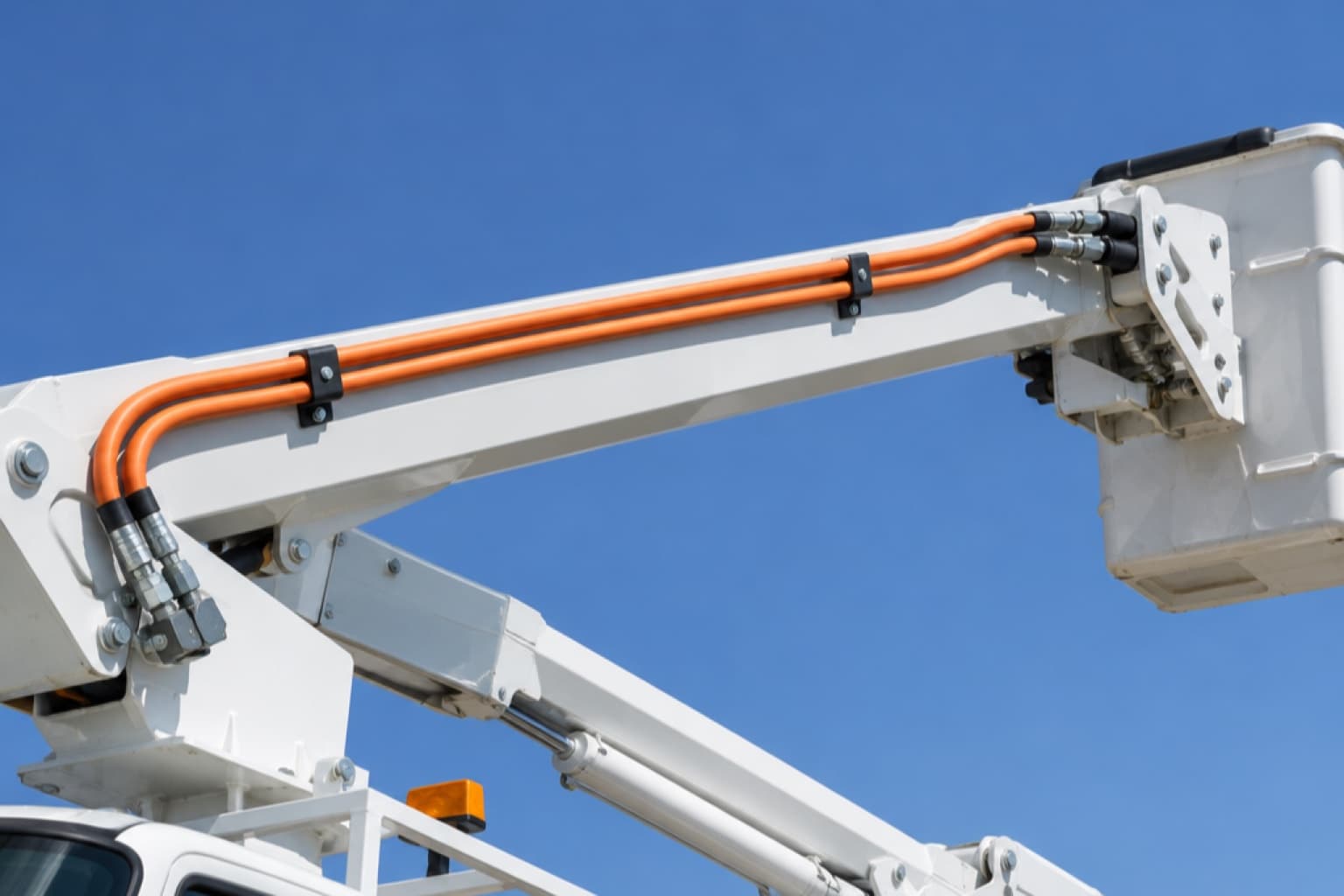
Parflex lists several hoses as meeting SAE J517 electrical non-conductivity — 518C, 518D, 528N, 578X, 588N and 538DM — all with orange covers; 518D, built specifically for the aerial lift market, also meets ANSI A92.2 for vehicle-mounted elevating and rotating aerial devices and has a non-perforated cover. Colour is a convention, not a guarantee. Parker’s safety guide says not to use hose near high-voltage lines unless the application is approved in Parker’s publication for that product, the hose is marked "nonconductive", and the equipment maker approves it — and warns that many black rubber compounds are inherently conductive, so do not conclude a hose is non-conductive unless it is designed and branded so.
/03The fittings.
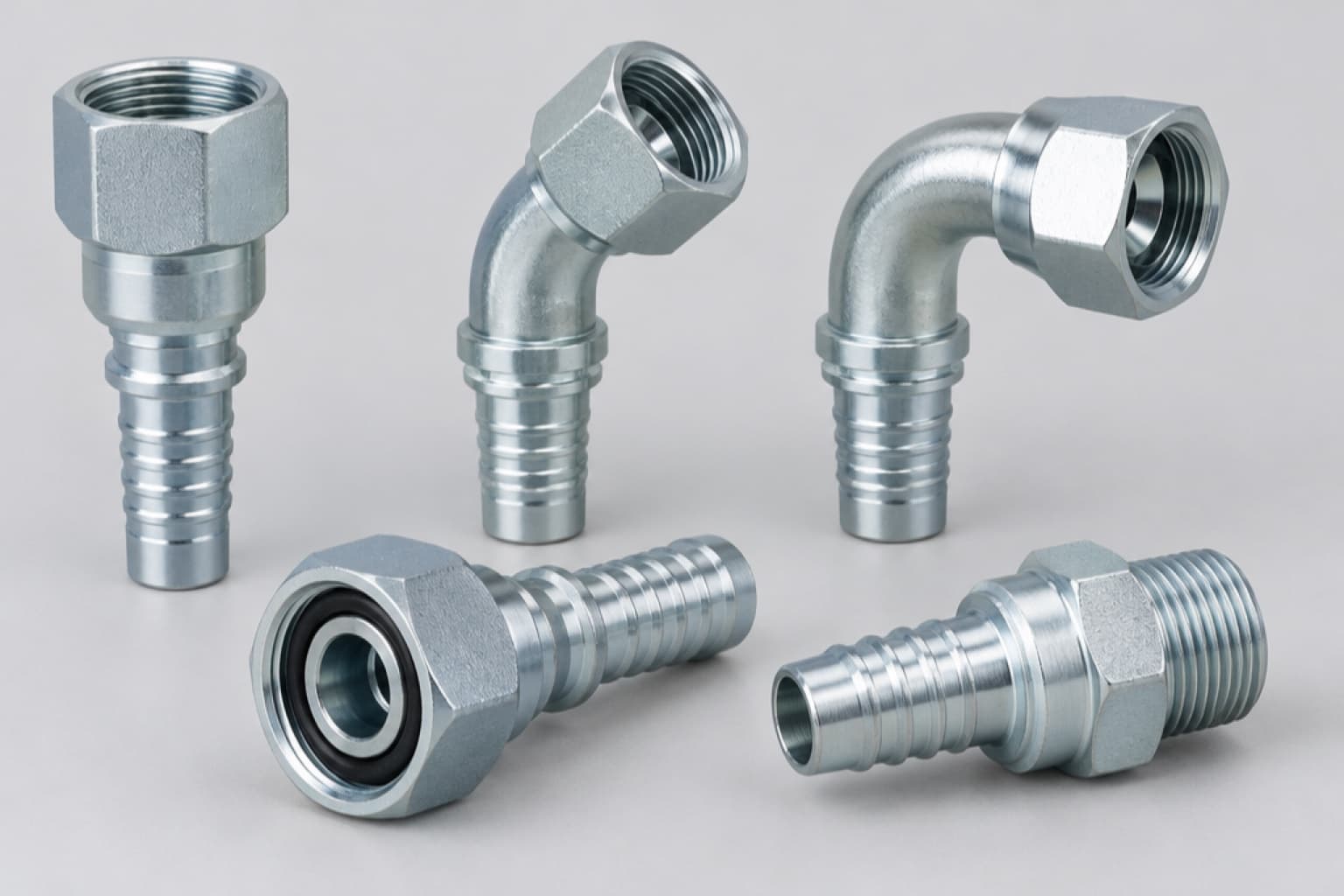
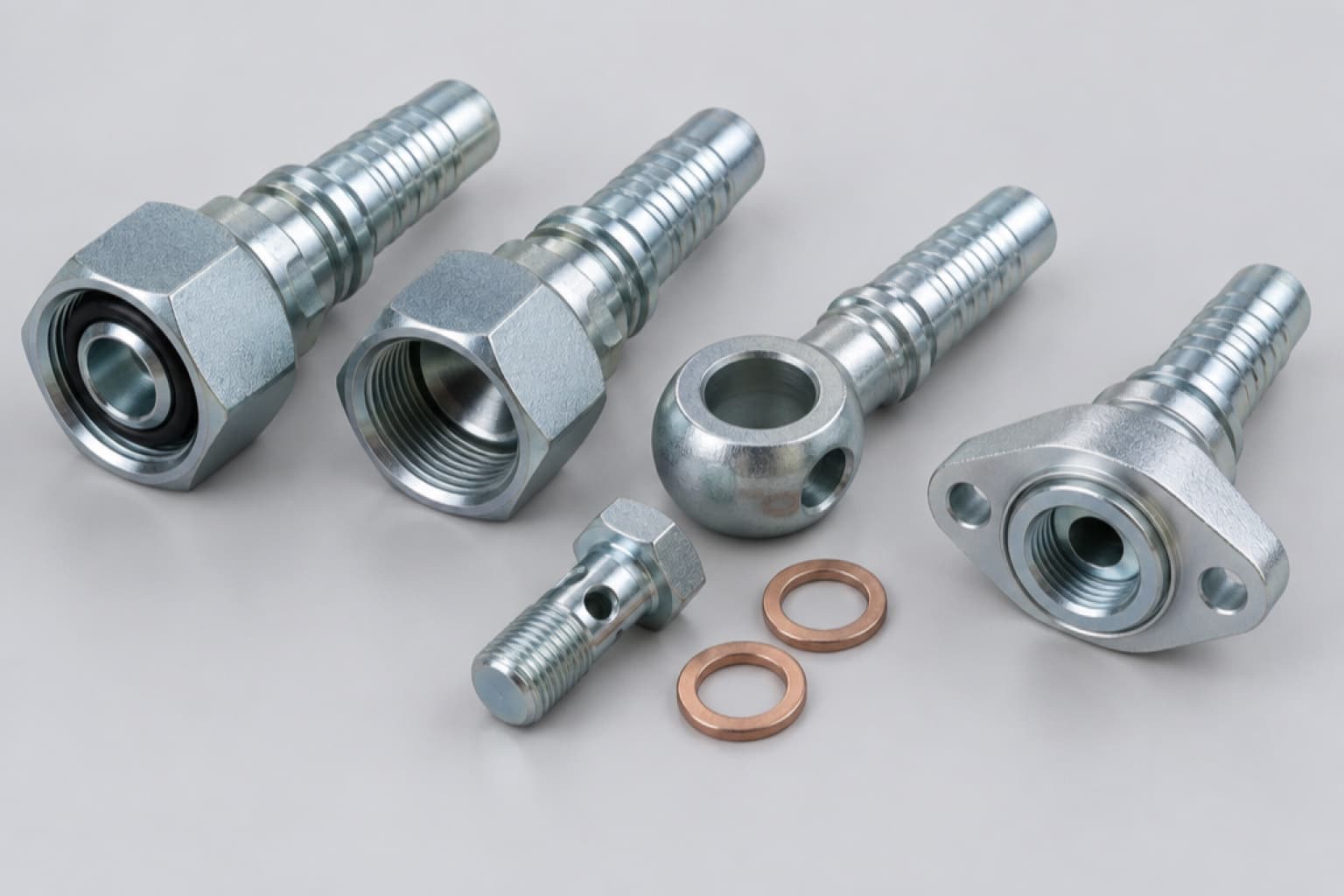
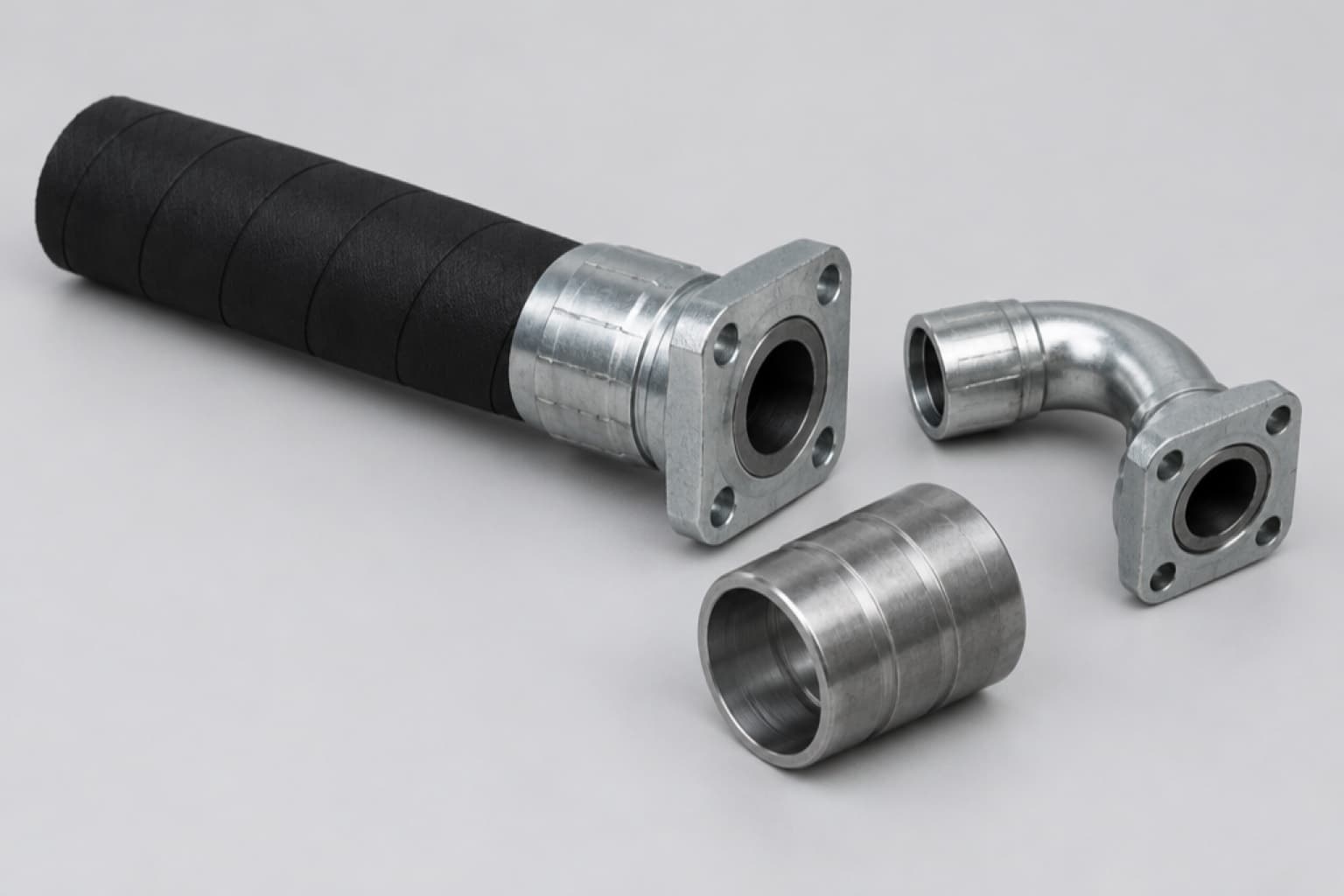
Parker crimps its Parflex thermoplastic hoses with the 56 Series; sizes outside its range use other Parflex series, and 518D can also take the 51R field-attachable series. Our Parker 56 Series range covers male and female NPTF, JIC 37° male and female swivels, SAE 45° and ORB, NPSM, BSPP 60° cone, and metric L and S 24° cone and ball-nose ends. The THY series in our range is a separate crimp system whose listings name braided, pressure-wash, thermoplastic and low-pressure hose — use it only with the hose and crimp specification it is made for, and never mix its shells and stems with another series. Our no-skive ferrule for R7/R8 hose is listed with the crimp ferrules.
Assembly follows the same rules as rubber hose — same make of hose and fitting, the maker’s crimper and specification — with one difference at the cut: Gates notes thermoplastic and PTFE hose can be cut cleanly with a shear, then deburred inside with a sharp knife.
Common questions
- What is thermoplastic hydraulic hose?
- Hose with a thermoplastic core, such as nylon, and synthetic-fibre reinforcement — SAE 100R7, R8 and R18 — lighter and more flexible than rubber hose of similar pressure.
- Is orange hydraulic hose non-conductive?
- Orange is the convention for non-conductive thermoplastic hose, but only hose designed, tested and branded "nonconductive" (to SAE J517) should be treated as such.
- What fittings go on thermoplastic hose?
- The series the hose maker lists — for Parker Parflex hose, the 56 Series crimp fittings (and 51R field attachable on 518D).
- What is the difference between R7 and R8 hose?
- Pressure: R8 is the high-pressure thermoplastic hose (Parker 520N/528N to 5,000 psi in small sizes); R7 is the medium-pressure class.
- What is R18 hose?
- A thermoplastic hose rated for constant pressure across its sizes — Parker’s 53DM/538DM at 3,045 psi — suited to over-the-sheave applications.
- How do I cut thermoplastic hose?
- With a shear for a clean cut, then deburr the tube inside with a sharp knife.
What we list
Parker 56 Series crimp fittings, THY series fittings and thermoplastic hose:
- Parker 10156 Male NPTF Pipe Crimp Fitting, Rigid, Straight (56 Series)
- Parker 10256 Female NPTF Pipe Crimp Fitting, Rigid, Straight (56 Series)
- Parker 10356 Male JIC 37° Crimp Fitting, Rigid, Straight (56 Series)
- Parker 10456 Male SAE 45° Crimp Fitting, Rigid, Straight (56 Series)
- Parker 10556 Male SAE O-Ring Boss (ORB) Crimp Fitting, Rigid, Straight (56 Series)
- Parker 10656 Female JIC 37° Crimp Fitting, Swivel, Straight (56 Series)
- Parker 10756 Female NPSM Pipe (60° Cone) Crimp Fitting, Swivel, Straight (56 Series)
- Parker 10856 Female SAE 45° Crimp Fitting, Swivel, Straight (56 Series)
- Parker 11356 Male NPTF Pipe Crimp Fitting, Swivel, Straight (56 Series)
- Parker 13756 Female JIC 37° Crimp Fitting, Swivel, 45° Elbow, Short Drop (56 Series)
- Parker 13956 Female JIC 37° Crimp Fitting, Swivel, 90° Elbow, Short Drop (56 Series)
- Parker 13E56 Male JIC 37° Crimp Fitting, Rigid, Straight, Long (56 Series)
- Parker 14156 Female JIC 37° Crimp Fitting, Swivel, 90° Elbow, Long Drop (56 Series)
- Parker 19256 Female BSP Parallel Pipe (60° Cone) Crimp Fitting, Swivel, Straight (56 Series)
- Parker 1B256 Female BSP Parallel Pipe (60° Cone) Crimp Fitting, Swivel, 90° Elbow (56 Series)
- Parker 1C356 Female Metric L (Ball Nose) Crimp Fitting, Swivel, Straight (56 Series)
- Parker 1C456 Female Metric L (Ball Nose) Crimp Fitting, Swivel, 45° Elbow (56 Series)
- Parker 1C556 Female Metric L Crimp Fitting, Swivel, 90° Elbow (56 Series)
- Parker 1C656 Female Metric S (Ball Nose) Crimp Fitting, Swivel, Straight (56 Series)
- Parker 1C956 Female Metric S (24° Cone with O-Ring) Crimp Fitting, Swivel, Straight (56 Series)
- Parker 1CA56 Female Metric L (24° Cone with O-Ring) Crimp Fitting, Swivel, Straight (56 Series)
- Parker 1CE56 Female Metric L (24° Cone with O-Ring) Crimp Fitting, Swivel, 45° Elbow (56 Series)
- Parker 1CF56 Female Metric L (24° Cone with O-Ring) Crimp Fitting, Swivel, 90° Elbow (56 Series)
- Parker 1D056 Male Metric L (24° Cone) Crimp Fitting, Rigid, Straight (56 Series)
- Parker 1D256 Male Metric S (24° Cone) Crimp Fitting, Rigid, Straight (56 Series)
- Parker 1D956 Male BSP Parallel Pipe (60° Cone) Crimp Fitting, Rigid, Straight (56 Series)
- Parker 1J156 Female Seal-Lok O-Ring Face Seal (ORFS) Crimp Fitting, Swivel, 90° Elbow, Long Drop (56 Series)
- Parker 1J756 Female Seal-Lok O-Ring Face Seal (ORFS) Crimp Fitting, Swivel, 45° Elbow (56 Series)
- Parker 1J956 Female Seal-Lok O-Ring Face Seal (ORFS) Crimp Fitting, Swivel, 90° Elbow, Short Drop (56 Series)
- Parker 1JC56 Female Seal-Lok O-Ring Face Seal (ORFS) Crimp Fitting, Swivel, Straight, Short (56 Series)
- Parker 1JS56 Female Seal-Lok O-Ring Face Seal (ORFS) Crimp Fitting, Swivel, Straight, Long (56 Series)
- Parker 1L956 Female JIC 37° Crimp Fitting, Swivel, 90° Elbow, Medium Drop (56 Series)
- Parker 1TU56 CPI Compression Crimp Fitting, Straight (56 Series)
- THY Series Crimp Hose Fitting × NPTF Female
- THY Series Crimp Hose Fitting × NPSM Female Swivel
- THY Series Crimp Hose Fitting × Female Weld Fitting
- THY Series Crimp Hose Fitting × ORB Male Swivel, 90° Block
- THY Series Crimp Hose Fitting, Hose Mender
- THY Series Crimp Hose Fitting × NPTF Male Swivel 90°
- THY Series Crimp Hose Fitting × Flareless Compression Male (SAE J514)
- THY Series Crimp Hose Fitting × Stand Tube
- THY Series Crimp Shell
- R7 Thermoplastic Hydraulic Hose
- R8 Thermoplastic Hydraulic Hose
- SAE 100R18 Thermoplastic Hydraulic Hose, Low-Friction Black Cover
- SAE 100R18 Non-Conductive Thermoplastic Hydraulic Hose, Orange
Thermoplastic hose and fittings
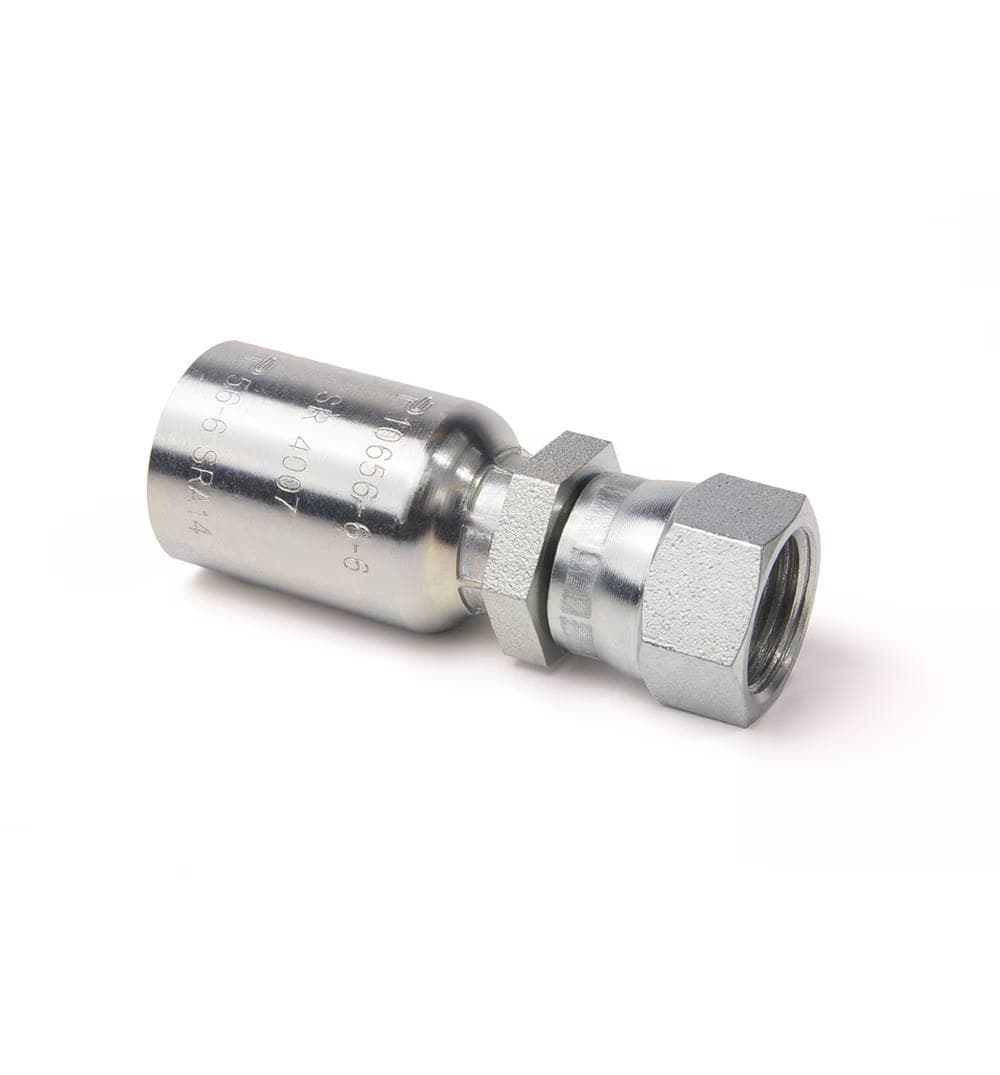 IH-PK-10656Parker 10656 Female JIC 37° Crimp Fitting, Swivel, Straight (56 Series)Parker Hannifin
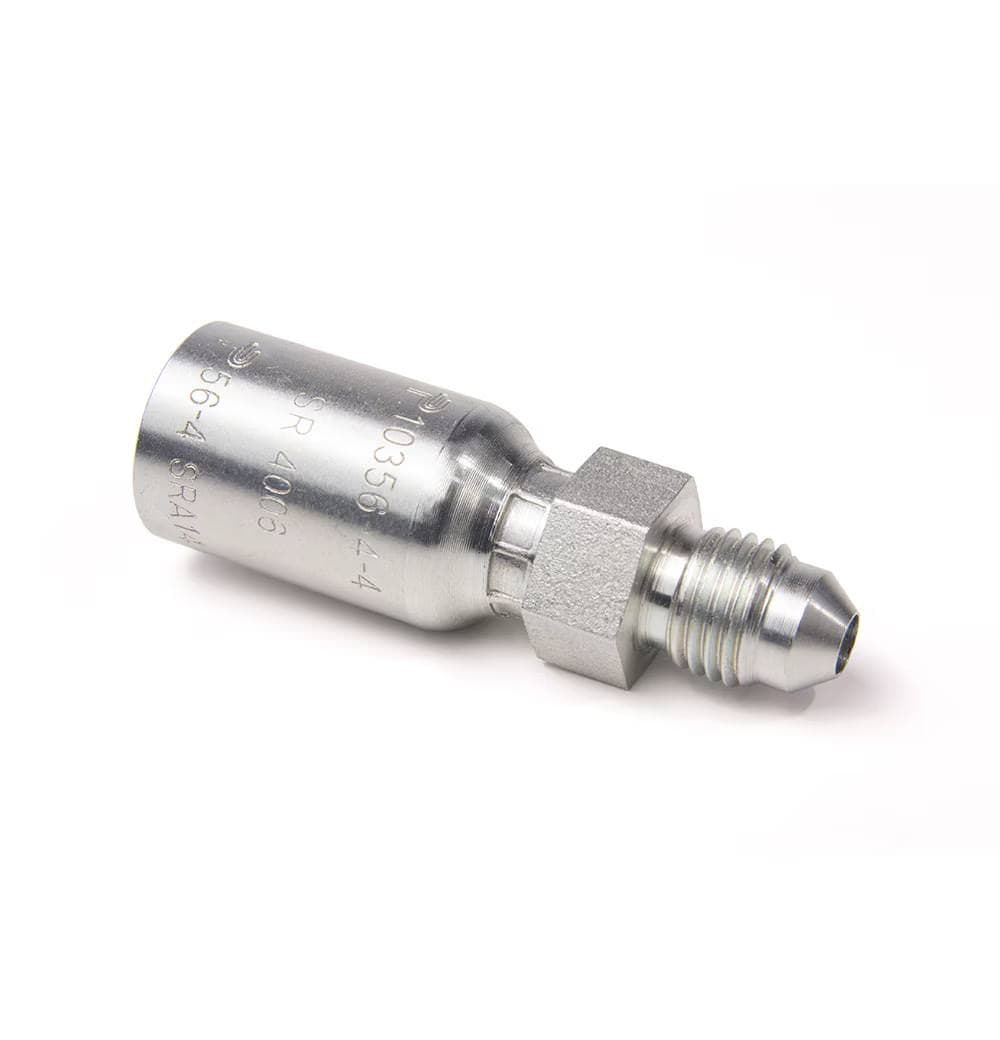 IH-PK-10356Parker 10356 Male JIC 37° Crimp Fitting, Rigid, Straight (56 Series)Parker Hannifin
 IH-PK-10156Parker 10156 Male NPTF Pipe Crimp Fitting, Rigid, Straight (56 Series)Parker Hannifin
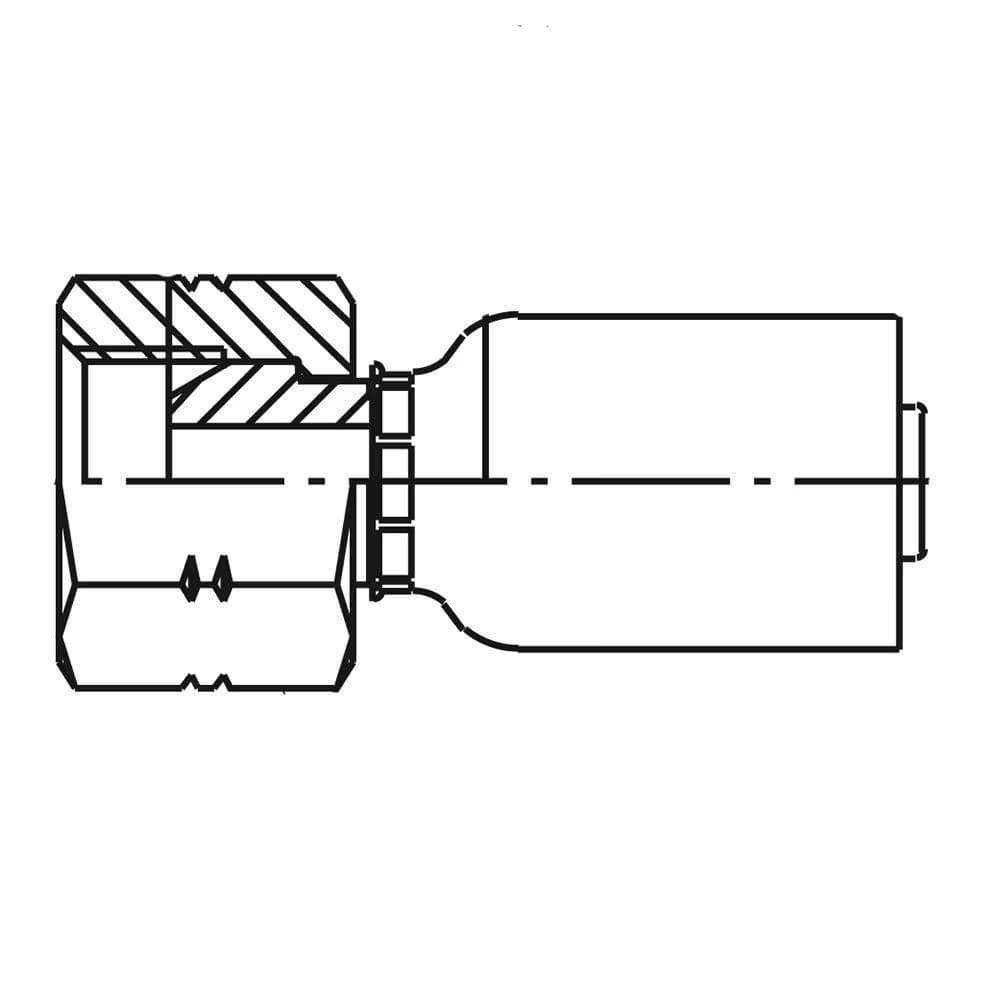 IH-PK-19256Parker 19256 Female BSP Parallel Pipe (60° Cone) Crimp Fitting, Swivel, Straight (56 Series)Parker Hannifin
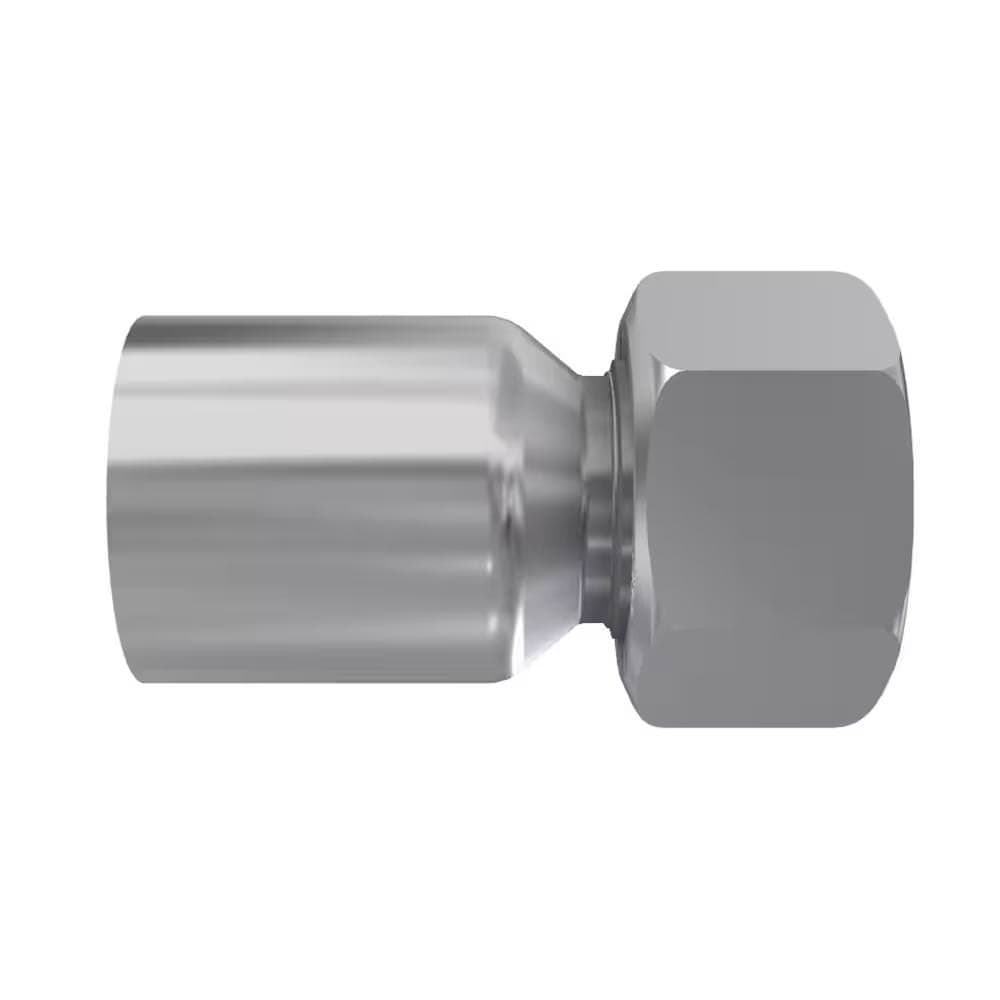 IH-PK-1CA56Parker 1CA56 Female Metric L (24° Cone with O-Ring) Crimp Fitting, Swivel, Straight (56 Series)Parker Hannifin
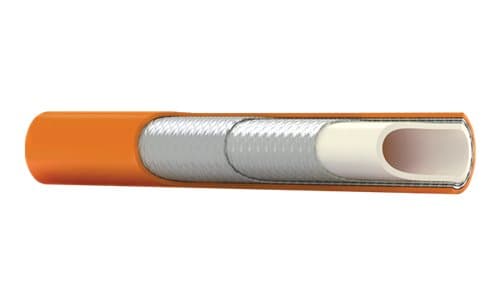 IH-HS-R18LFNCSAE 100R18 Non-Conductive Thermoplastic Hydraulic Hose, OrangeIndus Hydraulics
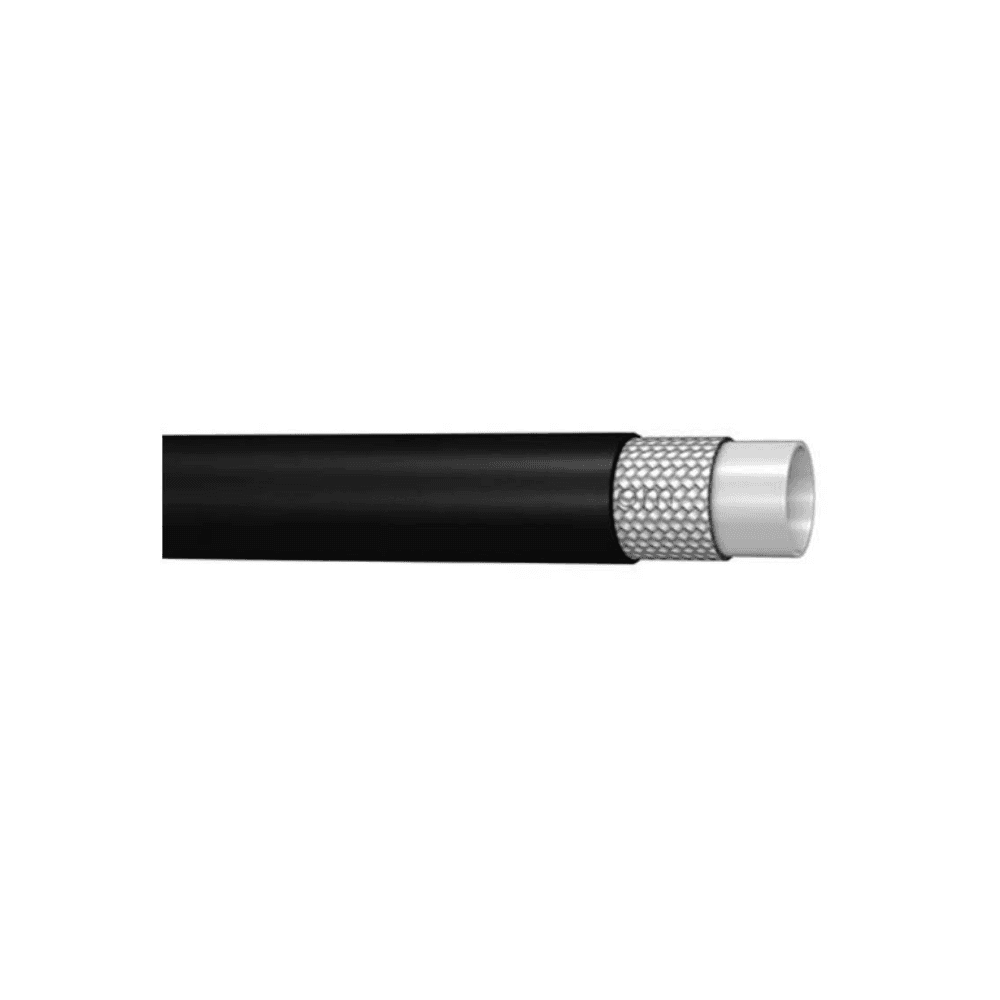 IH-HOSE-R7-TPR7 Thermoplastic Hydraulic HoseParker Hannifin
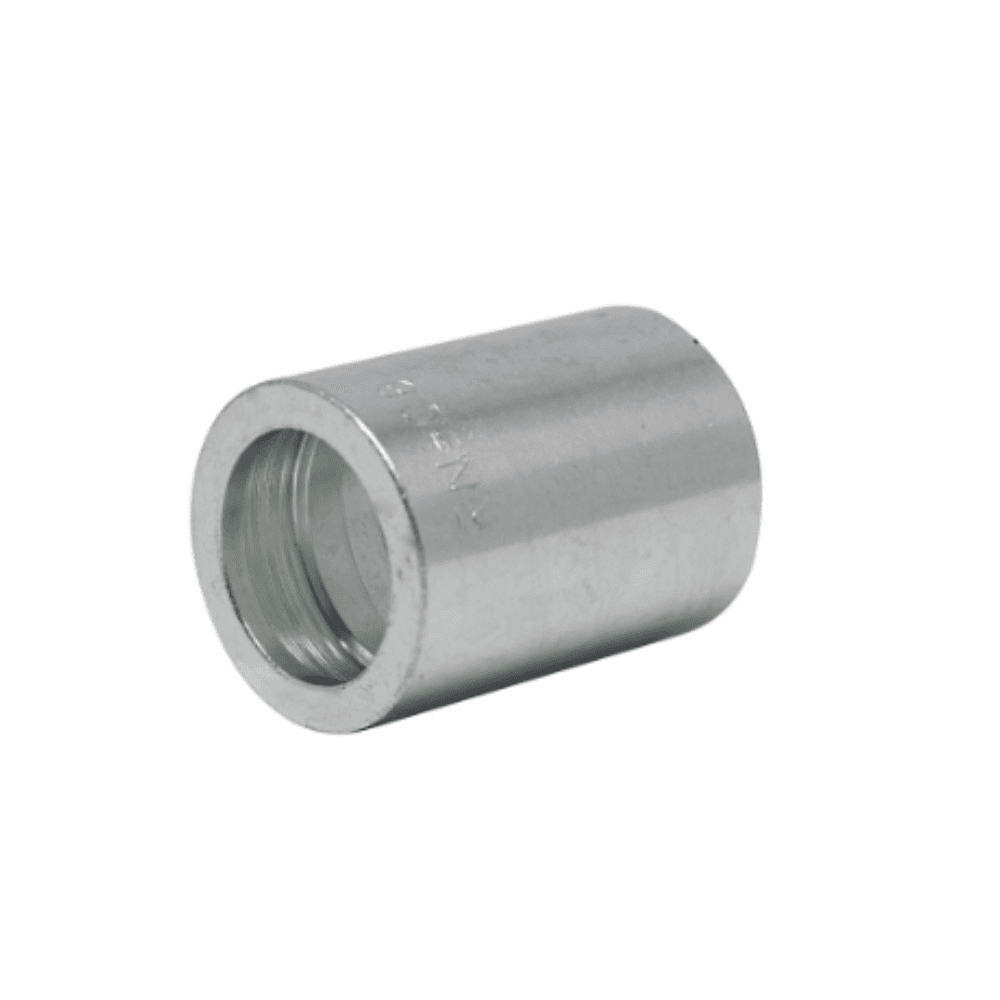 IH-CF-NS-R7R8No-Skive Crimp Ferrule for R7 / R8 Thermoplastic HoseIndus Hydraulics