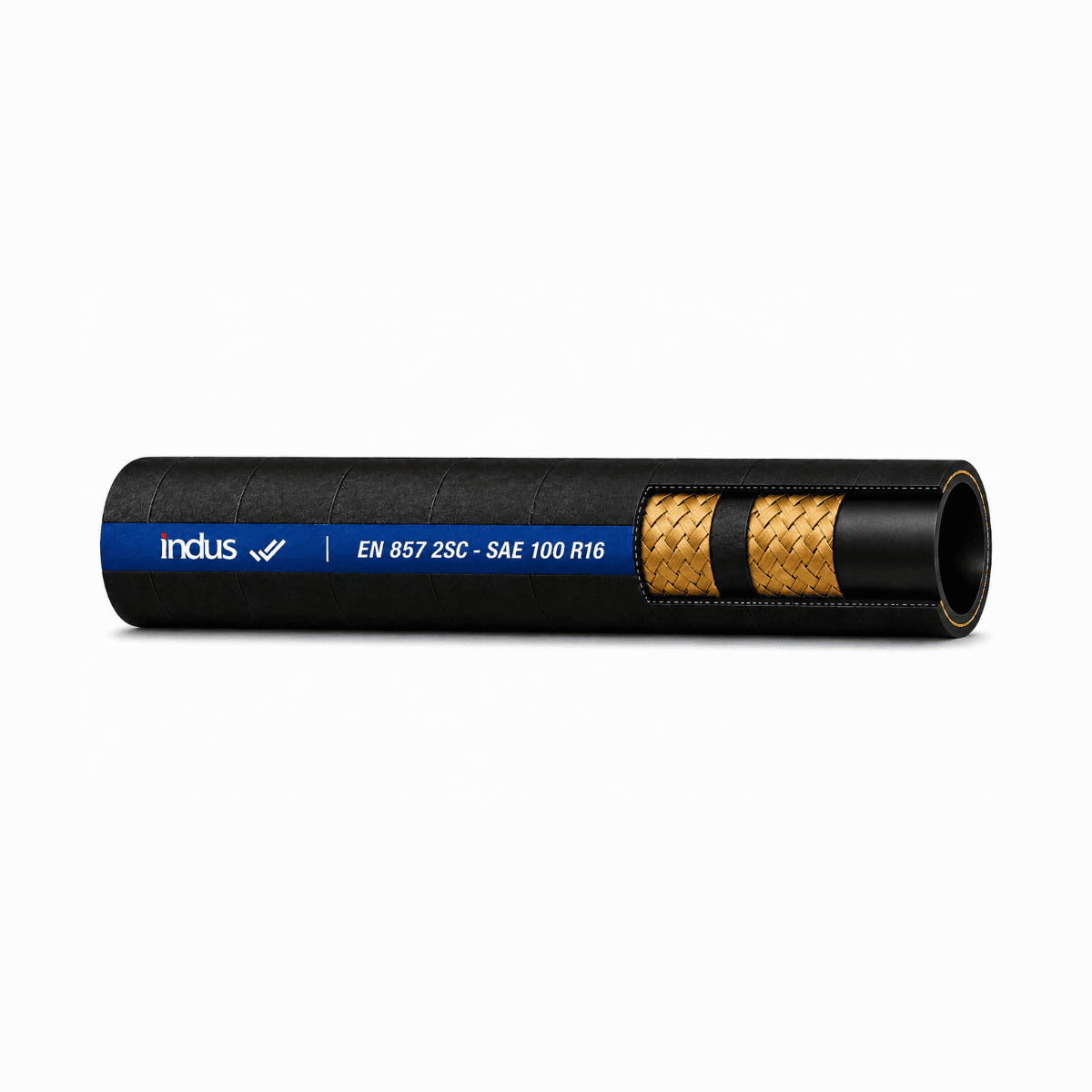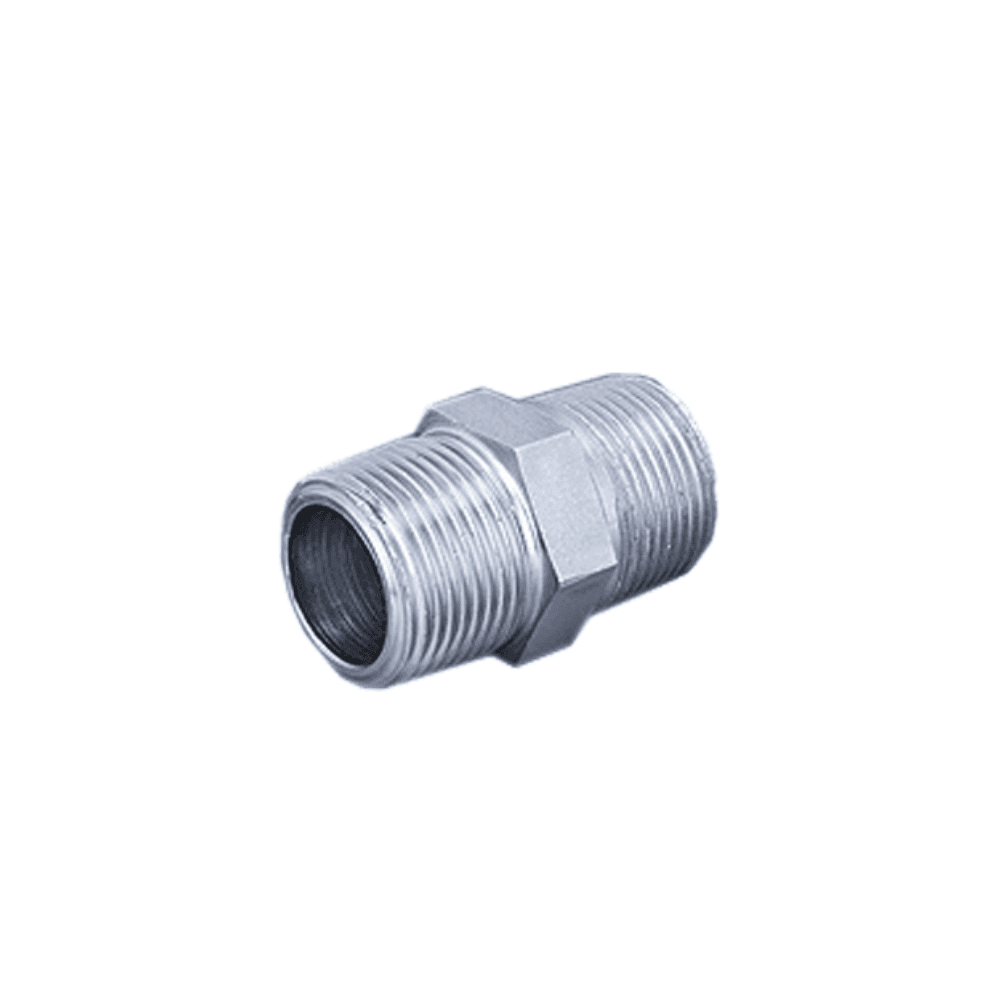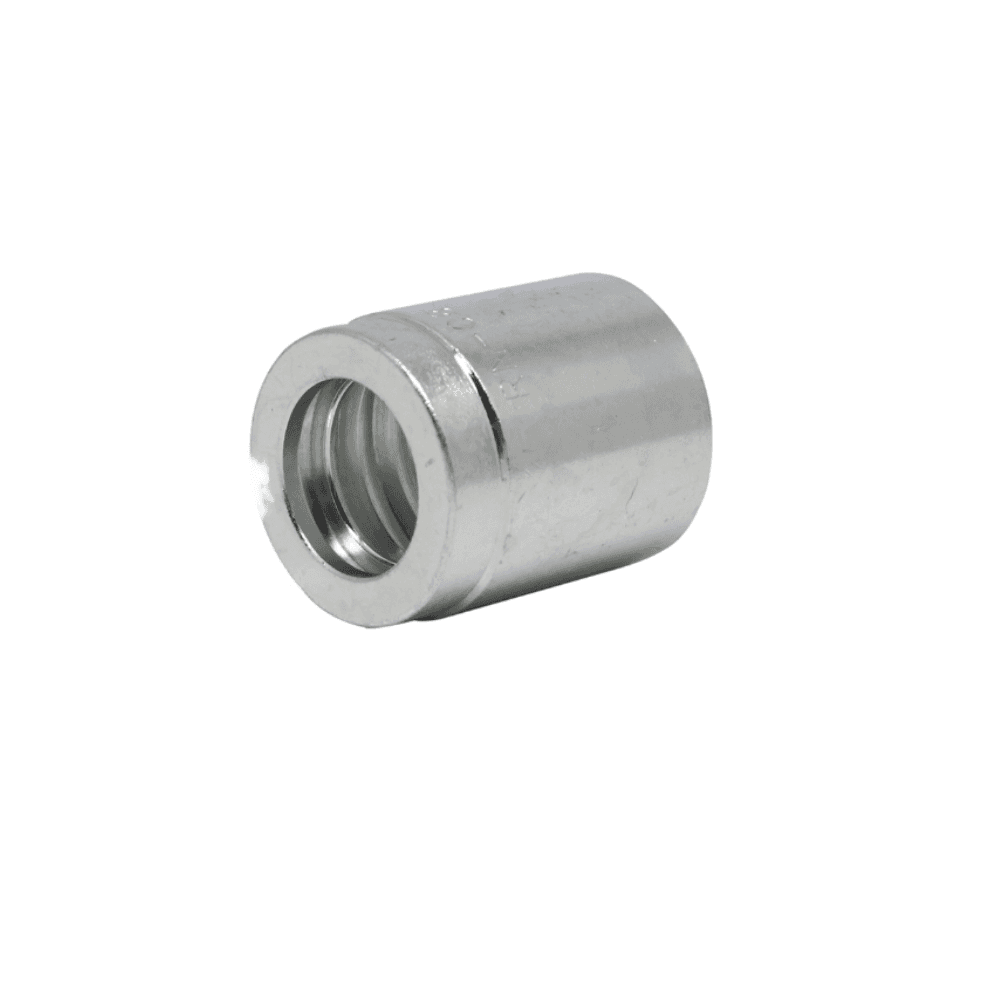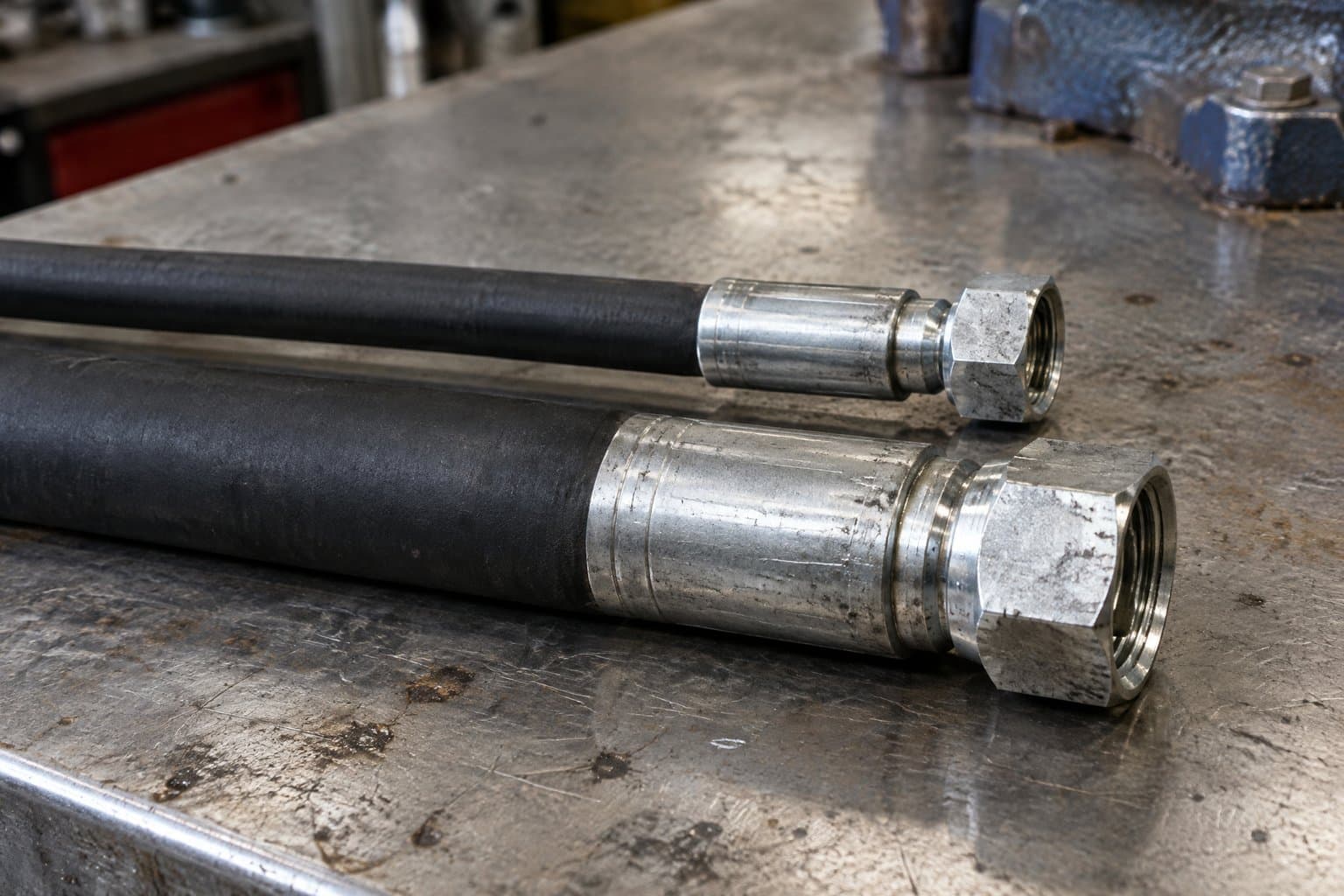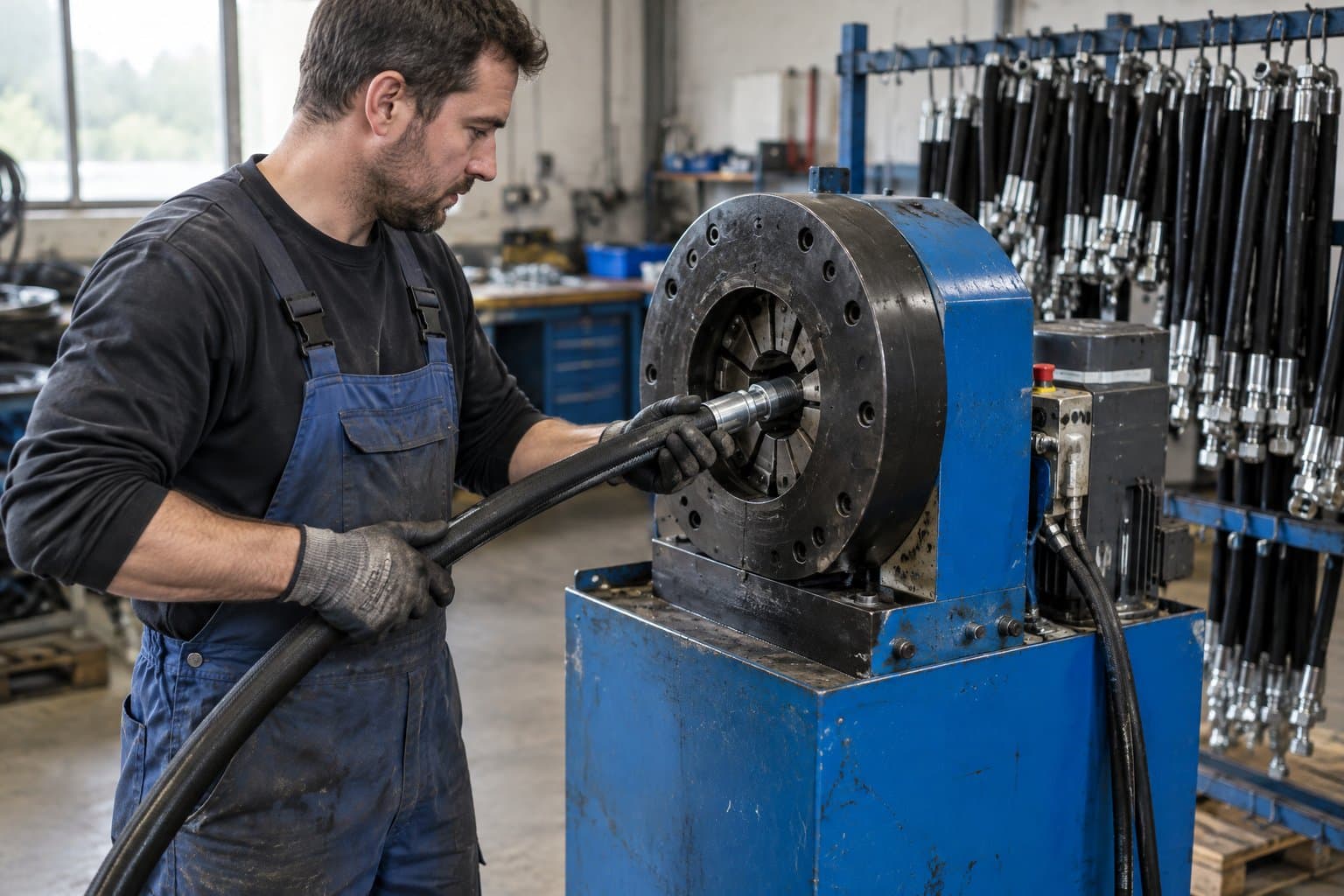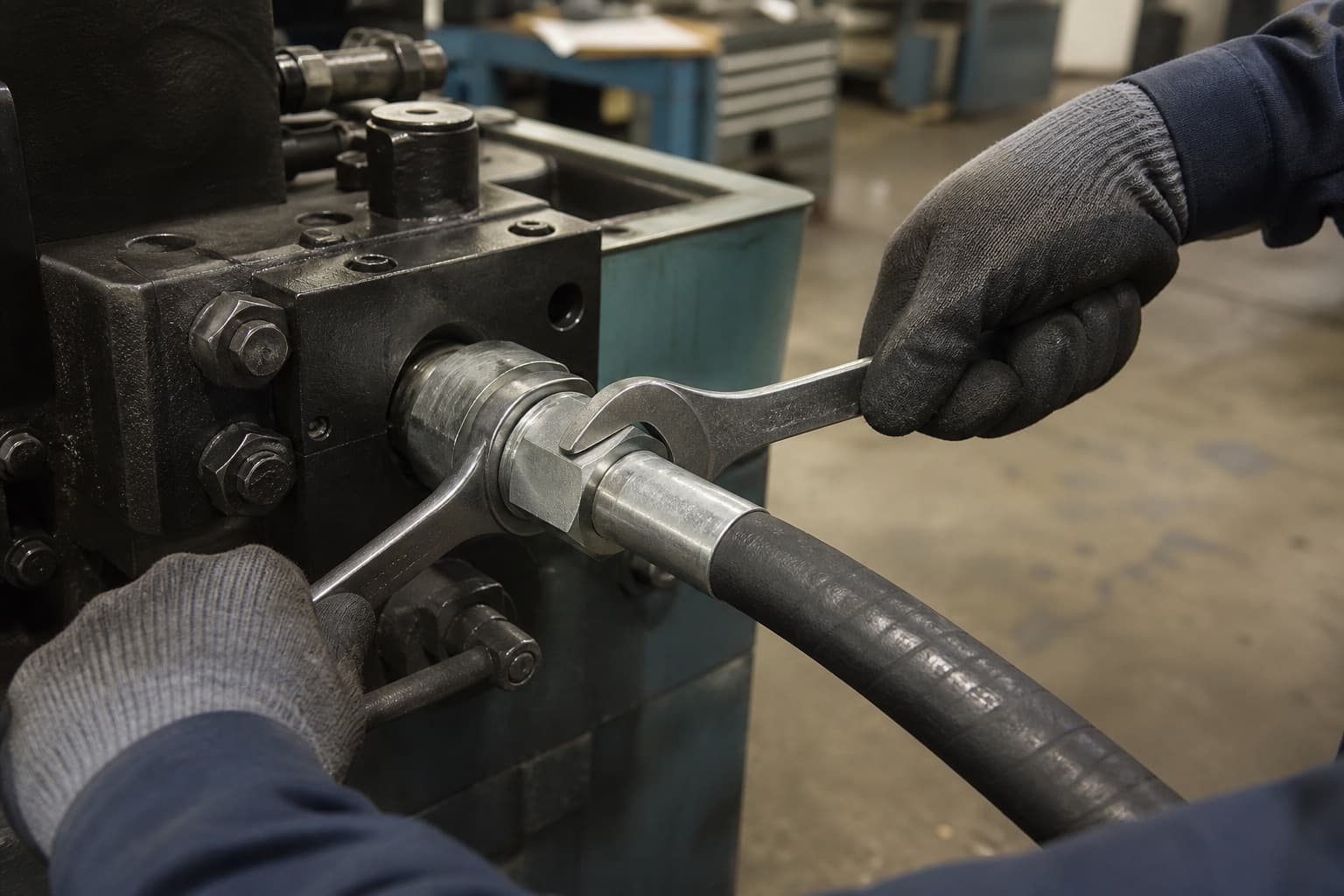
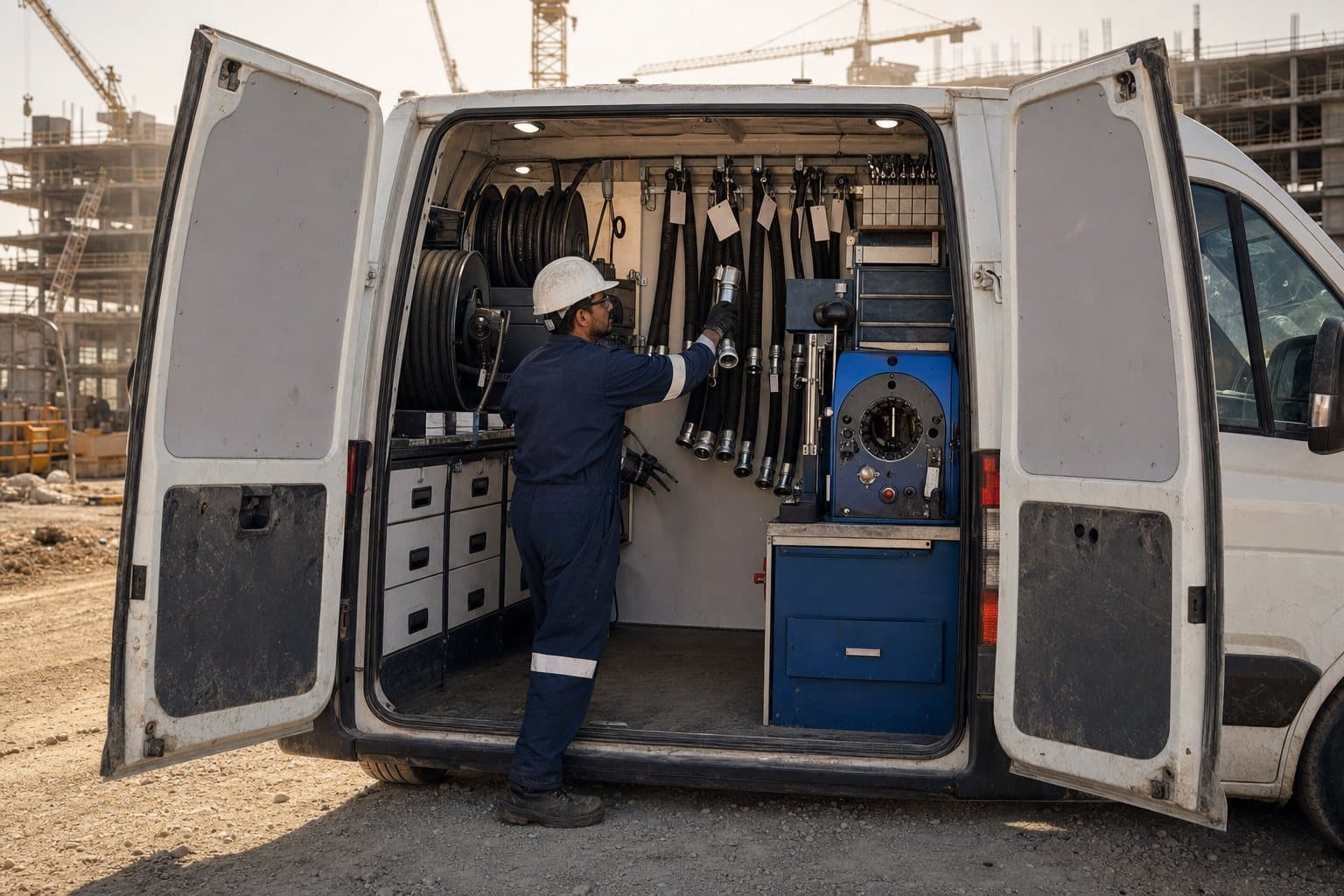
Replacing hoses as they fail keeps a machine limping for years. Replacing a whole set at once ends that, and it is the right call more often than people think — but doing it on a site road rather than a workshop floor is a different job, and the difference is almost entirely preparation. That means bulk hose, ferrules and hose fittings in the bores the machine actually carries, plus caps and plugs for every open port.
/01Before the van leaves.
| Item | Note |
|---|---|
| The assemblies, tagged to match the surveyHighlighted | Built to measured lengths, labelled with the position they go to |
| Spare adapters in the families on the machineHighlighted | For the port fitting that comes out with the hose |
| Bonded seals and O-rings for every joint being opened | Single use. Assume every one needs replacing |
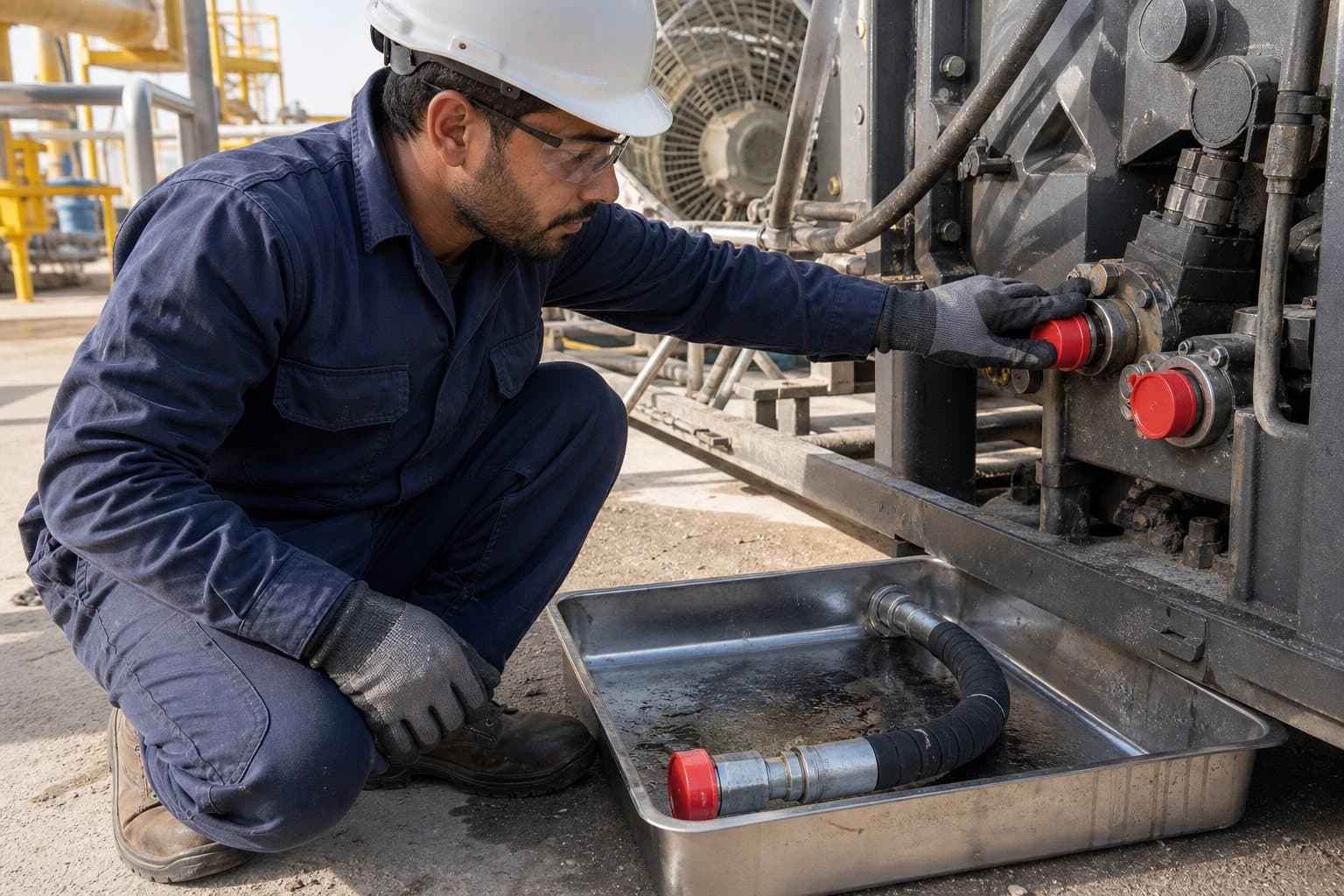
| Caps and plugs, every size | Contamination control, and enough of them for every open port at once |
| Drain trays and sealed waste containers | A field job produces more waste oil than expected |
| Backing wrenches in the right sizesHighlighted | Not optional — this is what saves the ports |
| Return filter for the machine | Fit it at the end of the job, not next service |
/02Tagging, before anything moves.
Labelling that survives the job
Do all of this before the first joint is broken.
IfTag both ends of every hose
Position and orientation, on a tag that will not wipe off in oil.
Two hoses of the same length with the same ends can still be different assemblies if the elbows are clocked differently.
IfPhotograph the routing before removal
Whole run, then close-ups of every clip, guard and crossing point.
Routing is what determines whether the new set lasts. Rebuilding from memory is how a hose ends up rubbing on structure.
IfMark the clocking of every elbow
A line across the fitting and the adapter with a marker.
The angle between two ends is the detail that most often sends an assembly back.
IfRecord which fittings came out with which hose
Port adapters that came out are part of the rebuild.
This is what tells you whether the adapter in the van is the right one before you find out at reassembly.
/03Order of work.
| Approach | When | Risk |
|---|---|---|
| One hose off, one hose onHighlighted | Default, and always where labelling is thin | Slowest, and safest |
| A circuit at a time | When a whole circuit is being replaced and is well documented | Manageable |
| Everything off, then everything onHighlighted | Workshop with a full survey and tagged assemblies | On site, this is how machines get stranded |
/04Finishing properly.
| Step | Why |
|---|---|
| Check every hose is free at full articulationHighlighted | Cycle every circuit slowly through its full range before releasing the machine |
| Confirm no hose is in tension or twistedHighlighted | Look at the layline. A spiral means it will fail early |
| Refit every clip and guard | The clips are why the routing survives, not decoration |
| Run, then re-check every joint dry | Wipe dry, run, then look. Weeps are visible in minutes |
| Change the return filterHighlighted | Whatever entered during the job is now circulating |
| Leave the survey and the tags with the customer | Next time this is a parts list rather than a survey |
Common questions
- Is it better to replace hoses as they fail?
- Only where failures are rare and the machine is easy to get to. On an ageing machine where hoses of the same age are failing one after another, replacing the set ends the pattern instead of chasing it.
- How long does a field re-hose take?
- It depends far more on access and on how many fittings resist removal than on the number of hoses. Budget for the ones that will not come off, because there are always some.
- Can you build the assemblies from photographs?
- Often yes, if the photographs include a rule and both ends, and the length is measured face to face. For a whole machine, a survey visit is usually worth it.
- What if a port adapter is damaged when it comes out?
- That is why the spare adapters are on the list. Where the port itself is damaged, stop and assess — a damaged pressure port is not a field repair.
- Should the customer keep the old hoses?
- Keep them until the machine has run for a shift, so anything mislabelled can be checked against the original. Then dispose of them so they cannot be refitted by mistake.