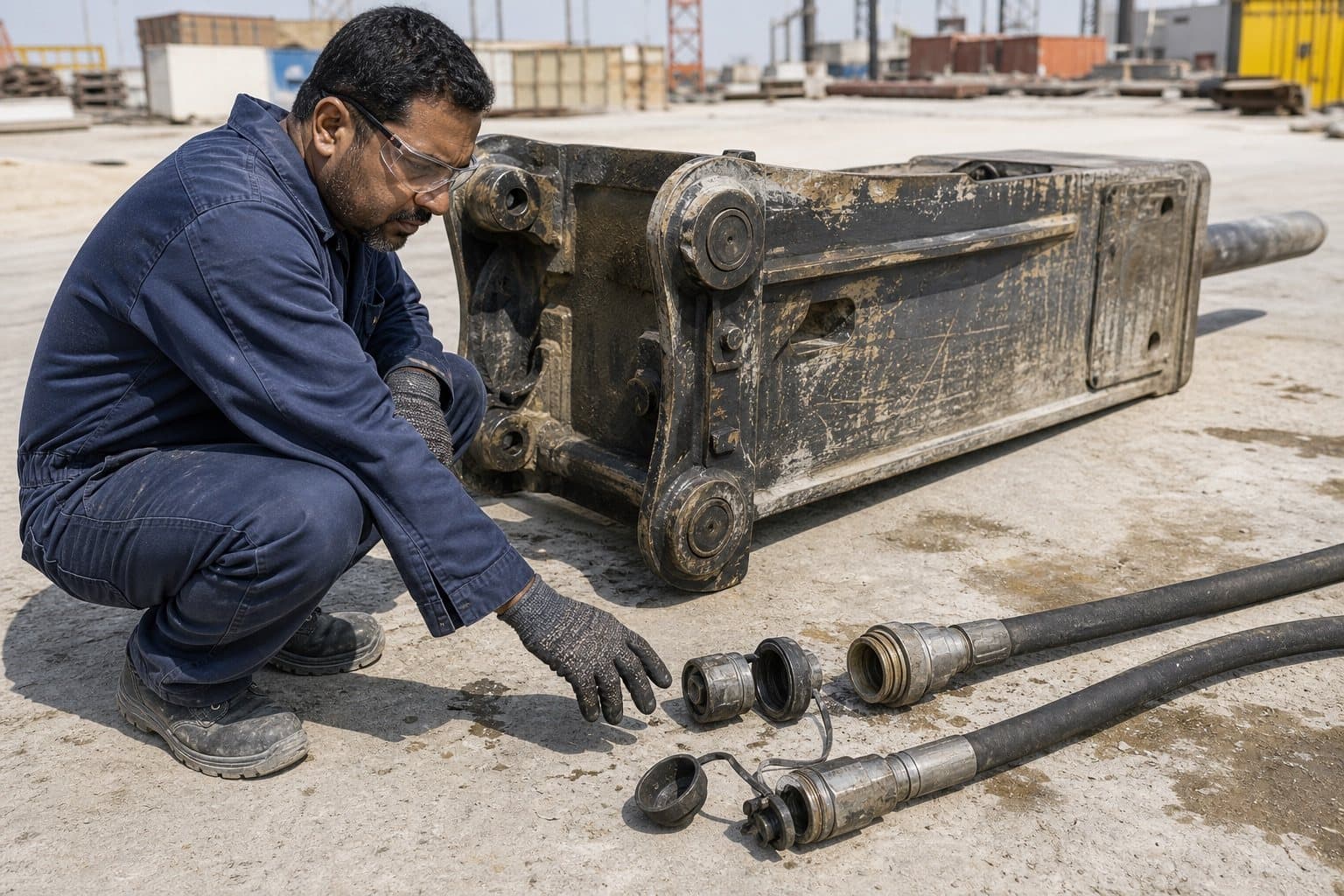
It is one of the most common questions on any equipment forum and it is almost always attributed to the wrong cause. The coupler is not faulty, the sizes are not wrong, and nothing has swollen. There is simply oil trapped between two closed poppets that has been sitting in the sun getting hotter.
/01Why the pressure appears at all.
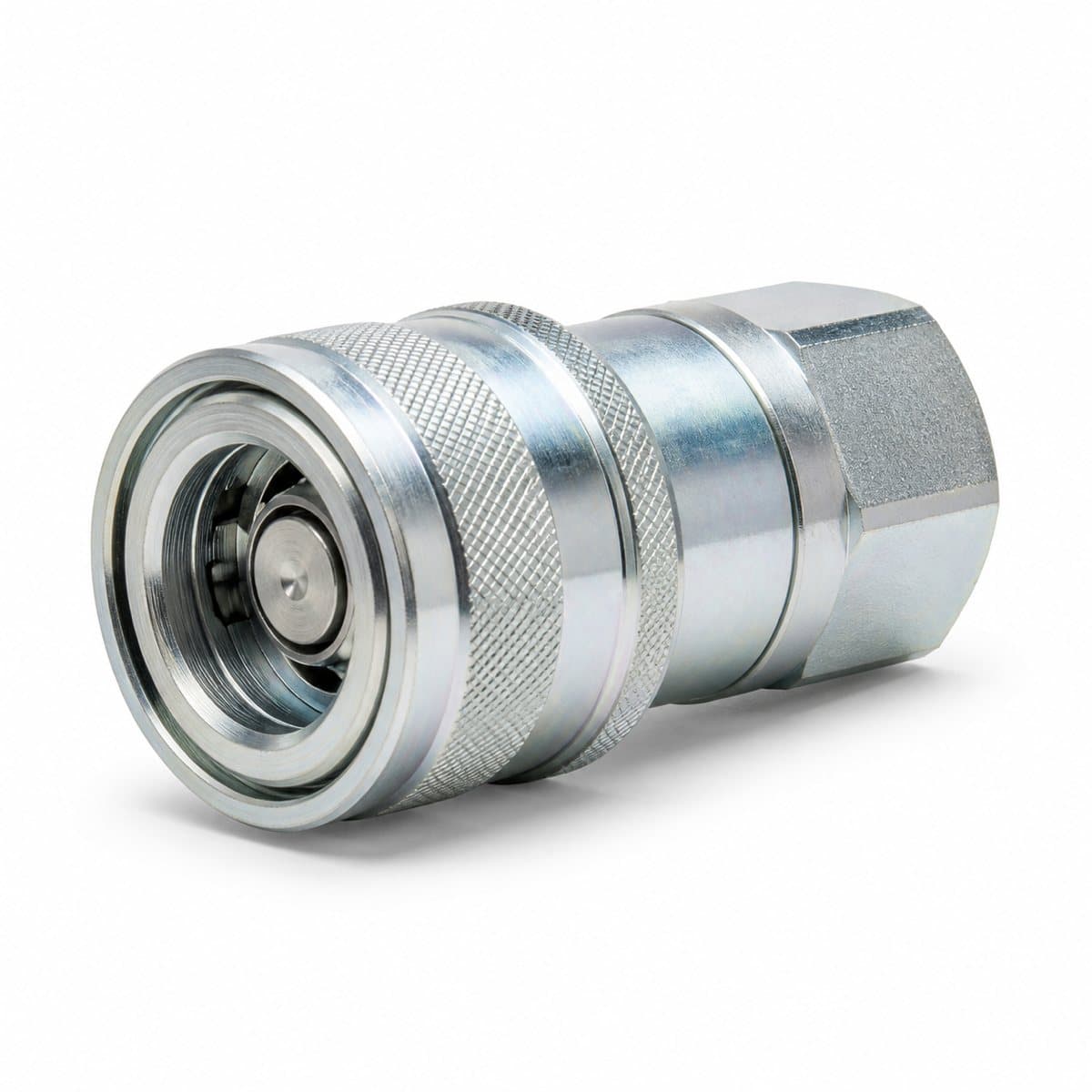
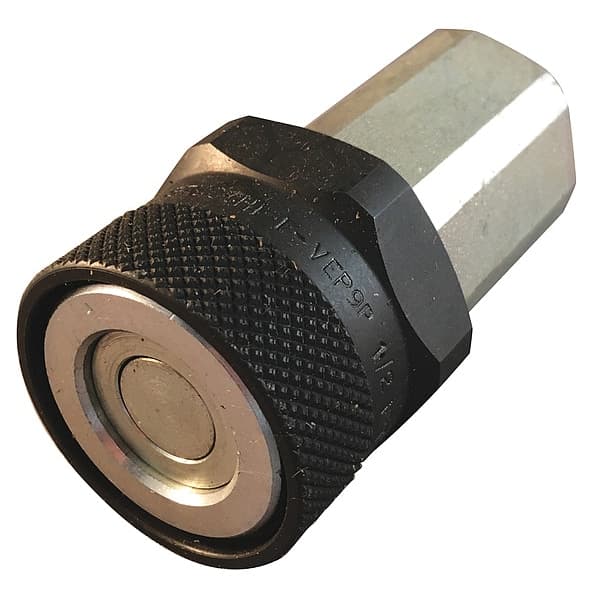
Hydraulic oil expands measurably with temperature, and it is very nearly incompressible. In a line that is open to a reservoir, that expansion is absorbed harmlessly. In a hose disconnected at both ends, the poppets seal the oil in a fixed volume, so expansion has to appear as pressure instead. The rise from a cool morning to a hot afternoon in direct sun is more than enough to hold a poppet firmly shut. Couplers designed to connect against that pressure — the connect-under-pressure farm coupler or a thread-to-connect flush-face coupler — remove the problem rather than managing it.
| Situation | Risk |
|---|---|
| Attachment disconnected in the morning, reconnected at middayHighlighted | High — the classic case |
| Hoses lying in direct sun on a dark surfaceHighlighted | High — surface temperature far exceeds air temperature |
| Attachment lowered onto its cylinders after disconnection | High — mechanical load adds to thermal rise |
| Disconnected while the circuit was still hot | Moderate — pressure falls as it cools, then it is fine |
| Stored under cover, connected the same temperature | Low |
/02Releasing it safely.
How to get the coupler connected
Work down this list. Never skip to force, which is not on it.
IfIs there a pressure release on the attachment?
Use it. Many breakers, grapples and augers have a bleed screw or a release valve for exactly this.
This is the manufacturer answer and it is the safest option available in the field.
IfCan you cool the assembly?
Move it into shade, or wait. The pressure falls as the oil cools.
Slow, free and completely safe. On a site where nothing is urgent, this is the correct answer.
IfCan the machine side relieve it?
With the engine off, cycle the auxiliary control to relieve pressure on the machine half first.
It does not release the attachment side, but it removes one of the two pressures fighting you and often that is enough.
IfDo you have to crack a fitting?
Last resort, and only with the correct equipment and protection.
Loosen slowly with a rag over the joint and a container beneath, standing clear of the line of the joint. If this is a routine requirement, the coupler specification is wrong for the application.
IfDoes this keep happening?
Change the coupler specification rather than the procedure.
Pressure-eliminator or screw-to-connect couplers exist for this duty. On an attachment that changes daily in Gulf summer conditions they are the correct part, not an upgrade.
/03What forcing it actually damages.
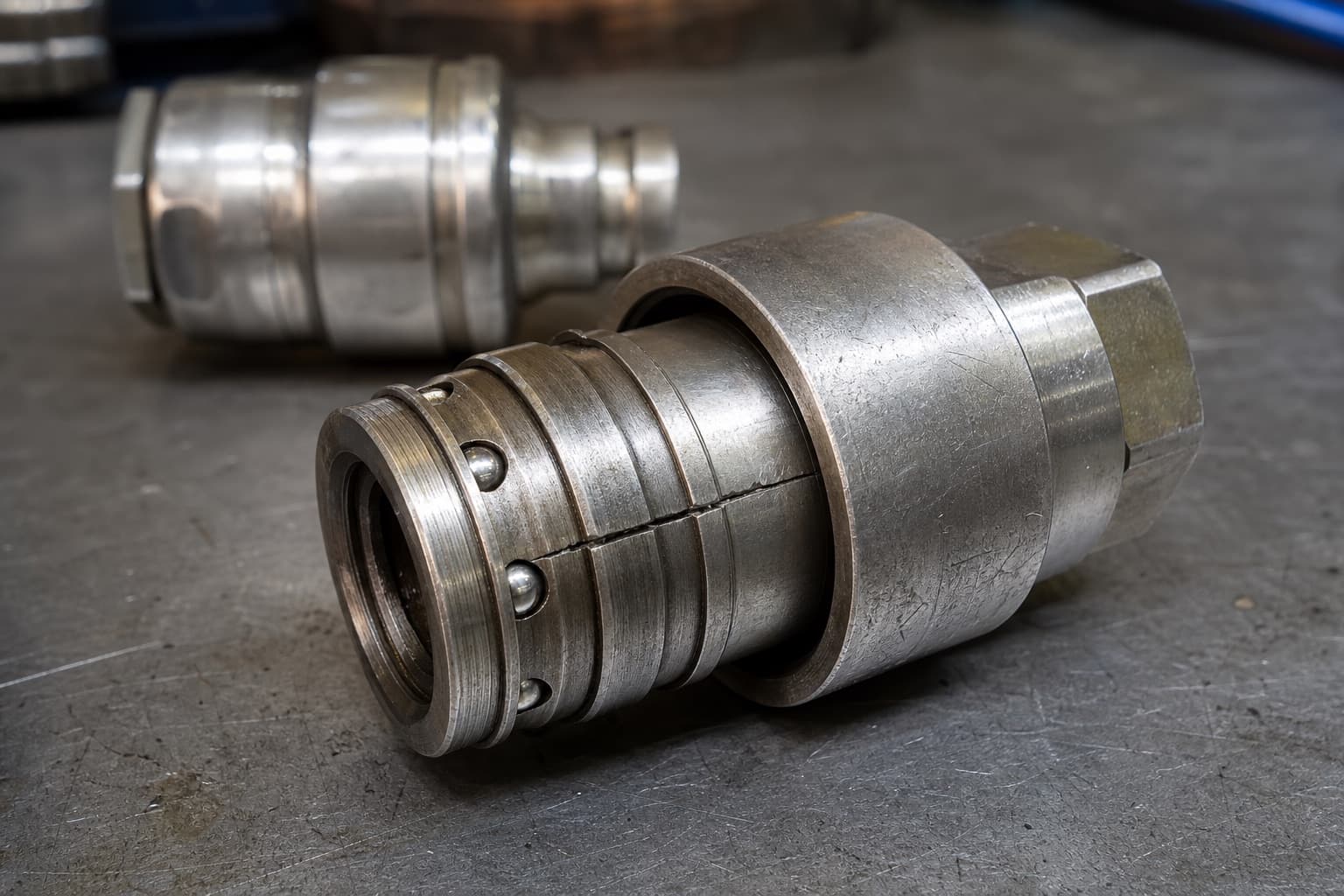
| What you do | What it does |
|---|---|
| Hammer the male half homeHighlighted | Deforms the locking ball track; the coupler then latches and can release under load |
| Lever it with a bar | Bends the male half and scores the sealing bore |
| Hold the sleeve back and force it | Damages the sleeve spring, so it no longer locks positively |
| Force it repeatedly over monthsHighlighted | Produces a coupler that appears serviceable and separates under pressure |
/04Designing the problem out.
| Option | What it gives you |
|---|---|
| Pressure-eliminator couplersHighlighted | A male half that can be connected against residual pressure |
| Screw-to-connect couplersHighlighted | Mechanical advantage to overcome residual pressure; also better under impulse |
| A bleed point on the attachment | A controlled release, without cracking a joint |
| Storing attachments in shade | Free, and removes most of the thermal rise |
| Disconnecting hot rather than cold | The line then falls in pressure as it cools instead of rising |
Hydraulic fluid power — Flush-face type, quick-action couplings
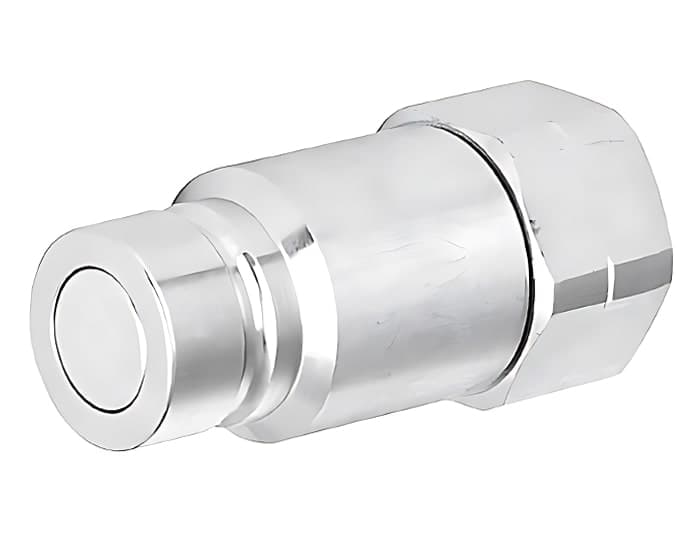
The flat-face coupling standard used on attachment circuits. Relevant here because flat-face designs are commonly available in pressure-eliminator variants intended for connection under residual pressure — the engineered answer to this problem.
Common questions
- Is it safe to crack a fitting to release trapped pressure?
- Only as a last resort, with eye protection, a rag over the joint, a container beneath, and your body clear of the line of the joint. Loosen slowly. If this is needed routinely, the coupler specification is wrong for the duty.
- Will leaving it overnight fix it?
- Usually yes, provided it cools. That is why the same attachment connects easily first thing and refuses at midday.
- My coupler connects but will not release. Same cause?
- Often, yes — pressure on either side loads the locking balls and stops the sleeve moving. Relieve the pressure rather than forcing the sleeve.
- Do flat-face couplers suffer from this?
- Yes, all poppet and flat-face couplers can trap pressure. What differs is that pressure-eliminator variants are readily available in flat-face ranges.
- Is this worse in the UAE than elsewhere?
- Considerably. Surface temperatures on hoses lying in direct sun on a yard in summer are far above air temperature, so the thermal rise across a working day is larger than the equipment was likely specified against.