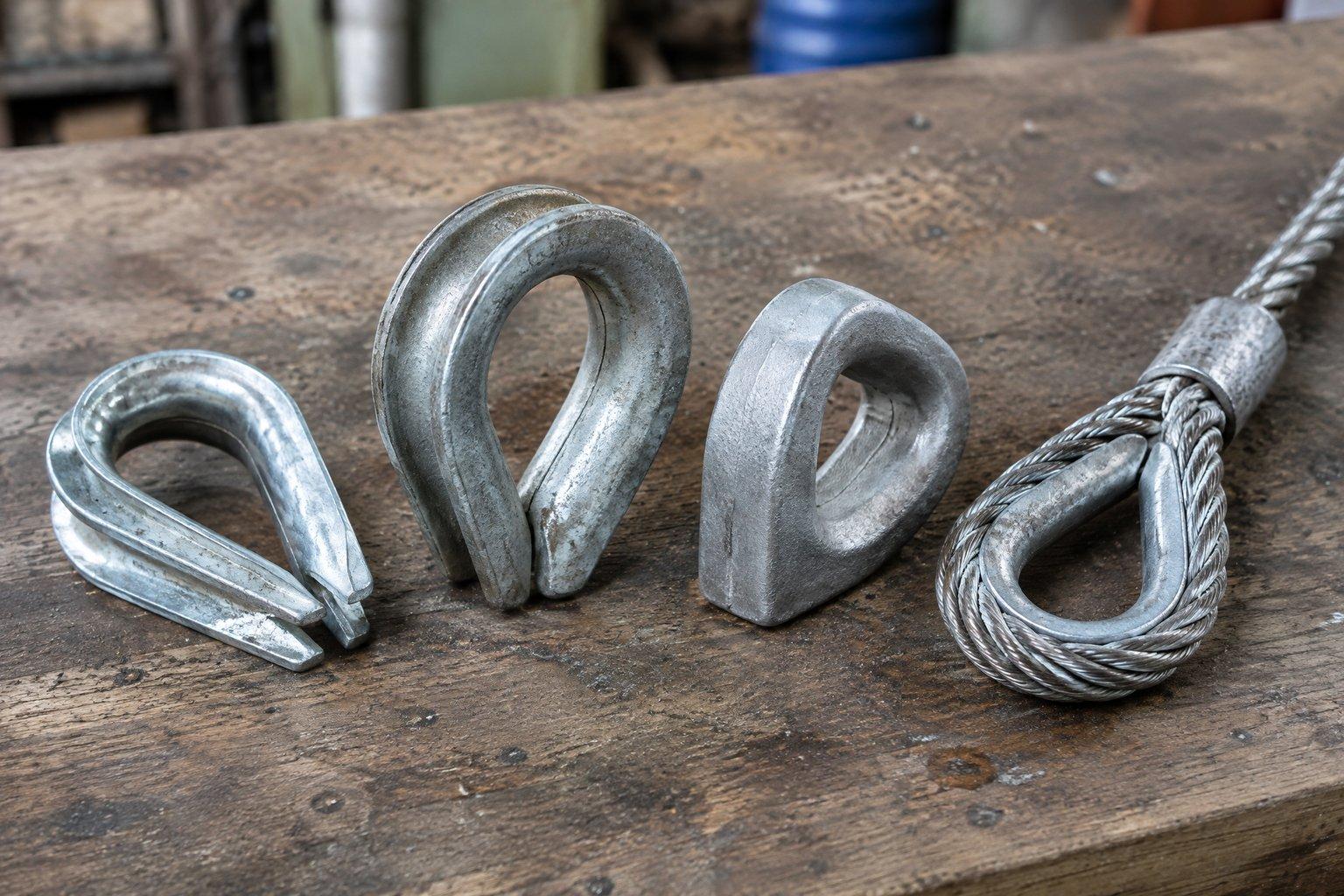
Bend a wire rope sharply around a shackle pin and it flattens and wears at exactly the point that carries the load. A thimble gives the eye a grooved, rounded bearing surface so that does not happen. It is a small, cheap part, and the eye of a sling is only as good as the thimble in it.
/01What a thimble does — and does not do.
A thimble protects the eye: it spreads the bearing load, keeps the eye from closing up, and takes the wear instead of the rope. It is not considered a primary load-carrying member and is not given a WLL — the rating of the termination comes from the rope and its ferrule or splice. Where an eye is used without a thimble, the shackle or pin it bears on must be larger in diameter than the rope.
/02The main types.
| Type | What it is | Use |
|---|---|---|
| Standard (G-411 pattern) | Pressed or formed thimble with an open throat | Light-duty loading and fixed terminations |
| Extra heavy (G-414 pattern)Highlighted | Heavier section and deeper groove | More protection against wear and deformation; longer service life |
| Solid thimble | Cast or forged with a solid centre and a hole for the pin | Eyes that must not close up; heavy connections to a pin |
| Tube thimble, with or without gusset | Tubular bearing for a pin | Fixed connections where a pin passes through the eye |
| Fibre rope thimble | Wider, shallower groove for fibre rope | Fibre and synthetic rope eyes — not wire rope |
For the eye of a lifting sling that will see repeated use, an extra-heavy thimble gives more protection against wear and deformation than a light standard one. Heart-shaped thimbles are for eyes that connect to a fitting; reeving thimbles, with a wider shape, let one eye pass through the other in a choke hitch.
/03The DIN and BS numbers.
- DIN 6899 covered light, medium and heavy thimbles in forms A and B. It has been withdrawn, and the EN 13411 series on wire rope terminations has taken its place, but the name is still used to order thimbles of that pattern.
- DIN 3091 covered solid thimbles. It has been replaced by EN 13411-9, which sets an efficiency of at least 0.9 for solid thimbles in ferrule-secured terminations and at least 0.8 in spliced ones.
- BS 464 was the British thimble standard. It was withdrawn in 2002; galvanised BS 464-pattern thimbles are still made to its dimensions.
/04Sizing and inspection.
A thimble is sized to the rope diameter: the rope must sit fully in the groove without being pinched or rattling loose. Check also that the thimble’s inside width takes the shackle pin or fitting it will bear on. A thimble that does not match the rope cannot support the eye properly.
At inspection, reject the sling if the thimble is damaged or worn, distorted, has come loose in the eye, or its throat has opened noticeably.
What we list
Every listing on our Wire Rope Thimbles shelf:
- BS 464 Wire Rope Thimble, Hot-Dip Galvanized
- DIN 6899 A Wire Rope Thimble
- DIN 6899 B Wire Rope Thimble
- Extra Heavy Wire Rope Thimble — G-414 Pattern, Hot-Dip Galvanized
- Fibre Rope Thimble — K3
- Heavy Duty Stub-End Thimble — K2
- Manila Rope Thimble Galvanized
- Round Rope Thimble Galvanized
- Solid Wire Rope Thimble — DIN 3091
- Stainless Steel Extra Heavy Wire Rope Thimble — US Type
- Stainless Steel Tube Thimble Cast without Gusset
- Stainless Steel Tube Thimble Heavy Duty
- Stainless Steel Tube Thimble with Gusset G8K
- Stainless Steel Tubular Thimble Cast with Gusset
- Stainless Steel Tubular Thimble Light Duty
- Stainless Steel Tubular Thimble without Gusset G5
- Stainless Steel Wire Rope Thimble — US Standard
- Stainless Steel Wire Rope Thimble European Type
- Stainless Steel Wire Rope Thimble Italian Type
- Standard Wire Rope Thimble — G-411 Pattern
- Superloop Thimble Type K15 Galvanized
- Synthetic Rope Thimble Galvanized
- Tube Thimble with Gusset TG2K
- Tube Thimble with Gusset TTG7K
- Tube Thimble without Gusset TTG7 Painted/Galvanized
- Tubular Thimble without Gusset TG2 Painted/Galvanized
- Wire Rope Thimble — AS 1138
- Wire Rope Thimble — European Commercial Type
- Wire Rope Thimble — JIS
Thimbles in this guide
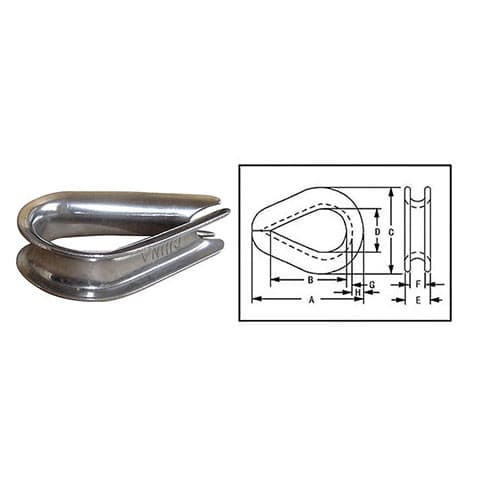 IH-LR-TH-USStandard Wire Rope Thimble — G-411 Pattern
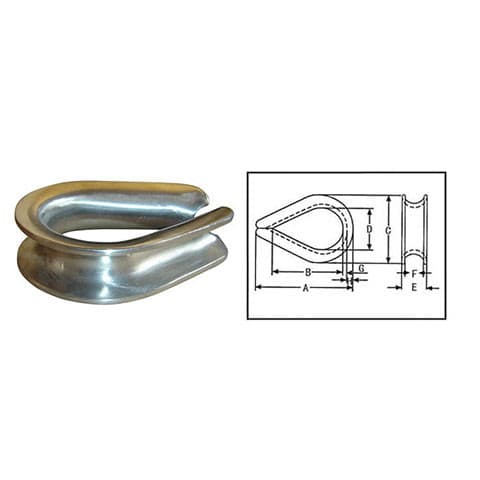 IH-LR-TH-EHExtra Heavy Wire Rope Thimble — G-414 Pattern, Hot-Dip Galvanized
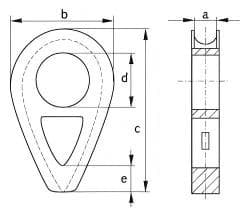 IH-LR-TH-SWRTD3091Solid Wire Rope Thimble — DIN 3091, 8–80 mm
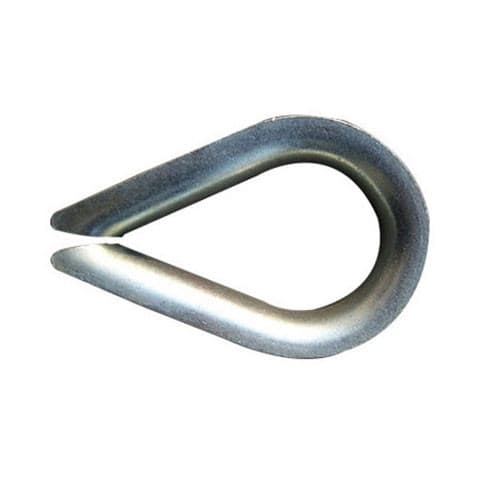 IH-LR-TH-D6899ADIN 6899 A Wire Rope Thimble — 2.5–16 mm
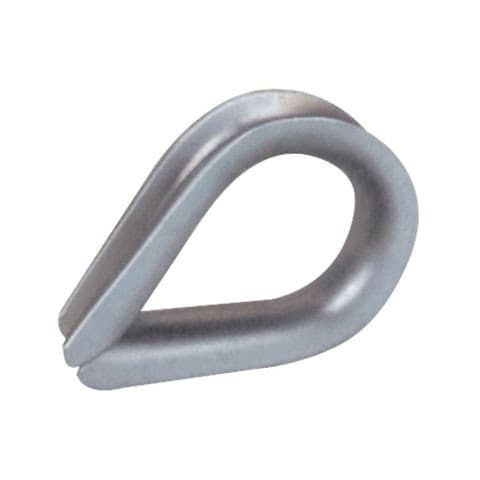 IH-LR-TH-D6899BDIN 6899 B Wire Rope Thimble — 2.5–32 mm
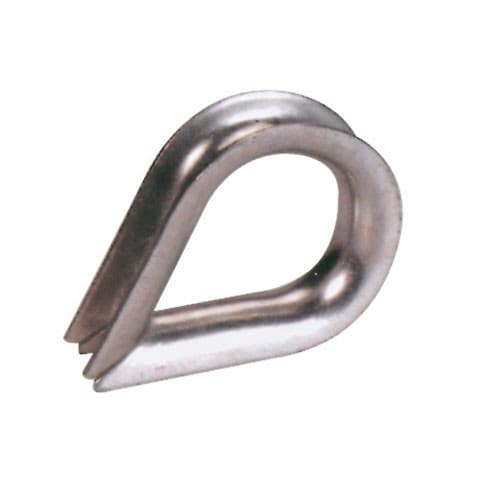 IH-LR-TH-BS464BS 464 Wire Rope Thimble, Hot-Dip Galvanized — 1/4–2″
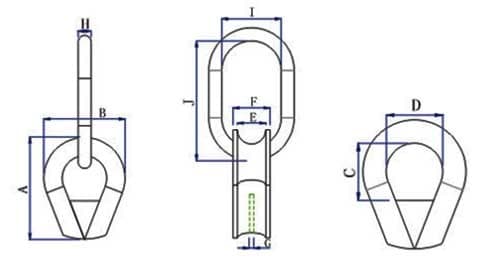 IH-LR-TH-FRTK3Fibre Rope Thimble — K3, 2–18″
Common questions
- Does a thimble have a working load limit?
- No. A thimble is not a primary load-carrying part; it protects the rope eye. The termination’s rating comes from the rope and its ferrule, splice or socket.
- Do I need a thimble in a wire rope eye?
- It is strongly recommended wherever the eye bears on a shackle, pin or hook. Without one, the fitting must be larger in diameter than the rope, and the eye wears and deforms faster.
- Is DIN 6899 still a current standard?
- No. DIN 6899 has been withdrawn in favour of the EN 13411 series, but the name is still used to order thimbles of that pattern.
- Can I use a wire rope thimble on fibre rope?
- Use a fibre rope thimble. Its groove is shaped for fibre rope, which a wire rope thimble would pinch.