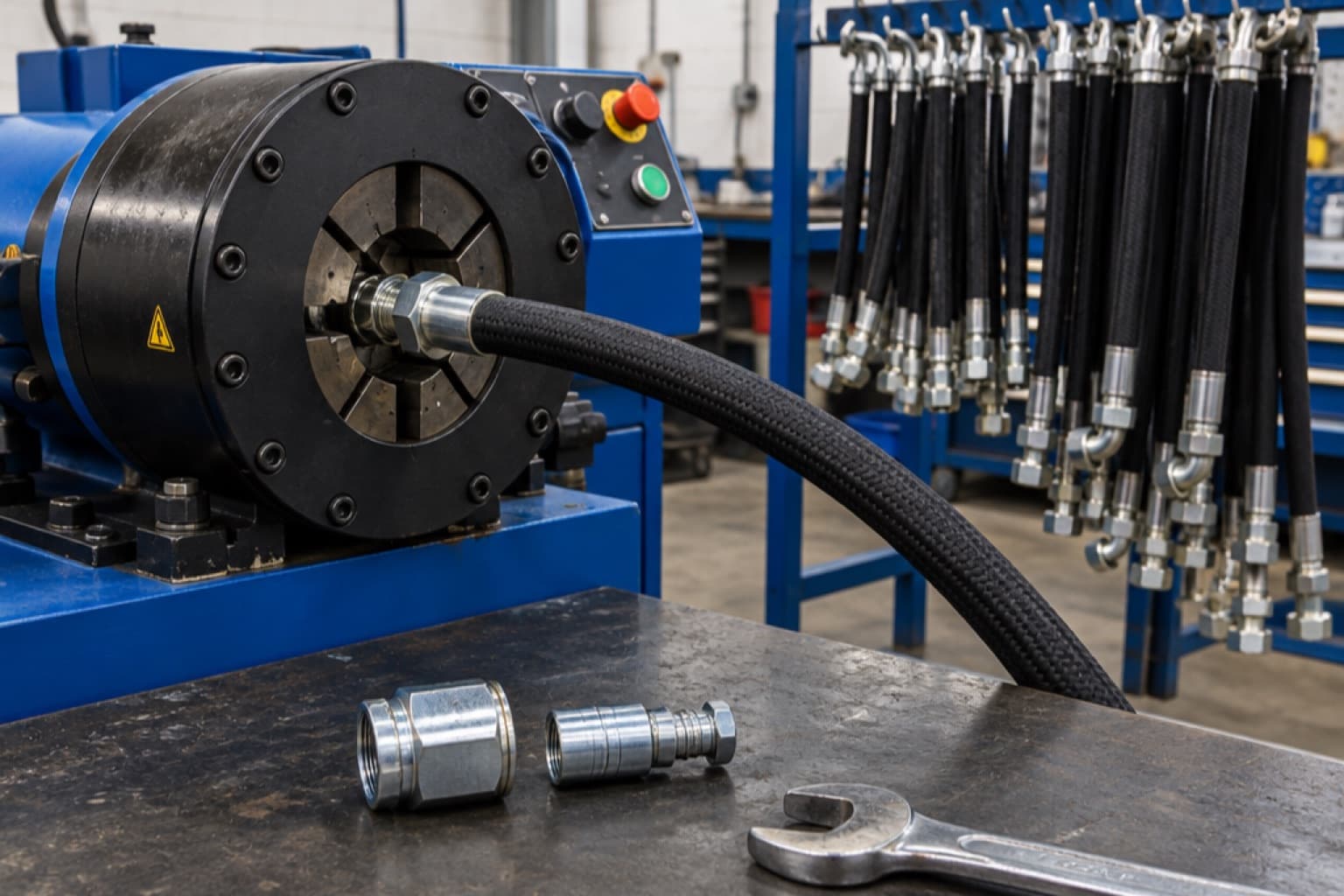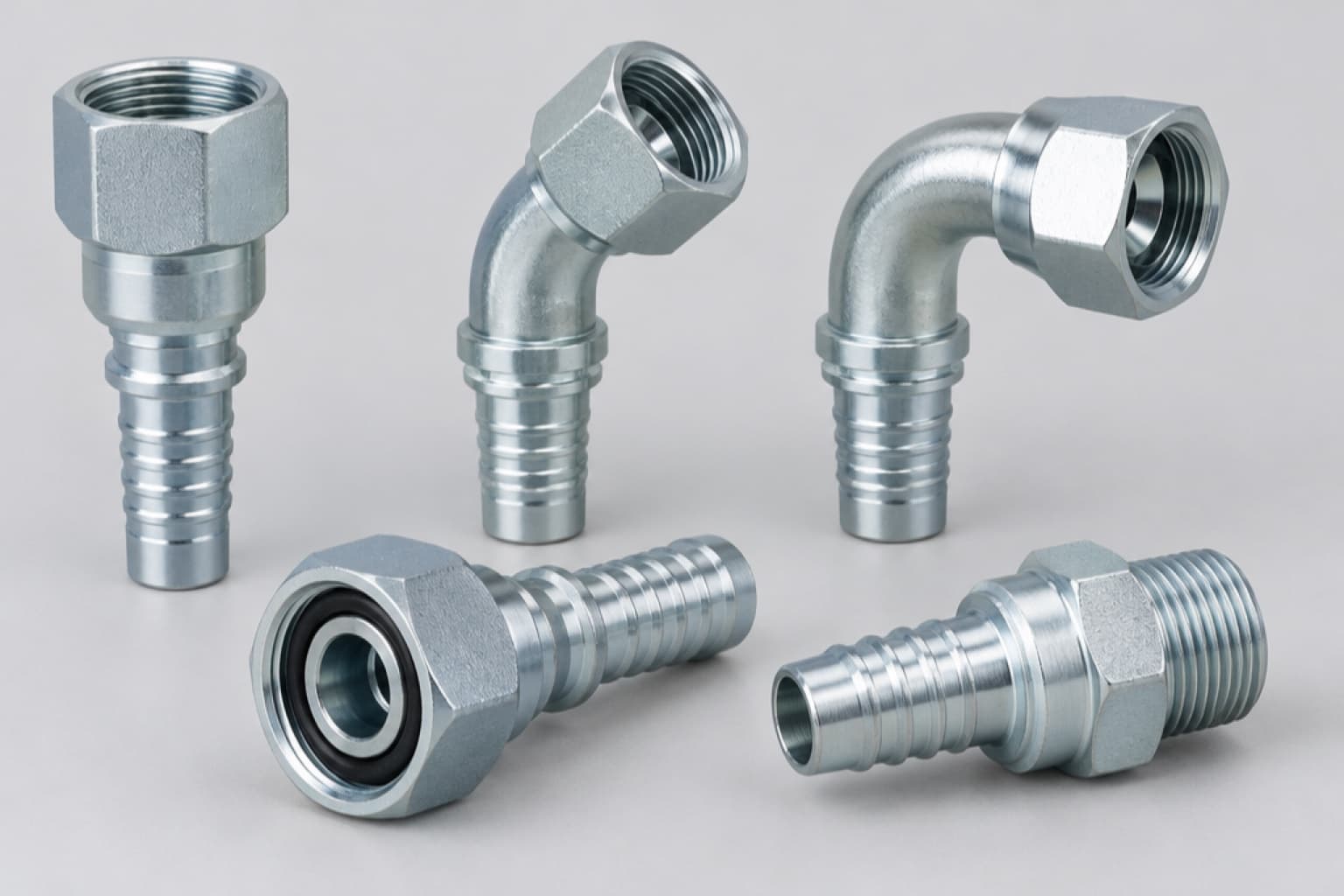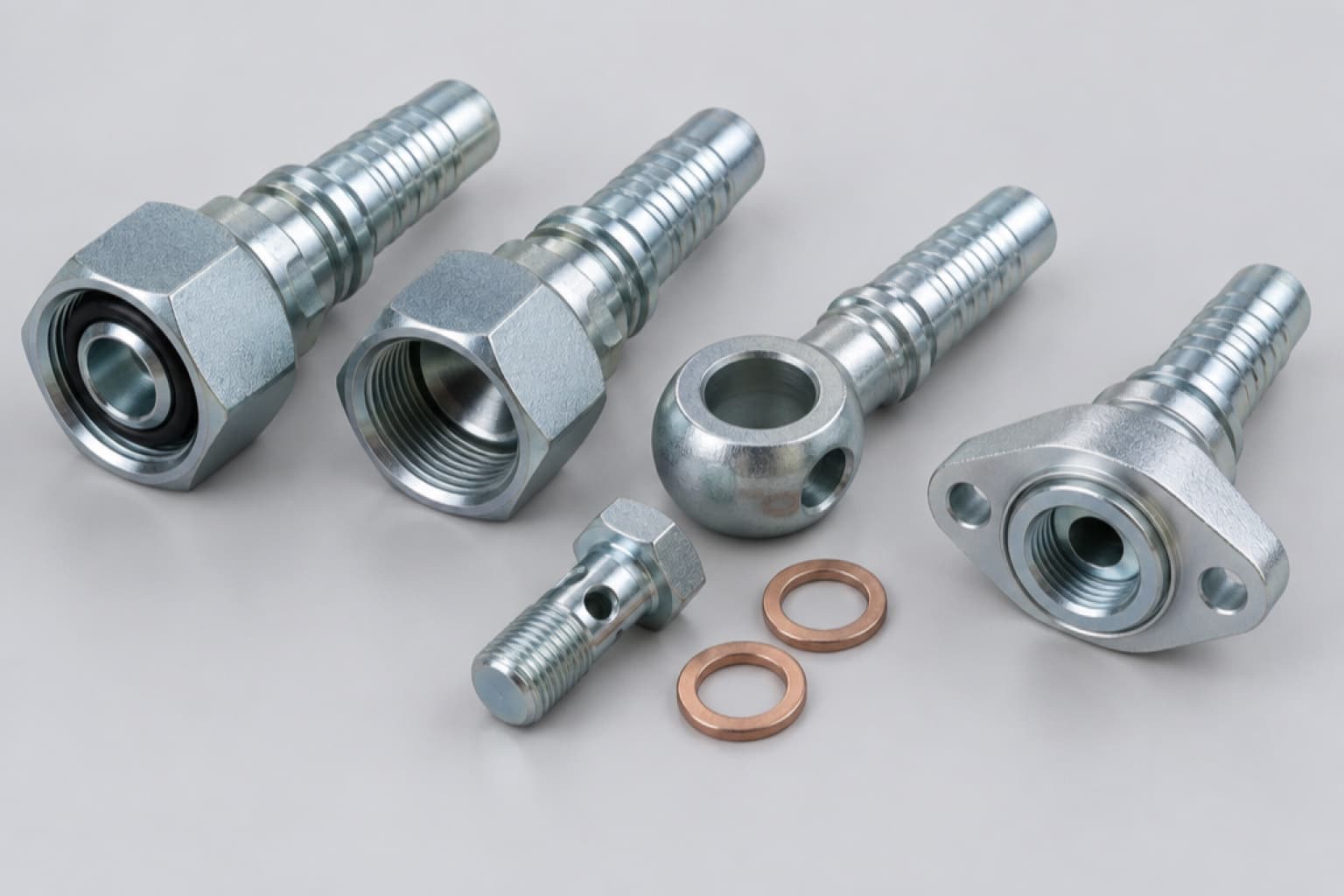
Most hydraulic hose is ordered by dash number, and the dash number is the bore in sixteenths of an inch. Two common hoses break that rule, and both need their own ends: PTFE hose for heat and chemicals, and R5 textile-covered hose for engines, fuel and air brakes. This guide covers both — what they are, how they are rated and which hose ends fit.
/01Dash size is not the bore.
| Dash | Bore | R14 PTFE, psi | R5, psi |
|---|---|---|---|
| -4Highlighted | 3/16" | 3,000 | 3,000 |
| -5 | 1/4" | 3,000 | 3,000 |
| -6 | 5/16" | 2,500 | 2,250 |
| -8Highlighted | 13/32" | 2,000 | 2,000 |
| -10 | 1/2" | 1,500 | 1,750 |
| -12 | 5/8" | 1,200 | 1,500 |
| -16 | 7/8" | 1,000 | 800 |
| -20 | 1-1/8" | 625 | 625 |
Parker’s handbook gives the exception directly: SAE 100R5 hydraulic hose, SAE J1402 air-brake hose and SAE J2064 air-conditioning hose use sizes equivalent to the corresponding metal tube. PTFE follows the same convention, and Parflex adds that PTFE smooth-bore hoses have a reduced inside diameter. A hose shop that measures the bore and orders the matching standard dash will get the wrong end.
/02R14 PTFE hose.
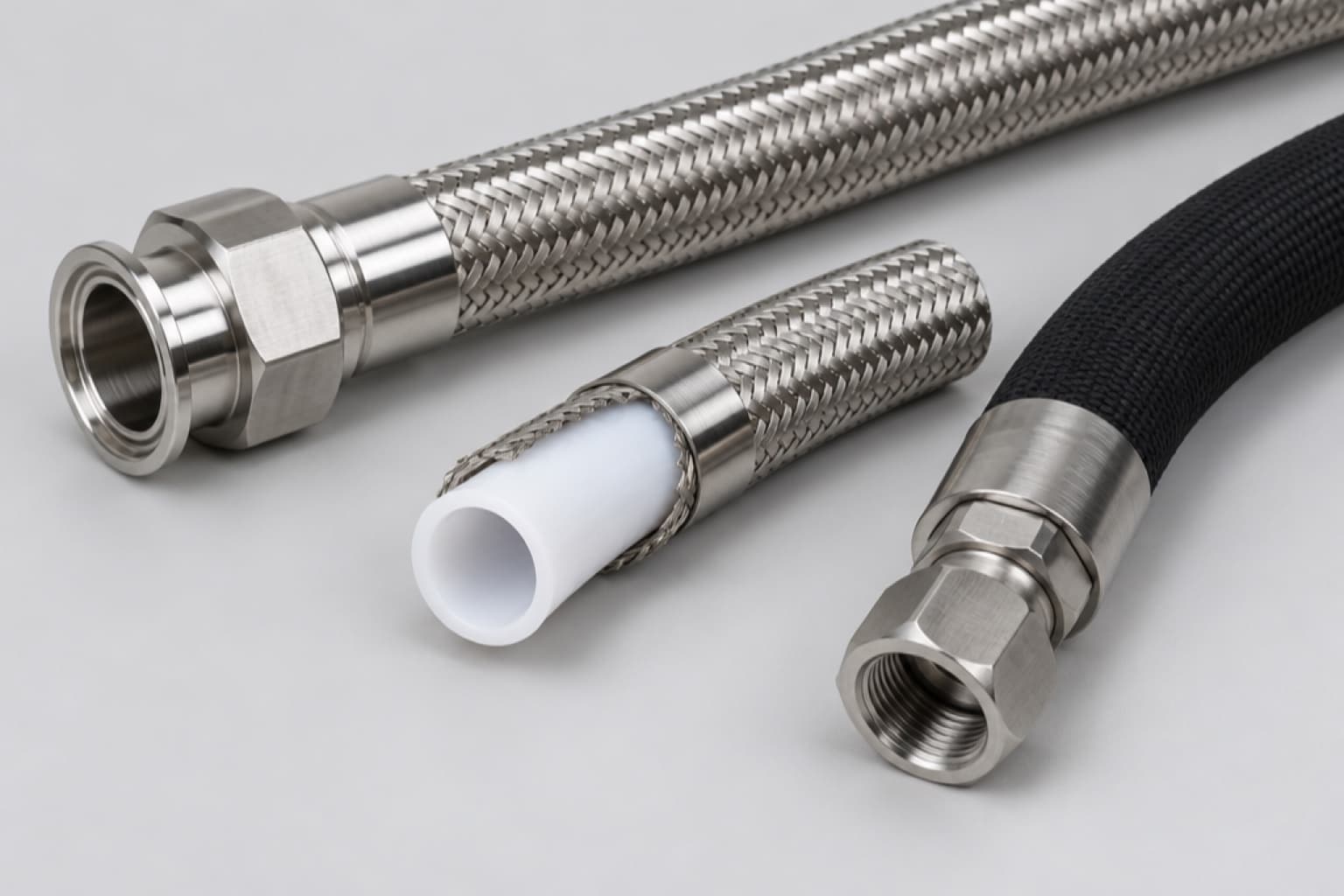
Parflex describes its 919 hose as a natural FDA-compliant PTFE tube — 919B is black static-dissipative PTFE — inside a 304 stainless braid, with at least .030" of PTFE wall. 919 meets SAE 100R14A and 919B 100R14B. It is rated from −100 to +450 °F (−73 to +232 °C), changes length by +2% to −4% at maximum working pressure, and has a minimum burst of four times working pressure. PTFE resists almost every fluid and does not age on the shelf, which is why it is used on hot lines, chemical and paint service, steam and compressors.
PTFE needs its own hose ends: Parker’s 91N permanent fittings (91 at -20) and 90 Series field-attachable fittings, built with a tube component and offered in steel or stainless. Our R14 range is 316L stainless and plated steel, with BSPP, JIC 37° (straight, 45°, 90°), ORFS, DIN 24° light and heavy, NPT and tube-stub ends; our crimp ferrule range includes a specialty ferrule for PTFE hose. Cut PTFE with a shear and deburr the tube with a sharp knife, Gates advises.
/03R5 textile-covered hose.
Parker’s 201 R5 hose has one fibre braid and one steel braid of reinforcement under a fibre-braid cover. It meets SAE J517 100R5, SAE J1402 AII and DOT FMVSS 106 for air brakes, and carries petroleum hydraulic fluids, lubricating oils, diesel and antifreeze, from −40 °F to +302 °F (150 °C) in engine service and 212 °F (100 °C) in air-brake service. Parker notes that SAE certification for 201 covers -4 to -12 only. Its fittings are the 26 Series crimp and the 20 and 22 Series field-attachable (reusable) ends; our R5 range carries JIC 37° female swivels (straight, 45°, 90°), inverted flare male swivels and NPTF male, and we list reusable R5 ends too (see reusable hose ends).
Common questions
- What size is -4 PTFE hose?
- 3/16" inside diameter. R14 PTFE and R5 hose are sized to the equivalent tube, so the dash number is not the bore in sixteenths.
- What temperature can PTFE hydraulic hose take?
- Parker’s 919 R14 hose is rated −100 °F to +450 °F (−73 °C to +232 °C).
- When do I need static-dissipative PTFE hose?
- When conveying non-conducting fluids such as oils, fuels, paints or steam — Parker’s black 919B (R14B).
- Can I use standard hose fittings on PTFE hose?
- No. PTFE hose takes fittings made for it — Parker’s 91N crimp or 90 Series field-attachable ends.
- What is R5 hose used for?
- Engine and truck lines: petroleum hydraulic fluids, lube oil, diesel, antifreeze and air brakes (SAE J1402 AII, FMVSS 106).
- What pressure is R5 hose rated for?
- Parker’s 201 is 3,000 psi at -4 and -5, 2,000 psi at -8, 800 psi at -16 and 350 psi at -32.
What we list
R14 PTFE hose ends in stainless and steel, and R5 hose ends:
- Stainless Steel R14 PTFE Hose End × BSPP Female Swivel
- Stainless Steel R14 PTFE Hose End × DIN 24° Female Swivel, Light Series
- Stainless Steel R14 PTFE Hose End × DIN 24° Female Swivel, Heavy Series
- Stainless Steel R14 PTFE Hose End × ORFS Female Swivel
- Stainless Steel R14 PTFE Hose End × ORFS Female Swivel 90°
- Stainless Steel R14 PTFE Hose End × JIC 37° Female Swivel
- Stainless Steel R14 PTFE Hose End × JIC 37° Female Swivel 45°
- Stainless Steel R14 PTFE Hose End × JIC 37° Female Swivel 90°
- Stainless Steel R14 PTFE Hose End × NPT Female Swivel
- Stainless Steel R14 PTFE Hose End × DIN 24° Male, Light Series
- Stainless Steel R14 PTFE Hose End × DIN 24° Male, Heavy Series
- Stainless Steel R14 PTFE Hose End × ORFS Male
- Stainless Steel R14 PTFE Hose End × JIC 37° Male
- Stainless Steel R14 PTFE Hose End × NPT Male
- Stainless Steel R14 PTFE Hose End × Tube Stub
- R14 PTFE Hose End × ORFS Female Swivel, Steel
- R14 PTFE Hose End × JIC 37° Female Swivel, Steel
- R14 PTFE Hose End × JIC 37° Female Swivel 45°, Steel
- R14 PTFE Hose End × JIC 37° Female Swivel 90°, Steel
- R14 PTFE Hose End × NPTF Male, Steel
- R5 Textile-Cover Hose End × JIC 37° Female Swivel
- R5 Textile-Cover Hose End × JIC 37° Female Swivel 45°
- R5 Textile-Cover Hose End × JIC 37° Female Swivel 90°
- R5 Textile-Cover Hose End × Inverted Flare Male Swivel
- R5 Textile-Cover Hose End × Inverted Flare Male Swivel 45°
- R5 Textile-Cover Hose End × Inverted Flare Male Swivel 90°
- R5 Textile-Cover Hose End × NPTF Male
PTFE and R5 hose ends
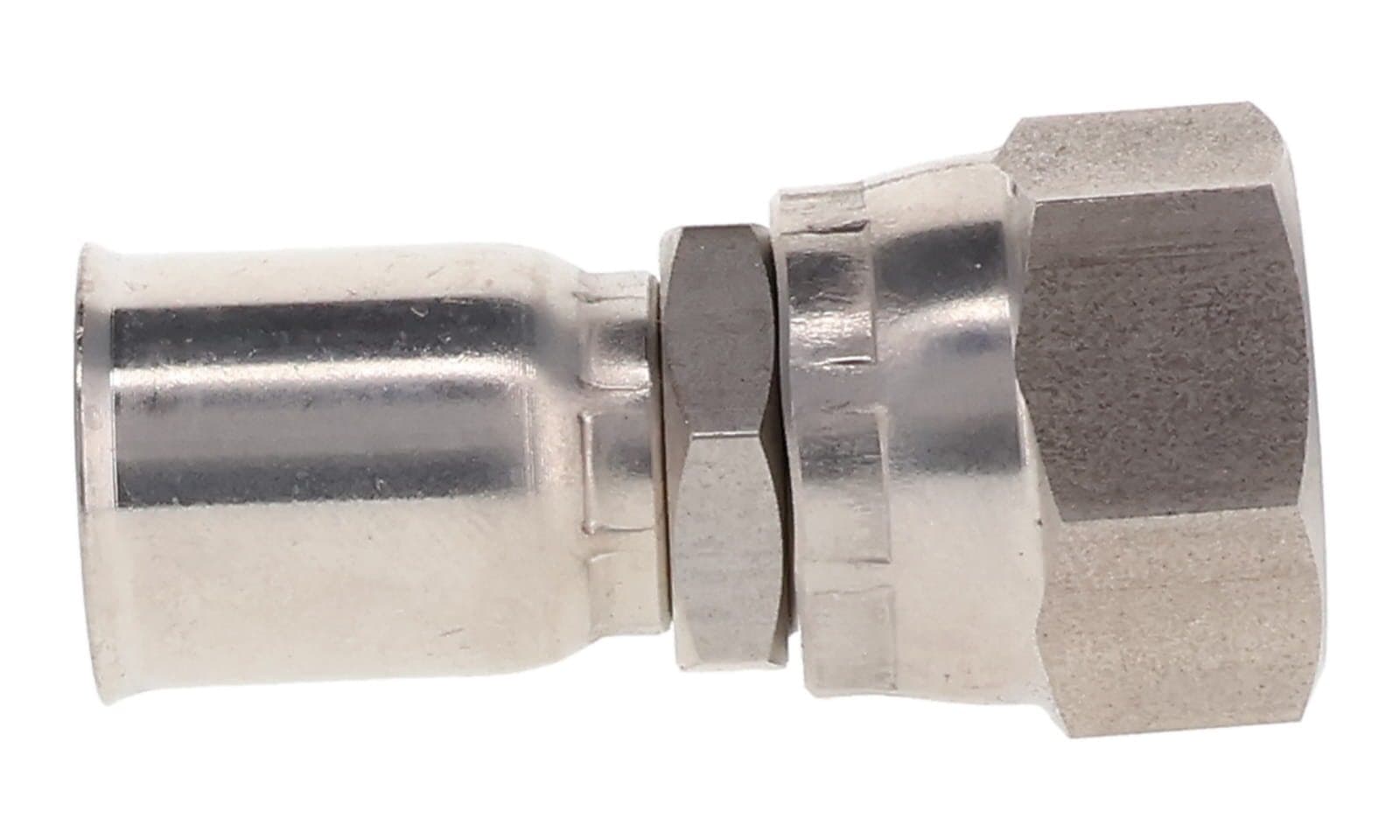 IH-SS-T91-FJXStainless Steel R14 PTFE Hose End × JIC 37° Female SwivelIndus Hydraulics
 IH-SS-T91-FJX90Stainless Steel R14 PTFE Hose End × JIC 37° Female Swivel 90°Indus Hydraulics
 IH-SS-T91-FBXStainless Steel R14 PTFE Hose End × BSPP Female SwivelIndus Hydraulics
 IH-SS-T91-FFXStainless Steel R14 PTFE Hose End × ORFS Female SwivelIndus Hydraulics
 IH-ST-T91-FJXR14 PTFE Hose End × JIC 37° Female Swivel, SteelIndus Hydraulics
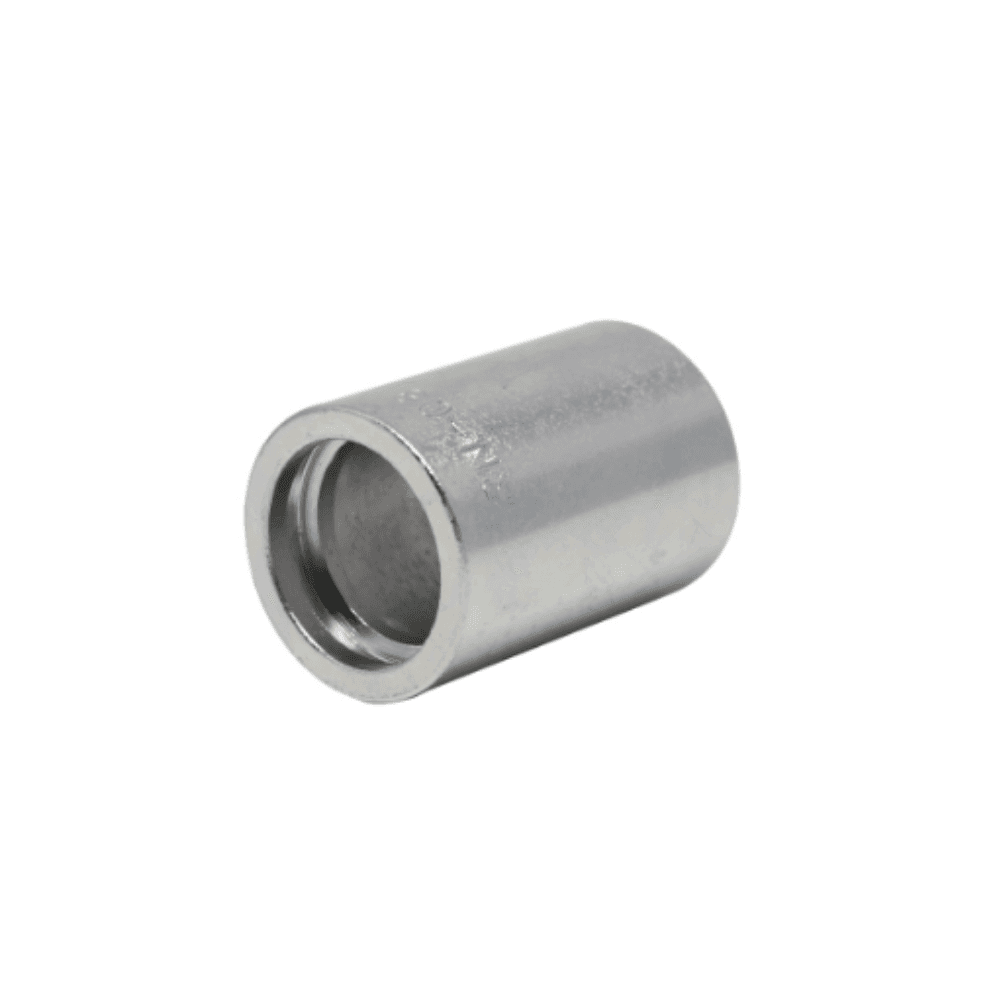 IH-CF-TEFLONSpecialty Crimp Ferrule for PTFE / Teflon HoseIndus Hydraulics
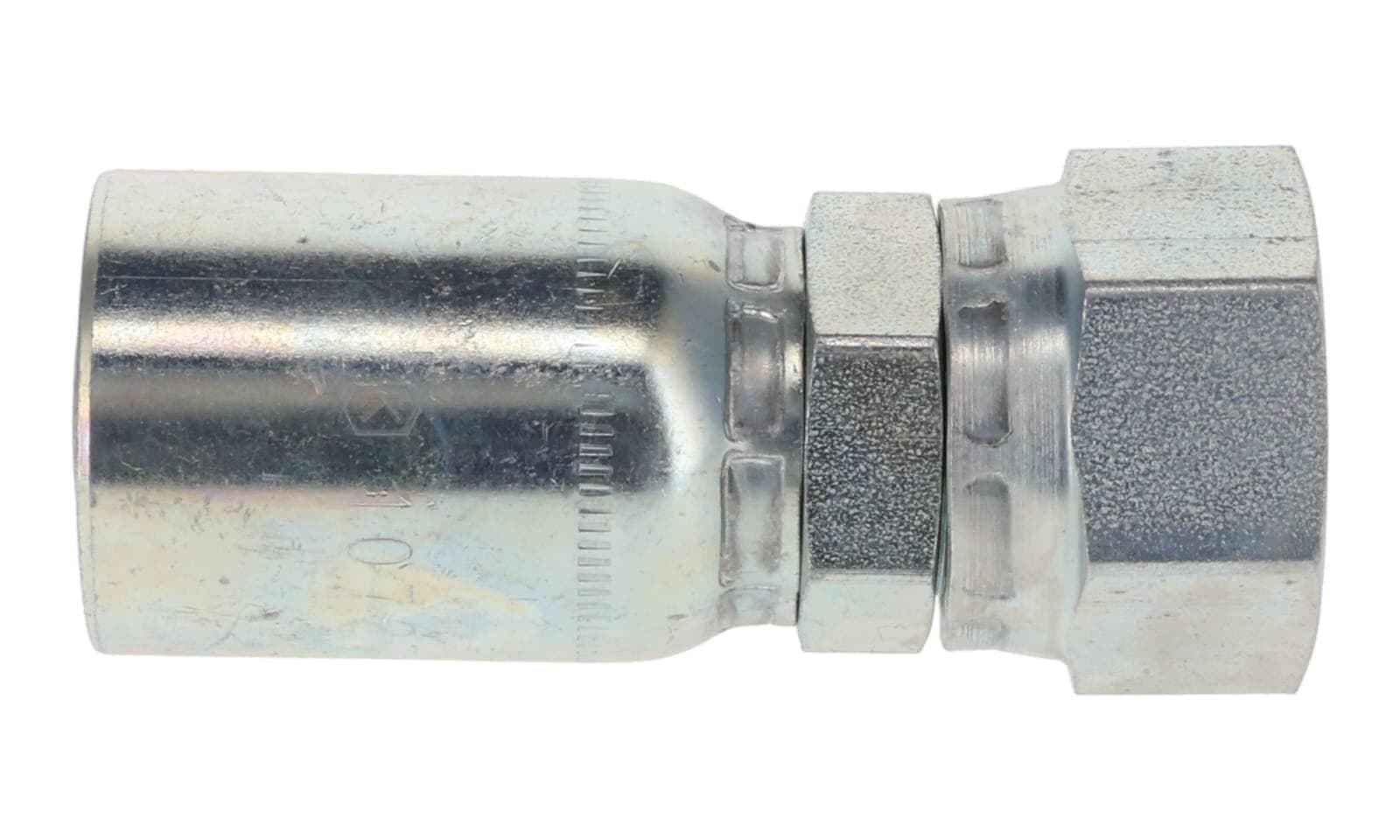 IH-ST-T5-FJXR5 Textile-Cover Hose End × JIC 37° Female SwivelIndus Hydraulics
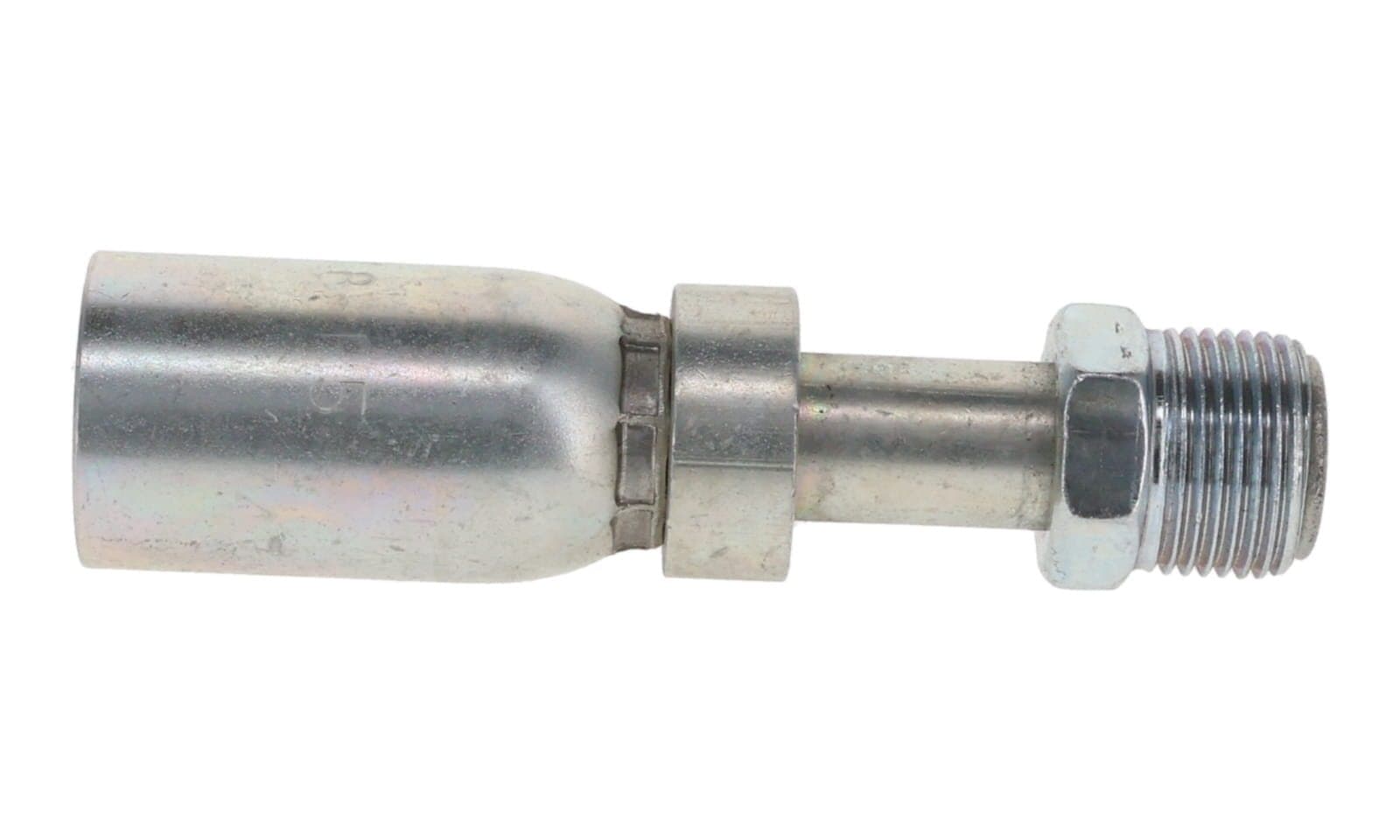 IH-ST-T5-MIXR5 Textile-Cover Hose End × Inverted Flare Male SwivelIndus Hydraulics