How do you identify a hydraulic fitting?
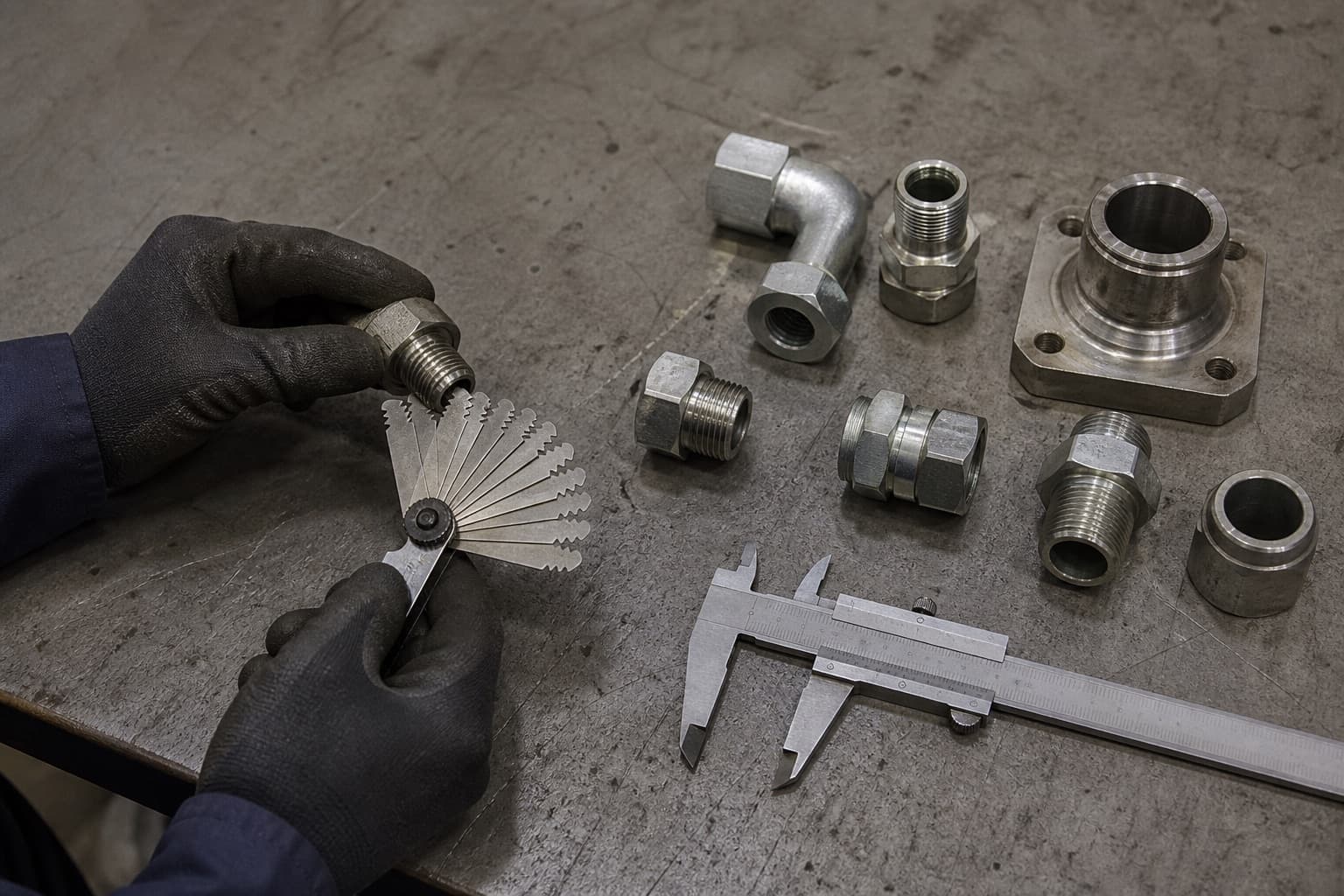
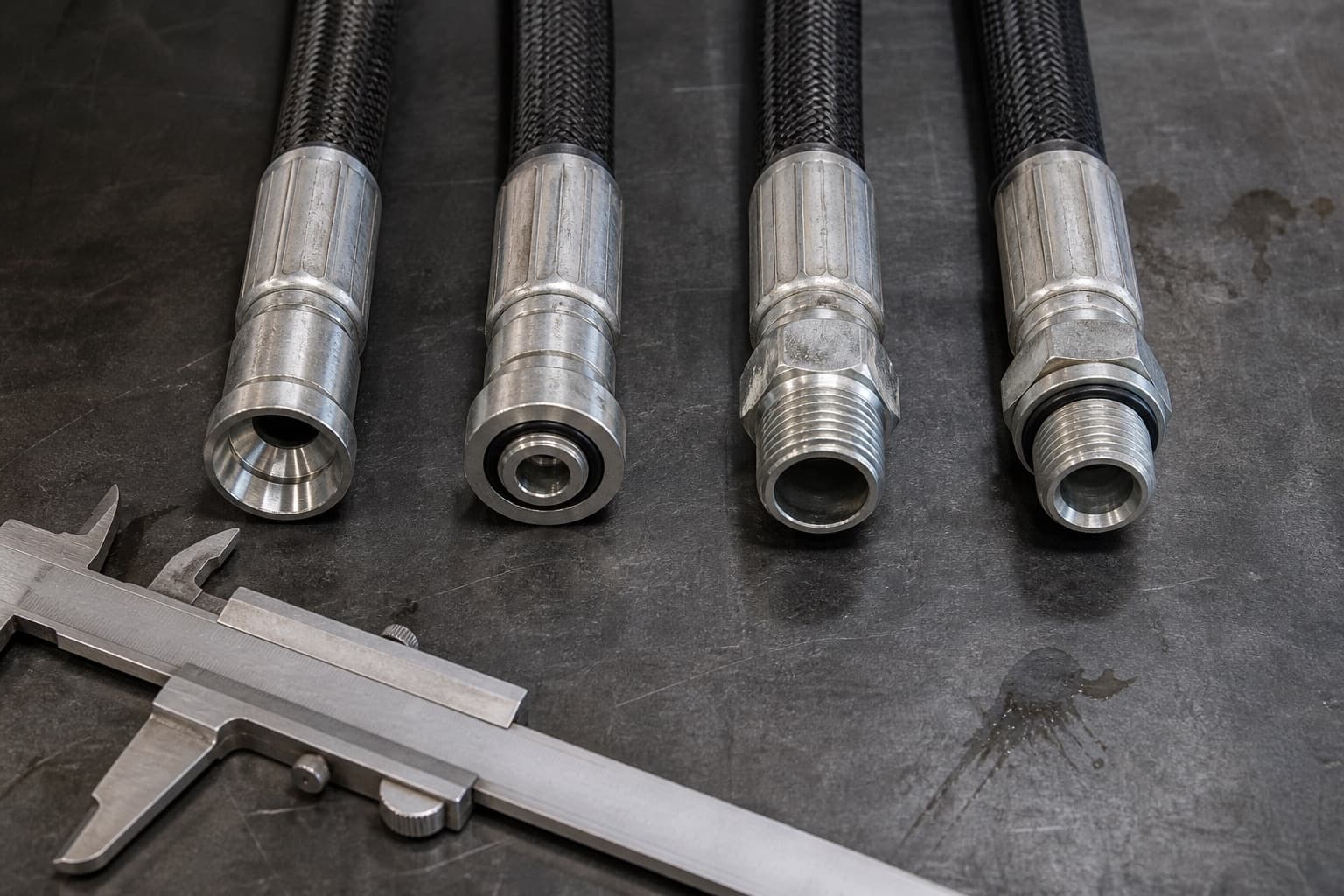
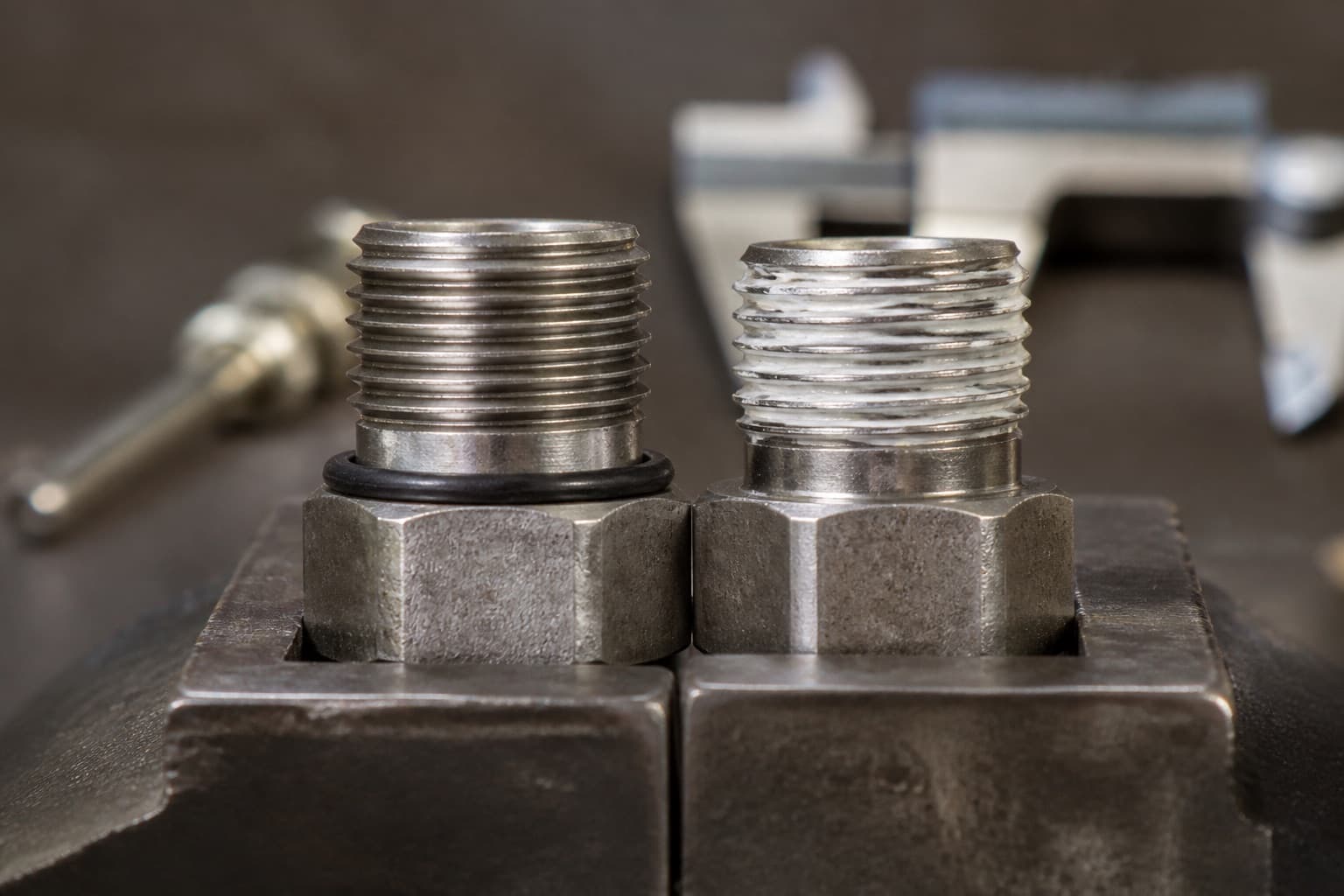
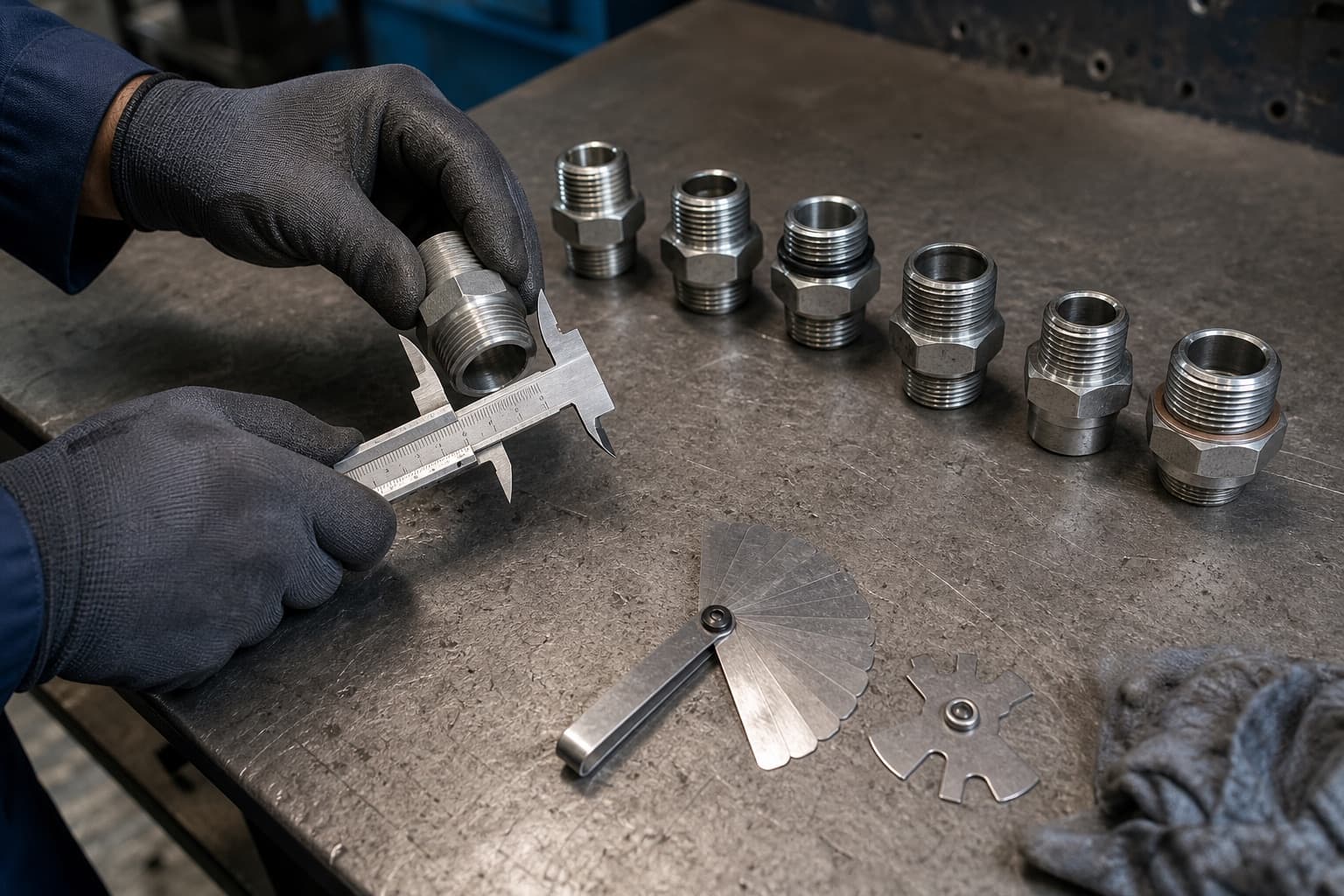
By three independent properties: the thread (size and pitch), the seat (how it seals) and the gender. A thread gauge and callipers settle the first. Only looking at the end face settles the second — and the seat is what decides whether a joint holds, which is why a thread match alone is not an identification.
Most misidentification is not a failure of measurement. It is stopping after the thread, because the thread is the part a gauge can tell you and the seat is the part it cannot.
| Family | Thread | Seals on |
|---|---|---|
| JIC 37° | Parallel UN/UNF | Metal-to-metal on a 37° cone |
| ORFS | Parallel UN/UNF | O-ring against a flat face |
| BSPP (G) | Parallel | Bonded washer or O-ring — not the thread |
| BSPT (R / Rc) | Tapered | Thread interference |
| NPT / NPTF | Tapered, 60° flank | Thread interference |
| Metric DIN 24° | Parallel metric | Cone, or a captive O-ring in the cone |
Where to start
I have a fitting in my hand and no idea what it is.
The four-step identification article walks it: parallel or tapered, then pitch, then seat, then confirm against a real family size.
I need pitches for a specific size.
The thread pitch reference lists every designation and pitch we carry, family by family, with the cross-family collisions marked.
I keep confusing BSPP and BSPT.
They share every pitch, which is exactly why. The BSPP-versus-BSPT article covers how to tell them apart and why one needs a seal and the other does not.
Hose fittings by thread type
Per-size dimension tables on every product page.
Adapters by family
BSP, JIC, ORFS, NPT, metric and DIN 2353.
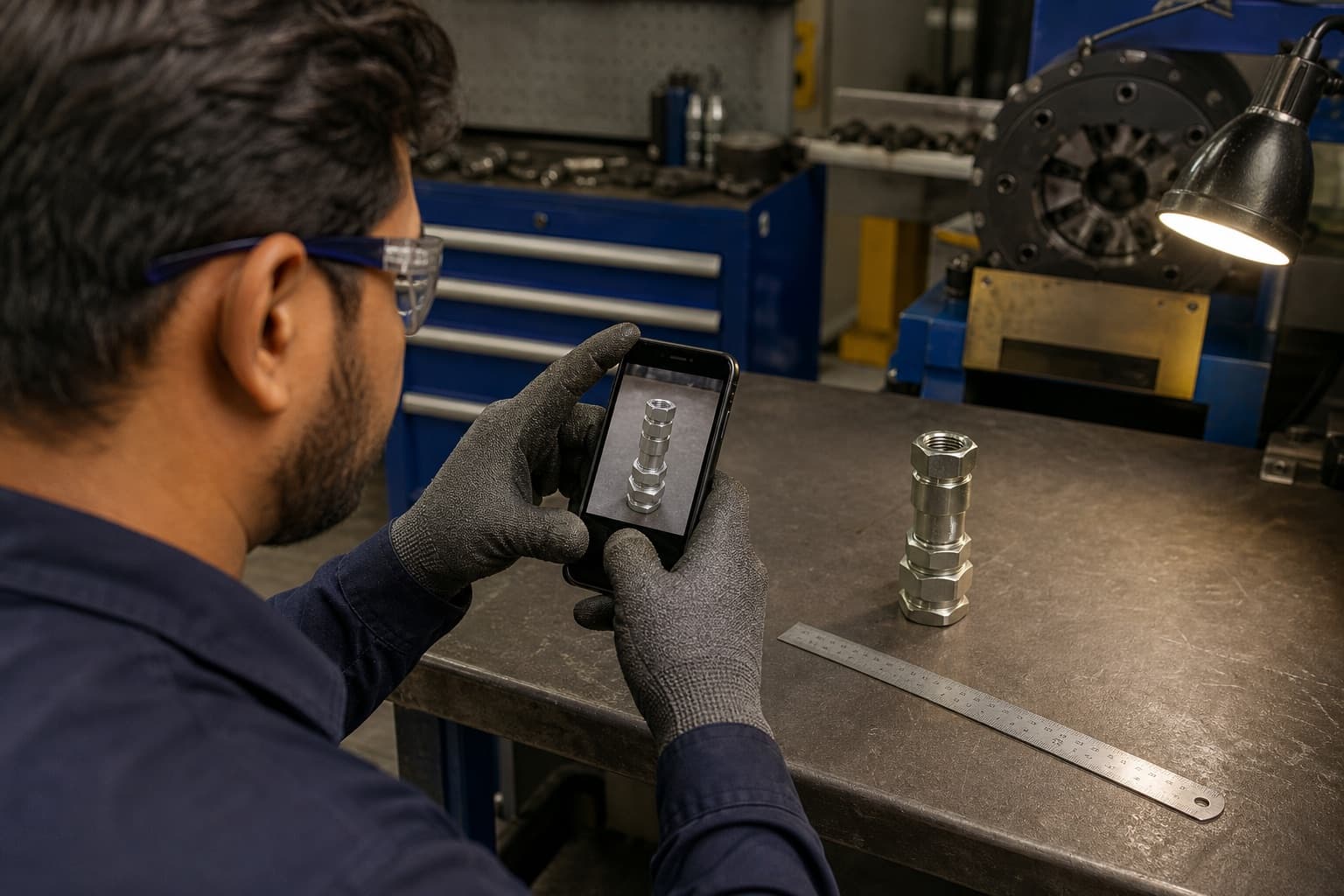
Send a photograph of the end face.
The seat is what resolves the families that share a thread, and it is visible in a photograph. Add the measured diameter and the pitch and we will identify it.
Plant-down? Call +971 52 2477942 — 24/7