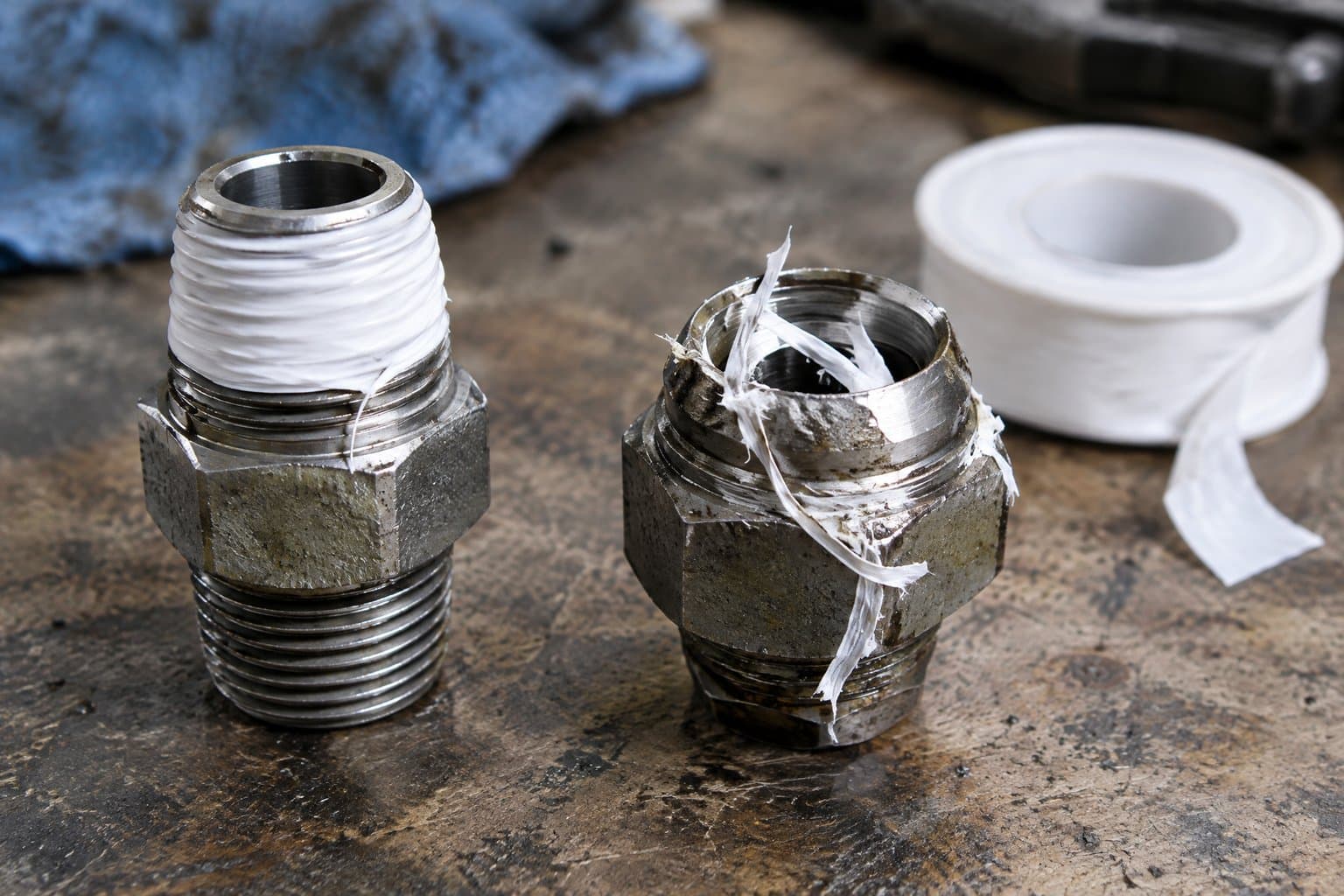
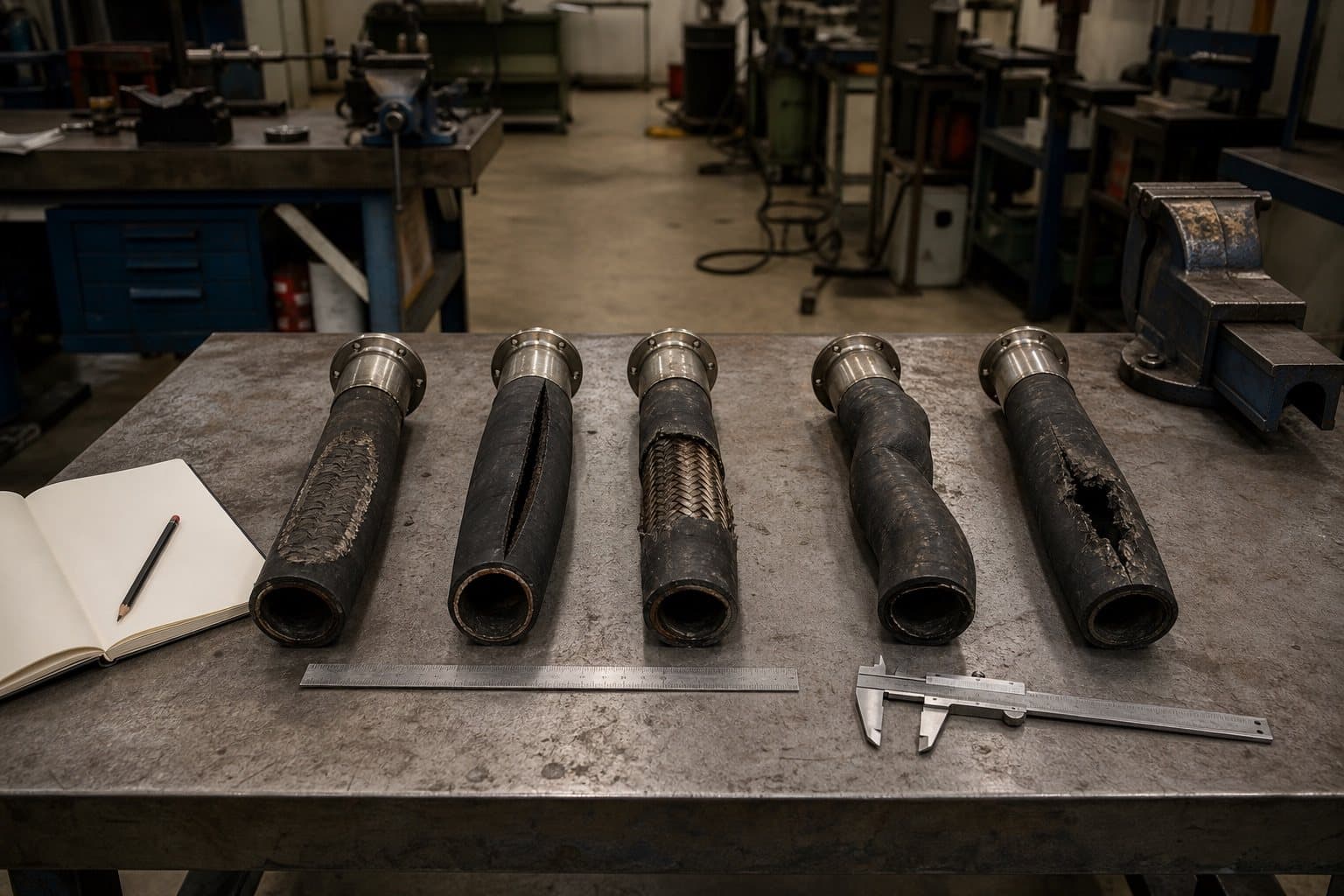
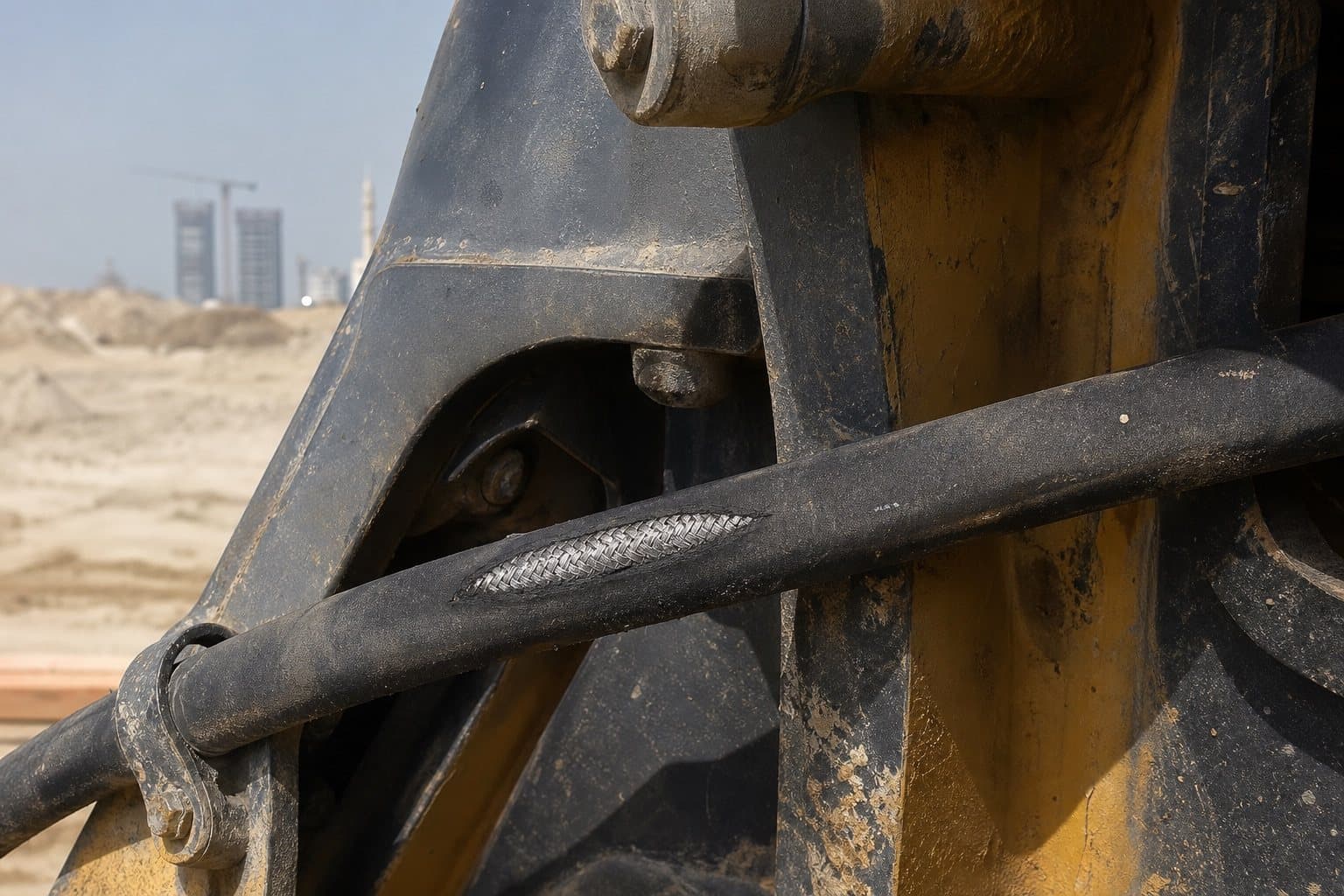
Nobody is going to fill in a form for a burst hose on a Tuesday afternoon with a machine down. The point of this one is that it is short enough to be filled in anyway, and that the fields were chosen because each one actually changes the conclusion. Keep the failed assembly whole — the ferrule and the fitting carry half the evidence.
/01Before the hose comes off.
| Record | Why it cannot wait |
|---|---|
| Photograph of the hose in its routingHighlighted | The relationship between the failure and what it touched is gone once removed |
| Where on the machine, and which circuit | Position is what makes a repeat failure identifiable as a repeat |
| Machine position at failure, if known | Contact often happens only at one point in the travel |
| Layline photograph, if still legible | Identifies grade and size without measuring; may carry a date code |
/02The eleven fields.
| # | Field | What it settles |
|---|---|---|
| 1 | Machine and position | Whether this position has failed before |
| 2 | Date fitted, date failed | Service life — the most diagnostic single number |
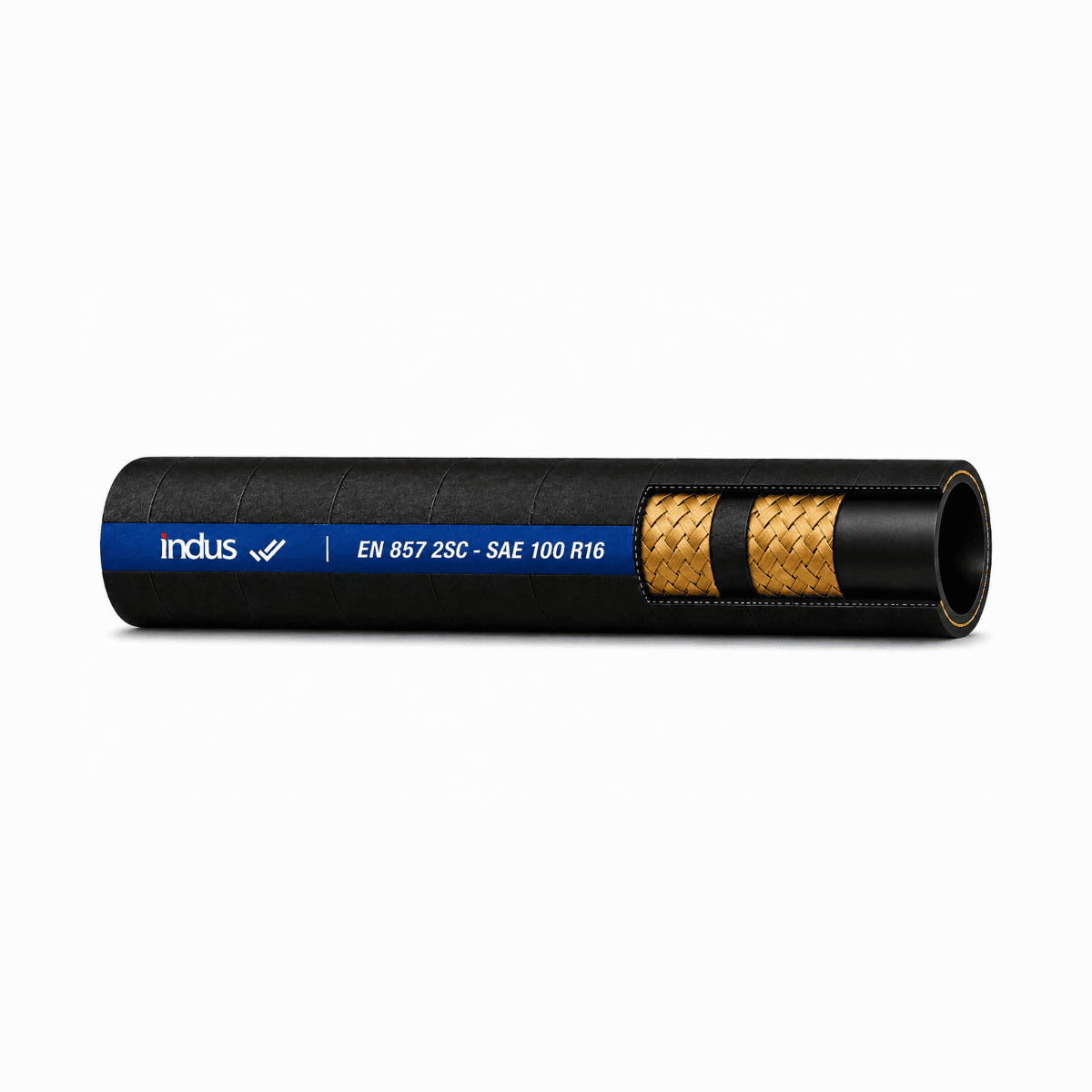
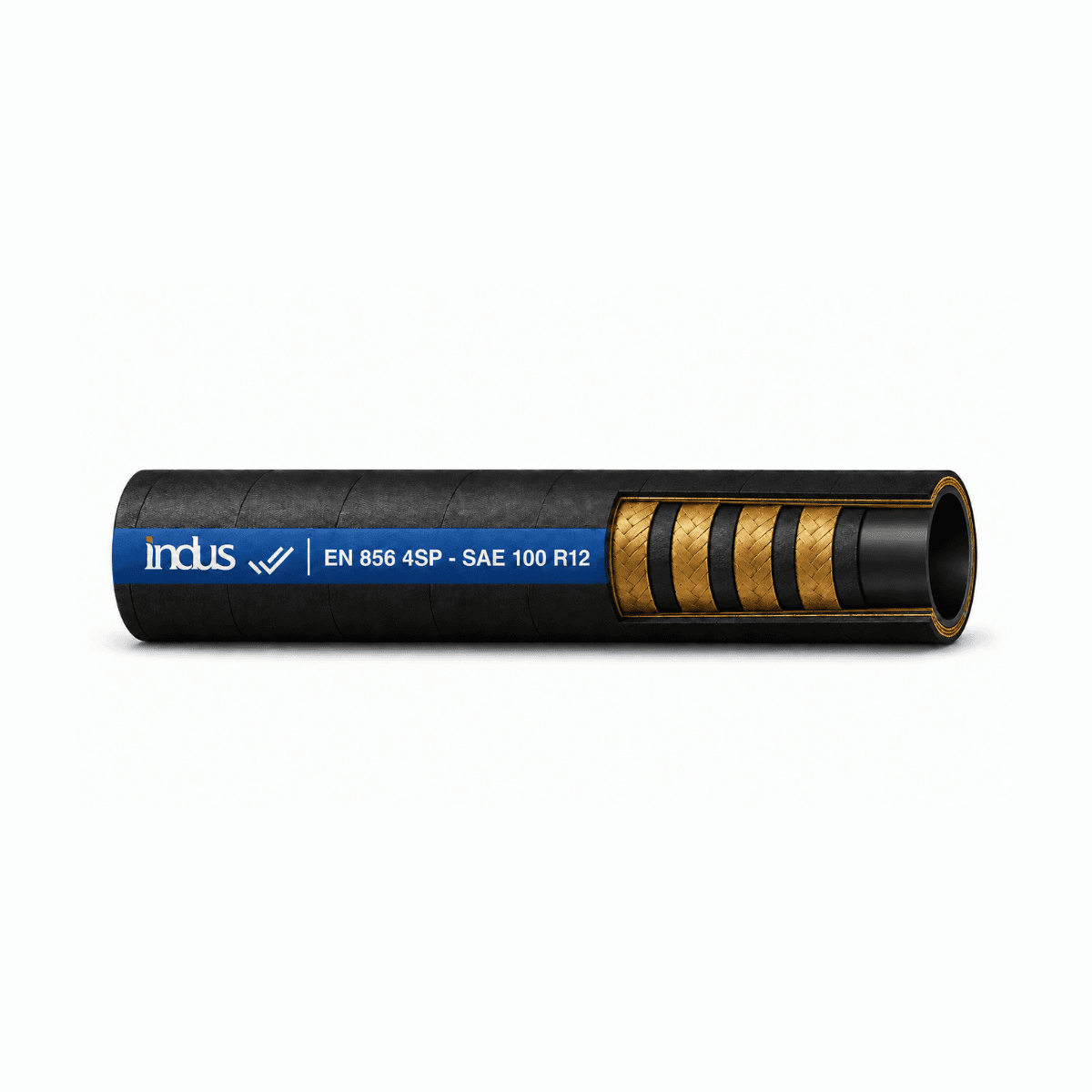
| 3 | Hose grade and size | Whether the specification was right for the duty |
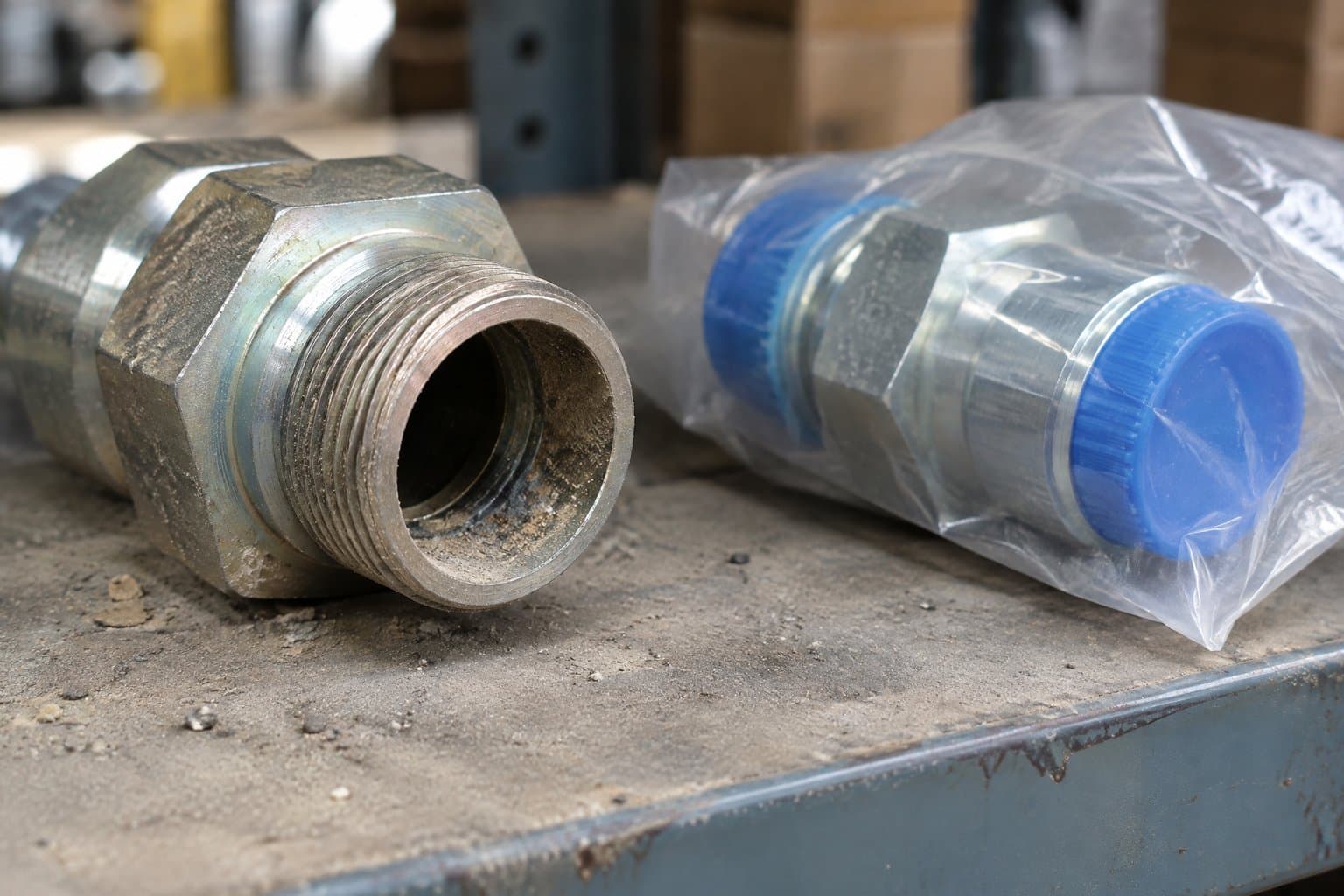
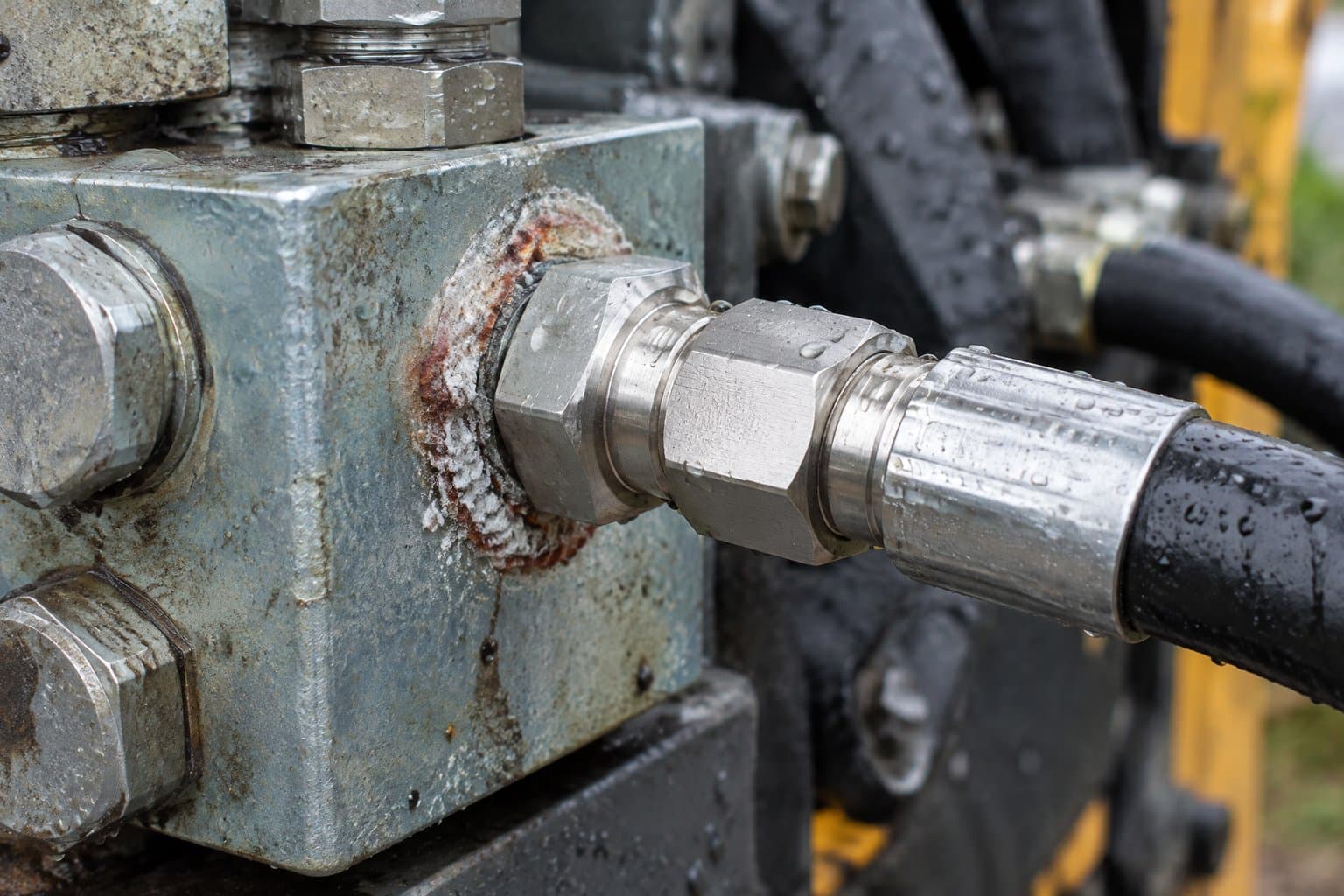
| 4 | Fitting types, both ends | Whether the termination suited the routing |
| 5 | Where it failed along its length | At the ferrule, mid-length, or at a bend |
| 6 | Cover condition at the failure | Abrasion, cracking, blistering, or clean |
| 7Highlighted | Wire condition — bright or corroded | Separates a pressure failure from a corrosion failure |
| 8 | Tube condition, cut lengthways | Swollen, hardened or clean — fluid compatibility |
| 9 | Layline straight or spiralled | Whether it was installed with a twist |
| 10 | Fluid and running temperature | Compatibility and heat ageing |
| 11 | What changed recently | New fluid, new duty, new operator, recent repair nearby |
/03Reading the answers.
What the combination points at
Take service life first, then location, then condition.
IfFailed within weeks, at the ferrule
Build fault. Ask for the crimp specification and the measured value.
Early ferrule failures are pull-out or over-crimp until the build is ruled out.
IfFailed after years, at the ferrule
Installation. The hose has been flexing or bending at the fitting the whole time.
Look for an elbow fitting or a longer assembly rather than a like-for-like replacement.
IfCover worn through on one side
Abrasion. Find the rub point before fitting the replacement.
The worn patch is a map of what it was touching.
IfWire corroded, cover otherwise intact
Water entered somewhere and tracked along the reinforcement.
Look for the entry breach, which is often nowhere near the corrosion.
IfTube swollen or hardened
Fluid incompatibility. Changing hose grade will not help.
The tube compound has to change, or the fluid does.
IfLayline spirals around the hose
Installed with a twist. Fix the installation method, not the hose.
Two spanners — hold the fitting while the nut turns.
Common questions
- Is a printable version available?
- Not yet — the table above is the current version, and it is written to be copied into whatever system you already use rather than to add another one. A printable sheet is on the list.
- Do I need to keep the failed hose?
- For a first failure, photographs and the eleven fields are enough. For a repeat at the same position, keep it — comparing two failed assemblies from one location is usually what identifies the cause.
- Who should fill this in?
- Whoever removes the hose, because half the fields are only answerable at the machine. It is deliberately short for that reason.
- We do not have fitted dates. Where do we start?
- With tags on the next set of assemblies. A hose register is the thing that makes field 2 answerable, and field 2 is the one that separates a build fault from an installation fault.