

Protection gets specified in a hurry after an incident, and usually as a single product for every problem. The three common devices are not alternatives to each other — they address separation, rupture and abrasion, and each is close to useless against the other two.
Three failures, three devices.
| Device | Failure it addresses | What it does not do |
|---|---|---|
| Whip restraint / safety cable | Separation at a coupling | Nothing for a split along the hose length |
| Burst sleeve | Rupture — contains and redirects the jet | Does not keep the hose in service or stop separation |
| Spiral guard / sleeve | Abrasion, before it becomes a failure | No protection once the hose has actually failed |
The most common specification error is fitting spiral guard and considering the run protected. Guard is a preventive measure — it stops the rub that would eventually breach the cover. It contributes nothing at the moment of failure, and it can conceal the damage it was fitted to prevent, so a guarded run needs inspecting underneath the guard rather than through it.
Why air is worse than oil.
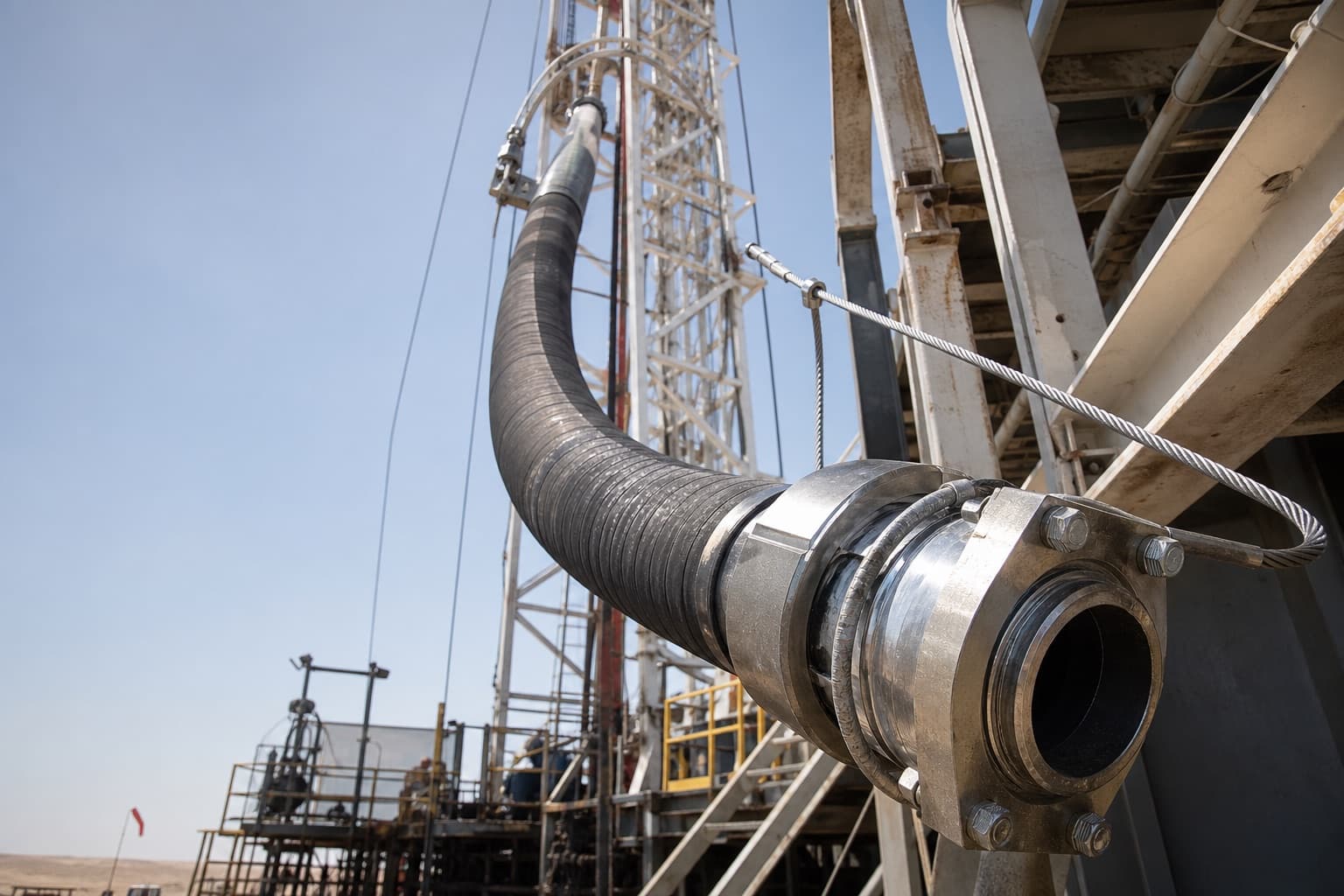
Why does a compressed air hose whip more violently than a hydraulic one?
Because gas is compressible and stores energy; hydraulic oil is very nearly not. When an air line separates, the compressed volume expands and drives the hose end for as long as it takes to empty. A hydraulic line at higher pressure releases far less stored energy — its danger is injection and fluid jet, not whip.
Where to fit what.
Choosing the protection
If · Coupling that could separate, especially on air or gas
Whip restraint across the joint.
Sized so it arrests movement, and fitted to both sides of the coupling rather than to the hose alone.
If · Hose runs near an operator position or walkway
Burst sleeve over the run.
The purpose is to contain and redirect a jet away from people. It does not preserve the assembly.
If · Hose touches structure or another hose
Spiral guard or sleeve at the contact point — and fix the routing.
Guard buys time against abrasion; it does not remove the cause. Inspect underneath it.
If · Hose is in a hot area
Fire sleeve, and move the run if you can.
Shielding a hose from radiant heat is worth more than uprating it.
If · Hose has already failed once in the same place
Change the installation, not the protection.
Protection applied to a bad route just delays the same failure.
Common questions
Does a burst sleeve keep the hose working after a failure?
No. It contains and redirects the escaping fluid so it does not spray an operator. The machine still stops and the assembly still needs replacing.
Can spiral guard cause problems of its own?
It can trap moisture and grit against the cover, and it hides the surface it protects. Use it where there is a real contact point, inspect underneath it, and do not sleeve everything by default.
Are whip restraints needed on hydraulic lines?
Less commonly than on air, because the stored energy is far lower — but they are still specified where a separation could put a heavy assembly in motion near people.
Is protection a substitute for replacing an old hose?
No. Every device here reduces the consequence of a failure. None of them reduces the probability, which is what inspection and replacement do.
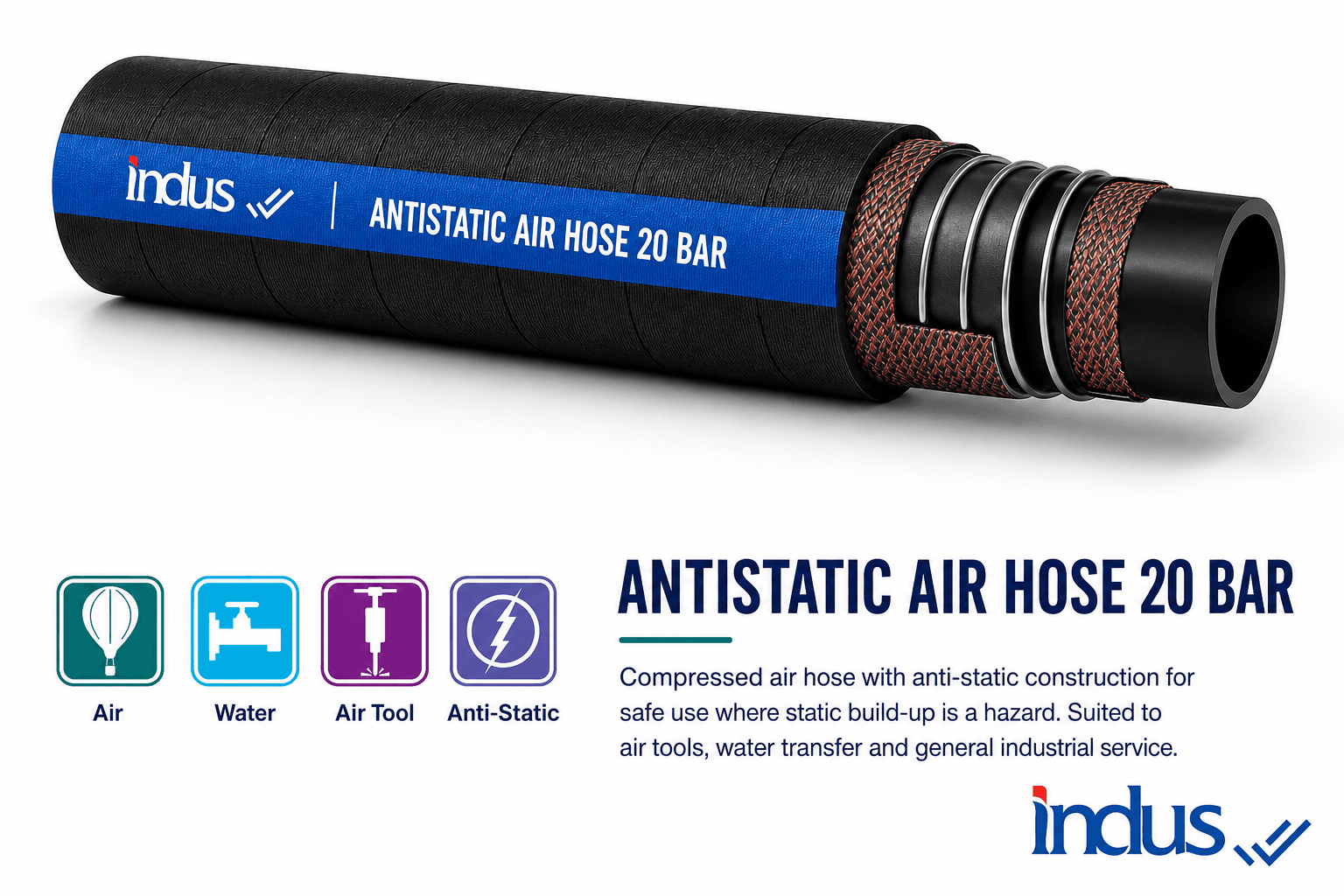
Anti-static air hose for hazardous areas
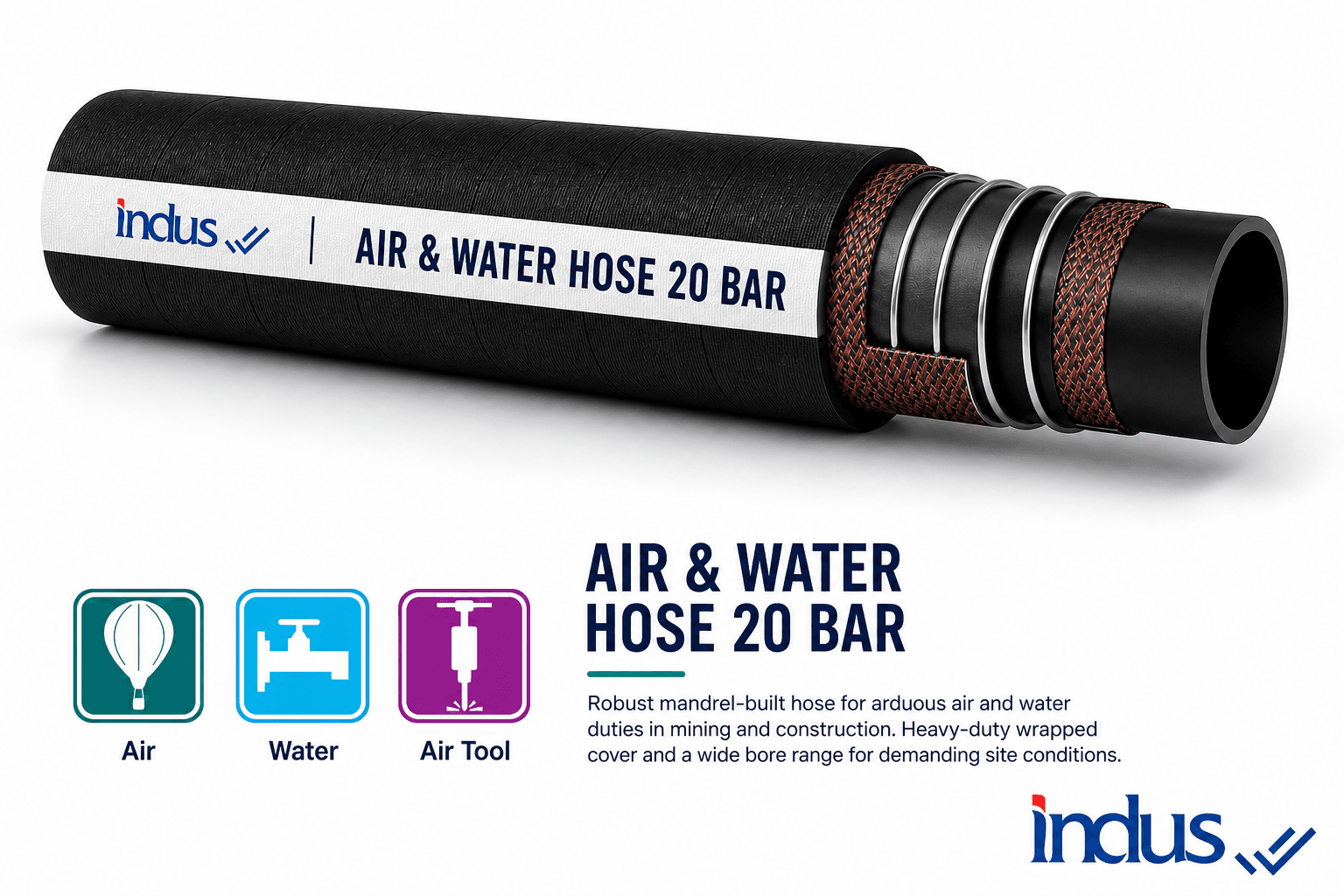
Air and water hose
Standard and anti-static constructions, with couplings specified to match.
Figures verified · Principles only. Restraint sizing and sleeve ratings are per product — take them from the manufacturer data.
Reviewing protection across a site?
Tell us where the hoses run and who works near them. Our engineers will say what each run actually needs rather than sleeving everything.
Plant-down? Call +971 52 2477942 — 24/7