This page does not contain a cross-reference table. That is deliberate, and the reason is the same reason you should be careful with the ones you find elsewhere: publishing "this replaces that" is a claim about a part that ends up carrying pressure on somebody’s machine, and it should only be made by someone who has actually checked.
/01What a part number is not.
A manufacturer part number is an internal identifier. It may encode size or series in a pattern their own catalogue explains, and it may encode nothing at all. It is not a specification and it cannot be decoded from outside, which is why the first move is always to get from the number back to the specification.
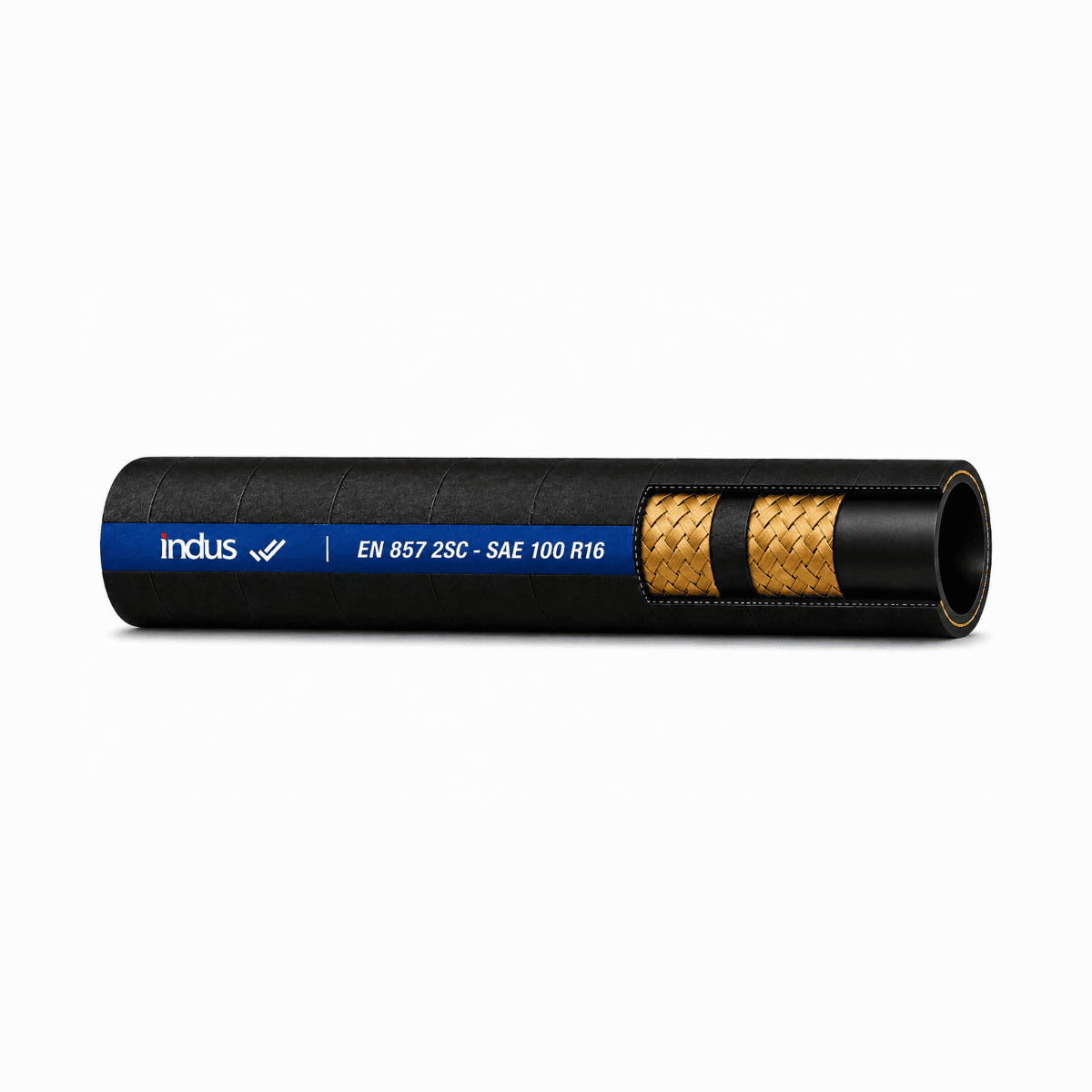
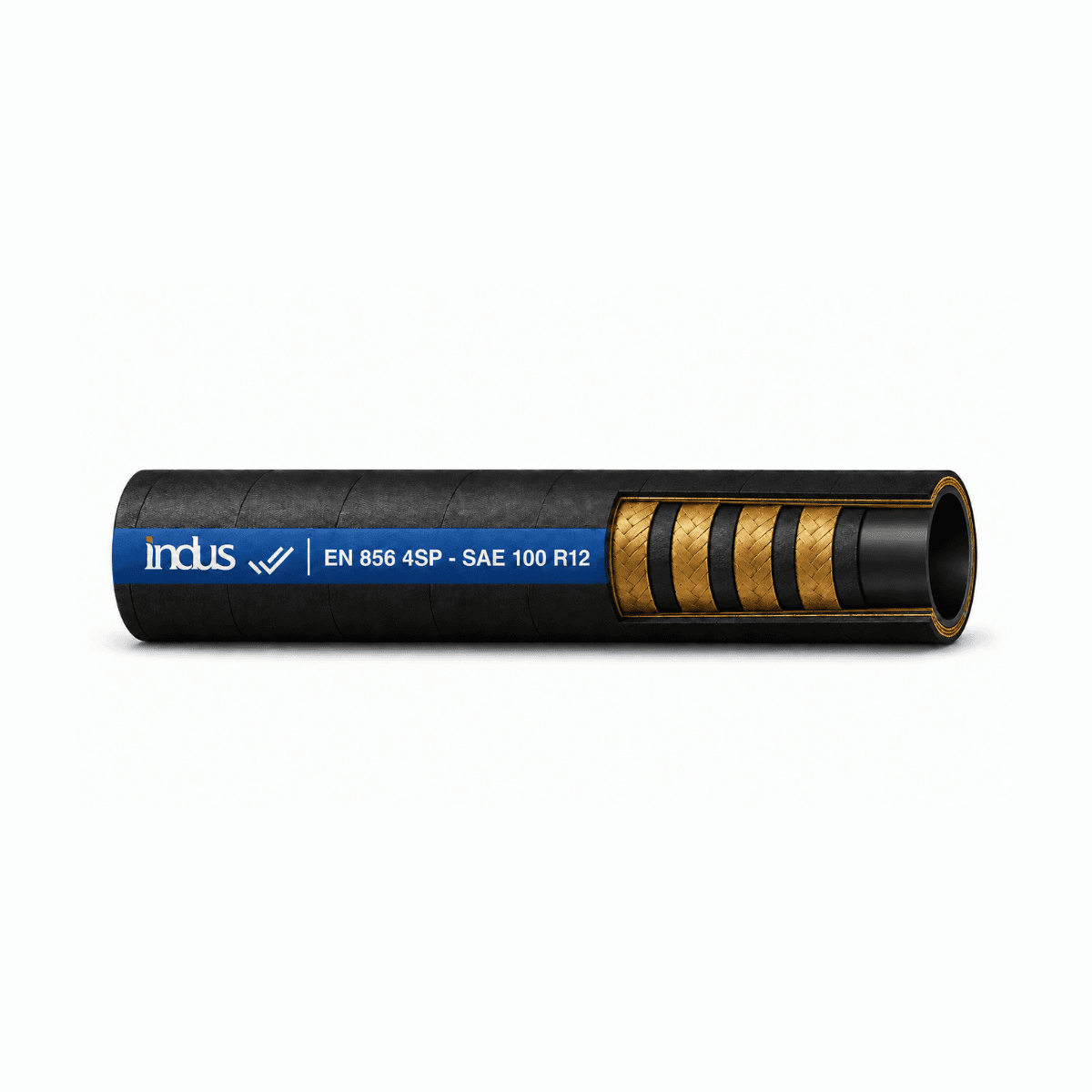
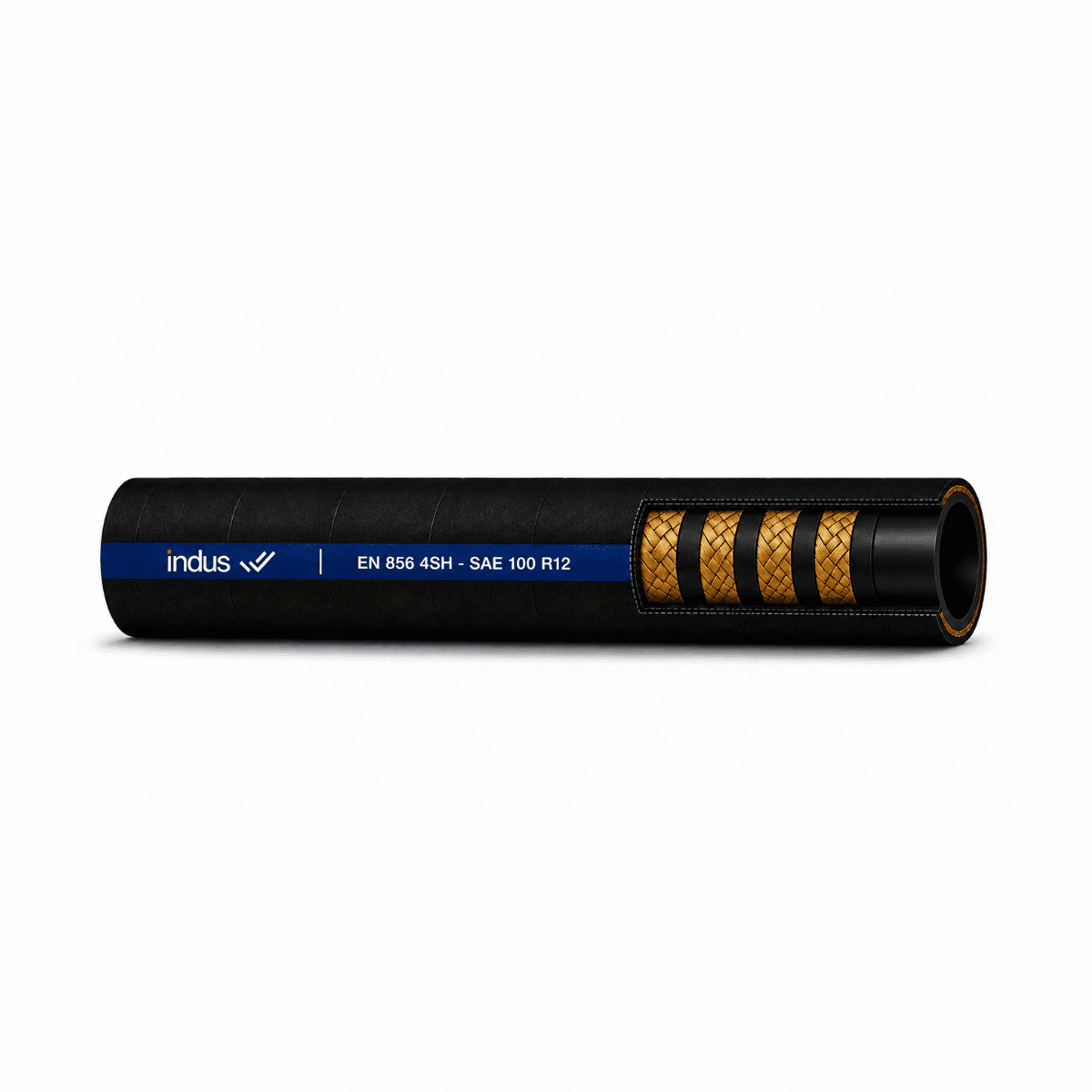
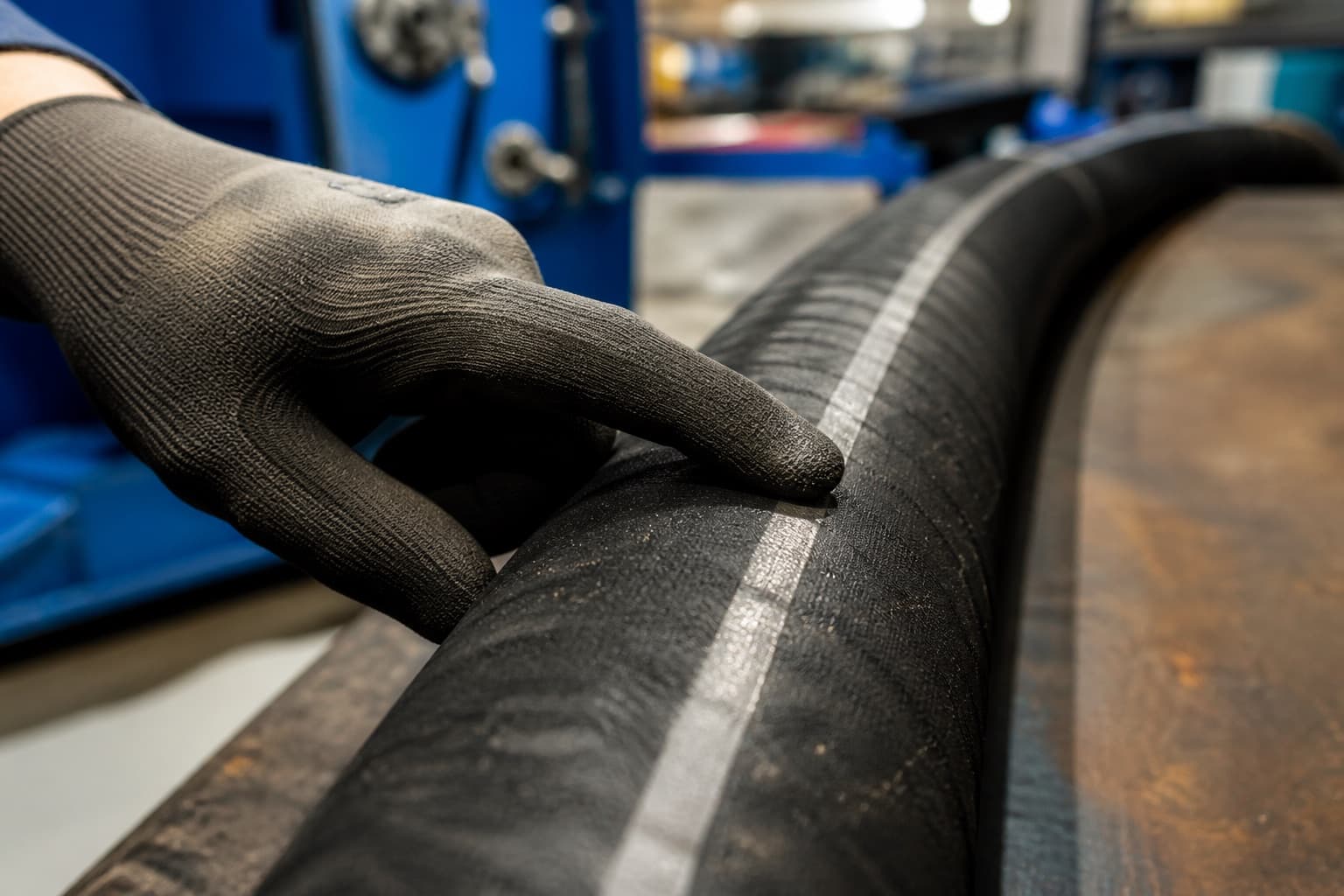
Usually that means the manufacturer’s own datasheet. Sometimes it means the hose in your hand, which carries more information on its layline than the part number does. A layline reading EN 853 2SN / SAE 100R2AT names a construction we stock as 2SN; one reading EN 856 4SH names 4SH.
/02The six things that have to match.
| Property | Why it matters | Where to get it |
|---|---|---|
| Bore | Sets flow and velocity; wrong bore is wrong hose | Layline, or the original datasheet |
| Working pressure at that boreHighlighted | Headline figures are quoted at the smallest size | Per-size table, not the catalogue headline |
| Construction | Braid, compact or spiral changes bend radius and behaviour | Designation, or count the layers on a cut end |
| Temperature range | Both ends of it — Gulf ambient matters at the top | Datasheet |
| Tube compound | Fluid compatibility; nitrile is not universal | Datasheet |
| Outside diameterHighlighted | Decides the ferrule and the crimp specification | Measure it, or the per-size table |
| Property | Why it matters |
|---|---|
| Thread size and pitch | The obvious one, and the only one a gauge settles |
| Seat typeHighlighted | JIC and ORFS share thread sizes and seal completely differently |
| Gender and swivel | A rigid male is not a female swivel, whatever the thread says |
| Hose end: construction and dash | The ferrule is matched to the hose, not just to the size |
| Material | Carbon steel and stainless are not interchangeable in a coastal duty |
/03Why the tables online are unreliable.
Most published cross-reference tables state that A corresponds to B and say nothing about what was compared. Was it bore and pressure only? Was outside diameter checked? Was the tube compound considered? Without that statement the table is an assertion, not a check — and it is frequently an application equivalence, meaning "one will usually do the other’s job", which is a different and much weaker claim.
That standard is why this page has no table on it. We do not currently hold verified interchange data for the major hose brands, and we are not going to publish inferred equivalences for parts that end up carrying pressure. What we will do is check a specific part number against our range properly and tell you what genuinely matches — including when nothing does.
/04The practical route.
In order
Each step is easier than the one below it, so start at the top.
IfYou have the physical hose or fitting
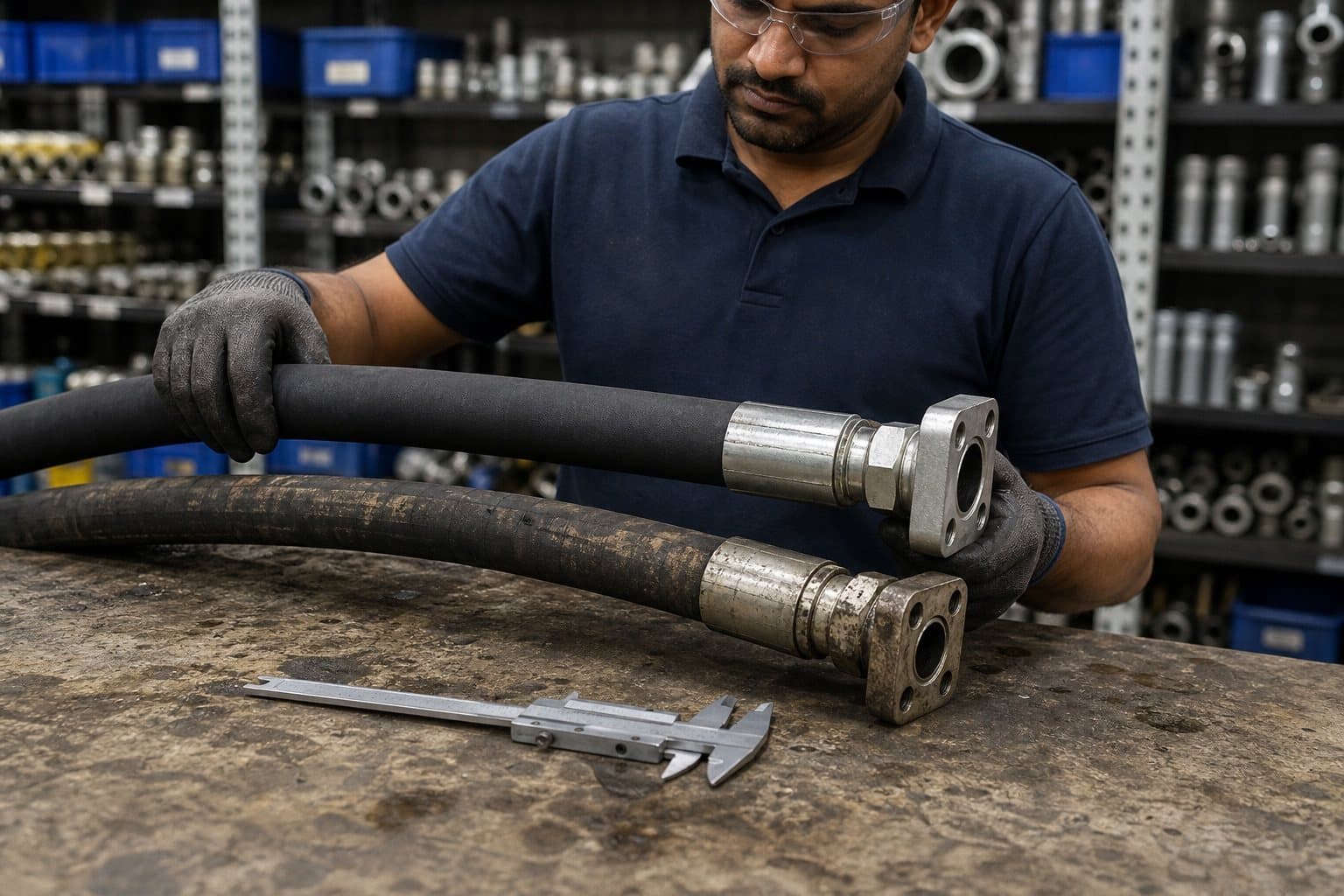
Photograph the layline and both ends, and measure the outside diameter.
This is the best case — the part carries most of its own specification.
IfYou have a datasheet for the original
Work from the six properties above.
Compare at the bore you actually need, not at the headline figure.
IfYou have only a part number
Send it to us with the machine and the circuit.
Context narrows it considerably even when the number alone does not.
IfYou have a number and no context at all
Go back to the machine and photograph what is fitted.
Five minutes at the machine beats an afternoon of searching a number nobody can decode.
Common questions
- Will you tell me if you cannot match something?
- Yes, and it happens. Saying "nothing in our range genuinely matches this" is more useful than selling you something close, because close is what fails at the crimp or at the seat.
- Is a 2SN from one maker the same as a 2SN from another?
- They meet the same minimum performance standard. They can still differ in outside diameter, cover compound, bend radius and temperature range — so they are comparable, not identical. Check OD before assuming the ferrule carries across.
- Can you cross-reference fittings as well as hose?
- Yes, and fittings are usually easier because the geometry is measurable. Send the thread size, the pitch and a photograph of the end face; the seat is what a photograph settles.
- Do you publish an interchange table?
- Not at present, because we do not hold verified interchange data for the major brands and we are not prepared to publish inferred equivalences. Send us the part number and we will check it properly.