Photographing a fitting so someone can identify it without holding it
Four photographs and one measurement identify almost any hydraulic fitting remotely. Most requests arrive with one photograph taken at arm’s length, and that one settles nothing.
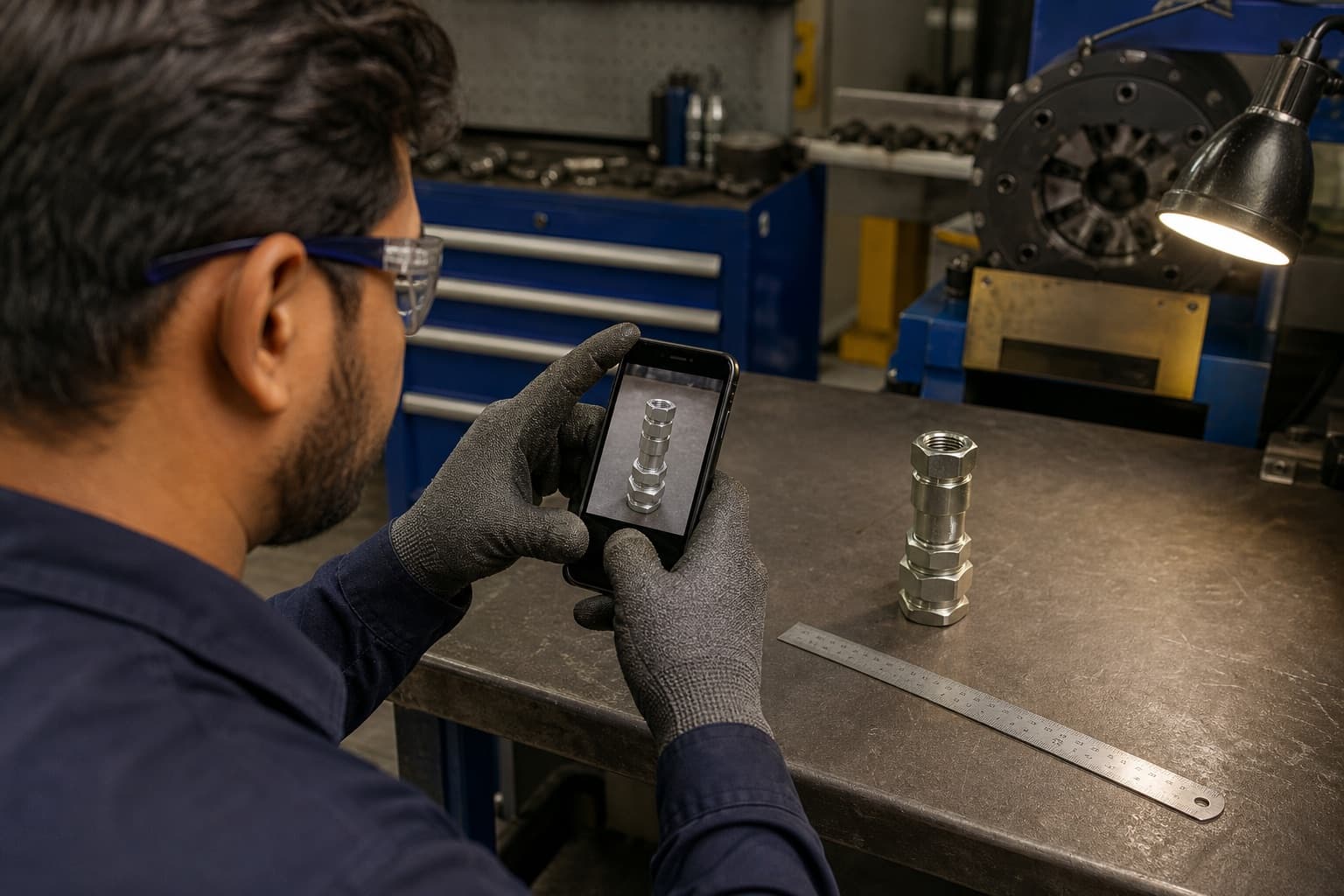
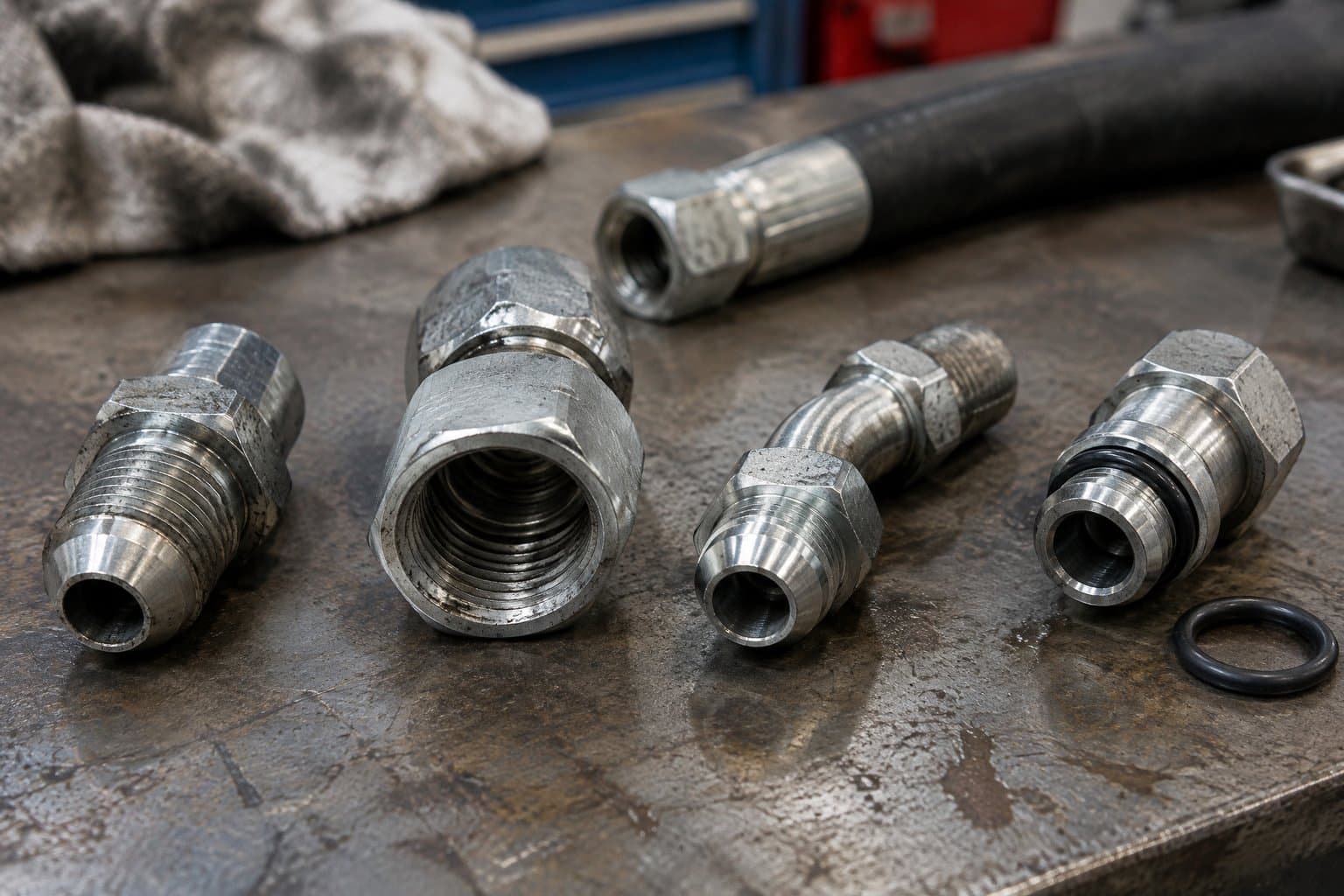
A clear photo of the seat, thread and hex lets a fitting be identified remotely.
At a glance
Key takeaways
01The end face square on is the most important photograph. The seat is what separates families that share a thread.
02Put something of known size in every frame. A steel rule beats a coin, and a coin beats nothing.
03Photograph the profile against a rule so the cone angle and the seat depth are visible.
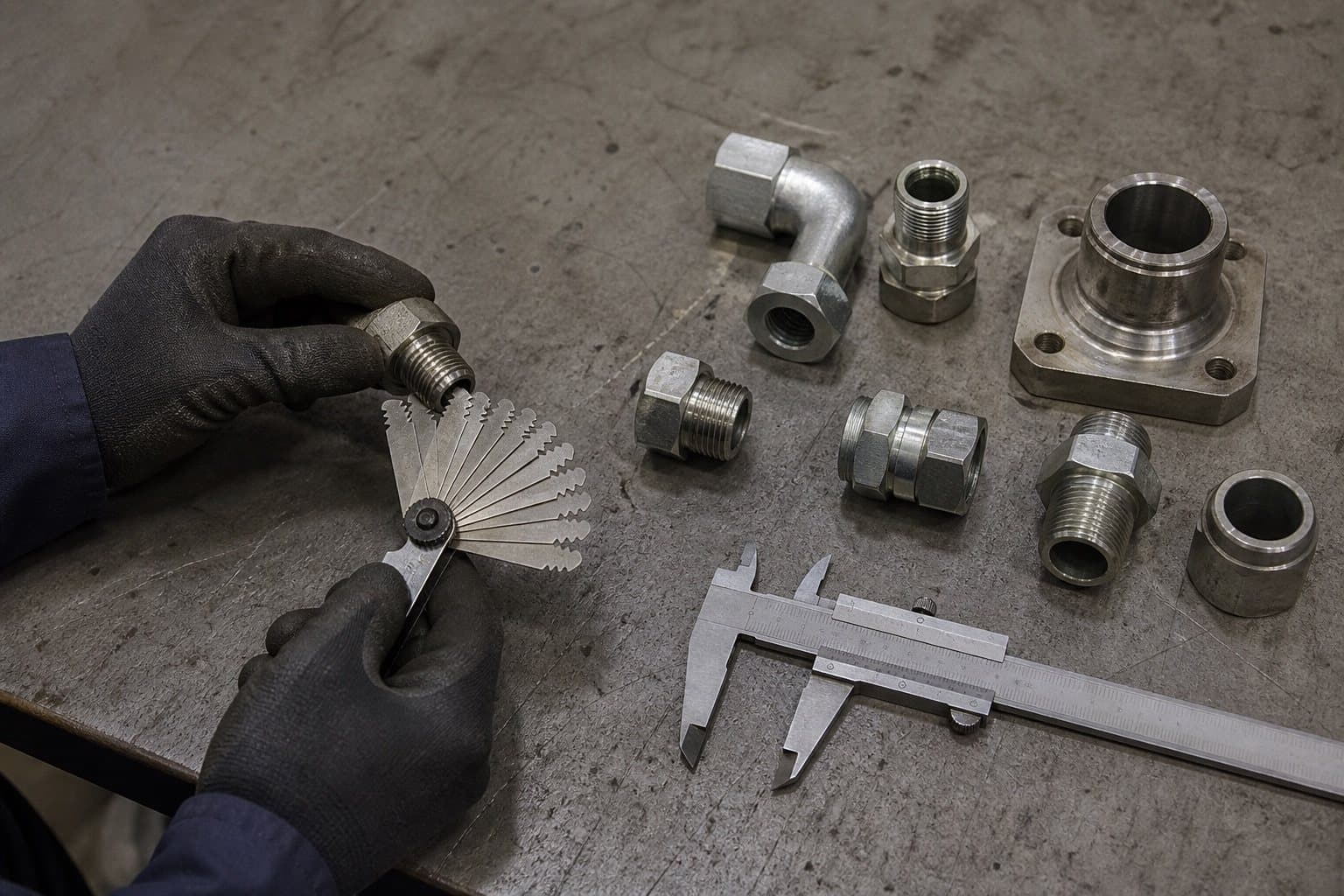
04A thread gauge and a caliper in the frame turn an opinion into a measurement.
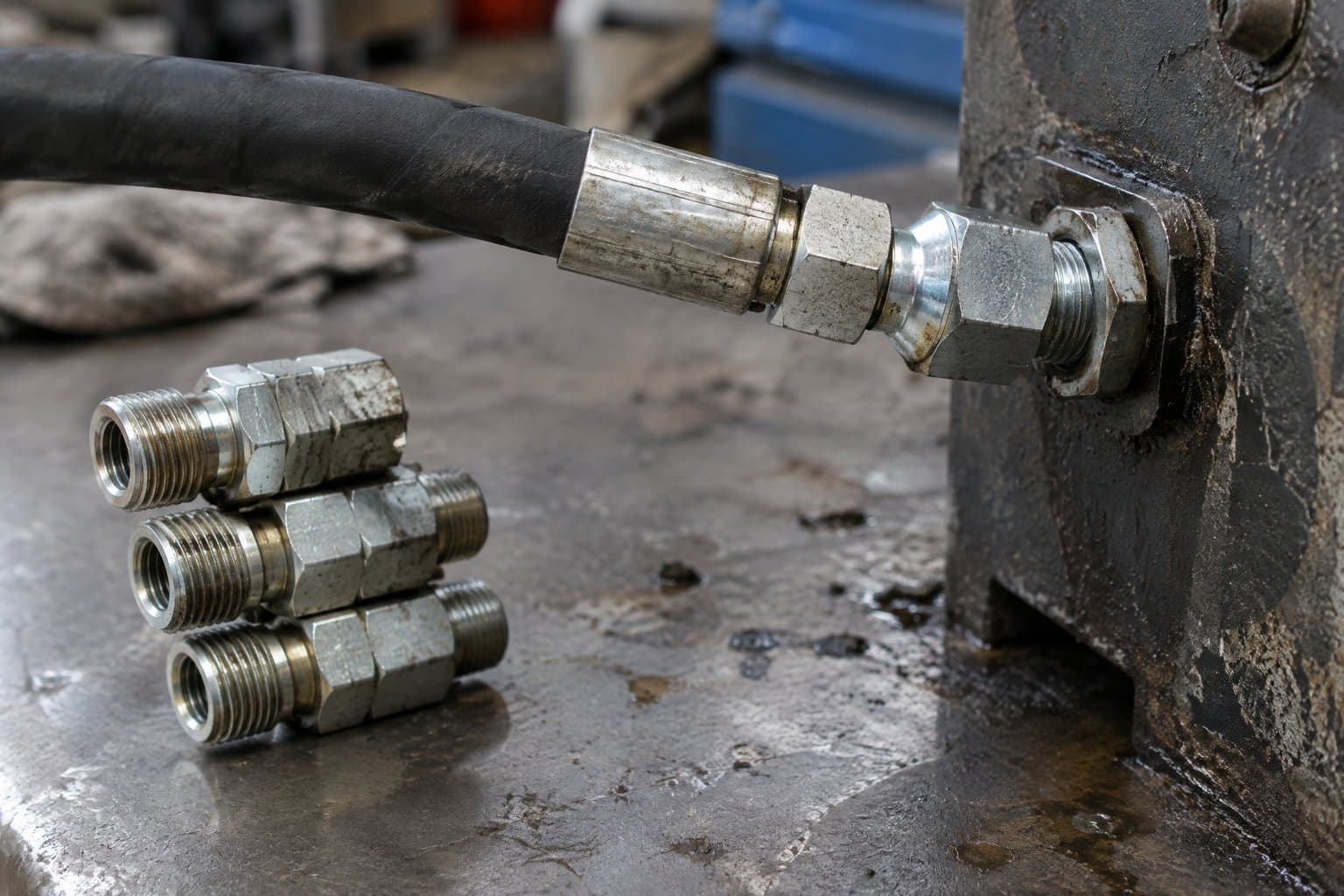
05One photograph of the fitting still on the machine tells us the port type, which is half the answer.
Figures verified · Based on what our own counter has to ask for when a photographed request cannot be answered.
Fitting identification is a solved problem when the part is in your hand and a coin-flip when it is not. The gap between those two is almost entirely photography — which angles, what is in frame, and what got left out. This is the list we would ask for anyway, so sending it first saves a day.
/01The four photographs.
What each one settles
Photograph
How to take it
What it settles
End face, square onHighlighted
Camera directly down the bore, fitting flat, good light
Seat type and gender — the single most decisive image
Profile, against a steel ruleHighlighted
Side on, rule touching the fitting, markings legible
A photograph with a rule and a pitch gauge in frame is worth more than three without them.
Scale references, best to worst
Reference
Verdict
Steel rule with millimetre markingsHighlighted
Best — gives dimensions directly
Caliper set on the measurement, display visibleHighlighted
Best for thread diameter, and removes any doubt
Thread pitch gauge engaged on the thread
Settles pitch, which settles the family in most cases
A coin
Adequate — tell us which coin
A hand
Poor, but far better than no reference at all
Nothing
The photograph cannot be used for sizing
Two measurements are worth taking even if the photographs are perfect: the thread outside diameter for a male fitting, or inside diameter for a female, and the pitch. Those two numbers plus a clear view of the seat will identify the great majority of fittings without further discussion. That combination separates, for example, a JIC male from an ORFS male of the same thread, which a diameter alone cannot.
/03The things people leave out.
Each of these costs a round trip
Missing detail
Consequence
The other end of the assemblyHighlighted
Half the part cannot be quoted
The layline on the hoseHighlighted
Grade, size and often the pressure rating are printed there and legible in a photograph
Elbow orientation
The angle between the two ends decides whether it will route
Overall length
Cut length cannot be derived from a photograph
Whether the seat is damaged
Changes the diagnosis from supply to failure analysis
Which machine and circuit
Lets us sanity-check the specification rather than copy it
/04A worked example of a good request.
What a request that gets priced first time looks like
Item
Example
Photographs
End face, profile against rule, thread close, on the machine
Measurements
Thread OD 22.0 mm, pitch 1.5 mm
Hose detailHighlighted
Layline photograph, overall length 780 mm face to face
Both ends
Straight one end, 90 degree elbow the other, elbow pointing away from the boom
Context
Excavator boom cylinder feed, failed after eight months
Quantity
Two, one for the shelf
Common questions
Can you identify a fitting from one photograph?
Sometimes, if it is square on to the end face and something of known size is in the frame. More often one photograph narrows it to two families that need a measurement to separate.
I do not have a caliper or a thread gauge. Is that a problem?
No. Photograph the fitting against a steel rule, square on and in focus, and count threads across a marked distance. That gets close enough to confirm against a table.
What if there are no markings on the fitting at all?
That is the normal case. Fittings are identified by geometry — thread diameter, pitch, seat form and angle — rather than by markings. Absence of markings changes nothing about the method.
Should I send the fitting instead?
If it is convenient, yes, and it removes all doubt. Photographs exist so you do not have to wait for a courier to find out what you need.
Does a phone camera give enough detail?
Easily, with light and a steady hand. Wipe the part, use daylight or a work lamp rather than the flash, tap to focus on the seat, and check the image is sharp before you send it.
An identified thread usually becomes a small parcel rather than a pallet, and small parcels are the least complicated thing we ship. Adapters, bonded seals and test-point fittings leave Dubai by courier on their own airway bill, so the destination changes the paperwork and the transit rather than the decision to order at all. Send the photograph and the measurements this article describes and we will name the part before we quote it.
Everything above ships from the same Dubai warehouse. If your destination is not listed, it is almost certainly still one we quote. See every export destination →
Send the photographs and we will tell you what it is.
Identification is free and it does not oblige you to buy anything. If we are not the right supplier for the part, we will say so and point you at what it is called.
Five American hose-end families that get confused because they share inch sizes. Which seals on the thread, which on a cone, which on an O-ring — and how to tell NPT from NPSM before it leaks.
BSP, JIC, ORFS, NPT, NPSM, SAE flare, O-ring boss, metric 24° cone, Japanese 30° and SAE flanges: how each family seals, how to tell them apart, and which standard each one is made to.
A mixed fleet forces you to join families that were never meant to meet. Where that is ordinary engineering, where it becomes a leak with a schedule, and how to design it out at the next hose change.