LNG is stored at about -162 °C, liquid nitrogen and argon near -196 °C and -186 °C, and liquid hydrogen at about -253 °C. At those temperatures an ordinary valve fails in three ways: the stem packing freezes and leaks, carbon-steel parts turn brittle, and liquid trapped inside the closed valve boils and over-pressurises the body. A cryogenic valve is a gate, globe, ball, butterfly or check valve with each of those problems designed out. This guide explains how, which standards apply, and what to send when you ask for a quote.
/01What makes a valve cryogenic.
The extended bonnet and its gas column
The stem seal is the hardest part to keep tight at cryogenic temperature, so it is moved away from the cold. A tube between the body and the gland, the extended bonnet, lifts the packing well above the line. Liquid that rises into the narrow gap between the bonnet bore and the stem boils off, and the column of vapour it leaves insulates the stem seal, which stays close to ambient temperature. One maker’s long bonnet, for example, has a 250 mm straight neck to meet BS 6364 for service outside a cold box.
The gas column only works if liquid cannot climb to the packing. Install with the bonnet vertical where you can. The same catalogue allows its long bonnet up to 45° from vertical and its short bonnet only 15°. Do not insulate up the extension; it is meant to stay warm.
Materials that stay tough
Carbon and low-alloy steels, and 400-series stainless, lose impact toughness as they get colder. Wrought austenitic stainless steels such as 304 and 316 have no ductile-to-brittle transition and keep essentially full toughness at cryogenic temperature, which is why cryogenic bodies are CF8, CF8M, CF3 or CF3M castings or 304/316 forgings. ASME B31.3 lists minimum temperatures for these grades between -198 °C and -254 °C, depending on grade and product form. Cast grades carry some ferrite, so many buyers still ask for Charpy impact tests at -196 °C. North American codes generally do not require them; European rules generally do.
Cleaning
Valves for oxygen service, and many for other cryogens, are degreased and bagged so that no oil or grease meets the fluid. If the line carries liquid oxygen, say so on the enquiry.
Oxygen service
Oxygen cleaning has its own standard. The industrial gas associations publish one harmonised text, CGA G-4.1, Cleaning of Equipment for Oxygen Service, with identical technical content issued by EIGA (Doc 33) and in Asia as AIGA 012. It applies to every surface in contact with gas or liquid above 23.5% oxygen. Its acceptance limit for non-volatile residue is below 220 mg/m² unless a risk assessment supports a higher figure, with separate limits for particles. Surfaces are checked under UV light and by wipe tests, and cleaned items carry a CLEANED FOR OXYGEN SERVICE label that can be read from outside the package. The cleaning methods themselves are covered by ASTM G93.
Cleaning is only half of it. EIGA Doc 13, the oxygen pipeline code (AIGA 021 in Asia), lists the ways a valve ignites in oxygen: particle impact, frictional heating and galling, and the heat of adiabatic compression when a downstream line is pressurised quickly. Copper, nickel and copper-nickel alloys such as Monel are highly burn-resistant. Below an alloy’s exemption pressure, at a minimum thickness the code gives, it can be used at any gas velocity. Above it, the gas velocity must stay under the code’s impingement curve wherever particles can strike a surface: 30 m/s from 0.3 to 1.5 MPa absolute, falling as pressure rises to 4.5 m/s between 10 and 20 MPa. Carbon and stainless steel are used below the curve; above it, exempt materials are used. Aluminium bronze is not recommended, because it can burn once ignited.
The code also sets how oxygen valves are used. Isolation valves are fully open or fully closed, never throttling, and are opened only once a bypass has equalised the pressure across them. Ball and butterfly valves open quickly, so they are often fitted with gear operators to slow them down. Control valves are the most severe duty, bypass and vent valves are treated the same way, and the code recommends exempt materials for bypass valves and the piping downstream of them. Its data on metal flammability applies up to 200 °C. See the oxygen service valves.
/02BS 6364, ISO 28921-1 and MSS SP-134.
| Standard | What it covers | Status to note |
|---|---|---|
| BS 6364:1984Highlighted | Requirements for valves in cryogenic service, on top of the valve product standard, including a cryogenic test | Withdrawn by BSI in 2021, but still widely specified |
| ISO 28921-1:2022 | Design, dimensions, materials, fabrication and production testing of gate, globe, ball/plug, butterfly and check valves, -50 °C to -196 °C | Current. Excludes control valves, safety valves and ISO 21011 valves |
| MSS SP-134 | Stainless and alloy cryogenic valves with body/bonnet extensions: gate, globe, butterfly, ball and check | Used with ASME B16.34 and the API product standards, not instead of them |
| ISO 21011 | Valves for cryogenic vessels at -40 °C and below, including vacuum-jacketed valves up to DN 150 | Vessel valves, not pipeline valves; under revision |
| ASME B16.34, API 600/602/608/609, API 6D | Pressure-temperature ratings, wall thickness and the product design | The parent standard the cryogenic rules add to |
Cryogenic standards add to a valve product standard; they do not replace it. A cryogenic gate valve is still an API 600 or API 602 gate valve with ASME B16.34 ratings, and a cryogenic trunnion ball valve can still be API 6D. The cryogenic standard adds the bonnet extension, the material and impact requirements and the cold test.
The cold test is what buyers usually mean by “tested to BS 6364”. The valve is cooled in liquid nitrogen, pressurised, usually with helium, and its seat and stem leakage are measured cold. Ask whether the test was run on your valve or on a prototype of the same design, and ask for the test record either way.
/03Cavity relief, and top vs side entry.
When a ball valve closes, liquid is trapped in the bore of the ball and the body cavity. As it warms it turns to gas, and the gas can raise the cavity pressure far above the line pressure. The usual fix is a relief hole drilled in the upstream face of the ball, so the cavity always vents to the upstream pipe. The hole has a cost: the valve now seals in one direction only, and must be installed with its flow arrow the right way round. Makers mark the body, and often the stem, to show which side the hole faces. Bidirectional sealing needs a trunnion-mounted ball with seats that relieve the cavity themselves; see floating vs trunnion mounted ball valves. Gate valves have the same problem, which is why a cryogenic wedge carries a relief hole on its upstream side.
- Side entry (split body): the body is bolted together in two or three pieces, and the ball and seats are fitted from the end. It is the usual design and costs less, but repairing the trim means taking the valve out of the line.
- Top entry: a one-piece body welded into the line, with the ball, seats and seals lifted out through a bolted top cover. On a welded, insulated LNG line the trim can be changed without cutting pipe or stripping insulation, and there are fewer body joints that could leak.
The other valve types follow the same rules. Gate valves isolate, and globe valves throttle and give tight shut-off on fill, drain and bypass lines. Both have extended bonnets. Offset butterfly valves, where the disc swings clear of the seat before it turns, suit large LNG lines where a ball valve would be too heavy. Cryogenic check valves, which have no stem, may need no bonnet extension at all. Cryogenic globe control valves carry the extended bonnet as well, but they sit outside ISO 28921-1, which does not cover control valves.
/04Liquid hydrogen.
Liquid hydrogen boils at about 20 K (-253 °C), below the -196 °C floor of ISO 28921-1 and colder than every common cryogen except helium. Two things change. First, any heat that gets in boils off product, so valves are built with extended bodies inside a vacuum jacket, often with a low-conductivity insert in the extension, and the stem is sealed with a bellows so the gland cannot leak hydrogen. Second, bare metal at that temperature condenses the air around it into a liquid that can be enriched in oxygen, a fire and explosion hazard. Berkeley Lab’s safety guidance calls vacuum-insulated transfer lines a necessity with liquid hydrogen; an un-jacketed valve in the middle of a jacketed line defeats them. For the lines either side of the valve, see cryogenic transfer hose and vacuum-jacketed metal hose.
What to send for a quote
- Fluid and minimum design temperature, and whether it is LNG, nitrogen, oxygen, argon or hydrogen
- Valve type, size, ASME class, end connections and operator
- Parent standard and cryogenic standard (BS 6364, ISO 28921-1 or MSS SP-134), and whether a cold test is needed on each valve or a type test will do
- Flow direction for ball valves, and whether bidirectional sealing is required
- Top or side entry; in a cold box or not; bonnet orientation
- Impact testing, oxygen cleaning, fire-safe and fugitive-emission requirements, and the inspection you want
Common questions
- What is a cryogenic valve?
- A gate, globe, ball, butterfly or check valve built for liquefied gas below about -50 °C: an extended bonnet that keeps the stem seal warm, austenitic stainless materials, cavity relief where liquid can be trapped, and a cold test.
- Why do cryogenic valves have long bonnets?
- To move the stem packing away from the cold. Liquid in the neck boils off, and the vapour column insulates the seal so it stays near ambient temperature and does not freeze and leak.
- Is BS 6364 still current?
- No. BSI lists BS 6364:1984 as withdrawn in 2021, but data sheets still cite it, especially for its cryogenic test. ISO 28921-1:2022 is the current international standard for low-temperature isolating valves.
- Why is there a hole in a cryogenic ball?
- Liquid trapped in a closed ball boils as it warms and can over-pressurise the cavity. A hole on the upstream side vents it to the line, so the valve seals in one direction and must be installed with its flow arrow the right way round.
- Can a cryogenic valve be installed horizontally?
- Vertical bonnets are preferred. Makers state a maximum tilt for each bonnet length; beyond it, liquid can reach the packing.
- What is different about liquid hydrogen valves?
- At about -253 °C they need vacuum-jacketed bodies to limit boil-off and to stop air condensing into oxygen-enriched liquid on the cold metal. Bellows stem seals are common.
What we list
Cryogenic and liquid hydrogen valves, and valves cleaned for oxygen service:
- Cryogenic Check Valves: Swing, Lift, Dual Plate and Axial Flow
- Cryogenic Control Valve, Globe Pattern
- Cryogenic Gate Valve, Extended Bonnet
- Cryogenic Globe Valve, Extended Bonnet
- Cryogenic Offset Butterfly Valve
- Liquid Hydrogen Butterfly Valve, -253 °C
- Liquid Hydrogen Emergency Shutdown Valve
- Liquid Hydrogen Filter, Vacuum Jacketed
- Liquid Hydrogen Globe Valve, Bellows Seal
- Liquid Hydrogen Lift Check Valve, Vacuum Jacketed
- Side Entry Cryogenic Floating Ball Valve
- Side Entry Cryogenic Trunnion Mounted Ball Valve
- Top Entry Cryogenic Floating Ball Valve
- Top Entry Cryogenic Trunnion Mounted Ball Valve
- Oxygen Service Valves: Gate, Globe, Ball, Butterfly, Check and Control
Cryogenic valves
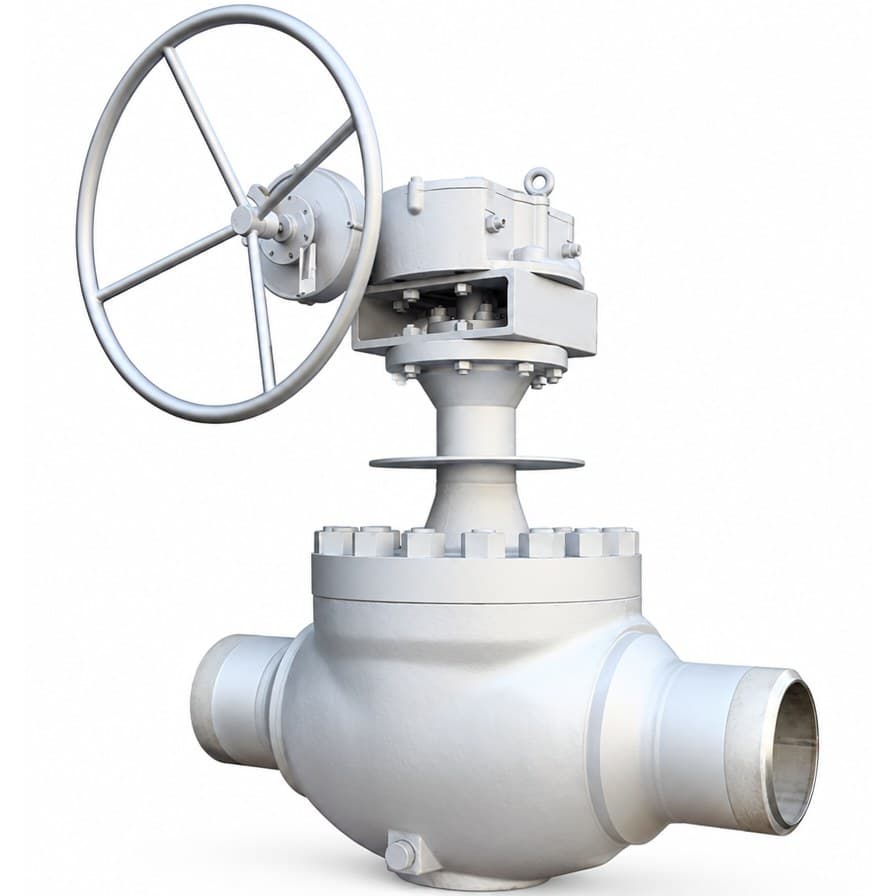 IH-PV-CTTTop Entry Cryogenic Trunnion Mounted Ball ValveIndus Hydraulics
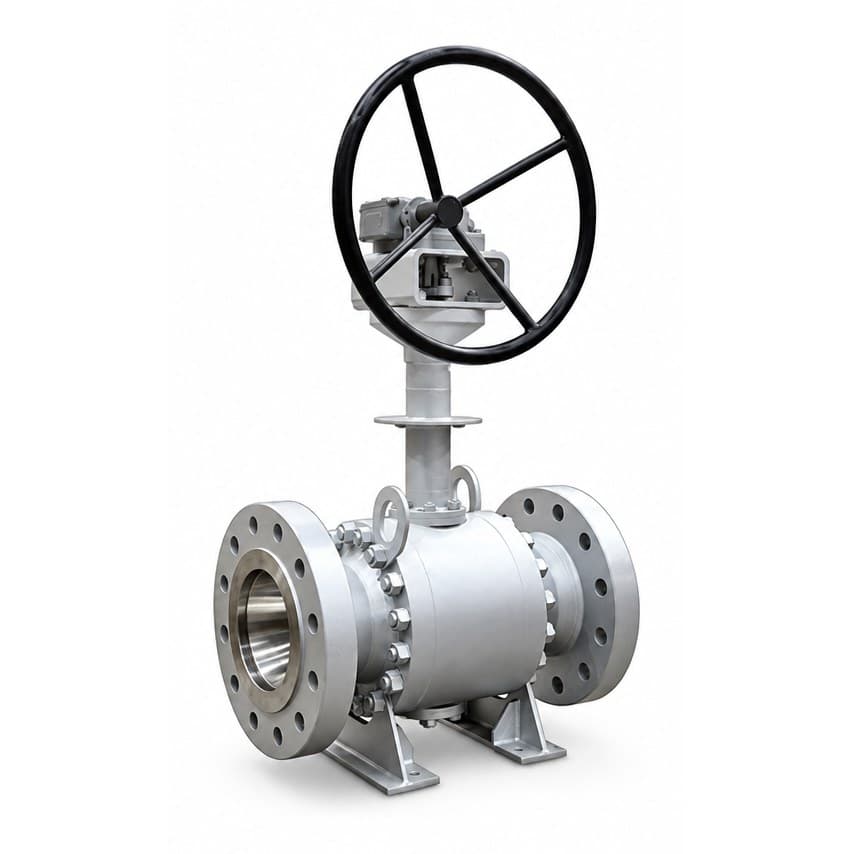 IH-PV-CTSSide Entry Cryogenic Trunnion Mounted Ball ValveIndus Hydraulics
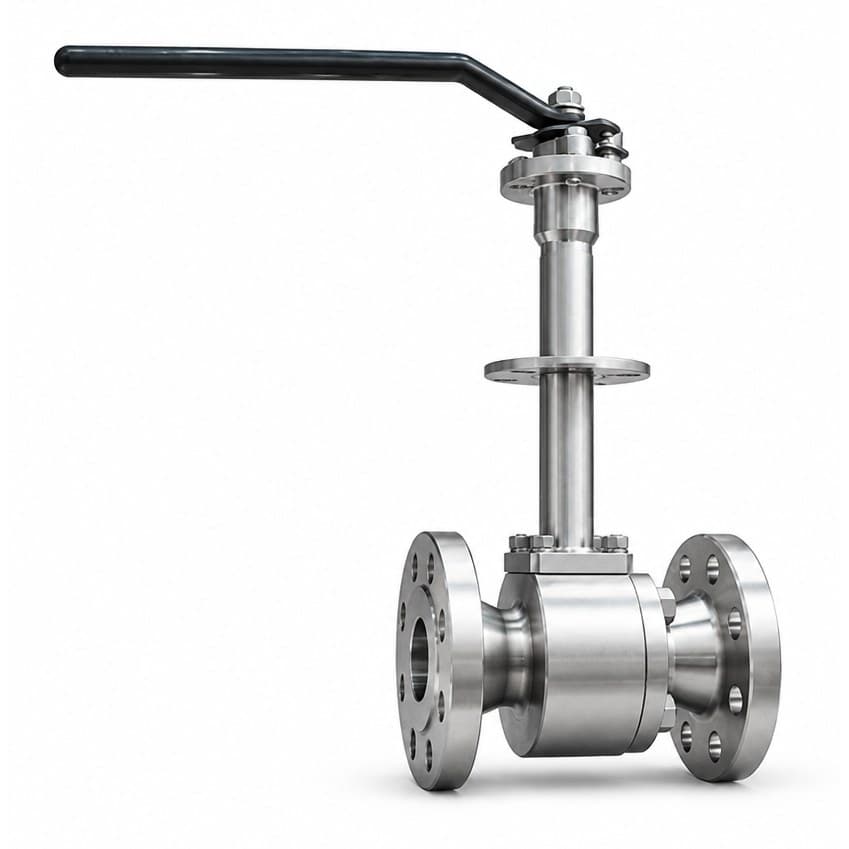 IH-PV-CFSSide Entry Cryogenic Floating Ball ValveIndus Hydraulics
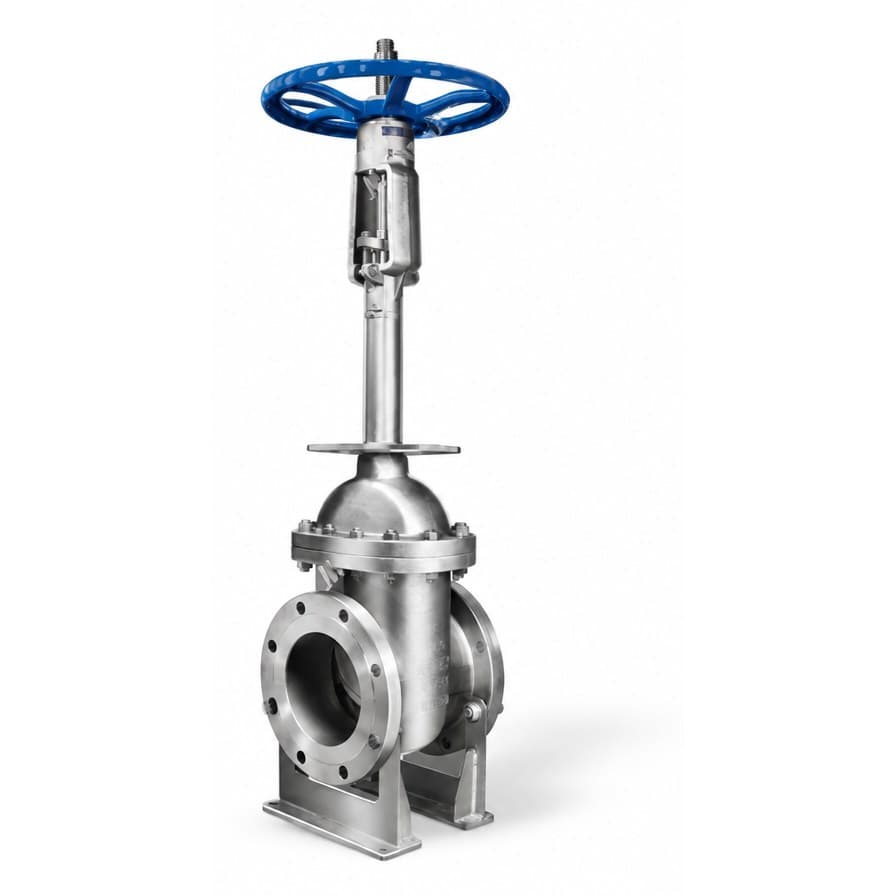 IH-PV-CGTCryogenic Gate Valve, Extended BonnetIndus Hydraulics
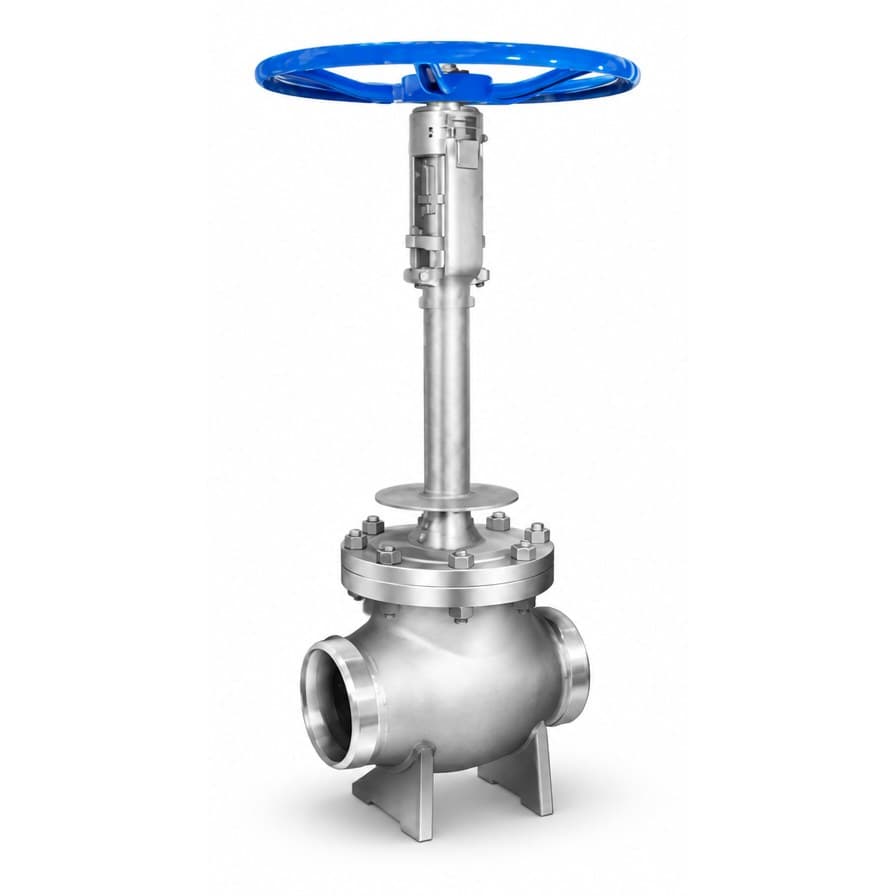 IH-PV-CGLCryogenic Globe Valve, Extended BonnetIndus Hydraulics
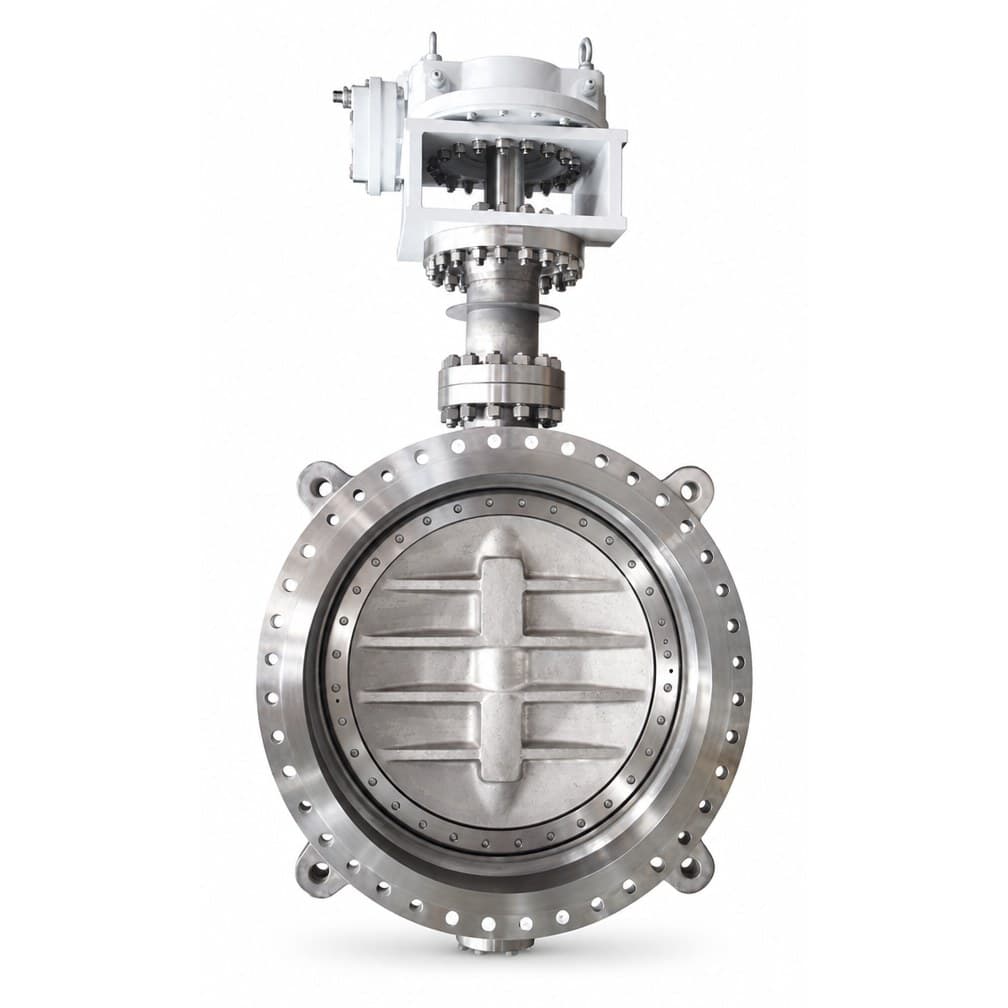 IH-PV-CBFCryogenic Offset Butterfly ValveIndus Hydraulics
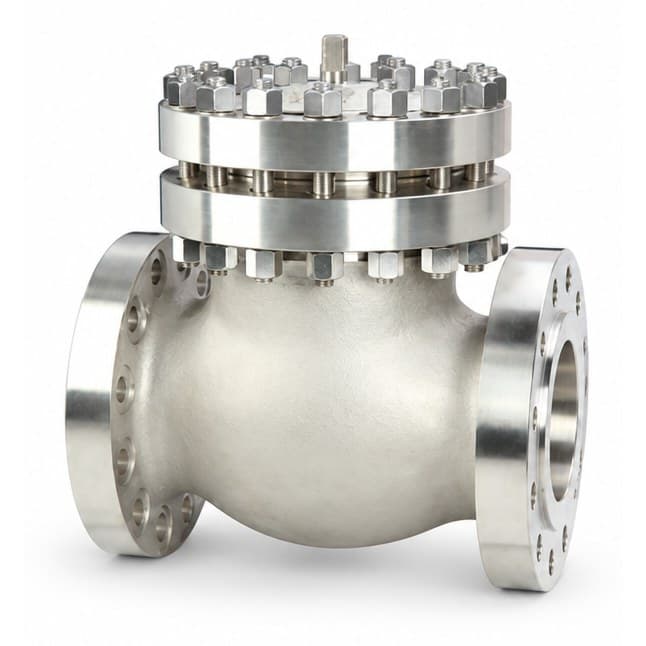 IH-PV-CCKCryogenic Check Valves: Swing, Lift, Dual Plate and Axial FlowIndus Hydraulics
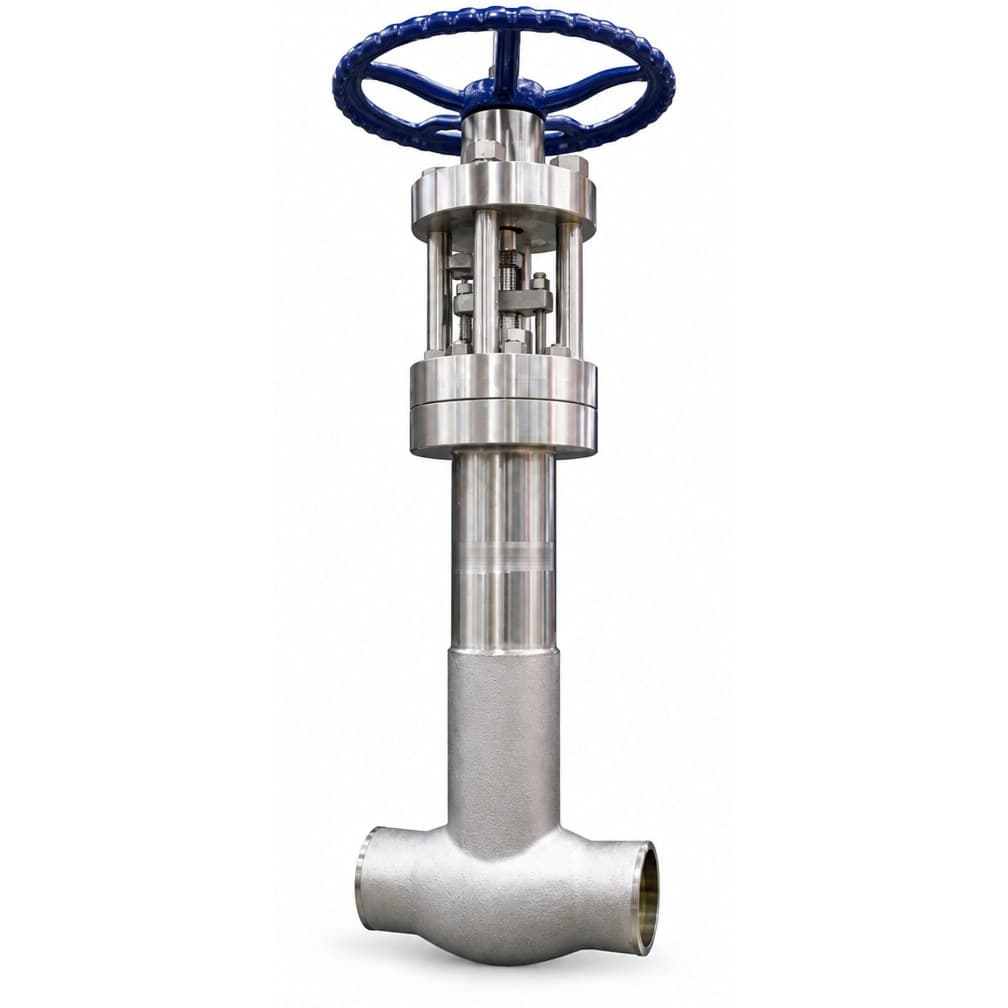 IH-PV-HGLLiquid Hydrogen Globe Valve, Bellows SealIndus Hydraulics
Sources
- 1.BSI. BS 6364:1984 Specification for valves for cryogenic service (status record). ↗
- 2.ISO 28921-1:2022 Industrial valves — Isolating valves for low-temperature applications — Part 1: Design, manufacturing and production testing (scope). ↗
- 3.MSS SP-134-2012 Valves for Cryogenic Service, Including Requirements for Body/Bonnet Extensions (scope). ↗
- 4.ISO 21011:2008 Cryogenic vessels — Valves for cryogenic service (scope). ↗
- 5.Habonim. Cryogenic ball valves catalogue, 2018. ↗
- 6.Habonim. Bi-directional sealing in cryogenic ball valves. ↗
- 7.Flow-Tek. Cryogenic Service Ball Valves, Technical Bulletin 1008. ↗
- 8.Spence, T. “Austenitic Stainless Steels.” Valve Magazine, April 2008. ↗
- 9.Berkeley Lab EHS. Liquid hydrogen. ↗
- 10.AIGA 012/19, Cleaning of Equipment for Oxygen Service (harmonised with CGA G-4.1 and EIGA). ↗
- 11.AIGA 021/20, Oxygen Pipeline and Piping Systems (originally EIGA Doc 13). ↗