
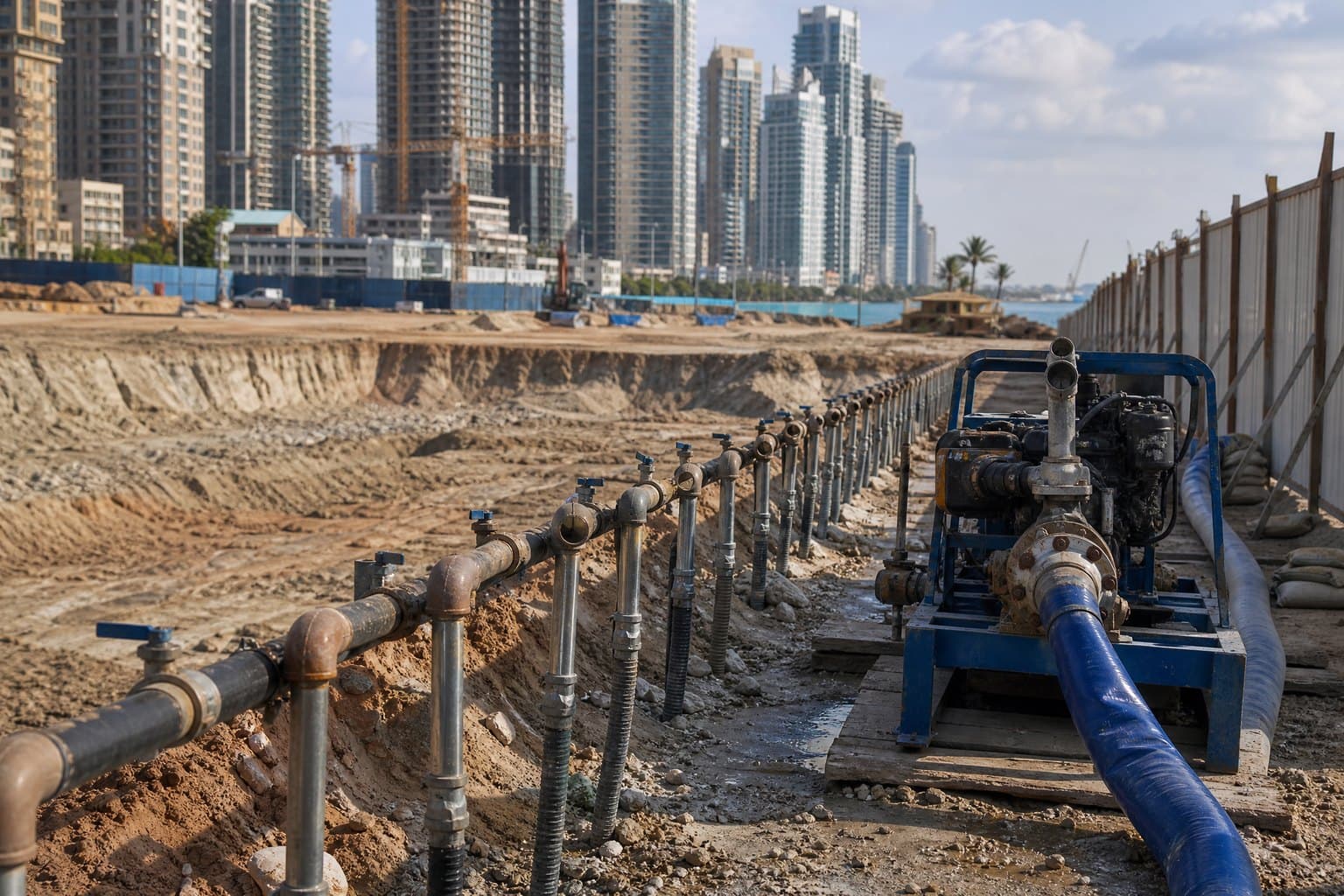
Dig a basement almost anywhere along the Gulf coast and you meet water within a few metres. Studies of coastal sabkha find the water table close to 2 m below ground, sometimes much less. In Doha a rising water table — blamed on rapid development, leaking older networks and seawater intrusion — flooded key projects and halted tunnelling on the Metro Red Line in 2015. Jeddah’s groundwater rose for decades with seepage from cesspools and irrigation, damaging roads and foundations, and Kuwait City has seen similar rises from over-irrigation and leaking networks. Dewatering is not a special case on GCC sites; it is part of the programme.
/01The three methods.
| Method | Suits | Hose on the suction side | Discharge |
|---|---|---|---|
| Wellpoints | Shallow excavations and trenches in sand and permeable ground | Flexible swing connections from each wellpoint to the header, header hose to the pump | Lay flat to settlement tank |
| Deep wells | Deeper basements and shafts | None at surface — submersible pump in each well, riser to the well head | Lay flat or pipe collector to the tank |
| Sump pumping | Open excavations, rainwater, seepage | Rigid-helix suction hose or submersible pump | Lay flat to the tank |
Ground conditions drive the choice. Research on Jeddah’s highly permeable coralline limestone, for example, recommends wellpoints in the coastal zone and ditches and sumps further inland, and warns that deep wells there would draw enormous volumes and wash fines out of the ground. Dubai’s own drainage regulation refers to deep-well dewatering. Your dewatering designer sets the method; the hose has to match it.
/02A wellpoint system, end to end.
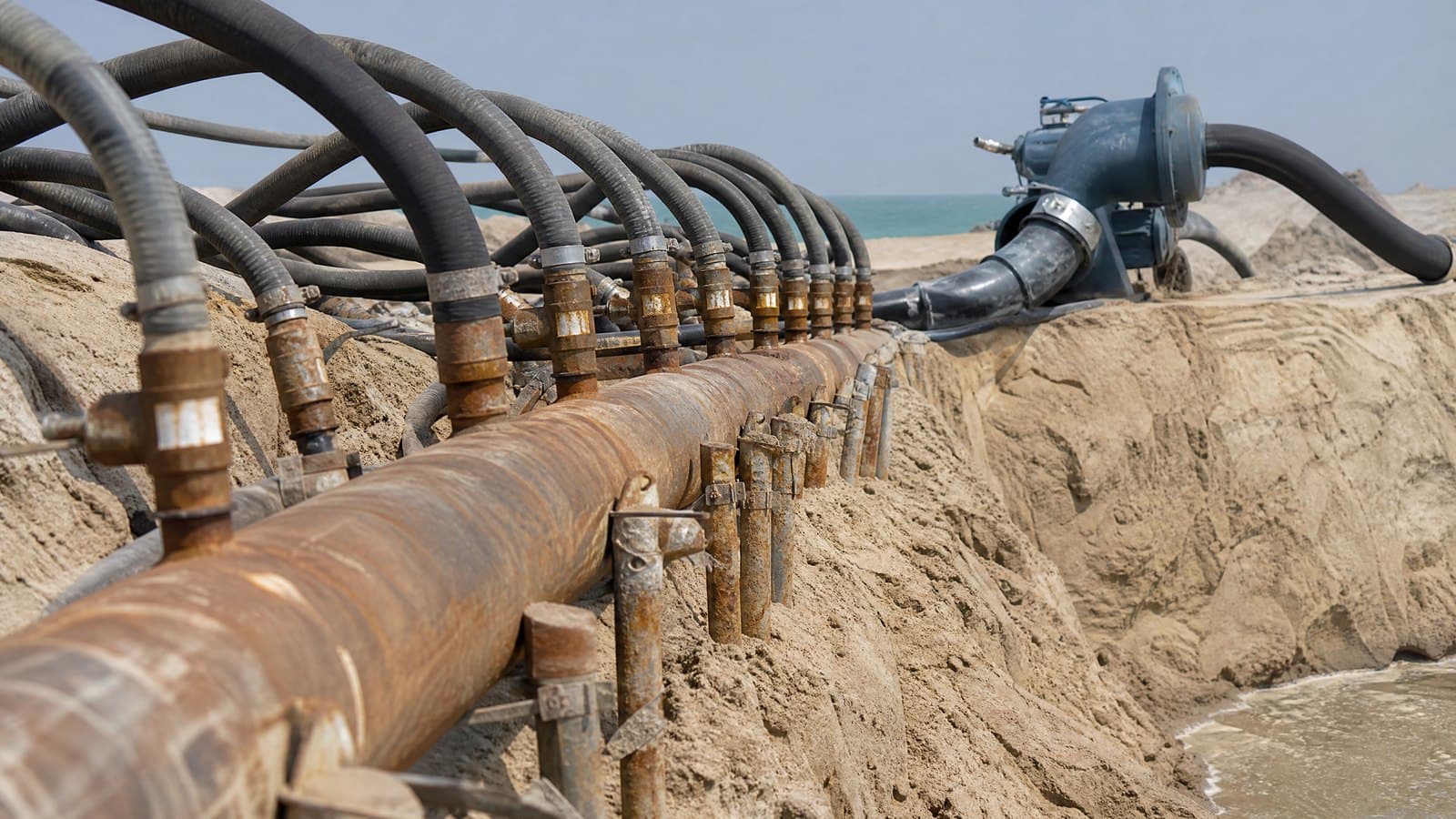
A line of wellpoints — small-diameter screened tubes jetted into the ground at close centres — is joined to a header pipe along the edge of the excavation by short flexible connections. A vacuum-assisted wellpoint pump draws water from the whole header. Every one of those connections works under vacuum, so they must be suction hose with a rigid helix; a lay flat hose there would collapse. On the pump’s outlet the pressure is positive, and that is where lay flat hose takes over, carrying the water to the settlement tank and outfall. Our article on suction hose vs lay flat hose explains the split.
/03Sizing the discharge line.
Add up the flow of every pump that feeds the line, then choose a bore that keeps friction loss well within the pump’s head at that flow. Discharge lines on GCC sites are often long, because the settlement tank, lagoon or approved outfall is at the site boundary or beyond it. As a rough guide from our friction loss guide, 6" lay flat carries 150 m³/h for several hundred metres at modest loss; at 400 m³/h and above, 8" to 10" is the usual starting point. Most site dewatering runs at low pressure, so the NBR discharge hose (10 bar) or TPU dewatering hose (14 to 21 bar by size) both have ample margin.
/04Settlement tank and outfall.
Pumped groundwater carries sand and silt. Dubai’s drainage regulation requires a sand trap, kept clean, before dewatering water enters the public network, and Qatar’s authorities expect sedimentation tanks or filters and regular water-quality reporting. The hose layout should bring every pump’s discharge into the tank inlet, take clear water from the outlet to the approved discharge point, and make the line easy to inspect for leaks. See our guide to dewatering discharge permits in Dubai, Abu Dhabi and Qatar for what the permit will ask for.
/05Choosing the hose.
Which discharge hose?
IfIs the line long, outdoors for months, or dragged over rough ground?
TPU lay flat dewatering hose.
IH-LF-TDWIfIs there oil, fuel or cement residue in the water?
NBR lay flat discharge hose.
IH-LF-NBRIfHigh-head or continuous pumping where a standard hose wears through?
Heavy-duty NBR lay flat hose.
IH-LF-NBRHIfShort, low-pressure, temporary run of clean water?
PVC lay flat hose.
IH-LF-PVC
Common questions
- Why is groundwater so high on Gulf construction sites?
- Coastal sabkha naturally holds water within a metre or two of the surface, and in cities such as Doha, Jeddah and Kuwait City leaking networks, irrigation and seepage have raised the water table further.
- Can lay flat hose be used on a wellpoint system?
- Only on the discharge side. The wellpoint connections and header-to-pump hose work under vacuum and must be rigid-helix suction hose.
- What size discharge hose does a dewatering pump need?
- Match the pump outlet as a minimum, then size up for long lines: one size larger often halves the friction loss. Tell us the flow and distance and we will size it.
- Does saline groundwater damage lay flat hose?
- No. TPU and nitrile resist salt water. Coupling metals need more care on long-running systems.
- What couplings do dewatering lines use?
- Camlock and Bauer on smaller lines, grooved, Storz or flanged on large-bore lines. See our lay flat hose coupling guide.
For dewatering systems
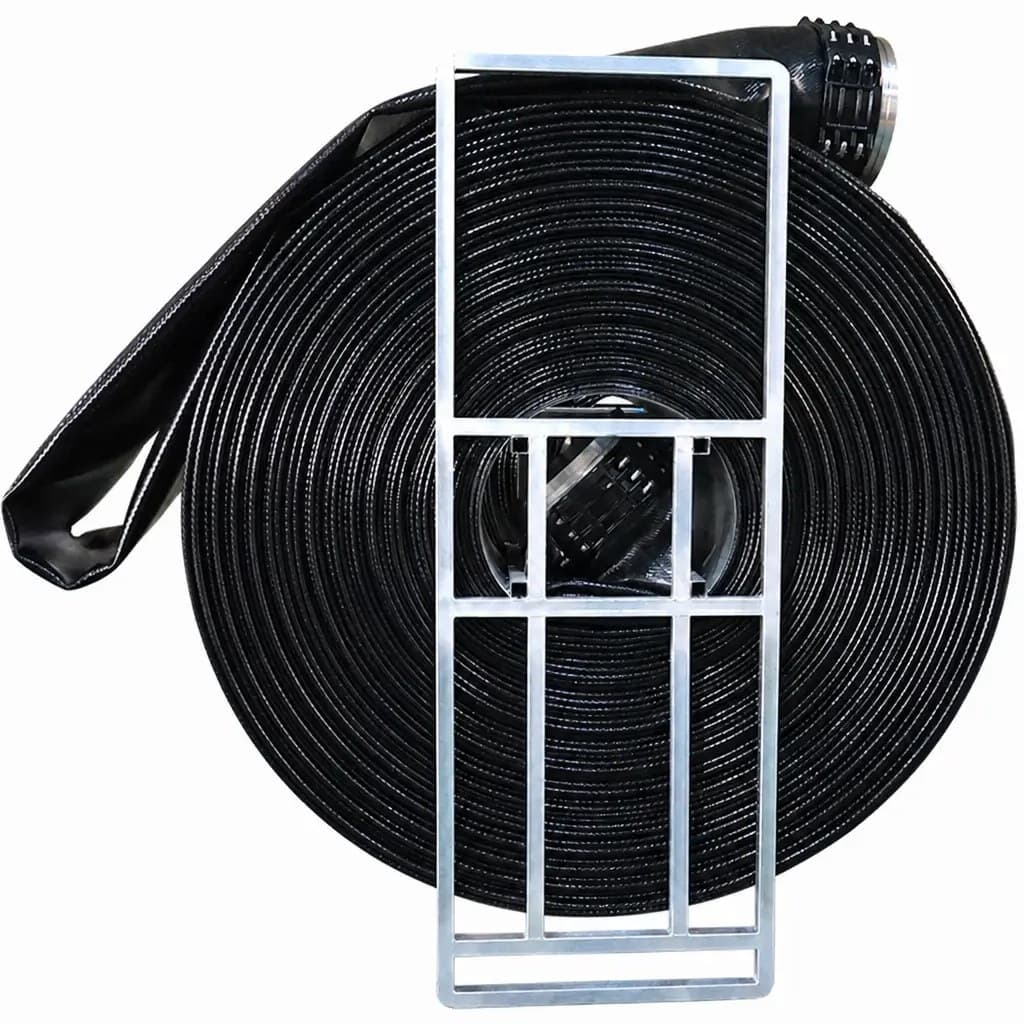 IH-LF-TDWTPU Lay Flat Dewatering and Water Transfer HoseIndus Hydraulics
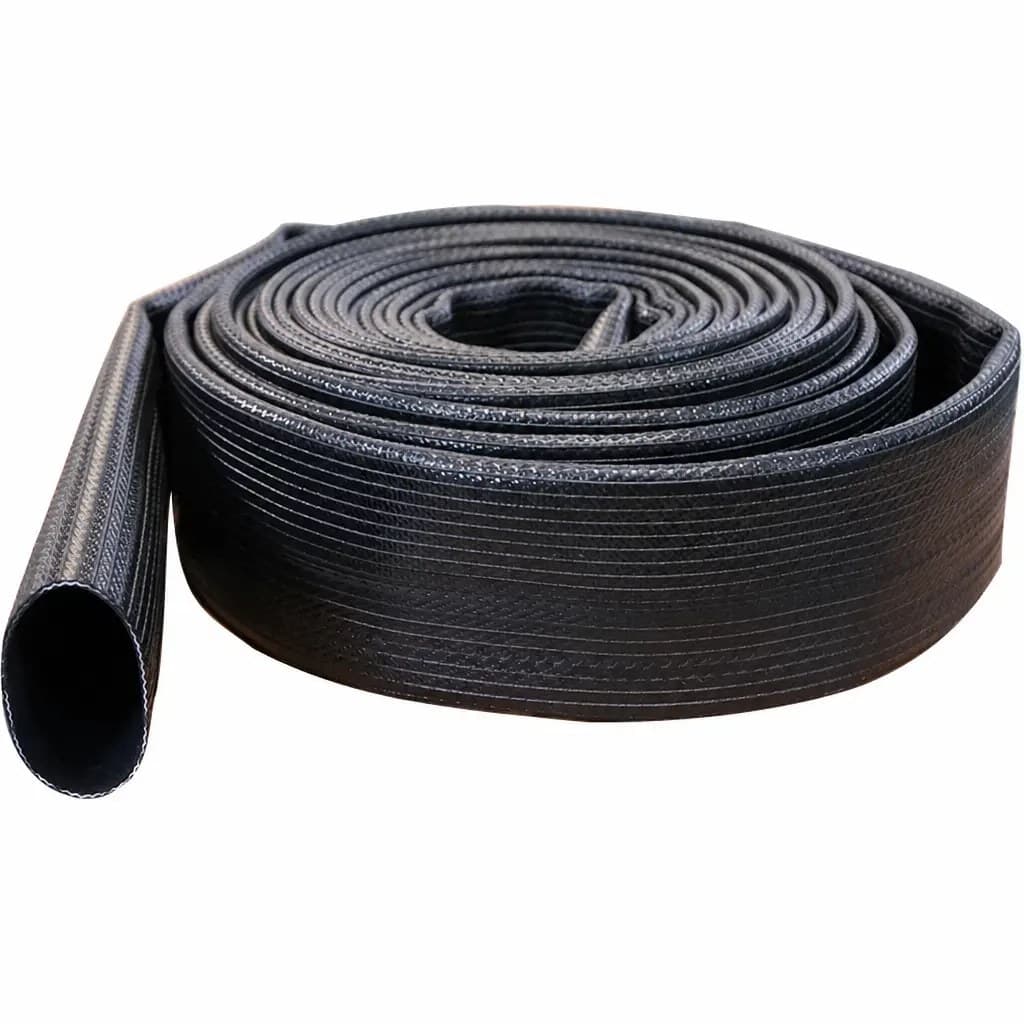 IH-LF-NBRNBR Lay Flat Discharge Hose, Ribbed CoverIndus Hydraulics
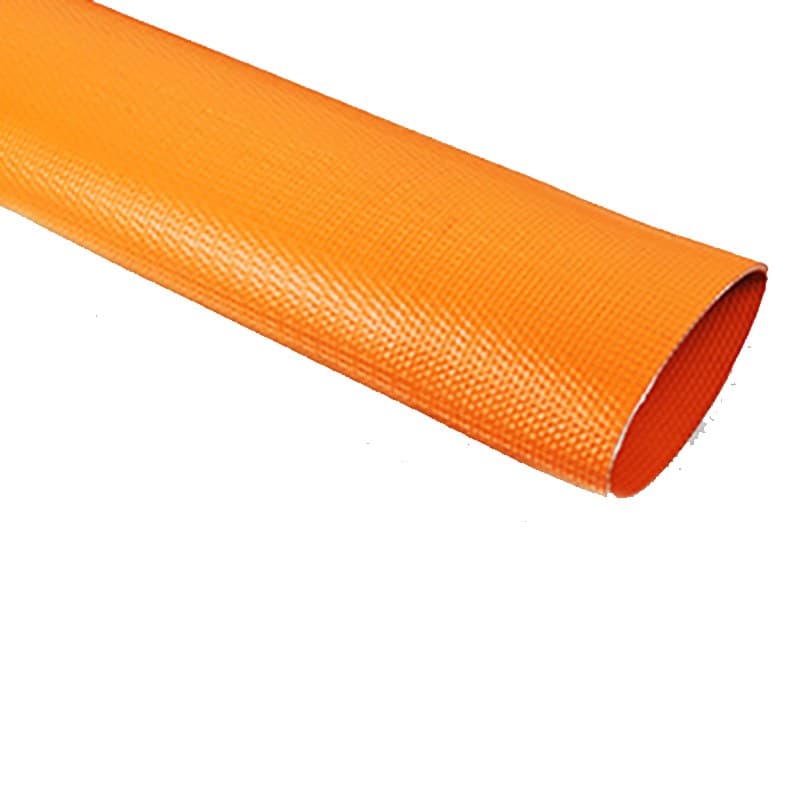 IH-LF-NBRHHeavy-Duty NBR Lay Flat HoseIndus Hydraulics
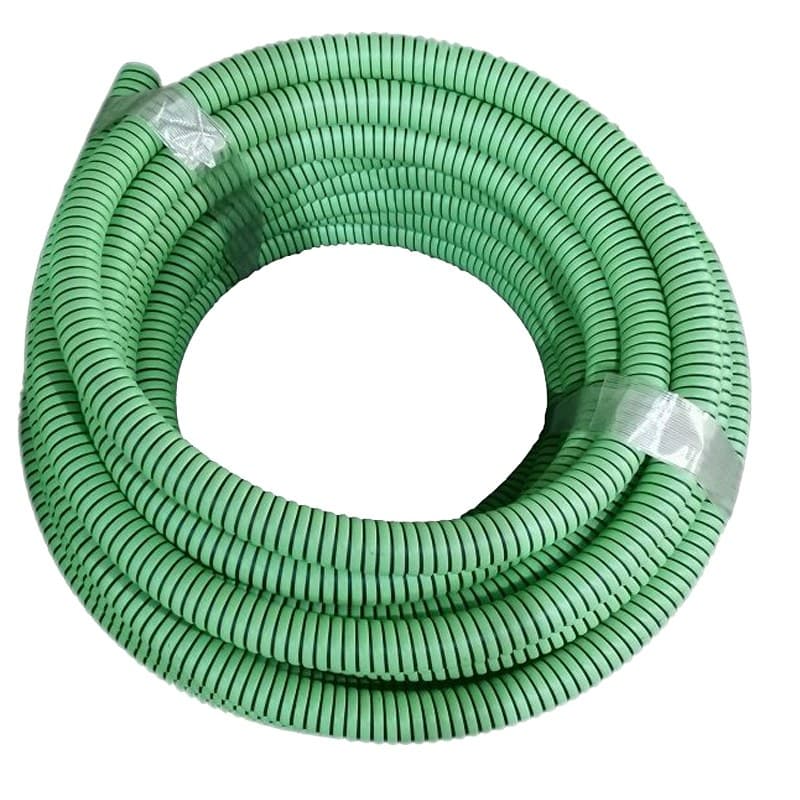 IH-LF-SEPEPDM/PE Suction Hose with Rigid HelixIndus Hydraulics
 IH-LF-PVCPVC Lay Flat Discharge HoseIndus Hydraulics
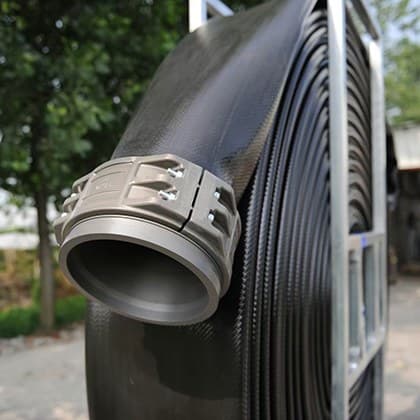 IH-LF-CVGLarge-Bore Lay Flat Hose Coupling, Grooved EndIndus Hydraulics
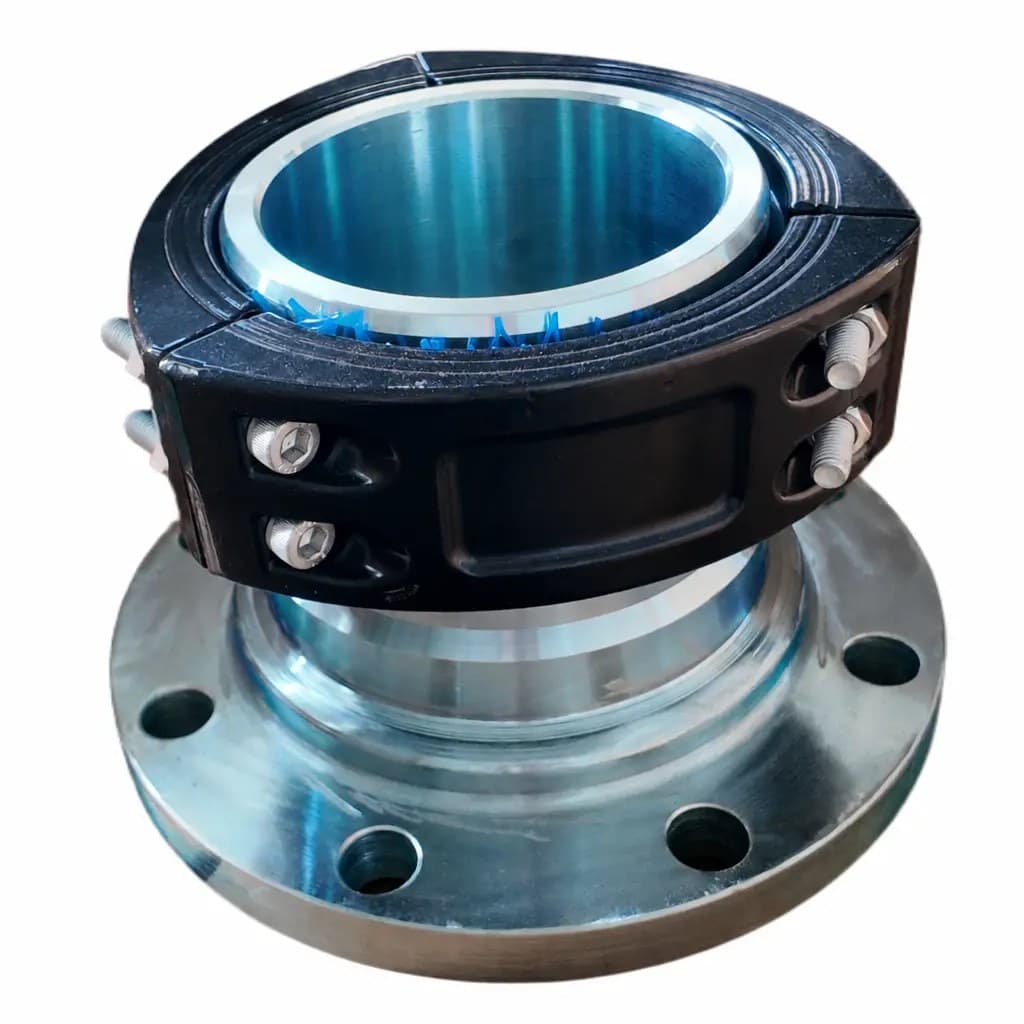 IH-LF-CFLLarge-Bore Flanged Lay Flat Hose CouplingIndus Hydraulics


