
Skip to content

Topic

Hydraulic tools & bolting

Industrial tools are chosen in a hurry and used under load: a torque wrench that will not fit the flange, a jack set on soft ground, a puller with the wrong reach, a breaker on a power unit that cannot supply its flow. These guides cover how each tool works, the figures that decide its size, and the accessories that have to arrive with it.

Articles
5
Reading
21 min
Updated
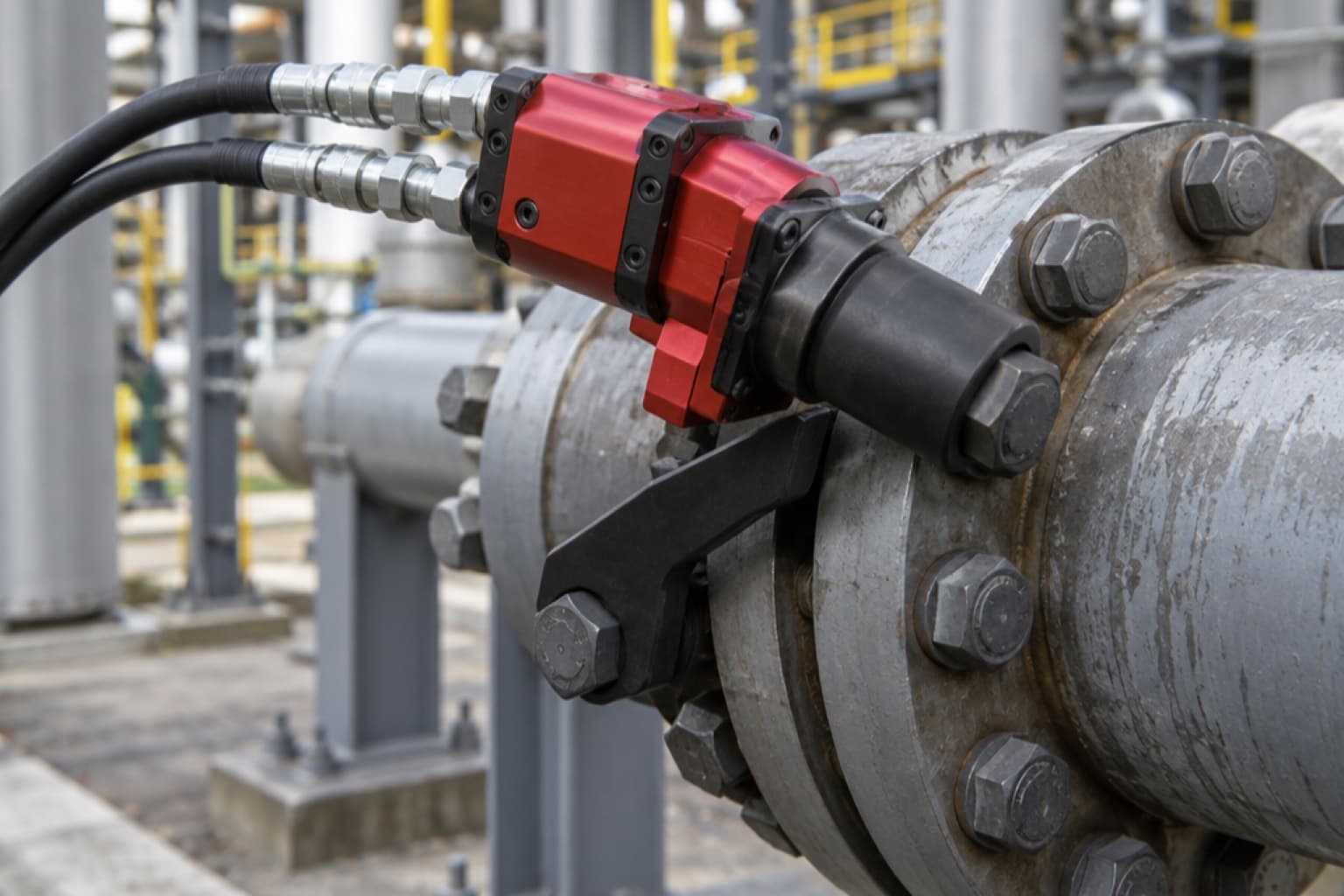
Square-drive hydraulic torque wrench with impact socket on a pipeline flange nut, reaction arm on the next nut

Start here

Hydraulic torque wrenches: square drive or low-profile, and how to size one

A hydraulic torque wrench is chosen by three things: the torque the joint needs, the nut size, and how much room there is around the nut. Square-drive wrenches take a standard impact socket and suit open access; low-profile hexagon wrenches slip a cassette over the nut where a socket will not fit. How each works, the torque ranges of the Enerpac series, the sizing rules for breakout, and the hoses, sockets and reaction arms that have to come with the tool.

6 min read

Topic guide

The short version

Which tool for which job
JobToolWhat decides the size
Tighten or break out large boltsHighlightedHydraulic torque wrenchTorque, nut size, access around the nut
Load studs evenly by stretchingBolt tensionerBolt diameter, thread, target load
Remove a seized nutNut splitterNut size across flats, bolt grade
Open or align a flangeFlange spreader, alignment toolGap, force, flange class
Lift or move heavy loadsJacks, wedges, skatesLoad, closed height, stroke
Remove bearings, gears, bushesPuller or pressForce, reach, spread
Break, cut, drill, pump on siteHydraulic power toolsFlow and pressure class of the power source

Planning a bolting or lifting job?

Send the bolt size and grade, the torque or load, the access around the joint and the shutdown date. We will quote the tool, pump, hoses and accessories as one kit.

Plant-down? Call +971 52 2477942 — 24/7