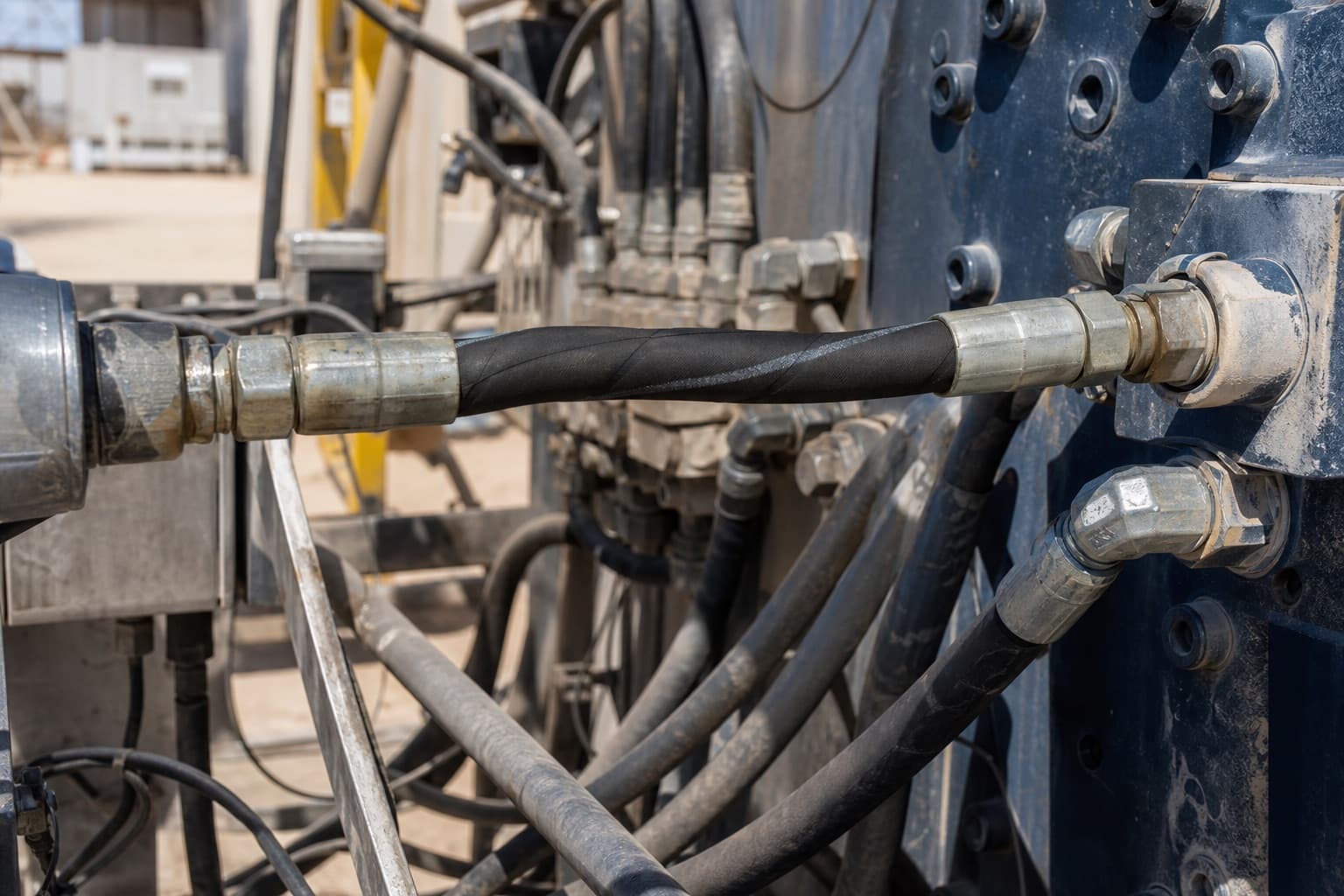
There is a fault that costs nothing to find, nothing to fix, and takes a hose down to a fraction of the life it was built for. It is installed by a competent person with a spanner, in about four seconds, and it is visible from two metres away if anybody looks.
/01What the twist does.
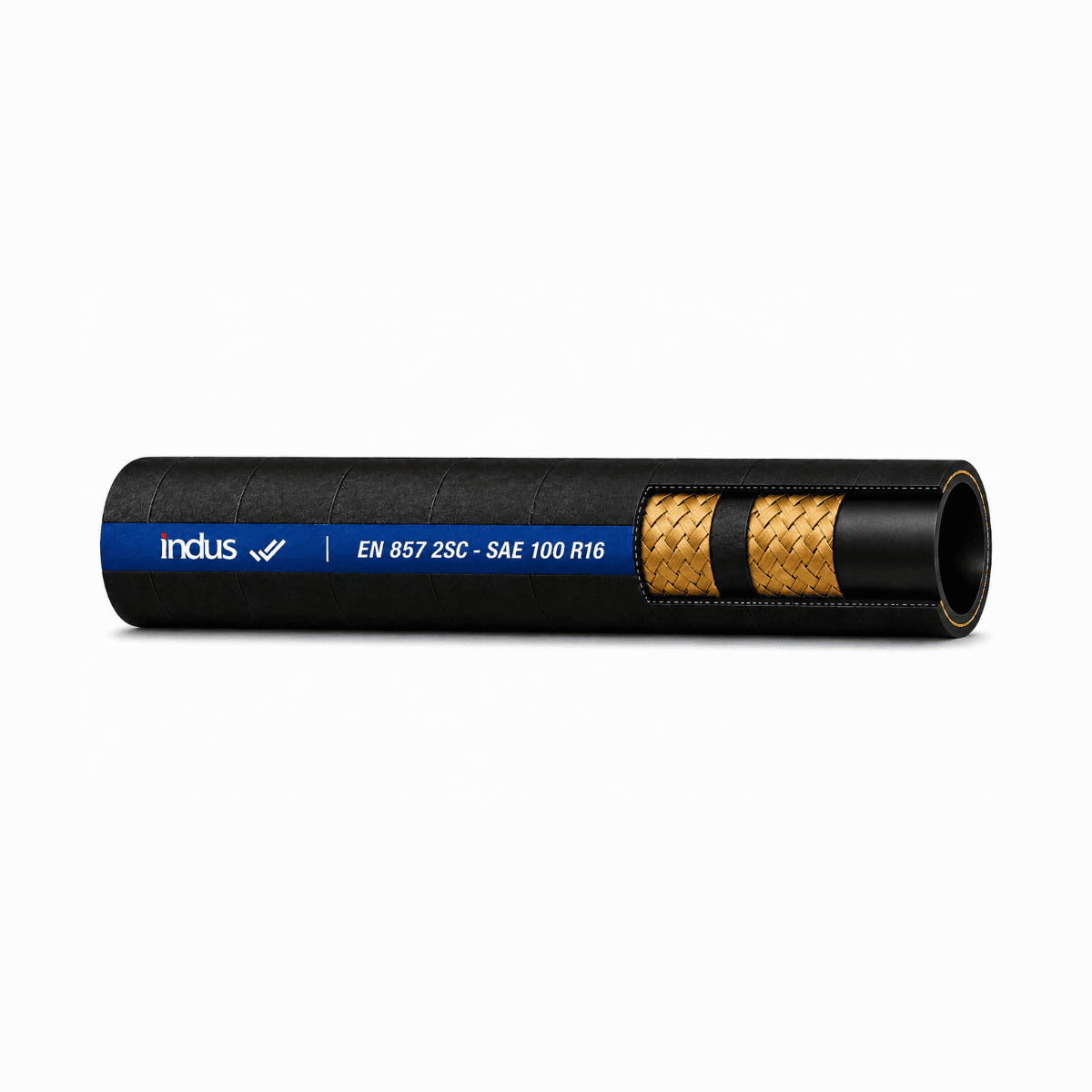
A hydraulic hose carries pressure through layers of wire wound in opposing directions. Those layers are balanced: under pressure the hose tries to grow in length and diameter, and the opposing windings hold it. Twist the hose and that balance is gone. One direction of winding tightens and the other slackens, so the load is no longer shared evenly between them.
Then every pressure cycle works on the imbalance. The hose is permanently trying to unwind itself, pulling against the fittings at both ends. It is not a dramatic effect on any single cycle — it is a small unfair share of load, applied a few million times.
/02The layline makes it visible.
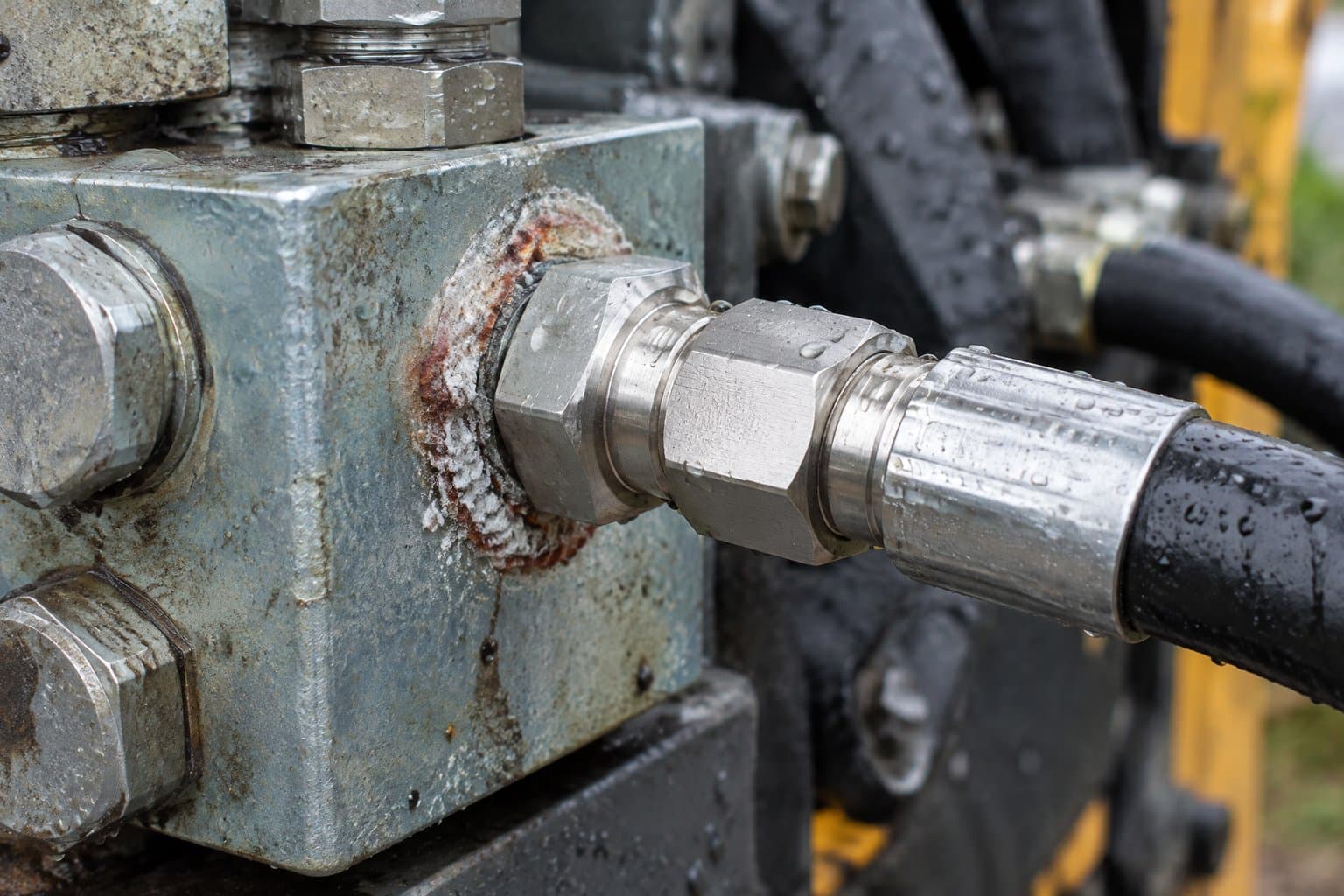
The printed line running along the cover is straight when the hose leaves the factory. It is straight because that is useful: it is a built-in twist indicator on every hose ever made. If it spirals around the assembly, the hose is twisted, and the number of turns tells you by how much. Swivel ends — a JIC 37° female swivel or an ORFS female swivel — let the nut turn without turning the hose, which is the point of fitting one.
/03How it gets there.
| Cause | What to do instead |
|---|---|
| Turning the hose while tightening the nutHighlighted | Hold the hose or the fitting hex with a second spanner |
| Fitting a hose that is too short, and forcing it round | Get the length right — a short hose is under tension as well |
| Both ends fixed, hose routed round an obstruction afterwards | Route first, then connect. Order matters. |
/04A twisted hose is also a short hose.
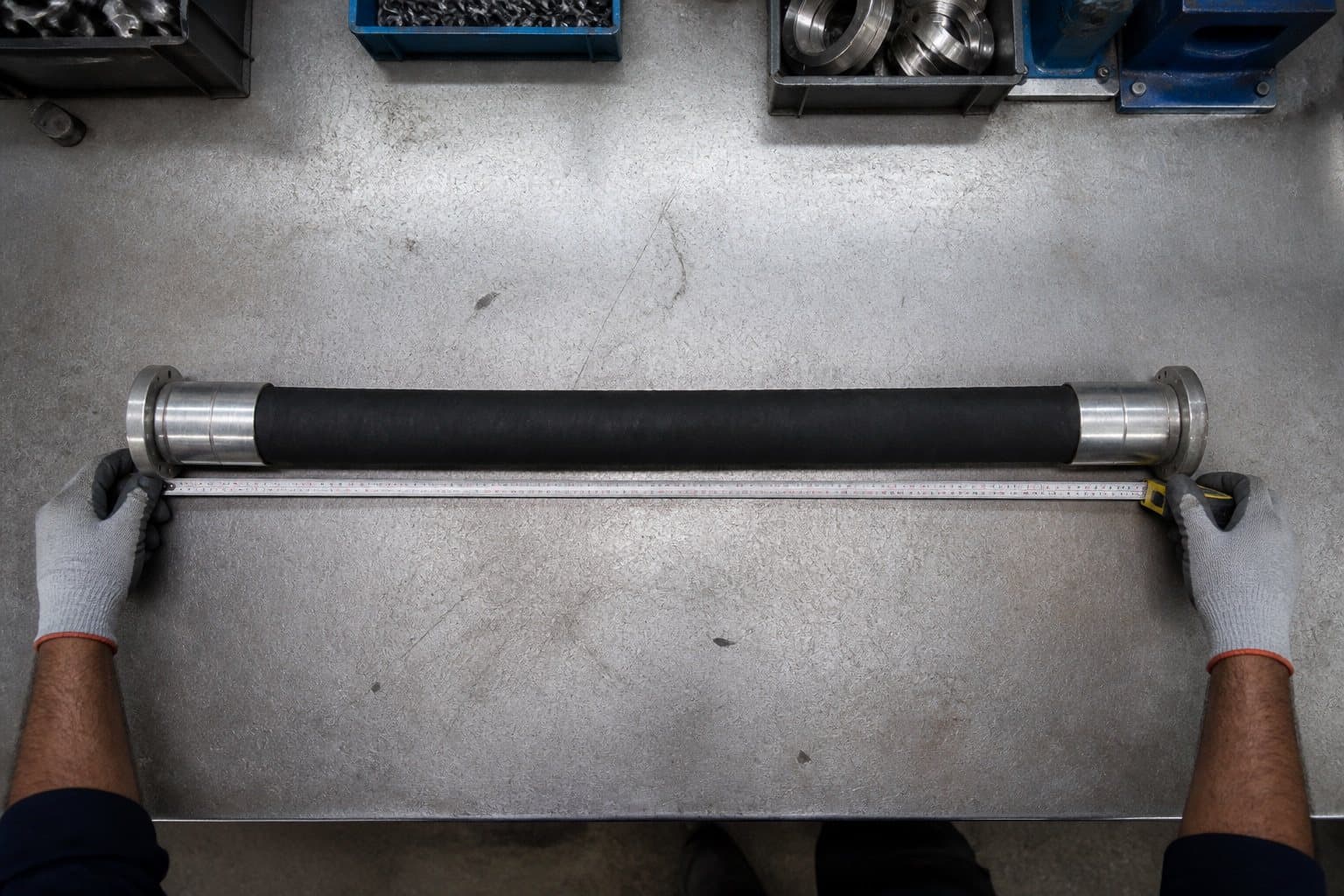
Twisting a hose pulls its ends together. An assembly cut to the right length and then twisted into place ends up under tension as well as torsion, which puts load into both fittings and removes the slack the routing needed. Two faults from one installation error, and the tension is the one that shows up as a failure at the ferrule.
Common questions
- How do I get a twist out of a hose already fitted?
- Loosen one end, let the hose find its own position, and re-tighten while holding the fitting. If it will not sit straight without the twist, the assembly is the wrong length or the routing is wrong — the twist was doing work.
- Does a swivel fitting prevent this?
- It is designed to. A female swivel end lets the nut turn without the hose turning, which is exactly the mechanism that puts twists in. It only helps if the hose is still held while tightening.
- The layline spirals slightly. Is that acceptable?
- A slight spiral is worth removing when it costs nothing to remove — loosen, straighten, re-tighten. It is not a reason to condemn a working assembly, but it is a reason to look again at whether the length and routing are right.
- Can a hose twist itself in service?
- On a circuit where one end moves relative to the other, yes — which is why hoses on moving circuits need routing that lets the movement happen as bending rather than as twisting.