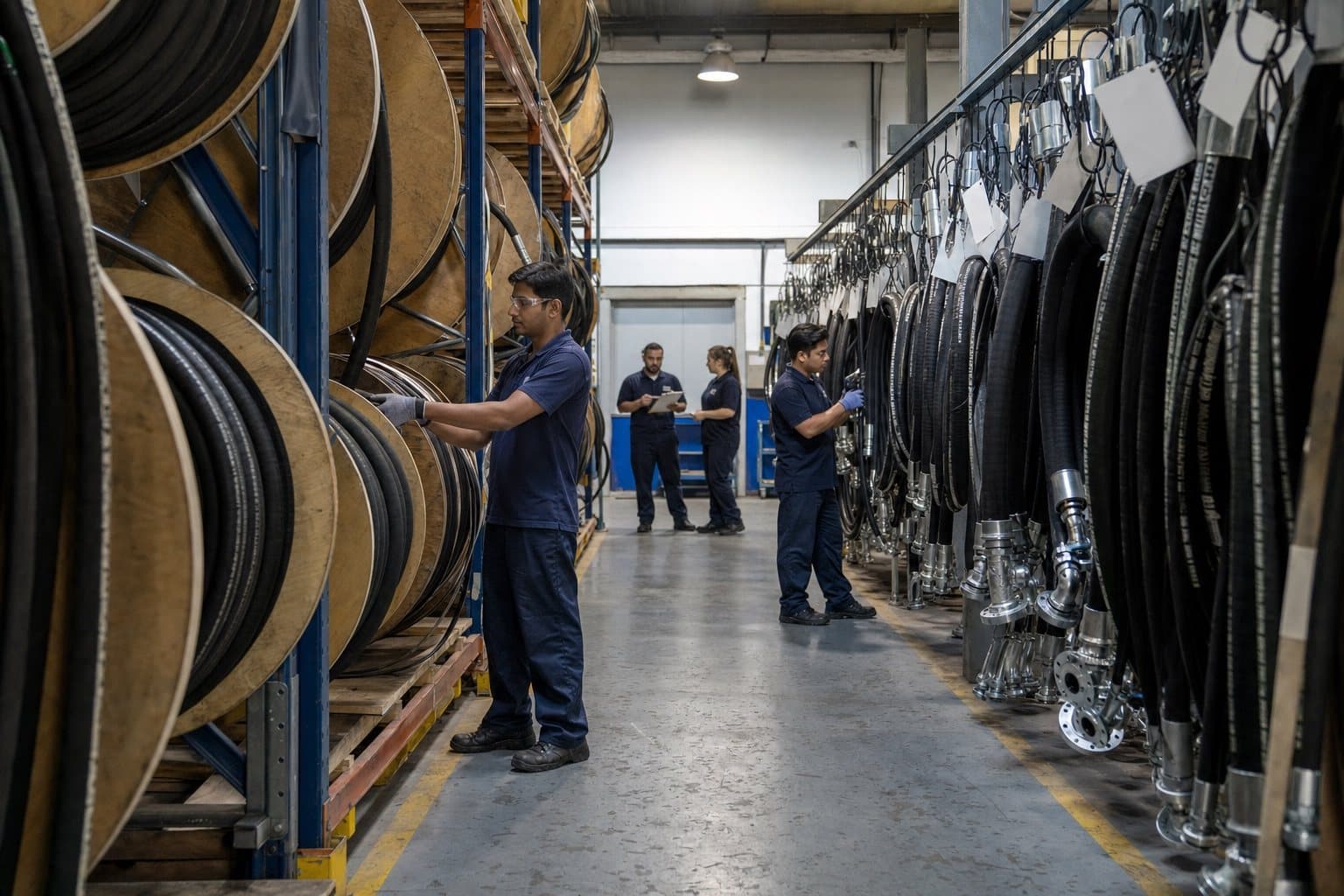
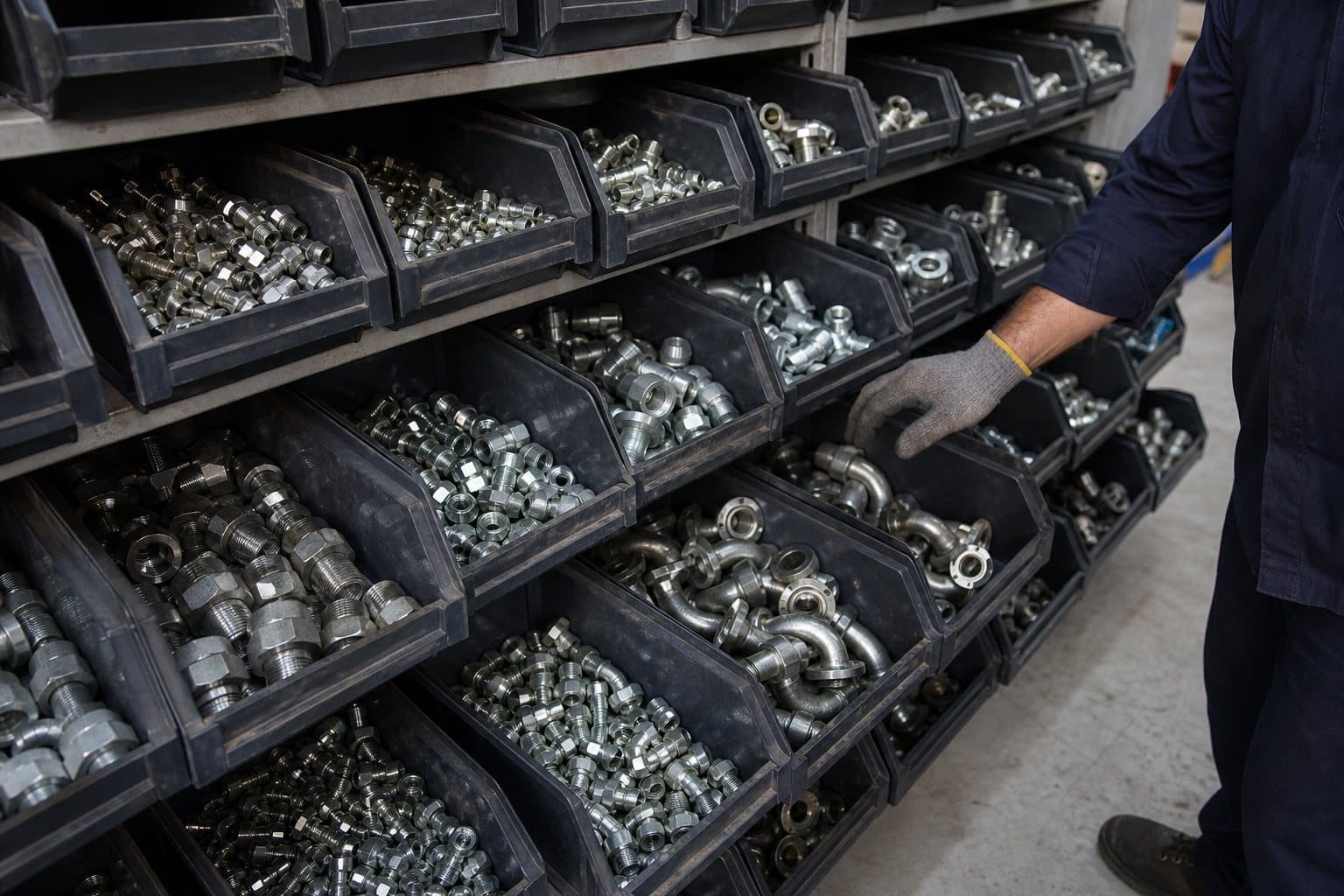
Most stocking decisions get made by accident: somebody was caught out once, so that part is now held forever, and nothing is ever reviewed. It is worth doing deliberately, because the answer is usually to hold less of more useful things.
/01Rank by consequence, not frequency.
The instinct is to stock what fails most. The better question is what does this failure stop, and for how long. A hose that fails twice a year on a machine that can be worked around is a poor stocking candidate. One that fails every two years on the only crane on site is an excellent one.
| Hold as a finished assembly | Hold as bulk + fittings | Do not hold |
|---|---|---|
| Single-point-of-failure machines | Common bores and grades across the fleet | Long-lead specials used once |
| Positions needing awkward access | Standard end types you fit repeatedly | Assemblies for machines being retired |
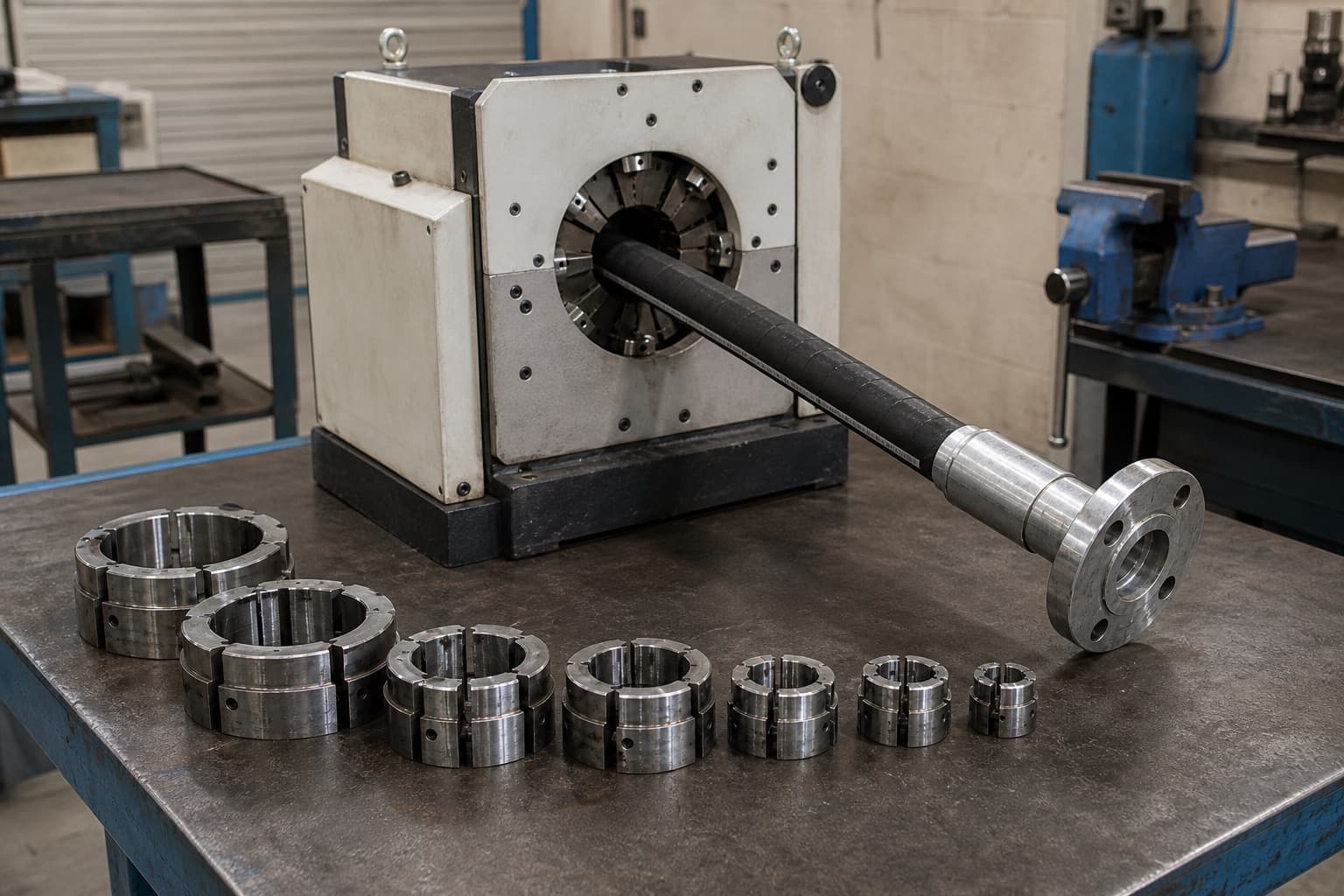
| High-cycle circuits — packer, spreader, lifter | Anything you can crimp in an hour | Grades used on one machine only |
/02Bulk hose is the efficient form.
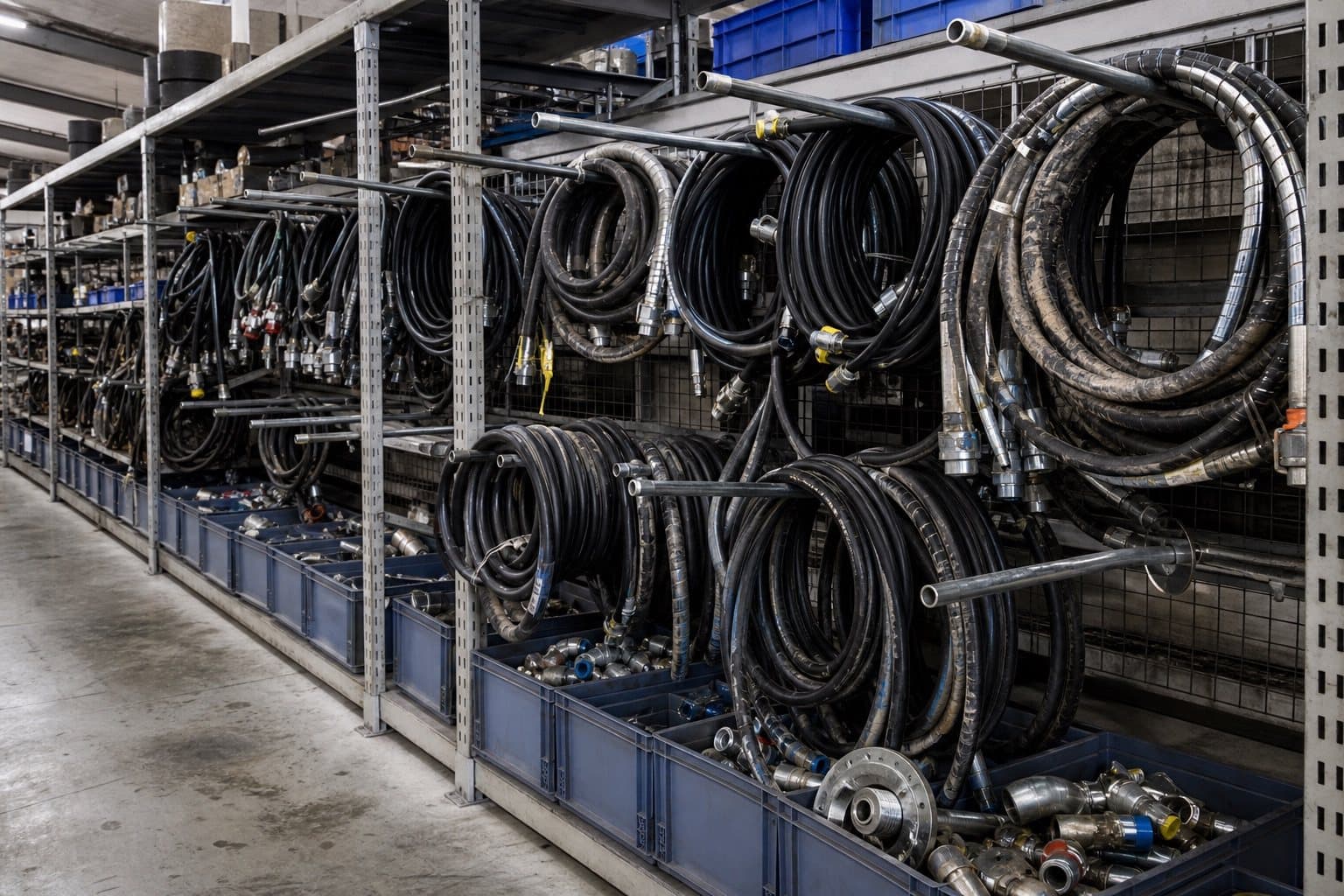
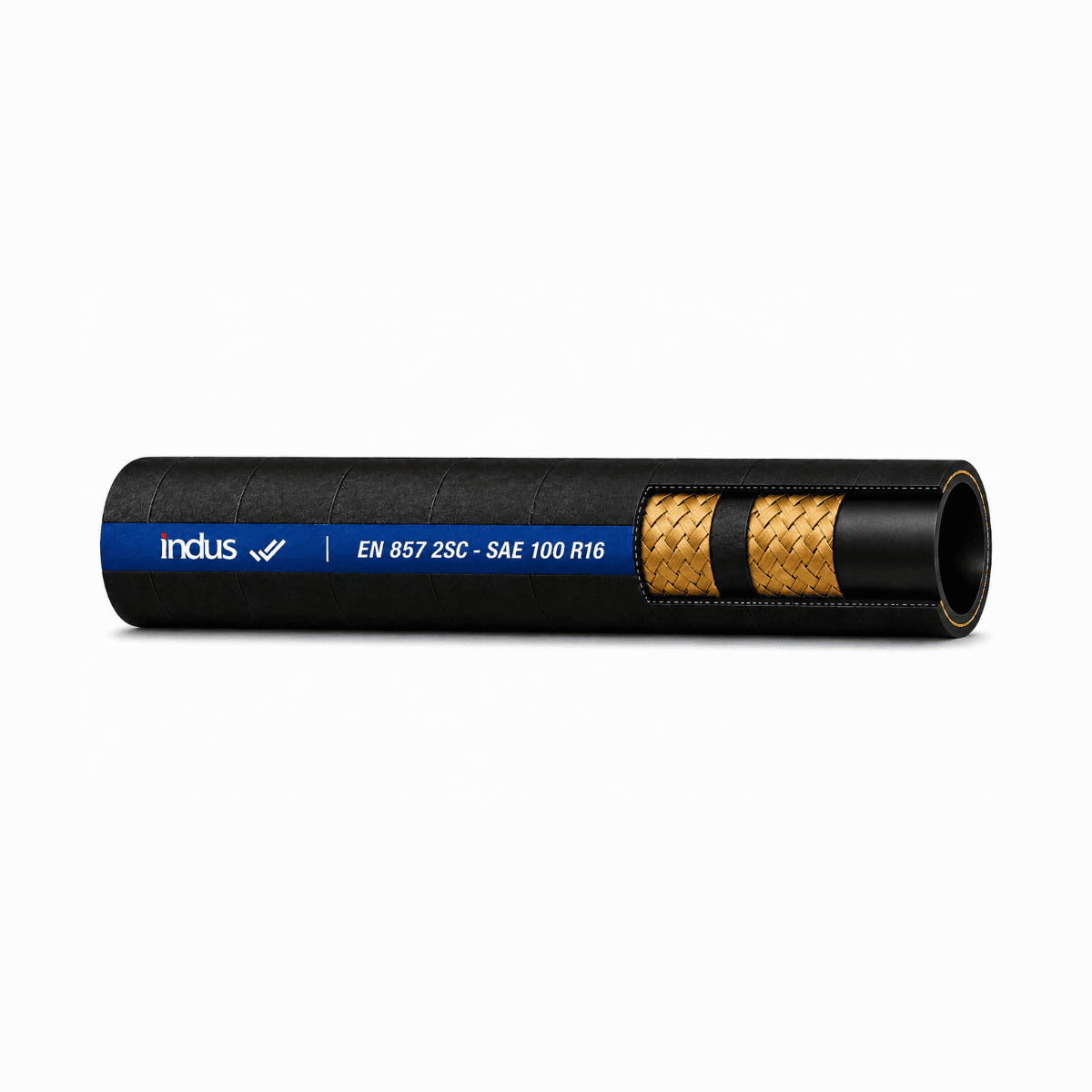
A reel of hose and a box of fittings covers every length and every combination those fittings allow. A finished assembly covers exactly one. For the same money on the shelf, bulk covers a far wider range of failures — at the cost of needing someone with a crimper when a machine stops.
/03Commonality is worth engineering.
Every distinct grade, bore and end type in a fleet multiplies the stock needed to cover it. Some of that variety is real — different machines have different circuits. A surprising amount is accidental, inherited from whatever the last supplier had in the van.
Standardising end types across a yard, or settling on one coupler standard for attachments, reduces the stock needed without changing what any machine can do. It is one of the few procurement decisions that reduces both cost and risk at the same time.
/04Stock ages.
Common questions
- How much should we hold?
- Enough to cover the failures that stop something expensive, for as long as it takes to get a replacement. That is a different number for a fleet in Dubai than for a site four hours away, which is the real input.
- Can you hold stock for us instead?
- Yes, and for many customers that is the better arrangement — we date-mark and rotate it, and you carry the cover without carrying the shelf.
- Is it worth stocking fittings without hose?
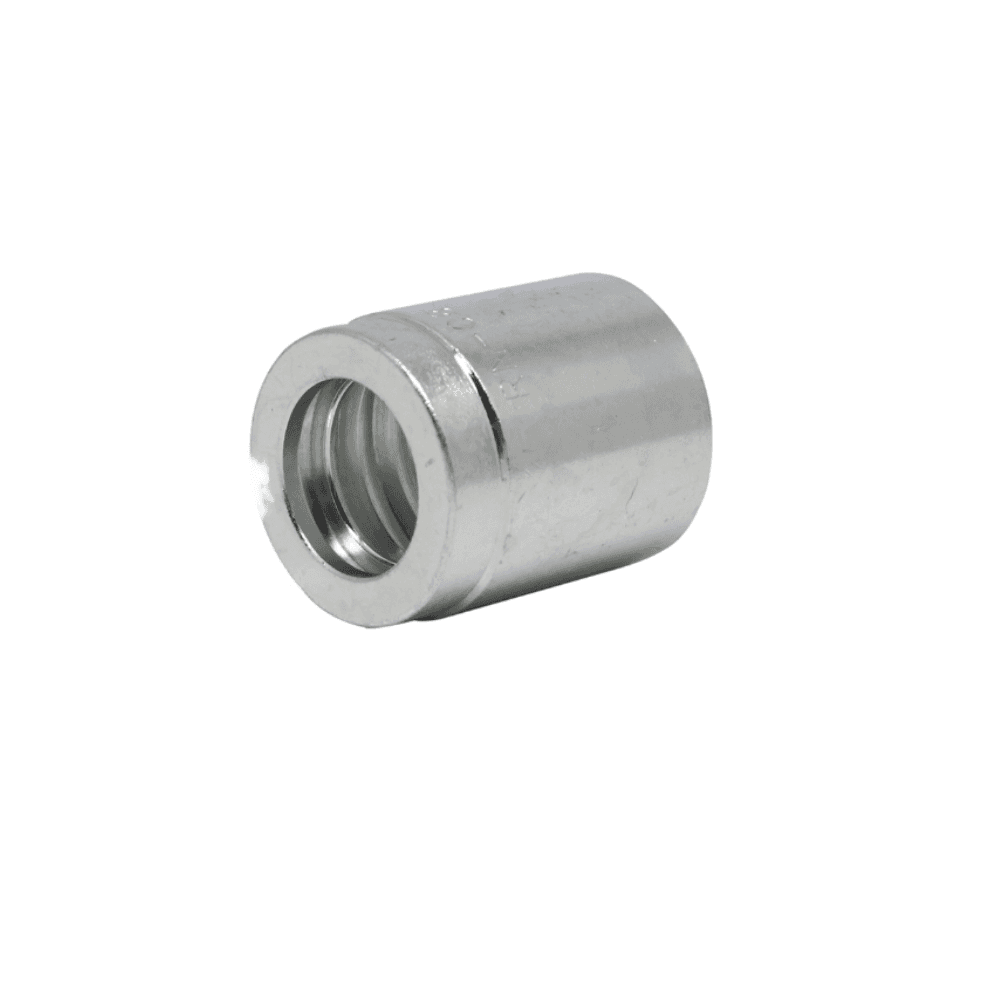
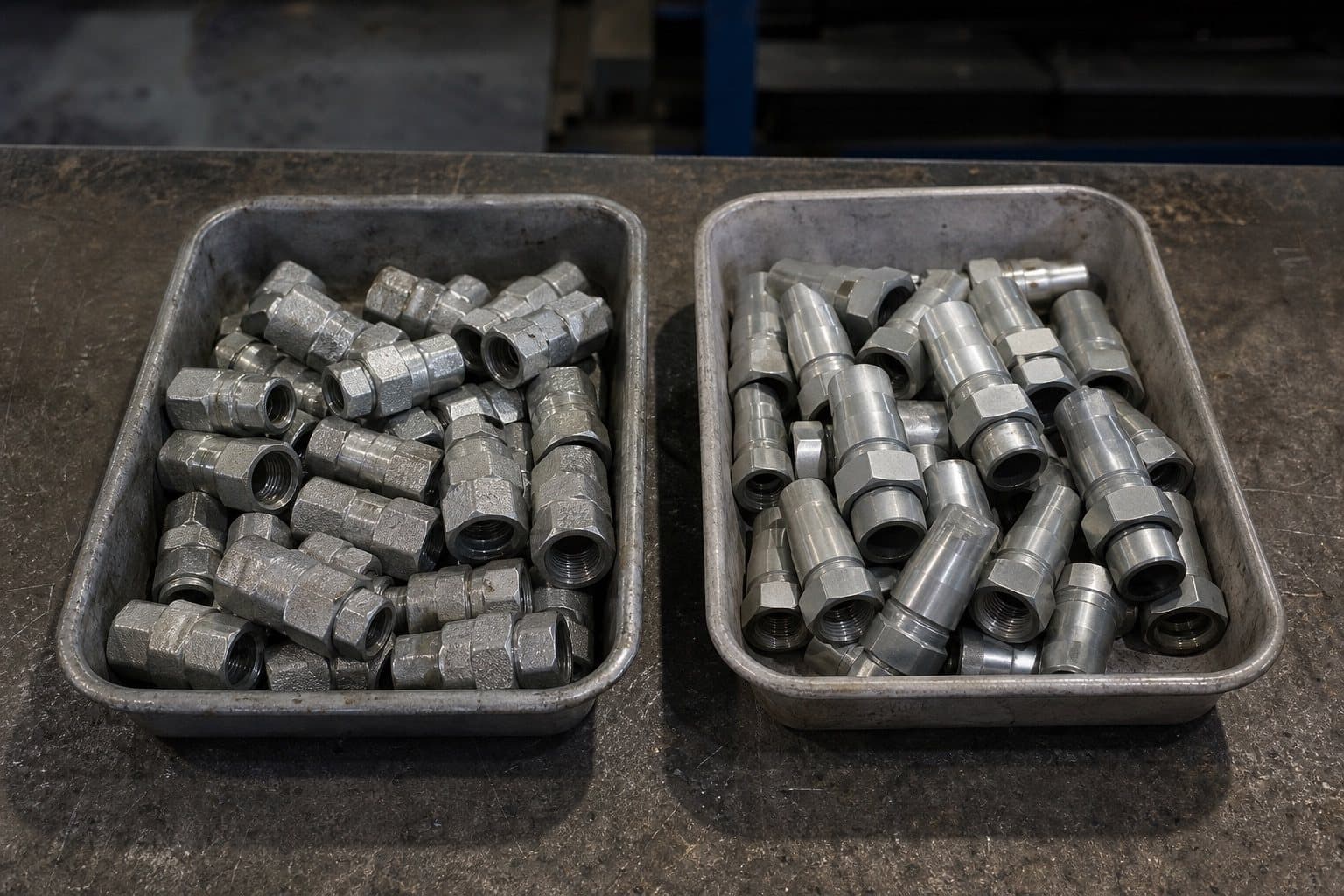
- Very much. Fittings do not age the way rubber does, they cover many combinations, and they are usually the longer-lead half of an assembly.
- How do we review a stock list that grew by accident?
- Start from failures over the last year, rank by what each one stopped, and check the list against that. Most lists have items nobody can explain and gaps nobody noticed.