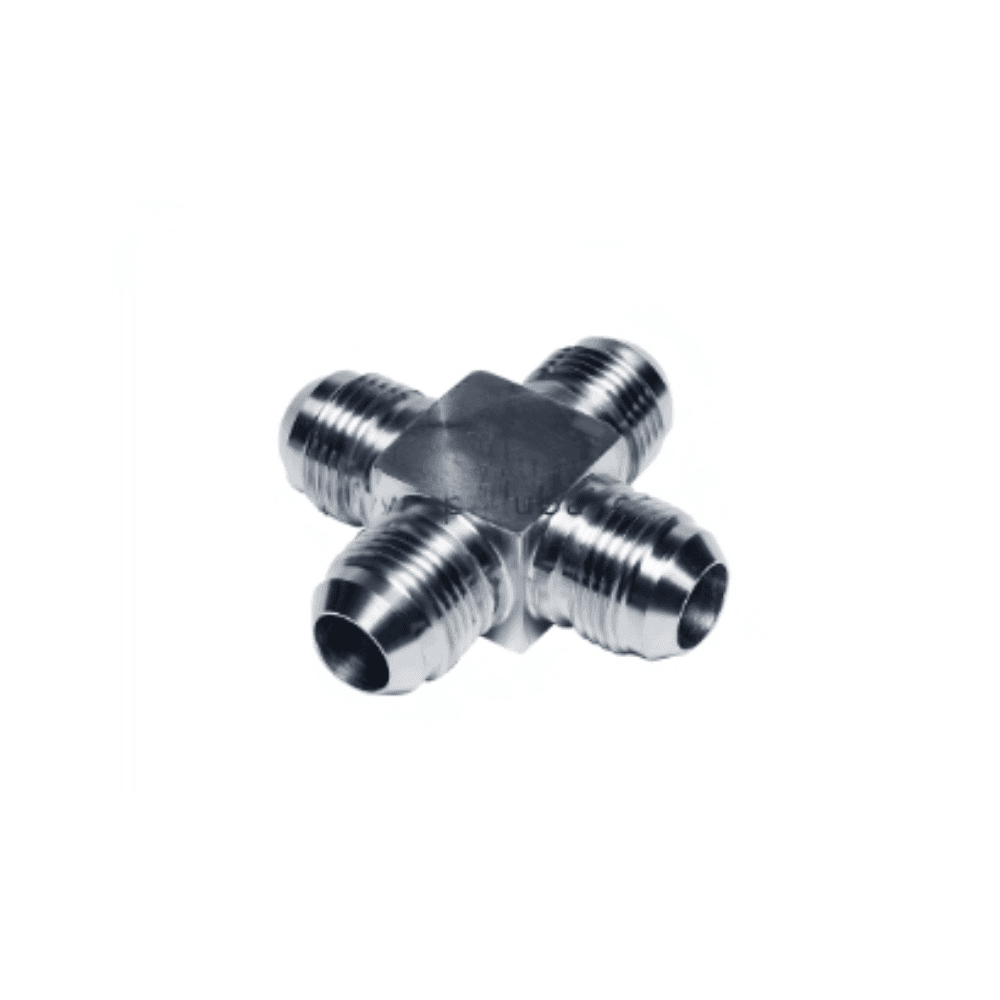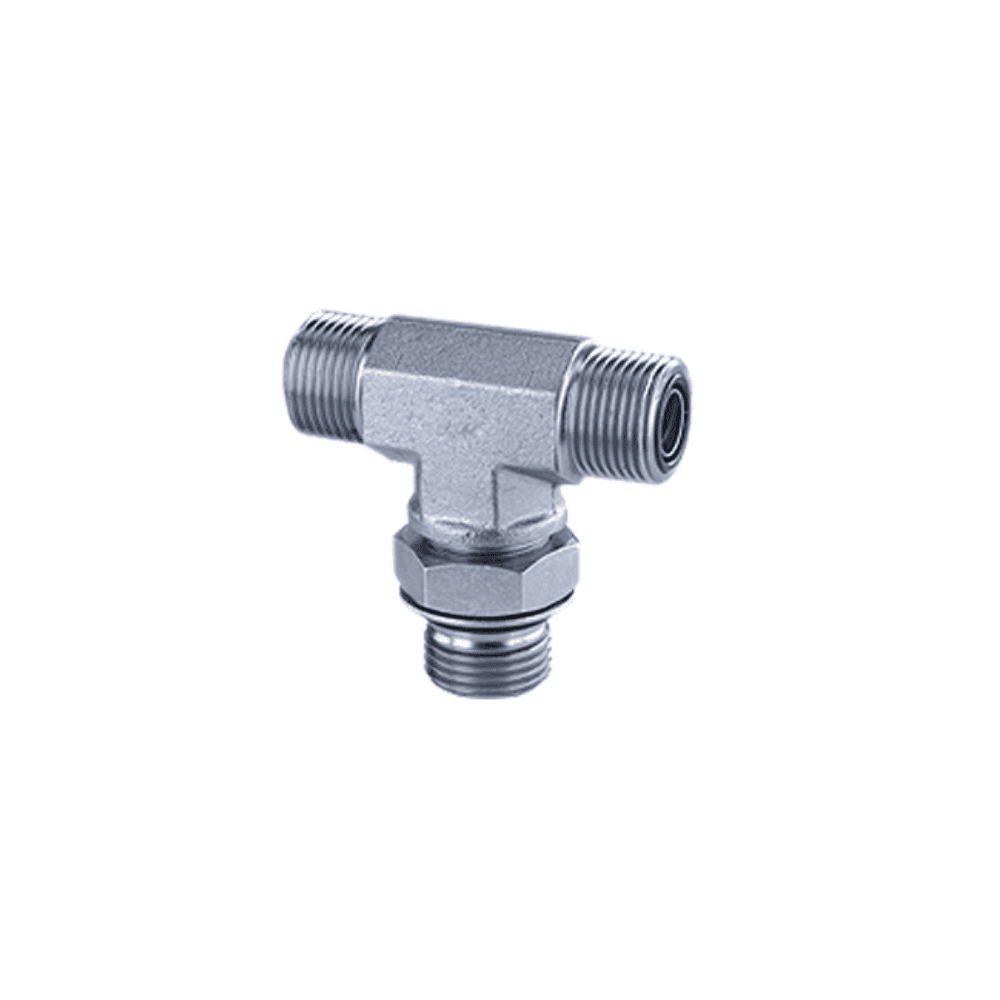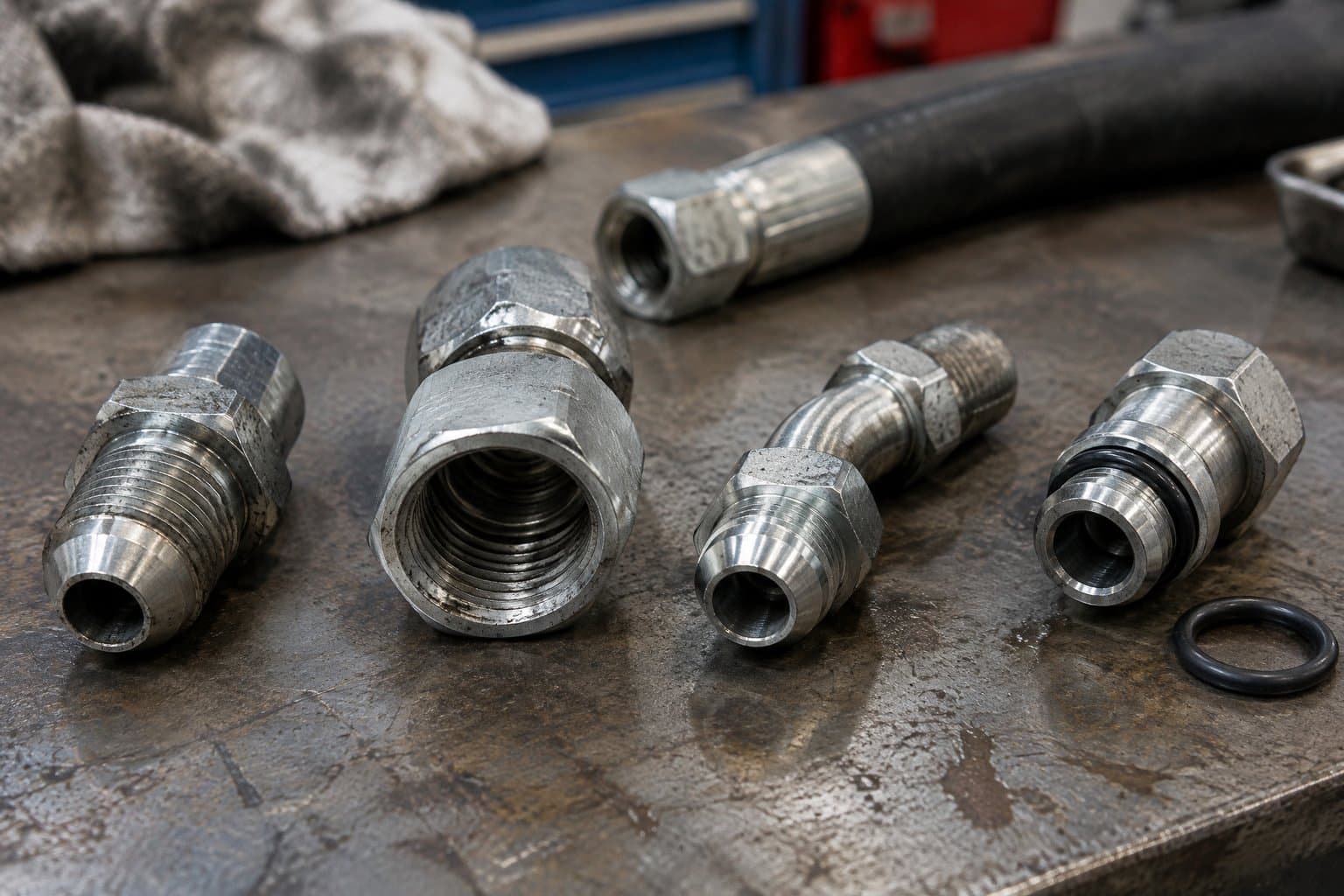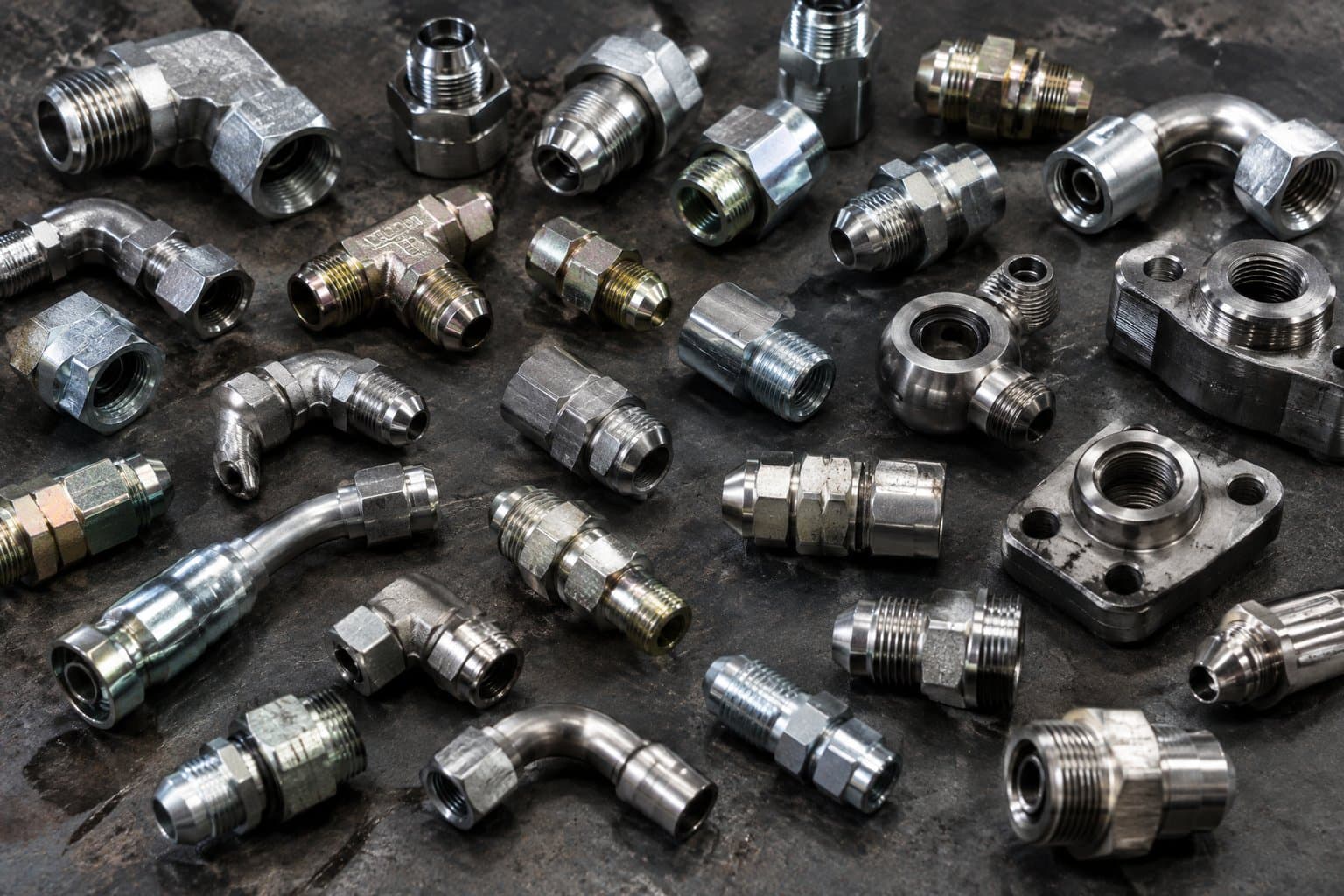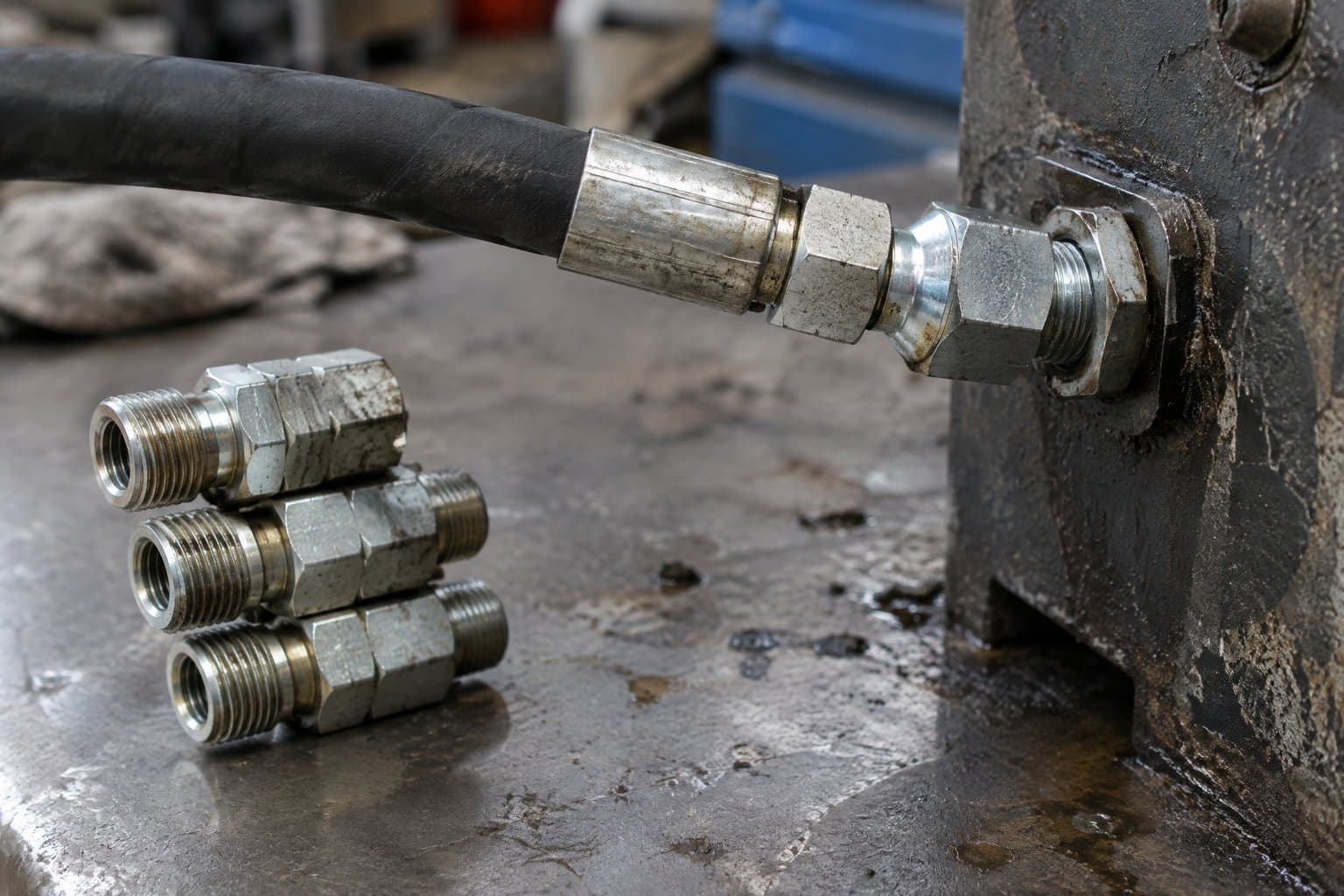
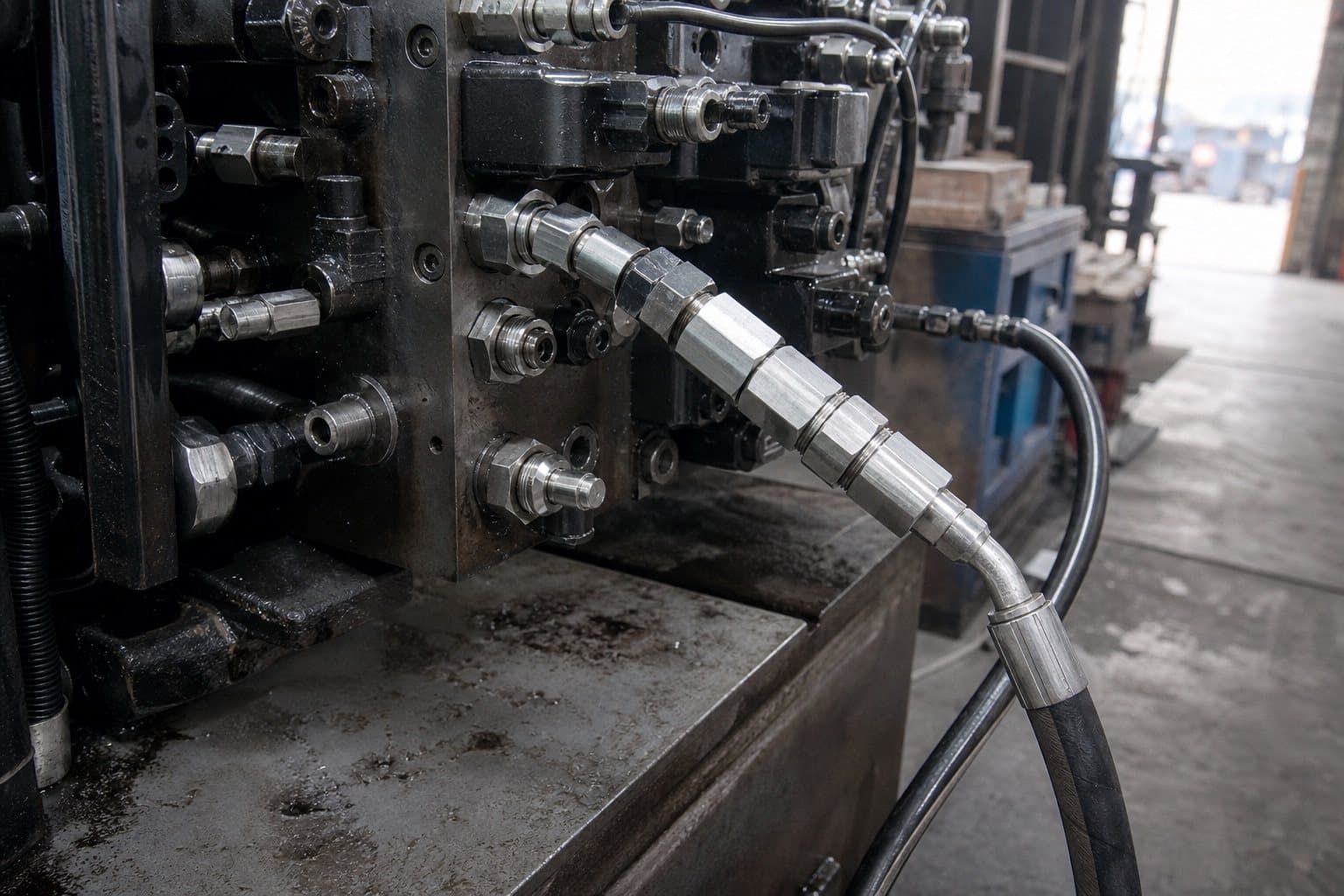
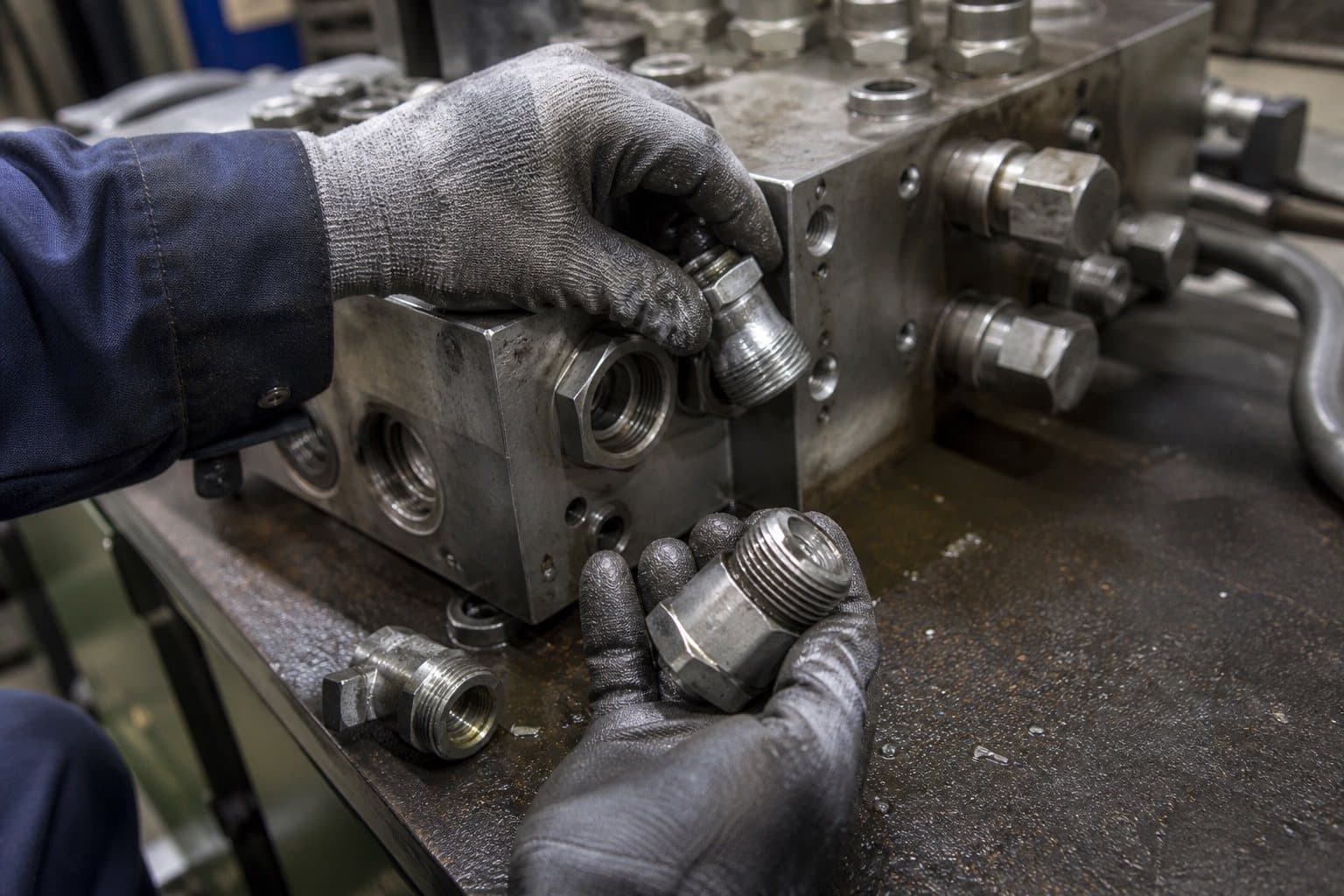
A stack of adapters is the most honest thing on a machine: it records exactly what was on the shelf the day something failed. Some of it is fine and stays fine for years. The rest is a slow leak and, occasionally, a cracked port — and the difference between the two is not really about how many adapters there are. A typical stack bridges a BSP port to a JIC or ORFS hose end, two or three parts deep.
/01What a stack actually costs.
| Effect | Why it matters |
|---|---|
| More jointsHighlighted | Each is an independent chance of a leak, and they are hard to isolate once oil is tracking |
| Leverage on the portHighlighted | Hose movement is amplified into a bending moment at the port thread |
| Flow restriction | Stacked reducers narrow the path; on suction lines this causes cavitation |
| Clearance and access | The stack lengthens the run and can foul structure or reduce bend radius at the hose end |
/02When it is fine.
A stack that will not cause you trouble
All four of these together. Miss one and it is worth reconsidering.
IfOne adapter, doing one job
Converting a port thread family, or changing direction once.
This is normal design, not a compromise. Machines ship like this from the factory.
IfShort, and close to the port face
Minimal leverage on the port thread.
The load a hose applies grows with the distance it acts through.
IfNo reduction in bore
Same size through, or larger.
A reduction inside a stack is invisible from the outside and shows up as heat or a slow circuit.
IfThe hose is properly supported and correctly long
Nothing is pulling on the stack.
If the hose is short and under tension, the stack is carrying that tension into the port.
/03When it is the leak.
| Arrangement | What happens |
|---|---|
| Two or more elbows stacked to reach a positionHighlighted | Long lever arm, and every cycle works the port thread |
| A stack compensating for a hose that is too shortHighlighted | The stack is in permanent tension. It will loosen or crack |
| Reducer, then expander, back to the original size | Pure restriction for no reason — usually a shelf artefact |
| A tapered thread buried in the middle of the stack | The one joint that cannot be re-made without disturbing everything |
| A stack on a vibrating componentHighlighted | Fatigue at the port, and the crack appears in the casting, not the adapter |
/04What to do instead.
| Option | When it is the right call |
|---|---|
| A hose built with the correct endsHighlighted | Almost always. Removes the stack and the leverage in one step |
| A single adapter of the right form | When the port genuinely is a different family from the hose end |
| A 45 or 90 degree hose end fittingHighlighted | When the stack exists purely to change direction |
| A longer hose with a proper routing path | When the stack is compensating for tension |
| Keep the stack | Short, single reduction-free, supported, and it has never leaked |
Common questions
- How many adapters is too many?
- There is no fixed number. Two short adapters close to the port on a static circuit can be fine; one long elbow on a vibrating pump housing may not be. Judge by total length from the port face, load on the port, and whether bore is reduced anywhere.
- Does each adapter reduce pressure rating?
- Each part has its own rating and the assembly is limited by the lowest. The more common practical issue is that a long stack applies bending loads the parts were not rated for at all.
- Is thread sealant a fix for a leaking stack?
- Only on the tapered joints in it, and only if those are the ones leaking. On JIC, ORFS and BSPP joints sealant makes it worse. A stack that leaks under load is usually leaking because of movement, not sealing.
- Why do reducers in a stack cause heating?
- A narrower path at the same flow means higher velocity and more pressure drop, and that energy appears as heat. On a suction line it can drop the pressure enough to cause cavitation, which damages the pump.
- The machine came from the factory with a stack. Is that different?
- Usually yes — a designed arrangement accounts for the loads and the bore. What is worth checking is whether it has been added to since.