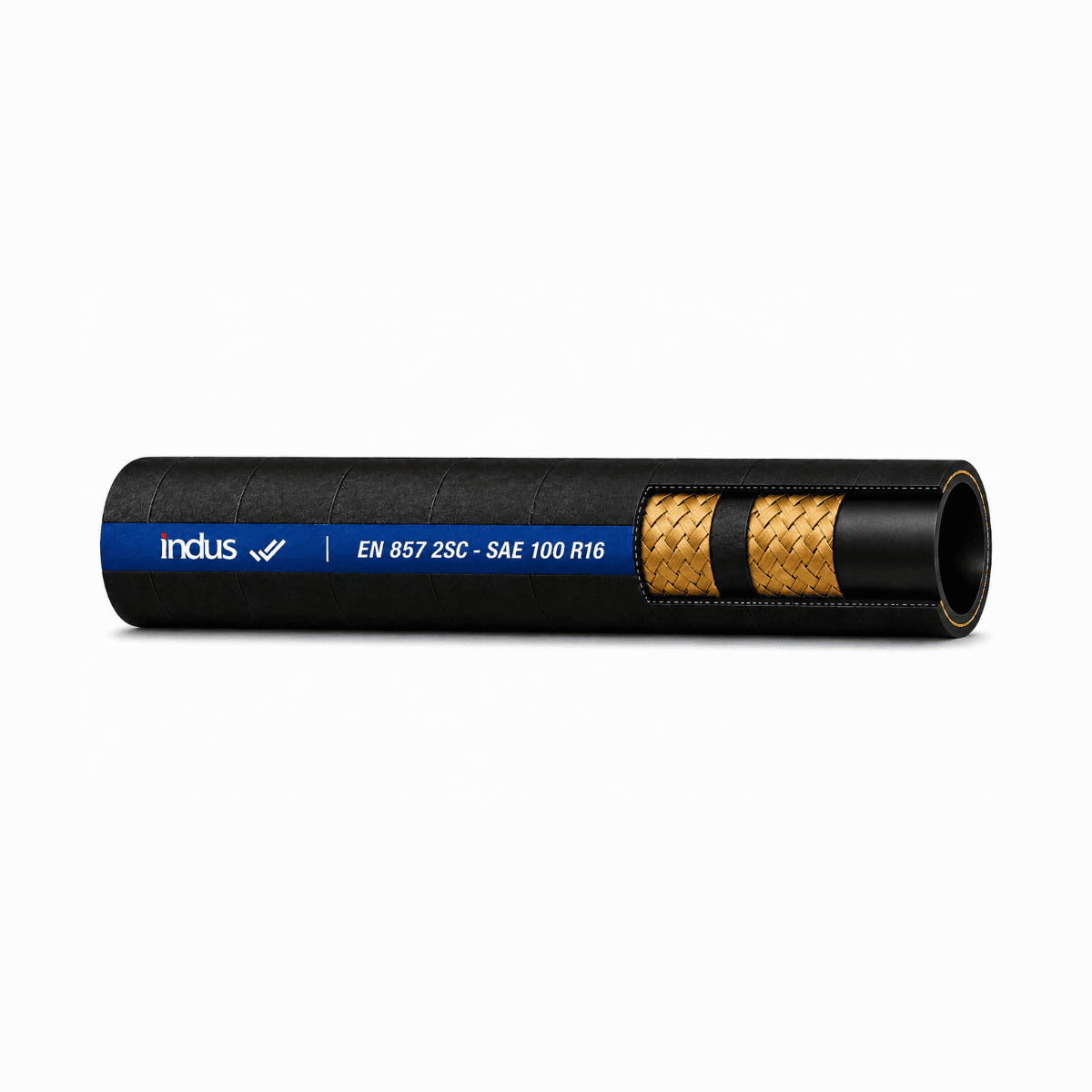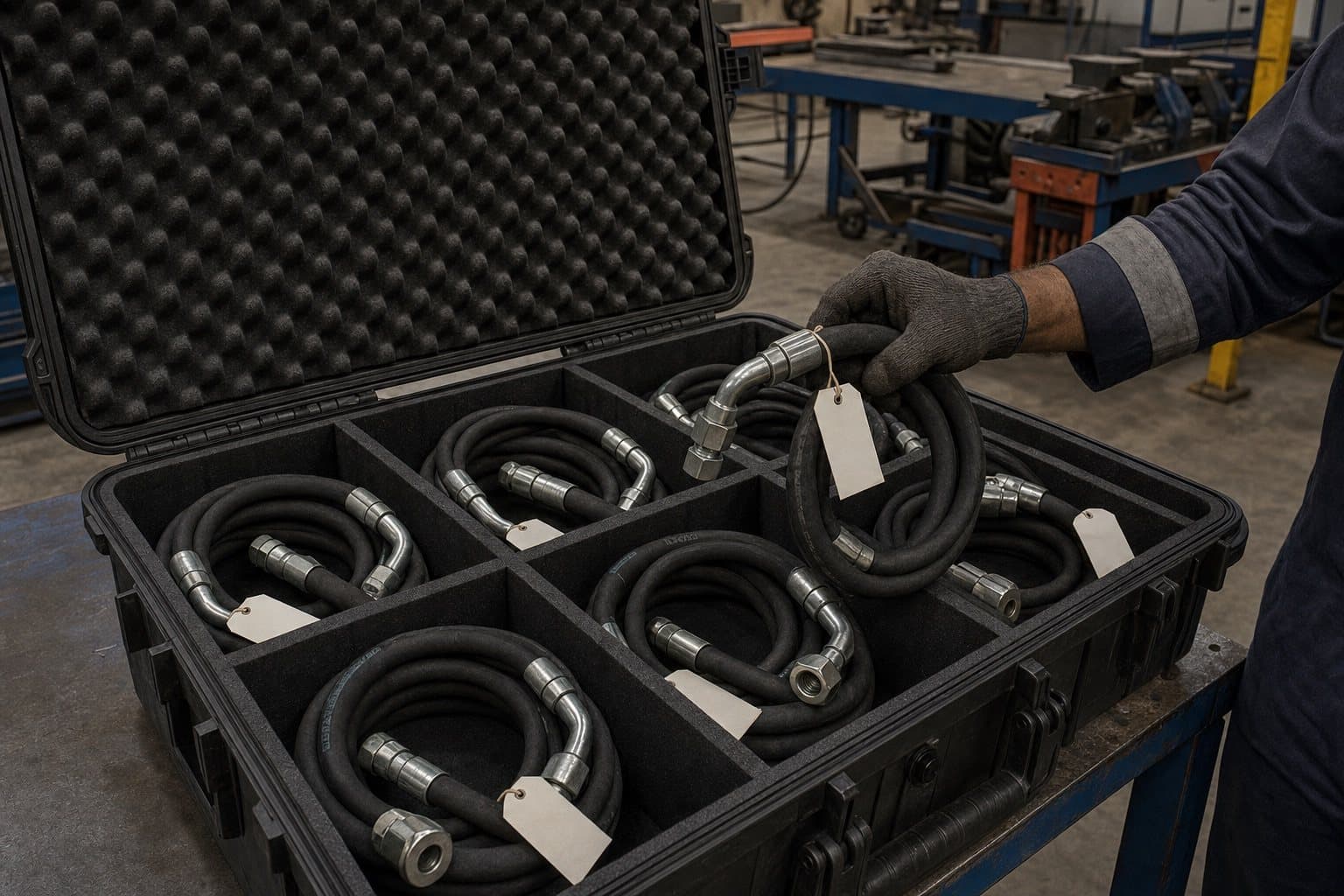
Most yards already hold hose spares. Very few can say what they hold, for which machine, or how old it is — which is the difference between a kit and a shelf, and the difference decides whether any of it gets used when something stops.
/01What makes a kit a kit.
| Property | A shelf of spares | A kit |
|---|---|---|
| ContentsHighlighted | Whatever was left over | A defined list |
| Labelling | Sometimes a size | Machine and position |
| DatingHighlighted | None | Build date on every assembly |
| Rotation | Oldest at the back, fitted last | Oldest fitted first |
| Review | Never | Against failures, annually |
| Use when a machine stops | Someone searches | Someone collects the kit |
/02Two kinds worth building.
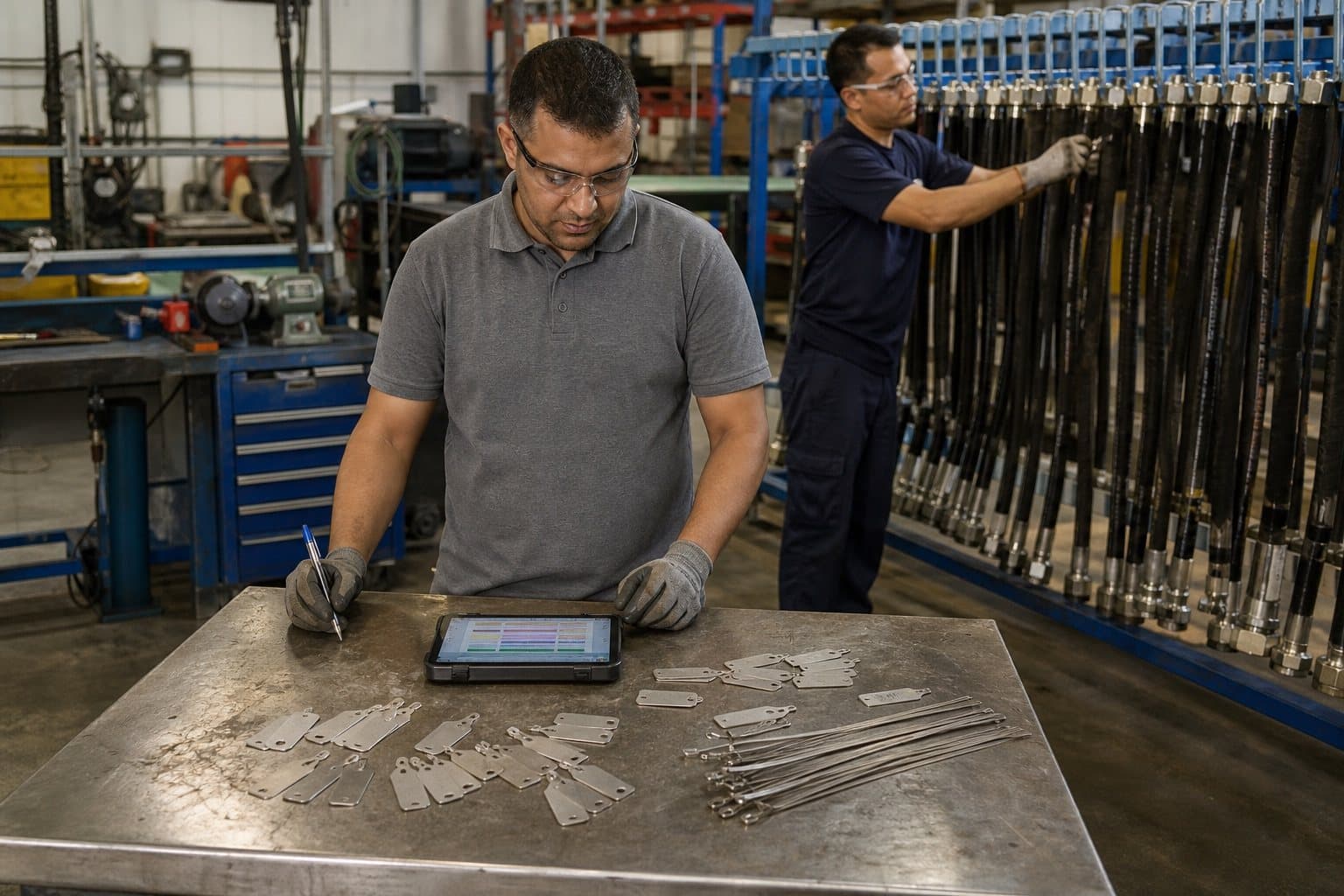
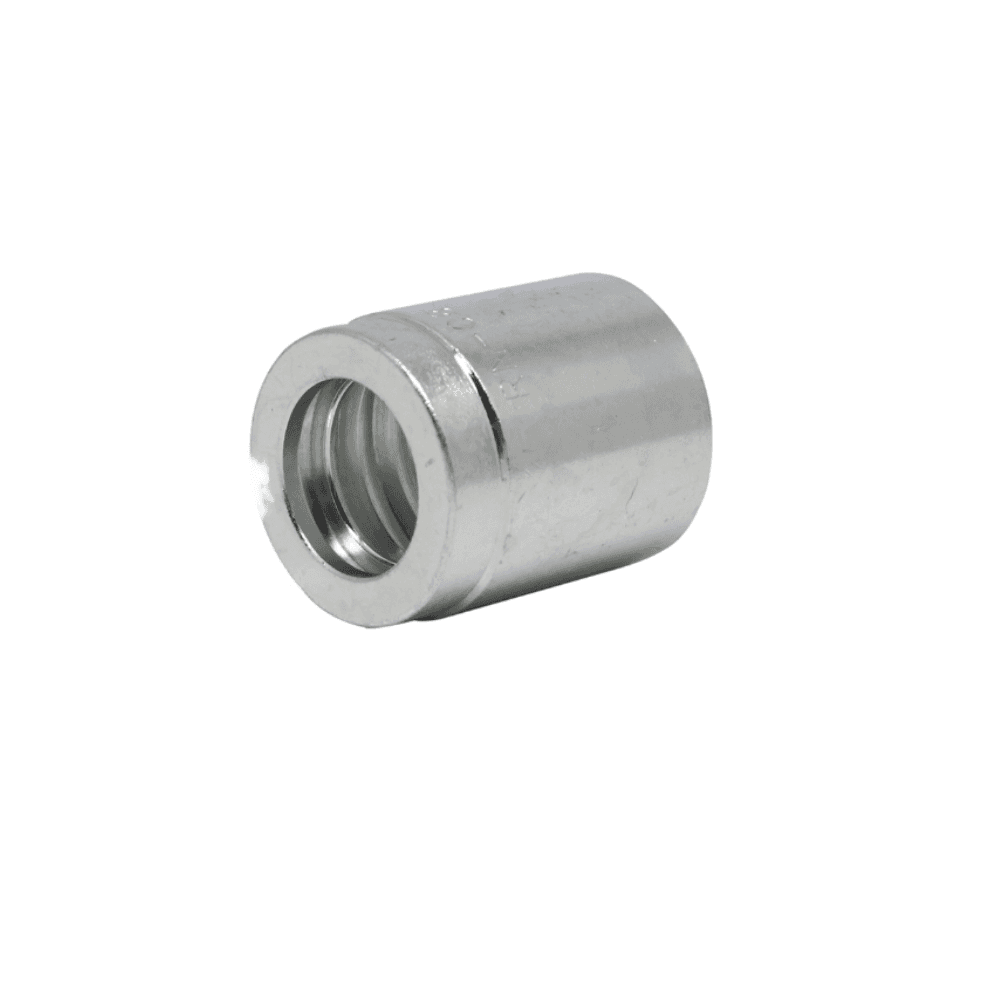
Per-machine kits cover the assemblies most likely to stop a specific machine. They suit single-point-of-failure equipment — the only crane, the only pump — where the question is how fast that particular machine can be back. Each assembly in the kit is tagged with its construction and ends — the hose fittings and ferrules it was built with — so it can be rebuilt identically.
Circuit sets cover one high-cycle circuit across a fleet: every packer hose, every spreader set, every bin lifter. They suit fleets of similar machines, and they convert a stream of individual interruptions into one planned replacement window.
/03The parts people forget.
| Item | Why |
|---|---|
| Bonded washers and O-rings for the ends usedHighlighted | A perfect assembly still leaks on a reused seal |
| Dust caps for couplers | Especially on attachment circuits |
| Clamps or sleeves for the positions that need them | The kit should let the routing be restored properly |
| The position list itself, laminatedHighlighted | So the kit is usable by whoever is on shift |
Common questions
- How do we work out what goes in the kit?
- From your own failure history if you have one, and from the machine’s high-cycle and hard-to-reach positions if you do not. A year of records makes the list obvious; without them it is an educated first version to be revised.
- Will you build and hold kits for us?
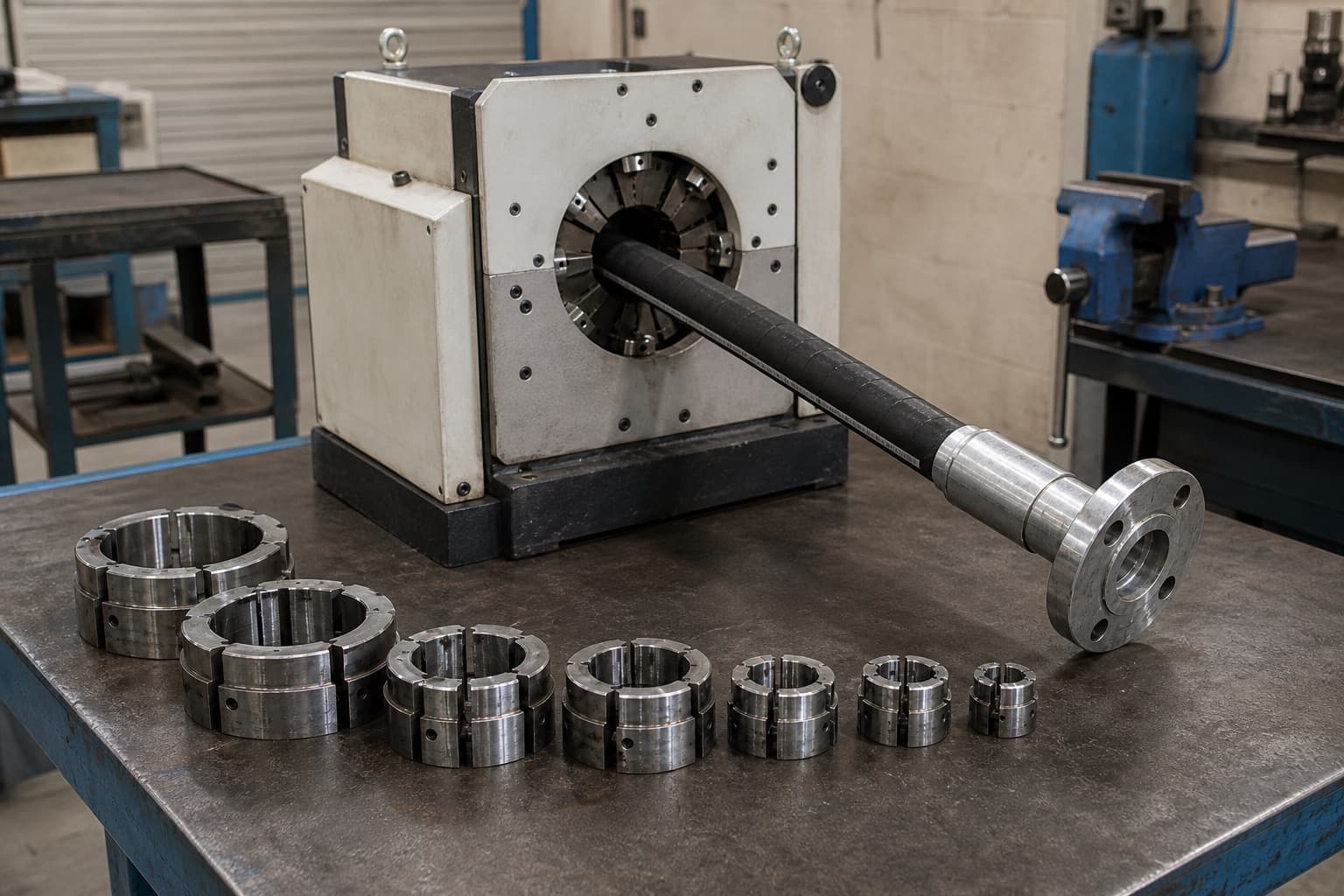
- Yes, including date-marking and rotation. For fleets working far from Dubai that is usually the arrangement that makes the difference.
- Is it worth kitting a machine that rarely fails?
- Only if a failure would be expensive or slow to fix. Rarity is not the test — consequence is.
- What happens to kit items that age out?
- Fit them on scheduled work rather than scrapping them. That is what rotation is for, and it is why dating every item matters.