A chain certificate is the only proof that a length of chain is what it is sold as. Diameter can be measured on the quay; grade, heat treatment and test results cannot. That is why classed ships and offshore units only accept chain and accessories with a certificate from a recognised classification society, and why the marks on the steel matter as much as the paper.
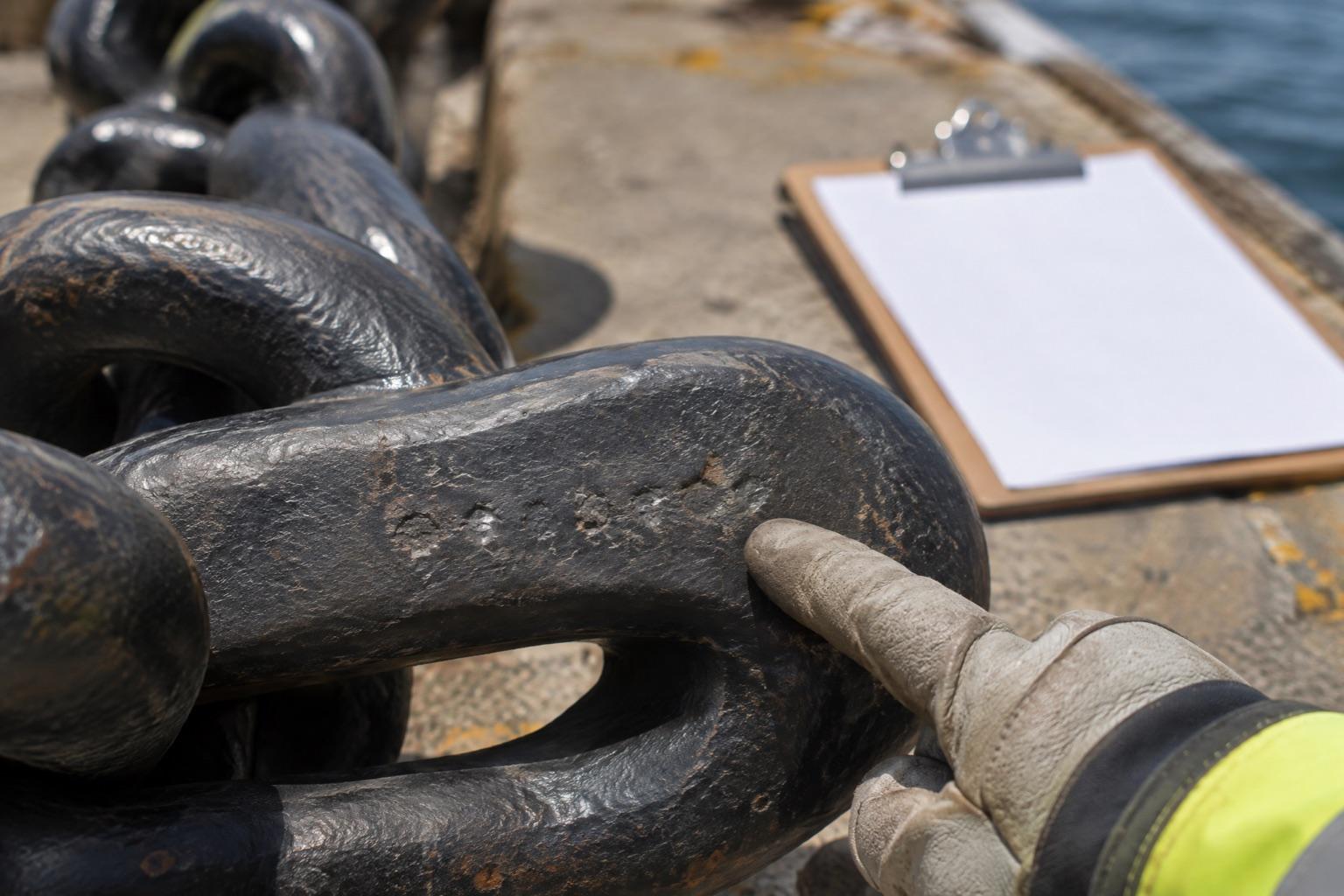
/01The marks on the chain.
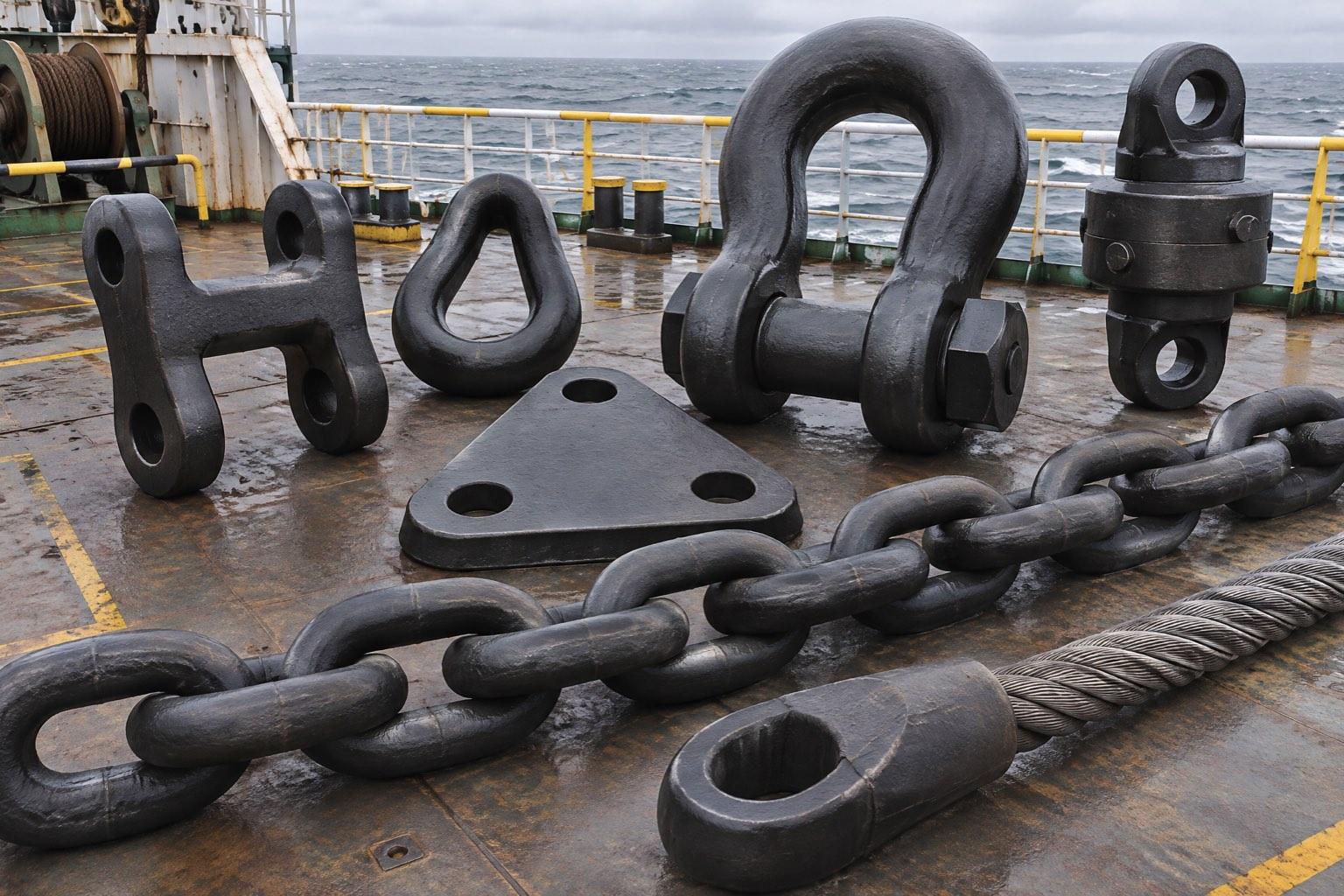
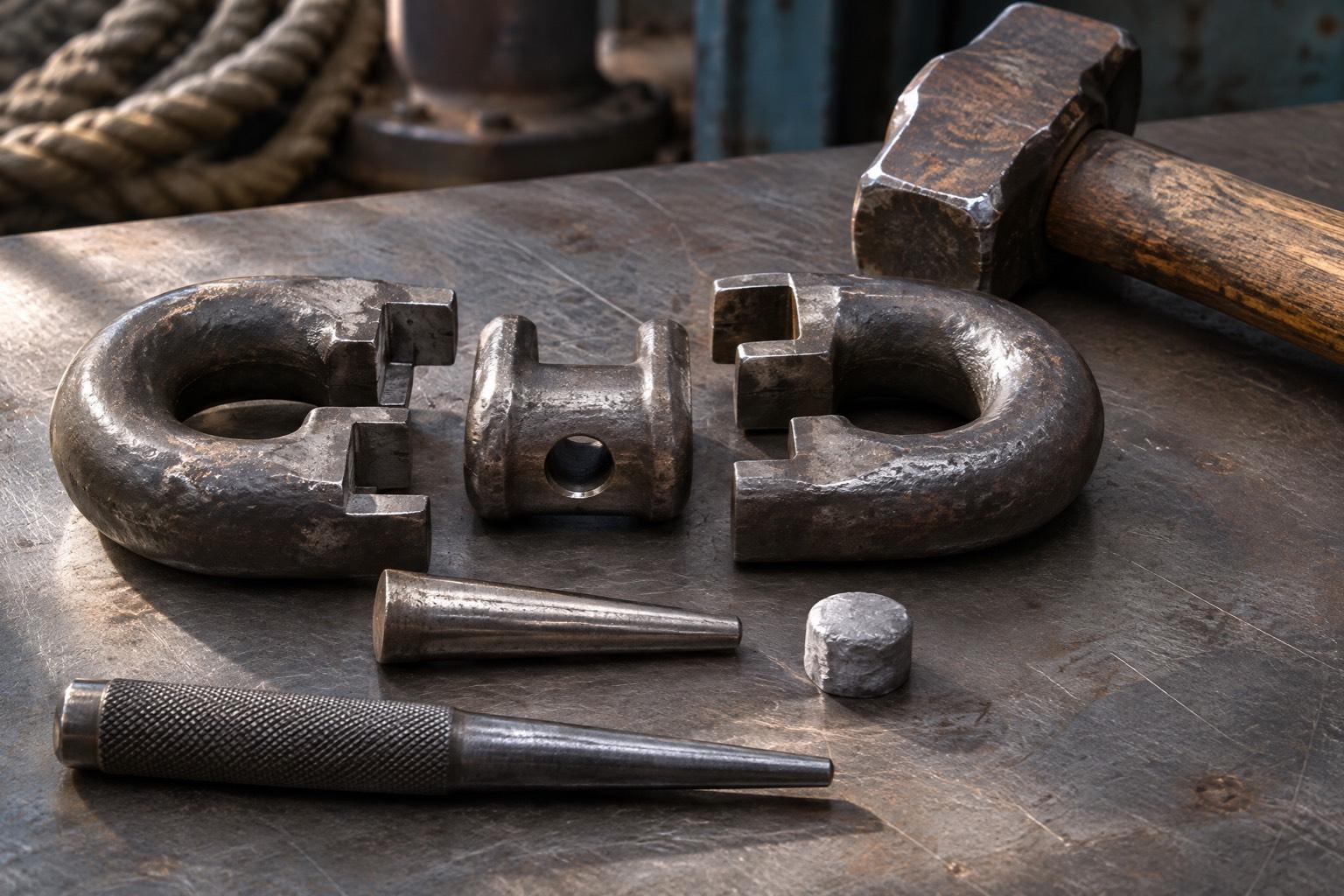
After testing, each length of class-approved chain is stamped near both ends — at least with the chain grade, the certificate number and the society’s stamp. Shackles, swivels and special links are stamped individually; one stockist notes that each of its swivels carries a serial number on the body. The exact content and position of the marks are set by each society’s rules. Makers now also record the flash-butt weld of every link and keep batch traceability, so a mark can be followed back to the bar it was made from.
/02What the certificate shows.
A class certificate for chain or accessories should give:
- the society, certificate number and the surveyor;
- the maker and works;
- the product — stud link or studless chain, or the type of accessory — its nominal diameter and grade;
- the number and length of the lengths, or the number of pieces;
- the proof load and breaking load applied, and the result;
- mechanical and impact test results, or a reference to them;
- the identification marks stamped on the steel.
The tests behind it are explained in anchor chain testing.
/03Which society.
The chain mills we work with hold factory approvals and class certificates from up to a dozen societies — among them ABS, BV, CCS, DNV, KR, LR, NK, RINA, RS, IRS and CR — for anchor chain and accessories and, separately, for offshore mooring chain. A ship needs the society that classes it, or one it accepts; an offshore project needs what its specification names. Some markets lean on one society: one chain maker reports that most projects in Australia ask for a particular society’s certificate. Say which you need when you enquire, because it decides which mill and which stock can supply. Certified chain, accessories and anchors are in our marine equipment range, quoted from Dubai.
/04Checks on delivery.
- Count the lengths and accessories against the certificates.
- Read the stamped marks on each length and piece, and find them on a certificate.
- Check size and grade on the certificate against the order and the ship’s requirement — equipment number for ships, the mooring specification offshore.
- Check the test loads against the size chart.
- Keep the certificates in the ship’s file: the surveyor will ask for them at every renewal survey.
Common questions
- Is a mill test certificate enough for anchor chain?
- Not for a classed ship or offshore unit. They need a classification society certificate issued after testing witnessed by the society’s surveyor.
- Where are the marks on anchor chain?
- Stamped near both ends of each length; accessories are stamped individually. The society’s rules set the content and position.
- Which classification societies certify anchor chain?
- Among others ABS, BV, CCS, DNV, KR, LR, NK, RINA, RS, IRS and CR.
- Do shackles and swivels need their own certificates?
- Yes. Each accessory is proof tested and certified, separately from the chain.
- What if a mark cannot be matched to a certificate?
- Do not fit it. Ask the supplier for the matching certificate or a replacement.
Class-certified chain and accessories
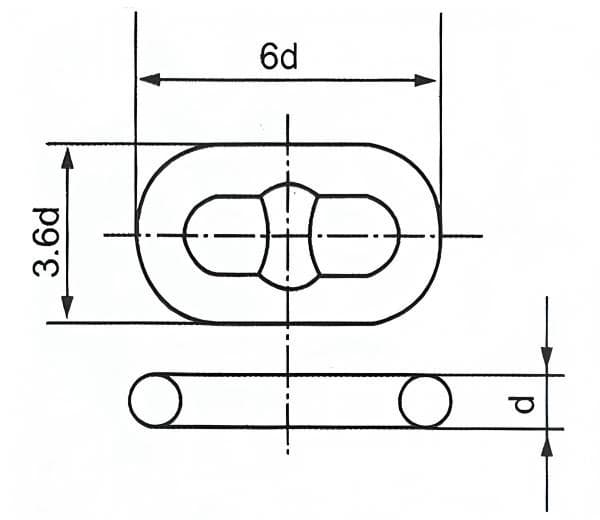 IH-LR-AC-SLACGU1U2Stud Link Anchor Chain — Grades U1, U2 and U3
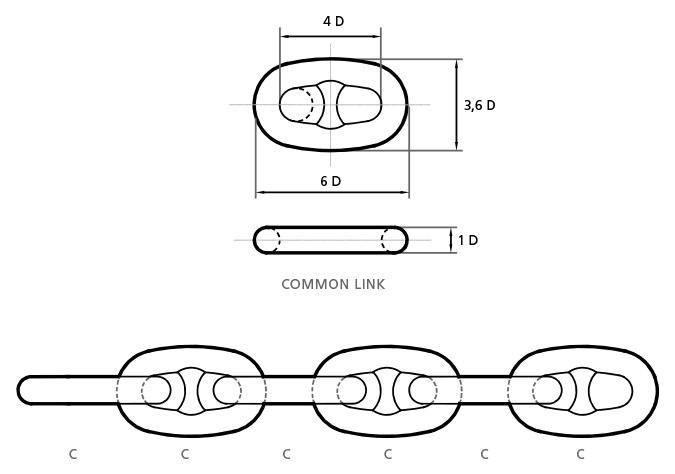 IH-MR-MC-SLStud Link Offshore Mooring Chain — Grades ORQ, R3, R3S, R4, R4S and R5
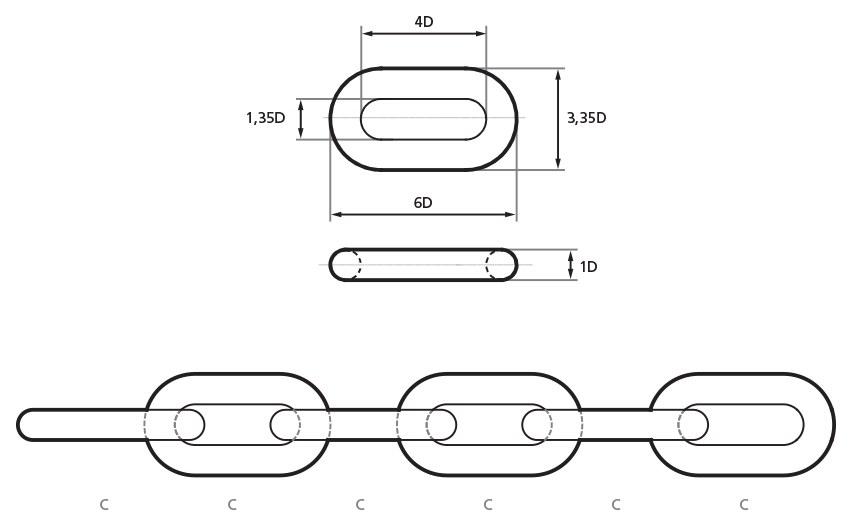 IH-MR-MC-SSStudless Offshore Mooring Chain — Grades ORQ, R3, R3S, R4, R4S and R5
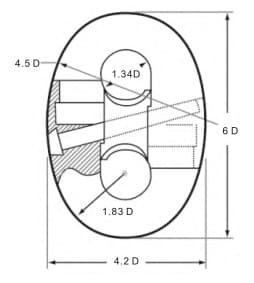 IH-LR-AC-KSGU2U3Kenter Shackle — Grades U2 and U3
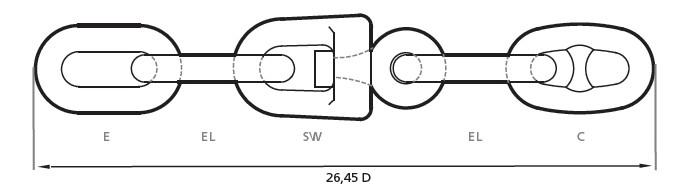 IH-LR-AC-SFACGU2U3Swivel Forerunner — Anchor Chain, Grades U2 and U3
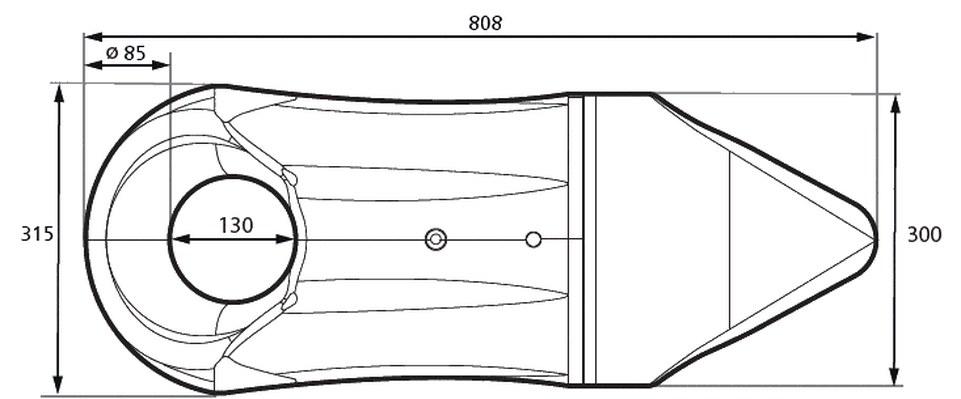 IH-MR-AC-BSWBearing Mooring Swivel