Skip to content
Assembly, crimping & certification

Getting a hydraulic hose made: what to bring and what we measure

Bring the old hose if you have it. If you do not, four measurements and two photographs will get the assembly built correctly first time.

Written by
Ayush Bhatia, Director
Published
Updated
Reading
3 min · 3 sections
Share
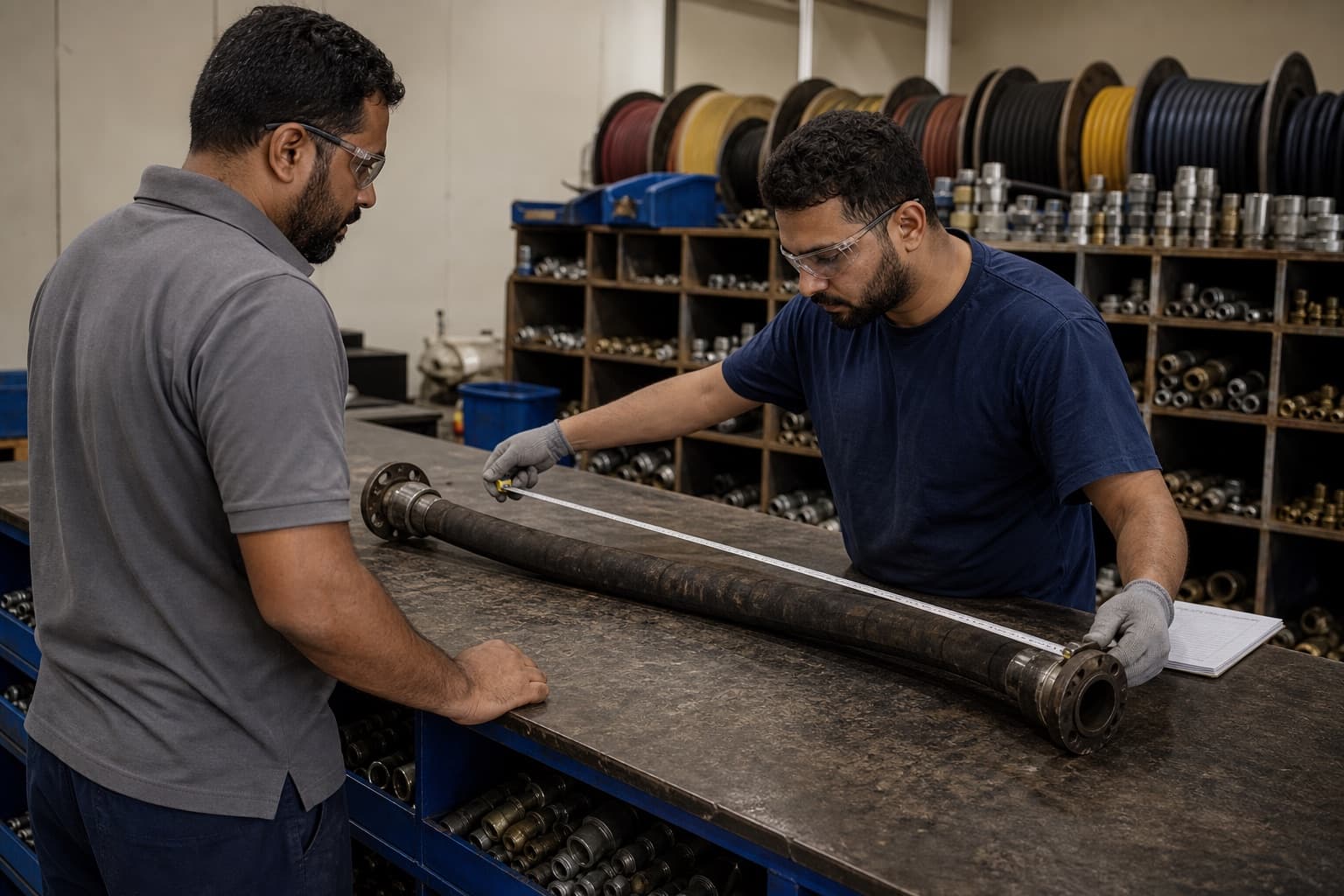
A worn hose assembly being measured across a trade counter, with hose reels and bins of fittings racked on the wall behind
Bring the old assembly: its length, ends and orientation are measured at the counter.

At a glance

Key takeaways

  1. Bringing the failed assembly is worth more than any measurement you can write down. It carries the grade, the size and both fitting types on it.
  2. Overall length is measured between specific points depending on the fitting type — and it is not the length of hose that gets cut.
  3. Fitting orientation matters on anything with two elbows. Note the angle between them before the old hose is thrown away.
  4. Getting the grade right means matching the working pressure and the bend radius the installation actually needs, not copying what happened to be fitted last.
  5. Ask for the test certificate. If an assembly is going into a regulated environment you will need it, and it is far easier to get at build time.

Figures verified · Procedure only. Cut-off factors and crimp diameters are per fitting series and per manufacturer, and are deliberately not published here.

The fastest hose job is the one where the old assembly arrives with the person ordering it. Everything needed to rebuild it is printed on the hose or visible on the ends. Everything below is what to do when that is not possible.

/01Bring the old one.

The layline — the printed stripe running along the cover — normally carries the manufacturer, the grade and the size. That single line resolves most of the specification. The fitting on each end supplies the rest: family, size and orientation. A failed assembly is a complete drawing of itself.

/02If you cannot.
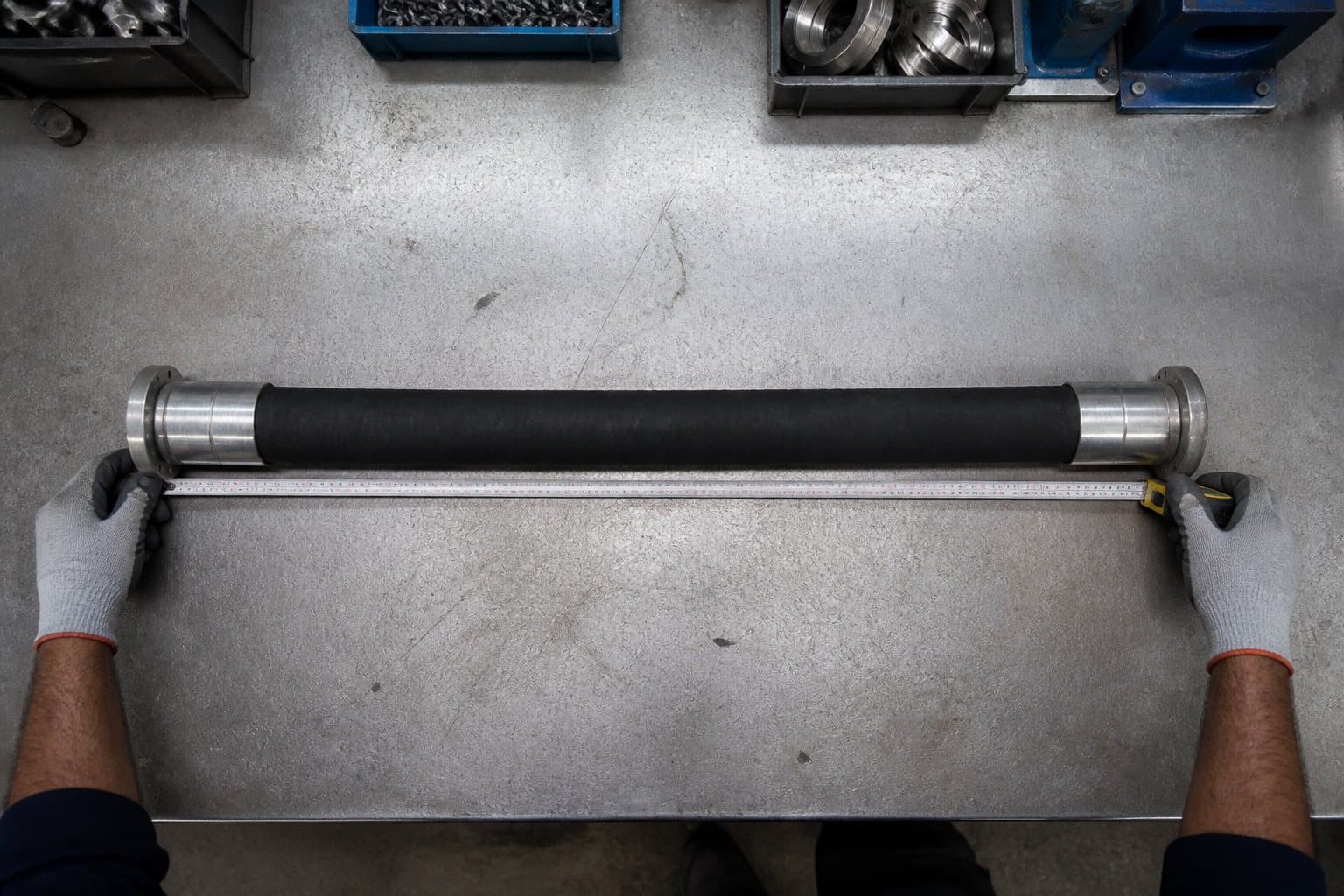
A hydraulic hose lying straight on a bench with a steel tape stretched from one sealing face to the other
Face to face, lying straight. This is the single measurement most often taken wrongly.
HOSE ASSEMBLY · WHAT WE NEED FROM YOU6 items

Measure

  1. Done

    Hose bore

    Inside diameter, or the dash size if the layline is legible. This sets the flow capacity and must match the circuit.

    Who
    Customer
    Tool
    Caliper
  2. Done

    Overall length

    End to end as installed. Say which points you measured between — the convention differs by fitting type and we will confirm it.

    Who
    Customer
    Tool
    Tape
  3. Done

    Fitting family and size, both ends

    They are often different. Photograph each end against a rule if you are unsure.

    Who
    Customer
    Tool
    Photo
  4. Done

    Fitting angle

    Straight, 45° or 90° at each end, and the rotational angle between them if both are elbows.

    Who
    Customer
    Tool
    Photo

Specify

  1. Done

    Working pressure

    What the circuit actually runs at, from the machine data — not the rating of whatever was fitted before.

    Who
    Customer
    Tool
    Machine data
  2. Done

    Application and environment

    Mobile or static, ambient temperature, and whether the run rubs on anything. This is what decides grade and whether it needs protection.

    Who
    Customer
    Tool
    —

That deduction is specific to the fitting series and the manufacturer, which is why this article does not publish a table of them. Getting it wrong produces an assembly that is measurably the wrong length, and on a tight installation that means either a strained hose or one that will not reach.

/03What you get back.

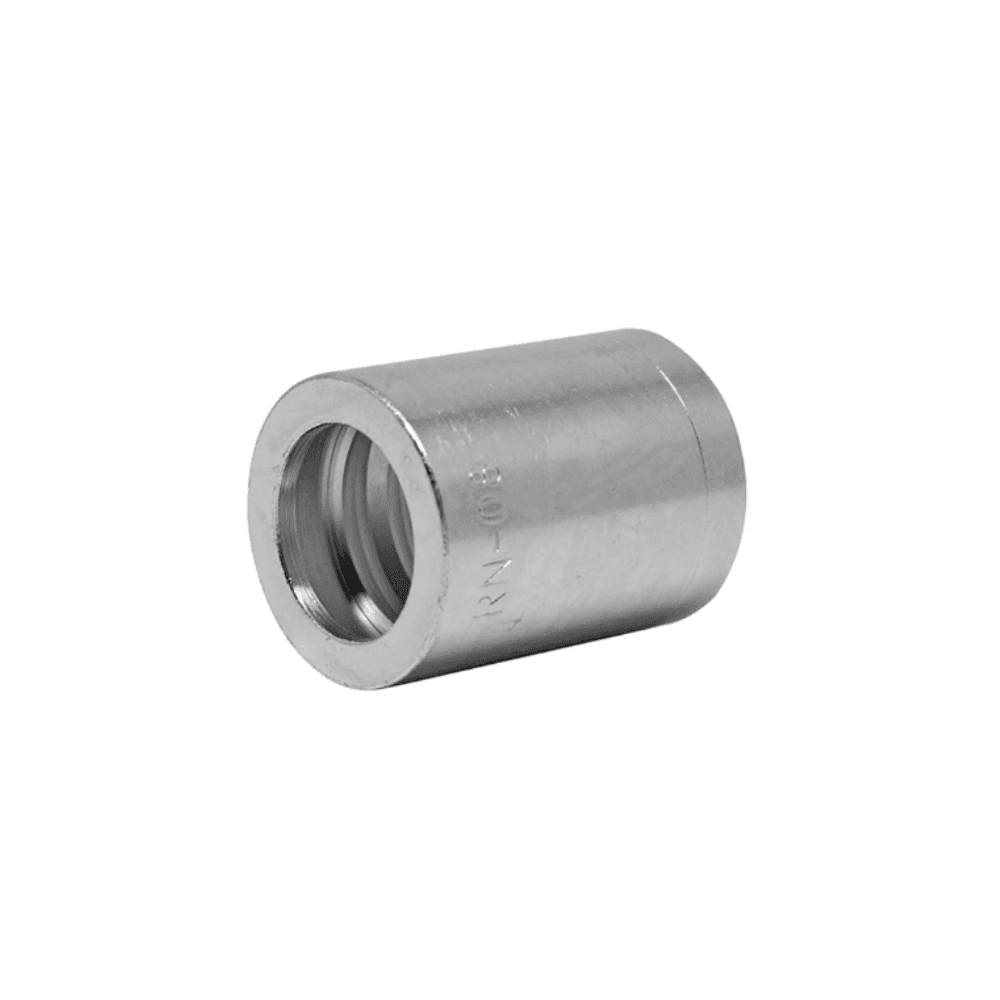
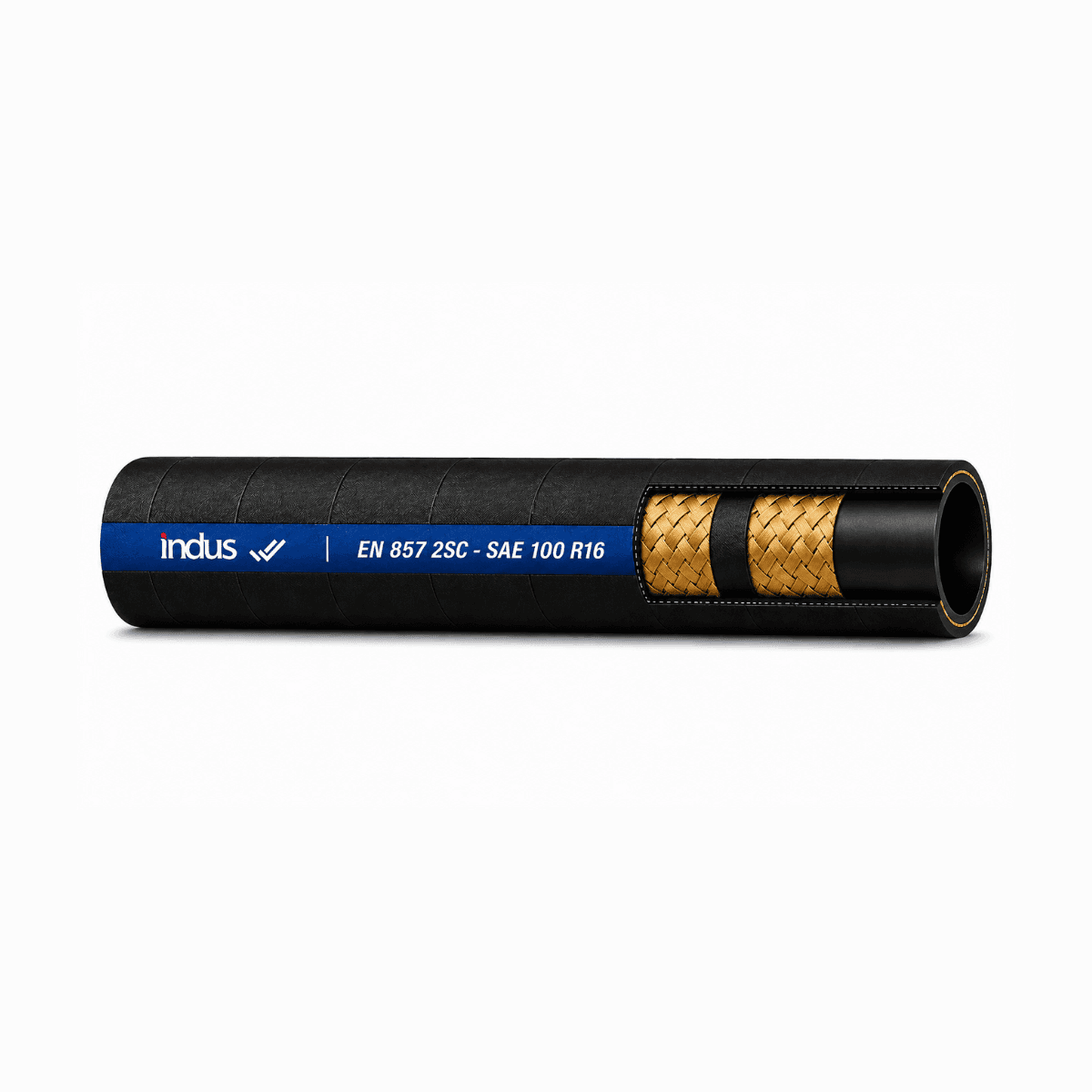
A finished assembly should be crimped to the specification for that hose and fitting combination, proof tested, capped, and tagged. The caps matter more than they look — an assembly that travels open collects exactly the contamination the system is designed to keep out, and a new hose is a common route for dirt into a clean circuit. The same applies whether the hose is a two-wire 2SN or a four-spiral 4SH: the ends are crimped to the specification for that pairing.

Common questions

Can you build to a drawing rather than a sample?
Yes. A drawing needs bore, overall length with the measurement convention stated, both fitting specifications, and the angle between the ends if both are elbows.
Can you match a hose I bought elsewhere?
Usually. The layline carries the grade and size, and the ends identify the fittings. If the layline is worn off we can work from the construction and the fittings.
Do I get a test certificate?
Ask for it at the time of order. Proof testing and certification are straightforward as part of the build and awkward to add afterwards — particularly if the assembly has already been fitted.
How long does it take?
It depends on grade and size availability rather than on the build. Send the specification and we will tell you what is in stock before you travel.

Common grades and ferrules

What next

  1. 01
  2. 02
  3. 03

    Where the finished assemblies go

    Assemblies are cut to length in Dubai, crimped, tagged, pressure-tested and crated, and that is exactly what makes them practical to send somewhere with no hose shop of its own. A batch built to a measured list travels as one consignment with its test records and arrives ready to fit rather than ready to be made up. The further the site, the larger that difference gets.

    Everything above ships from the same Dubai warehouse. If your destination is not listed, it is almost certainly still one we quote. See every export destination

Send the specification.

Photographs of both ends and the layline are usually enough. We will confirm the build and what we hold before you make the trip.

Plant-down? Call +971 52 2477942 — 24/7

Keep reading

More on Assembly, crimping & certification

All articles in this topic
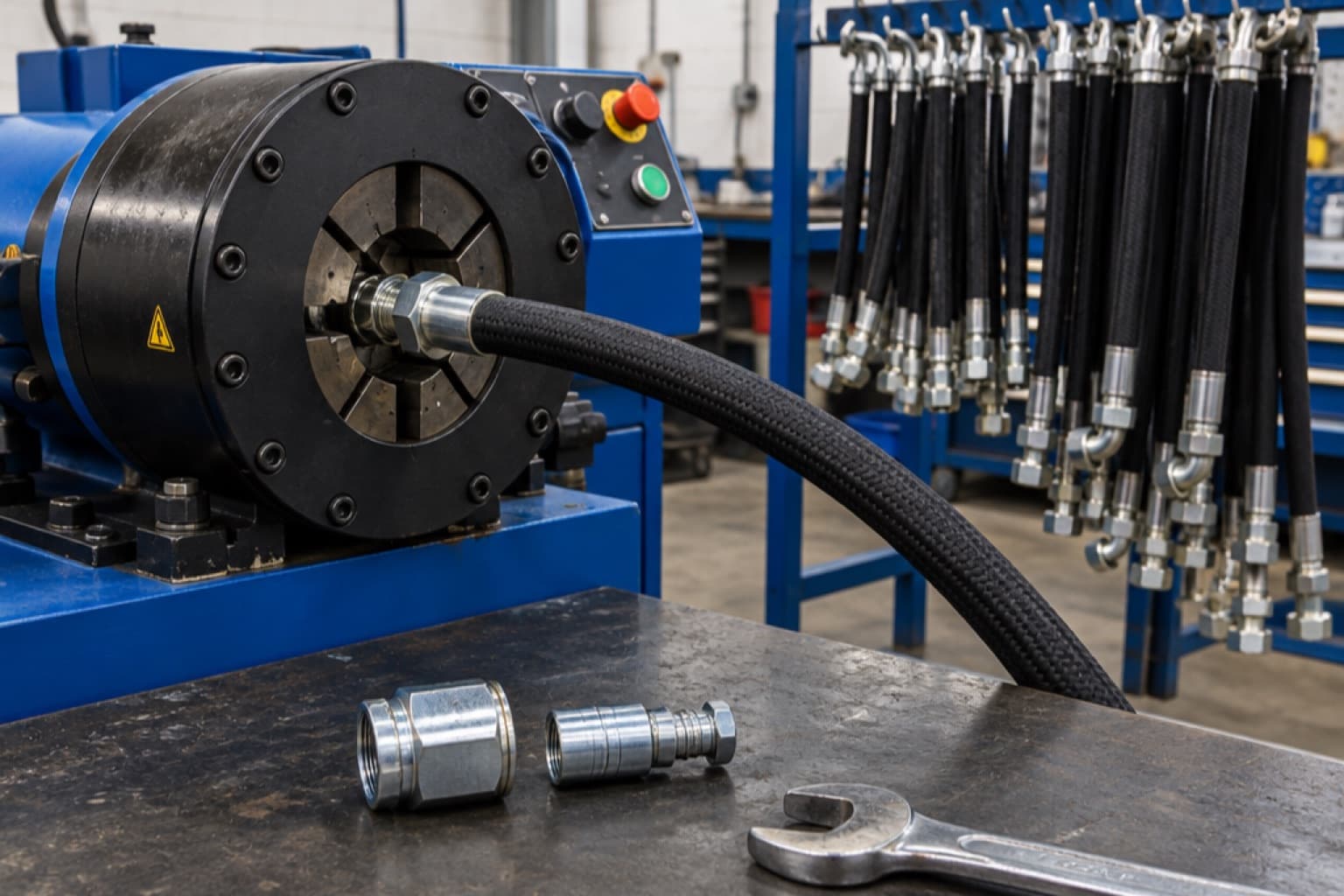
A crimping machine crimping a braided hose assembly, finished assemblies on a rack, and a reusable fitting on the bench

Crimped, reusable or ready-made: choosing how to get a hydraulic hose assembly

6 min read

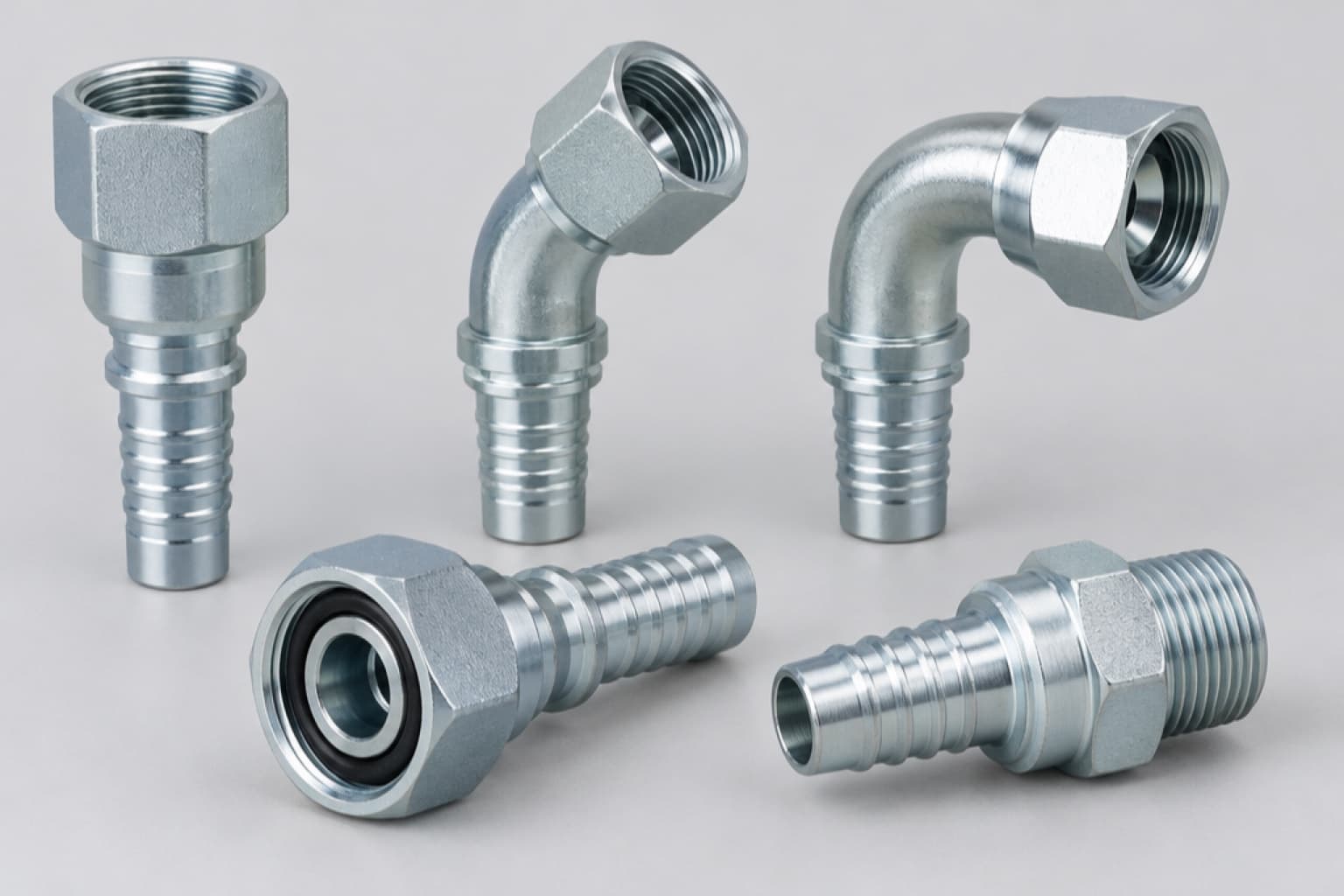
Steel hose fittings: JIC 37° female swivels straight, 45° and 90°, an ORFS female swivel with O-ring, and an NPT male

JIC, ORFS and NPT hose fittings: inch-thread hose ends, drop lengths and how they seal

4 min read

Steel hose fittings with metric and BSP swivels: 24° cone with O-ring, 60° cone, banjo with bolt and washers, JIS flange

BSP, metric, DIN and JIS hose fittings: 60° cones, 24° cones, banjos and Komatsu ends

6 min read

Back to Blog