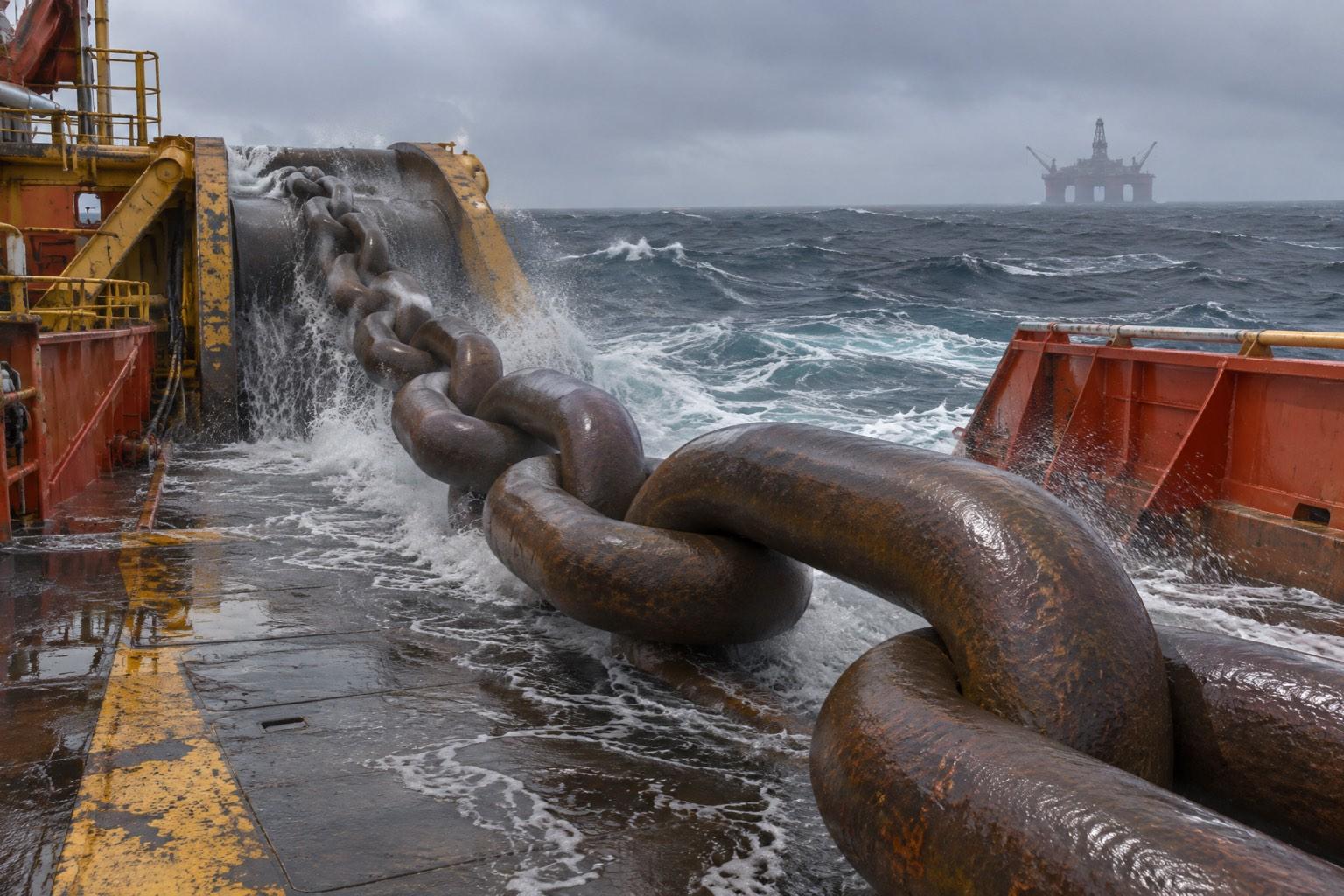
A ship’s anchor chain spends most of its life in the locker. A mooring chain on a floating production unit or a drilling rig is under load every hour for years, in seawater, cycling with every wave. That is why offshore chain has its own family of grades, with higher strength than ship chain and a toughness requirement for every grade. One chain maker puts it plainly: ordinary grade 3 anchor chain steel is far from meeting what a mooring chain needs — high strength, fatigue and corrosion resistance, weldability and low-temperature toughness at the weld.
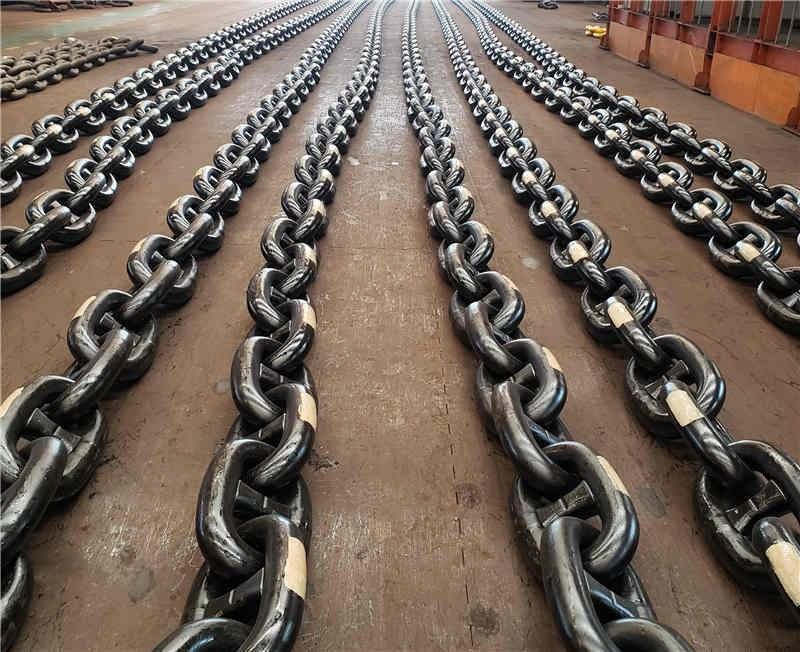
/01Mechanical properties.
| Grade | Tensile, MPa | Yield, MPa | Elongation % | Reduction of area % |
|---|---|---|---|---|
| ORQ | 641 | — | 17 | 40 |
| R3 | 690 | 410 | 17 | 50 |
| R3S | 770 | 490 | 15 | 50 |
| R4 | 860 | 580 | 12 | 50 |
| R4S | 960 | 690 | 12 | 50 |
| R5 | 1,000 | 760 | 12 | 50 |
| Grade 3 (ship chain, for comparison) | 690 | — | 17 | 40 |
Grade 3 ship chain and R3 mooring chain share a 690 MPa tensile strength, but R3 adds a yield requirement, a higher reduction of area and a toughness requirement at a lower temperature. Above R3 the strength climbs quickly while the required elongation falls — higher-strength steel is less ductile, which is why toughness has to be specified separately.
/02Toughness: the Charpy requirement.
| Grade | At −20 °C | At 0 °C |
|---|---|---|
| ORQ | — | 58 / 49 (40 / 36 at −15 °C) |
| R3 | 40 / 30 | 60 / 50 |
| R3S | 45 / 33 | 65 / 53 |
| R4 | 50 / 36 | 70 / 50 |
| R4S | 50 / 36 | — |
| R5 | 58 / 42 | — |
The flash-butt weld in every link is the place a chain is most likely to be brittle, so the weld has its own, lower minimum. The test temperature is the design temperature chosen for the project: −20 °C is usual, with 0 °C values given for R3, R3S and R4 where the class allows. How the welds are made is in how anchor chain is made; how they are tested in anchor chain testing.
/03Test loads by grade.
| Grade | Break constant | Break at 76 mm | Proof at 76 mm, stud link / studless |
|---|---|---|---|
| ORQ | 0.0211 | 4,621 | 3,066 / 3,066 |
| R3 | 0.0223 | 4,884 | 3,417 / 3,417 |
| R3S | 0.0249 | 5,454 | 3,942 / 3,811 |
| R4 | 0.0274 | 6,001 | 4,731 / 4,205 |
| R4S | 0.0304 | 6,658 | 5,257 / 4,665 |
| R5 | 0.0320 | 7,009 | 5,498 / 4,884 |
Every load comes from F = c × d² × (44 − 0.08d) kN with the grade’s constant. One detail worth knowing: for R3 one class society proves stud link chain with a slightly lower constant (0.0148) than the 0.0156 others use, so check which rule set the certificate follows. All sizes from 36 to 205 mm are in the anchor chain size chart, and the difference between the stud link and studless proof loads is explained in stud link vs studless chain.
/04Choosing a grade.
The mooring analysis sets the required breaking strength; the grade decides how big and heavy a chain meets it. Things to weigh:
- Weight. A higher grade carries the same load on a smaller chain, which matters on a deep-water line where the unit carries the chain’s weight.
- Fittings. Every connector must be rated to the grade — H-links, pear shackles, swivels — see offshore mooring components.
- Availability. R3 and R4 are the most widely made and stocked; R4S and R5 are made to order by fewer mills.
- Newer grades. Makers have begun to offer an R6 grade; check the class status before specifying it.
Common questions
- What is the strongest mooring chain grade?
- Of the established IACS grades, R5, with a minimum tensile strength of 1,000 MPa. Some makers now offer R6.
- What does ORQ stand for?
- Oil Rig Quality — the original API grade for mooring chain, below R3 in strength.
- Is R3 the same as grade 3 anchor chain?
- They share a 690 MPa tensile strength, but R3 adds a minimum yield of 410 MPa, a 50% reduction of area and a Charpy requirement at −20 °C, and has higher test loads.
- What does the S in R3S and R4S mean?
- They are intermediate grades — stronger than R3 and R4 respectively, below the next grade up.
- What Charpy energy does R4 chain need?
- 50 J in the base material and 36 J at the weld at −20 °C, or 70 J and 50 J at 0 °C.
Offshore mooring chain and fittings
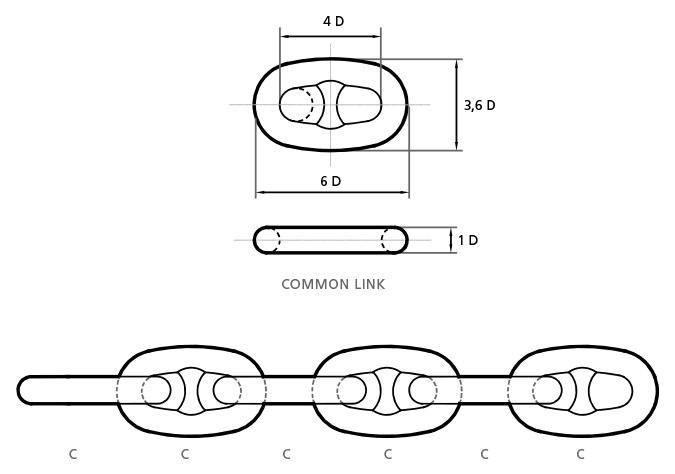 IH-MR-MC-SLStud Link Offshore Mooring Chain — Grades ORQ, R3, R3S, R4, R4S and R5
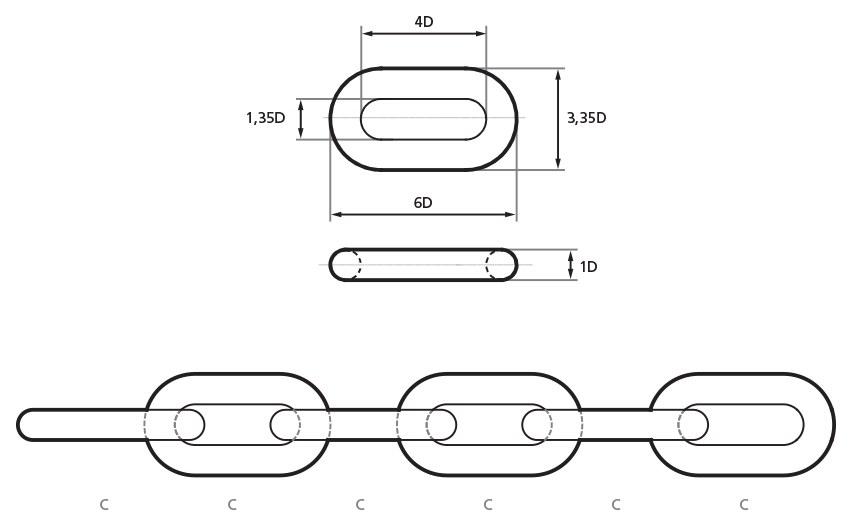 IH-MR-MC-SSStudless Offshore Mooring Chain — Grades ORQ, R3, R3S, R4, R4S and R5
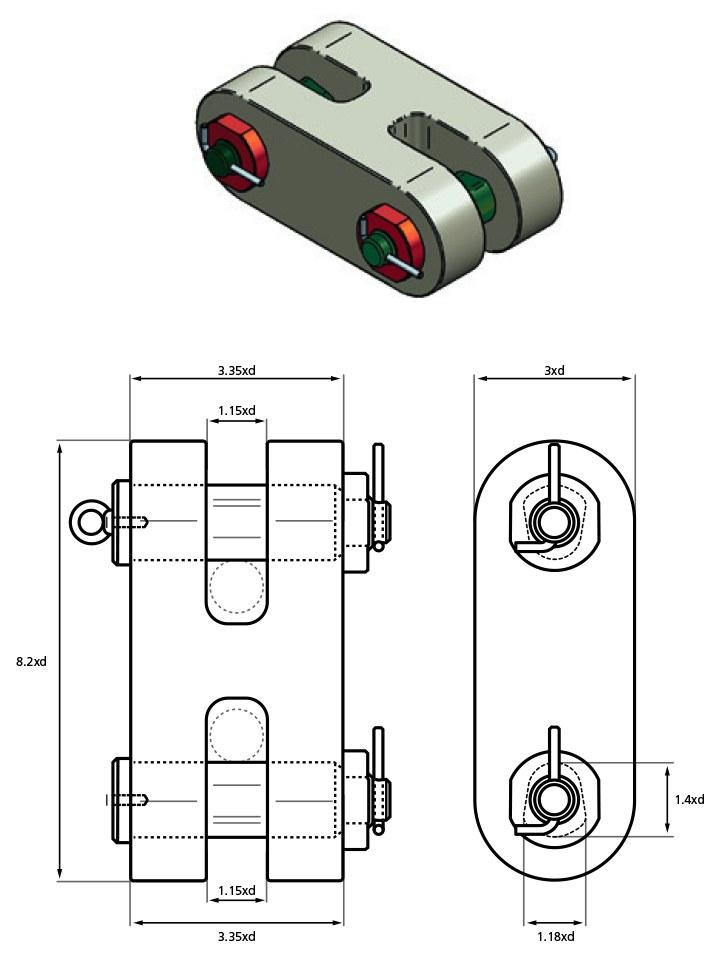 IH-MR-CN-HLKH-Link
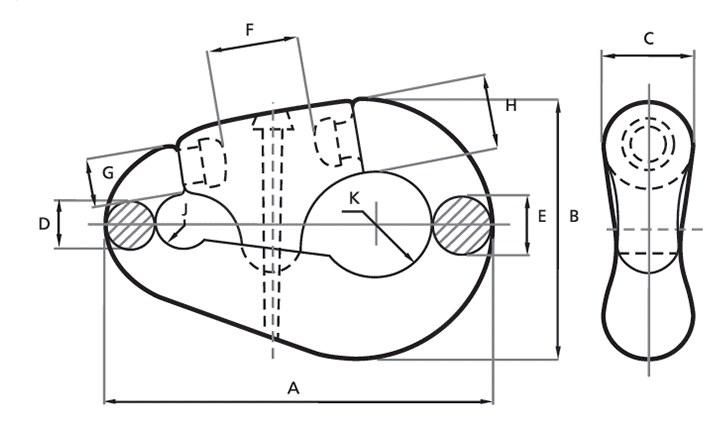 IH-MR-AC-PESR4Pear-Shaped End Shackle — Grade R4
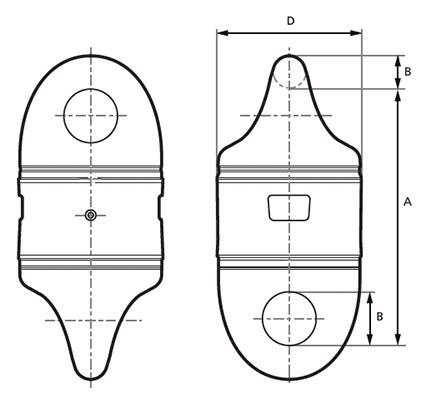 IH-MR-AC-CSWCompact Mooring Swivel — Grades R4 and R5
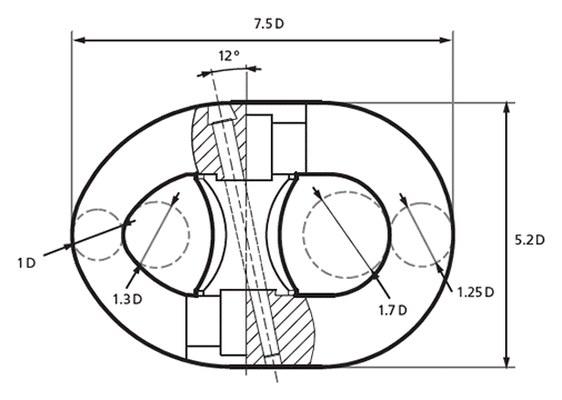 IH-MR-AC-AKSAnchor Kenter Shackle — Grades R3 and R4