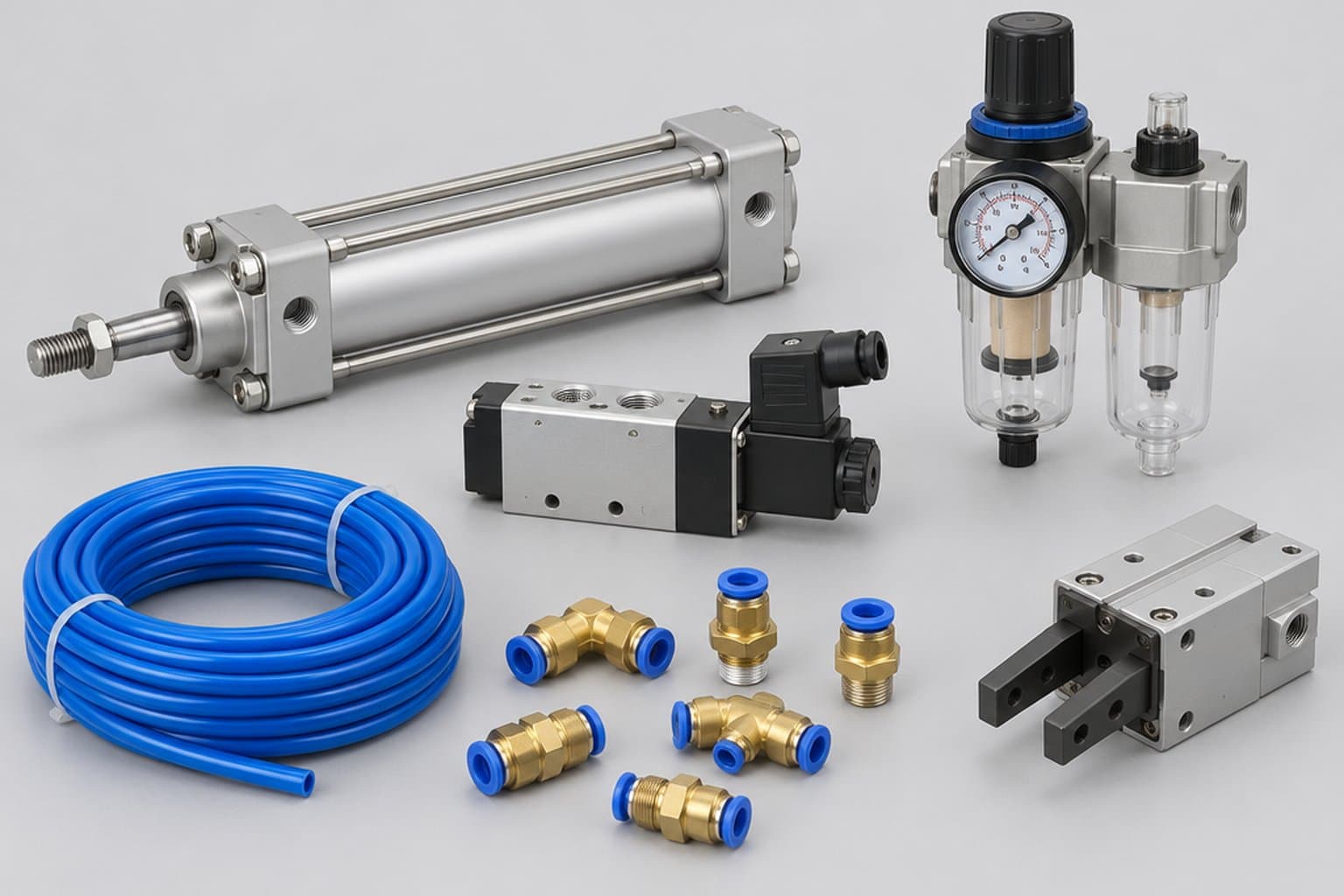
- 01Should I use polyurethane or nylon air tubing?
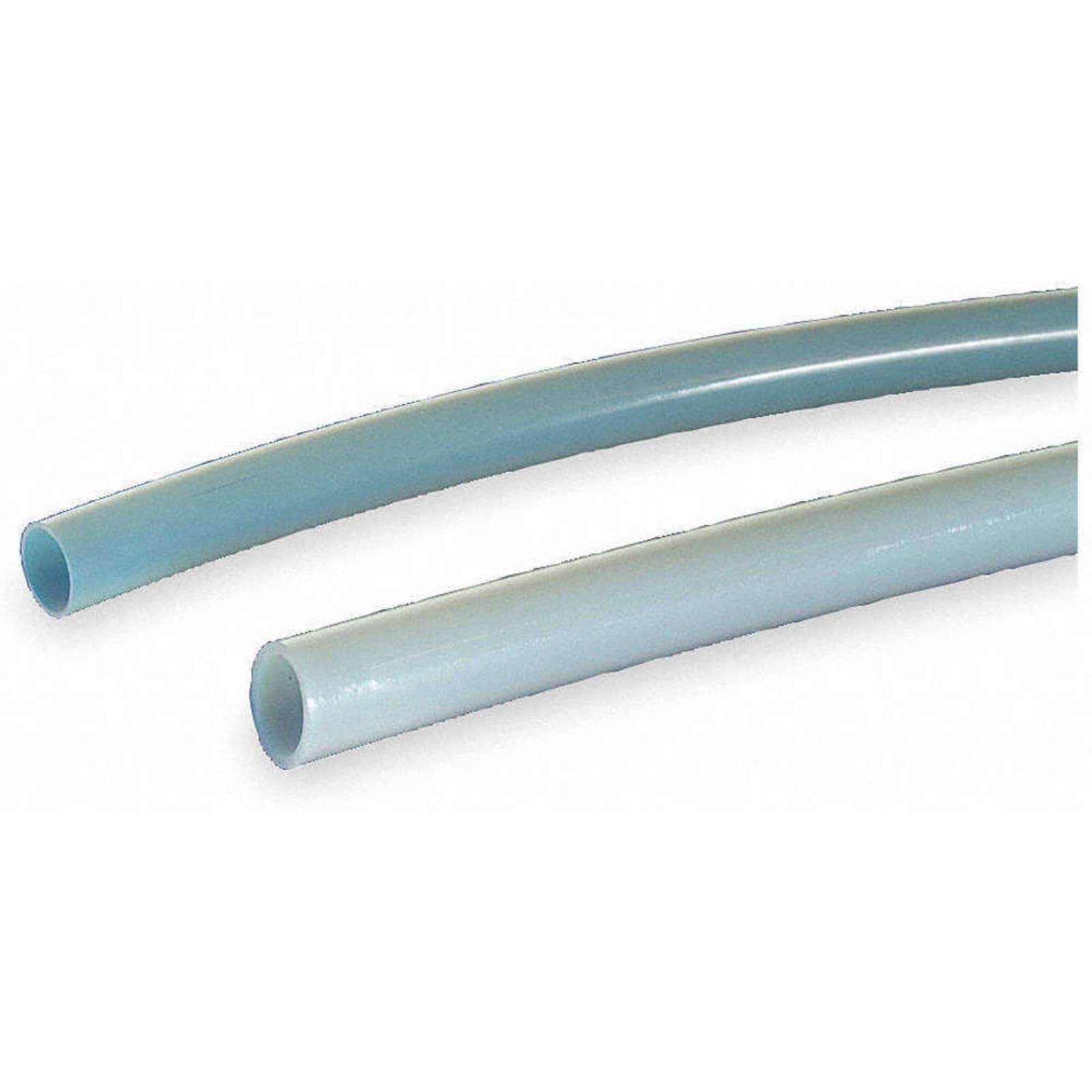
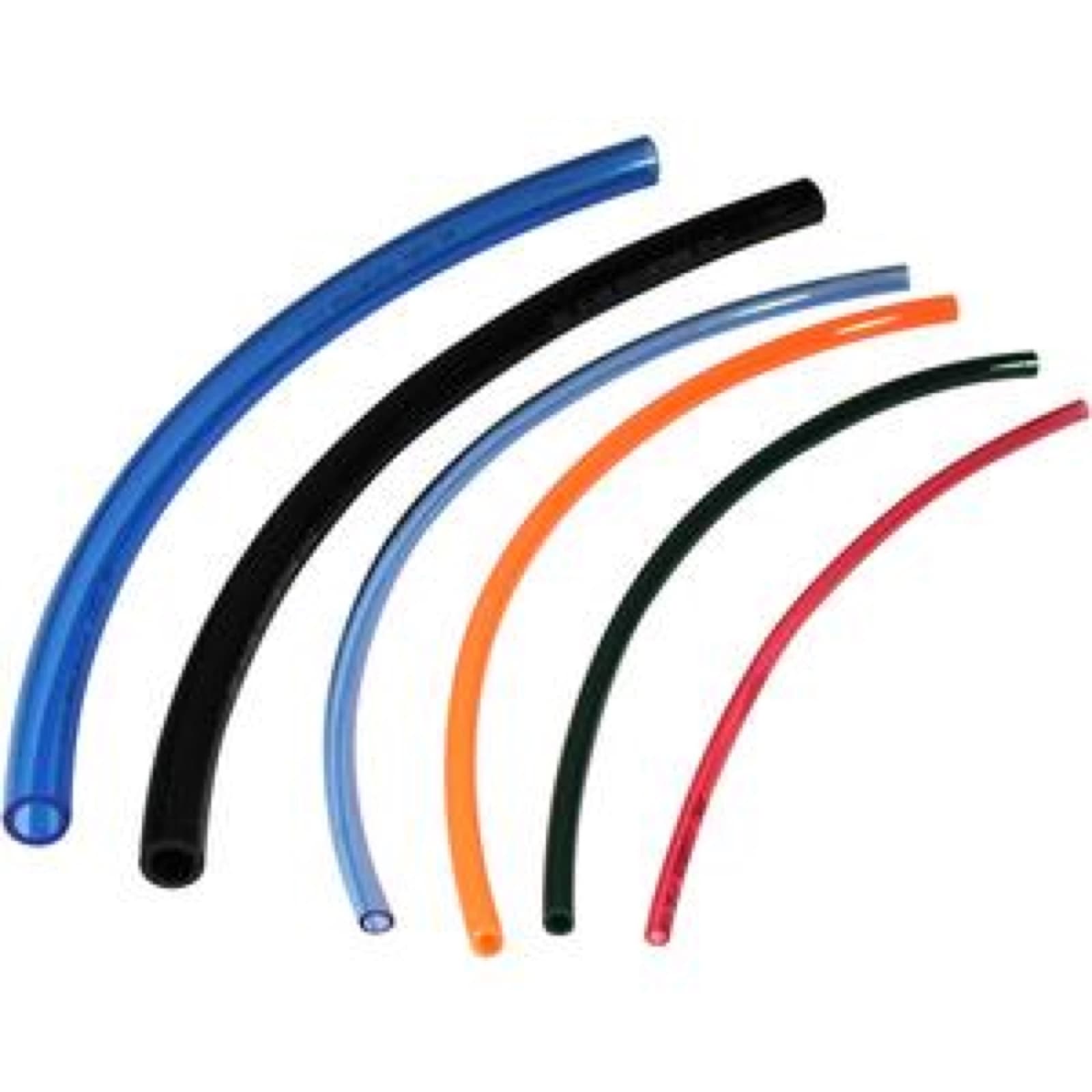
- Polyurethane where the tube flexes or has to bend tightly, such as on moving machine parts and short connections, because it is soft and resists kinking. Nylon where you want a stiffer tube that holds its line, takes higher pressure for the same size and stands up better to heat and many chemicals, such as fixed runs along a machine frame. Check each maker's pressure rating at your working temperature.
- 02Is 6 mm tube the same as 1/4 inch tube?
- No. 1/4 inch is 6.35 mm, and 5/32 inch (3.97 mm) is not the same as 4 mm. Push-in fittings grip and seal on the tube's outside diameter, so mixing metric and inch can leak or let the tube blow out under pressure. Order tube and fittings in the same system; SMC speed controls on our flow-control shelf, for example, are listed separately for 4 mm and 5/32 inch tube.
- 03How should I cut tubing for push-in fittings?
- With a tube cutter, square across, leaving no burr, flat or angled end. Push the tube in until it bottoms in the fitting, past the grip and the seal, then pull back on it to check that it has locked. A tube cut at an angle or with a knife that squashes it is the most common cause of leaks at push-in fittings.
- 04What are PTFE and FEP tubing used for?
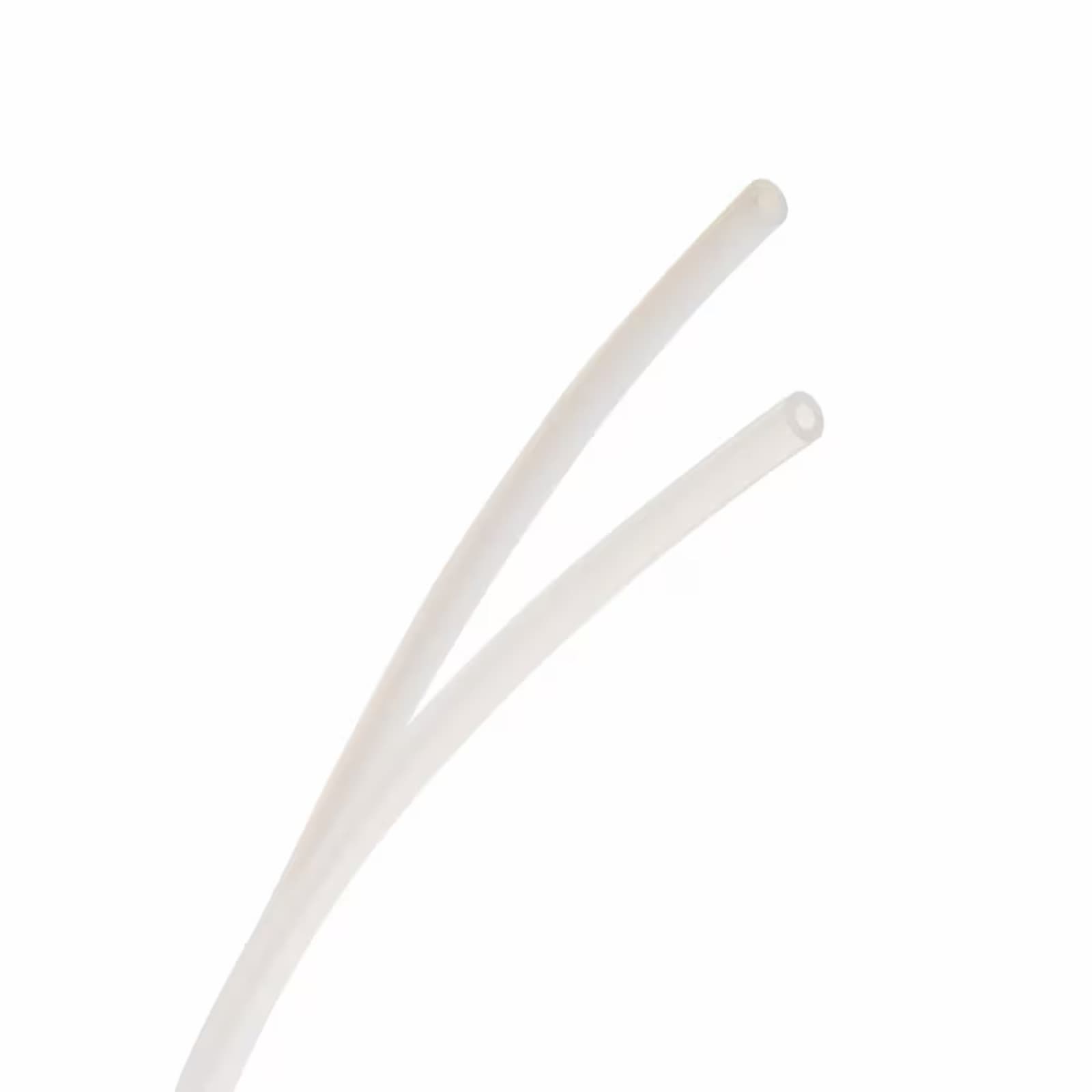
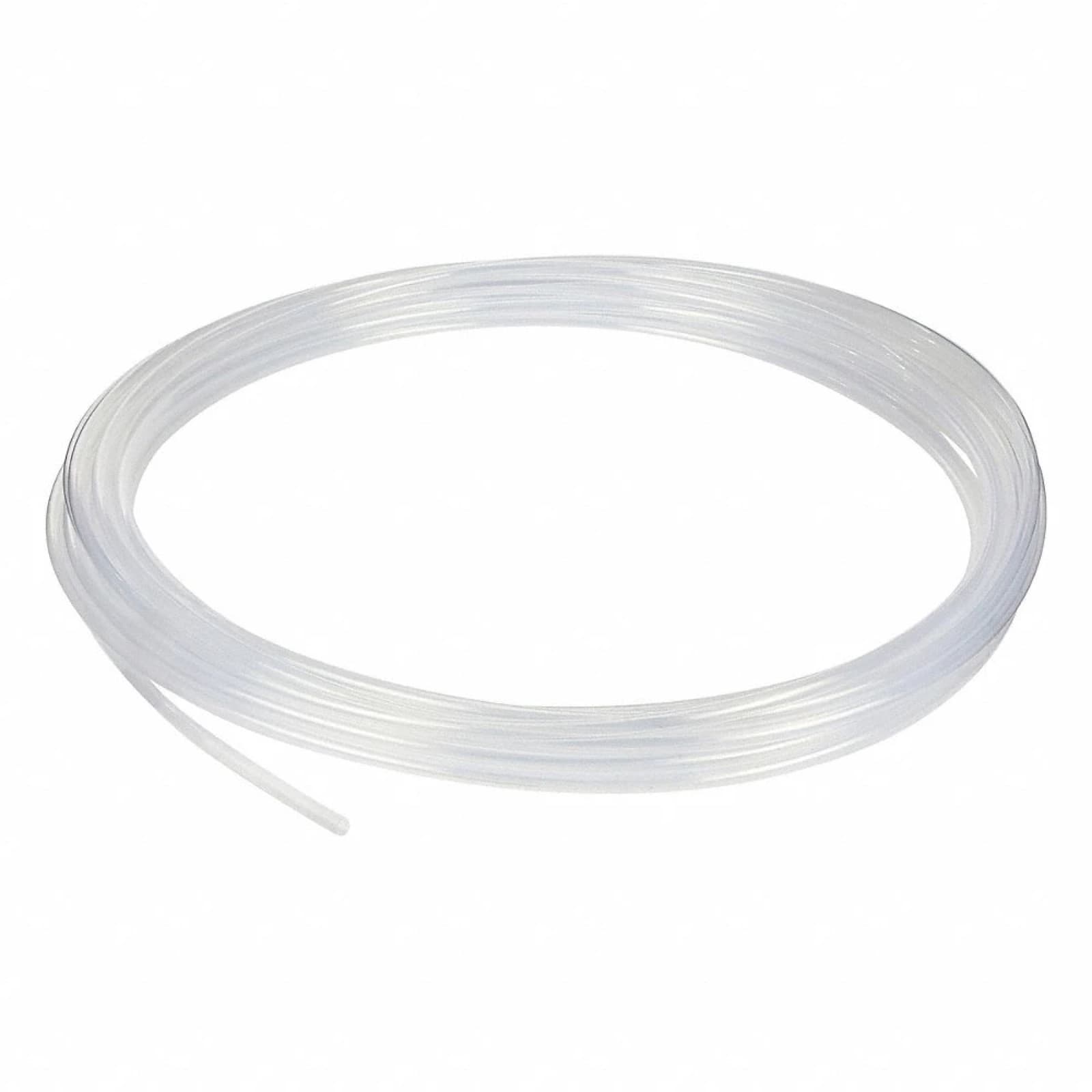
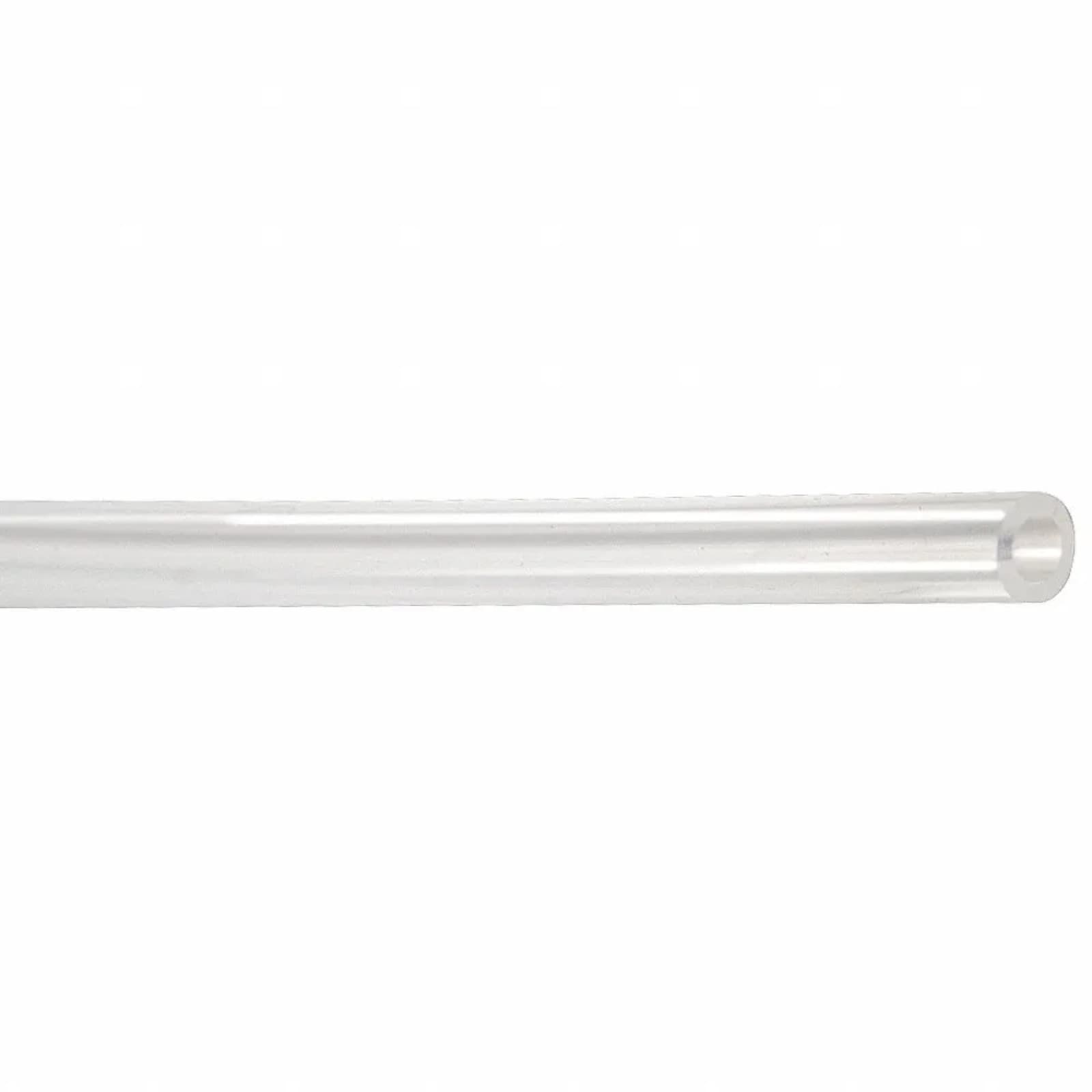
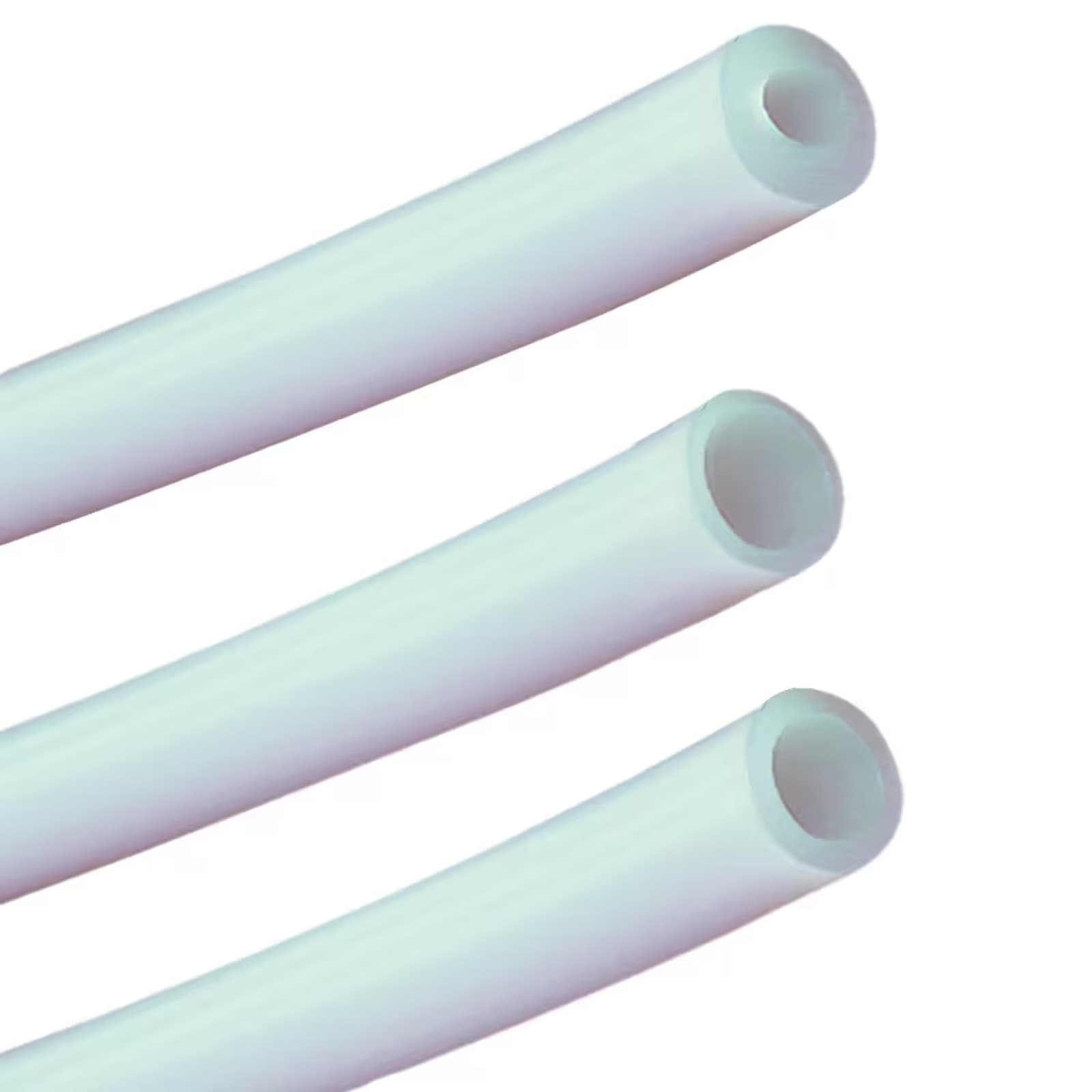
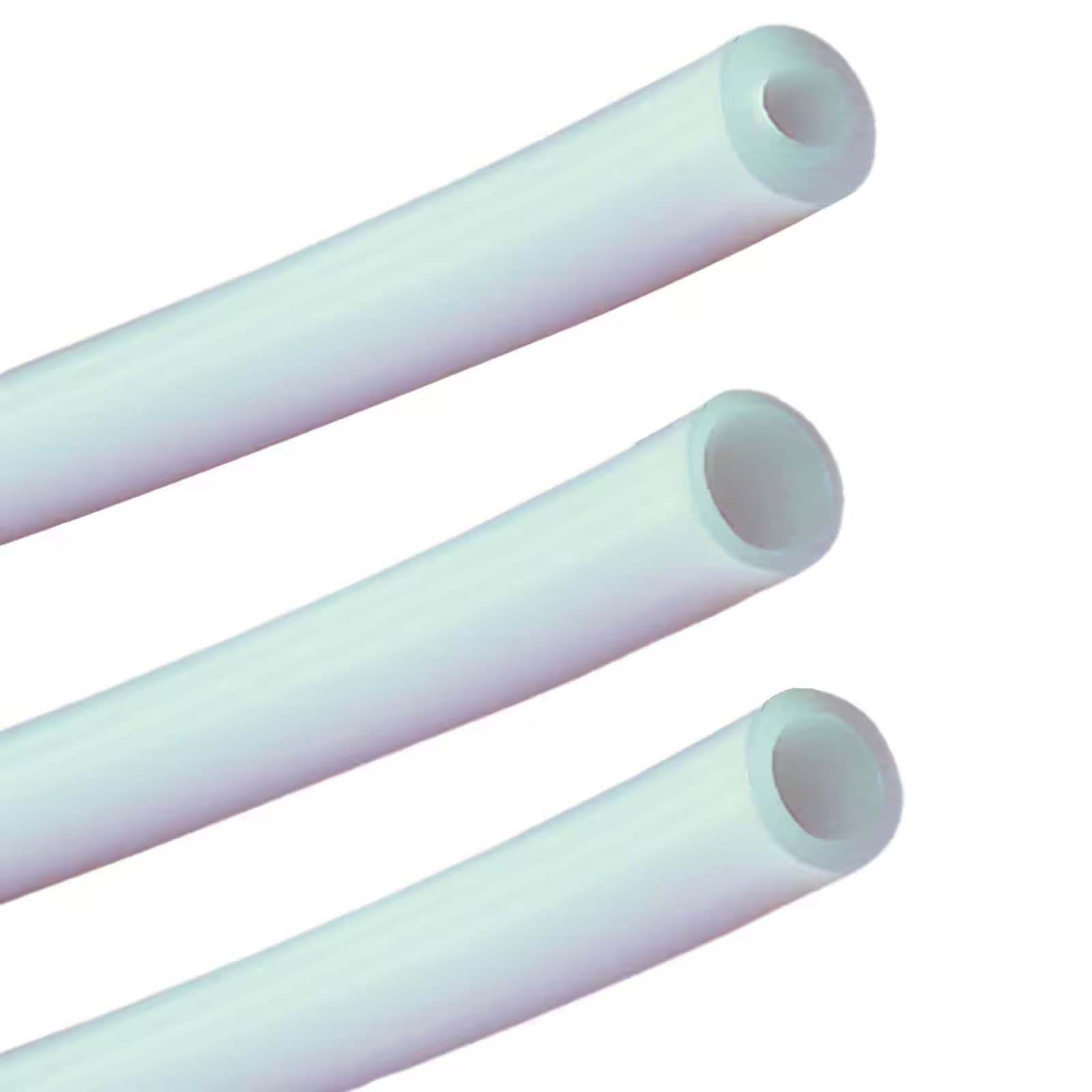
- Fluoropolymer tubing resists almost all chemicals, takes higher temperatures than nylon or polyurethane and has a low-friction surface. PTFE handles the higher temperatures of the two; FEP is clearer, so flow can be seen. Both are stiffer than nylon. This shelf carries Parker PTFE and FEP tubing in fractional and metric sizes and SMC TL and TIL fluoropolymer tubing.
- 05Why use flame-resistant tubing?
- Near welding, spatter can melt through ordinary polyurethane or nylon tube and cut the air to clamps and cylinders. Flame-resistant tubing, such as the SMC TR Series on this shelf, is made to resist ignition from spatter. Check the maker's data for the test it meets and the pressure rating.
- 06Does pneumatic tubing pressure rating change with temperature?
- Yes. Thermoplastic tubing gets softer as it gets hotter, so its working pressure falls as temperature rises. Makers publish the rating at a reference temperature and a derating for higher ones. Where tube runs near hot machinery, in direct sun or in hot plant rooms, size it on the rating at the highest temperature it will see.