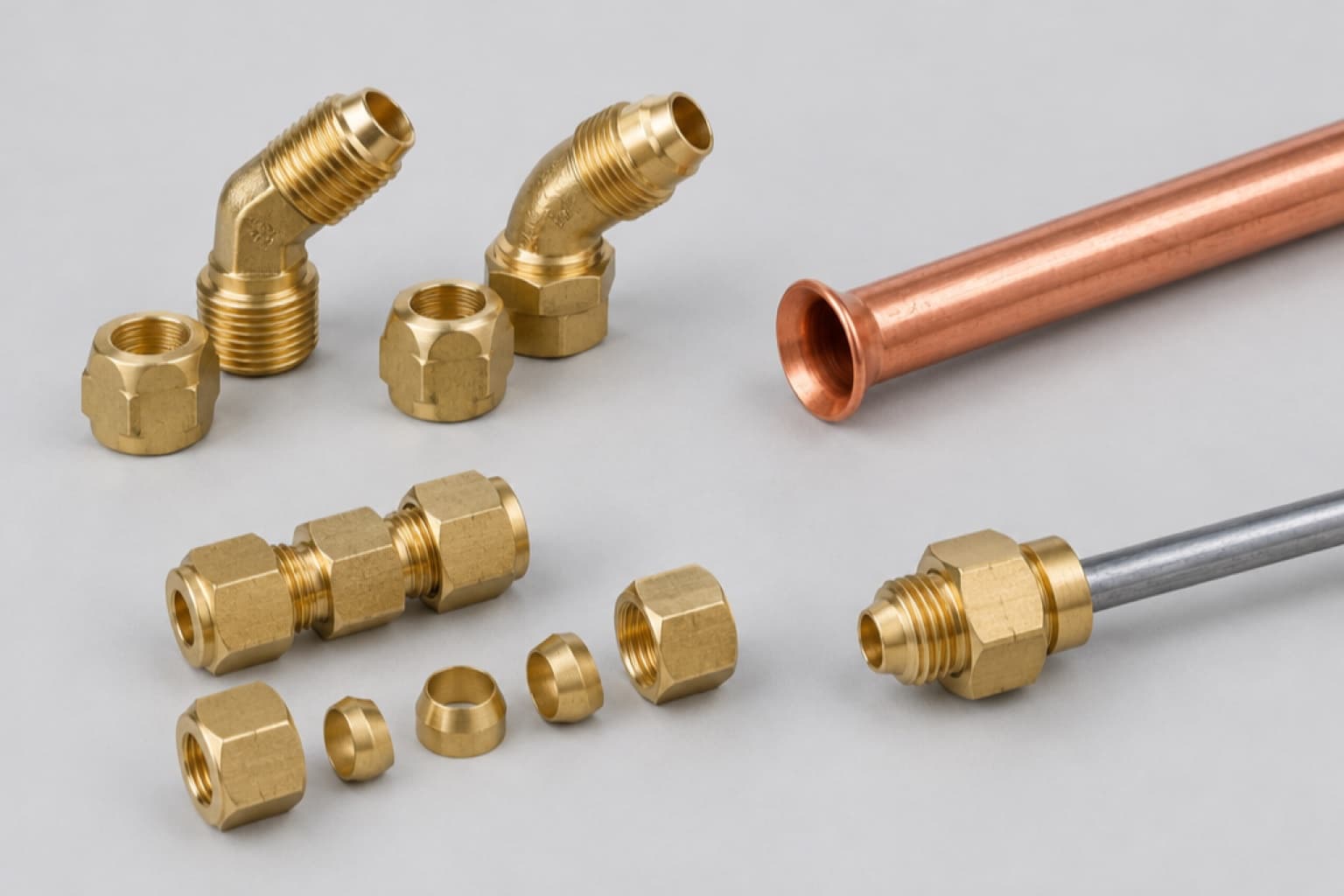
Refrigeration, gas, fuel, lubrication, instrument and brake lines are mostly small copper, aluminium, steel or plastic tube, and they are joined with brass fittings that look a lot like hydraulic ones. They are not hydraulic fittings — they are rated for these services, at these pressures — and the 45° flare in particular is the most common cross-up with a 37° JIC. This guide covers the three brass tube-fitting families and how to choose and use them.
/01The three families.
| Family | How it seals | Typical service | Tube |
|---|---|---|---|
| SAE 45° flareHighlighted | Tube flared to 45°, metal to metal on the fitting cone; long nut resists vibration | Refrigerant, propane, fuel, natural gas | Copper, brass, aluminium, welded steel |
| Inverted flare | Double-flared tube seals inside the fitting; nut threads into the body | Brake, fuel and refrigerant lines | Copper, brass, aluminium, welded steel |
| Compression | A brass or acetal sleeve squeezed onto the tube by the nut | Air, lubrication and cooling lines | Copper, aluminium, thermoplastic (with insert) |
| Tube OD | 45° flare | Inverted flare | Compression (brass sleeve, copper tube) |
|---|---|---|---|
| 1/8" | 2,800 | 2,800 | 2,800 |
| 3/16" | 1,900 | 1,900 | 1,900 |
| 1/4"Highlighted | 1,400 | 1,400 | 1,400 |
| 5/16" | 1,200 | 1,200 | 1,200 |
| 3/8" | 1,000 | 1,000 | 1,000 |
| 1/2" | 750 | 750 | 750 |
| 5/8" | 650 | 650 | 650 |
| 3/4" | 550 | 550 | 550 |
| 7/8" | — | — | 450 |
Parker’s temperature range is −65 to +250 °F for both flare types and −65 to +200 °F for compression. Note that Parker lists welded steel hydraulic tubing as compatible with its brass flare fittings — but at these pressures, so a brass flare fitting is for a low-pressure steel line, not a hydraulic circuit.
/02Nut threads — and the JIC trap.
| Tube OD | 45° flare | Inverted flare | Compression |
|---|---|---|---|
| 1/8" | — | 5/16-28 | 5/16-24 |
| 3/16" | — | 3/8-24 | 3/8-24 |
| 1/4"Highlighted | 7/16-20 | 7/16-24 | 7/16-24 |
| 5/16" | 1/2-20 | 1/2-20 | 1/2-24 |
| 3/8" | 5/8-18 | 5/8-18 | 9/16-24 |
| 1/2" | 3/4-16 | 3/4-18 | 11/16-20 |
| 5/8" | 7/8-14 | 7/8-18 | 13/16-18 |
| 3/4" | 1-1/16-14 | 1-1/16-16 | 1-18 |
The table shows why mix-ups happen. A ¼" 45° flare nut is 7/16-20, the same thread as a -4 37° JIC; ½" and ⅝" 45° flare nuts match -8 and -10 JIC threads too. Parker draws the 37° and 45° flare noses as separate profiles: the thread engages, the seats do not, and the joint leaks or splits the flare. Inverted flare and compression nuts share several threads with each other at small sizes. Identify by the seat, not the thread — see identifying a fitting and JIC adapters.
/03Making them up.
- 45° flare. Cut the tube square and deburr, slide the nut on, flare to 45° with a flaring tool, then run the nut on finger-tight and turn a further ¼ to ½ turn for the metal-to-metal seal (Parker).
- Inverted flare. Put the nut on first, then flare. Parker advises a double flare on thin-wall copper, welded or brazed tube to prevent pinch-off or cracked flares; it also offers a piloted nut for single-flared tube. Parker notes that one of its ½" union tees does not meet SAE or UL — check the listing when a certification matters.
- Compression. No tube preparation beyond a square, clean cut. With a brass sleeve on soft metal tube, Parker gives 1¼ turns from hand-tight for ⅛"–5/16" and 2¼ turns for ⅜"–⅞"; on plastic tube use the plastic sleeve and a tube insert, and 2 turns.
Common questions
- What is the difference between 45° flare and inverted flare?
- A 45° flare fitting has the flare on the outside of the fitting cone with the nut over the tube; an inverted flare seals inside the fitting, with the nut threading into the body. Inverted flare is the usual brake- and fuel-line fitting.
- Can I use a 45° flare fitting with a JIC fitting?
- No. Some sizes share a thread (¼" 45° flare and -4 JIC are both 7/16-20) but the 45° and 37° seats do not seal against each other.
- What pressure are brass flare fittings rated for?
- Parker gives 2,800 psi at ⅛", 1,400 psi at ¼", 1,000 psi at ⅜", 750 psi at ½" and 550 psi at ¾" for both 45° and inverted flare.
- Do I need a double flare?
- Parker advises a double flare for inverted flare fittings on thin-wall copper, welded or brazed tube, to prevent pinch-off or cracked flares.
- Can brass compression fittings be used on plastic tube?
- Yes, with a plastic sleeve and a tube insert to support the bore.
- Are brass flare fittings suitable for gas?
- Parker’s brass 45° flare and inverted flare fittings are UL listed and used on refrigerant, propane, fuel and natural gas lines; follow the local gas code for the installation.
What we list
Brass SAE 45° flare, inverted flare and compression fittings, nuts, sleeves and inserts:
- Brass SAE 45° Flare Cap
- Brass SAE 45° Flare Plug
- Brass SAE 45° Flare Nut, Long
- Brass SAE 45° Flare Nut, Short
- Brass SAE 45° Flare Union
- Brass SAE 45° Flare Union Tee
- Brass SAE 45° Flare × NPTF Male Branch Tee
- Brass SAE 45° Flare Male × NPTF Female Connector
- Brass SAE 45° Flare Male × NPTF Male Connector
- Brass SAE 45° Flare Male × NPTF Male 90° Elbow
- Brass SAE 45° Flare Male × NPTF Female 90° Elbow
- Brass SAE 45° Flare × NPTF Male Run Tee
- Brass SAE 45° Flare Male × NPTF Male 45° Elbow
- Brass SAE 45° Flare Union 90° Elbow
- Brass Inverted Flare Tube Nut
- Brass Inverted Flare × NPTF Male Connector
- Brass Inverted Flare × NPTF Female Connector
- Brass Inverted Flare Union
- Brass Inverted Flare × NPTF Male 45° Elbow
- Brass Inverted Flare × NPTF Male 90° Elbow
- Brass Inverted Flare × NPTF Female 90° Elbow
- Brass Inverted Flare Union 90° Elbow
- Brass Inverted Flare × NPTF Male Branch Tee
- Brass Inverted Flare × NPTF Female Branch Tee
- Brass Inverted Flare Union Tee
- Brass Inverted Flare × NPTF Male Run Tee
- Brass NPTF Female × NPTF Male × Compression Tee
- Brass Compression Sleeve
- Brass Compression Nut
- Brass Compression Nut, Long
- Brass Compression Union
- Brass Compression Union Tee
- Brass Compression Union 90° Elbow
- Brass Compression × NPTF Female Connector
- Brass Compression × NPTF Male Connector
- Brass Compression × NPTF Male 90° Elbow
- Brass Compression × NPTF Female 90° Elbow
- Brass Compression × NPTF Male Run Tee
- Brass Compression × NPTF Male Branch Tee
- Brass Tube Insert for Plastic Tubing
Brass flare and compression fittings
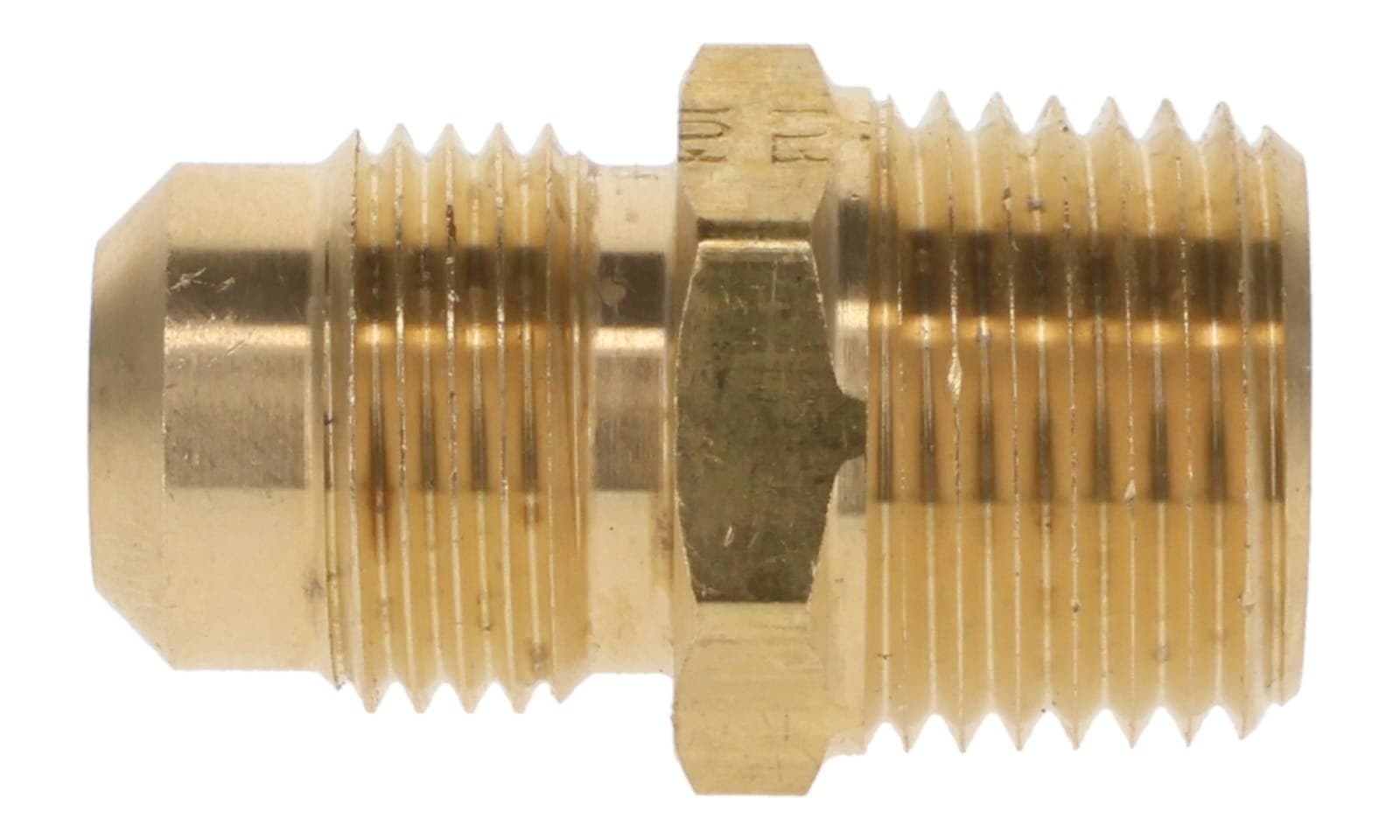 IH-BR-48Brass SAE 45° Flare Male × NPTF Male ConnectorIndus Hydraulics
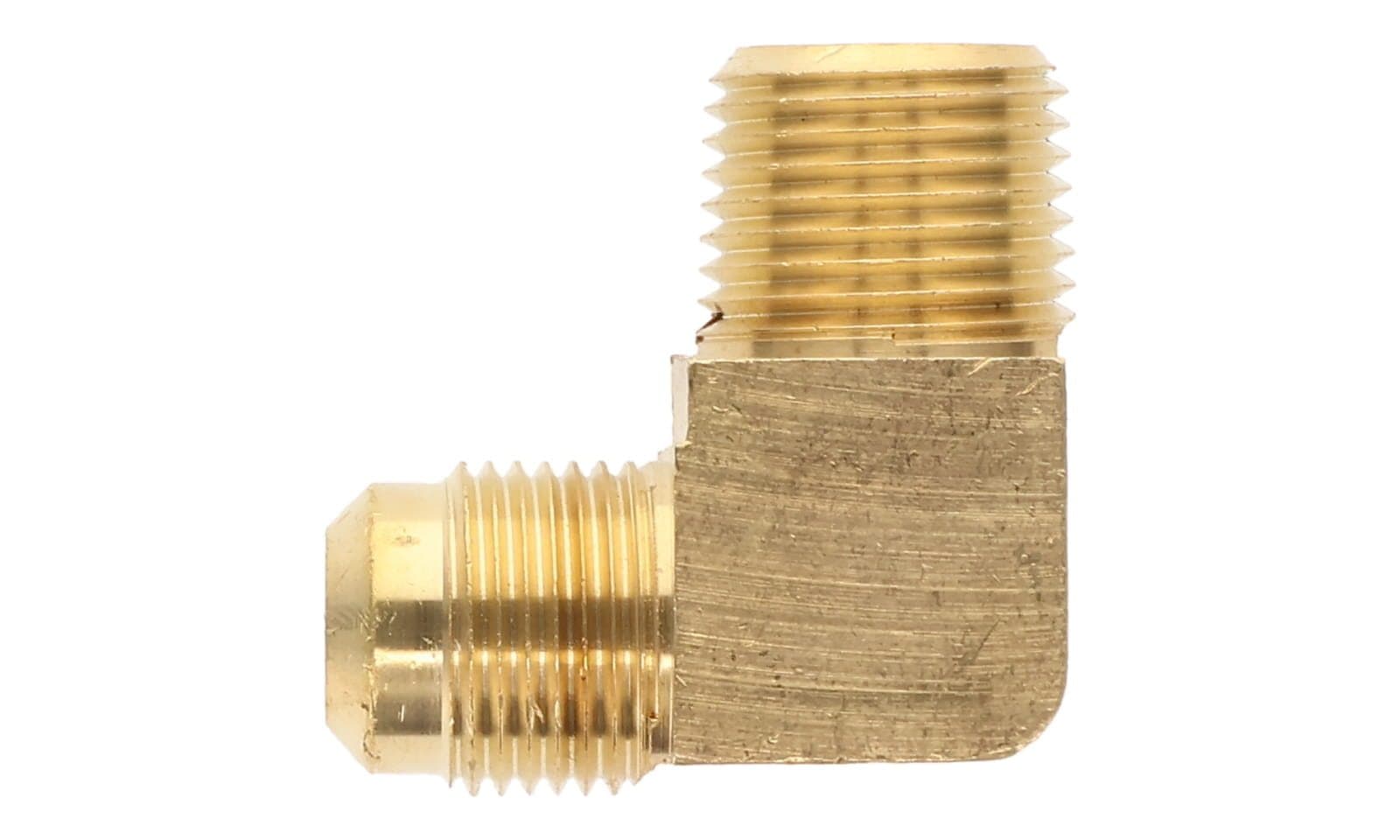 IH-BR-49Brass SAE 45° Flare Male × NPTF Male 90° ElbowIndus Hydraulics
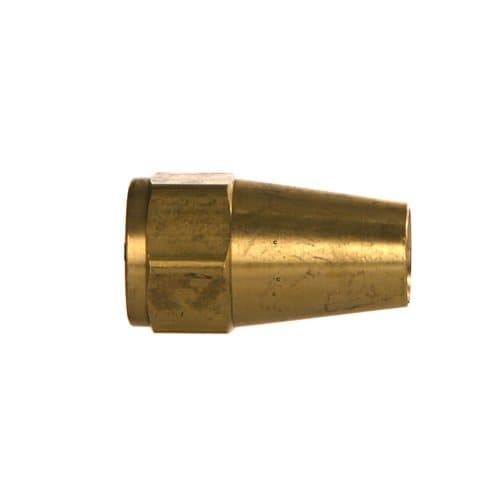 IH-BR-41Brass SAE 45° Flare Nut, LongIndus Hydraulics
 IH-BR-3202Brass Inverted Flare × NPTF Male ConnectorIndus Hydraulics
 IH-BR-3100Brass Inverted Flare Tube NutIndus Hydraulics
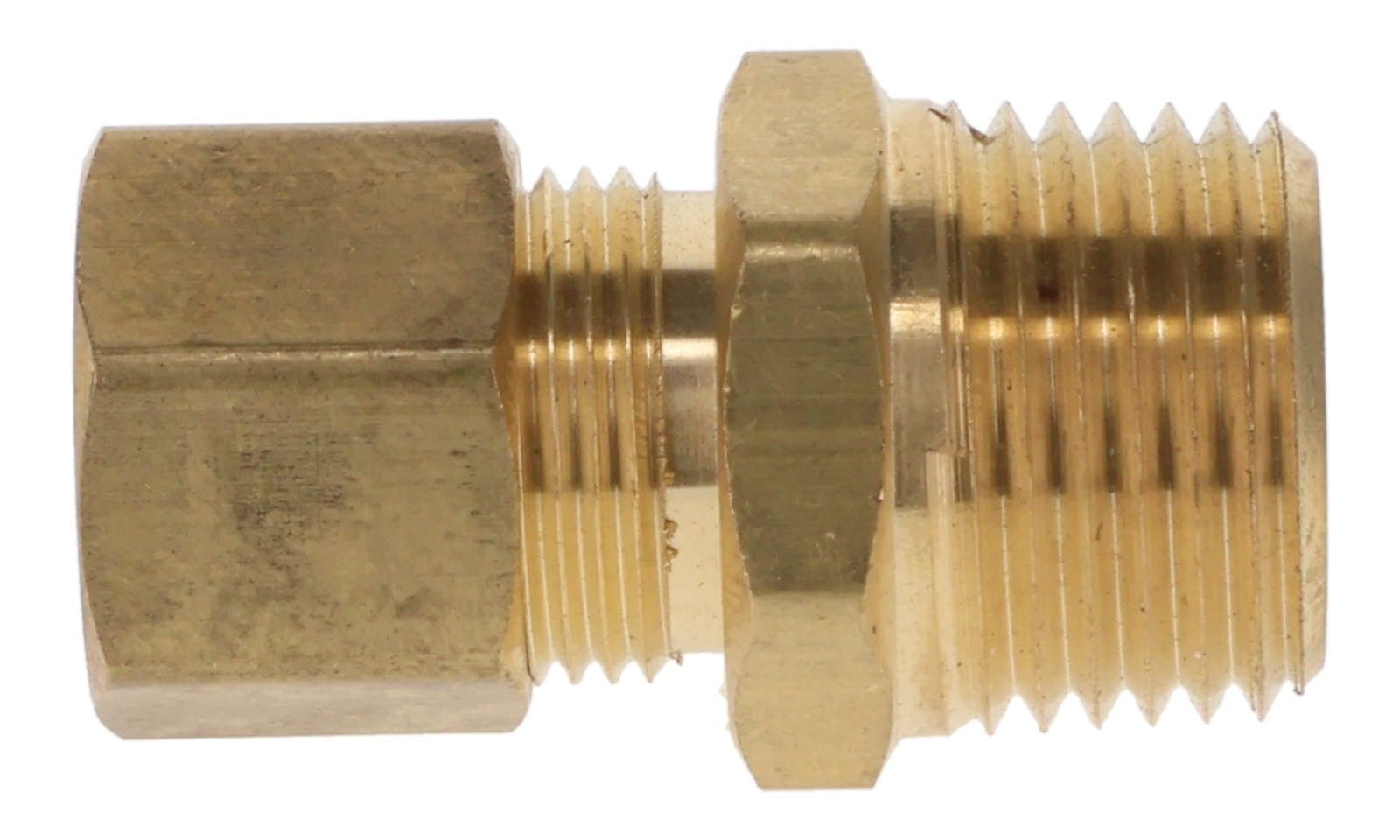 IH-BR-68Brass Compression × NPTF Male ConnectorIndus Hydraulics
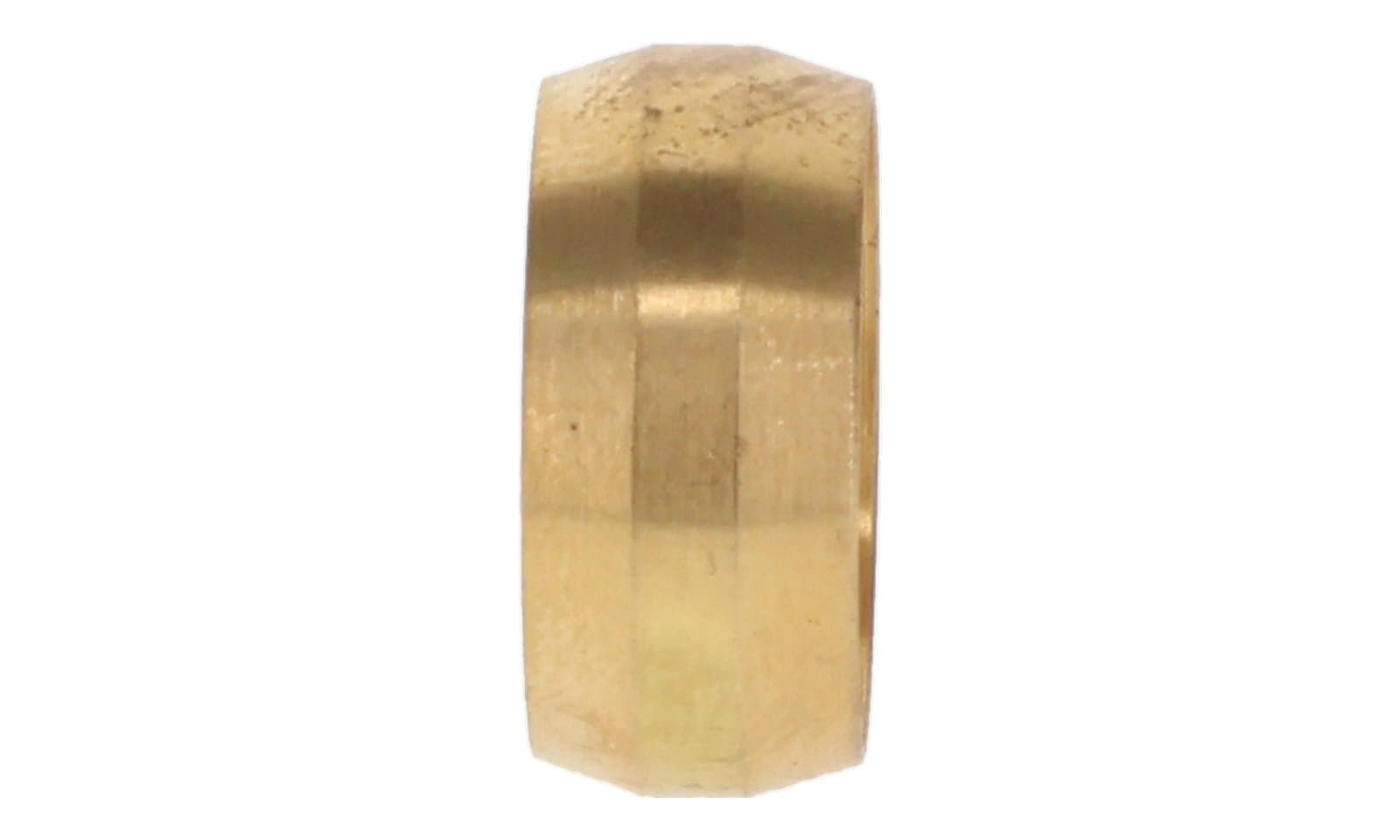 IH-BR-60Brass Compression SleeveIndus Hydraulics
 IH-BR-73Brass Tube Insert for Plastic TubingIndus Hydraulics
Sources
- 1.Parker Hannifin. Catalog 3501E — Brass, Composite and Thermoplastic Fittings and Valves (rev. 05/22), sections G and H. ↗