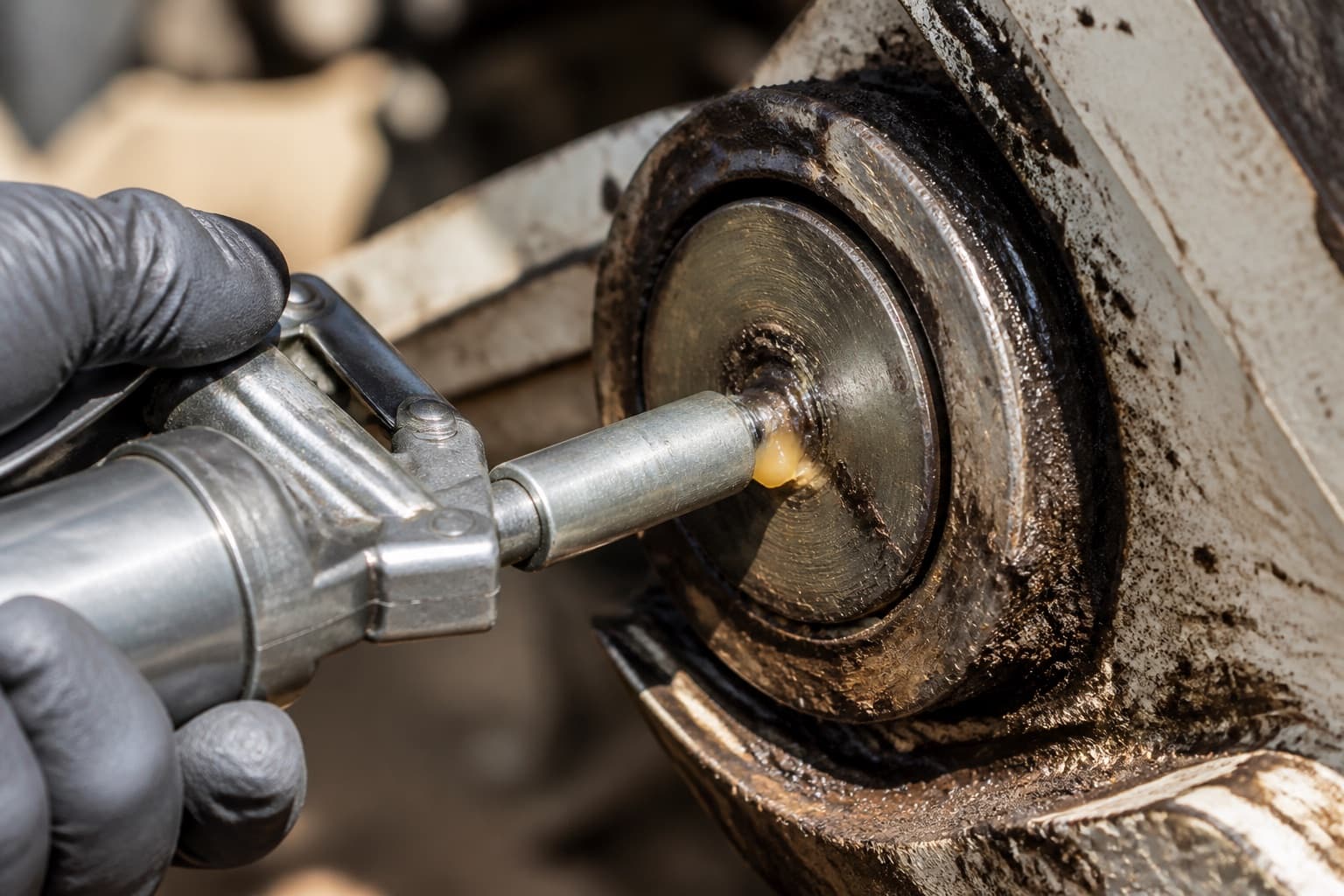
A grease nipple costs less than almost anything else in a workshop and is responsible for a surprising amount of unplanned downtime — not because it fails, but because the wrong one gets fitted, or the right one seizes, and a lubrication point quietly stops being lubricated for a year.
/01Identifying what is fitted.
| Thread | Typically found on | Notes |
|---|---|---|
| NPT taperedHighlighted | North American equipment, older machinery | Tapered — visibly narrows along its length |
| BSPHighlighted | European and Asian machinery, both parallel and tapered forms | Check parallel against tapered before ordering |
| Metric | European machinery, modern equipment generally | The most common on newer machines |
| UNF | Automotive, some attachments | Fine pitch, easy to cross-thread |
| Head style | Use | Coupler |
|---|---|---|
| Standard hydraulic (Zerk) headHighlighted | General purpose, most machines | Standard push-on coupler |
| Button head | High volume, industrial plant | Larger dedicated coupler |
| Flush or pin type | Where a protruding head would be knocked off | Needle or dedicated adapter |
/02When it will not take grease.
Working out what is actually blocked
Diagnose before applying more pressure — a grease gun generates enough to damage a seal.
IfRemove the fitting and try grease into the open port
If it takes it, the fitting was the blockage.
This is the most common outcome by a wide margin. The check ball has corroded or is stuck with hardened grease.
IfOpen port also refuses
The passage or the bearing is blocked.
Now it is a mechanical problem. Forcing more grease at higher pressure risks blowing a seal.
IfIt takes grease but nothing appears at the joint
Grease is escaping somewhere else, or the passage is cracked.
Look for grease emerging where it should not be before assuming the point is fed.
IfThe fitting takes grease and pushes it back out
Check ball not seating.
Replace the fitting. It will also be letting contamination in.
/03Getting a seized one out.
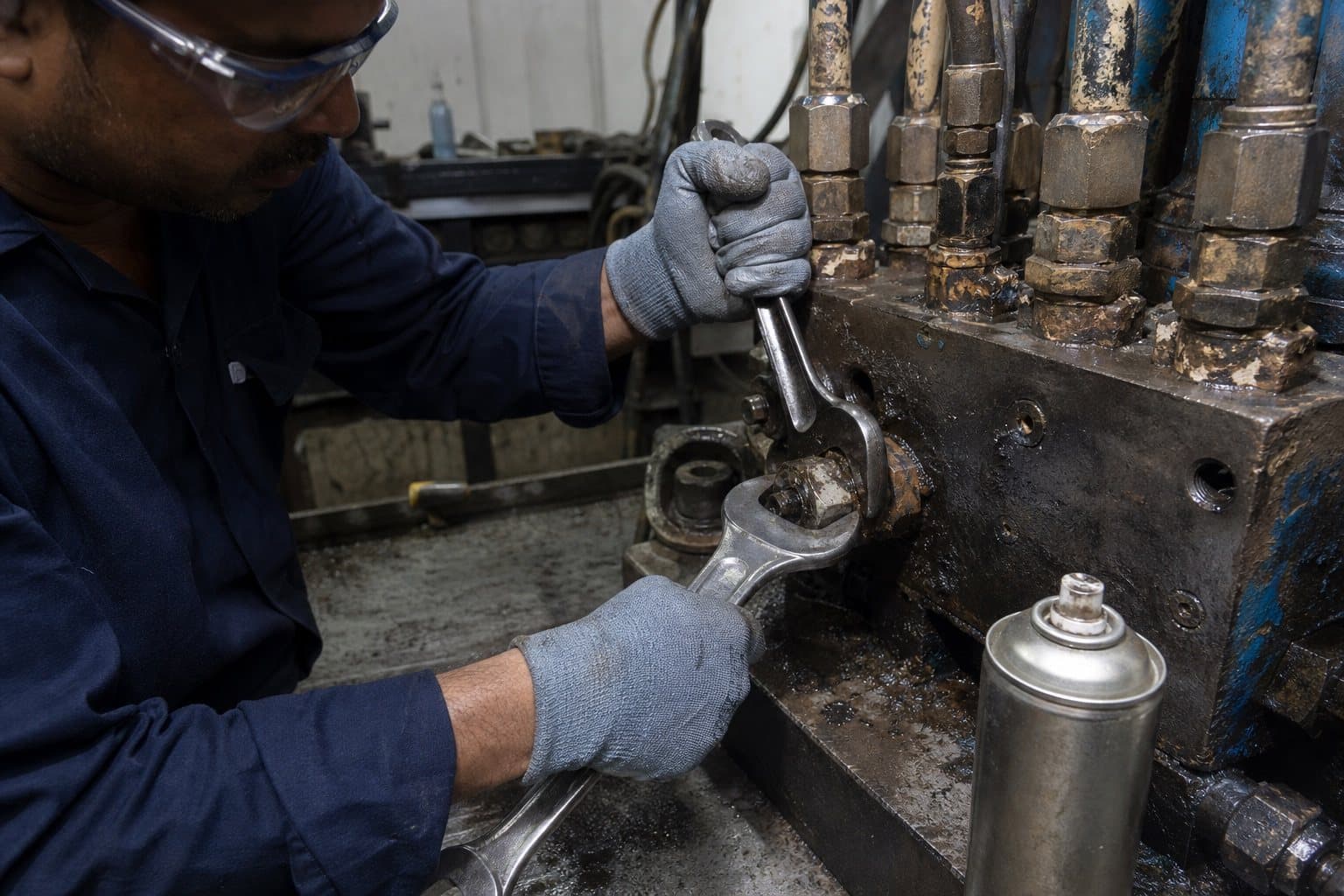
Grease fittings are small, usually mild steel, and sit exposed to everything. The failure mode is shearing the head off and leaving a threaded stub in the housing — which turns a two-minute job into a drilling and extraction job on a component you probably cannot remove. The grease itself is a separate specification from the fitting; our Molykote greases are listed by type and duty.
| Step | Note |
|---|---|
| Clean the head and get a proper six-point socket on itHighlighted | Most "seized" nipples are simply being turned by a slipping tool |
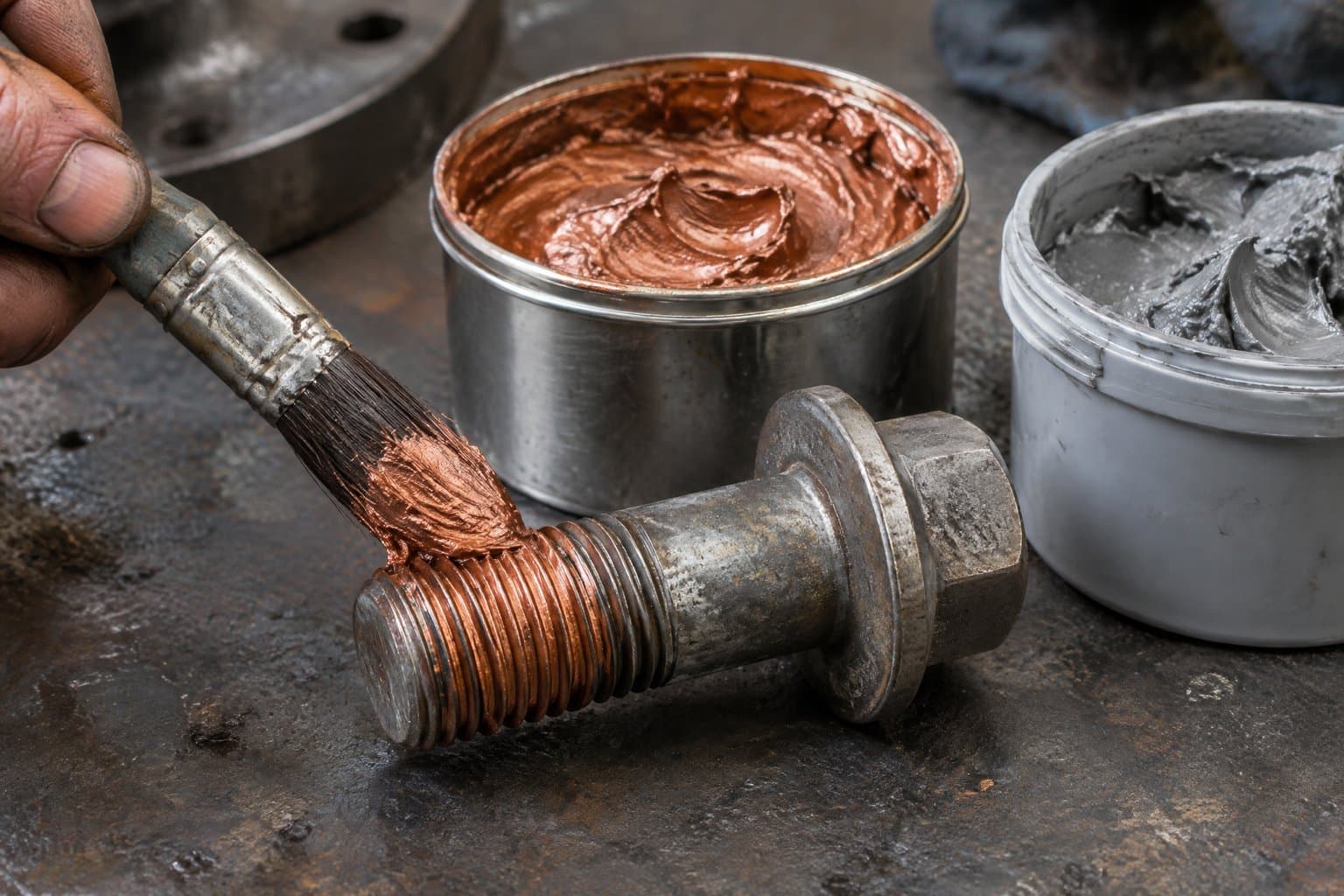
| Penetrant and sharp taps, then wait | Vibration moves penetrant along a thread; standing still does not |
| Small, controlled heat on the housing around it | Only where there is no seal, no paint and nothing flammable nearby |
| Alternate loosen and tighten in small movementsHighlighted | Breaks the corrosion bond without a single high load |
| Stop if the head starts to roundHighlighted | A rounded head can still be gripped. A sheared stub cannot |
/04Specifying replacements sensibly.
| Decision | Guidance |
|---|---|
| AngleHighlighted | Fit the angle that lets a gun reach — straight, 45 or 90 degrees |
| MaterialHighlighted | Stainless where washdown, salt air or corrosion is the issue |
| Extension or remote line | Where the point is genuinely unreachable, bring it somewhere reachable |
| Caps | Keep dirt off the head so it is not driven in by the coupler |
| Stock | Hold the sizes your fleet uses. They are cheap and they strand a machine |
Common questions
- What is a zerk fitting?
- The common name for a standard hydraulic grease fitting — a small threaded body with a spring-loaded check ball behind a rounded head. Zerk is the inventor’s name; the part is the same one sold as a grease nipple.
- Can I fit a metric grease nipple into an NPT hole?
- No. It may start and feel tight, then either leak grease around the thread or strip the housing. Match the family, and use an adapter only if the housing thread genuinely cannot be matched.
- Why does grease come out around the fitting rather than into the joint?
- Either the thread is not sealing — wrong family, or a tapered fitting that needs sealant — or the passage beyond it is blocked so the grease takes the easiest route out.
- Should I replace a fitting that is hard to grease?
- Yes. They cost very little, and a fitting that resists the gun is one that will be skipped on the next service round.
- Is stainless worth it?
- On coastal and washdown equipment, clearly. It is a small premium against a fitting that seizes into a housing you cannot easily repair.