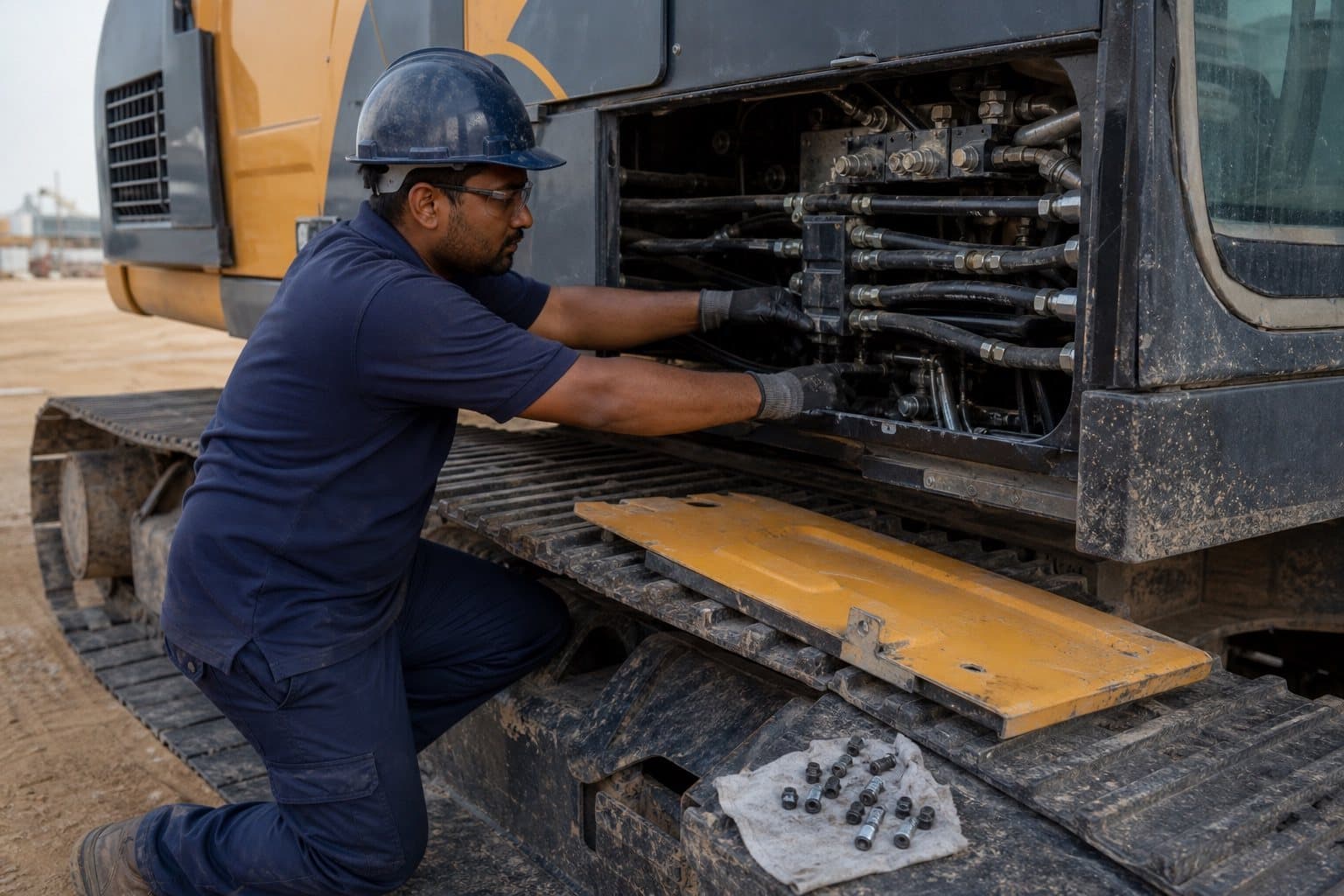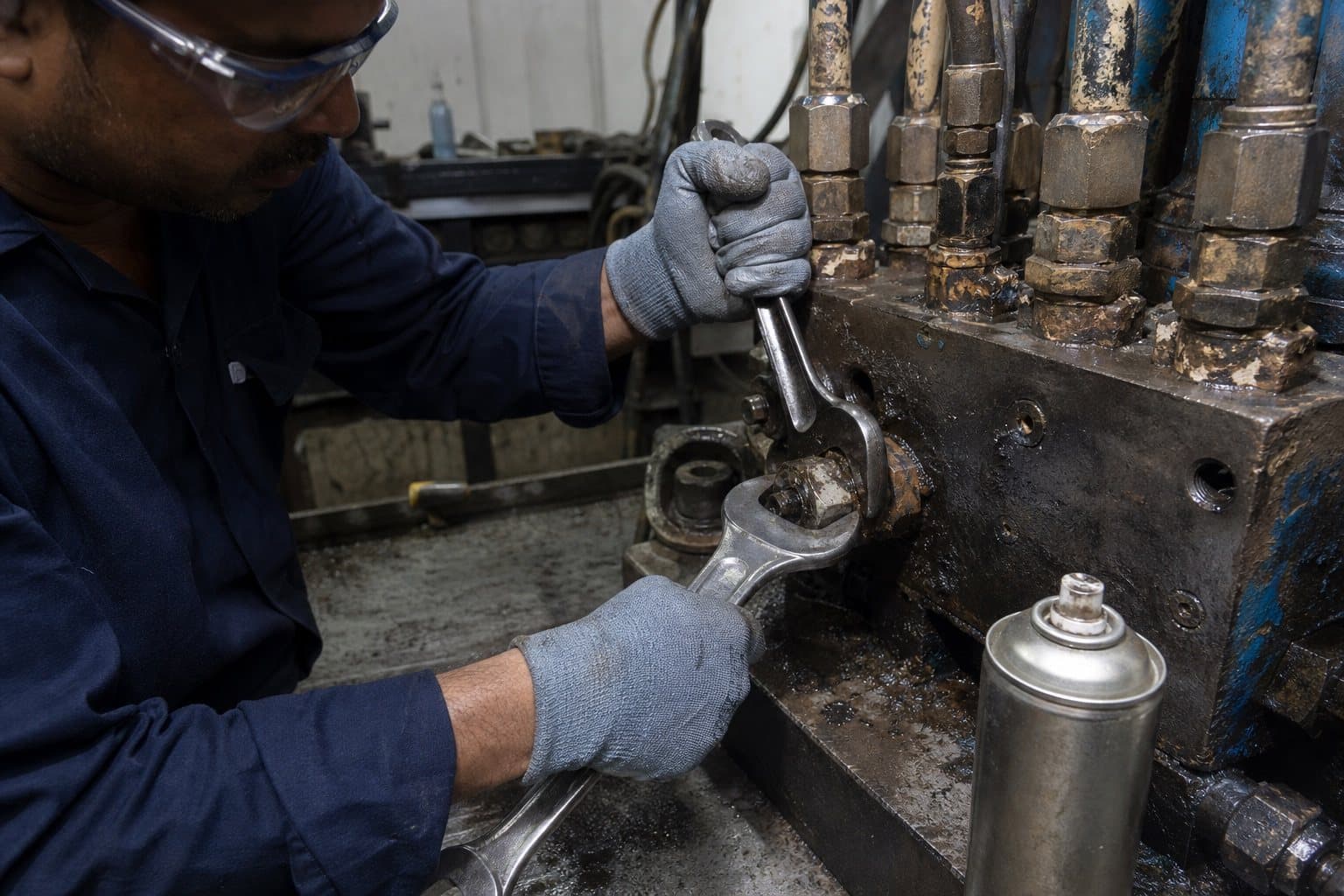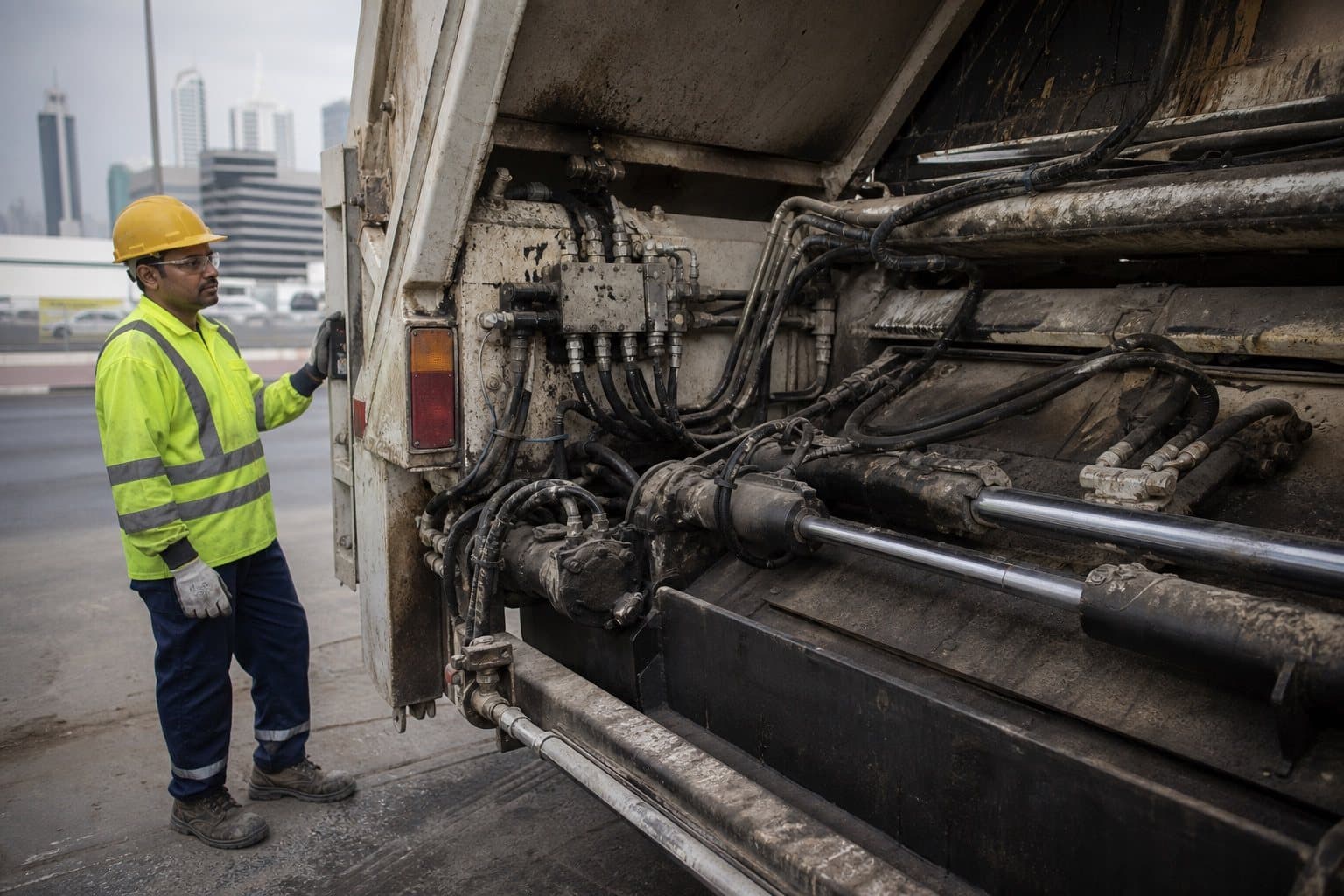
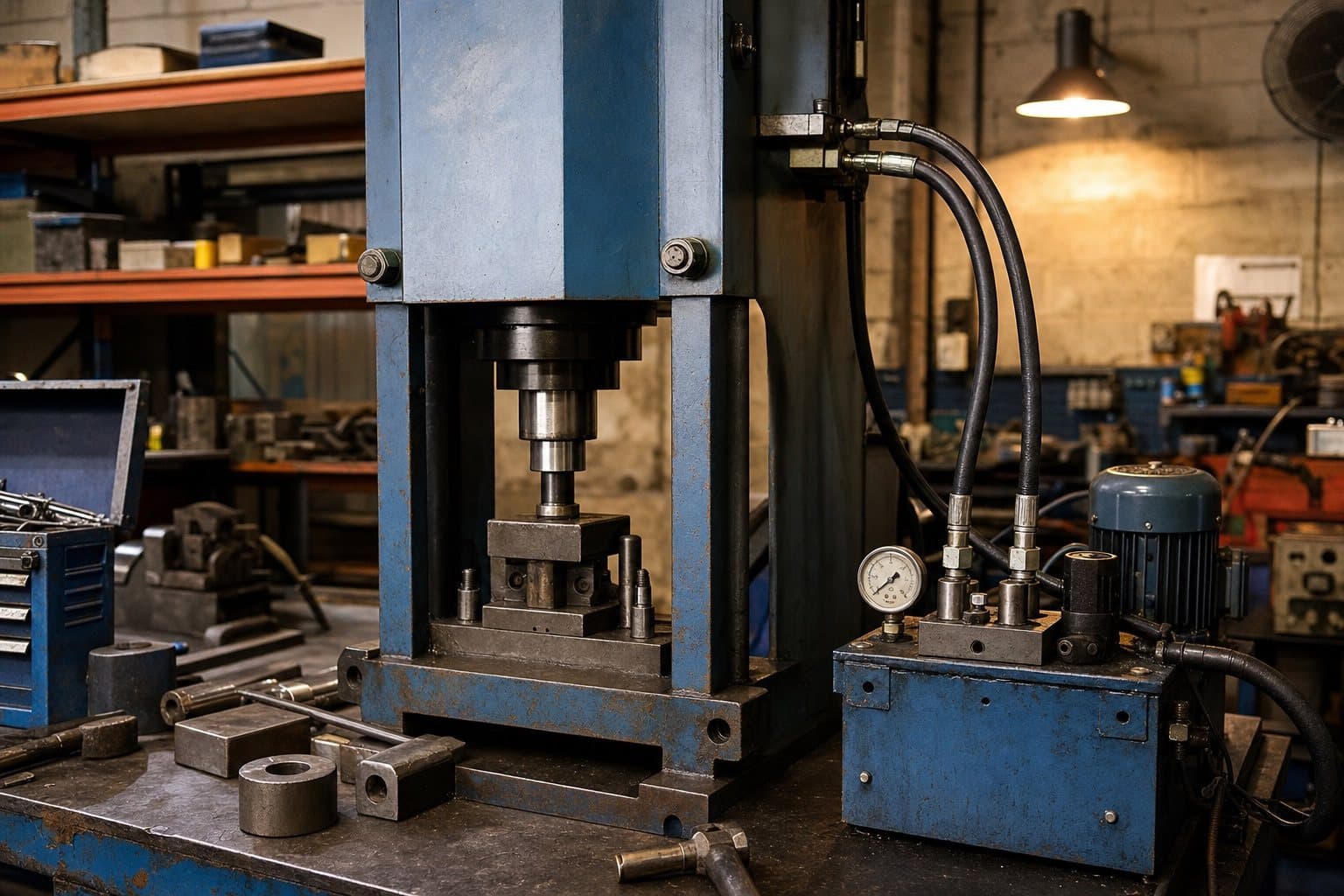
Log splitters, shop presses, small tippers and workshop rams are built and rebuilt constantly, usually by capable people working from a parts pile rather than a drawing. The hydraulics are simple, which is exactly the problem — a simple circuit hides the fact that it may be running at a higher pressure than the excavator parked next to it.
/01Specify against the relief setting.
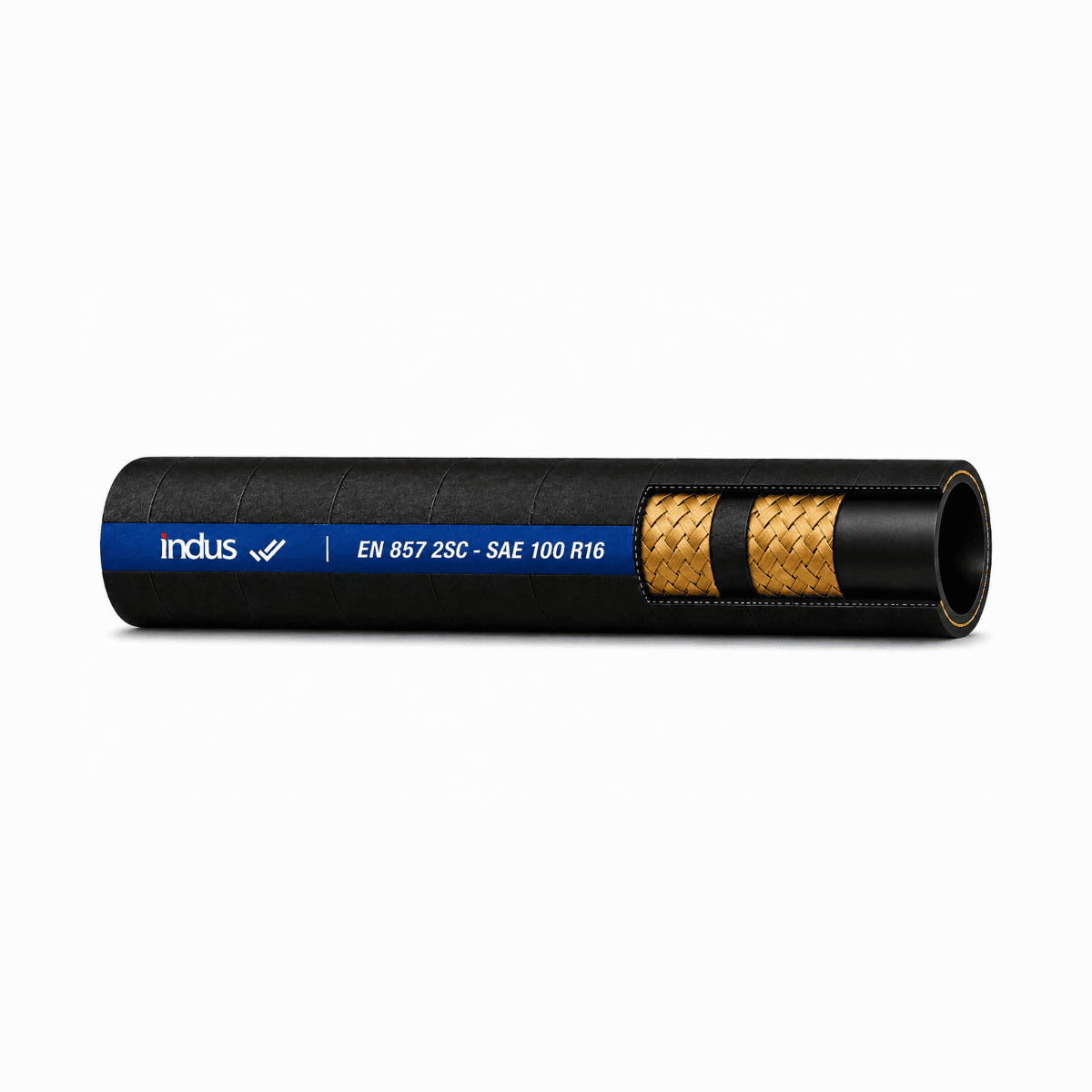
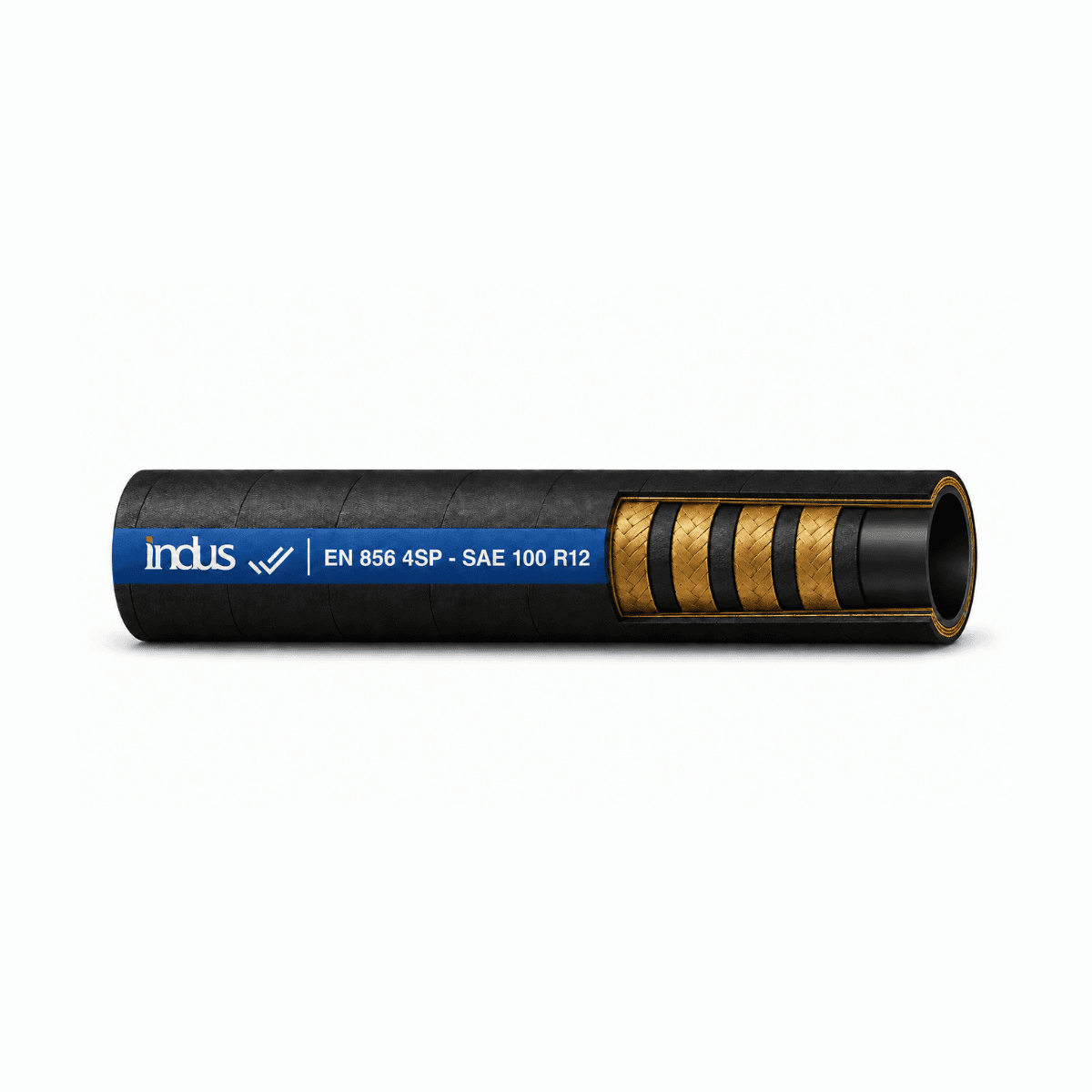
The working pressure of a circuit is not the number that sizes the hose. The relief valve setting is, because that is the highest pressure the circuit can reach — and on a log splitter it reaches it on every single cycle, at the moment the wedge stalls in a knot. A hose specified against normal running pressure is being asked to hold relief pressure thousands of times a season. That usually points to two-wire hose such as 2SN or 2SC, chosen at the actual bore against the relief setting.
| Figure | How to get it | Why it matters |
|---|---|---|
| Relief valve settingHighlighted | From the valve, or measured with a gauge | Sets the hose grade |
| Pump flowHighlighted | From the pump rating and drive speed | Sets the bore of pressure and return lines |
| Suction requirement | From the pump manufacturer data | Sets the suction hose bore and type |
| Fluid and temperature | What is in it, and how hot it gets in service | Affects hose and seal material |
| Cycles per hour | Realistically, not optimistically | Impulse duty is what ages a hose |
/02The two complaints we hear most.
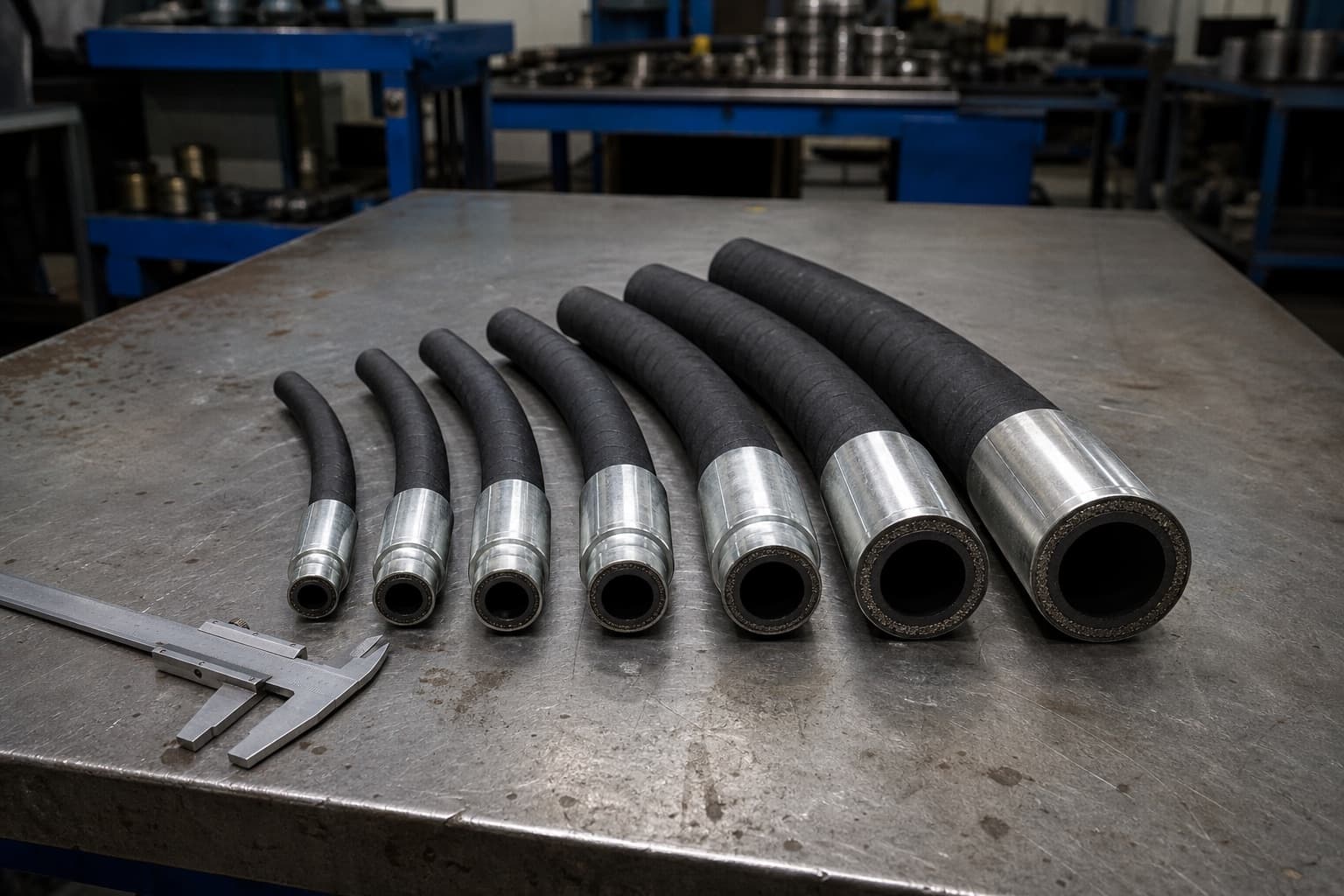
Diagnosing before re-plumbing
Both of these usually turn out not to be hose problems, which is worth knowing before buying hose.
IfPress or splitter loses force as the oil warms
Internal leakage past a seal or valve.
Warm oil is thinner and passes a worn clearance more easily. Hose capacity does not change with temperature in a way that produces this symptom.
IfWeak only at full extension
Cylinder or valve, not the supply.
A supply restriction is weak everywhere. A fault that appears only at one end of travel points at the cylinder or its end-of-stroke behaviour.
IfSlow everywhere, hot oil, noisy pump
Suction restriction — this one really is plumbing.
Check suction bore, hose type, filter condition and the height of the tank relative to the pump.
IfFast but stalls under load
Relief setting or pump condition.
Measure with a gauge before changing anything. Guessing at relief settings on a home-built circuit is how a hose gets over-pressured.
/03Building it so it lasts.
| Choice | Guidance |
|---|---|
| Hose gradeHighlighted | Chosen against relief pressure with the standard safety factor, not against normal running pressure |
| Suction hoseHighlighted | Rated for vacuum, generously sized, as short and straight as possible |
| Fitting family | JIC is a sensible default on a build assembled once. ORFS if it will be dismantled often |
| RoutingHighlighted | Bend radius respected, no twist, clear of the moving ram and the working area |
| GuardingHighlighted | On a splitter especially — an operator stands within reach of the pressure lines |
| Return line | Sized for full pump flow; a restricted return builds back pressure and heat |
/04When it is worth having assemblies made.
Small builds are exactly where reusable screw-together fittings are most tempting and least appropriate. They exist and they work within their ratings, but the ratings are lower than a crimped assembly and the assembly quality depends entirely on the person who made it. On a circuit running at relief pressure with an operator standing over it, crimped assemblies made to a published specification are worth the trip.
Common questions
- How do I find the relief setting on a home-built circuit?
- Fit a gauge on the pressure line and stall the cylinder against its stop or against the work. Reading it is the only reliable method — relief valves are frequently adjusted and rarely labelled.
- Can I use the same hose for pressure and return?
- Often yes for grade, provided the bore is sized for full pump flow on the return. What you cannot do is use either of them on the suction side.
- My splitter is slow. Will bigger hose fix it?
- Only if the restriction is in the hose, which is usually on the suction side. Slow-everywhere with a noisy pump points at suction; slow-under-load points at the pump or the relief.
- Are screw-together reusable fittings acceptable?
- Within their published rating and assembled correctly, they have a place. On a circuit running at relief pressure with an operator alongside, crimped assemblies are the better choice.
- Does hose length affect performance?
- Only marginally on short runs at these flows. Bore and suction condition dominate; a longer hose correctly sized will outperform a short one that is too narrow.