
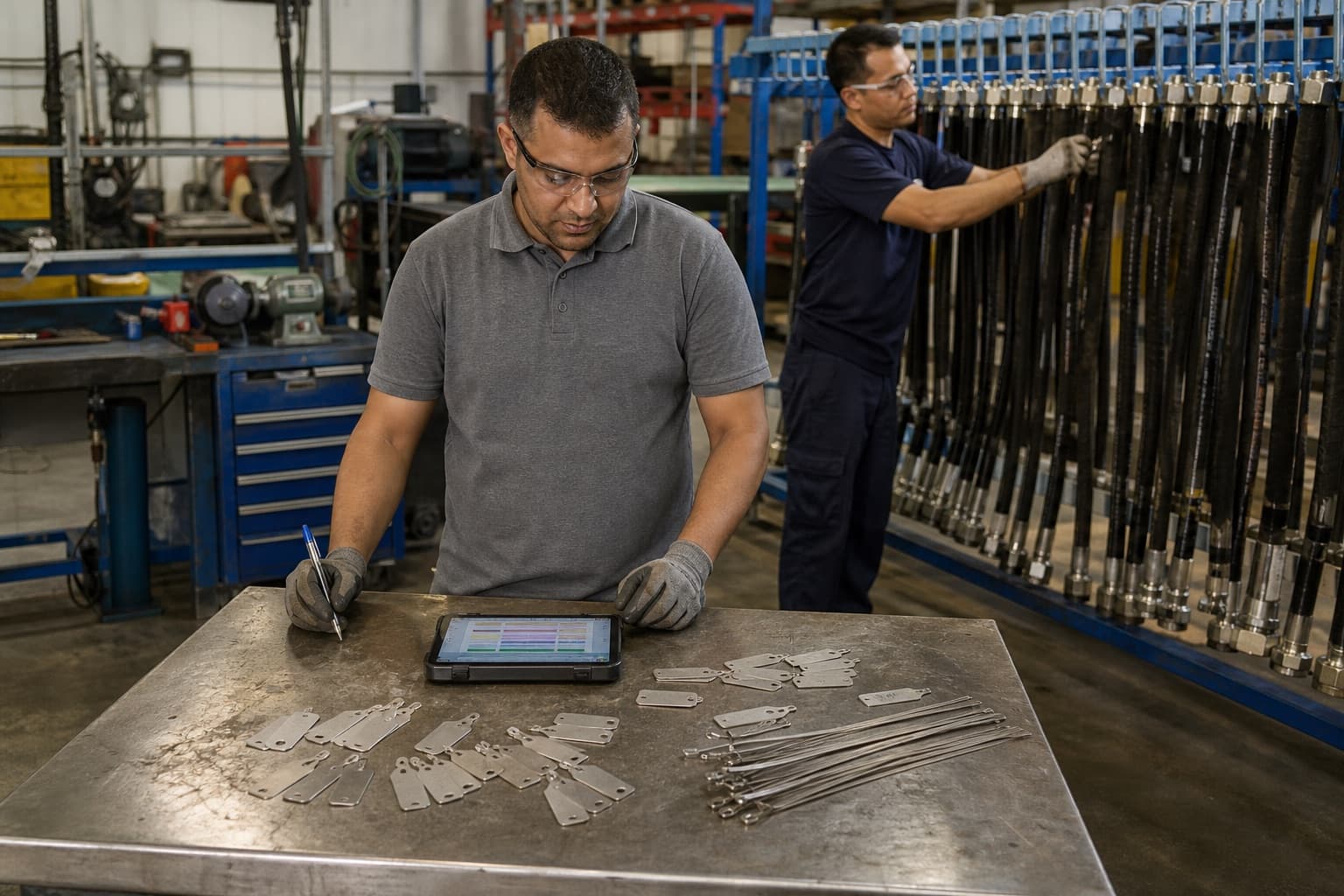
Nearly every fleet starts on breakdown replacement, and most stay there because the alternative sounds like a project. It is smaller than it looks: the useful version of a hose programme is three columns and a decision about consequence.
The register.
A hose register lists every assembly on every machine you intend to manage, with enough detail to re-order it without going back to the machine. That is the whole trick — the register is what turns a two-hour identification job into a two-minute one when something fails at an inconvenient time.
Rank by consequence.
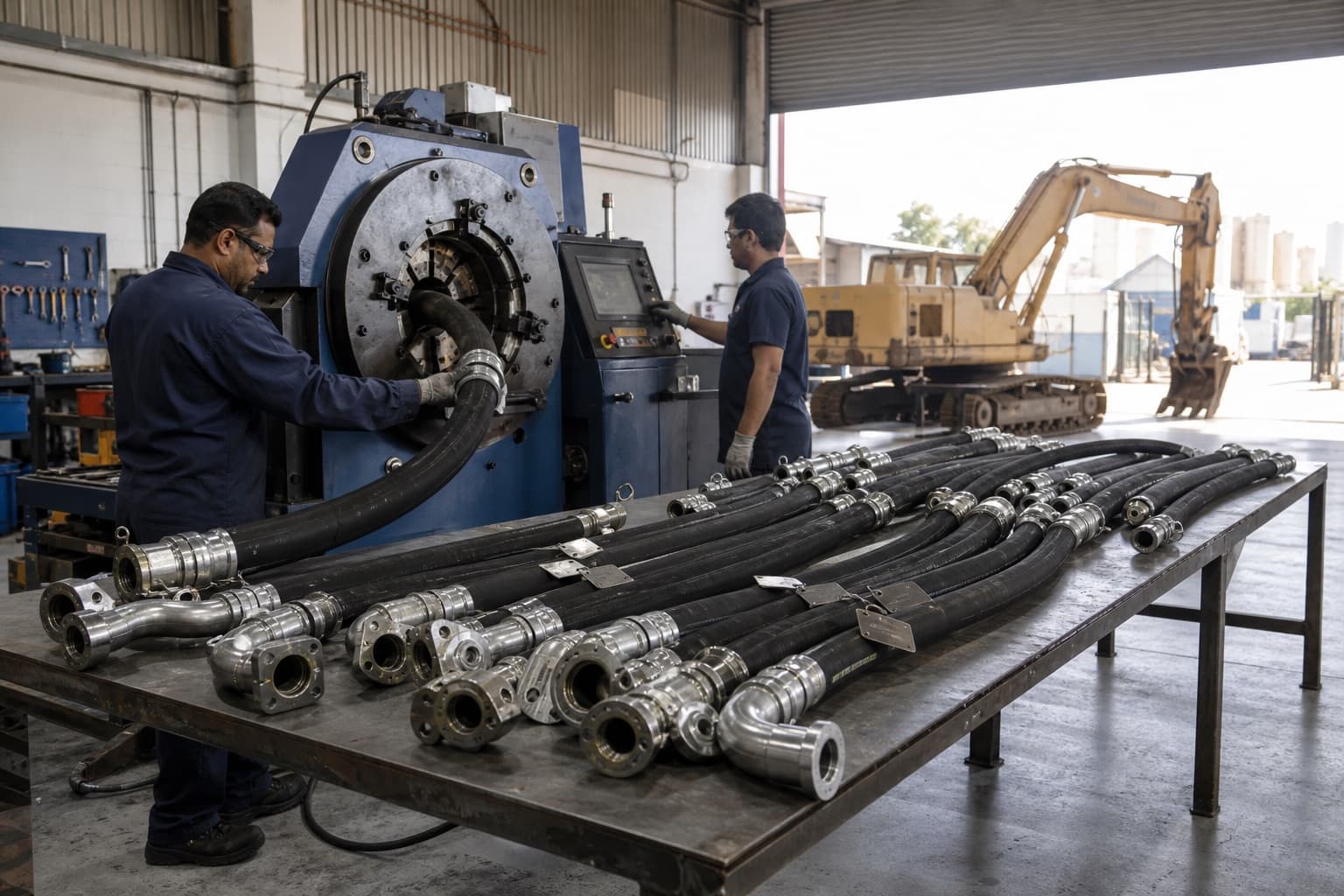
How do you decide which hoses to include in a replacement programme?
By the consequence of failure, not the cost of the part. Rank each assembly on what its failure does — stops production, creates a safety hazard, causes environmental release, or is merely inconvenient — and put the top band on planned replacement first. A programme covering everything usually covers nothing.
| Band | Failure consequence | Approach |
|---|---|---|
| A | Stops production, or creates a safety or environmental hazard | Planned replacement, spares held |
| B | Degrades output or takes a machine off for hours | Planned replacement, spares available at short notice |
| C | Inconvenient, easily worked around | Condition-based; replace on inspection finding |
The band-A list is usually far shorter than people expect, and that is the point. A programme that begins with the twenty assemblies that actually stop the plant gets adopted; one that begins with every hose on site gets abandoned in month two.
Where the interval comes from.
From your own failure history, which is why the register has a failure column. Once you have a year of records on band-A assemblies you can see where they actually fail and roughly when — and that is a defensible interval in a way a published figure is not, because it already accounts for your duty cycle, your ambient temperature and your installation quality.
Common questions
Is planned replacement not just throwing away good hoses?
Some, yes — that is the trade. The question is whether the value of the hose discarded early is less than the cost of the outages avoided. On band-A assemblies it usually is by a wide margin; on band-C it usually is not, which is why they stay condition-based.
What do we tag assemblies with?
Anything durable that survives the environment and carries a unique ID. The technology matters far less than whether the ID is legible in three years and links to a record someone maintains.
Can we run this without maintenance software?
Yes. A spreadsheet with those six fields beats an unused module in an expensive system. Move it into your CMMS when the discipline is established, not before.
How long before it shows a result?
You see the register pay off immediately in faster identification. The reduction in unplanned failures follows the first full replacement cycle on band A.
Common band-A replacement grades
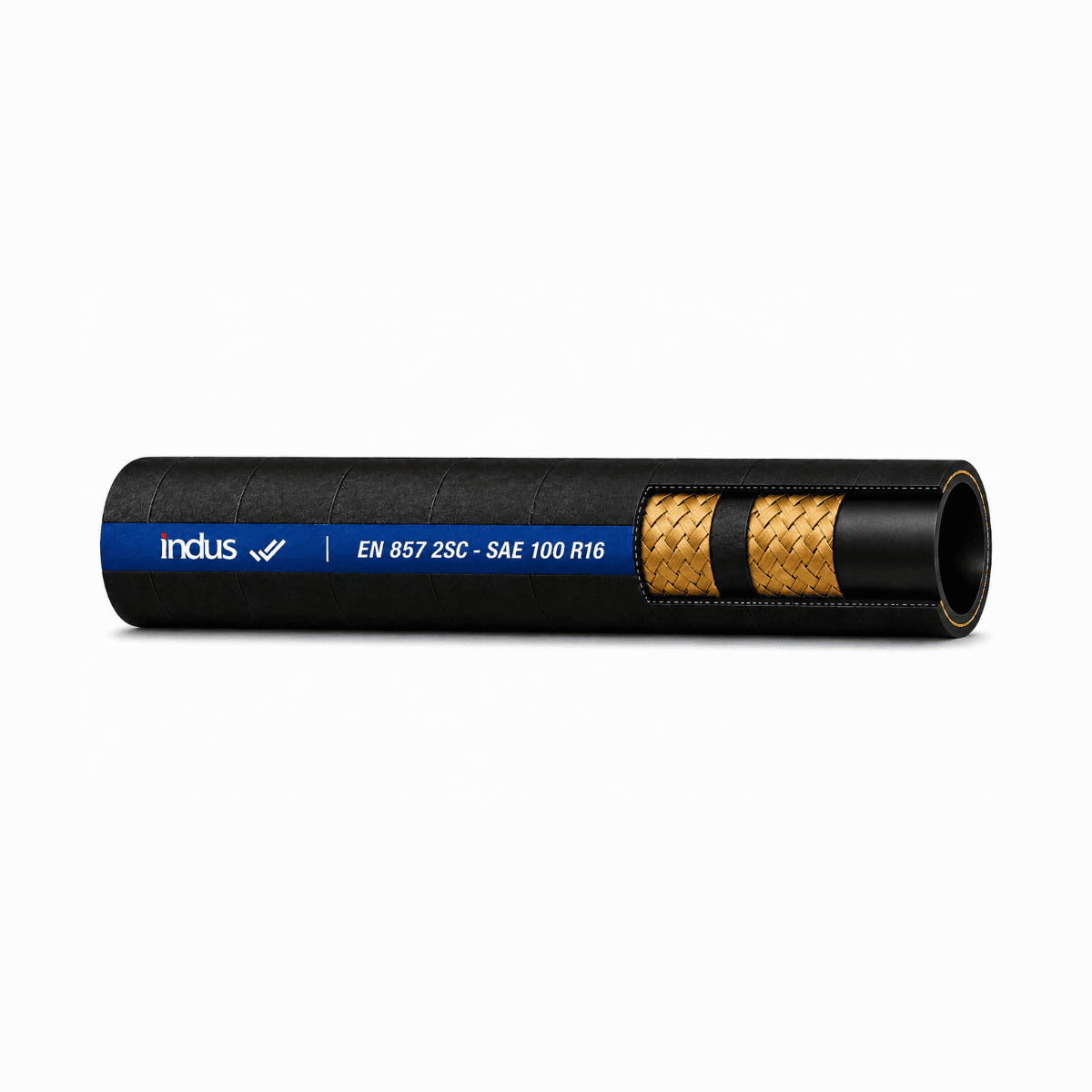
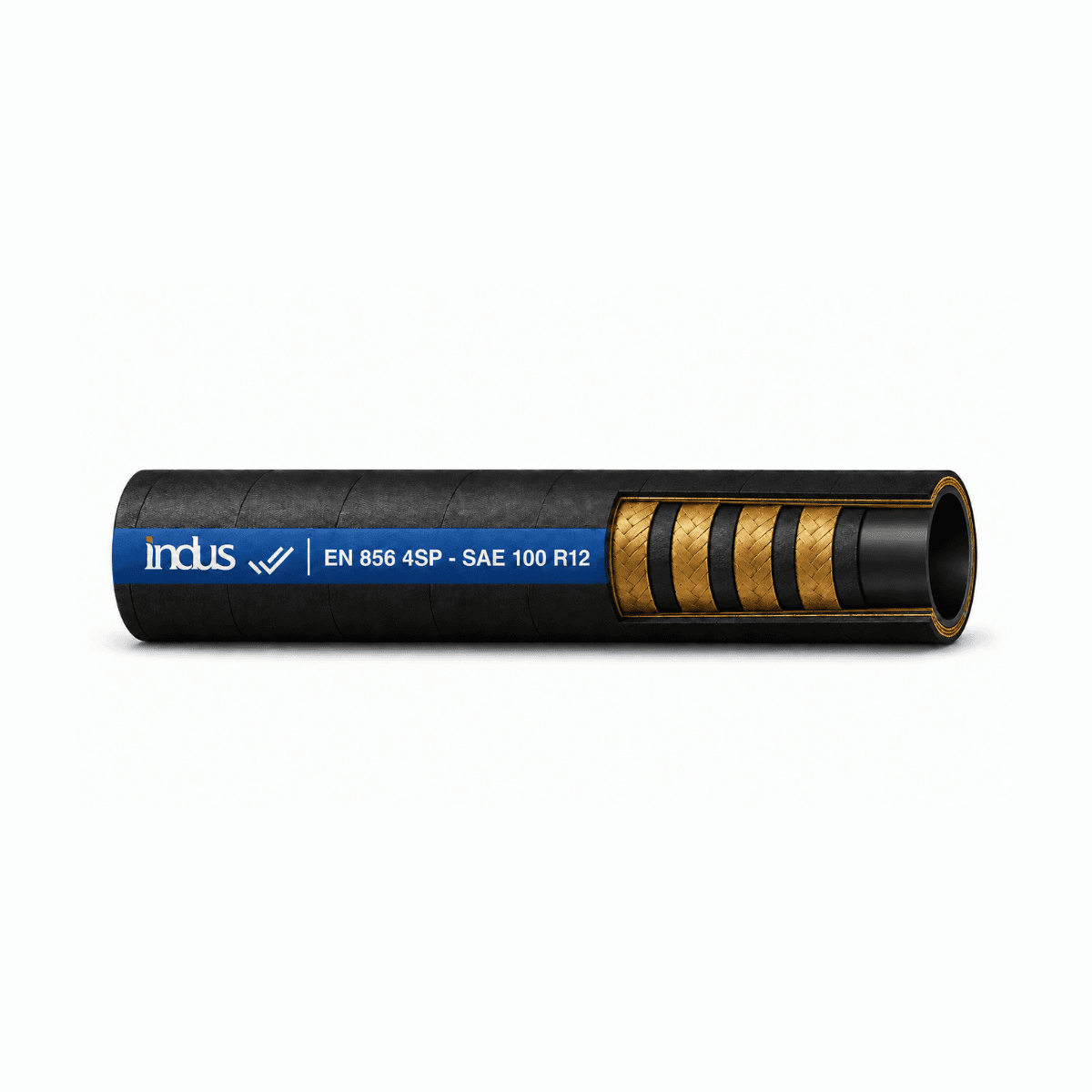
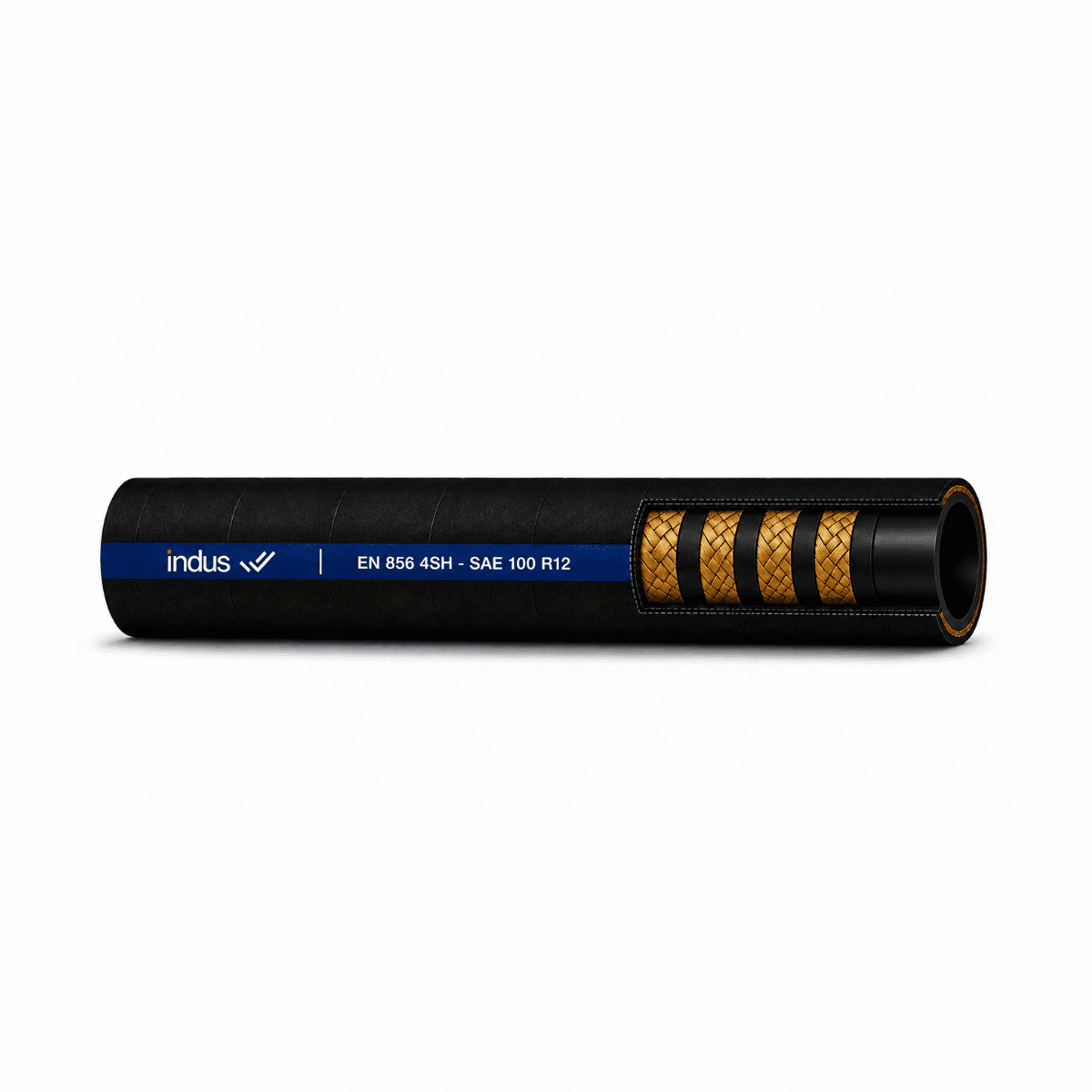
Hydraulic hose by grade
For stocking the assemblies your programme puts on planned replacement.
Figures verified · Method only. No replacement intervals published — the article argues they should come from your own failure data.
Setting up a programme?
Send the machine list and what has failed in the last year. We can help set criticality and work out what needs holding as spares.
Plant-down? Call +971 52 2477942 — 24/7