
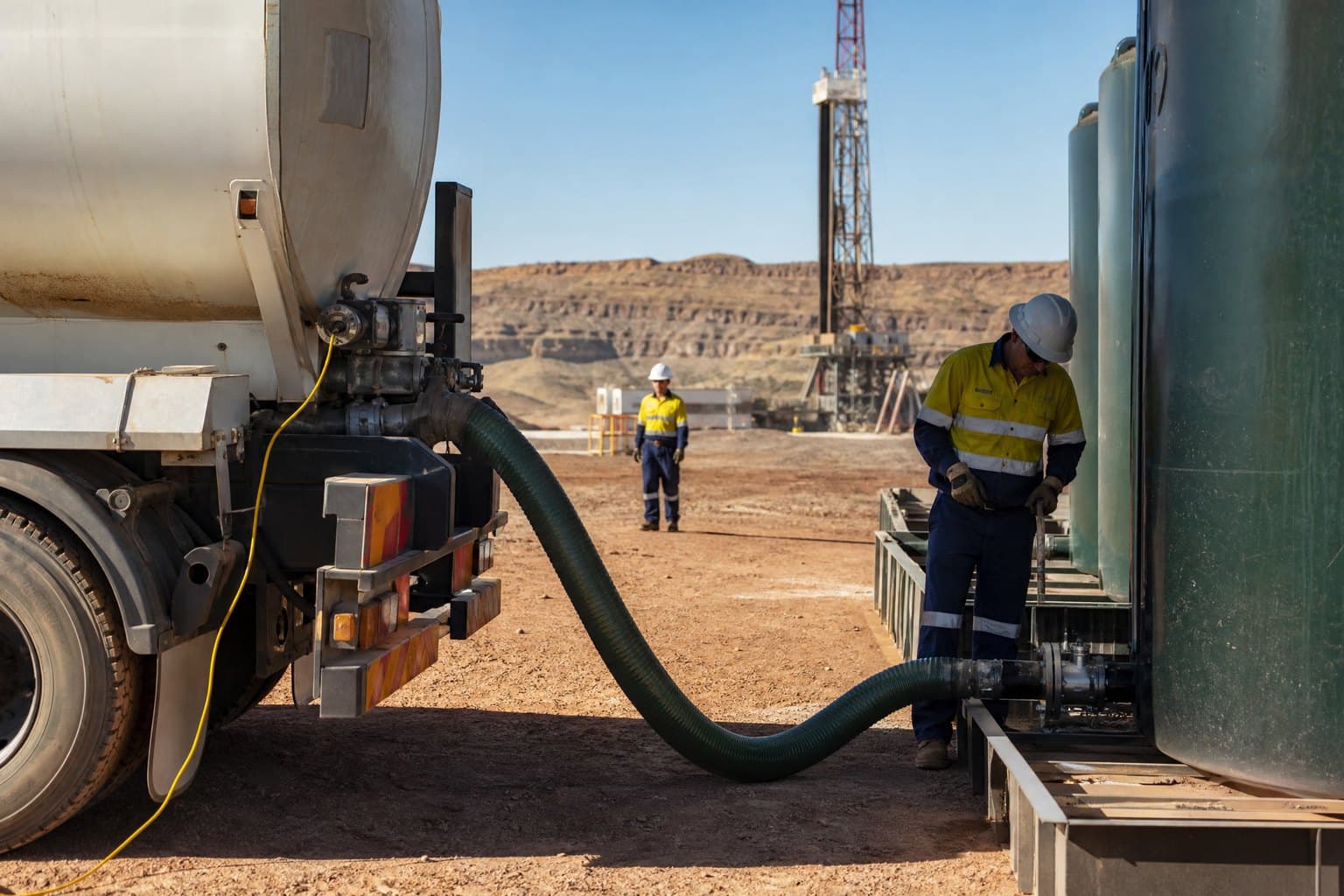
Static is invisible right up to the moment it is not. When diesel, jet fuel or gasoline flows through a hose, friction between the fuel and the wall separates electrical charge. In a conductive line that charge leaks away to earth as fast as it forms. In a hose with no electrical path — or with one broken coupling — it accumulates on the fuel, the hose or a metal fitting until it finds a way to jump. In a fuel vapour atmosphere, that spark is an ignition source.
/01Why fuel generates static.
Water conducts well enough that charge in a water line drains away almost instantly. Refined fuels do not: diesel and kerosene are such poor conductors that charge generated by flow, by filters and by splashing into a tank can persist for some time. More flow, higher velocity, filters and micro-filters, and water droplets in the fuel all increase the charge. That is why fuel handling rules focus on three things: an electrical path through the hose, bonding between the vessels at each end, and limiting velocity and splash during filling.
/02M, Ω and what the markings mean.
European hose standards for fuel and tanker service classify hoses by how they handle charge. The common markings are:
| Marking | How charge is carried | Typical limit between couplings | Notes |
|---|---|---|---|
| M (bonded) | Metal bonding wire or wires connected to both end fittings | About 100 Ω or less | Simple to check with an ohmmeter; the wire must be attached to the couplings |
| Ω (conductive) | Conductive rubber layer in the hose wall | Up to 1 MΩ (10⁶ Ω) | Dissipates charge along the whole wall; tested with an insulation tester |
| /T suffix (Ω/T, M/T) | As above, plus requirements for explosive atmospheres | — | Specified where the hose works inside a hazardous zone |
Resistance is measured to ISO 8031, the international test method for the electrical resistance and continuity of hoses and hose assemblies. Aviation refuelling hose (EN 1361) uses the same M and Ω idea with the same limits. Whatever the marking, the test is end to end, coupling to coupling, on the made-up assembly — not on the hose alone.
/03Where lay flat fits.
Rigid-wall fuel hose — rubber with a wire helix — is the right tool for tanker discharge, pump suction and anything that bends tightly or works under vacuum. See our guide to oil suction and discharge hose. Lay flat comes into its own for the long, temporary pressure line: from a bulk tank or tanker pump to generators across a construction camp, from a fuel farm to a drilling rig, or for emergency and military fuel distribution. An antistatic TPU lay flat fuel hose comes in 2" to 12" bores and lengths of up to 400 m, rolls onto a reel, and resists fuels, oils, UV and abrasion on the ground. A copper earthing wire woven into the polyester jacket gives the hose its continuity — the bonding-wire principle of an M hose.
/04Bonding and earthing a fuel line.
- Check the hose before it leaves the store. Measure resistance coupling to coupling with a meter. A reading that is open circuit or far above the hose’s figure means the wire is broken or not connected — tag the hose out.
- Use conductive couplings and make sure the hose’s earthing wire is connected to each one when the assembly is made up. A plastic adapter anywhere in the line breaks the path.
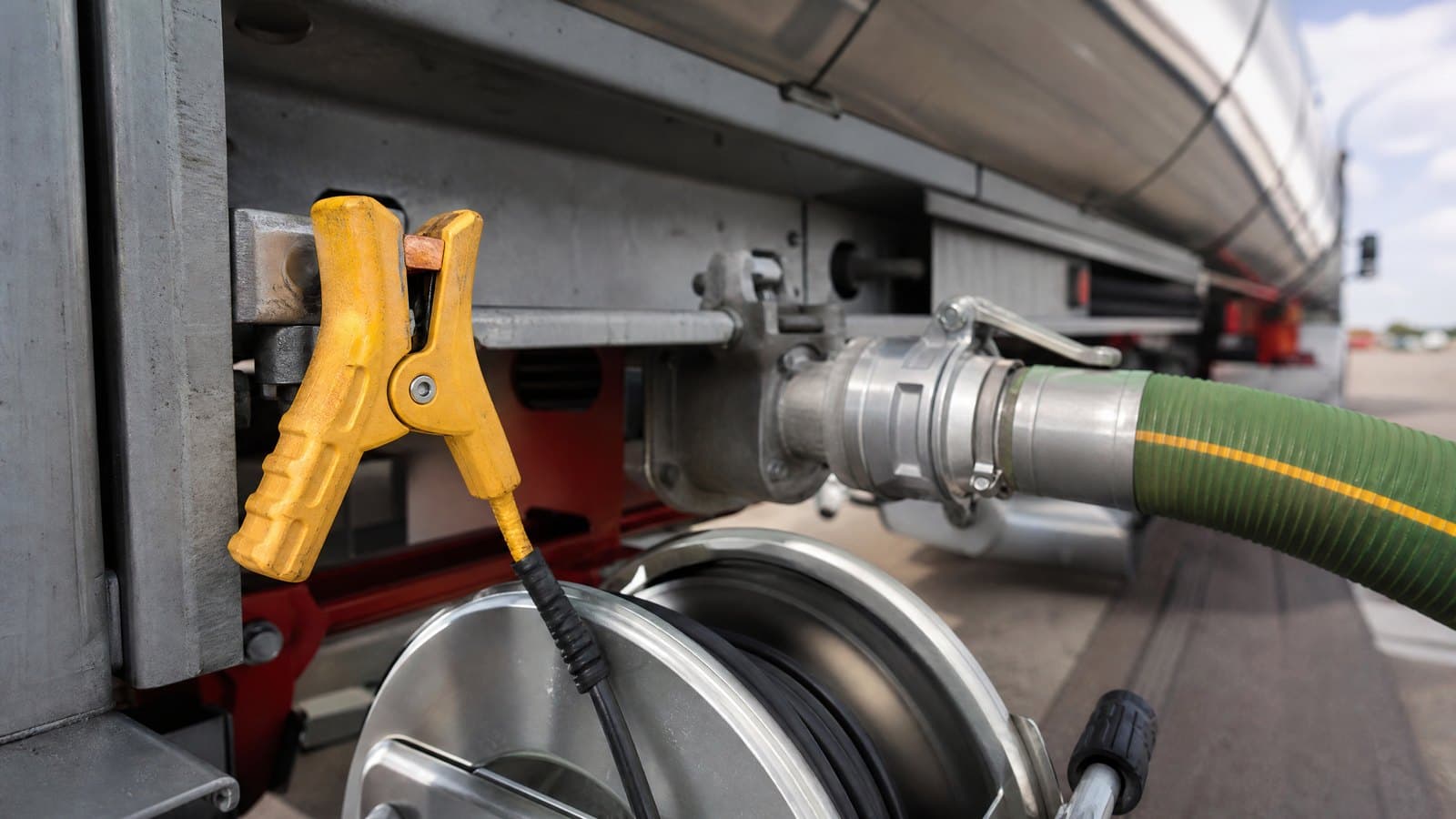
- Earth first, open second. Connect the earthing cable from the tanker or bulk tank to a proven earth point before opening any dome cover or valve, and remove it only after everything is closed again.
- Bond both ends so the supply and receiving tanks are at the same potential.
- Start slowly. Keep the initial fill rate low until the inlet in the receiving tank is covered, avoid splash filling from the top, and bottom-fill where the tank allows.
- Use a ground-proving system where you can: it stops the pump until the earth connection is confirmed.
These are the general principles in industry guidance such as API RP 2003 on static, lightning and stray currents. Your site’s hazardous-area rules, the operator’s fuel handling procedure and the tanker company’s instructions take precedence — follow them.
/05Running a temporary fuel line on site.
Desert camps and rig sites in Saudi Arabia, Kuwait and Oman often run generators and plant from a central fuel farm. A lay flat line saves bowsers and drivers, but it needs the same care as any fuel system. Route it away from hot exhausts and vehicle tracks, protect road crossings with hose ramps, keep it within bunded areas at both ends, and walk it every shift for wear and weeps. Black and dark-green hose in direct sun gets much hotter than the air — see how heat affects lay flat — so a line that is left full and static should be in shade or drained. When the job ends, drain it completely, cap the ends and store it rolled, out of the sun.
Common questions
- What is the difference between an M hose and an Ω hose?
- An M hose carries charge through metal bonding wires connected to both couplings, with a resistance of about 100 Ω or less. An Ω hose has a conductive wall and a resistance of up to 1 MΩ between couplings. Both drain static if the line is earthed.
- How do you test an antistatic hose?
- Measure the electrical resistance between the two couplings of the made-up assembly, to the method in ISO 8031. Do it with the hose empty and laid out, before each deployment, and remove any hose that reads open circuit.
- Can lay flat hose be used for diesel?
- Yes, if it is made for fuel. Our antistatic TPU lay flat hose has an oil-resistant TPU tube and cover and a copper earthing wire in the jacket. Use it on the pressure side only, never on a pump suction.
- Is the copper wire enough on its own?
- Only if it is connected to conductive couplings at both ends and the whole line is earthed. Check continuity every time the hose is deployed.
- What pressure can an antistatic lay flat fuel hose take?
- A per-size pressure table is not published for this line. Tell us the fuel, flow, bore and pump pressure and we will confirm the rating before quoting.
For fuel transfer lines
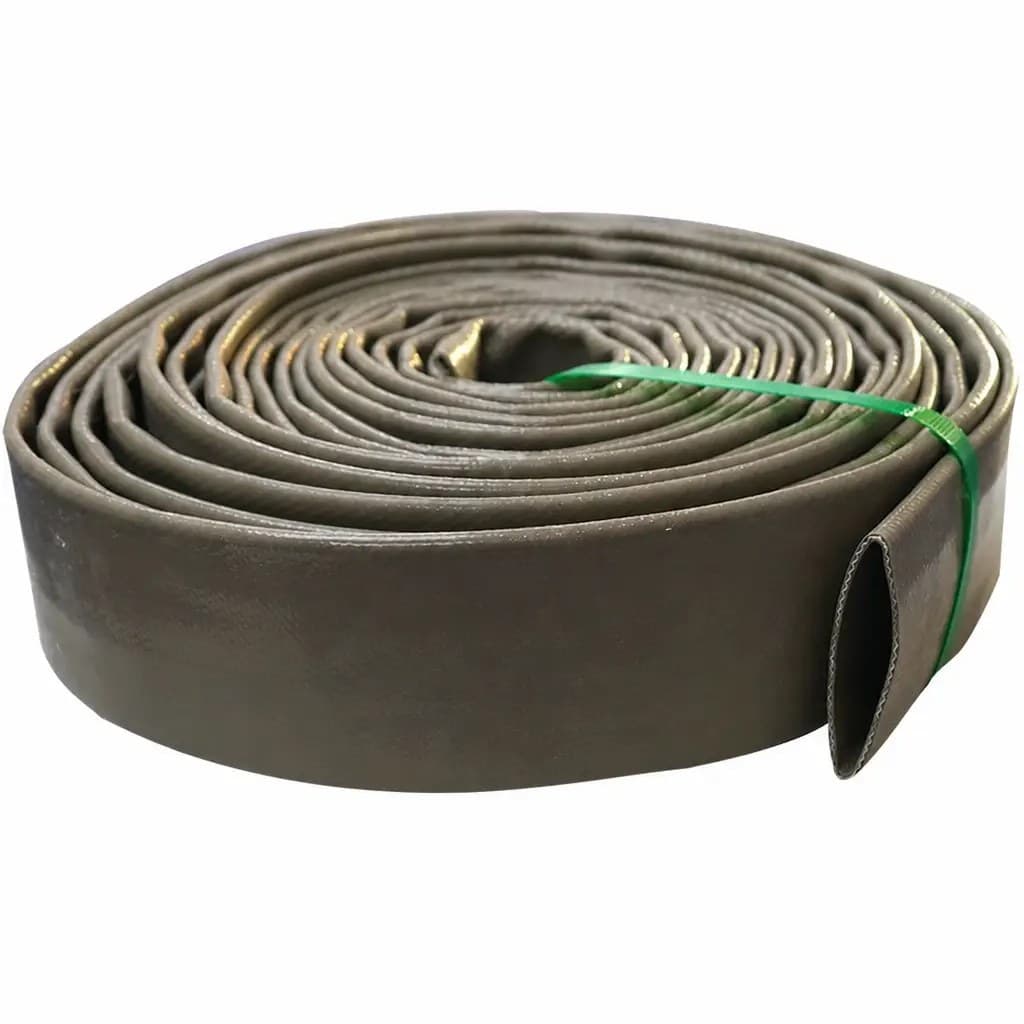 IH-LF-TOFAntistatic TPU Lay Flat Oil and Fuel Transfer HoseIndus Hydraulics
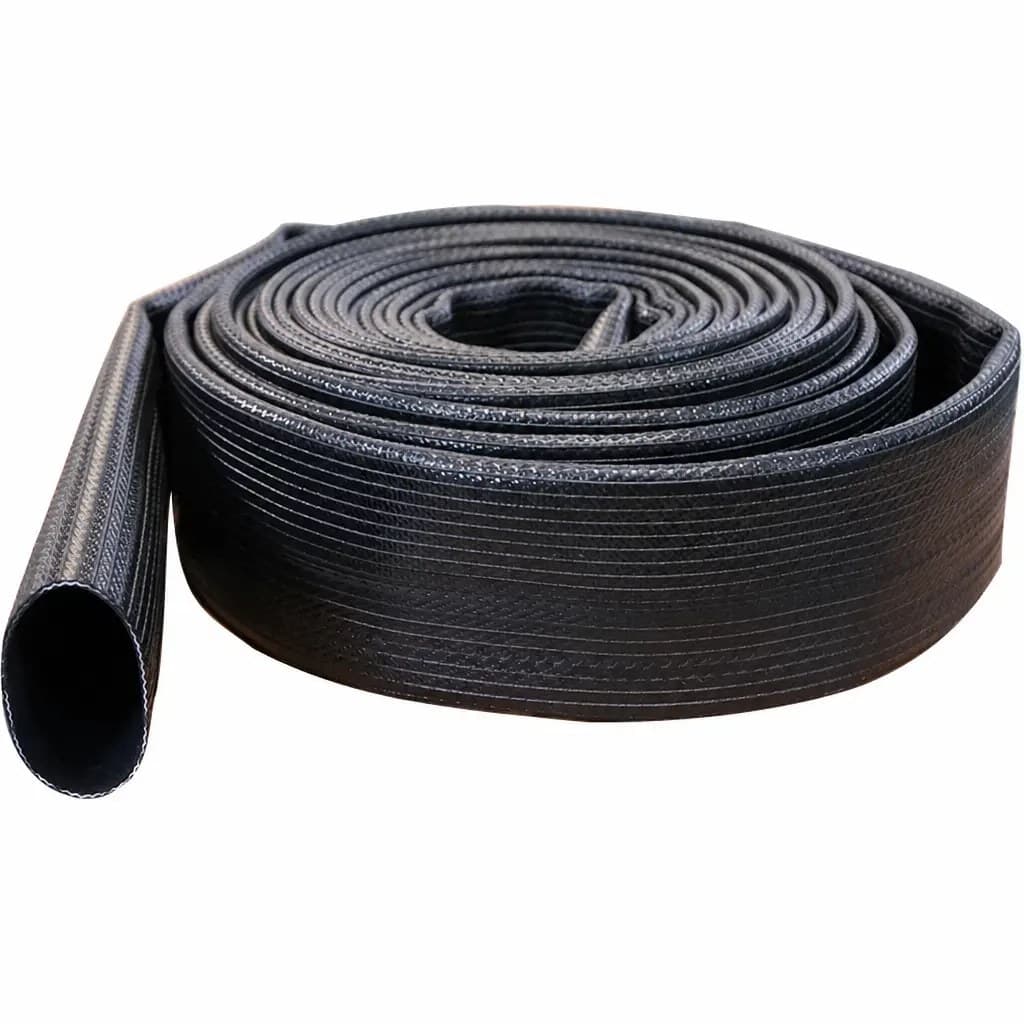 IH-LF-NBRNBR Lay Flat Discharge Hose, Ribbed CoverIndus Hydraulics
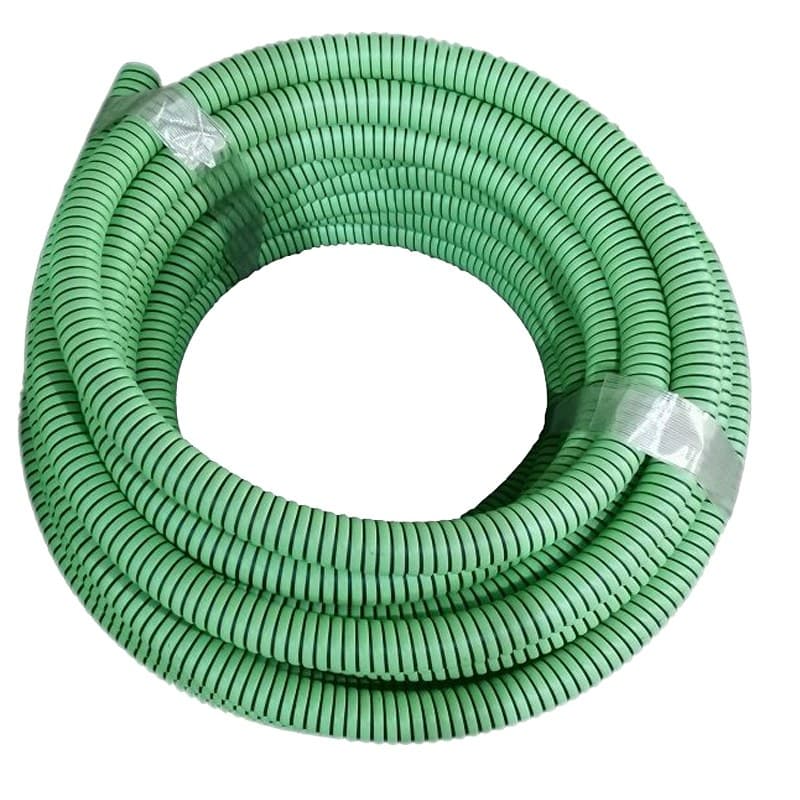 IH-LF-SEPEPDM/PE Suction Hose with Rigid HelixIndus Hydraulics
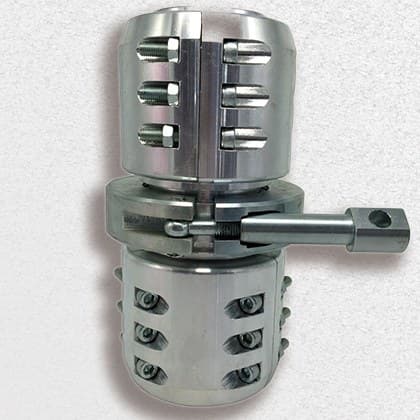 IH-LF-CHPHigh-Pressure Lay Flat Hose Coupling, Male × FemaleIndus Hydraulics
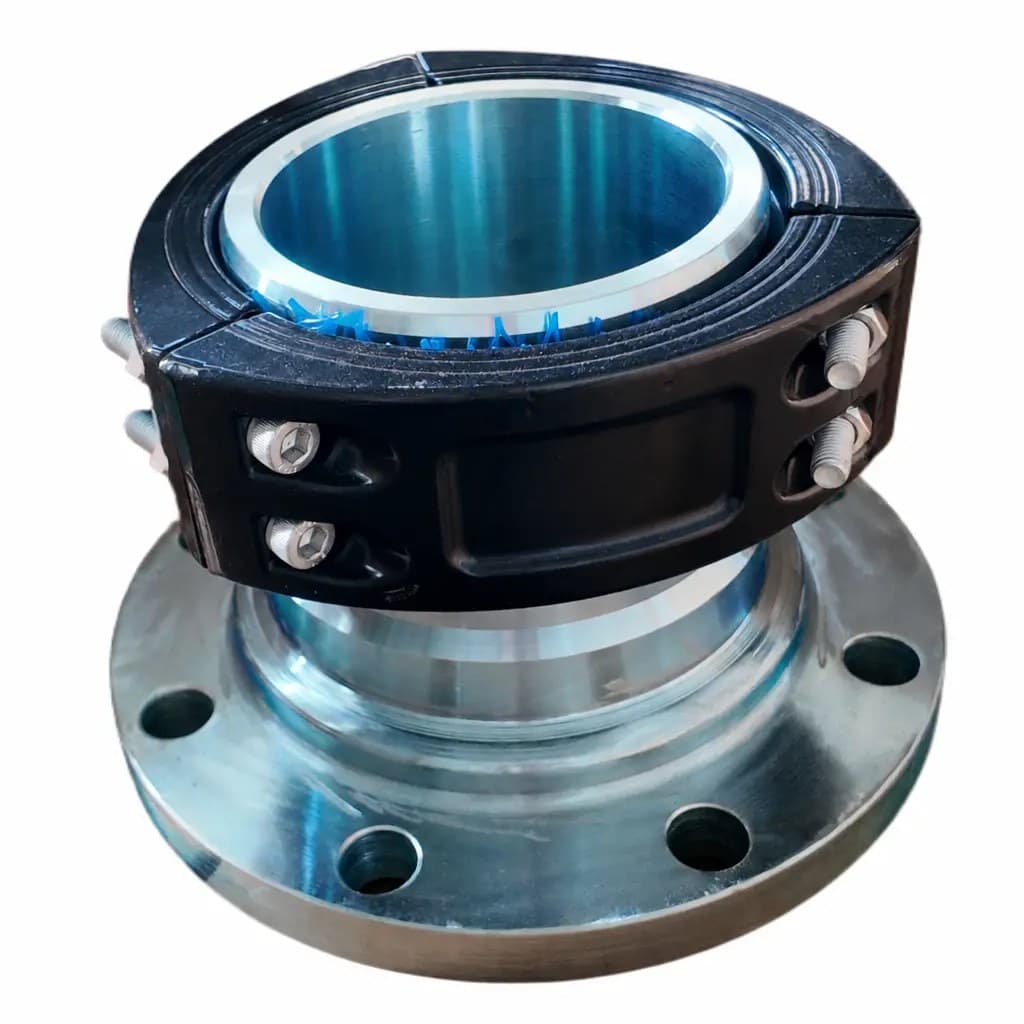 IH-LF-CFLLarge-Bore Flanged Lay Flat Hose CouplingIndus Hydraulics


