
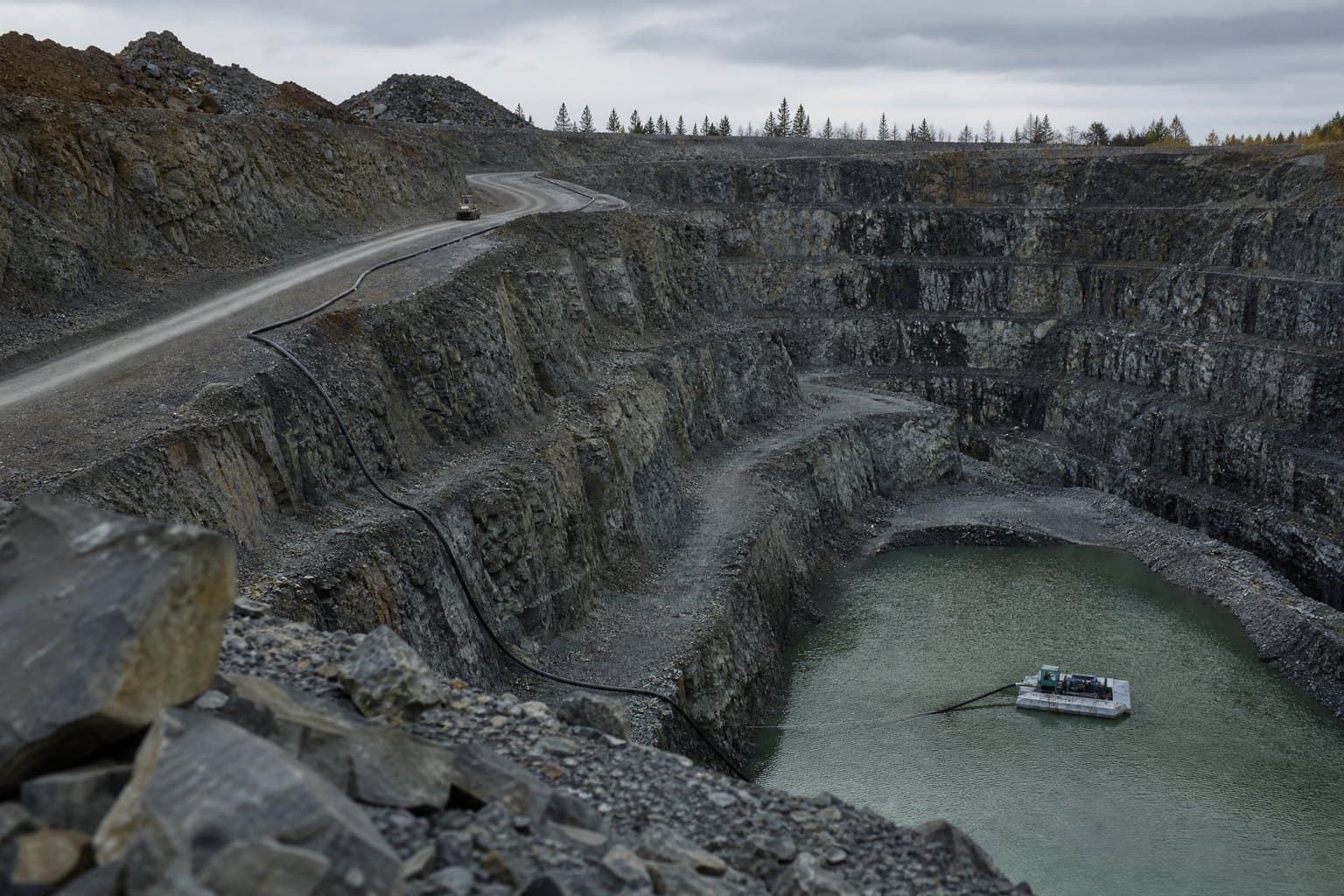
Mining below the water table means pumping, continuously, for the life of the mine. The scale is easy to underestimate: in 2006 the active and abandoned coal mines of Poland’s Upper Silesian basin pumped 162.8 million cubic metres of water, and recent estimates put the basin at around half a million cubic metres a day, with inflows to individual mines from 1 to 60 m³ a minute. Main shaft pumping runs through fixed steel pipe. But the pit-bottom pumps, the sumps that move as the face advances, the in-pit transfer lines and emergency pumping after a storm are where lay flat hose earns its place.
/01Where lay flat fits in a mine.
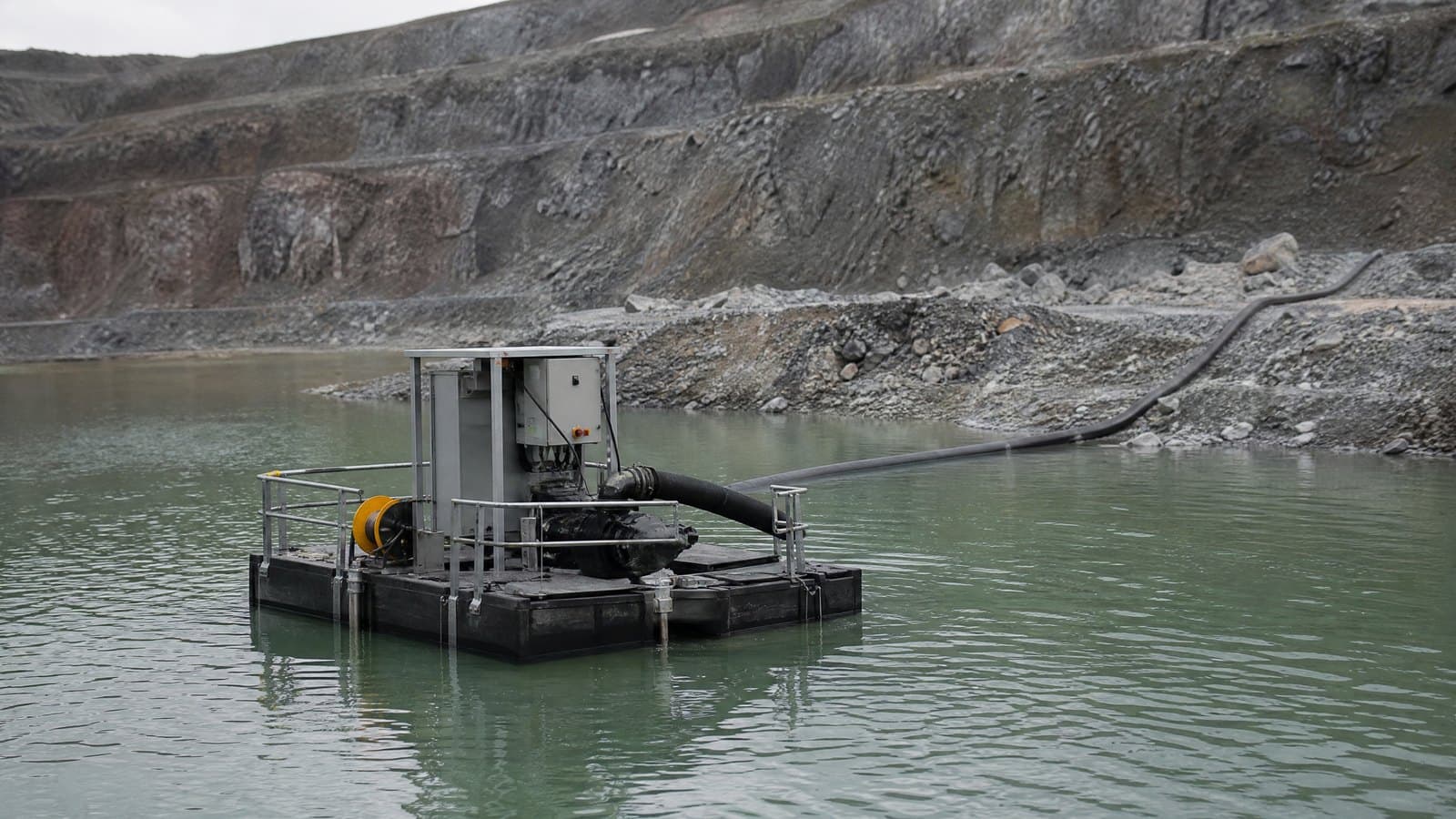
- Open-pit sumps: pontoon and skid pumps in the pit bottom, discharging up the benches to a settling pond. The pump moves as the pit deepens; lay flat follows it.
- In-pit and haul-road transfer: moving water between sumps, ponds and treatment, often over kilometres.
- Underground temporary lines: face and development pumping into the main sump, where rigid pipe would have to be re-laid every few weeks.
- Storm and emergency pumping: extra pumps brought in after heavy rain or an inrush.
/02From pit depth to hose pressure.
A dewatering line’s highest pressure is at the pump, and in a pit most of it is lift. Every 10 m of vertical rise needs about 1 bar; add friction along the hose and the pressure at the outlet. A pump lifting 120 m from the pit bottom to the rim through a kilometre of hose might need 12 bar for the lift and several more for friction — beyond some hoses, comfortably within others. Our TPU dewatering hose is rated 21 bar from 1-1/2" to 2-1/2", 17 bar at 3" and 4", 14–15 bar from 6" to 14" and 10 bar at 16", with burst at three times working. For the friction side, see our friction loss guide and how pressure ratings work.
/03TPU or NBR?
| Hose | Strengths | Best for |
|---|---|---|
| TPU dewatering hoseHighlighted | Light, very abrasion-resistant, smooth bore, 1-1/2" to 16", up to 21 bar | Long transfer lines, high flows, lines dragged over rock |
| NBR discharge hose | Nitrile tube and ribbed cover, oil resistant, 10 bar | Smaller pumps, oily water from plant areas |
| Heavy-duty NBR hose | High-strength jacket, oil, abrasion and weather resistant | Continuous, high-intensity pit pumping |
| EPDM/PE suction hose | Rigid helix, vacuum rated | Pump suction — never lay flat |
For most open-pit transfer, TPU wins on weight and abrasion: a 12" hose weighs 4.6 kg/m, so a kilometre is a reel, not a truckload of pipe. NBR discharge hose and heavy-duty NBR hose suit the oily water from workshops and plant areas, and the high-wear duty of continuous pumps. Our materials comparison goes further.
/04Acid mine water.
Where sulphide minerals meet air and water, mine water turns acidic. The US Geological Survey puts acid mine drainage typically at pH 2 to 6, though near-neutral mine water (pH 5 to 8) is also common, and extreme sites go far lower. Acidity matters more for couplings than for the hose: aluminium couplings corrode in strongly acidic water, where stainless steel is the safer choice. Hose compatibility depends on the acid, its concentration and the temperature, so send the water analysis — pH, sulphate, chloride, metals and any oil — and we will confirm hose and coupling materials against it.
/05Laying lines in a working mine.
- Keep clear of blast zones; move or protect hose before each blast.
- Run along the bench edge, not across haul roads; where it must cross, bury it or use heavy-duty ramps rated for haul trucks.
- Support the line on steep sections so its weight full of water does not hang off the coupling.
- Avoid sharp rock at bends and crests; pad contact points.
- Walk the line daily for abrasion, cuts and coupling weeps.
Common questions
- Is TPU or NBR better for mine dewatering?
- TPU for long, dragged transfer lines and high flows, because it is lighter and very abrasion resistant. NBR for oily water and high-wear discharge from smaller pumps.
- Can lay flat hose handle acidic mine water?
- Often, but it depends on the acid, concentration and temperature. Send the water analysis and we will confirm hose and coupling materials; stainless couplings are safer in strongly acidic water.
- How much pressure does pumping out of a pit need?
- About 1 bar for every 10 m of vertical lift, plus friction along the hose and surge allowance.
- Can lay flat hose be used underground?
- Yes, for temporary and face pumping lines. Check the mine’s rules on hose materials for underground use, including any fire and antistatic requirements.
- What couplings suit high-head mine lines?
- High-pressure male × female couplings for the line, flanged or grooved couplings to pumps and pipework, matched to the hose wall and pressure.
For mine dewatering
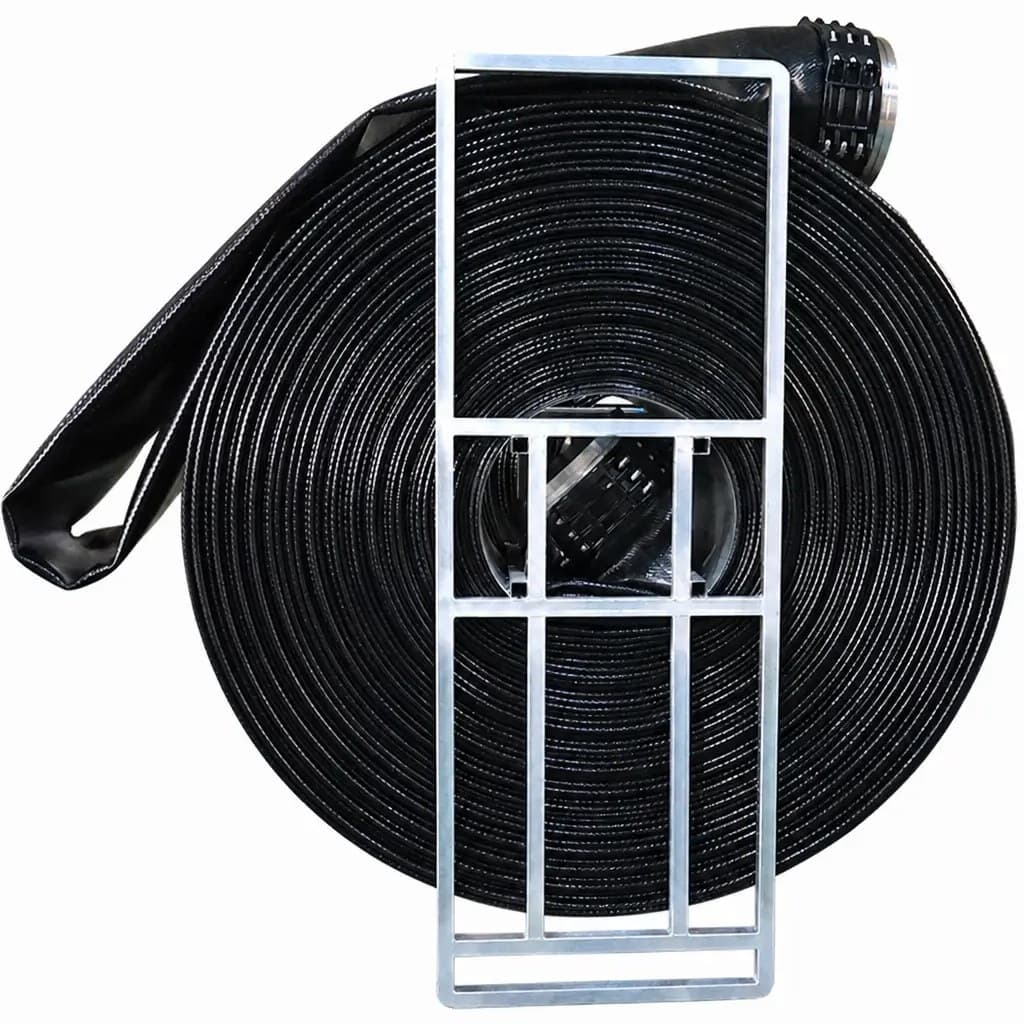 IH-LF-TDWTPU Lay Flat Dewatering and Water Transfer HoseIndus Hydraulics
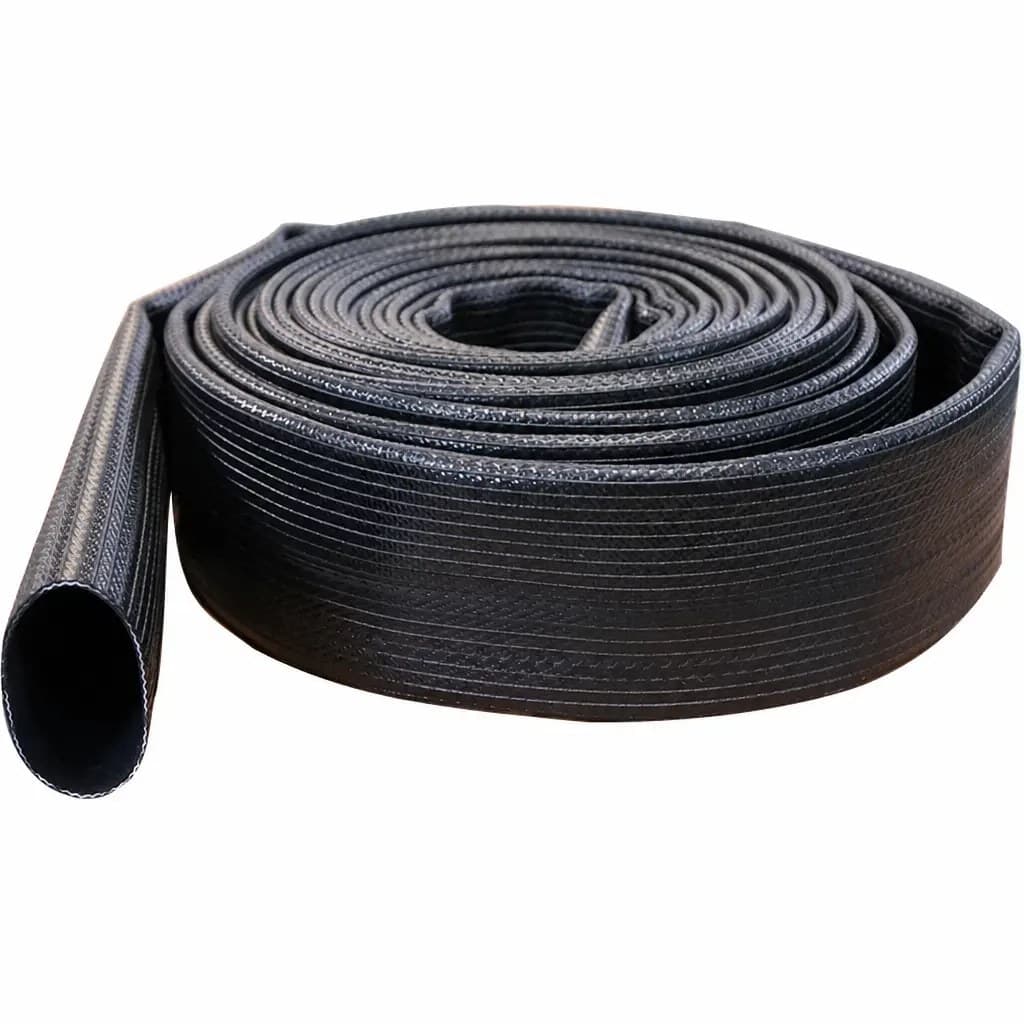 IH-LF-NBRNBR Lay Flat Discharge Hose, Ribbed CoverIndus Hydraulics
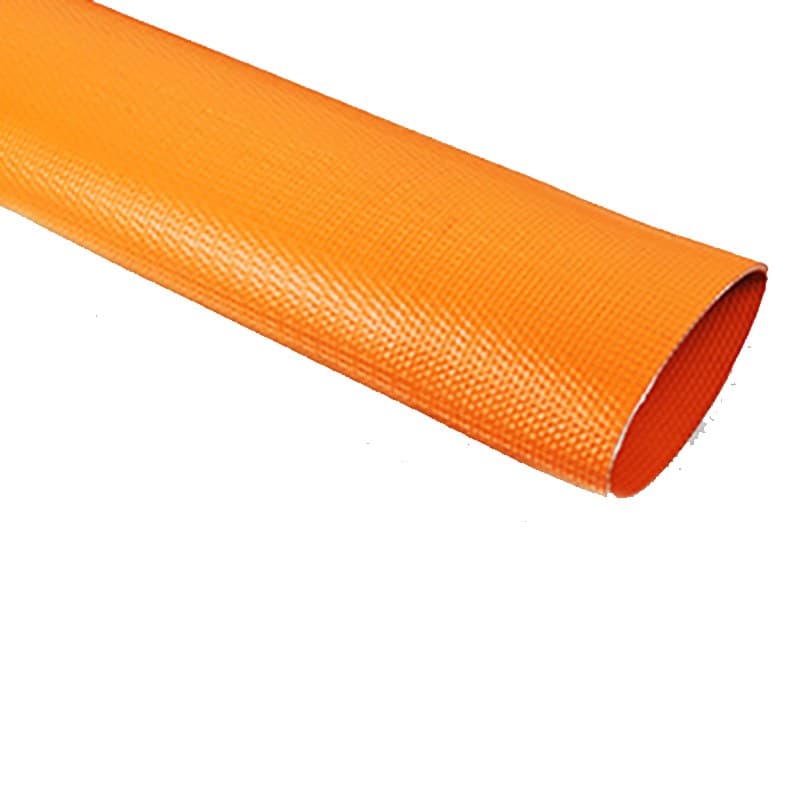 IH-LF-NBRHHeavy-Duty NBR Lay Flat HoseIndus Hydraulics
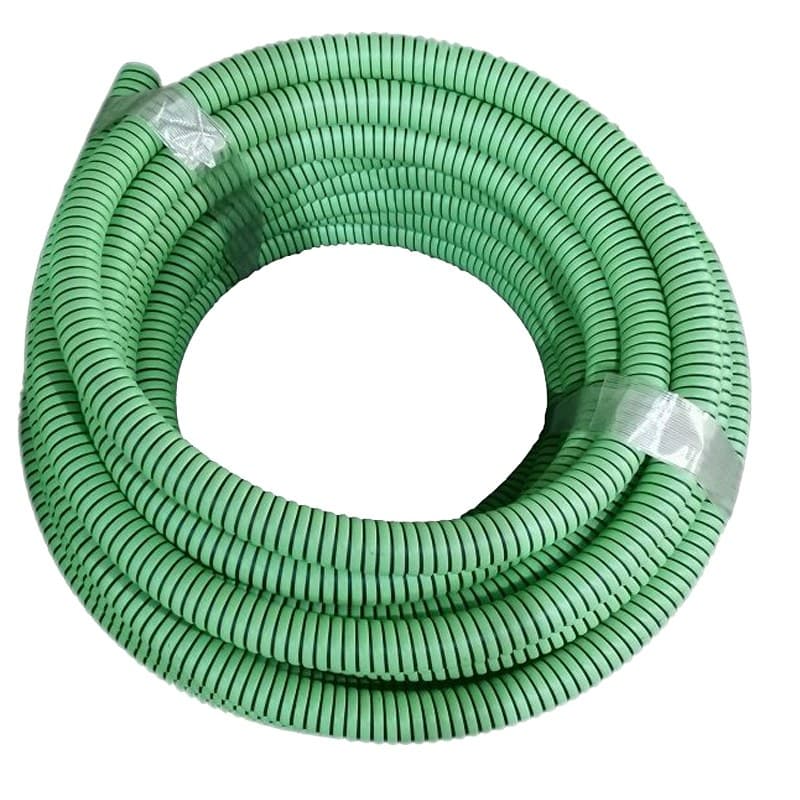 IH-LF-SEPEPDM/PE Suction Hose with Rigid HelixIndus Hydraulics
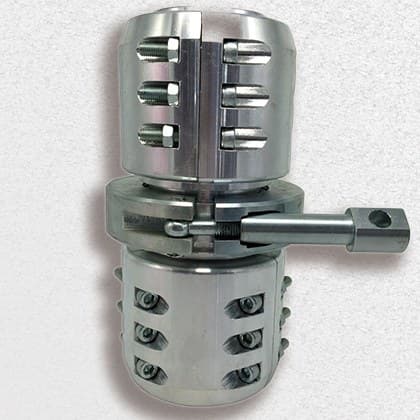 IH-LF-CHPHigh-Pressure Lay Flat Hose Coupling, Male × FemaleIndus Hydraulics
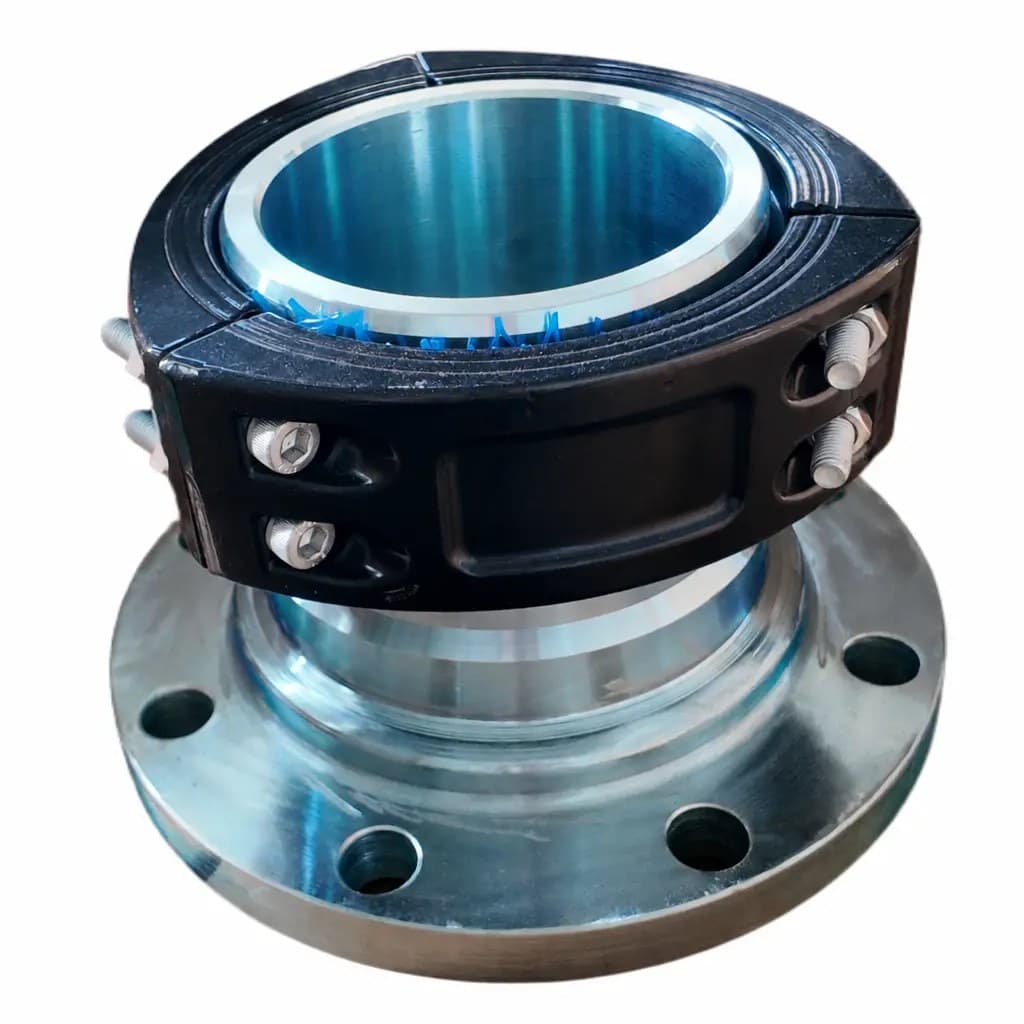 IH-LF-CFLLarge-Bore Flanged Lay Flat Hose CouplingIndus Hydraulics
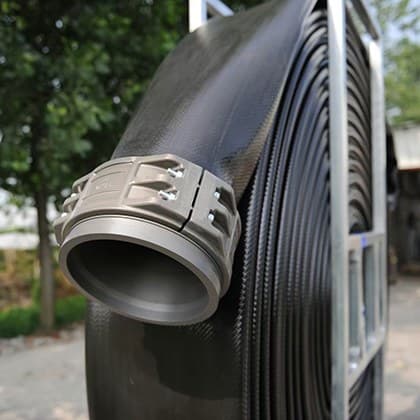 IH-LF-CVGLarge-Bore Lay Flat Hose Coupling, Grooved EndIndus Hydraulics


