
Skip to content
+971 52 2477942

Topic

Rigging capacity charts

Every figure in these charts is read from the size tables on our product pages, for the specific products named — not copied from a generic chart. Find the item and size, read across to the way you will rig it, and then check the figure against the tag or certificate on the part in your hand.

Articles
8
Reading
57 min
Updated
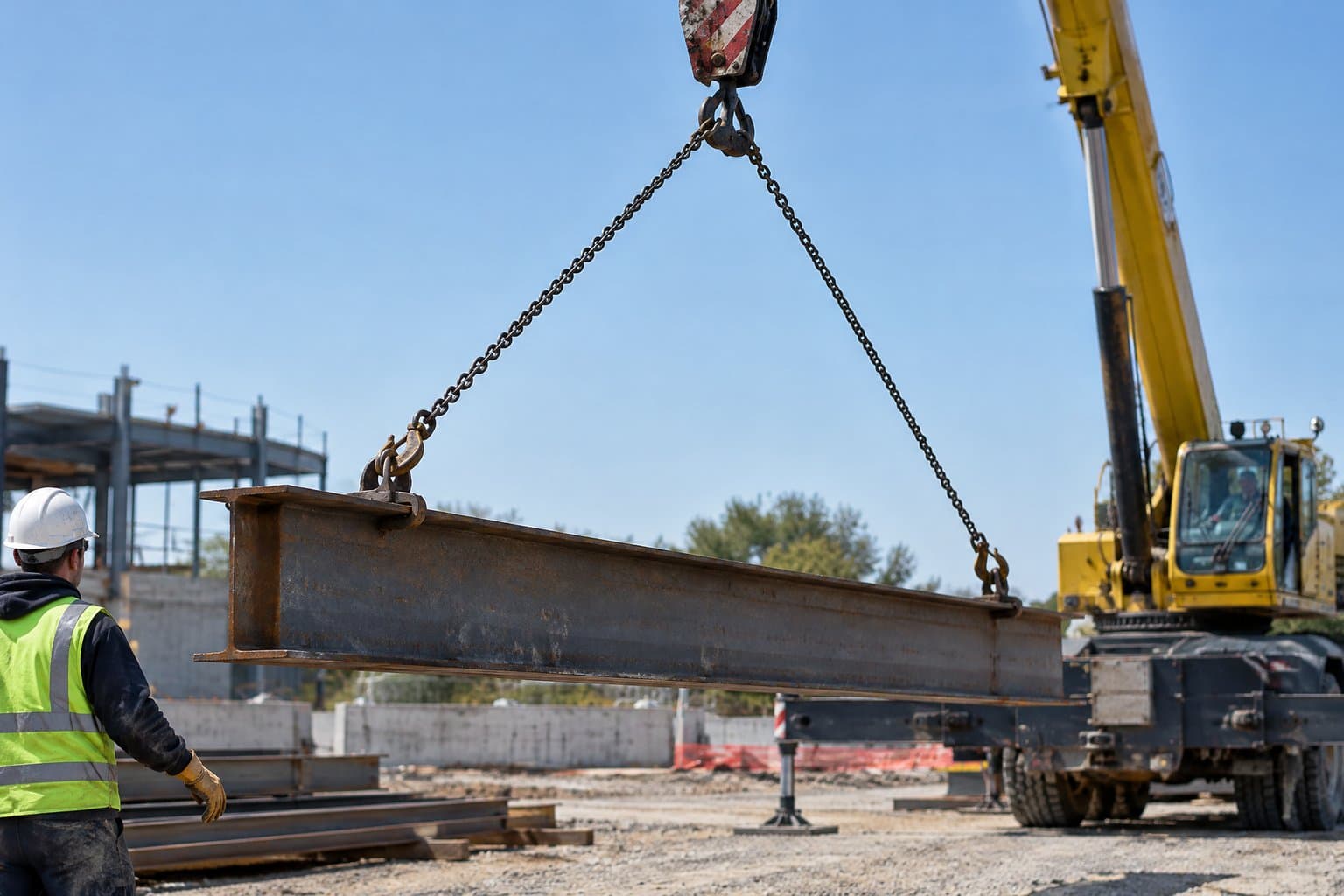
A crane lifting a steel beam on a two-leg chain sling, the legs spread at a wide angle

Start here

Sling angle chart: how the angle changes the load in each leg

Two sling legs do not each carry half the load unless they hang straight down. At 45° from vertical each leg carries 71% of the load; at 60° each carries all of it. Here is the chart, the one-line formula behind it, and how rating tables for multi-leg slings build it in.

6 min read

Topic guide

The short version

How the charts are read:

  • Angles are measured from the vertical, as in the European standards. 45° from vertical is 90° between two legs.
  • Converted units (kN to tonnes, pounds to kilograms) are rounded down, so a conversion never overstates a rating.
  • How each rating works — design factors, hitches, inspection — is explained in the lifting and rigging guides.