
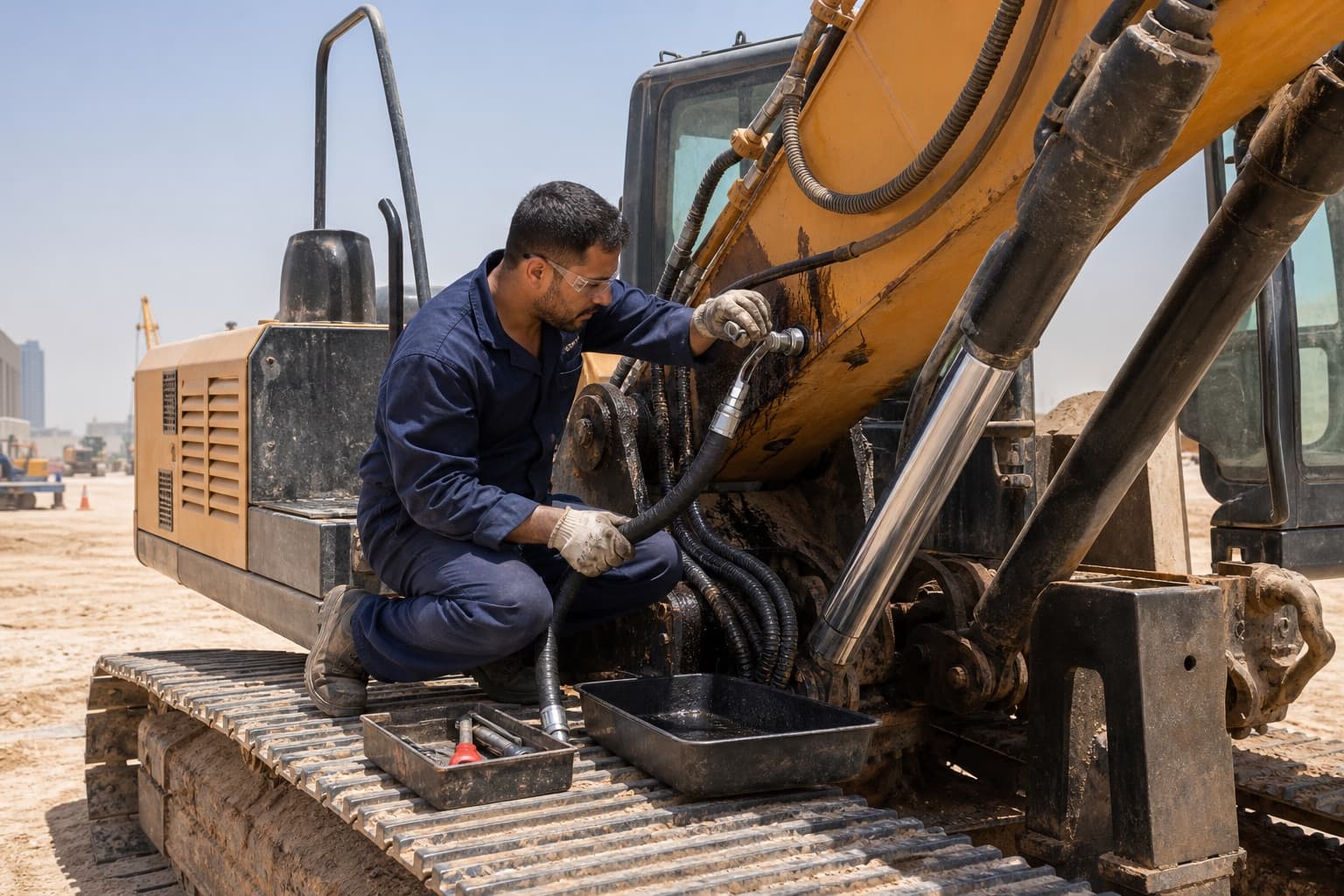
An excavator with a hydraulic failure is usually diagnosable from the seat. What the machine can and cannot do points at a circuit, and the circuit points at a short list of hoses — most of them somewhere you can reach.
Read the symptom.
| What the machine does | Likely circuit | Where to look first |
|---|---|---|
| Boom will not lift, or drifts down under load | Boom | Hoses along the boom, and the cylinder rod-end connections |
| Arm slow or unresponsive, boom fine | Arm / stick | Hoses running the length of the boom to the arm cylinder |
| Bucket will not curl or dump | Bucket | The most exposed hoses on the machine — at the working end |
| House will not slew, tracks fine | Swing | Swing motor lines, and the hoses through the slew centre |
| One track drives, the other does not | Travel | Travel motor lines on the affected side |
| Attachment dead, everything else normal | Auxiliary | Auxiliary lines along the boom and the couplers at the end |
Which excavator hoses fail first?
Bucket and arm hoses, in most fleets. They sit at the working end where they take impact from material, drag against the ground and the trench edge, and flex through the largest range of movement — so they accumulate both abrasion and cycles faster than anything on the house side.
Identify the hose without the parts book.
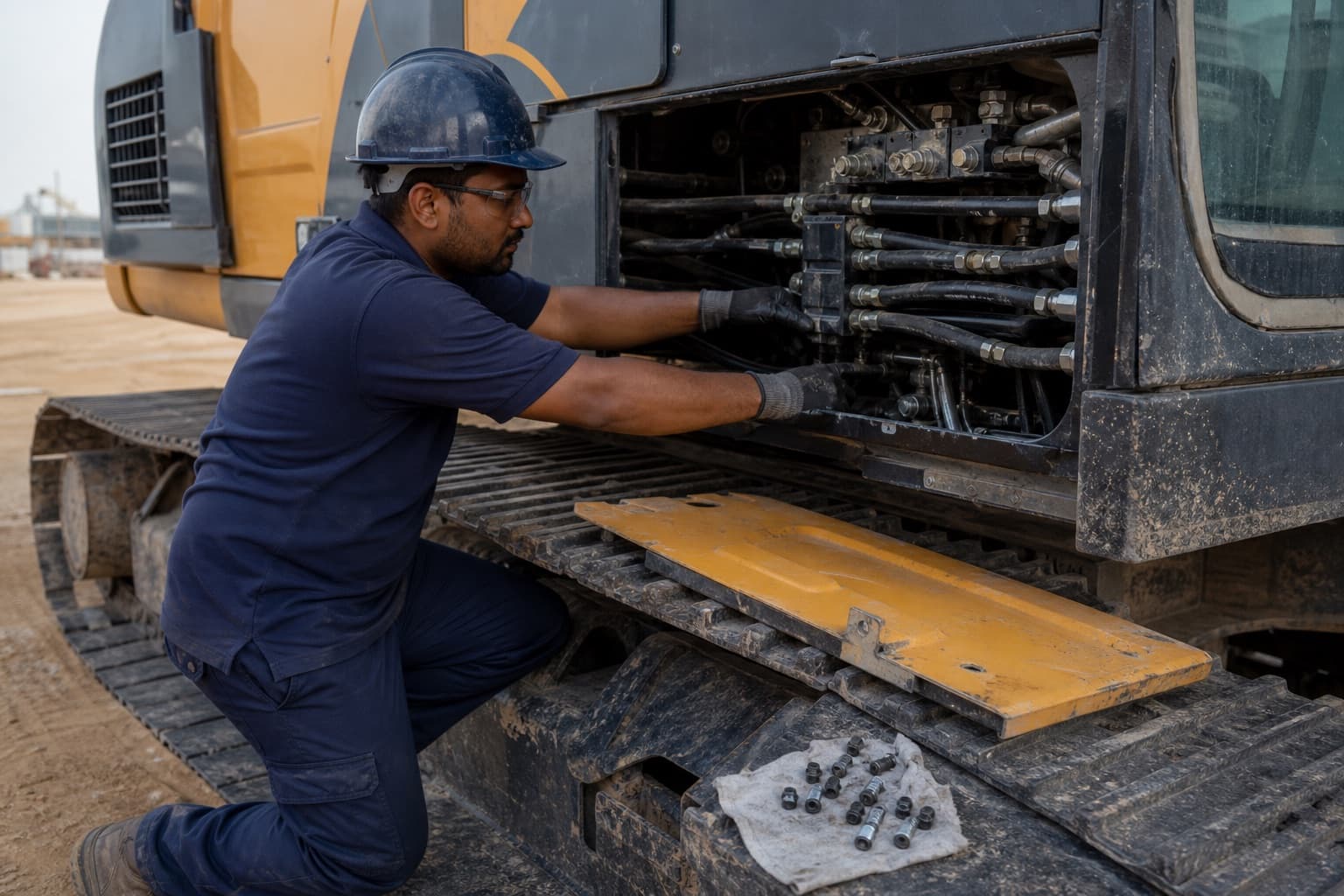
Those five items fully specify a replacement. What this article deliberately does not carry is a table of part numbers by machine model — a wrong row there sends someone a hose that does not fit, on a machine that is already down, and the machine’s own parts book is authoritative in a way a blog post cannot be.
Grade selection on a rebuild.
Replacing like for like is the safe default, and matching what was fitted is usually right. Where it is worth thinking again is when the original kept failing: a run that has burned through several assemblies may need a different route or an elbow rather than a different hose, and a run in a tight space may need a compact construction that bends tighter than the standard grade.
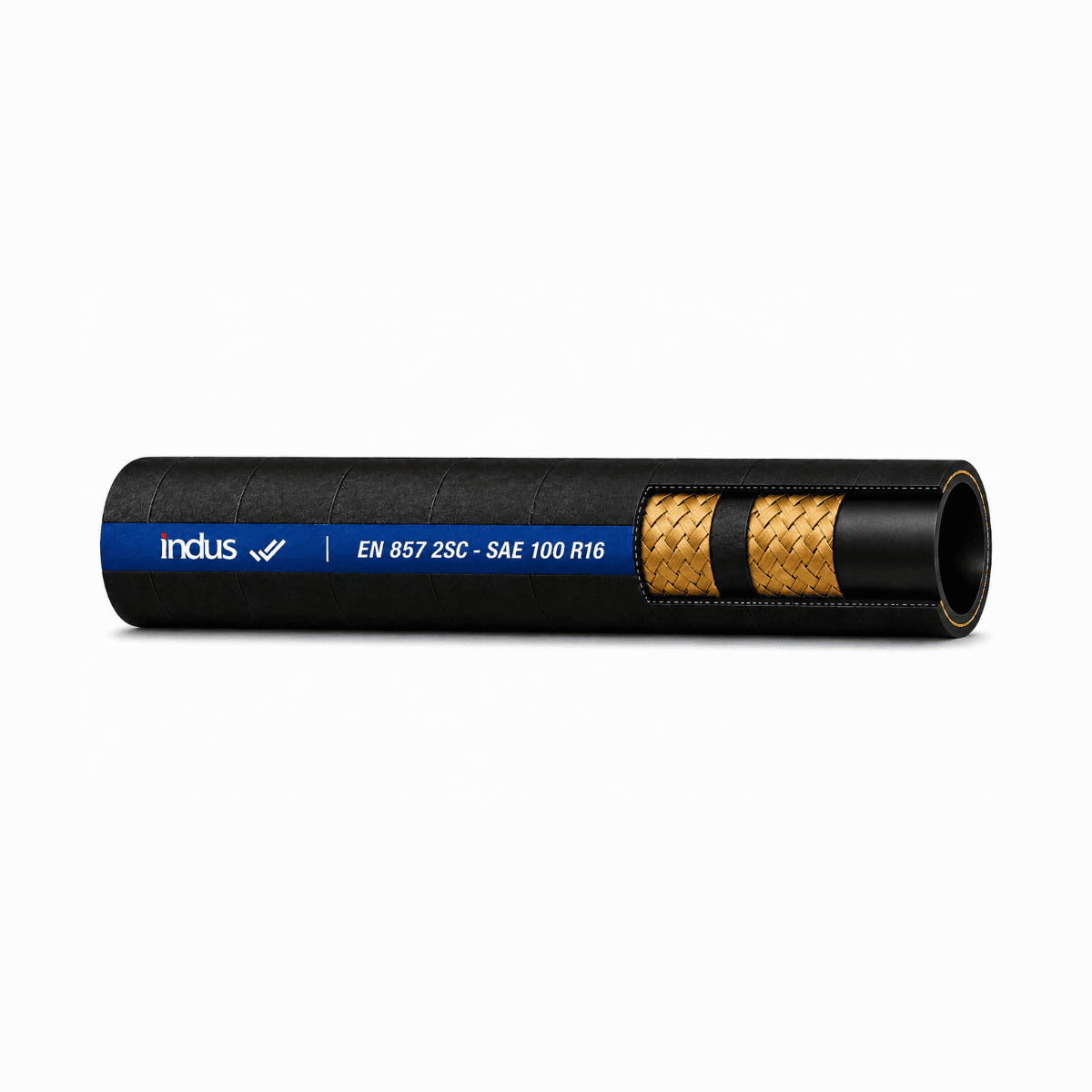
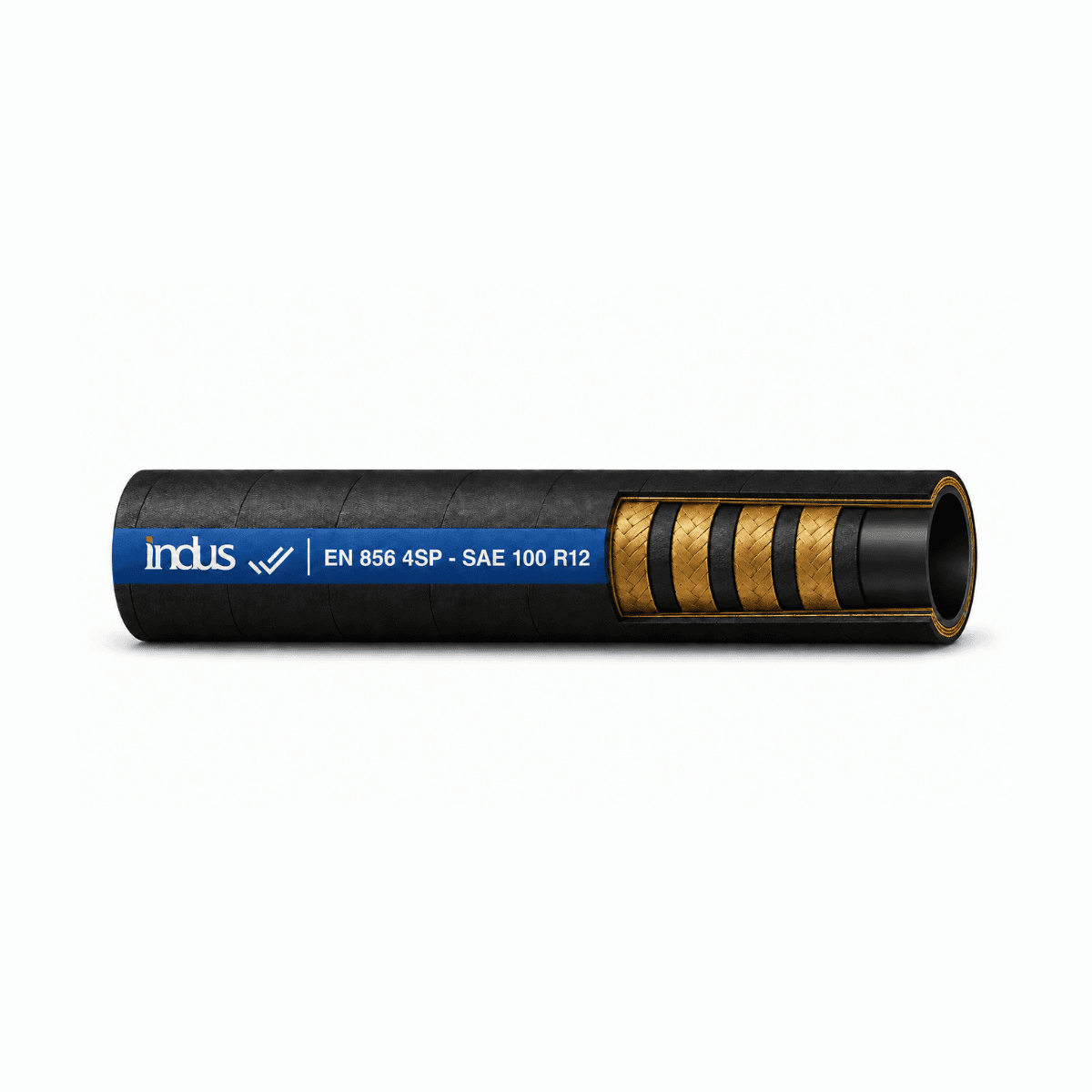
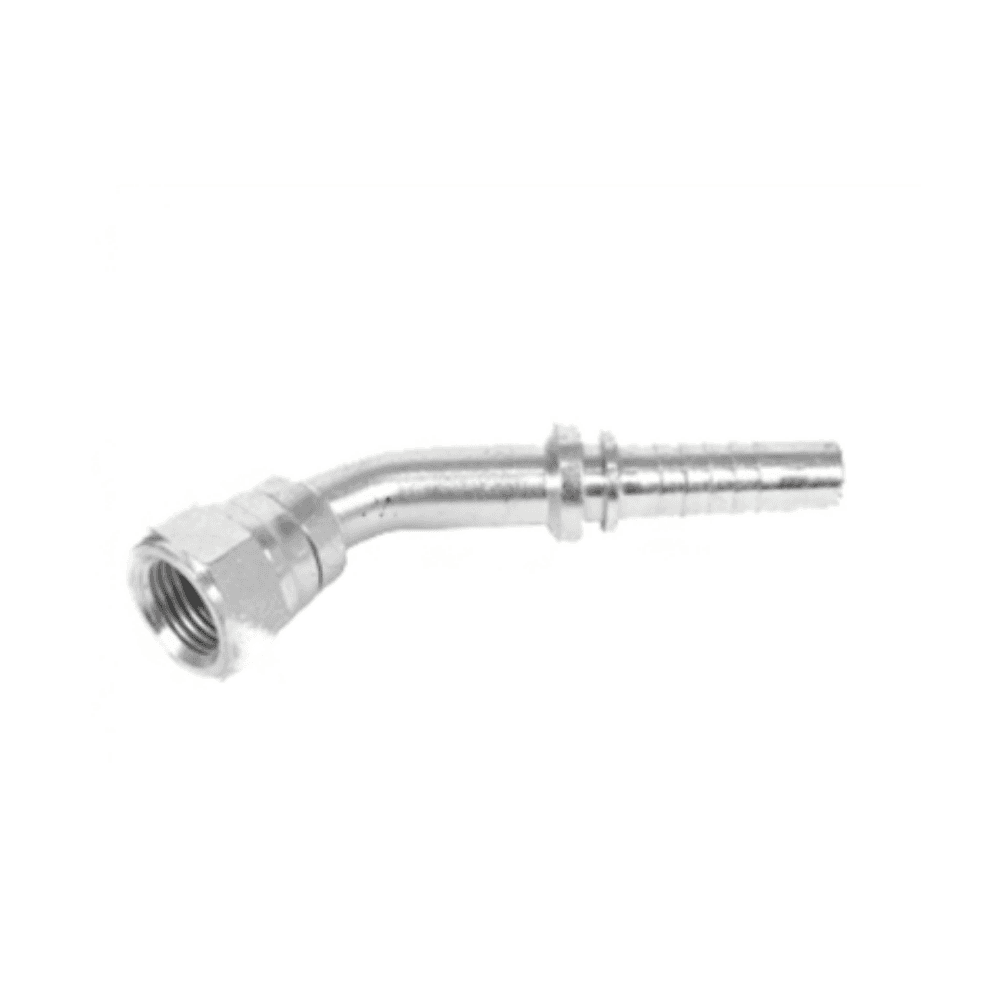
Common excavator grades and ends

Common questions
Can you make an excavator hose without the machine present?
Yes, from the failed assembly or from bore, length, both fitting specifications and the angle between the ends. Photographs of each end against a rule cover most of it.
The same hose has failed three times. What is wrong?
The installation, almost certainly. A failure that repeats in the same location is routing, clamping or bend radius until proven otherwise — the hose is the symptom.
Should I replace hoses in pairs?
On a circuit where both lines are the same age and duty, often yes — the second one is usually not far behind, and the labour is largely shared.
Is a four-spiral hose always better than two-wire?
No. It is rated higher and bends less easily. On a run that needs to flex in a confined space, a compact two-wire construction may be the better engineering answer.
Hydraulic hose by grade
Compact and standard braid through four-spiral, in stock in Dubai.
Figures verified · Diagnostic guidance only. No model-specific part numbers — the machine parts book is authoritative for those.
Industry
Construction
Earthmoving, lifting and concrete plant.
Machine down?
Send photographs of both ends and the layline. We will identify the assembly and tell you what we hold before you travel.
Plant-down? Call +971 52 2477942 — 24/7