
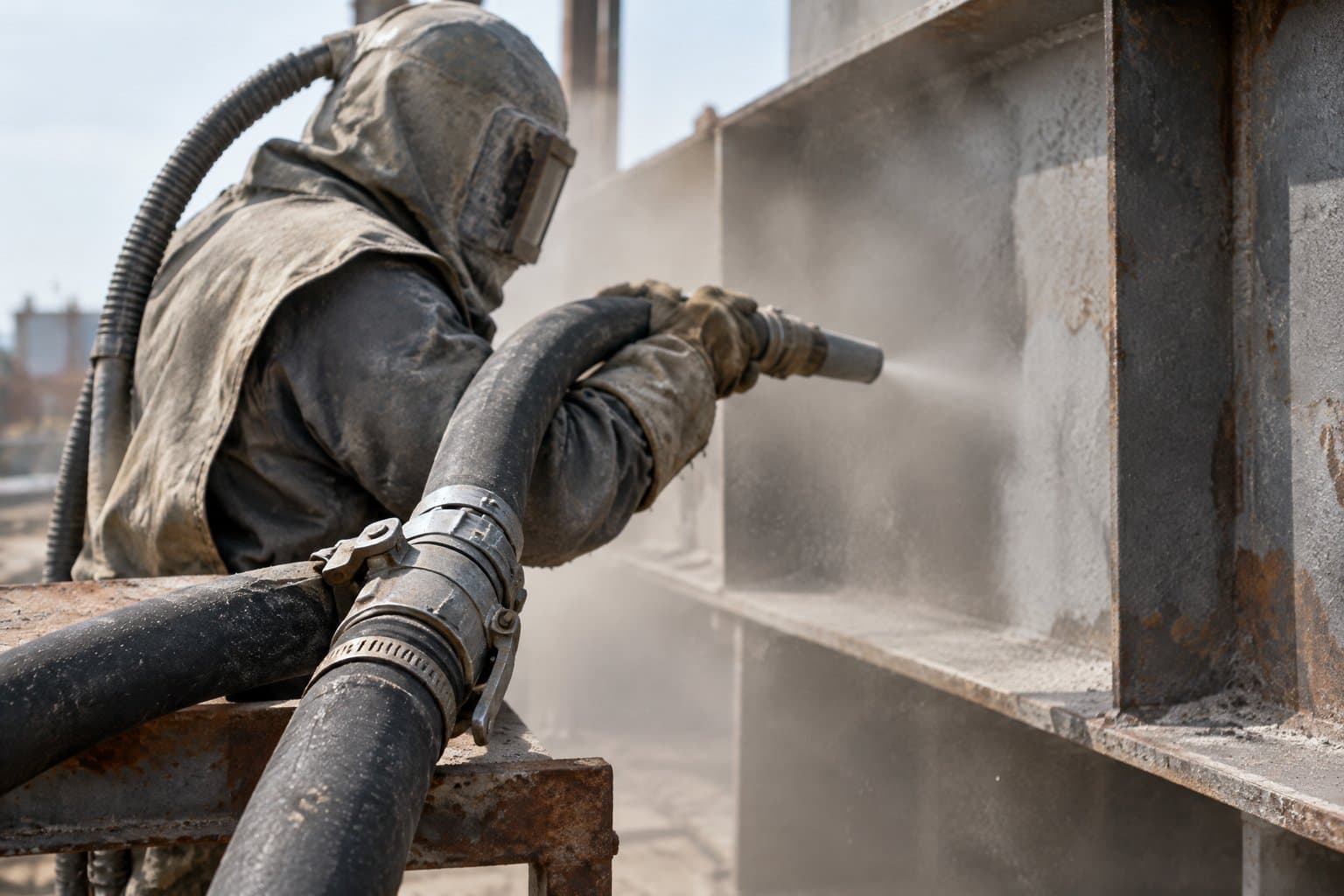
Most hoses fail from the outside — abrasion, sun, a rub point on a frame. Abrasive-duty hose fails from the inside. Sand, cement, fly ash, grain and blasting grit scour the tube with every metre they travel, and they scour hardest wherever the hose bends. Choosing a hose for that duty is mostly choosing the tube, and then making sure the static the flow generates has somewhere to go.
/01The tube does the work.
Our bulk material suction and delivery hose (A361) is built for dry and slurried abrasives: a black anti-static natural rubber tube — natural rubber being the classic compound for resisting sliding abrasion — over high-tensile textile plies, a steel helix for suction and anti-static wires, under an abrasion, weather and ozone resistant cover. It is rated 10 bar with a 30 bar burst (SF 3:1), −40 to +70 °C, in 3" and 4". For lighter slurries, and where some chemical resistance is wanted, the MDSE chemical and abrasion PVC hose (PREMFLEX) runs from 1-1/2" to 6" at 3 to 5 bar, −10 to +55 °C.
| Hose | Rating | Sizes | Temperature |
|---|---|---|---|
| A361 bulk material S&DHighlighted | 10 bar, SF 3:1, anti-static NR tube | 3", 4" | −40 to +70 °C |
| PREMFLEX MDSE PVC | 3 – 5 bar by size, SF 3:1 | 1-1/2" – 6" | −10 to +55 °C |
/02Static, and why it matters with powders.
Dry powders and grit sliding along a hose wall build an electrostatic charge, and in a dusty atmosphere a discharge can ignite the dust or simply give the operator a heavy shock. That is why A361 has both an anti-static tube and anti-static wires. As with any anti-static hose, the path only works if the couplings are bonded to the wires and the couplings are earthed — check continuity when the assembly is made and at every inspection.
/03Bends are where it wears.
Abrasive particles travel in straight lines and strike the outside of every bend, so that is where the tube wears through first. Route abrasive hose in long, gentle curves rather than tight ones, support it so it does not sag into a kink, and where a bend cannot be avoided, plan to rotate the hose a quarter turn at intervals so the wear is spread around the tube. A361's minimum bend radius is listed at 380 mm on 3" and 550 mm on 4"; staying well above it on abrasive duty buys life.
/04Sandblast couplings and nozzle holders.
Blasting hose has its own small family of ends. Our sandblast range covers aluminium hose ends with crowfoot faces (3/4" to 1-1/2"), NPSH-threaded nozzle holders (3/4" to 1-1/2"), and nylon hose couplers, female thread adapters and nozzle holders in 1-1/4" and 1-1/2", in yellow or red. Sealfast's nozzle holders are NPSH-threaded (ASME B1.20.7), and only one part has a published rating: Sealfast's aluminium female NPT crowfoot end, at 110 psi. Confirm the rest for your blast pressure — and the hose still sets the limit.
Frequently asked questions
- Why is natural rubber used for abrasive hose tubes?
- Natural rubber resists sliding abrasion well, which is why our bulk material hose A361 uses an anti-static natural rubber tube.
- Does bulk material hose need to be anti-static?
- For dry powders and grit, yes. Flow builds static charge. A361 has an anti-static tube and anti-static wires, which must be bonded to earthed couplings.
- What thread do sandblast couplings use?
- Sealfast's aluminium nozzle holders are threaded NPSH (ASME B1.20.7), and one of its crowfoot ends has a female NPT thread. Sunpool does not state a thread for its nylon parts.
- Where does abrasive hose wear out first?
- On the outside of bends, where the particles strike the tube. Route the hose in gentle curves and rotate it periodically to spread the wear.
Abrasive hose and sandblast couplings
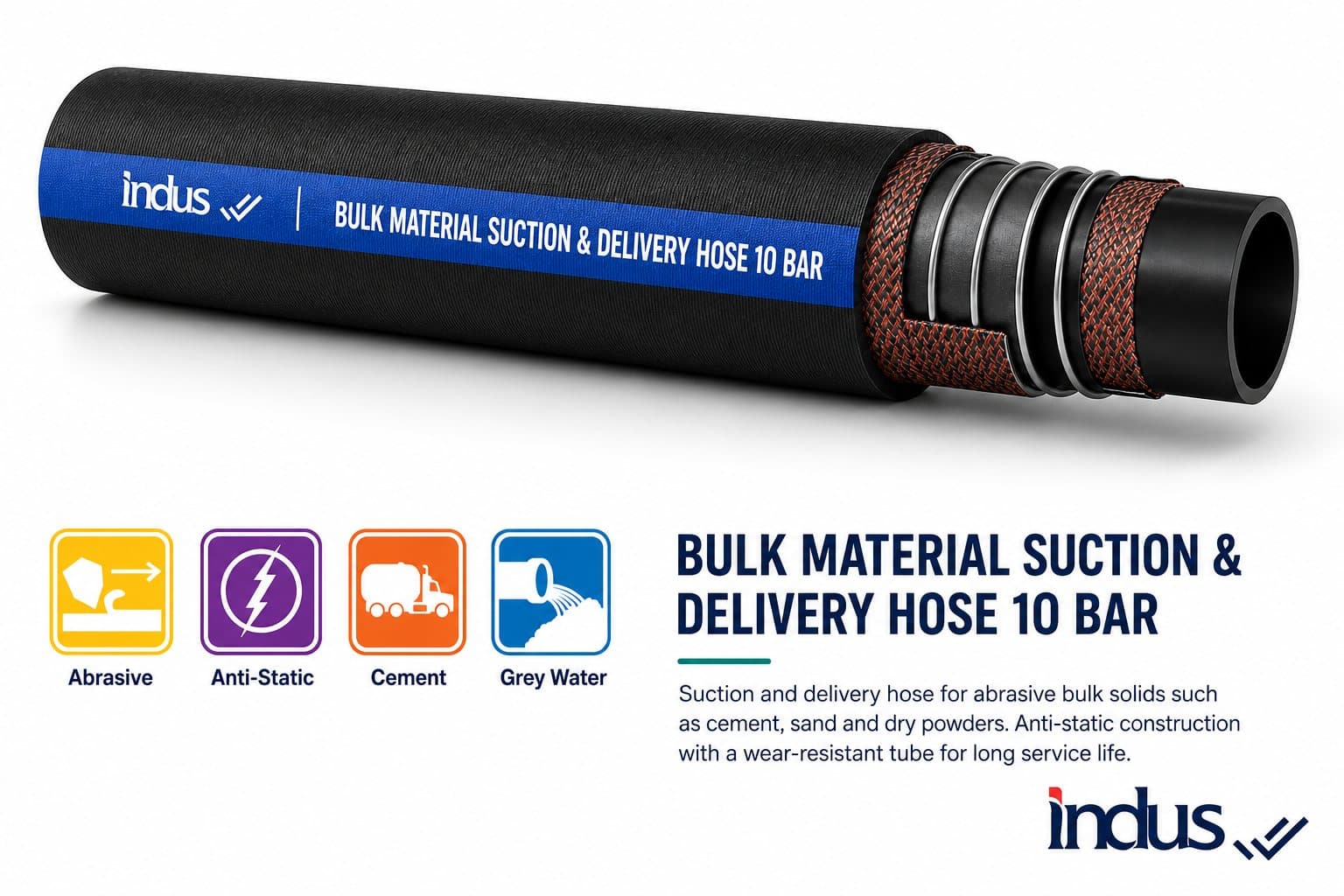 IH-IH-A361Bulk Material Suction & Delivery Hose 10 barIndus Hydraulics
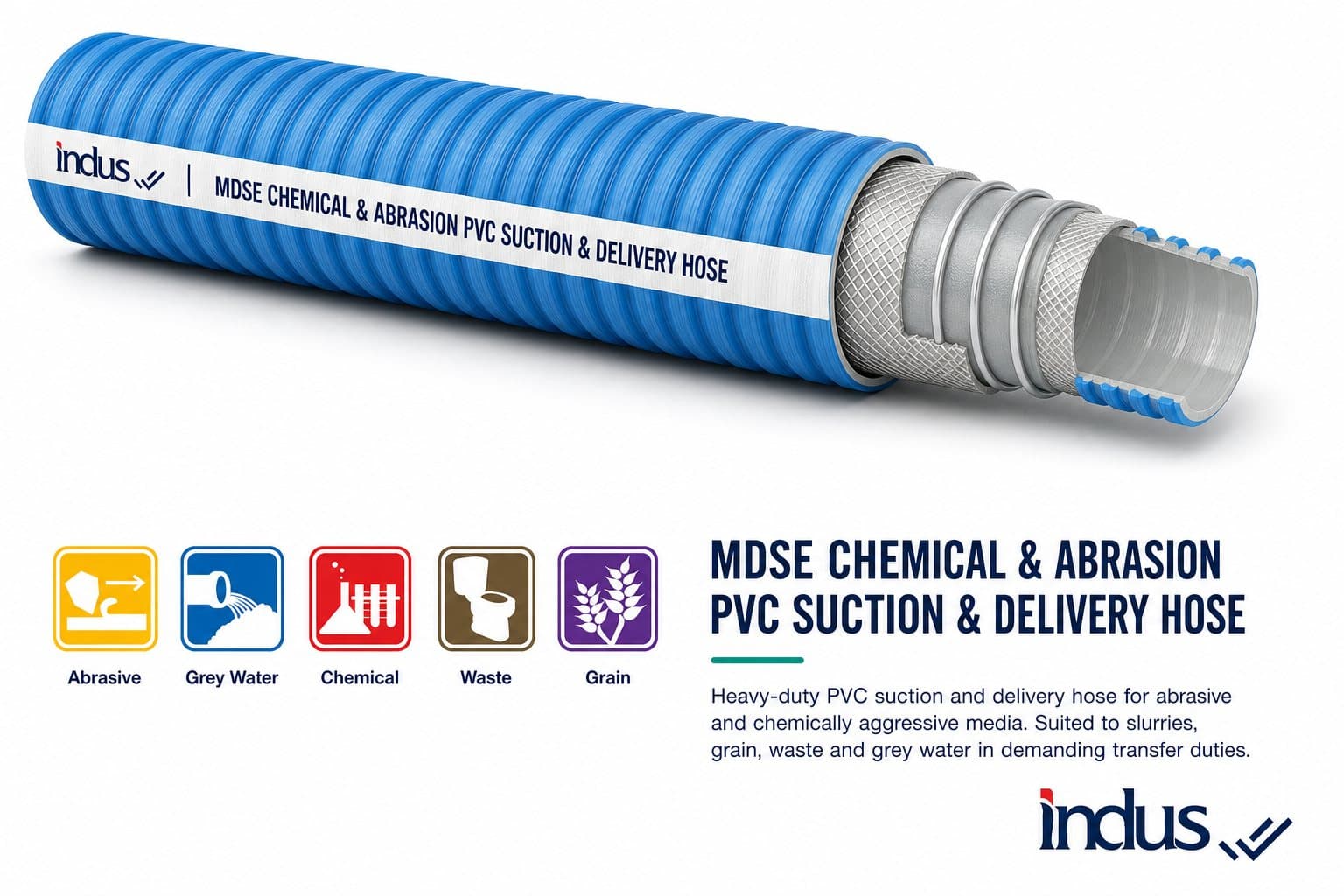 IH-IH-PREMFLEXMDSE Chemical & Abrasion PVC Suction & Delivery HoseIndus Hydraulics
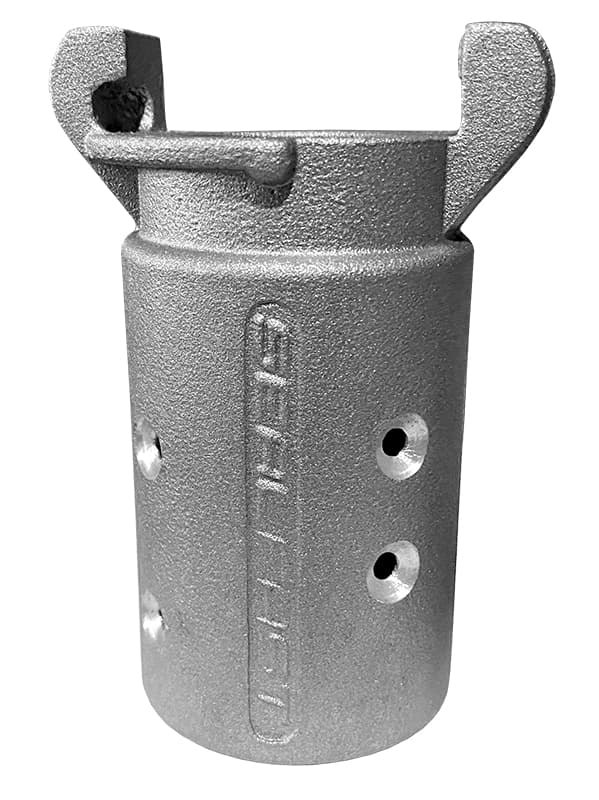 IH-SB-HOSE-END-WITH-CROWFOOTAluminum Hose End with CrowfootSealfast
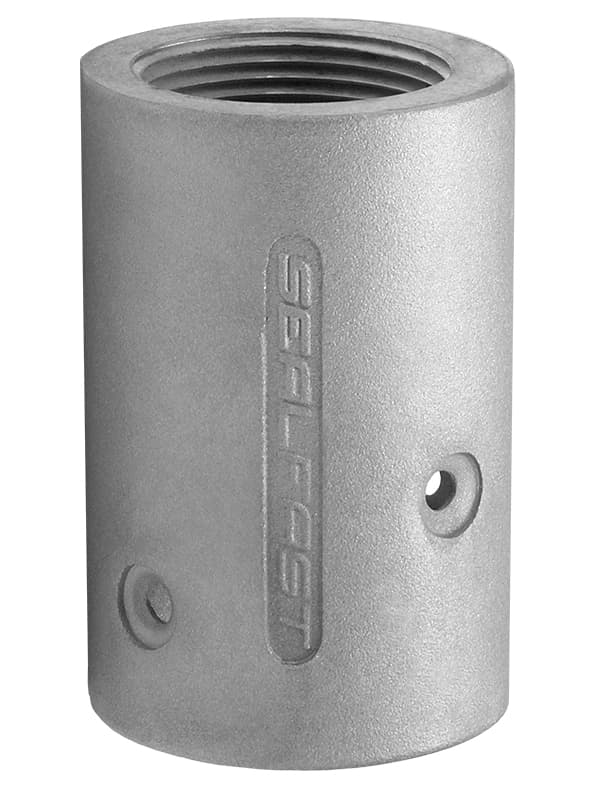 IH-SB-NPSH-THREADED-HOSE-END-NOZZLE-HOLDERSAluminum NPSH Threaded Hose End Nozzle HoldersSealfast
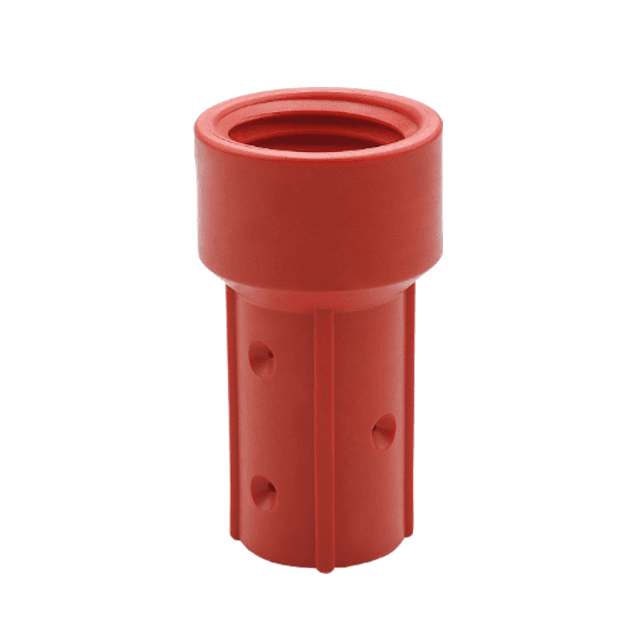 IH-SB-NOZZLE-HOLDERNylon Sandblasting Nozzle HolderSunpool
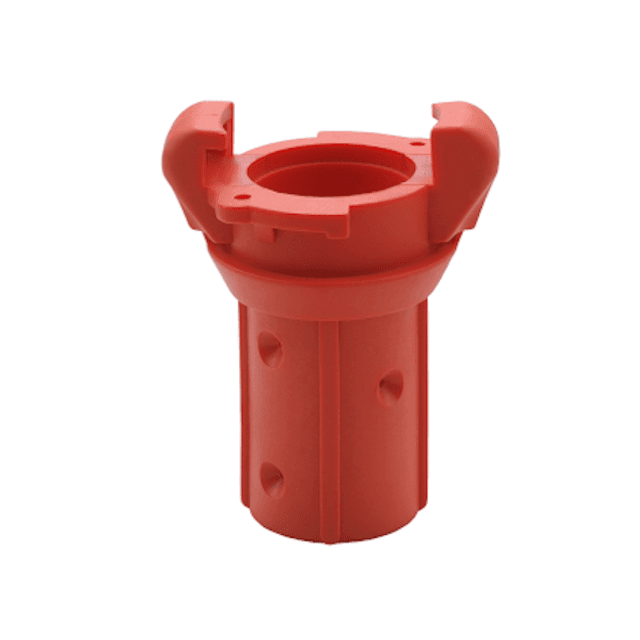 IH-SB-HOSE-COUPLERNylon Sandblasting Hose CouplerSunpool
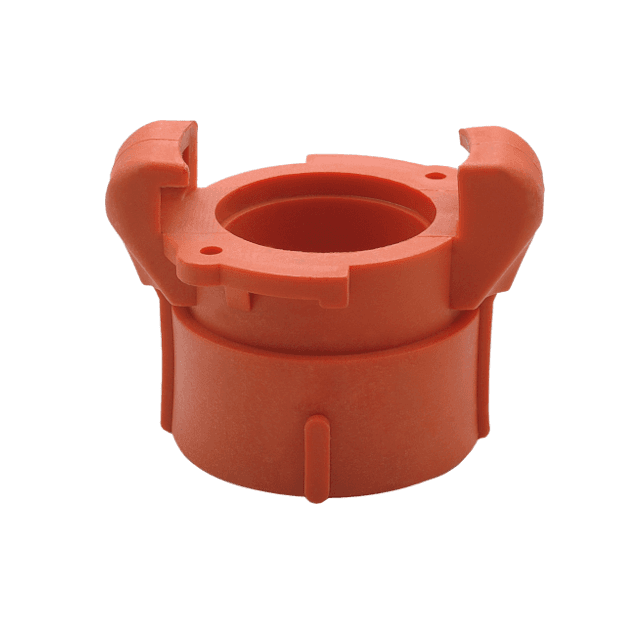 IH-SB-FEMALE-THREAD-ADAPTERNylon Sandblasting Female Thread AdapterSunpool


